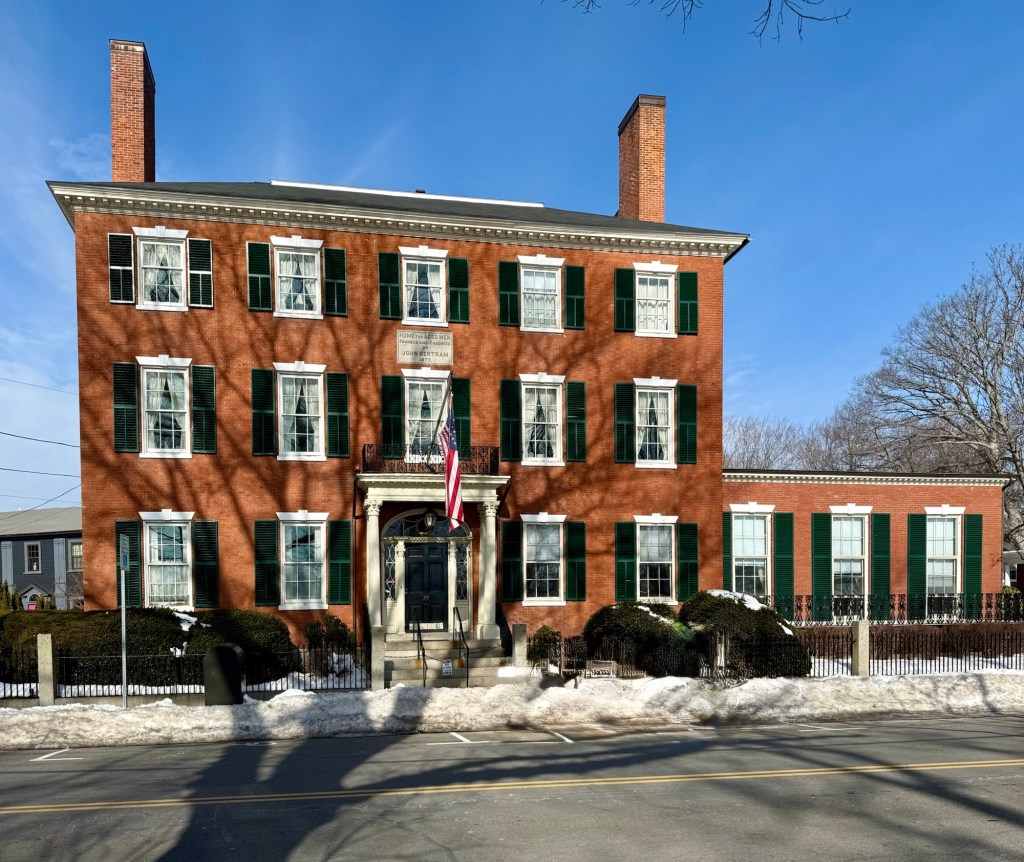
Forrester-Peabody House – Salem Home for Aged Men // 1818

Overlooking the Salem Common, this 1818 Federal style dwelling has served as everything from a single-family home to a boarding house and ultimately an assisted living facility, showcasing that old buildings can always be repurposed into new uses. The home was built for Captain John Forrester, son of Simon Forrester, one of Salem’s most successful merchants. The Forrester House was purchased in the 1830s by George Peabody, who added the one-story ballroom wing. Peabody lived in the house until 1892 and the building later housed the Salem Club, a men’s social organization with over two-hundred well-connected members. In the 1920s, it became the Bertram Home for Aged Men, named after Captain John Bertram, who founded the organization in 1877 as a charitable residence providing housing and socialization space for aged men in Salem. The home had fallen into disrepair when it was closed in 1988, to reopen two years later as the first free-standing assisted living community for men and women in Massachusetts, today known as the Bertram House.

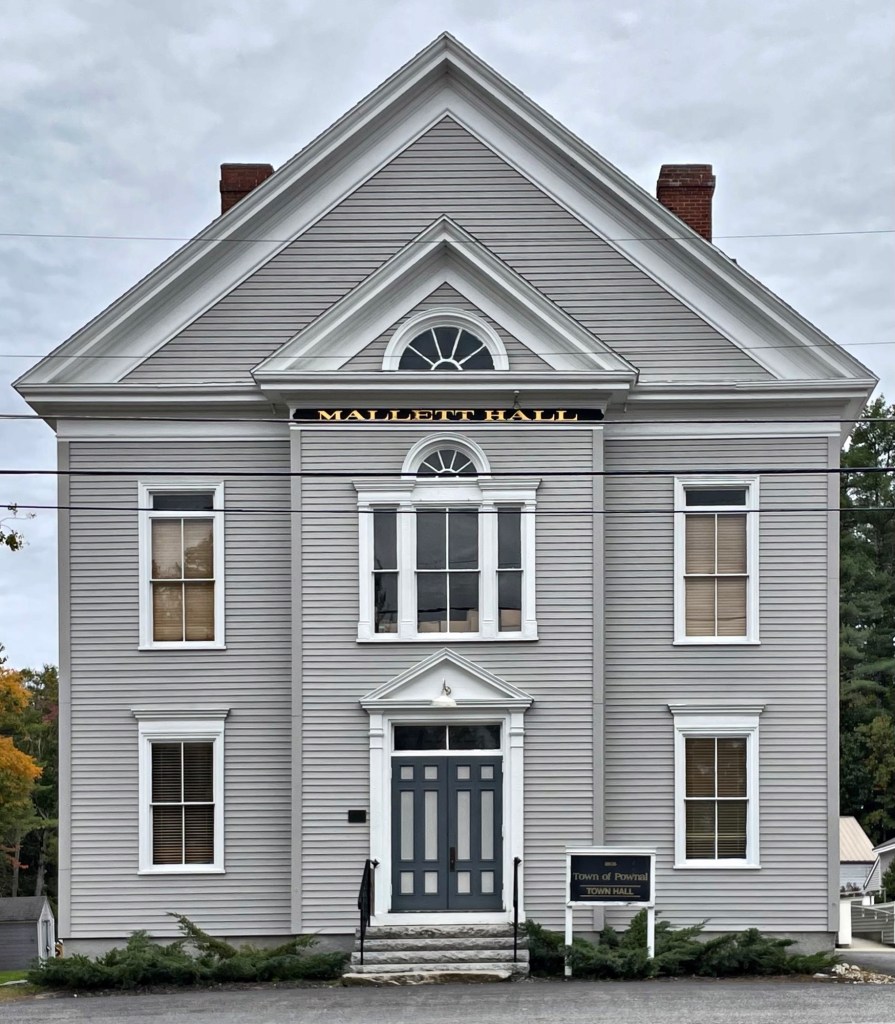
Mallett Hall // 1886

Built in 1886, Mallett Hall is one of the most interesting and significant buildings in the small town of Pownal, Maine. The town is located equidistant to the larger cities of Portland, Brunswick, and Lewiston, but retains a very rural charm. This hall was built following a town meeting on March 15, 1886, where an article was approved to appoint a committee charged with developing plans and estimates for a new town hall. The hall is named after Edmund Mallett, a businessman who partially funded its construction. The architect is not officially known, but estimates guess it was the work of Francis Fassett, a popular architect at the time in the area. In addition to housing town offices and functions, it has also served as a community center, hosting social events. The Colonial Revival style building takes strong cues from Greek Revival meeting houses in the area but exhibits a Palladian window and fanlight in the pediment.

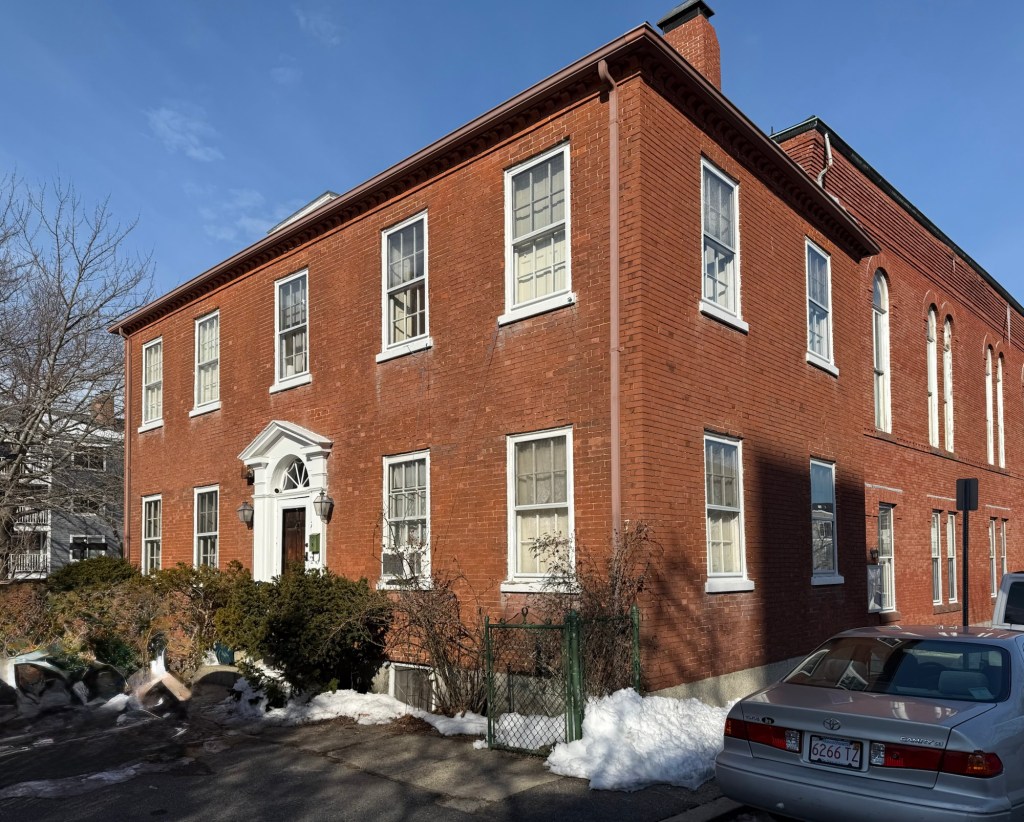
Peter Bent Brigham Building // 1888

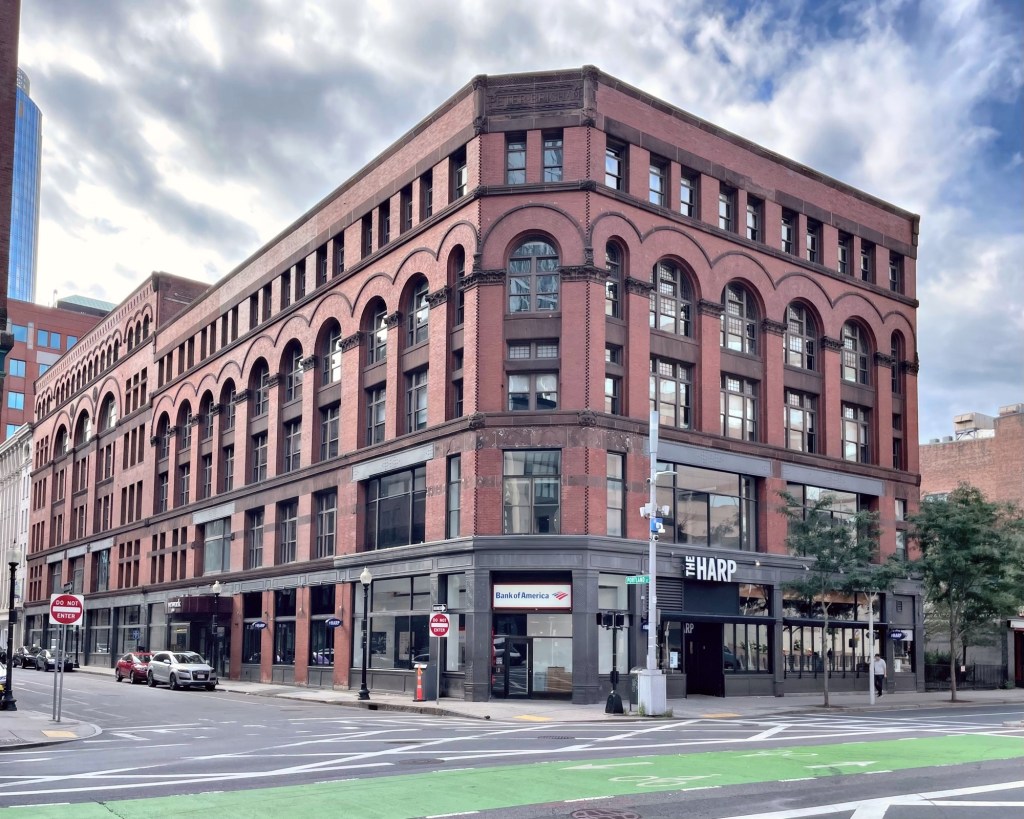
Located at the corner of Causeway and Portland streets in the Bulfinch Triangle Historic District of Boston, you will find the Peter Bent Brigham Building, one of the best examples of the Richardsonian Romanesque architecture style in the city. The building was built by the estate of Peter Bent Brigham (1807-1877), an interesting character in Boston’s history. Peter B. Brigham was born in Vermont and eventually moved to Boston and began his career selling fish and oysters in Boston. A self-made, hardworking man, Peter would eventually own a restaurant in the city and began making connections with the movers and shakers of town. With his success, he began investing in real estate and would become a founding director of the Fitchburg Railroad. Peter died in 1877, he never married nor had children. His estate valued in the millions and was to be spent 25 years after his death, for a hospital “for the care of sick persons in indigent circumstances”. The money appreciated to $2,000,000 by 1902 and was used to establish the Peter Bent Brigham Hospital, now Brigham and Women’s Hospital. His family, who also received a substantial amount of money in the will, built this building, hiring the firm of Hartwell & Richardson to design the 1888 corner and the later, larger 1891 addition. The commercial building was rented to stores and professionals and even retains Peter B. Brigham’s name in the facade carved in terra cotta.

Orin Witter House // 1821

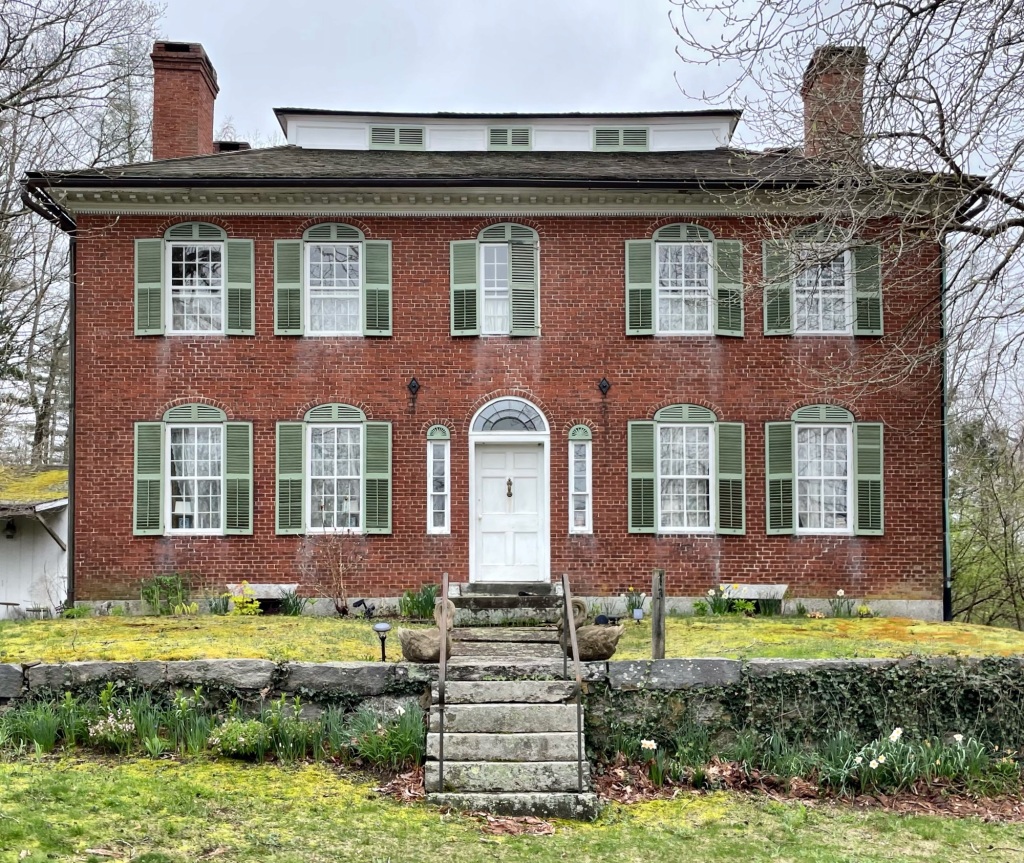
The Witter House of Chaplin, Connecticut was built in 1821 and owned by three generations of medical doctors all named Orin Witter. The Witter House stands on Chaplin Street and is among the finest Federal style residences in this part of the state. Orin Witter had the house built just before the town was incorporated in 1822 and would also serve as the town’s first Clerk. The Witter House is five bays wide, with paired chimneys at the ends of the hip roof. The centered entrance is flanked by arched sidelight windows and has a fanlight above. The fanlight detail is echoed by semi-elliptical fan louvers above each window. The roof has a monitor section at its center. Due to its architectural merit and state of preservation, the house was individually listed in the National Register of Historic Places.

Benjamin Bosworth House // 1800

One of the most unique houses in Connecticut is this massive Federal style residence located in the small town of Eastford. Built next to the Congregational Church of Eastford (1829-2023), which burned down in 2023 by arson, the massive house has been known as both the Benjamin Bosworth House and Squire Bosworth’s Castle due to its first owner, Benjamin Bosworth (1762-1850). According to the Bosworth Family, the house was built in 1800 by Bosworth was a wealthy merchant, who hired Vini Goodell, a local carpenter to design and build the large Federal home. The house was completed by 1801 when the local Masonic group met in the building. As Bosworth was also a merchant, he used the basement as a storeroom. The house is also unusual for its monitor roof, a rarity in Federal period construction, which reads like a second structure on the house, due to the building’s size. After Bosworth’s death, the house was occupied by his niece, and was later purchased by Elisha Grant Trowbridge in 1897. Trowbridge was a grand-nephew of General Nathaniel Lyon (1818-1861), a local hero who was the first Union general killed during the Civil War. Trowbridge, an engineer, lived here until he died in 1963 at the age of 96. Later owners have had the monumental task of restoring and maintaining this behemoth of a house, to great success.

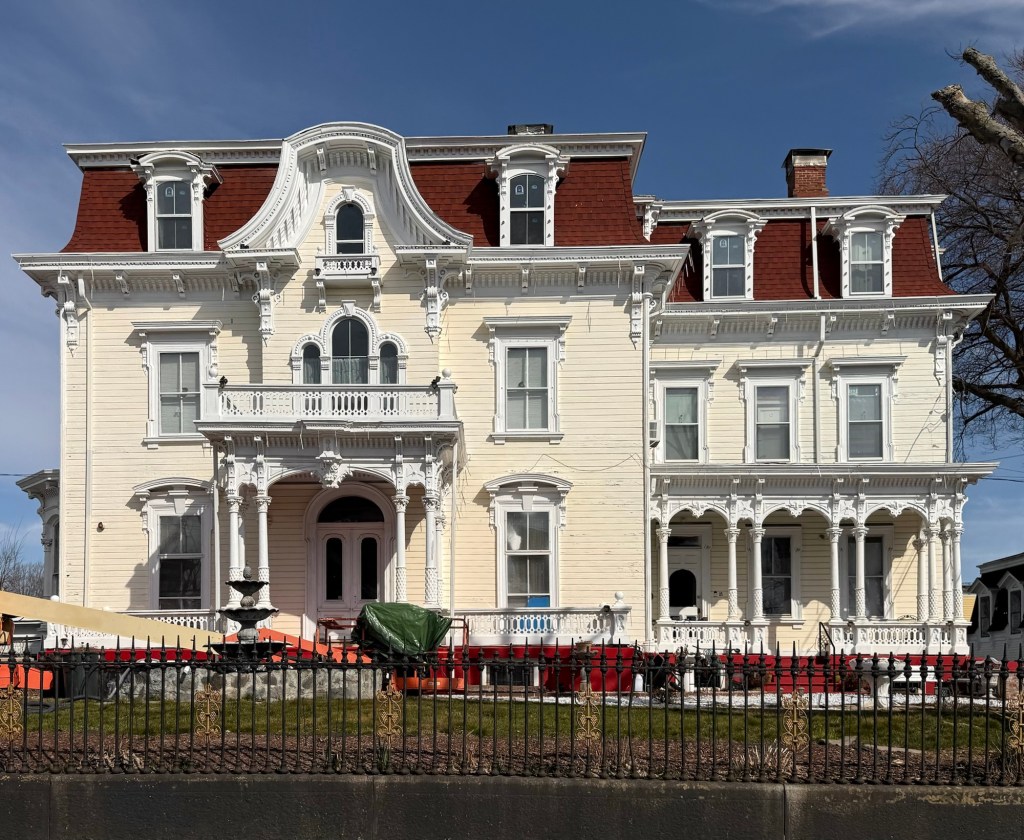
Derby House Hotel // 1896

The Derby House Hotel is located on Main Street in Derby Center, Vermont and was built in 1896 by Ms. Luvia A. Rickard, a widow. Since its construction, the hotel has been at the center of both the commercial and social activities of Derby Center and is one of the town’s few Second Empire style buildings. While built in the Second Empire style, then in declining use in Vermont, the Derby House Hotel was adorned with high-style touches including elaborately detailed porches and hardware. The rear section afforded extra living space, and a livery stable/barn provided for the guests’ horses and carriages. Luvia ran the hotel for extra income until her death in 1905. It appears that after, her son Harry took over the hotel for a few years until he sold the property to Albert C. Fellows, a local businessman. Tourism never really took-off in the early-mid decades of the 20th century, and the hotel was converted to apartments, a use that remains to this day.

Lewis June House // 1865

The Lewis June House sits on North Salem Road in northern Ridgefield, Connecticut, and is one of the finest Second Empire style homes in this part of the state. The c.1865 home was built for Lewis June (1824-1888), who was in the circus business, and it replaced an earlier home on the site that burned. Lewis June was a partner in the June, Titus and Angevine & Co. Circus that as early as 1842 toured 85 towns in six states. The circus wintered in Ridgefield. Past owners have since found many horseshoes, largely of small horses, on the property, suggesting that June kept the circus’ horses and ponies on this property. The home has been preserved thoughtfully and was listed on the National Register of Historic Places in 1984.

Hezekiah Chase House // c.1820

In 1782, Stephen Chase (1740-1821) settled in present-day Unity, Maine, and built the first frame house there to establish a community. After Stephen’s death, his son, Hezekiah Chase (1774-1848) built this brick, Federal period home for his family, moving his father’s wood-frame house and adding it onto the rear, which remains there to this day. Hezekiah was a judge and was involved in town affairs ever since it was established. The bricks were made locally and were of fine quality. Hezekiah’s son George C. Chase (1844-1919) was raised here. He attended Bates College in its second class, and eventually became a professor of English there. In 1894 he became the second president of Bates College and oversaw a period of significant growth at the college. Chase became known as “The Great Builder” at the college. The old Chase House was listed on the National Register of Historic Places both for its architectural merit and its history and significance to the town and region.

Laura Richards House // 1810

This stunning Federal style house in Gardiner, Maine, was built about 1810 by Ebenezer Byram, who had purchased the land from Robert Hallowell Gardiner, a descendant of Dr. Sylvester Gardiner, the “founder” of the town. Dr. Gardiner was a resourceful Boston druggist, who was one of the principal owners of the Kennebec Purchase, known as the Plymouth Company, who purchased land on the west side of the Kennebec River in Maine. Dr. Sylvester Gardiner had been attracted to the Gardiner area for a number of reasons, primarily because of the depth of the water of the river to the point of Gardiner as the head of navigation for ships here. This house overlooking that river was purchased in 1878, by Henry and Laura E. Richards. Laura Richards (1850-1943) was the daughter of Samuel Gridley Howe, an abolitionist and the founder of the Perkins Institution and Massachusetts School for the Blind. Her mother, Julia Ward Howe wrote the words to The Battle Hymn of the Republic, a tune that I am sure most of you have heard of, but never knew the name. Henry and Laura moved to Gardiner in 1876 after suffering financial reverses in Boston, where Henry worked at his family’s paper mill, and it was about that time that Laura Richards began her writing career. At this house in Gardiner, Laura wrote more than 90 books including biographies (including one on her mother), poetry, and several children’s books. Even more impressive, Laura was awarded one of the first four ever Pulitzer Prize in 1917 for her biography on her mother, years before women were even afforded the right to vote!

Lewis-Zukowski Farm // 1781

On the rural back roads of Suffield, CT, it is amazing how many historic farmhouses you can stumble upon. This is the Lewis-Zukowski Farmhouse, built in 1781, as one of the earliest brick homes built in this part of the state. When Hezekiah Lewis (?-1805) built his house in 1781, he was a farmer of modest prosperity. By the time of his death in 1805, he was somewhat wealthier, perhaps because of his second marriage in 1794 to widow Ruth Phelps, as his 91-acre farm. His estate indicates he was a traditional farmer of the period: he had a yoke of oxen, 2 horses, 2 cows, and 2 pigs, suggesting that he was primarily raising sustenance for his family, not products for market. Michael Zukowski arrived in Suffield in 1888 with his family as an immigrant from Poland. Zukowski worked on a farm in town for $8.00 a month plus board for local tobacco farmer Calvin Spencer. He had saved enough by 1905 to pay Hiram Knox (then the owner of the former Lewis Farm) $2,800 in cash, purchasing the property. Zukowski worked the farm until the 1920s, when his son took it over and he moved to another farm nearby. The house remained in the family one more generation until it was sold out of the family. It remains as an architecturally and culturally significant farm in Suffield.