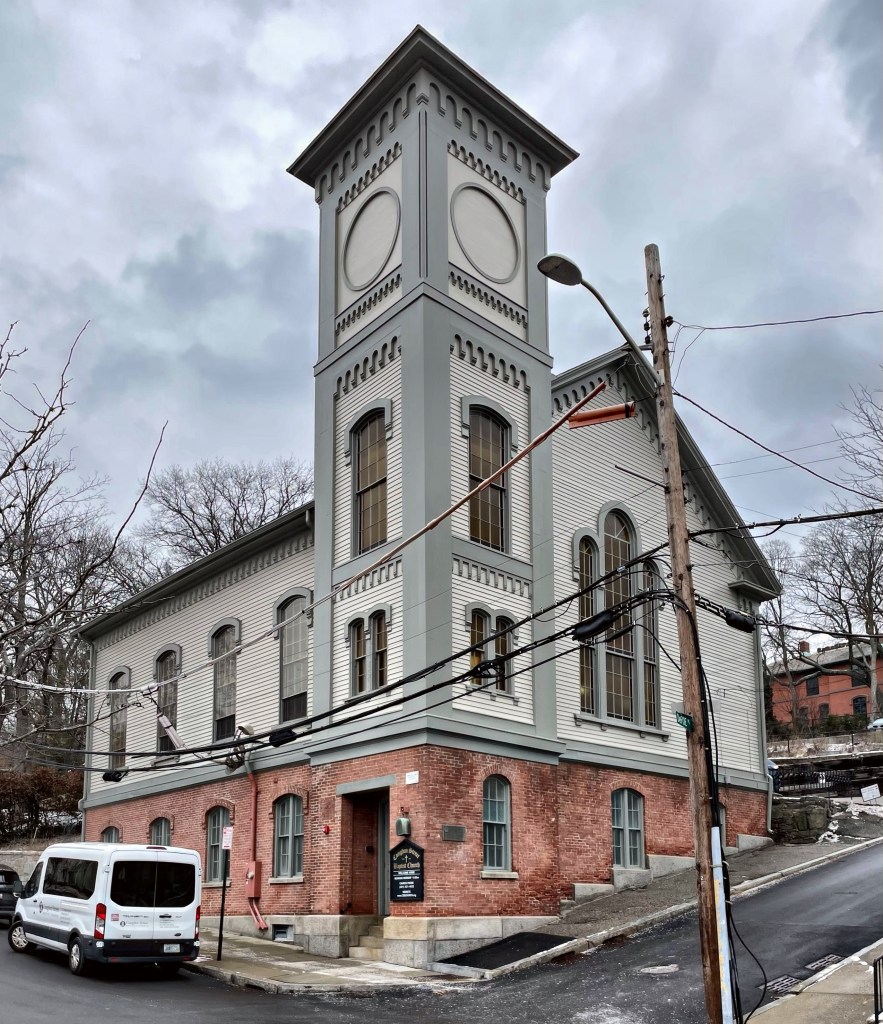
Congdon Street Baptist Church // 1875

The Congdon Street Baptist Church on College Hill is extremely significant as part of the rich history of Providence. Its origins began in 1819, when Moses Brown, an abolitionist, industrialist and member of the Brown Family (who profited on the institution of slavery) gave land to “the people of color” of Providence for a schoolhouse and meeting house. The original building stood slightly north of the present structure and it was built in 1821. The structure provided the first schoolhouse for Black children in Providence. In 1869 the building was torn down, without the approval or knowledge of the congregation by white neighbors because “its proximity displeased them”… Eventually the congregation arranged an exchange of lots with one of the church’s neighbors and architects Hartshorn & Wilcox were commissioned to design the new church building. Hartshorn was the successor of Thomas A. Tefft and this church echoes many of his designs in the Italianate style. The new building was completed in 1875 at the cost of $16,000. It was renamed the Congdon Street Baptist Church. The church has since 1875 served as an important landmark and gathering place for many Providence’s Black residents past and present.

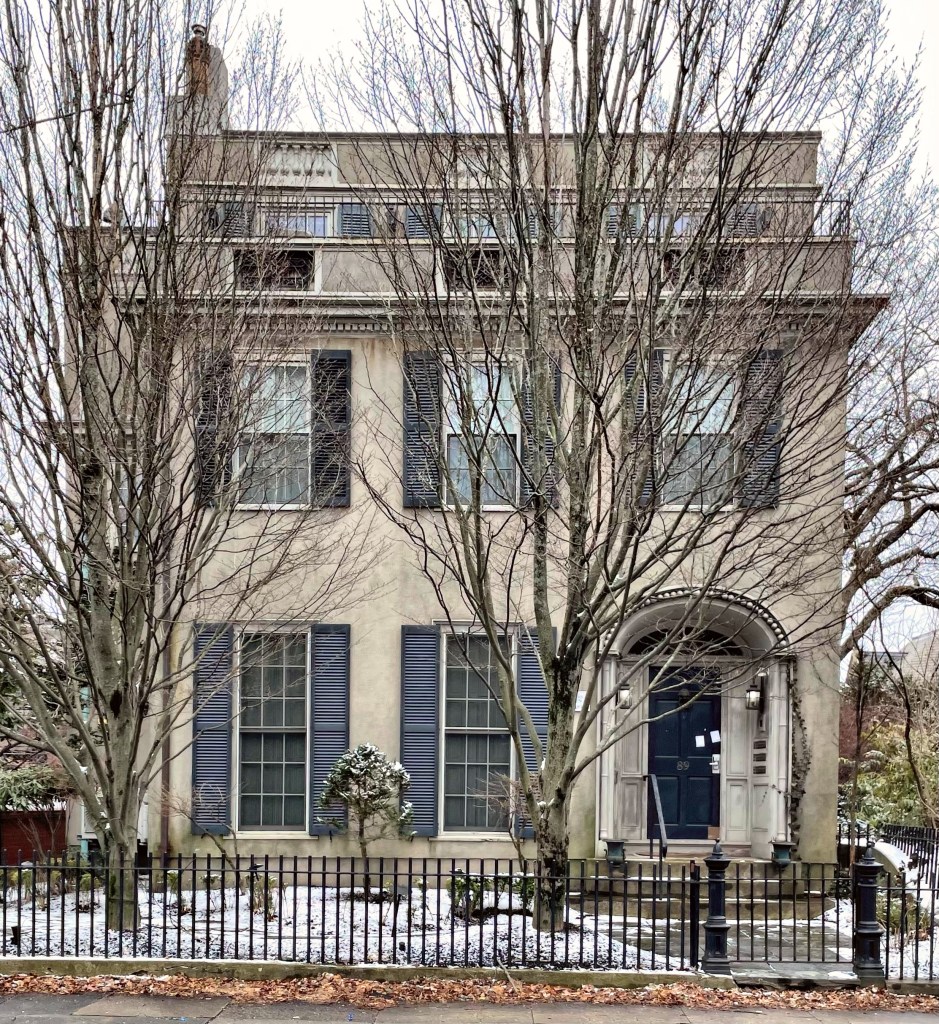
Welcome Congdon House // c.1820

In 1820, Joseph Dorr, a trader, purchased this house lot in Providence’s East Side overlooking present-day Downtown. He had this Federal style house built with a symmetrical five-bay facade with fanlight transom over the door. He occupied the house until 1827 when he sold the property to a Charles Hadwin. In 1832, the property was acquired and soon after purchased by Welcome Congdon (1794-1874) who lived there until his death. The house was more recently added onto with a Modern addition on the side, to provide additional, private space for the owners who live directly next to a public park.

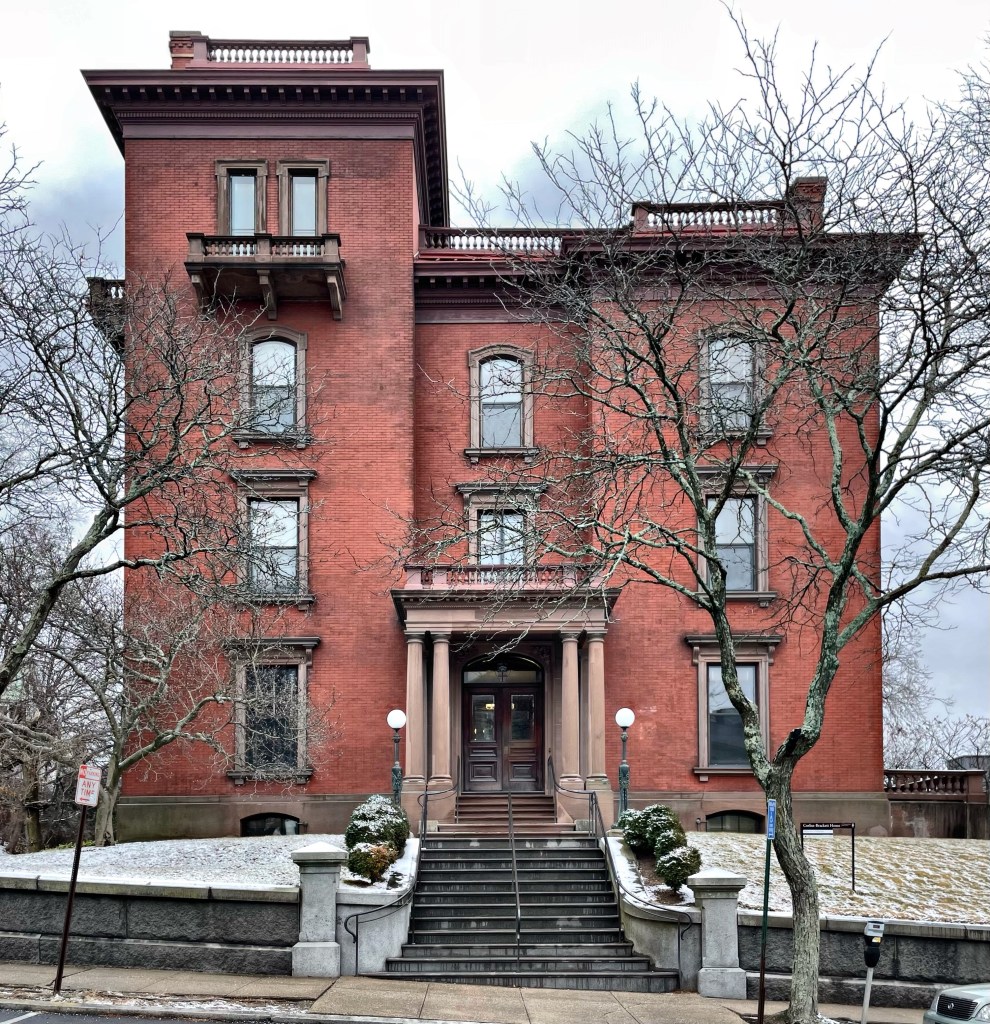
George Corliss – Charles Brackett House // 1878

This mansion, one of the finest in Providence, was built in the late 1870s by George H. Corliss for his second wife. Corliss (1817-1888) was the inventor of the most widely used industrial steam engine of the nineteenth century. Corliss’ first wife Phebe died in 1859. Seeking companionship, George remarried in 1866 to Emily Shaw who was eighteen years younger than he. Ms. Shaw suffered from poor health and she with the assistance of her doctor, convinced Mr. Corliss that she escape the cold winters of Rhode Island for Bermuda. It does not appear that they relocated to Bermuda, but Corliss stated, “I will build Bermuda for Mrs. Corliss.” He did, and this is it. Corliss used his engineering skills to build a state-of-the-art, climate-controlled building, cool in the summer, warm in the winter. The Italianate Villa is one of the largest in town but employed a style that was dated upon completion. In 1929, Corliss’s great-nephew, screen-writer and movie producer for Paramount Studios Charles Brackett inherited the house. He in turn eventually transferred the house over to Brown in 1955, who have maintained the old mansion to this day!

Benjamin Bliven House // 1849

Although Benjamin Bliven built this house, he never owned the property, but the name lives on! This house on Angell Street in Providence was originally constructed in 1849 in the Greek Revival style, popular at the time. Bliven, a musician, rented the property to tenants until the deed was transferred to Abby W. Watson, wife of Robert W. Watson (owner of the property next door and featured on this account previously). The first owner-occupants were Grace A. and Eugene H. Greene, who bought the property in 1898. The house was completely remodeled in the early decades of the 20th century with Regency/Colonial Revival detailing. Changes including the former roof with its gable-end facing the street boxed off, a new modillion cornice with parapet above; recessed attic story with balustrade; small wing to the east. The stucco siding and Federal entry is icing on the cake!

Samuel B. Wheaton House // 1850

Another Italianate mansion on Angell Street in Providence is the Samuel B. Wheaton House which is presently occupied by Brown University’s English Department. Samuel Burr Wheaton (1807-1863) was a merchant who also served as president of the Phenix Bank. The building is capped by a shallow hip roof which is not visible from the street and wide, overhanging eaves supported by brackets. The house is a Villa in plan as it features irregular massing and not a symmetrical form, just sans tower. The Wheaton House was acquired by Brown University who has since added onto the rear of the house for the English Department offices and classroom spaces. LLB Architects is credited with the contextually designed additions which utilizes lead-coated-copper clad connectors that are recessed between sensitively-scaled brick pavilions that preserve the integrity of the original house by letting it stand proud of the later additions.

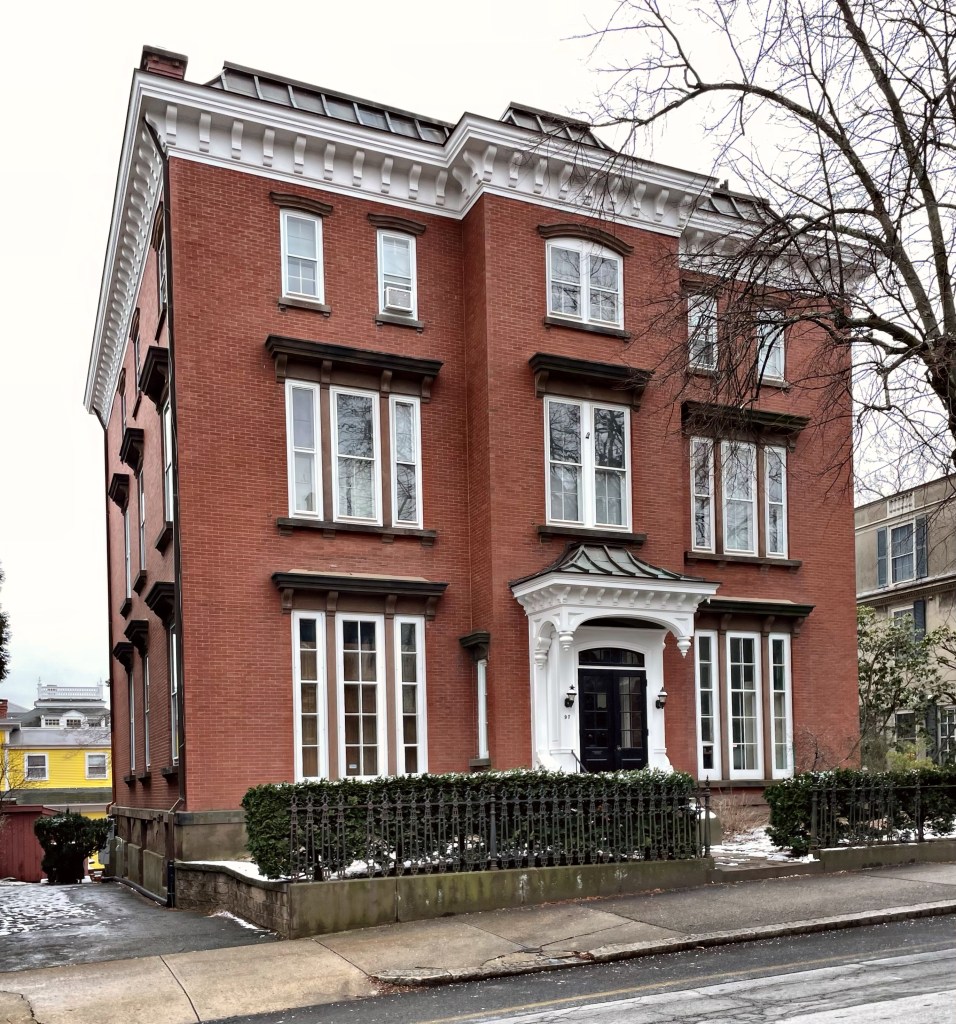
Watson-Knight Mansion // 1854

No town does Italianate architecture quite like Providence! Case in point, the Watson-Knight Mansion, a relatively overlooked example of the style found on Angell Street in College Hill. In 1854, a house lot here was purchased by an elderly Matthew Watson (1786-1857), who possibly lived in half of the house for a few years until his death. Directories also list his son Robert as living in the home in 1854. The three-story brick mansion has a boxy form with symmetrical facade. Brownstone hoods and sills are located at the windows and add depth to the otherwise blank facade. A projecting wooden door hood with hanging pendants covers the large entry. The home remained in the Watson Family until it came under the possession of Robert Brayton Knight (1826-1912) a businessman and mill owner who became the largest individual owner of cotton mills in the world, with upwards of twenty distinct establishments under his personal control. He co-founded what became the Fruit-of-the-Loom brand with his brother in the 1850s. The building has since been divided into apartment/condominiums.

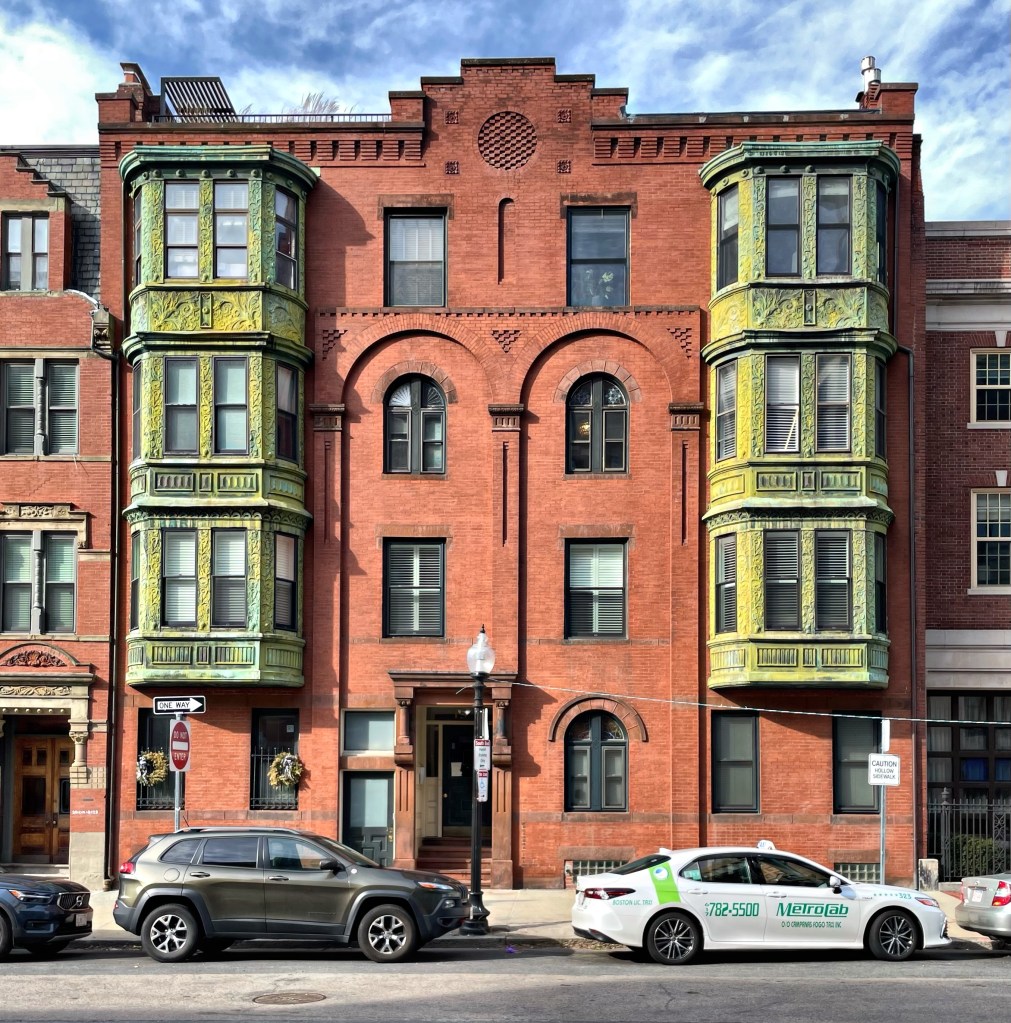
The Atherton // c.1890

About ten years after the nearby Carlisle building (last post) was completed by owner Jonas Gerlusha Smith (1817-1893), he began construction on another large, apartment hotel next door. He again retained architect Arthur Vinal, who was acting City Architect for the City of Boston to furnish the plans on the building, which would be attached to the older portion which fronts Gray Street behind. The building is extremely well-preserved and has some stunning metal bays with decorative details which really pop!

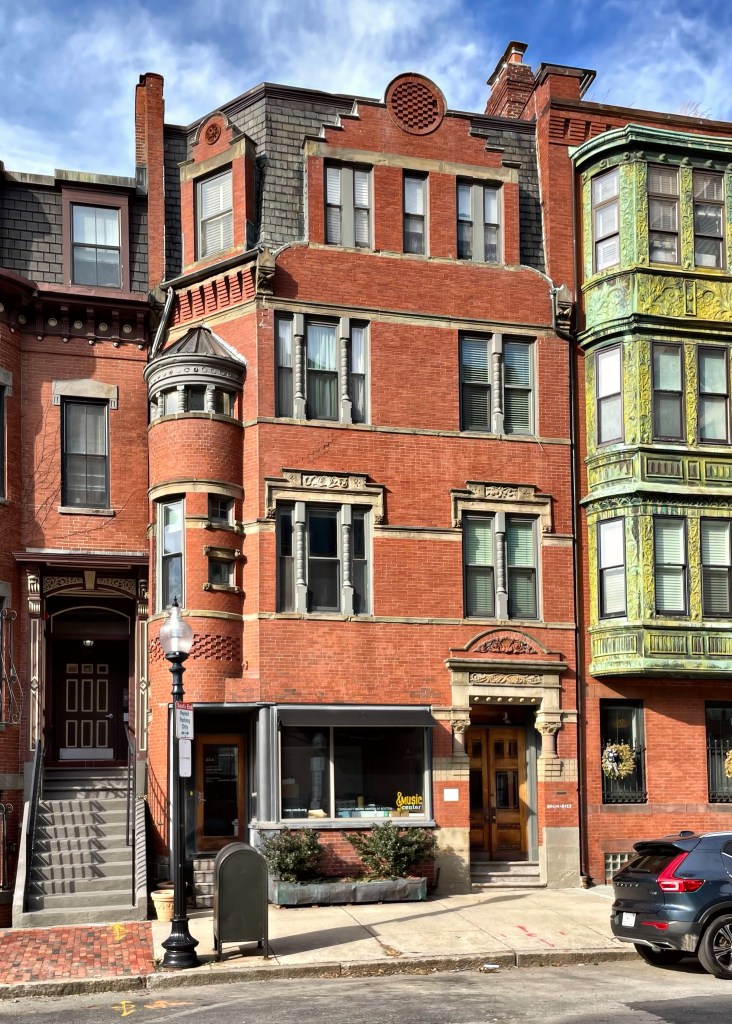
The Carlisle // 1880

In 1880, Jonas Gerlusha Smith (1817-1893) received a permit to erect a multi-family apartment building on Warren Avenue in present-day South End. The lot was close to his personal residence at 13 Warren Avenue and would have been easy to maintain and oversee tenants in the building. Mr. Smith hired 26-year-old architect Arthur H. Vinal, who furnished the plans for the handsome Queen Anne building. Vinal would later become the City Architect of Boston from 1884 to 1887, designing the High Service Building at the Chestnut Hill Reservoir just seven years after this building. By the late 1880s, the building was known as The Carlisle and it remained in the Smith family holdings under Walter Edward Clifton Smith until the 1930s. Walter attended the Cambridge Episcopal Theological School and later worked at various churches in the Boston area, serving as pastor in his later years. He lived on Follen Street in Cambridge while he held the Carlisle for additional income. Under new ownership in 1950, a retail storefront was added to the first floor which was occupied as a florist for some years. In 1979, after years of deferred maintenance, the property was purchased by Louis G. Manzo and his son David W. Manzo, who meticulously restored the building over time into the time-capsule that it is today!

Horatio Harris Villa // 1857

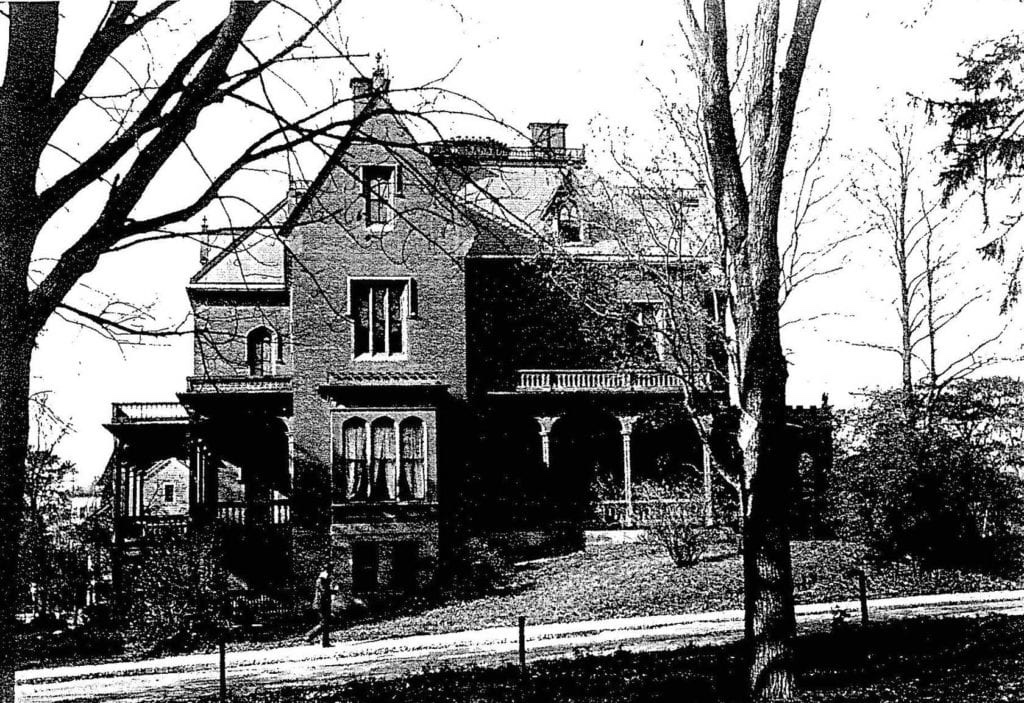
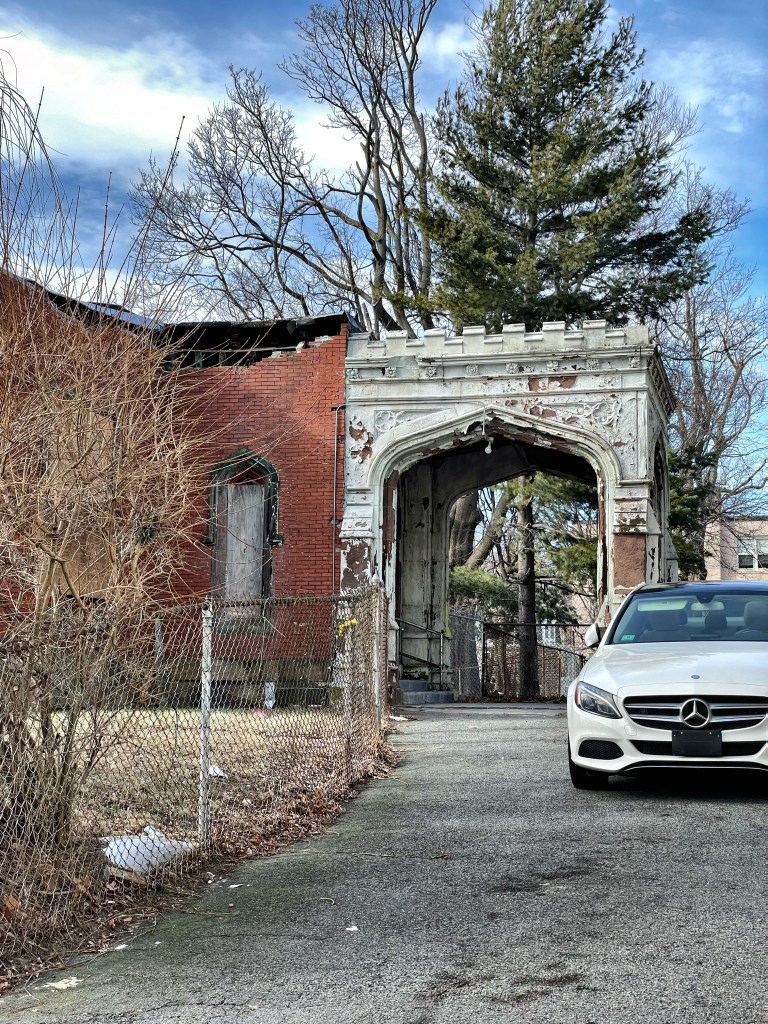
Not much remains of one of Roxbury’s once grand rural estates, but as there is some left, I want to feature it before it’s all gone, possibly any day now! Horatio Harris was born in Dorchester (present-day South Boston) in 1821 and ran a prominent auction house in Boston. He built his country estate in Roxbury beginning in 1857 in the Gothic Revival style, adding on and updating numerous times. During the Civil War, the firm of Horatio Harris & Co. obtained the contract to sell at auction all goods which were confiscated by the United States’ land or naval forces and brought to Boston. He made a lot of money and added to his land holdings and estate house in Roxbury. The mansion’s construction was timely as Roxbury was transitioning from a rural town, with farms and country estates of wealthy Boston merchants, to a streetcar suburb, increasing the land value of his holdings. The estate included nearly 30 acres of meandering paths, a lake with an island, outbuildings, and an observation tower – one of which remain today besides the ruin of the former mansion. Horatio died in 1876, in the decades following his death, his heirs began subdividing the estate, developing some and selling other plots off for houselots. By the early 1900s, Jewish people began moving into Roxbury, mixing with the predominantly Yankee population. By 1915, the Harris manor house was owned by the Hebrew Alliance of Roxbury, Inc. By the 1920s, they expanded facilities, adding a school building to the front of the former Harris Mansion, completely obscuring the facade of the old estate. In the 1940s, the upper stories were removed. Seemingly the death knell of the old Harris Villa was a fire in 2019, which gutted much of the remaining original fabric of the estate. All that remains is a bay window, some window trim details and a Gothic porte-cochere at the rear of the estate. See it before it’s too late!

Harriswood Crescent // 1889

Harriswood Crescent was built in 1889-90 at the height of Roxbury’s development as a streetcar suburb which coincided with the electrification of the streetcar lines in Boston. The area of Roxbury in which the Crescent is located, known at the time as Boston Highlands due to its rocky terrain and steep grades, was an extremely desirable residential location. As land values raised, middle and upper-class families looked for varied housing types that fit their demands. Seen as a great investment of the family estate, the heirs of wealthy businessman Horatio Harris (1821-1876) redeveloped lots on one side of a rocky park for fine townhouses, which were named Harriswood Crescent. The name was probably chosen for its historical associations with Boston’s Tontine Crescent and the great Georgian crescents of London and Bath in England. Architect J. Williams Beal designed the row, which was one of his first commissions upon returning to Boston in 1888 after employment as a draftsman at McKim, Mead & White and a long study in England to view architecture. Built at 15 separate units, the row of Tudor style houses is among the only of such developments in Boston, and New England at large.