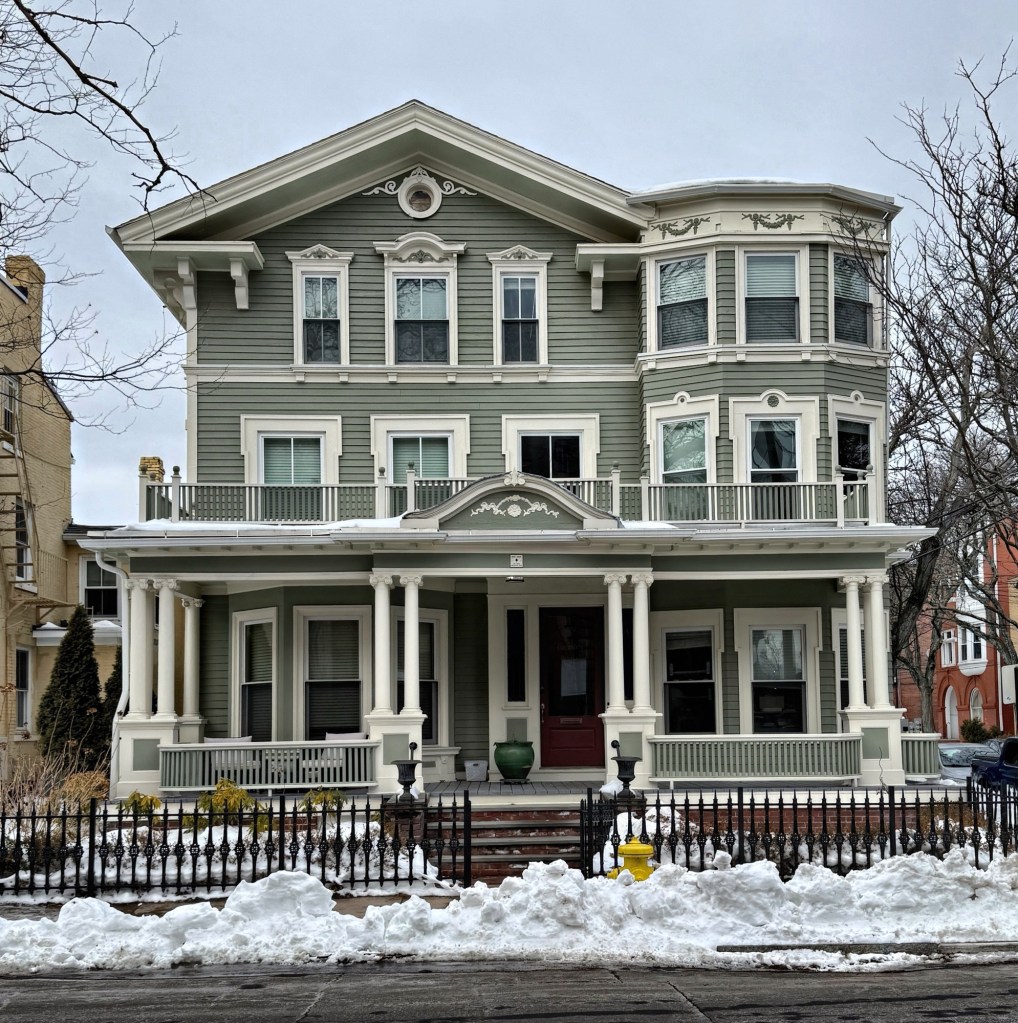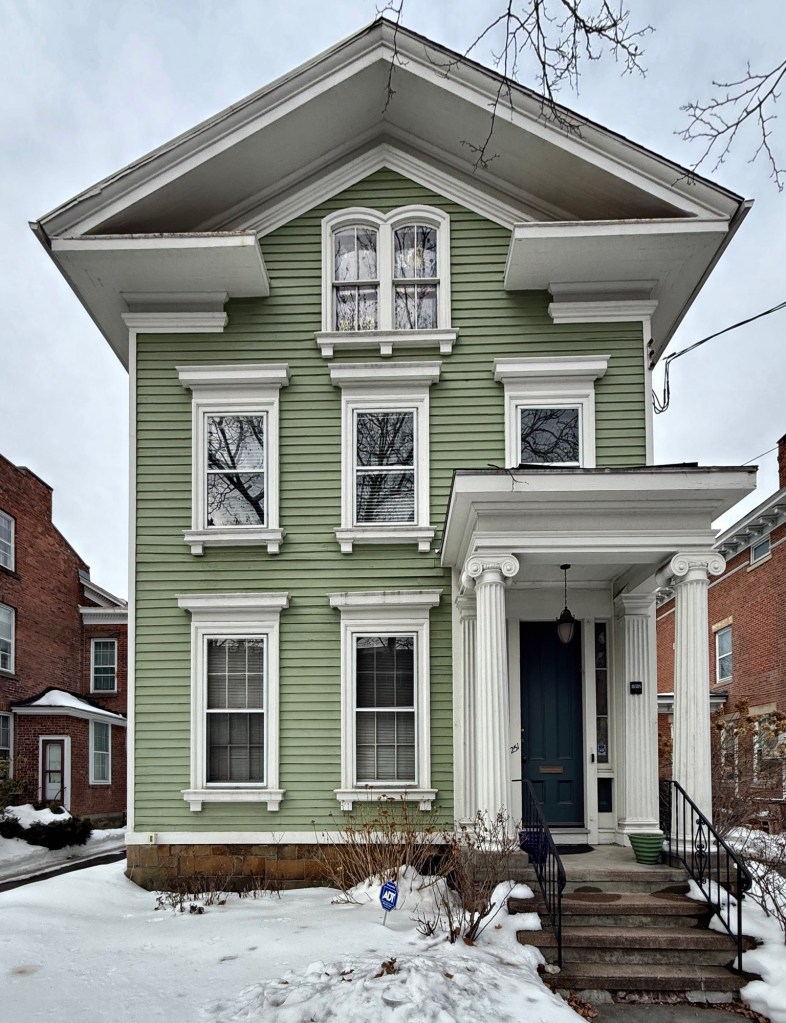
Elliott-Russo House // c.1835

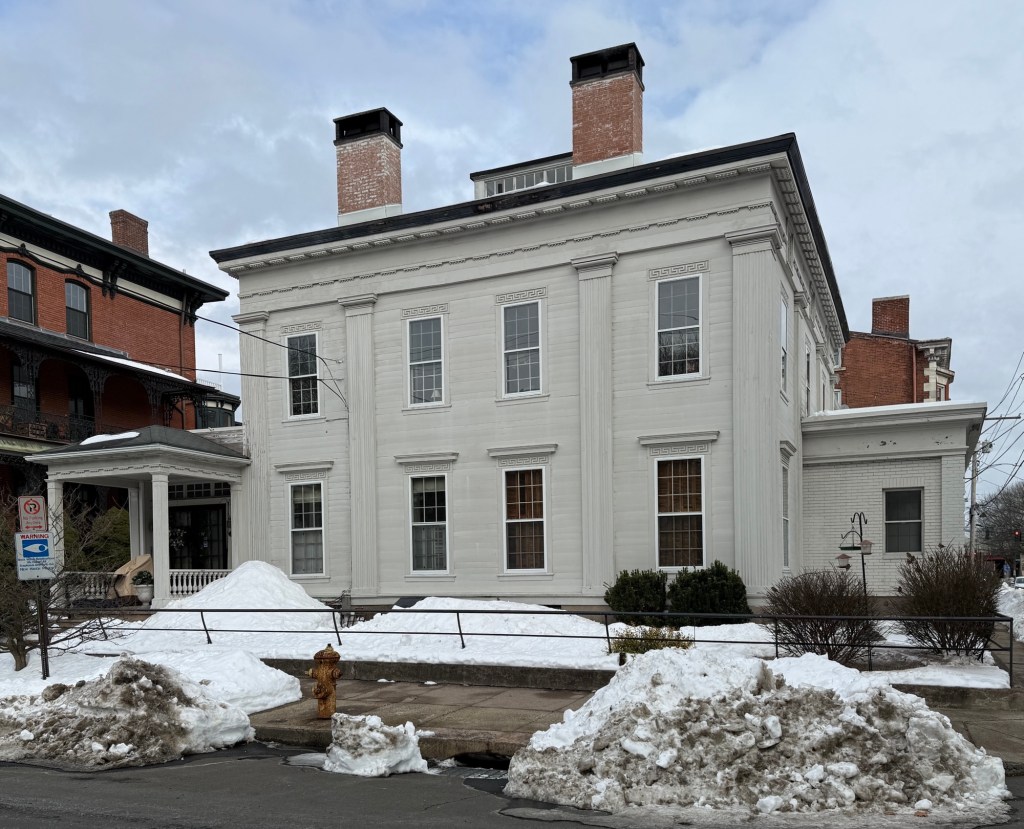
Located at the corner of Wooster Place and Chapel Street in the iconic Wooster Square neighborhood of New Haven, this early Greek Revival style house is a physical landmark showcasing the evolution of the neighborhood in the 19th and 20th centuries. The residence was built around 1835 either for or purchased early on by Matthew Griswold Elliott (1805-1892), a businessman who later engaged in politics and became Vice President of the New Haven Savings Bank and a director of the New York and Hartford Railroad. In 1890, the property was purchased by Paulo “Paul” Russo, an Italian immigrant who was born in 1859, in Viggiano, Italy. His family moved to New York in 1869 and then New Haven in 1872. Paulo opened a small market in New Haven which became the first Italian-owned business in the state of Connecticut. In 1893, Russo became the first Italian to graduate from Yale Law School and he helped foster and grow the local Italian-American community around Wooster Square. After Paul Russo, Michael D’Onofrio, also of Italian descent, purchased the home and along with his wife, brothers, and friends, D’Onofrio transformed the building into a funeral home for over a decade before the house was converted to condominiums. The Elliott-Russo House is a landmark example of a hipped-roof, Greek Revival style residence with smooth flushboard siding, pilasters dividing the bays, and unique Greek meander motifs in the window lintels.

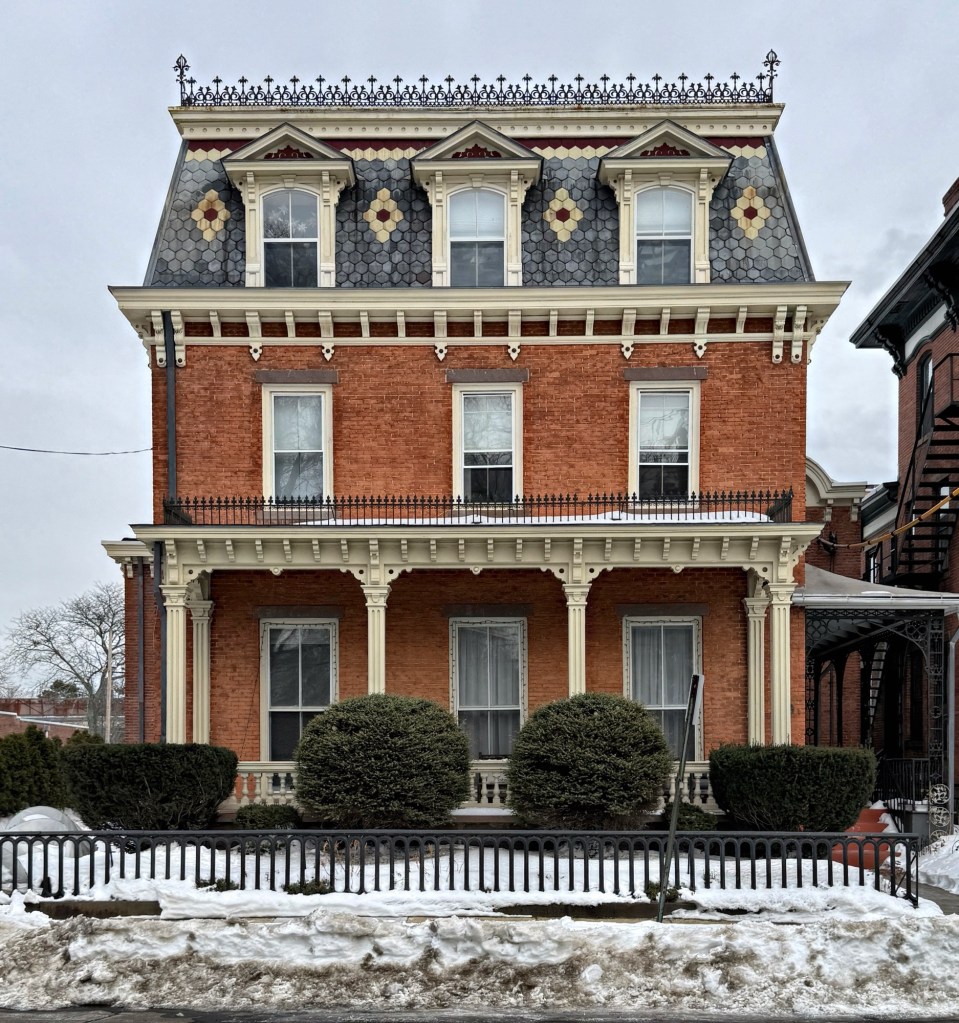
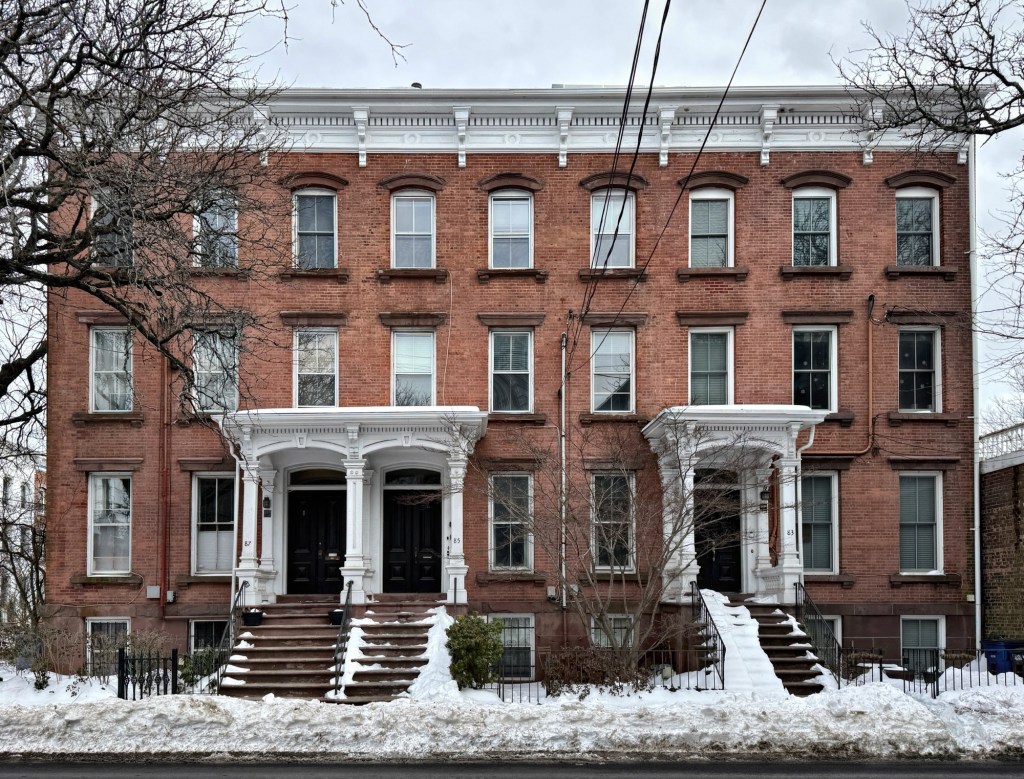
Olive Street Rowhouses // c.1865

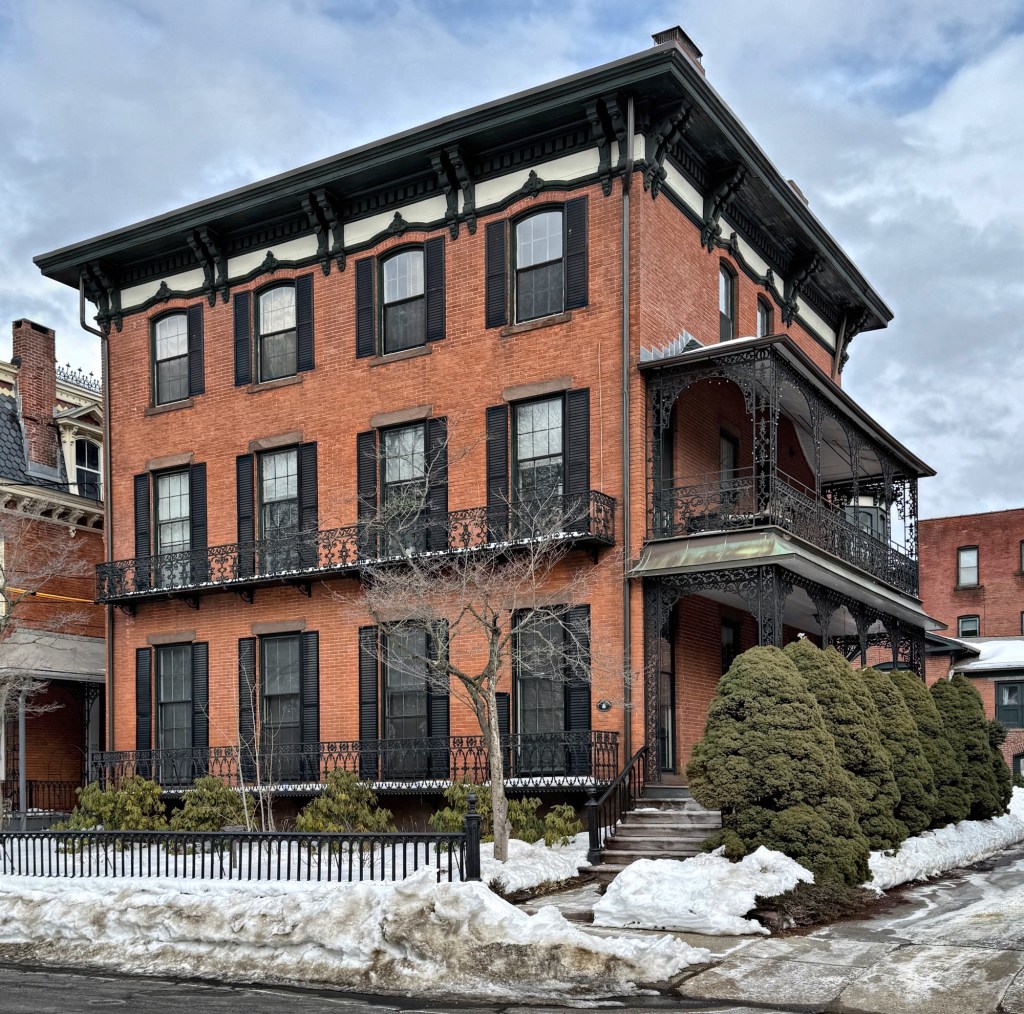
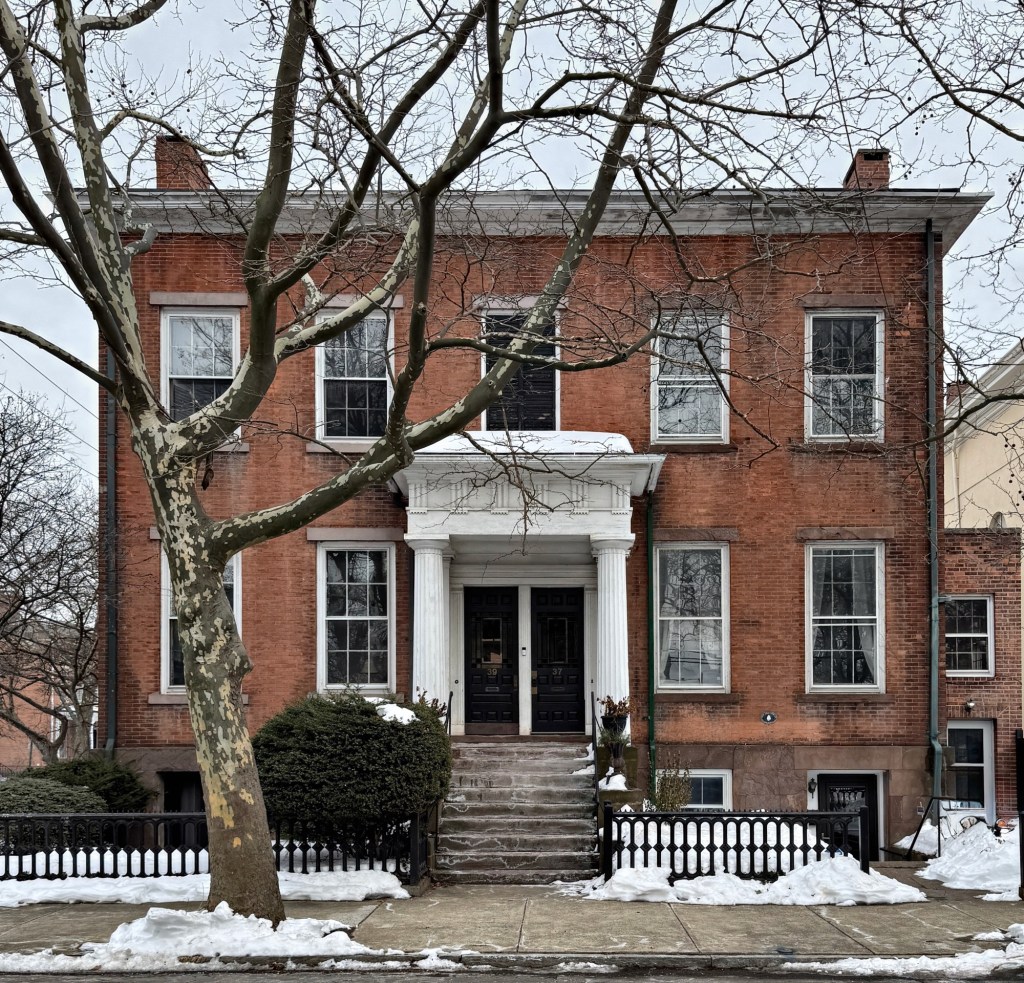
The Wooster Square area of New Haven, Connecticut, is comprised of a lovely collection of houses and institutional buildings from the 1830s through the late 19th century, showing the ever-changing taste of architectural styles from Greek Revival to Italianate to Second Empire and Queen Anne. These rowhouses on Olive Street serve as bookends to long rows of houses on Court Street, a narrow, one-way street radiating from Wooster Square. The buildings were developed by the Home Insurance Company, a fire insurance firm and developer that helped fuel the development of residential New Haven in the 1860s by investing in real estate, primarily with fireproof masonry buildings. These Italianate style rowhouses were built in the 1860s after the Civil War and were sold on speculation to middle-class families. All buildings retain the original bracketed cornices, brownstone sills, lintels, and basement facing, and projecting porticos at the entries.

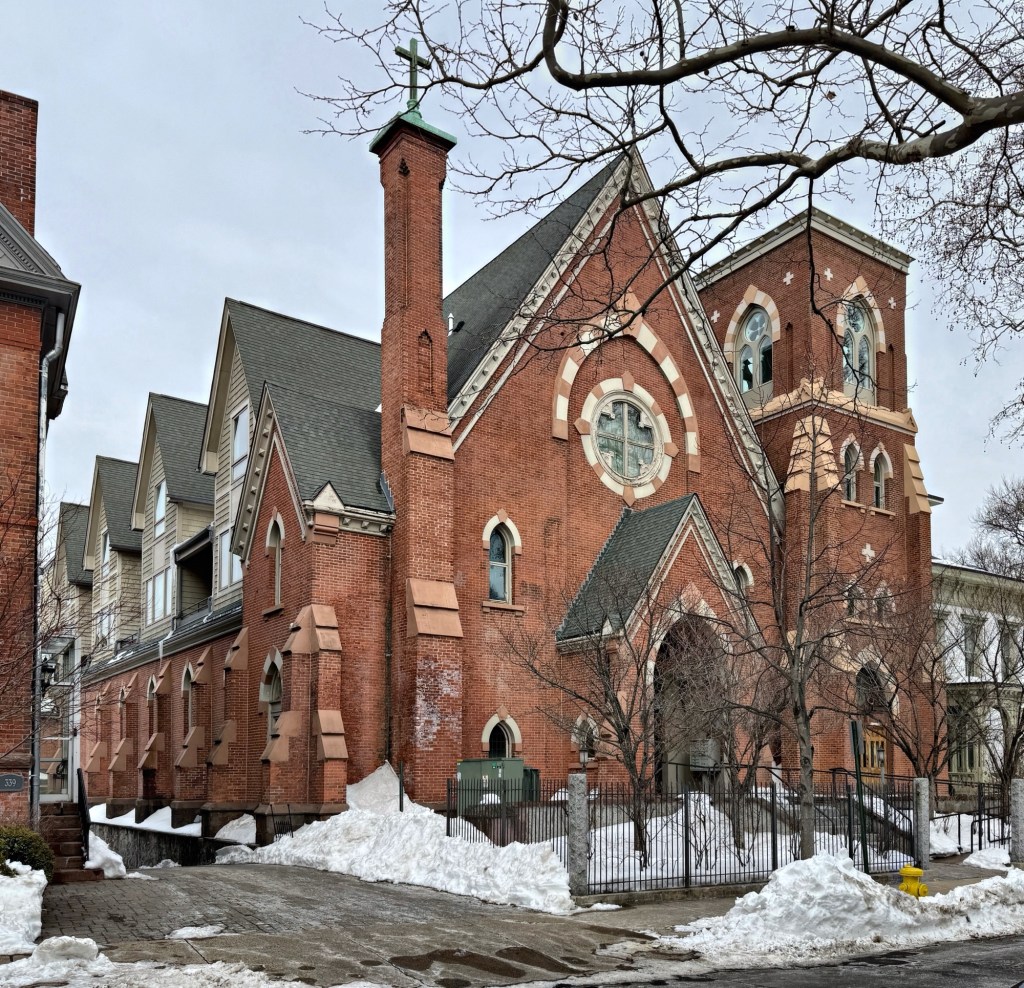
St. Michael’s Roman Catholic Church // 1904

St. Michael’s Roman Catholic Church in Wooster Square, New Haven, Connecticut, was established in 1889 to serve a burgeoning community of Italian immigrants and is said to be the oldest Italian Catholic church in the state. New Haven’s census of 1870 listed just ten Italian residents and by 1900, the census listed more than 5,000 Italian-born residents. Most of these Italian immigrants were drawn to New Haven for employment in the growing industrial and railroad industries and the proximity to New York, where many arriving immigrants passed through. New Haven’s Italian community centered around Wooster Square, where many today know all about the many Italian groceries and nationally known pizzerias. The Italian Community acquired a c.1855 church here by 1899 and following a fire, rebuilt the church in the current form. The New Haven-based architectural firm of Brown and Von Beren furnished plans for the Italian Renaissance Revival style renovations, which was completed in 1904 with bold central tower and stucco walls, retaining many original Italianate windows. The church has served as an important cultural and institutional landmark in New Haven for over 120 years and the congregation remains active.

Becton Engineering and Science Center, Yale // 1968

The Becton Engineering and Science Center at Yale is a behemoth academic building on Prospect Street containing offices, laboratories, a library, and an auditorium for the world-renowned institution. Discussions about a new engineering and science center began in 1965 after a generous donation by Yale alumni, Henry Prentiss Becton, and the University hired famous Modernist architect, Marcel Breuer to design the new building opposite the city’s Grove Street cemetery. For the design, Breuer used precast concrete panels and logical planning, to maximize interior space through the building which required less vertical columns in the floorplates. At the street, an elongated arcade provides views into the interior spaces and serves as a shelter from the weather. The arcade and facade above is supported by stunning buttress-like columns, a Modernist nod to the predominant Gothic buildings and character of Yale’s campus. A landmark example of the Brutalist style, the Becton Center serves as a great, and well-preserved example of an often maligned period of American architecture.

James Dwight Dana House // 1849

The James Dwight Dana House at 24 Hillhouse Avenue in New Haven, Connecticut, is a landmark early example of an Italianate style residence designed by a famed 19th century architect. Built in 1849 from plans by architect Henry Austin, the house was constructed for owner, James Dwight Dana (1813-1895) and his new wife, Henrietta Silliman and possibly funded by her father, Benjamin Silliman, a Yale professor who was considered “The Father of Science in America”. James Dwight Dana’s education in geology, in addition to his studies with his father-in-law, Professor Silliman, extended to the four-year United States Exploring Expedition between 1838–1842), in which Dana served as the staff geologist and mineralogist, exposing him to a wide-ranging variety of geological formations and minerals. Upon his return to New Haven, he married Silliman’s daughter and then moved into this stately home. Later in his career, Dana was responsible for developing much of the early knowledge on Hawaiian volcanism. In 1880 and 1881 he led the first geological study of Hawaii. The James Dwight Dana House has a three-bay front facade, with a single-story porch extending across its width, supported by wooden columns with unique capitals. The shallow roof has broad, overhanging eaves sheltering a unique corbelled brick cornice. The building was added onto in 1905 with similar architecture and was purchased by Yale in 1962. Today, the building is preserved by the University and houses the Institution for Social & Policy Studies (ISPS).

Derby Gas and Electric Company Offices // 1931

The former Derby Gas and Electric Company offices are located on Elizabeth Street in Derby, Connecticut, and stand as one of the great Art Deco buildings in New England. Built in 1931, the four-story office building features a limestone facade with bronze storefronts and light fixtures which were illuminated from the company’s plant nearby. In the 1950s the company was acquired by the United Illuminating Company.

Harcourt Wood Memorial Library // 1902

Derby’s main public library building, the Harcourt Wood Memorial Library, is located a few blocks from the city’s downtown on a unique triangular lot formed by Elizabeth and Caroline Streets. The one-story library is one of the finest of its period in all of New England and is built primarily out of Ansonia granite. The library was designed by architect Hartley Dennett and is notable for its Colonial Revival style porticoed entrance and distinctive rounded Flemish gables on the side walls. The interior is said to retain most of its original woodwork and many of its original furnishings. The building was constructed in 1902 following the donation of land and funds for its construction by Hamilton Holton Wood, a native of Montreal who made his fortune operating Derby’s streetcar railway system. The library is named in honor of Wood’s son Harcourt, who died at the age of 12 in 1897. The community does a great job at preserving the structure, which is one of the finest of its type in the region. 

Former Derby Savings Bank // 1893

The former Derby Savings Bank stands at the corner of Main and Caroline streets and is one of the many handsome commercial buildings in Derby, Connecticut, which have been preserved. Designed in the Romanesque and Classical Revival styles, the building is adorned by terracotta, brick, and brownstone, with medallions depicting the date of incorporation (1843) and the date of this building (1893) which flank the Palladian window at the second floor. The bank occupied this structure from the date of its completion in 1893 until it built a new banking facility farther down Main Street in 1923. The bank again built a new building during the period of urban renewal in Derby’s downtown in 1976 when the modern structure at Main and Elizabeth streets was completed. The Modern bank is presently used as the City Hall.

Former Birmingham National Bank // 1892

The former Birmingham National Bank building on Main Street in Derby, Connecticut, is one of the finest buildings in the former industrial village of Derby (originally named Birmingham). The bank was originally chartered in 1848 as the Manufacturers Bank of Birmingham, with Edward N. Shelton as its first president, and became a national bank after the Civil War. Designed by architect Warren R. Briggs and constructed in 1892, the building features an elaborately detailed facade of red sandstone with terracotta trim in the Sullivanesque and Romanesque Revival styles. Like many local and regional banks in the mid-late 20th century, the bank merged with others and the building was vacated. Today, the former Birmingham National Bank building is occupied by the Twisted Vine restaurant.

Randall House // 1927

This handsome stone mansion in Derby, Connecticut, was built by industrialist Walter Randall (1868-1949) and his bride, Olive Vouletti Whitlock Randall (1870-1938), in 1927 on a tract of about 200 acres of farmland. Olive was a granddaughter of Isaac Merritt Singer, the inventor of the first practical sewing machine for home use, which made him one of the wealthiest men in the world. It is unclear as to who the architect was, but the stone residence was built in an English Tudor/Arts and Crafts style, possibly from stones taken from the 200-acre estate. The property was sold in 1950 to Harold and Ida Yudkin, who developed much of the land into a shopping center and housing development, but maintained this stone house and a smaller parcel surrounding it. That smaller parcel was purchased in the 2010s by a developer who restored the old house, and developed a small cul-de-sac of “green” homes on the aptly named, Singer Village Drive.