Derby Summer House // 1793

The Derby Summer House sits on the Glen Magna Farms property in Danvers, Massachusetts, and is a rare and excellent example of a formal 18th century garden house in the Federal Style. The structure was built in 1793-94 by Samuel Mclntire, the noted craftsman-carpenter of Salem, on the country farm of Elias Hasket Derby in South Danvers. The Derby Farm was sold off by the family, but in 1901, Mrs. Ellen Peabody Endicott, a descendant of the original owners, bought the Derby Summer House and transported it to Glen Magna Farm, their own summer residence. A shopping center now occupies the original location of the Derby Farm. Inside the structure on the first floor, there are two small rooms which are divided by a central hall that extends through the structure. The steps and vestibule at this level are surfaced in white marble. The second floor, where tea was served, was decorated in an Oriental manner. A wood parquet floor, dating from the first decade of this century is still in place. The structure with its carved figures has been studied and replicated by architects and historians for decades, but nothing beats the original.
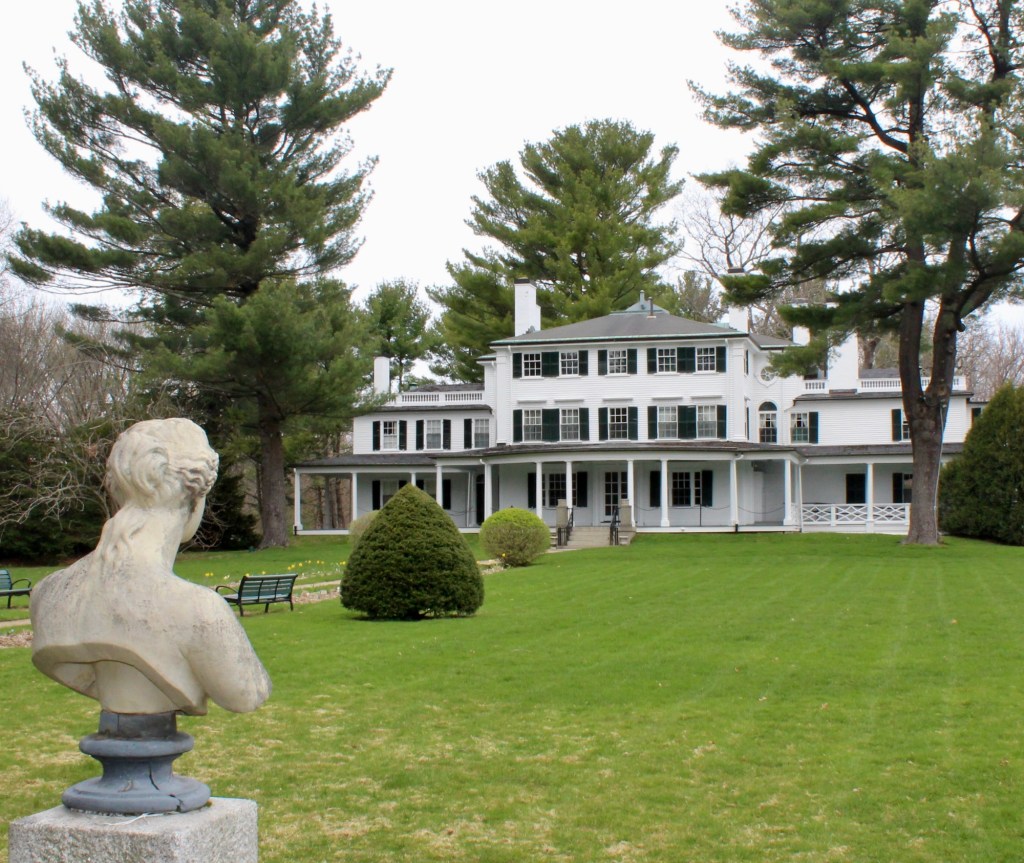
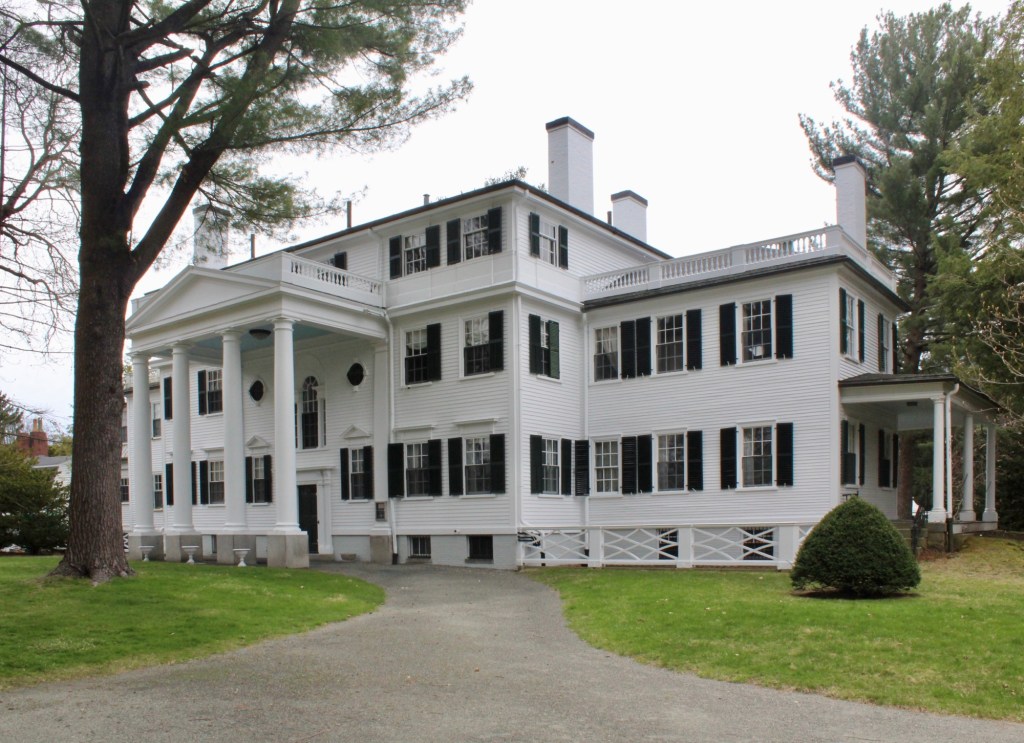
Glen Magna Farms // c.1790

Glen Magna Farms is a historic estate located in Danvers, Massachusetts, and it is one of the lesser-known historic properties of this stature. During the War of 1812, Joseph Peabody, the wealthiest Salem shipping merchant of his day, bought a 20-acre Danvers farm with a dwelling house. The c.1790 house was likely updated at this time in a higher example of the Federal style, and used as a summer residence the family would escape to during the warmer months. Peabody purchased additional property and Glen Magna grew to over 130-acres. William Crowninshield Endicott, who served as Secretary of War during the Grover Cleveland administration, married Ellen Peabody, granddaughter of Joseph Peabody in 1859. The couple would inherit Glen Magna and later hire the firm of Little, Browne, and Moore in the 1890s to renovate the mansion and update the gardens. Ellen Peabody Endicott would also have the Derby Summer House added to the grounds by 1901. In 1963, the Danvers Historical Society purchased the house and eleven acres of surrounding gardens which they painstakingly restored to their early 20th century condition. Glen Magna can now be rented out for weddings and other events!

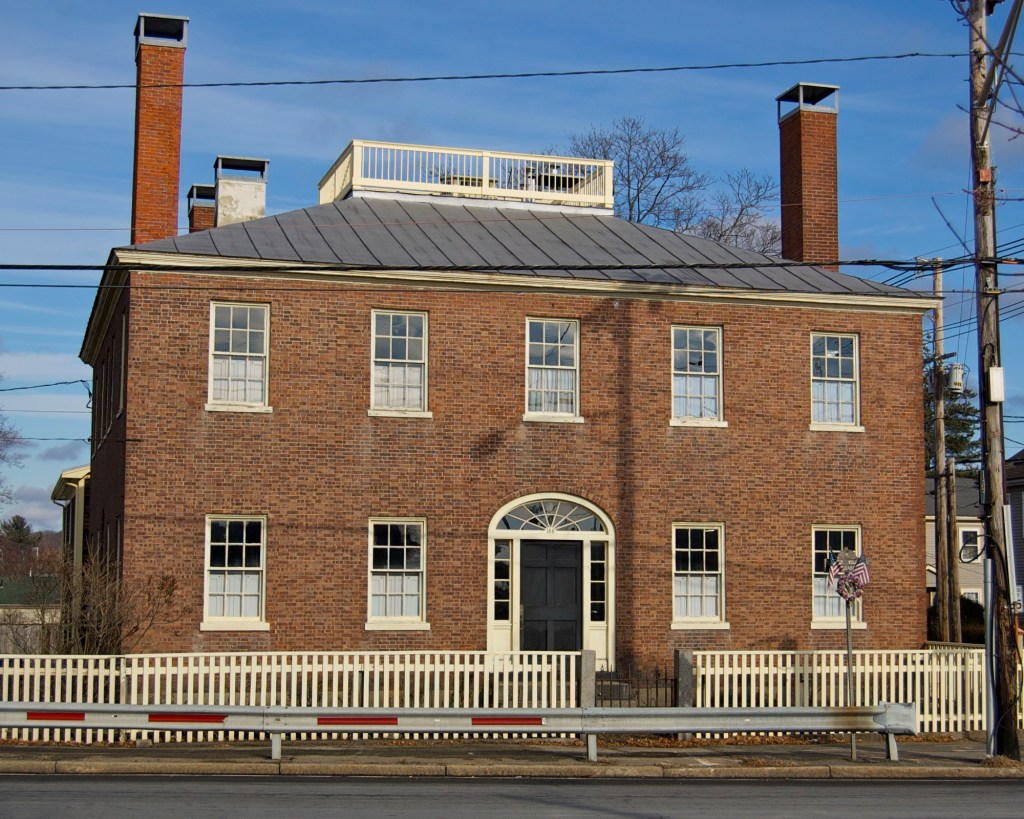
Fowler House // 1809

Photo courtesy of Wikimedia commons.

The Fowler House is located in the Danversport section of Danvers, Massachusetts, and is one of the town’s few brick Federal period homes. The residence was built in 1809 by builders Levi Preston and Stephen Whipple for Samuel Fowler Jr., an early Danvers industrialist and landowner in this part of town. The property was passed down through generations of the Fowler family and ultimately acquired by the Society for the Preservation of New England Antiquities (SPNEA, now known as Historic New England) as their second property acquisition in 1912. Uniquely, Historic New England granted life occupancy of the house to the two unwed Fowler sisters, who had resided here, even as it was converted into a museum. When bought by SPNEA, some members were concerned that the Fowler house was not grand or architecturally interesting enough to warrant its acquisition, Samuel Appleton, the founder, stated, “As might be expected, the Fowler home reflects the simple tastes of its owner. As seen from the square the house is as severely simple as it could be. It depends for its effect on its very simplicity and admirable proportions. The principal features of the house may be said to be simplicity, good taste, solid construction, splendid preservation, and homogeneity.” The property was eventually sold by Historic New England to a private owner, but a preservation easement by the Society ensures its preservation for the future. The Fowler House was recently listed for sale, and the property retains many historical features, including original ca. 1810 wallpaper in the main two-story entry hall and a large hearth in the main kitchen, its original floors, plaster, woodwork and other features.

Israel Putnam House // c.1648

The General Israel Putnam House in Danvers, Massachusetts, was built circa 1648 by Lieutenant Thomas Putnam on farmland that then consisted of 100 acres. In 1692, his youngest son, Joseph Putnam, lived here, inheriting the property over his half-brother, Thomas Putnam, Jr. (1652-1699), causing friction within the family. During the infamous witch trials and hysteria in Salem Village, Joseph Putnam was one of two people who took notes during the examinations of the first three to be accused of witchcraft in 1692 – Sarah Good, Sarah Osborne, and Tituba. From that point forward, he was one of the most outspoken opponents of the proceedings, which put him in direct conflict with most of the Putnam family, especially that of his half-brother Thomas. Fearing accusations against him by his half-brother, Joseph was said to have kept horses saddled at all times, ready to escape at a moment’s notice. He was never accused, though Thomas Putnam was responsible for the accusations of 43 people, and his daughter was responsible for 62. In 1718, Israel Putnam, the son of Joseph Putnam, and later Commander of the colonial troops at the Battle of Bunker Hill, was born in this house. It is the only extant structure with direct ties to Commander Putnam. During the Battle of Bunker Hill, Putnam is thought to have ordered William Prescott to tell his troops, “Don’t fire until you see the whites of their eyes.” This command has since become one of the American Revolution’s notable quotations. It was given to make the best use of the low ammunition stocks that the troops had. The Putnam House remained in the family into the 20th century, and due to highway and commercial expansion, the property now sits in the middle of a cloverleaf intersection of two highways. The house was given by the Putnam family to the Danvers Historical Society in 1991, but as of 2020, the Putnam family once again owns the property. The house is not holding up well and I could not locate plans for restoration or preservation of it online. This house deserves to be preserved.

Thomas Haines House // 1681

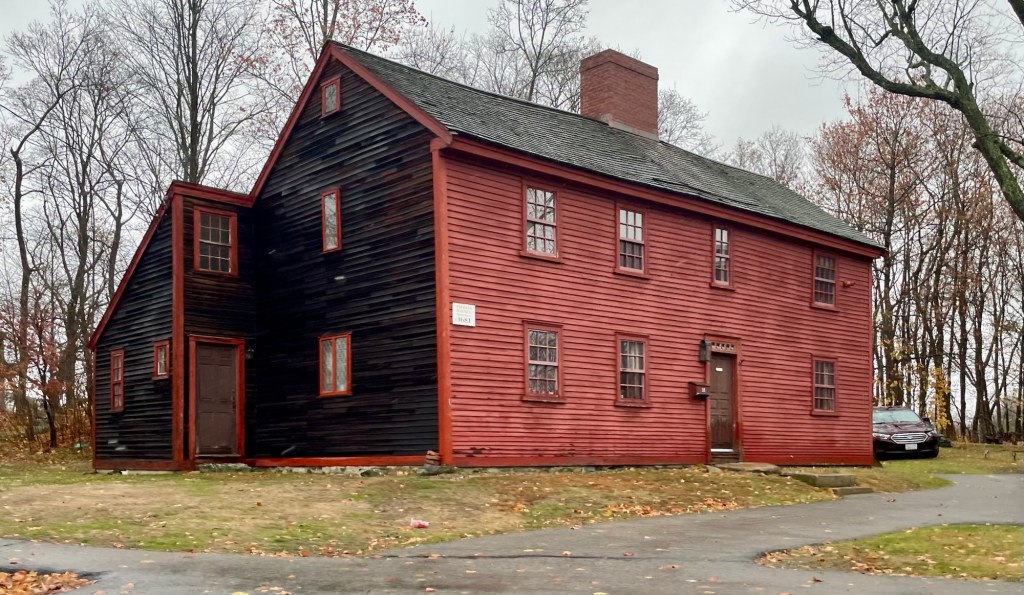
There aren’t many extant buildings with direct ties to the Salem witch trials of the 1690s, but this First Period house on Centre Street in Danvers is one of them! This is the Thomas Haines House, built in 1681 for Thomas Haines. During the witchcraft hysteria of 1692, Thomas testified in the trials of Elizabeth Howe and John Willard, who were accused of witchcraft. Elizabeth would be executed by hanging on July 19, 1692 and John was hanged on August 19, 1692. Less than a year following the frenzy of the trials, Thomas received a license to keep a public house of entertainment & sell strong drink as an innholder. He remained here until 1703, when he sold his home and land to John Allen, a gunsmith, and removed to Salem, New Jersey. The First Period home with saltbox roof is in great condition and was restored to its historic appearance in the 20th century. The property is privately owned.

Jeremiah Page House // 1754

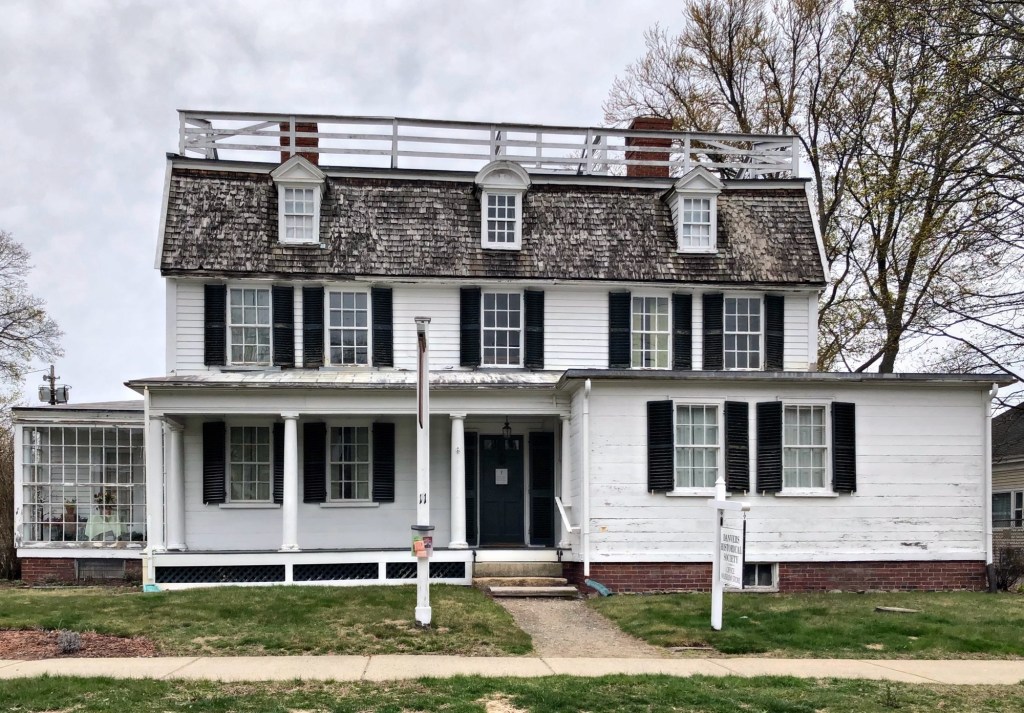
In 1754, a 32-year-old brickmaker Jeremiah Page built this large, gambrel-roofed Georgian house in Danvers, Massachusetts, for his young family. Jeremiah and his first wife, Sarah, raised nine children here and dreamed of liberty from England. Following the Tea Act, passed by British Parliament in 1773 that granted the British East India Company Tea a monopoly on tea sales in the American colonies, Page was said to have demanded that “none shall drink tea in my house.” One evening when her husband was out, Sarah Page is said to have invited several women from the neighborhood up to the porch atop the Page House’s gambrel roof to enjoy tea. Larcom quotes Page as telling her friends, “Upon a house is not within it,” thereby finding a loophole around her husband’s directive. This legend was enshrined in the poem “The Gambrel Roof” (1874) by Lucy Larcom, who knew Sarah Page’s granddaughter. Jeremiah Page would fight in the Revolution, serving as a Captain. The Page House remained in the family for two more generations, Sarah Page’s daughter in-law, Mary Page died in 1876 and her will put the property into a trust with the stipulation that once there were no longer any Page descendants to live there, the historic house was to be torn down. After Mary Page’s daughter Anne Lemist Page died in 1913, the trustee planned to demolish it according to her wishes. The Danvers Historical Society sprung into action and sued to oppose the will, fighting to preserve this significant home. They won, and relocated the home a block from Elm Street to its present site on Page Street, where it stands today. The Danvers Historical Society maintain the structure to this day, including the “porch” at the roof where the tea party once took place.

Danvers Town Hall // 1854

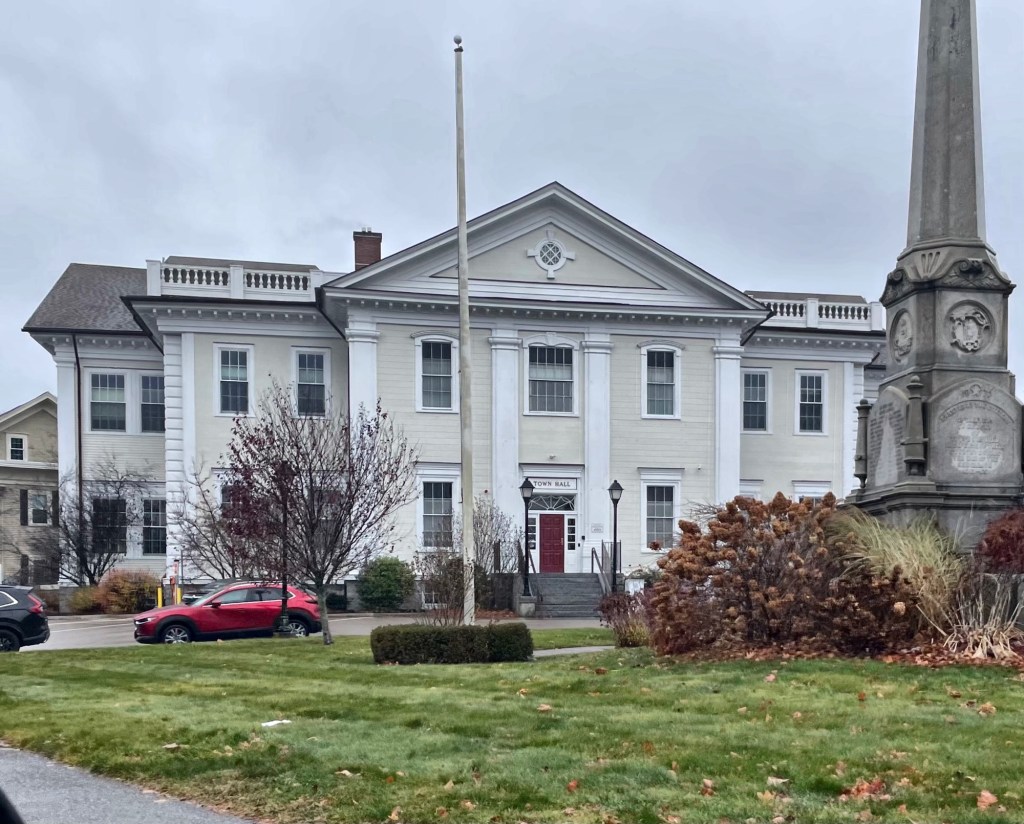
The land that is now Danvers, Massachusetts, was once owned by the Naumkeag branch of the Massachusett tribe. Permanent European settlement began in 1636, when present-day Danvers was known as Salem Village, a village of Salem. The historical event for which Danvers is best-known is the Salem witch trials of 1692, which began in the home of Rev. Samuel Parris, in Salem Village. Danvers officially separated from Salem in 1752 and is likely named after Sir Danvers Osborn, a Colonial Governor of New York. In 1757, Massachusetts incorporated Danvers as a town and, according to legend, King George II later vetoed this act of incorporation and returned his decree with the message, “The King Unwilling.” They simply ignored this royal veto, which was later included on the town’s seal! Danvers would eventually build a central town hall building , this structure, in 1854 which partially functioned as a high school as well. Plans were drawn by the Salem architectural firm of Emmerton & Foster in a pleasing blending of Greek Revival and Italianate styles. As the town grew, the building was expanded in 1883, and in the 1890s. When a new, purpose-built high-school was constructed elsewhere in town in the early 1930s, it was decided to renovate the town hall building. Due to financial constraints during the Great Depression, the town got a lifeline by the Federal government, who in 1934, appropriated $6,500 to the town for a renovated town hall as part of the New Deal. Additional funds from the WPA went to murals (many of which still adorn the walls inside). Architect Lester S. Couch of Danvers, a partner in the firm Little & Browne, oversaw the renovations in the Colonial Revival style.

Spofford-Root House // c.1830

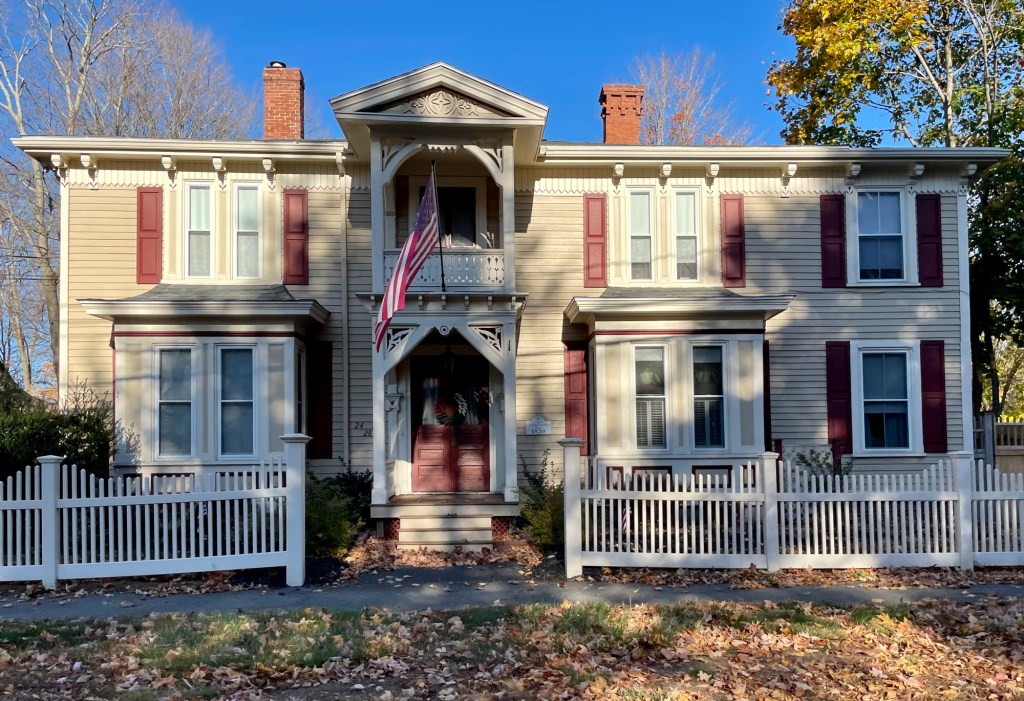
The Spofford Family was one of the earliest to settle in present-day Georgetown, with the earliest enclave of homes built along Andover Road in the western part of town. A few generations later, subsequent family members would built in the town center, taking advantage of the growing commercial and business community. This Federal period home (with later alterations) was built around 1830 for Greenleaf Spofford (1801-1887) the same year as his marriage to Emily Willmarth. The couple would move out of town and sold the home to Dr. Richmond Barbour Root (1846-1930),  the second of a highly respected, three generation family to practice medicine in Georgetown. The overlay of machine-sawn Stick Style decorative porch, bracketed cornice and bay windows were likely added by Root sometime after the Civil War. Unlike most owners of Federal and Greek Revival-style dwellings, Dr. Root may have held a valid professional interest in appearing as up-to-date as possible with a “modernized” home that also served as the site of his office and consulting rooms.

Moody-Hall House // 1830

Transitional Federal/Greek Revival style houses are among my favorite. You can see the emergence of Classical architecture blending with American architecture with features of both styles, which work well together. This example can be found on Elm Street in Georgetown, Massachusetts. The dwelling appears to have been built for Dr. George Moody, one of four physicians in Georgetown in 1840, who began his practice in town in 1830. In his first years there, he oversaw patients during Typhus and Dysentery outbreaks and was credited with having determined that a high sulphur content in the local water supply accounted for the increased cases. Dr. Moody died in 1866, and his widow continued to live in the house until her death in 1880, after which it was sold to Mrs. Charlotte Sawyer Hall, the widow of local shoemaker Seth Hall.

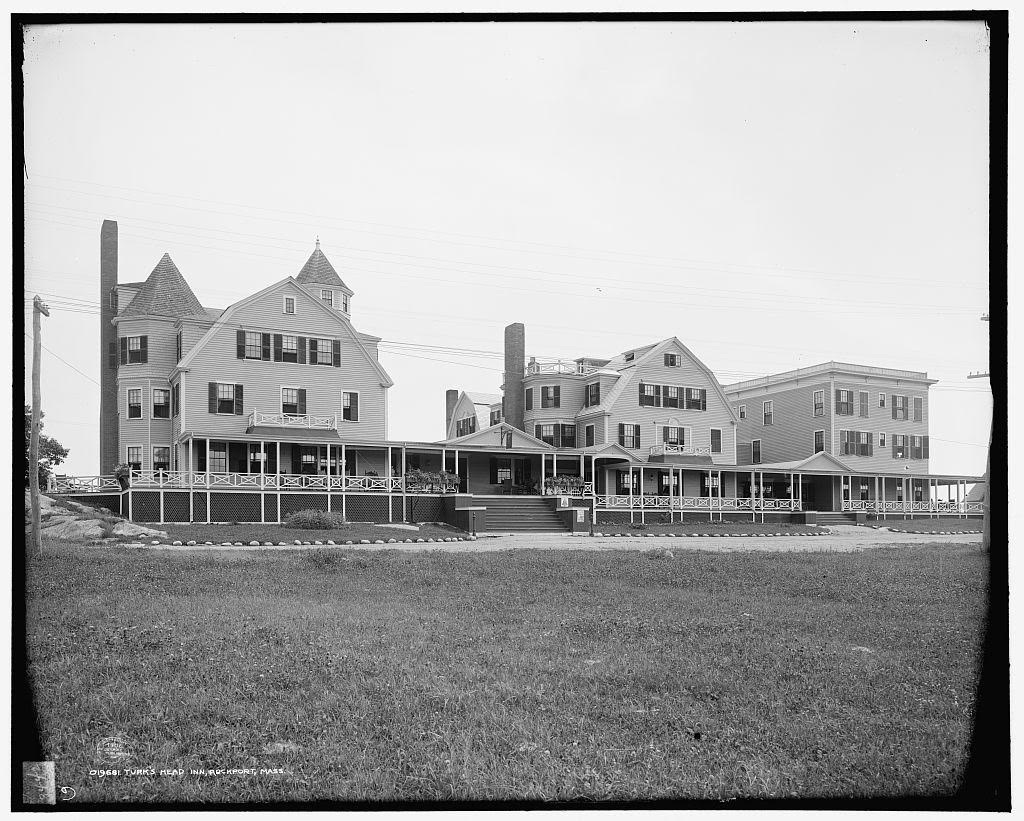
Turk’s Head Inn // 1890-1970

The Turk’s Head Inn was once Rockport’s grandest getaway. For those uninterested in building their own summer cottage to spend the along the coast of Massachusetts, luxury summer resorts provided summer rentals for those escaping the hot and polluted cities in favor of cool ocean breezes. Once situated in the  Land’s End section of Rockport, the Turk’s Head Inn, had sweeping views of the coast and islands in the distance. The initial portion was built from 1889 to 1890 by builder J. M. Wetherill of Rockport based on plans by architect H. M. Stephenson of Boston. It was expanded and became this rambling, E-shaped Colonial Revival structure with a seaboard frontage of two hundred feet and wraparound verandas over three hundred feet in length. Over the years, the Turk’s Head Inn suffered a number of fires, and its central and southeast wings were rebuilt, the latter in 1905 by then owner C.B. Martin. With a peak capacity of 200, the hotel, uncharacteristic of the regional hospitality industry, remained in operation for eighty years before it was closed down, partially destroyed by fire, and the remains removed in 1970.