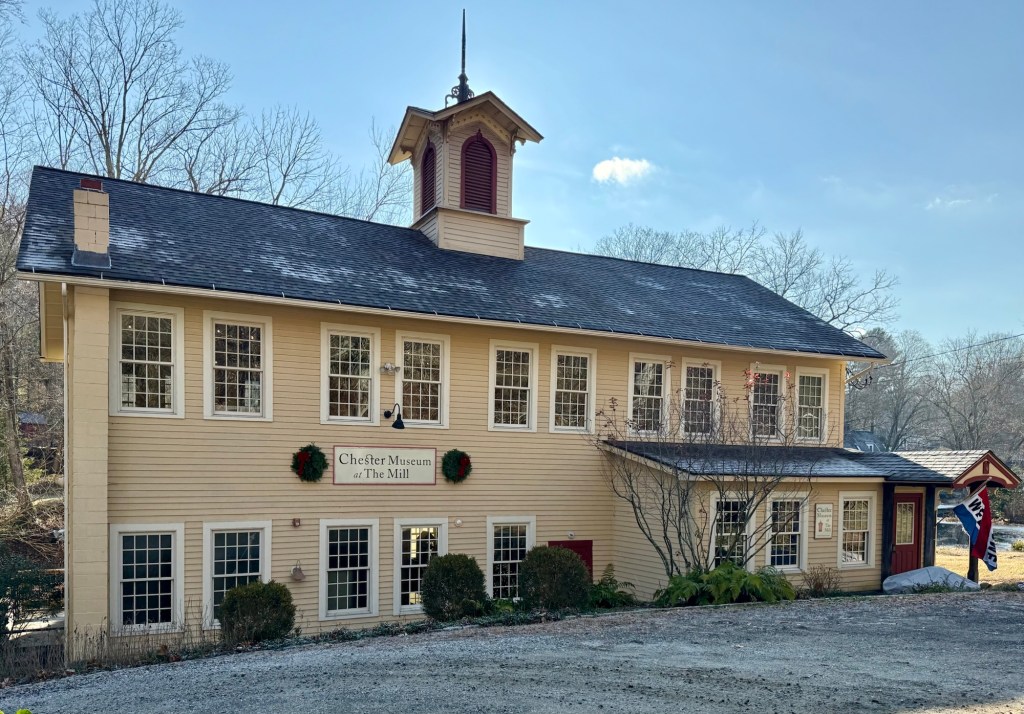
C. L. Griswold Mill // 1850

Tucked away on the banks of the Pattaconk Brook in Chester, Connecticut, this mid-19th century industrial building contributes to the town’s vibrant industrial past. Built in 1850 by Charles L. Griswold (1822-1901) the mill ran on water power and originally produced auger bits, wood screws, corkscrews and other light hardware under the name Chester Manufacturing Company, before closing in 1919. In the early-mid 20th century, the building was occupied by the Solar Masonic Lodge No. 131, who renovated the building and removed all the original factory equipment. The National Theatre of the Deaf bought the building in 1983 and restored the original openings, using the building for rehearsal space and small performances until the theater company moved to Hartford in 2000. With its future uncertain, the old Griswold Mill was purchased by the Chester Historical Society, who opened it as the Chester Museum at The Mill in 2010.

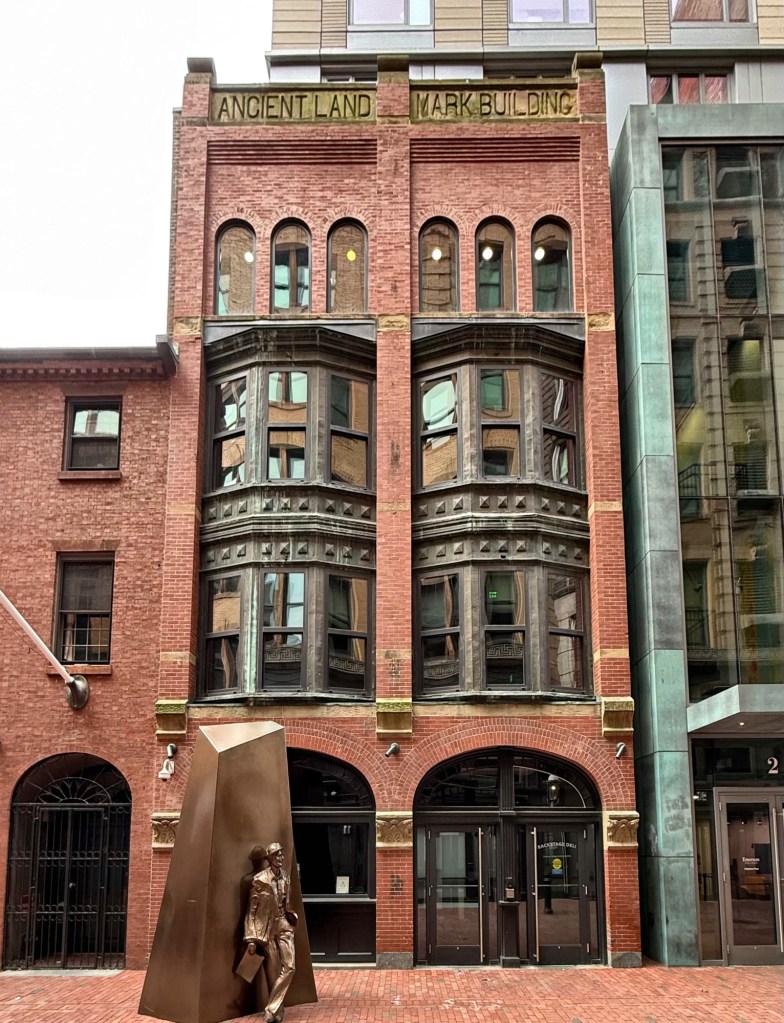
Ancient Landmark Building // 1887

Tucked away on Boylston Place, a dead-end pedestrian way off the bustling Boylston Street in Boston, you will find a collection of 19th century buildings that have miraculously survived over a century of growth, urban renewal, and rebirth. This is the Ancient Landmark Building, constructed in 1887 as a IOOF Lodge. The Independent Order of Odd Fellows (IOOF) is a non-political, non-sectarian international fraternal order established in the United States 1819. The four-story Ancient Landmark Building blends Queen Anne and Romanesque Revival styles effectively with its two arched openings, arched windows in the top floor and two-story metal projecting bays. In the 1970s, the building was listed as “substandard” by the infamous Boston Redevelopment Authority, and luckily did not get demolished as part of its Urban Renewal push. The property was eventually acquired by Emerson College, a great steward for historic buildings and cultural institutions, who restored the building and built a new dormitory above and alongside the Ancient Landmark Building. The project preserves the important streetscape of Boylston Place, while providing needed dormitories for the school.

First Congregational Church of Rockport // 1805

Fondly referred to as the “Old Sloop” in town (a name conferred by local fishermen in the 1800s), the First Congregational Church of Rockport stands as one of the most prominent landmarks in the old village. The village of Sandy Bay (now downtown Rockport) had a growing population since the 1700s. Prior to 1755, churchgoers from Sandy Bay made the journey every Sunday by horse or foot in good weather to the parish in Annisquam or the First Parish in Gloucester, and in poor weather, met in a small log schoolhouse on this site. Eventually, a church building was erected in town, which was used until after the Revolutionary War. In 1805, a new meetinghouse was built where it stands today. In 1814, the British invaded Sandy Bay colony and residents rang the Old Sloop’s bell to sound the alarm. British forces fired a cannon at the bell to silence it, but hit the steeple instead. A replica cannonball can be seen to this day in the steeple as a nod to that historic event. In 1840, the people of Sandy Bay voted to establish the Town of Rockport. At that time, the meetinghouse was completely redecorated and the steeple enlarged. After the Civil War, the church was outgrown, and in 1872, the Old Sloop building was cut in half and separated by about twenty feet with an addition built in the middle. At that time the steeple was enlarged and strengthened to accommodate a new and heavier bell and the Town Clock. In 2015, the church began a campaign to replace the deteriorated steeple, which was rebuilt, faux cannonball and all!