Dr. Andrew Harris House // c.1820

This house is located across from the iconic Prudence Crandall House in Canterbury, Connecticut, and is another excellent example of a high-style Federal home in the town’s main village. Built in circa 1820, this residence was the home of Dr. Andrew Harris (1787-1840), one of two physicians in Canterbury in the early 19th century. After Dr. Harris’ death, the property was owned by Hiram and Nancy Waldo, who altered the house with the addition of a Victorian observatory at the rear, two-over-two sash windows, and an entry porch with paired door entrance.

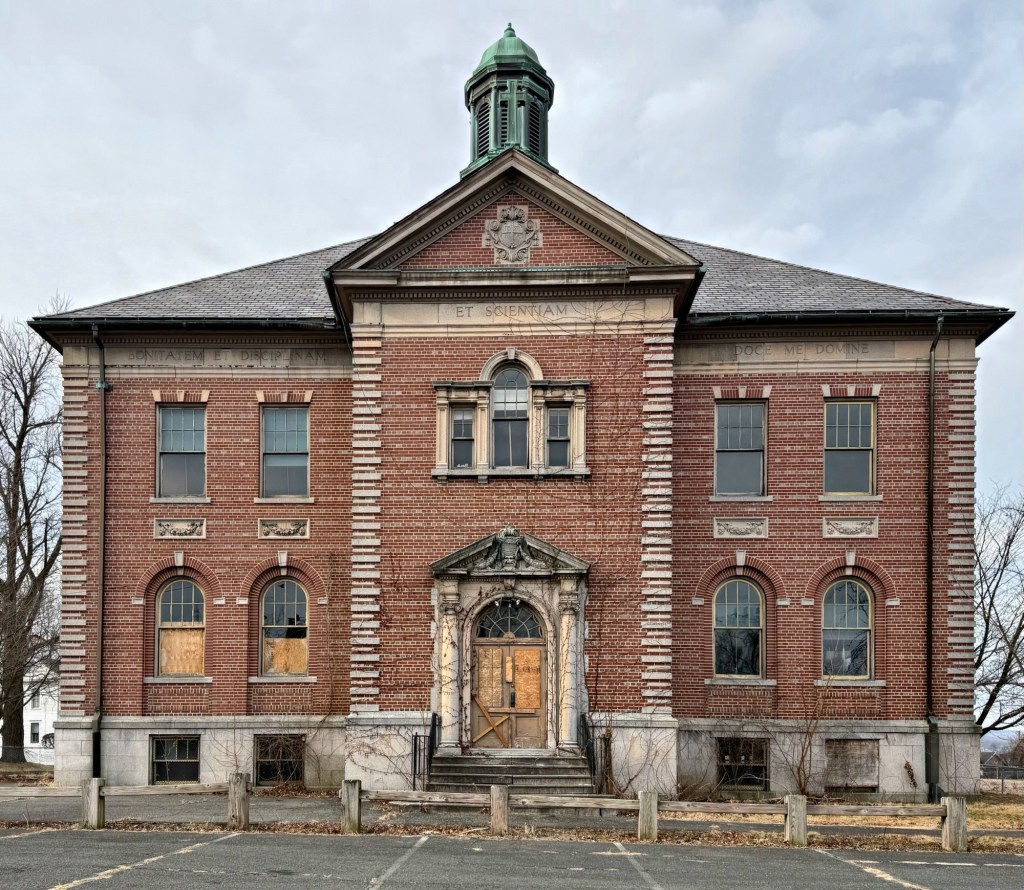
Holy Name Science High School // 1925

The third and final extant building on the former Church of the Holy Name of Jesus complex in Chicopee, Massachusetts, is this former school building, a stunning example of Colonial Revival architecture. Located behind the former church and rectory buildings, this three-story building was built in 1925 as a “Science” building to accompany an existing girl’s high school. Inside, the building had a “Commercial” department, where young girls could learn important skills like banking, stenography, and typing; with the second floor containing traditional science classrooms and labs along with the school library. Springfield-based architect, John W. Donahue, who specialized in ecclesiastical buildings in Western Massachusetts, designed the building in the Colonial Revival style with brick and stone construction, an elaborate entrance and Palladian window on the second floor facade. The school building closed in the late 20th century, and has seemingly sat vacant ever-since. I sincerely hope this important building could be incorporated as much-needed housing for Chicopee residents!

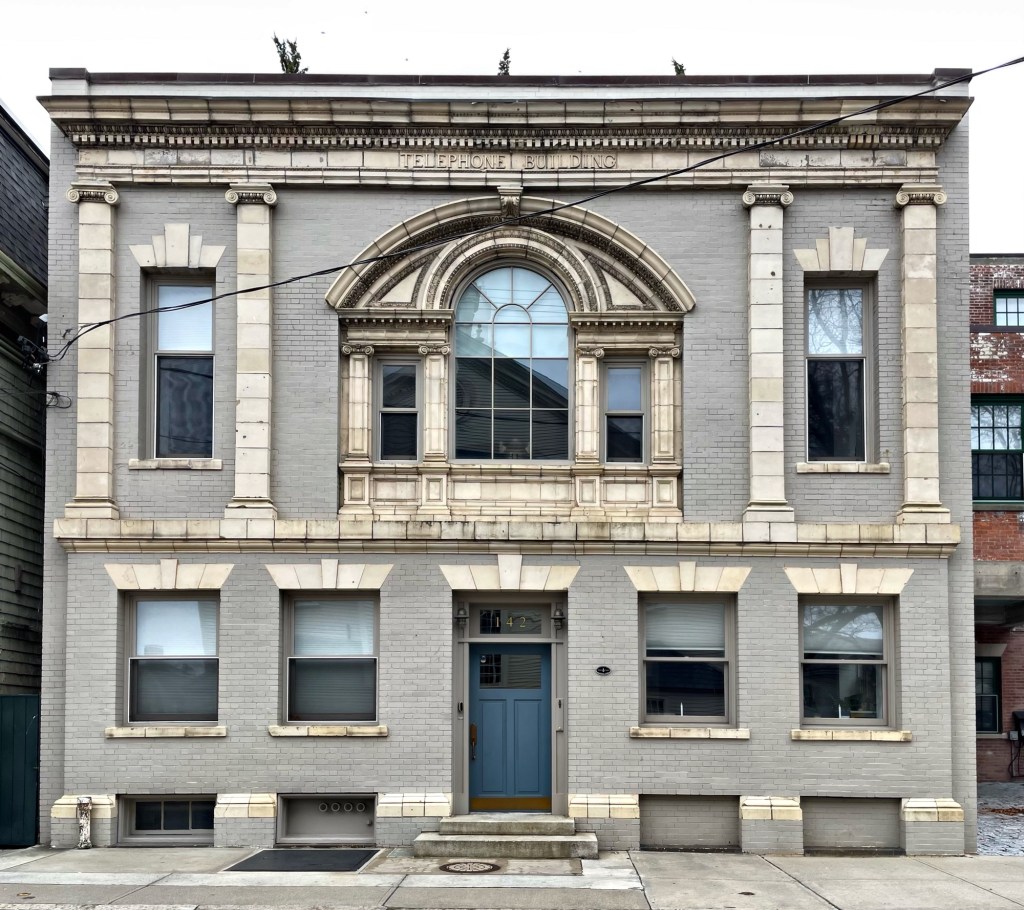
Newport Telephone Building // c.1897

Before the days of virtual meetings, texting, and calls by cellphone, residents of towns and cities all over New England needed central telephone exchanges to connect them to those who they were trying to reach. Telephone exchange buildings were typically located in downtown areas and were often architectural statement-pieces by telephone companies. This example in Newport, Rhode Island, is located just behind Trinity Church and was designed around 1897 by the firm of Perkins & Betton of Boston. The building is constructed of brick (now painted) with terracotta trim details, which really pop. The oversized Palladian window with arch, pilasters, and cornice are all terracotta installed by the Waldo Brothers, contractors. The building was converted to residential use and was sold for $2.5 Million in 2020.

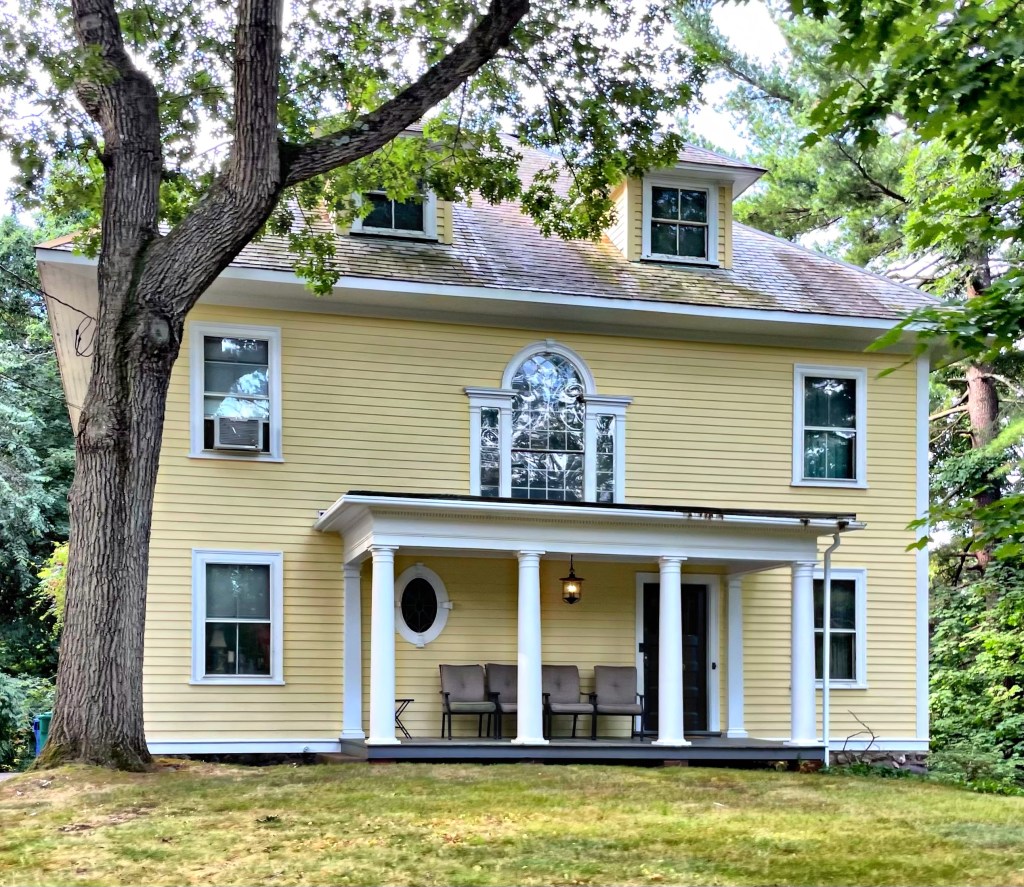
Eva Southwick House // 1898

Okay, there is just something about this house that is so intriguing and unique and stands out among all the other (thousands) of Colonial Revival style houses I have seen. I just can’t quite put my finger on it! This late 19th century beauty was built in 1898 for Eva Bailey and Francis Southwick eight years after their marriage and after the birth of their children. It is unclear who the young family hired as an architect to design the home, but they definitely went with a loose adaptation of the Colonial Revival style in an American Foursquare form. The house has a large Palladian window and a minimal front portico supported by Doric columns.