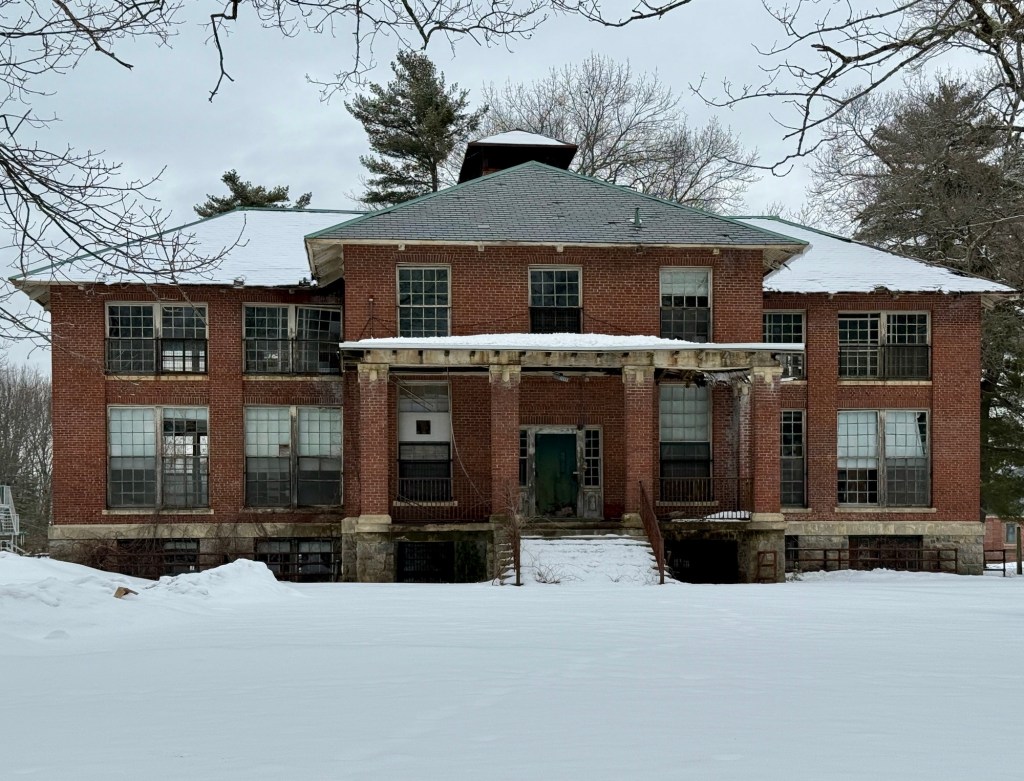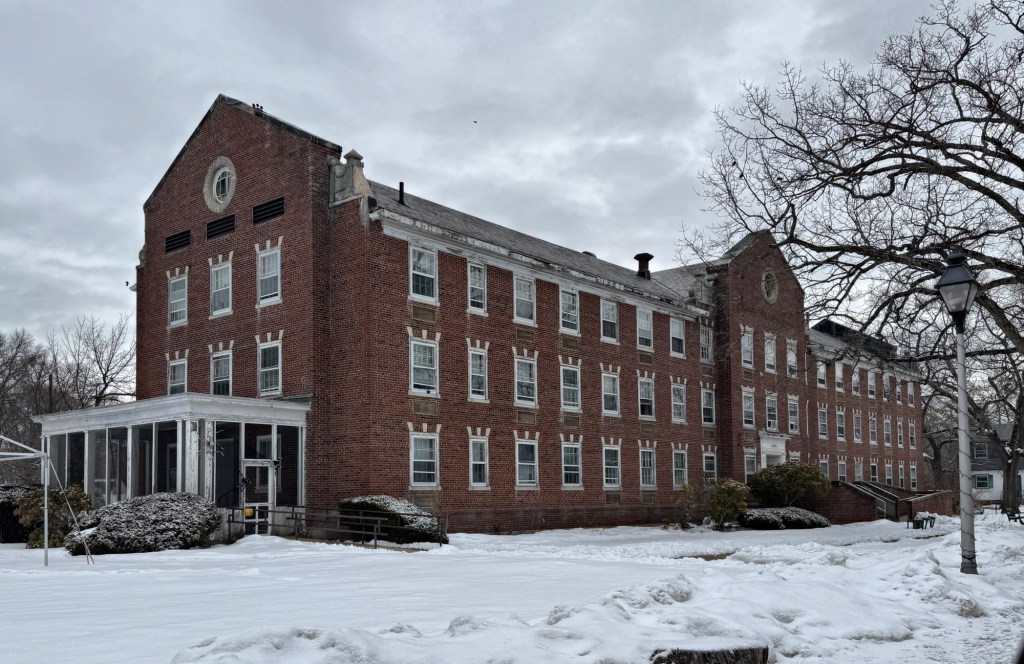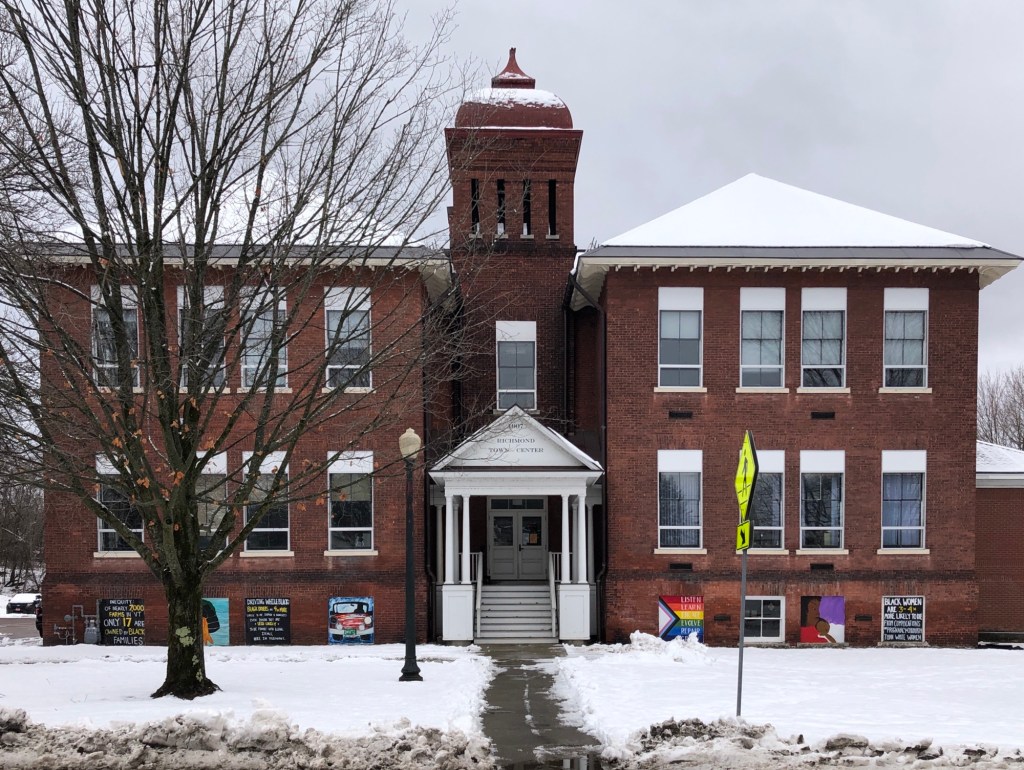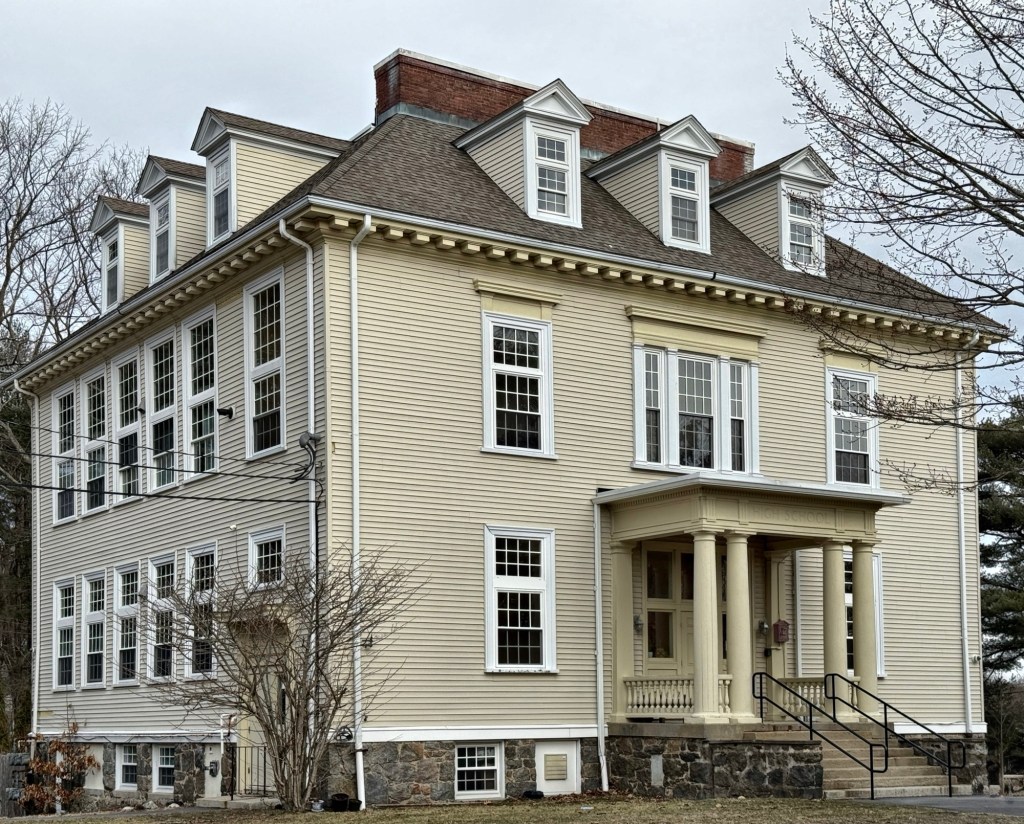
Cochituate School // 1910

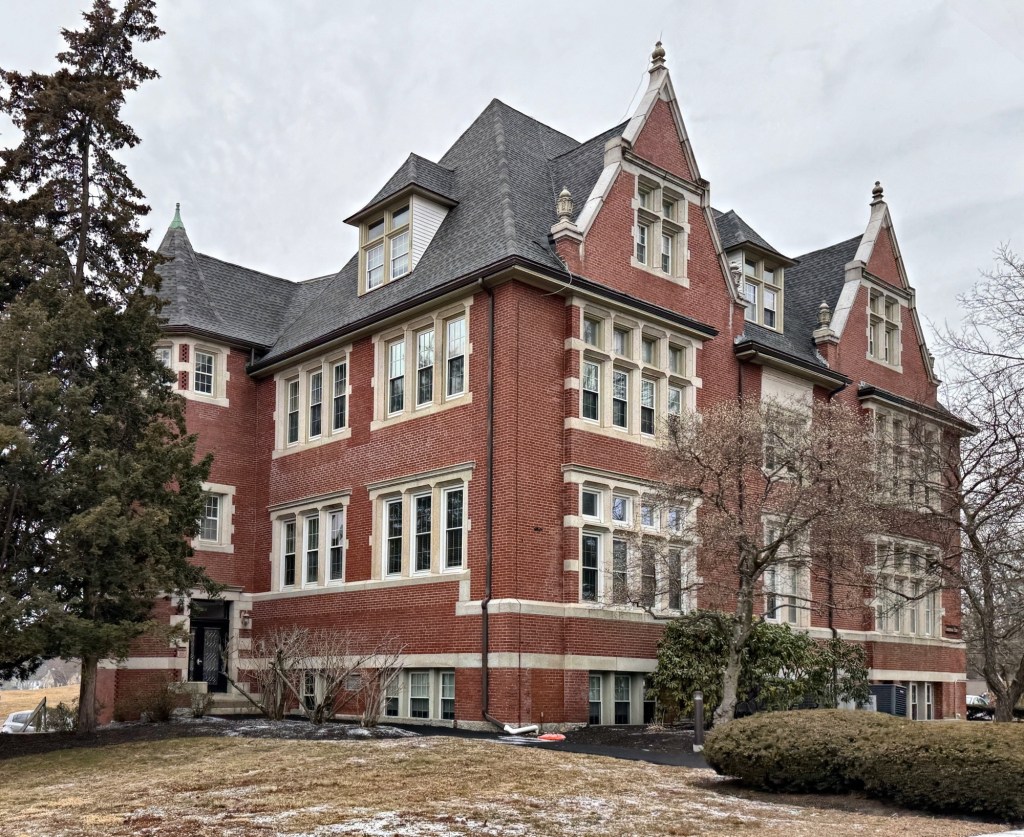
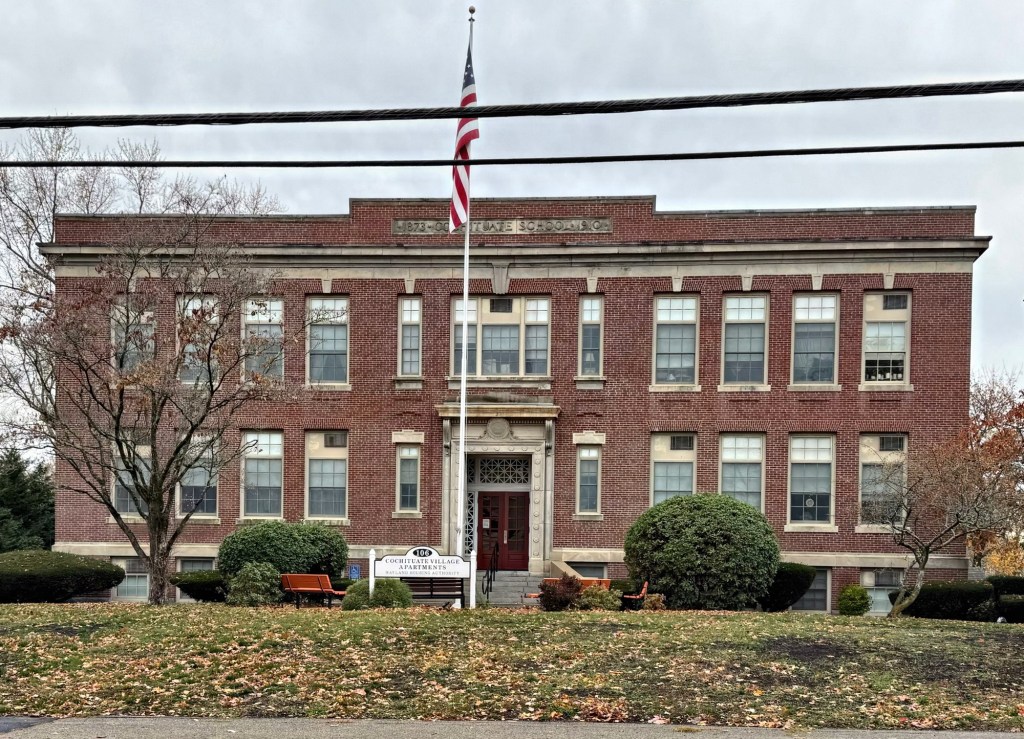
The Cochituate School in Wayland, MA, was built in 1910 to educate the Cochituate Village’s growing student population. The industrial village was dominated by shoe manufacturing with workers largely consisting of first- and second-generation European immigrants who moved to New England for work. Boston architect, Willard P. Adden, designed the school, which replaced an earlier schoolhouse on the site that was outgrown. The two-story, brick school was expanded following WWII, when a long rear ell with classrooms and a cafeteria was designed by Perry, Shaw & Hepburn. In the 1990s, the old Cochituate School was renovated and converted to senior housing administered by the Wayland Housing Authority.

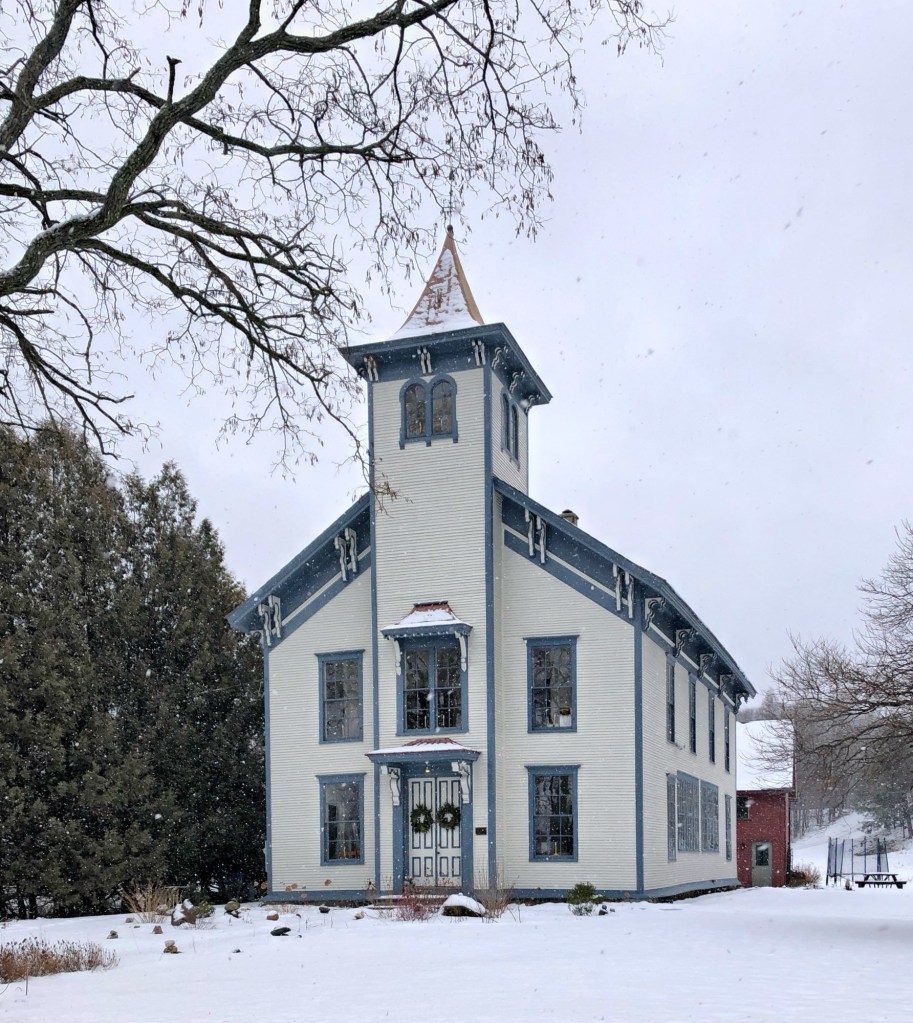
Simonsville Schoolhouse // 1856

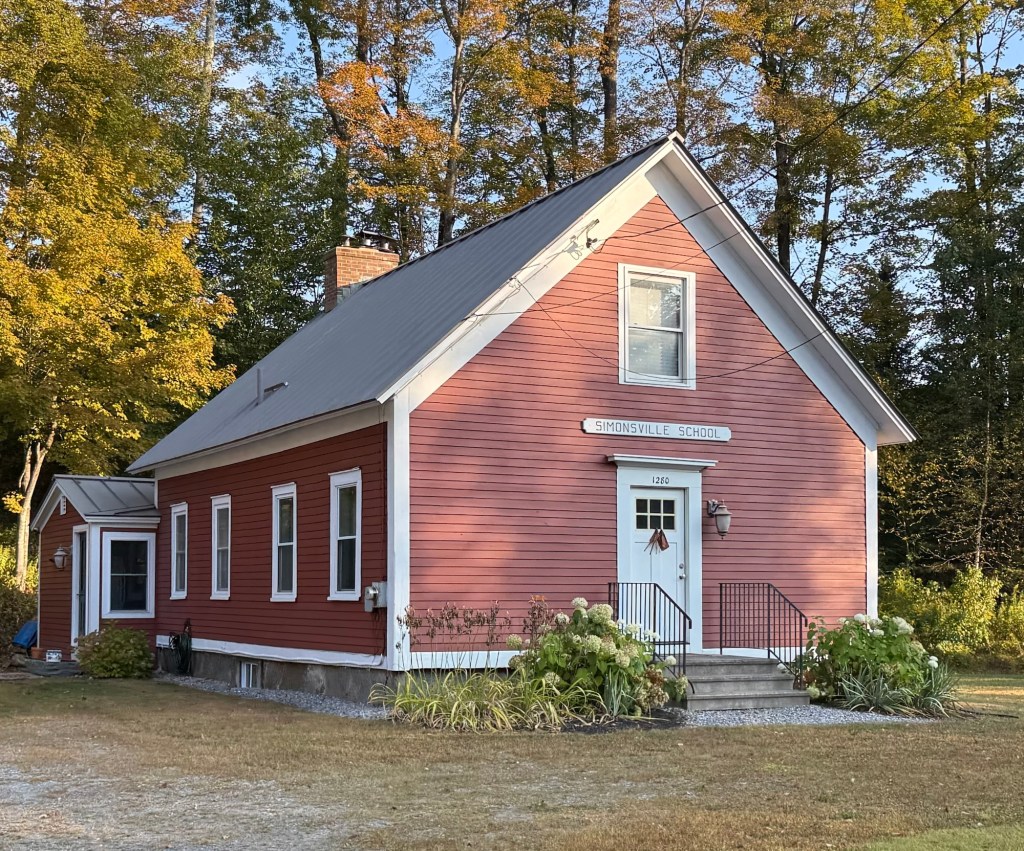
One-room schoolhouses like this example in the Simonsville area of Andover, Vermont, have been commonplace throughout rural portions of New England where children of most ages would share the classroom and be taught everything from basic spelling to math. The Simonsville schoolhouse was built in 1856 and is a typical example of a vernacular one-room schoolhouse in rural New England, with no frills or ornament, just a house of learning. The Simonsville Schoolhouse was converted to a residence sometime in the latter half of the 20th century and has been renovated, keeping the basic form and interior floorboards from the 1850s. The school-turned-home is currently (2025) listed for sale.

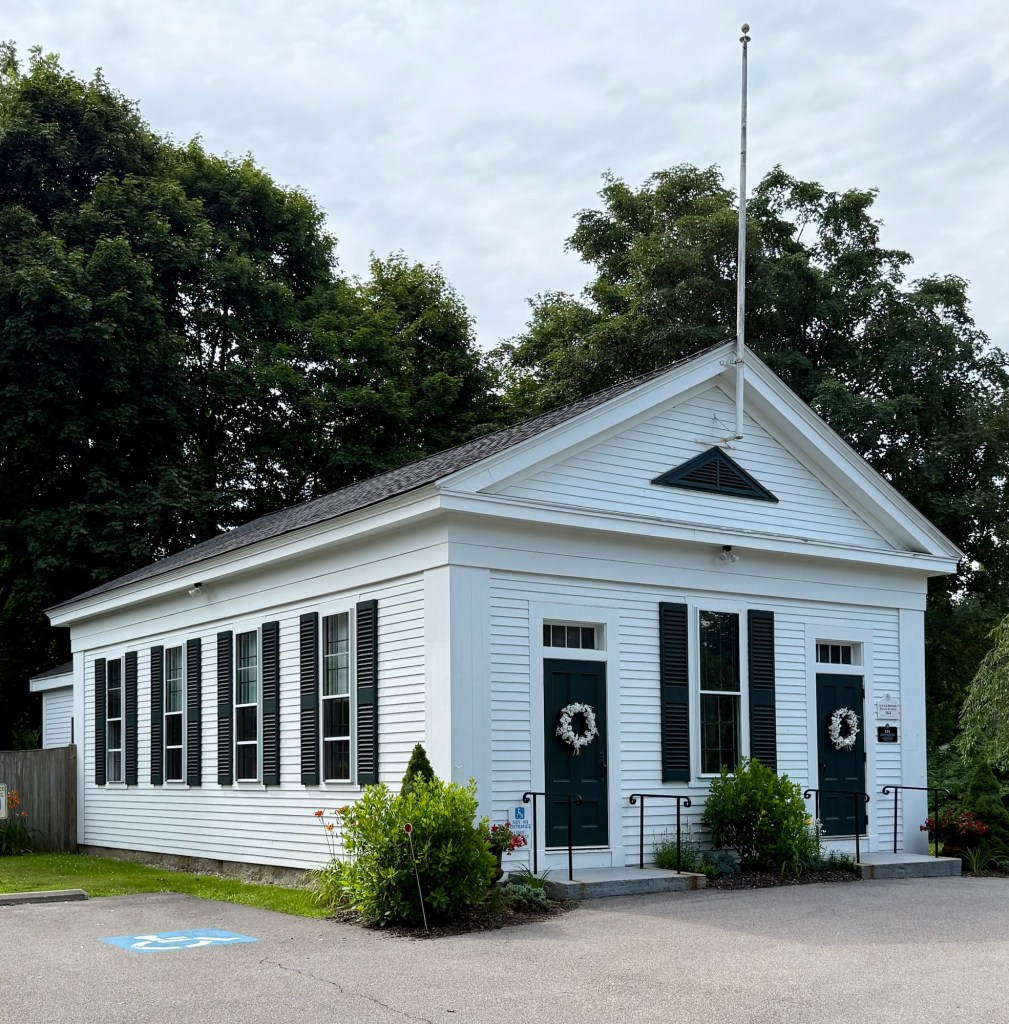
Faunce Schoolhouse // 1844

This one-story, well-proportioned schoolhouse is located in the town center of Kingston, Massachusetts. The Faunce Schoolhouse showcases all the hallmarks of the Greek Revival style, including the siting of the building with its narrow end facing the street to showcase the gable roof, corner pilasters, and the entablature completing the gable as a pediment. The school was built in 1844, shortly after the nearby Town House was completed, as a center primary school. Up until the early 1900s, one or two teachers taught first through fourth grades at the two-room school. By 1908, overcrowding at the school led to a town meeting that led to the construction of a new school to provide more space conducive to learning. The Center Primary School remained open, and in 1924, the school was renamed in honor of Walter H. Faunce, a former teacher, superintendent of schools, and town selectman. The building was abandoned as a school in 1926 and stood empty until 1934 when it was sold by the town to the Kingston Grange No. 323 for $400. The Grange occupied the building until 1959 when it sold the building back to the town for $4,000. The building was restored in the 1970s and remains a source of pride for the community to this day offering free meeting and event spaces for local non-profits.


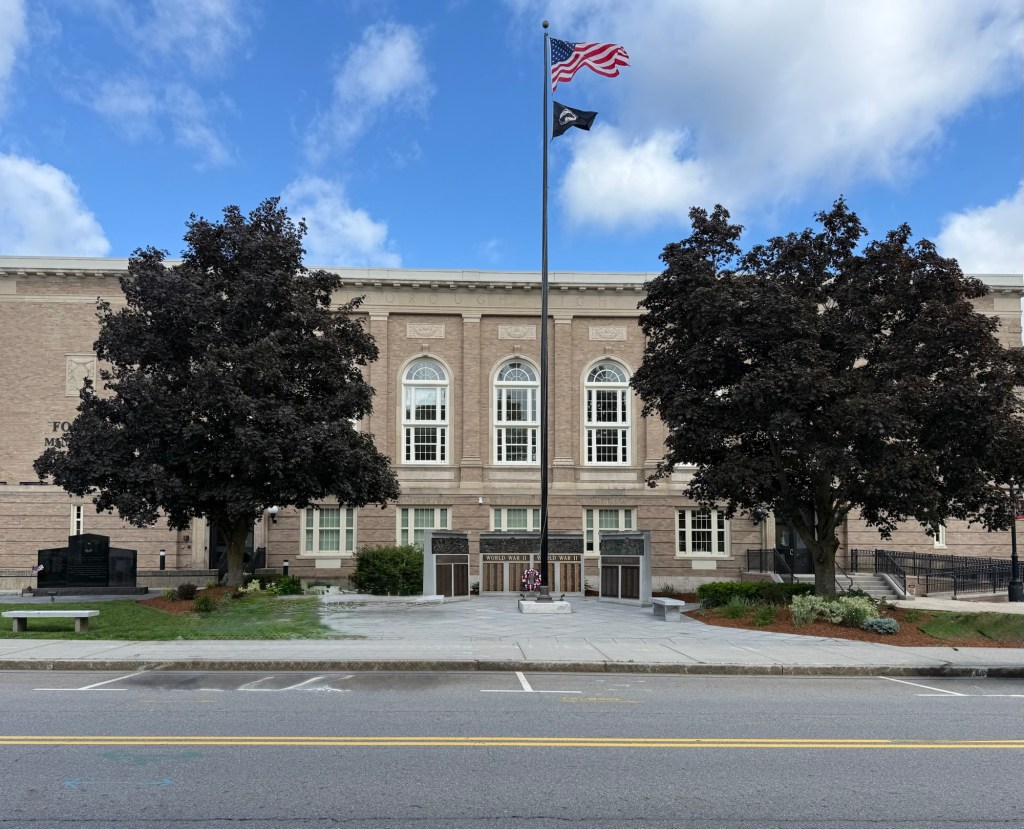
Forbes Public High School // 1924

The former Forbes Public High School in Westborough, Massachusetts, is an excellent example of a civic building in the Classical Revival style. Built in 1924 for a growing suburban community, the building was constructed as the town’s high school with the grounds and substantial funding donated by Francis and Fannie Forbes, life-long residents of town with Francis having roots going back to the earliest settlers here. The building was permitted in late 1924 and plans were drawn by the firm of Ritchie, Parsons & Taylor. who designed the large school with stone and brick construction, large arched windows, and pilasters breaking up the bays. Inside, the new building had 14 classrooms, a gymnasium, a shop room, and cooking rooms, all with fine carved woodwork. After WWII, Westborough further consolidated its schools, and built a new High School nearby. This building was repurposed as the Forbes Municipal Building, containing city offices and the Police Department headquarters.

Former Eli Whitney School // 1907

Built a few decades after and located behind the Harvey School in Westborough, Massachusetts, the former Eli Whitney School is a landmark example of an educational building designed in the Neo-Classical style. Built between 1906-7, the school building replaced an earlier school on the site that was outgrown and outdated. Designed by architects Cooper & Bailey, the building stands two-stories tall with a central pedimented pavillion containing the entry that is framed by monumental fluted columns. The school was named after Eli Whitney, the famous American inventor, born in Westborough, who is widely known for inventing the cotton gin in 1793, one of the key inventions of the Industrial Revolution, and later moving to New Haven and manufacturing weapons. When Westborough schools consolidated into modern facilities in the second half of the 20th century, this building was then occupied by the YWCA, and have rented the facilities from the town until it was purchased in 2000.

Canterbury Center District School // c.1860

The Center District Schoolhouse of Canterbury, Connecticut, sits behind the village church and is the town’s best-preserved example of a district schoolhouse. Built c.1860, the vernacular, Greek Revival one-room schoolhouse served the central village through the 19th and into the 20th centuries with its twin entry, double-hung windows to allow light and air into the classroom, and a belfry with bell to notify pupils when class was about to start. Like many similar one-room schools in rural New England, pupils attended class with neighbors and siblings in the small, intimate classroom of varied ages. 

Old Chicopee High School // 1917

The Old Chicopee High School building is located at 650 Front Street, between the two major population hubs of Chicopee Center and Chicopee Falls and is one of the finest examples of Collegiate Gothic/Neo-Gothic Revival architecture in Massachusetts. The school building was constructed in 1917 from plans by architect, George E. Haynes as a central high school, a single building where pupils from all over the city could be educated. The population growth of Chicopee in the early decades of the 20th century necessitated additions and reworking of the spaces of the building, eventually outgrowing the building after WWII. In 1961, plans for a contemporary high school were completed and this building became a middle school for the City of Chicopee. Architecturally, the building stands out for its siting and high-quality design. The main facade features a central clock tower which contains the main entrance. The use of brick with cast stone trim and the castellated parapet add much dimension to the large building. The City of Chicopee have done a commendable job maintaining this important landmark.

Holy Name Science High School // 1925

The third and final extant building on the former Church of the Holy Name of Jesus complex in Chicopee, Massachusetts, is this former school building, a stunning example of Colonial Revival architecture. Located behind the former church and rectory buildings, this three-story building was built in 1925 as a “Science” building to accompany an existing girl’s high school. Inside, the building had a “Commercial” department, where young girls could learn important skills like banking, stenography, and typing; with the second floor containing traditional science classrooms and labs along with the school library. Springfield-based architect, John W. Donahue, who specialized in ecclesiastical buildings in Western Massachusetts, designed the building in the Colonial Revival style with brick and stone construction, an elaborate entrance and Palladian window on the second floor facade. The school building closed in the late 20th century, and has seemingly sat vacant ever-since. I sincerely hope this important building could be incorporated as much-needed housing for Chicopee residents!

Alvord School // 1894

When the old Broadway school in Chicopee Falls became neighbors with the Overman Wheel Company, an early bicycle manufacturing company, there was so much noise and distraction that the Chicopee School Committee voted to sell the school and build a new school building down the street. A triangular lot on Broadway was purchased and Springfield architect, Francis R. Richmond, was chosen to design the new building in 1894. The school was dedicated to Dr. Samuel Alvord, a Chicopee Falls resident who was first principal of the local high school and local doctor that died in 1892. The Alvord School is a great example of a Richardsonian Romanesque school building of brick and brownstone, with recessed entry within a Syrian arch and decorative terracotta tiles. The school would close in the second half of the 20th century, and today is known as the Helen A. O’Connell Administration Building, a municipal office building.

Adelphic Institute Building // 1847

Located across from the North Cornwall Congregational Church in Cornwall, Connecticut, this vernacular, Greek Revival building was constructed by 1847 as the Adelphic Institute, a private school. The Adelphic Institute was founded by Ambrose Rogers, son of Deacon Noah Rogers of the Congregational Church in the village, on land and adjacent to the house he had inherited from his father. The school would eventually relocate to New Milford, Connecticut, in 1860 and this building was converted to a parsonage and meeting room for the church and village. It is now privately owned on the property of the old Rogers house.