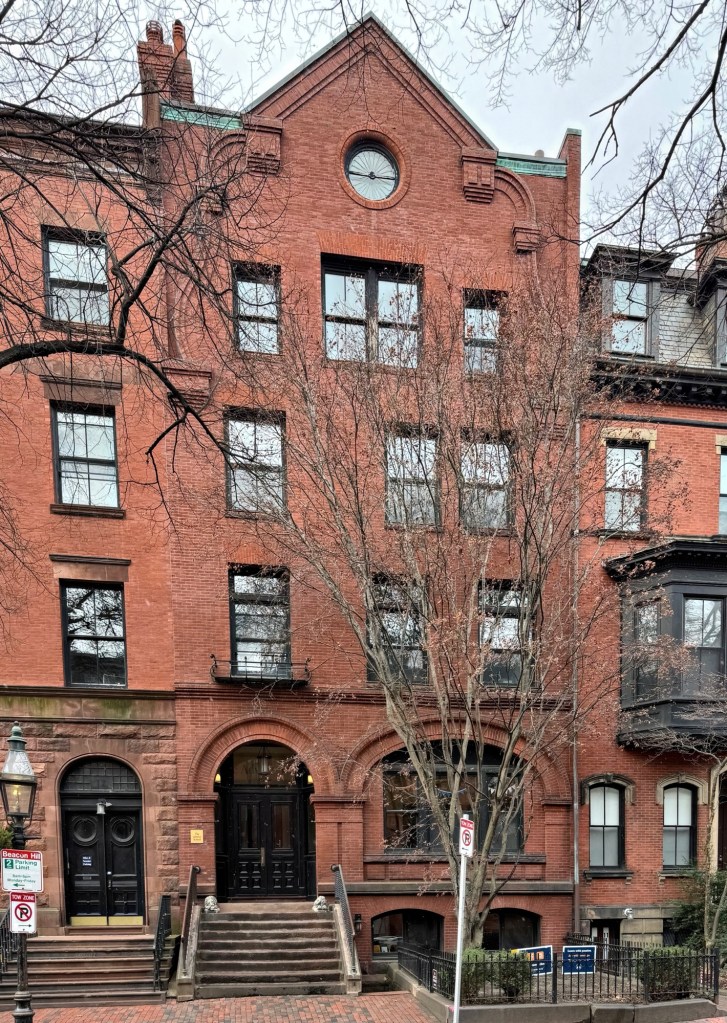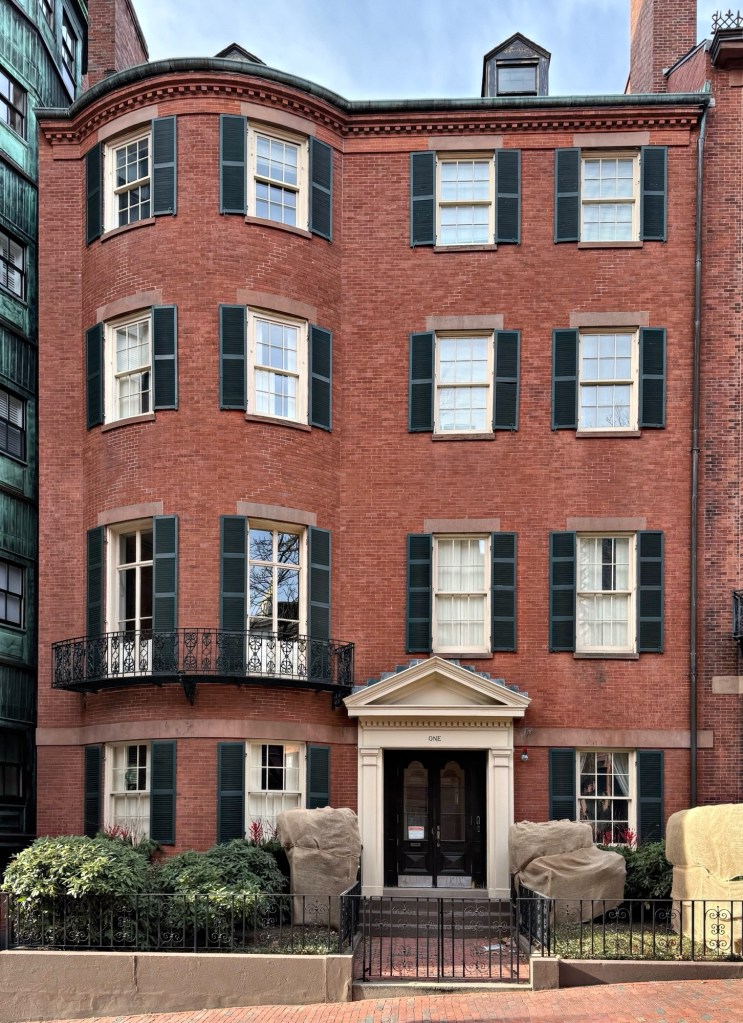
Perkins House – Diocesan House // 1832

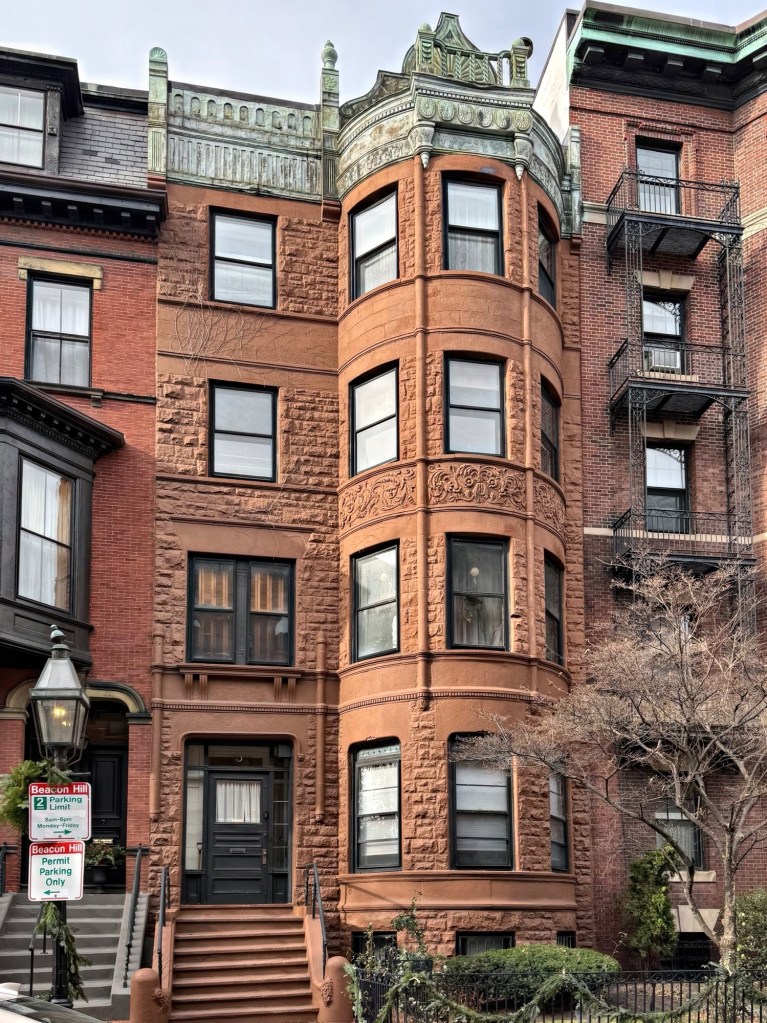
Constructed of red brick and trimmed with brownstone, the beautiful townhouse at 1 Joy Street, is one of a few properties in Boston’s Beacon Hill neighborhood to have a front yard. Built in 1832, the four-story residence has its primary facade characterized by a flat entrance with a rounded bay extending upwards to the roof. Designed by architect, Cornelius Coolidge, who designed many other homes in this section of Beacon Hill, the completed house was purchased by Thomas Handasyd Perkins, Jr. (1796-1850), the eldest son of the enormously wealthy and influential Thomas Handasyd Perkins, Sr., who is considered by many to have been the most successful merchant prince of Boston’s Federal period. In 1892, the Episcopal Association purchased 1 Joy Street for use as headquarters of the diocese, and it became known as the Diocesan House. Today, the building is divided up into condominium units, providing residences just steps from the Boston Common.

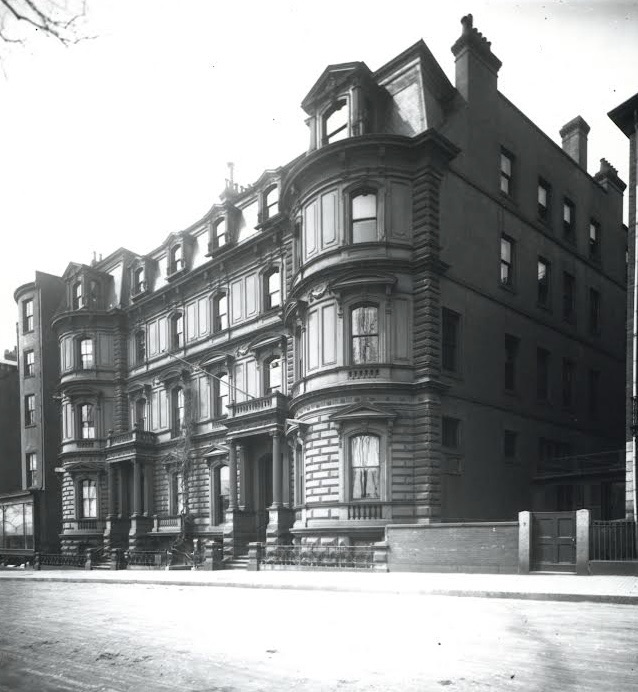
Brewer & Beebe Townhouses // 1863-1917

Boston is ever-changing and while change can be good, there have been some major architectural losses. This trend of redevelopment is not new however, as this single site on Beacon Street has seen two major losses, all before 1918! This lot on Beacon Street was originally home to Hancock Manor, a landmark Georgian mansion built between 1734-1737 for the wealthy merchant Thomas Hancock (1703–1764), and later inherited and occupied as the home of United States Founding Father John Hancock, yes, that John Hancock. In 1863, the Hancock Manor was sold at public auction and was purchased for $230. The house was demolished within days. While the building was torn down, souvenirs of it were actively sought as it fell. To replace it, two of the finest homes ever built in Boston were constructed on the site, from plans by elite Boston architect, Gridley James Fox Bryant. The double Second Empire style homes were first occupied by wealthy merchants, James Madison Beebe (the house on the left) and Gardner Brewer (right). In 1916, plans for the extension of the Massachusetts State House necessitated a taking of these (and other nearby) properties. These two houses were razed by 1917.

I wonder if the Hancock Manor would have survived to this time, would preservation prevail to save it?

Storrow-Meyer Townhouses // 1862

Two is always better than one, especially when it comes to historic townhouses! These two residences on Beacon Street in the Back Bay neighborhood were built in 1862 for two esteemed Boston families, the Storrows and the Meyers. 192 Beacon Street (right) was built as the home of Charles Storer Storrow and his wife, Lydia (Cabot Jackson) Storrow. Charles S. Storrow was an engineer by training and made his fortune as the chief engineer at the Essex Company, a company organized to harness the water power of the Merrimack River downstream from Lowell, Massachusetts in present-day. There, Storrow designed and built the Great Stone Dam across the Merrimack river, canals to distribute the water, several large textile mills, and a city, Lawrence, to house the mill workers. He came up with the idea to make roads that go to the mills in Lawrence, allowing him to become the first mayor of Lawrence in 1853. He retired and lived out his final years at this home in Boston. James J. Storrow, after whom Boston’s Storrow Drive is named, was Charles Storrow’s grandson. 194 Beacon Street (left) was built as the home of George Augustus Meyer and his wife, Grace Helen (Parker) Meyer. George Meyer was a prosperous German-American East India merchant and lived in this home until his death in 1889.

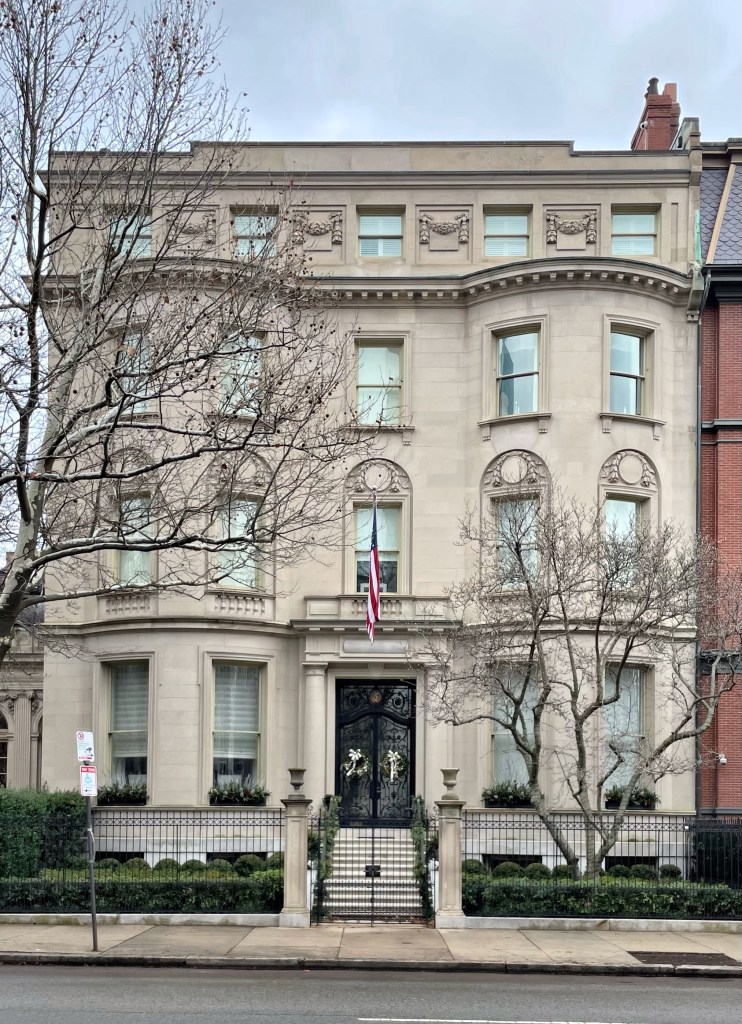
Baylies Mansion // 1903

Commonwealth Avenue in Boston’s Back Bay neighborhood is a dream, no matter what time of year, though I am a huge fan of it in the winter so the leaves don’t obscure the architectural details! This home just steps from the Public Garden was built in 1903 for Walter Baylies (1862-1936) and his wife, Charlotte. The couple had purchased a c.1860 Second Empire mansion (basically a sister house or twin to the adjacent at 3 Commonwealth Ave), and demolished it for a more “modern” residence. Baylies was extremely wealthy with investments in nearly everything, and he wanted his city residence to stand out amongst the earlier, brick and brownstone townhouses on the eastern edge of the neighborhood. Architect Arthur Rice designed the house in the Renaissance Revival style, and it is finished with Indiana Limestone. Of particular note is the one-story ballroom, which was built to the side of the home, set back behind a small garden. An empty house lot, formerly occupied by a stable, was used simply for the Baylies’ ballroom, constructed in 1909 for their daughter. Talk about a status symbol! The home was purchased by Walter’s heirs in 1941 by the Boston Center for Adult Education. The home was again purchased in 2020, and is back to a single-family home! I can’t even imagine how stunning the interior is!

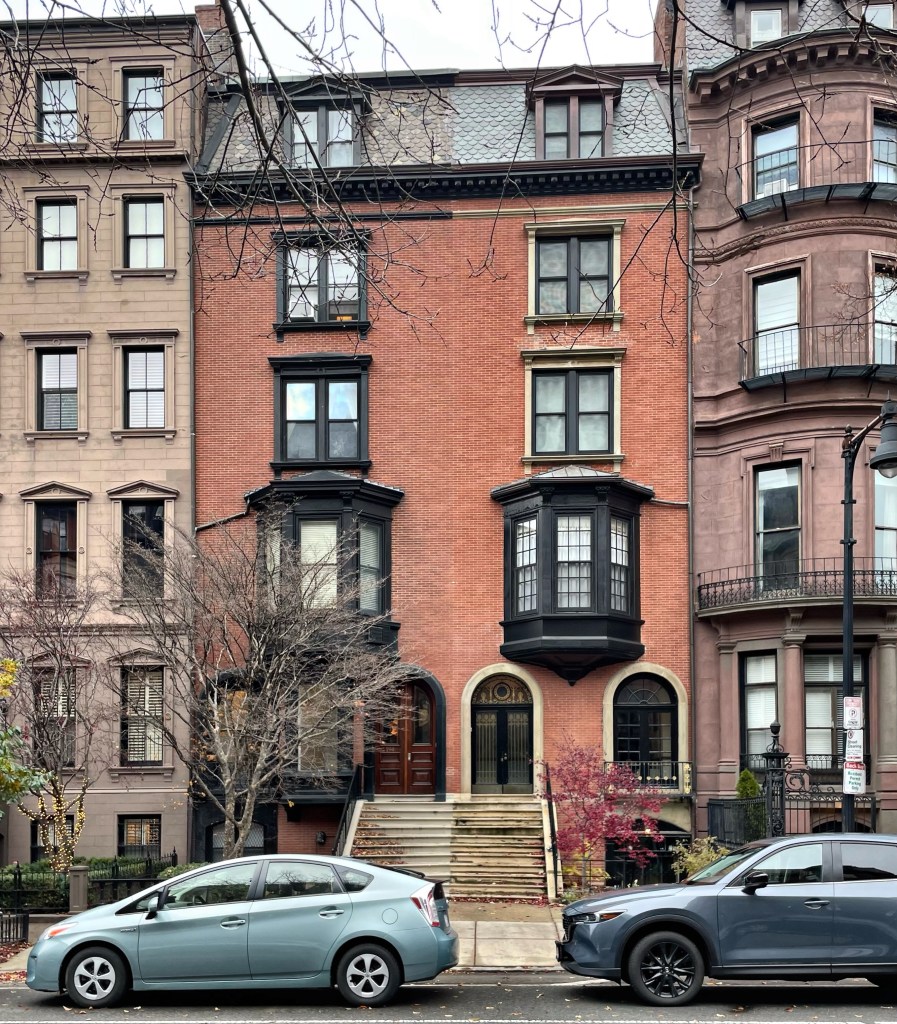
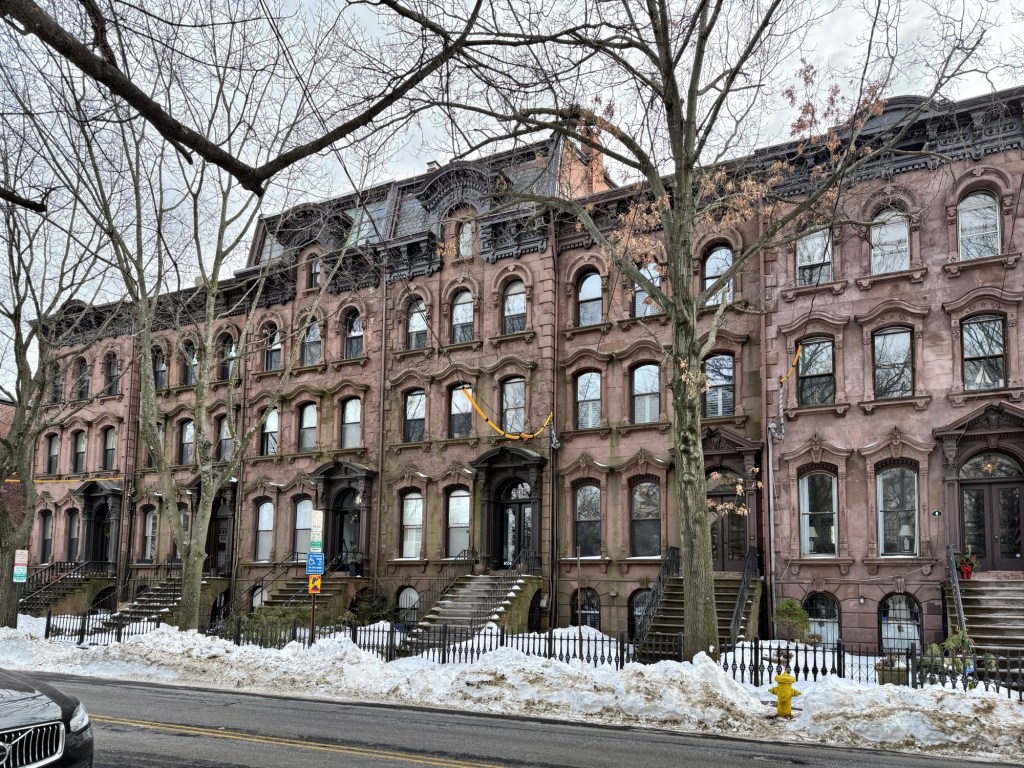
Wheatland Rowhouses // 1874

This series of four rowhouses at 233-239 Marlborough Street were built together in 1874 for George Wheatland. Designed as two sets of symmetrical pairs, the four homes together contribute to the character of the Back Bay neighborhood while standing out for their use of materials and detailing. George Wheatland Jr. was a developer of over 100 properties in the Back Bay after the Civil War, and through his business partnerships and savvy land acquisitions and developments, became one of the wealthier residents of the neighborhood. Wheatland was born in Salem, MA and attended Harvard Law School before starting work as an attorney. Within a couple years, he was called to serve in the Civil War and fought for the Union Army, participating in the Siege of Port Hudson in Louisiana! When he returned, he used his legal knowledge and business connections to acquire and develop the filled, newly developable land in Back Bay. These four homes are constructed of brick with scored stucco on the main facade to resemble brownstone, which was more expensive. A large central oriel bay window is situated at each home with the fourth floors incorporated into a mansard roof with Stick style detailing at the dormers.