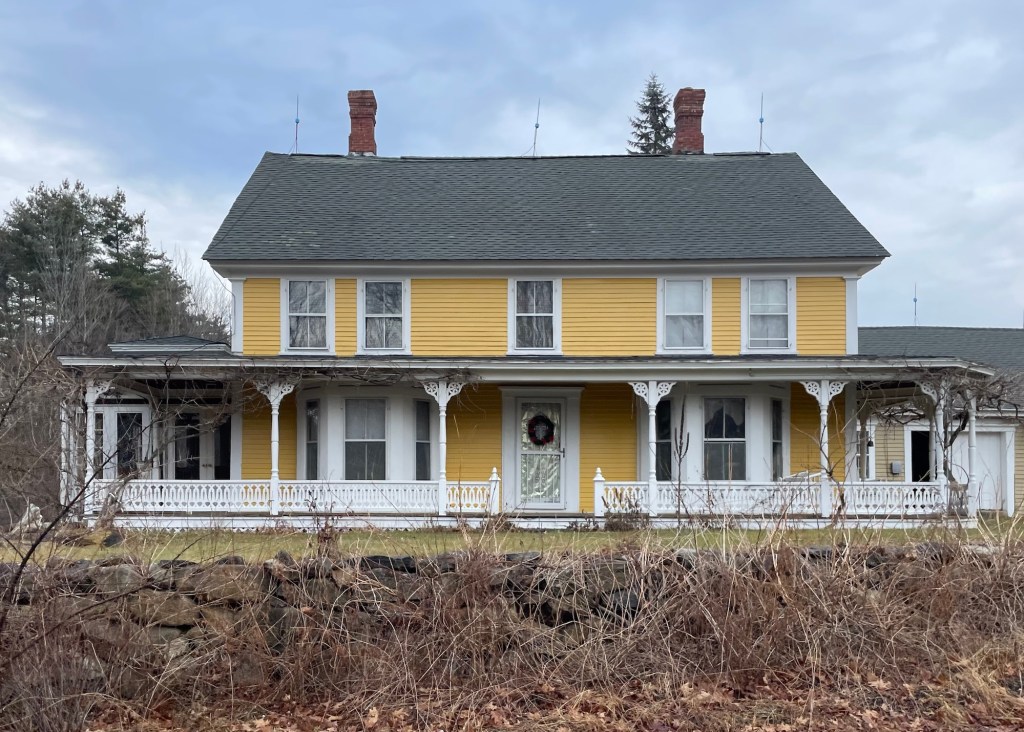
The backroads of New England always lead you to great discoveries! This time, driving around Weare, New Hampshire, I stumbled upon this large farmhouse on the side of the road. The home was owned by Cyrus Hazen by 1858 and due to its style, I would date it to be built in the 1850s. Cyrus Hazen married Louisa Bartlett (as her second marriage) in 1847 and they appear to have had this home built a few years later. The Hazen’s ran a farm from this home for decades. Sometime after the Civil War, the home would have gotten the full-length verandah (front porch) and a side tower, both Victorian-era additions. The home is now attached to the historic barn by an ell.
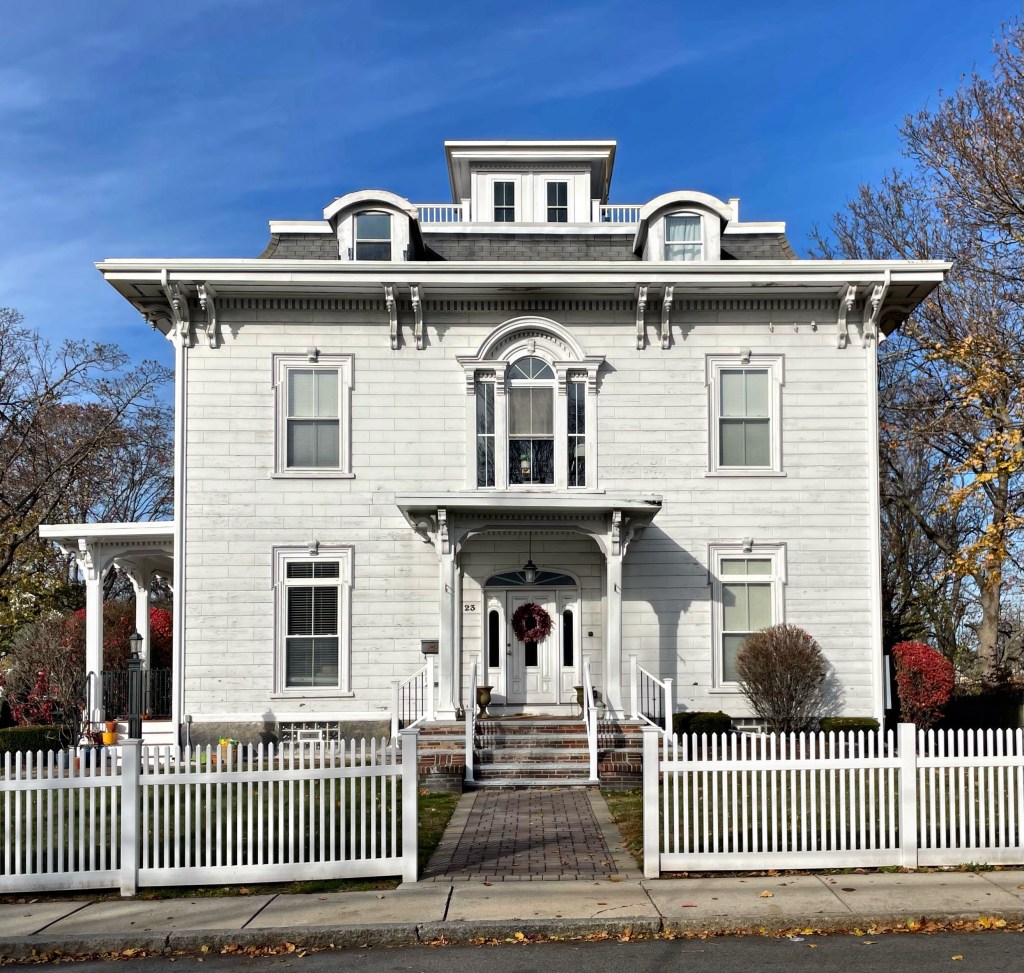
Originally built for Charles E. Jenkins, a partner in Bailey & Jenkins, suppliers of doors and blinds, this house in Dorchester’s Clam Point neighborhood stands out as one of the earliest and high-style mansions in the area. It appears to have been designed by local architect Luther Briggs, Jr. Shortly after its completion, the property was purchased by Theron and Rebecca Shaw. Theron was a partner at Lindsley, Shaw & Co., boot dealers in Downtown Boston. He died in 1870 and the house was sold to Dr. Luther Dimmick Shepard, a dentist. While the house (like many in Boston) is covered in later siding and has a plain white color scheme, the building retains its architectural integrity and would really shine when restored! What color would you love to see this Italianate/Second Empire style mansion be painted?
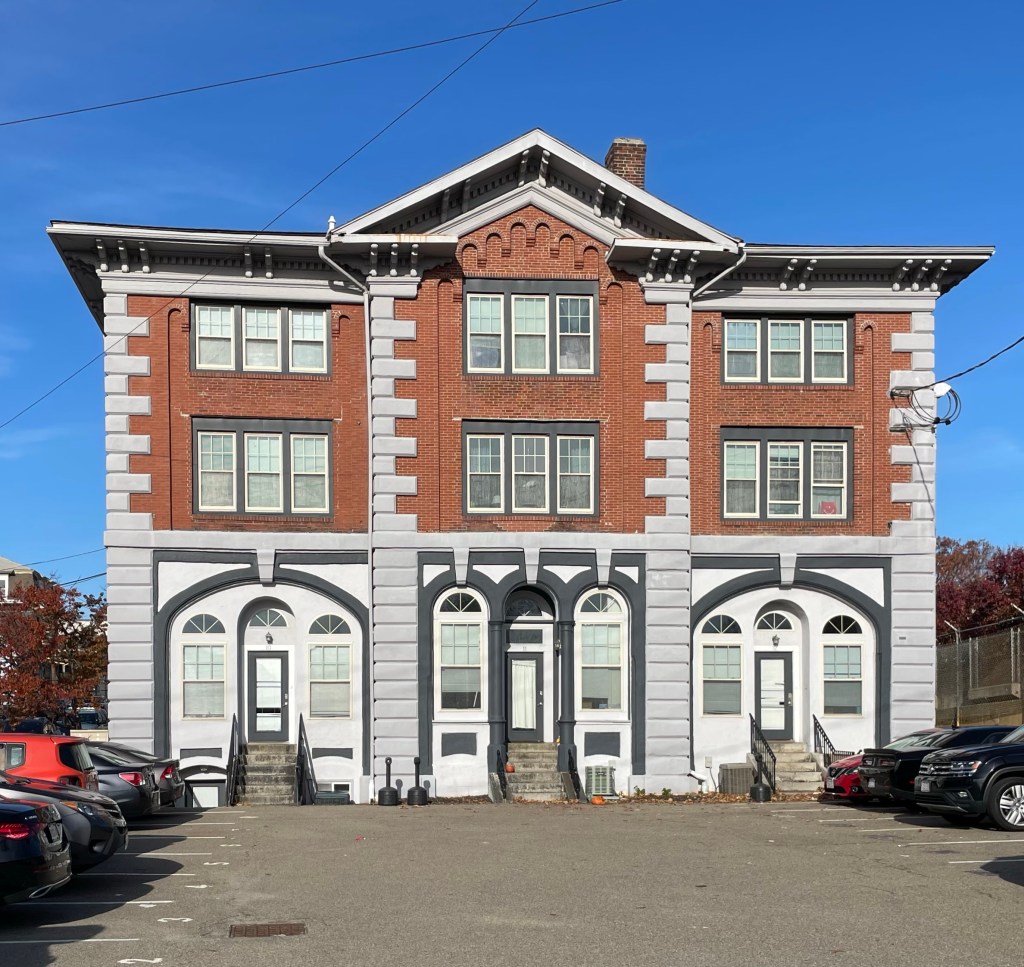
This is your sign to take a different route! When exploring a new town or neighborhood, I love to explore the obscure streets just as much as the iconic Main Streets as hidden treasures can always be found! This building in Dorchester’s Port Norfolk neighborhood was constructed in 1860 as the new home of the Dorchester Mutual Fire Insurance Company, which was incorporated in 1855. The company seemingly hired Dorchester-based architect Luther Briggs, who also laid out the streets for Port Norfolk and the Clam Point neighborhoods and designed many buildings in the area at the time. The high-style Italianate building features bold proportions, quoins, and cornice. While the former round-arched windows have since been enclosed and are traditional double-hung windows, they building still stands out! At the rear, Second Empire style rowhouses were built for private ownership. The building is now all condominiums following a renovation.
Located on Harbor Road in Southport, CT, this stunning Italianate residence is properly sited on a small bluff overlooking the village’s harbor. According to historic maps, the house was owned by an “I. Chidsey” who appears to be Isaac Chidsey (1793-1865). The large Italianate style home is boxy in form and stands three full stories with two original one-story side wings. Sleeping porches were added in the early 20th century; those along with the rooftop belvedere, would allow for sweeping views of ships entering and exiting the harbor here. The house was recently restored by the architectural firm of Fairfax & Sammons and it looks amazing!
One of the finest examples of Italianate residential architecture in the state of Connecticut can be found in Fairfield in the Sturges House. This property was built in 1855 for Henry Sturges Thorp a New York City merchant from a Fairfield family and his wife Julia Ann Thorp, likely as a summer home away from the city. Both Henry and Julia died in 1869 and the property was acquired by Frederick Sturges, the son of Jonathan Sturges a wealthy businessman and philanthropist who had a stunning early Gothic Revival mansion nearby. The Sturges House as it is now known, is a landmark example of the Italianate style with broad overhanging eaves, massive belvedere at the roof, round arched windows, and the tripartite blind windows capped by an elaborate cornice.
The John Reed House at 37 Orange Street in Nashua, New Hampshire is a testament that houses can be updated over time with thoughtful renovations, and still be pretty darn amazing! The house was originally constructed in 1840 in the then-popular Greek Revival architecture style. Within a decade, to ‘keep up with the Jones”, the house was “modernized” with Italianate style detailing, including the brackets at the eaves and the large, square cupola with round arched windows and shutters. Decades, later, Queen Anne/Colonial Revival changes were made, with the full-length front porch with turned, fluted posts, enlarged windows, and an oversized front door. The house today blends these very different styles very well and adds to the house’s significance.
Inspired by suggestions from books by Andrew Jackson Downing, the Gen. George Stark House is one of the finest dwellings in the Italian villa style in New Hampshire. Located on a triangular plot just north of Downtown Nashua, the house was built in 1856 by a man who, though then only in his early thirties, was one of New Hampshire’s most experienced civil engineers and surveyors, and was the superintendent of the Nashua and Lowell Railroad. General George W. Stark (1823-1892) was born in Manchester, N.H., and as a young man worked on surveys of the canals and factories being built in the late 1830s in his native city. In 1836, during the first days of railroading in northern New England, Stark was employed with the engineers who laid out the route of the Nashua and Lowell Railroad. He climbed the ladder, eventually working as treasurer and assistant superintendent of theHudson River Railroad, subsequently rising to the position of superintendent. He later became superintendent of the Nashua and Lowell Railroad, whose route he had helped to plan, and in 1857, at about the time he saw the completion of his Italianate villa, he became managing agent of the Boston and Lowell line. In the same year, he was commissioned Brigadier General of the Third Brigade of New Hampshire Militia, giving him his title, General. The Stark House was occupied by General Stark and by members of his family until the property was acquired by The First Church of Christ, Scientist, about 1928. Today, it houses offices but retains a distinct residential character regardless.
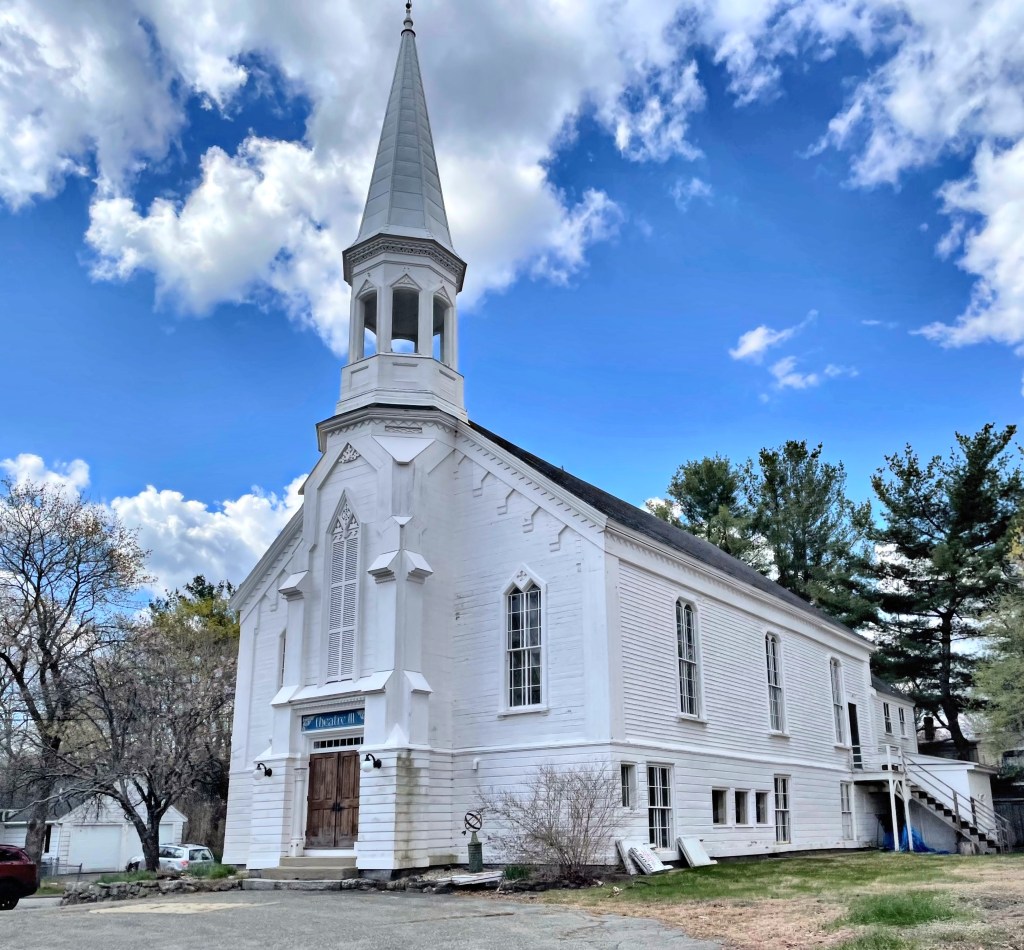
This beautiful church in Acton, Massachusetts was built in 1868 by the Universalists of West Acton who sought a house of worship closer to their homes, rather than taking horses to the other part of town every week. The building exemplifies the influence of both Gothic Revival and Italianate styles on rural churches of the time. Gothic elements include the double pointed lancet windows with quatrefoil ornament, buttresses, and pointed lancet panels on the tower and belfry. Italianate elements include the rusticated base and the corbel table at the eaves. Religious services ceased in 1925. At that time, the church building was bought by leading men in the village who gave the building to the West Acton Women’s Club, which began in 1890 by Lucy Mead (the wife of Oliver Mead, who built the Mansard home nearby). In the 1950’s, the church was used as a community center. It is now home to a local performing arts center, Theatre III Box Office.
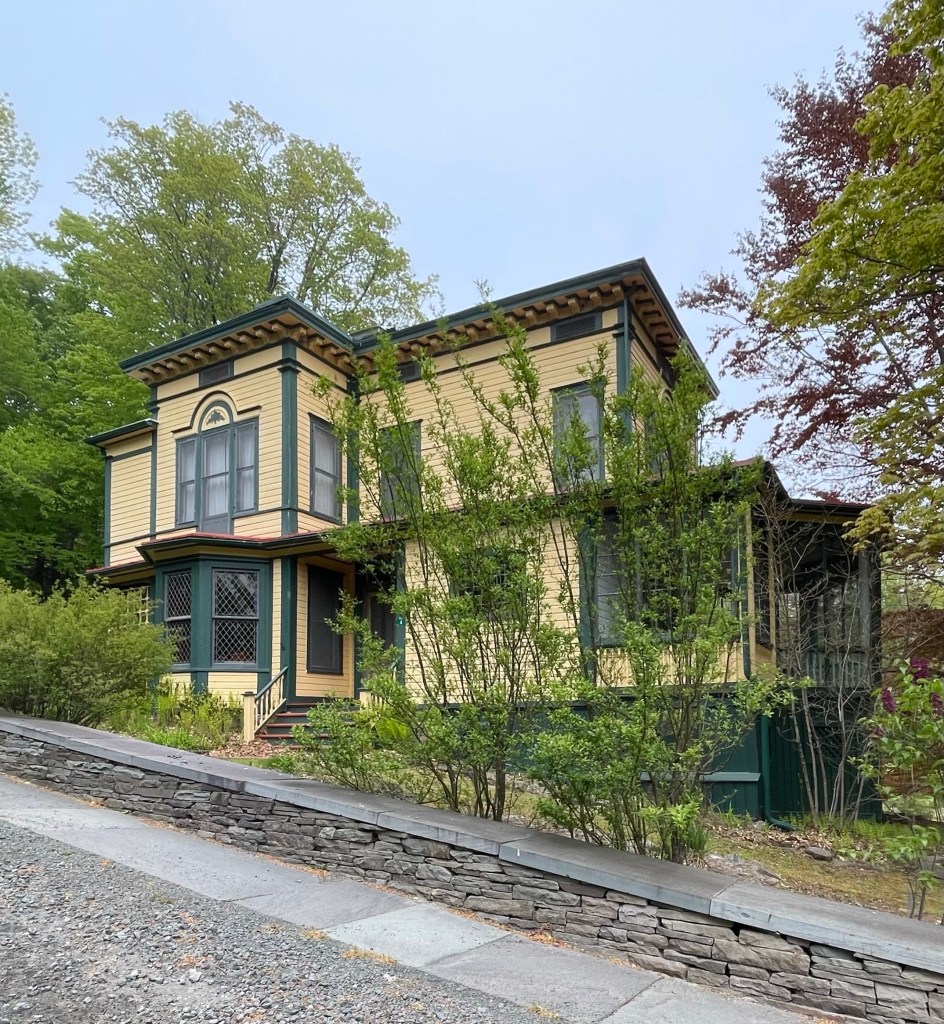
Elka Park in Hunter, New York, is a really unique summer colony developed in the late 19th century as a country retreat for wealthy German-Americans to escape the woes of city life, primarily from New York City. Between 1890-1896, a total of 21 homes were built as summer cottages, 17 remain to this day. Almost all “cottages” were built with at least 4 bedrooms with space for servants, guests would lodge at the nearby Elka Park Clubhouse, which was destroyed by fire and replaced after WWII. The private community remains a secluded respite and relatively unknown to most. This cottage was built in 1896 for a tax commissioner Mr. Kurth, from plans by Hugo Kafka, a Czech-American architect with an office in New York City. Kafka also had a summer cottage at Elka Park. This cottage was purchased in the 1920s by Johann Kliegl, a German inventor and businessman who settled in New York, developing the “Klieglight”, a carbon arc lamp used heavily in filmmaking at the time. The late-Italianate style cottage remains well preserved to this day and even has a historically appropriate paint scheme!


 Buildings of New England