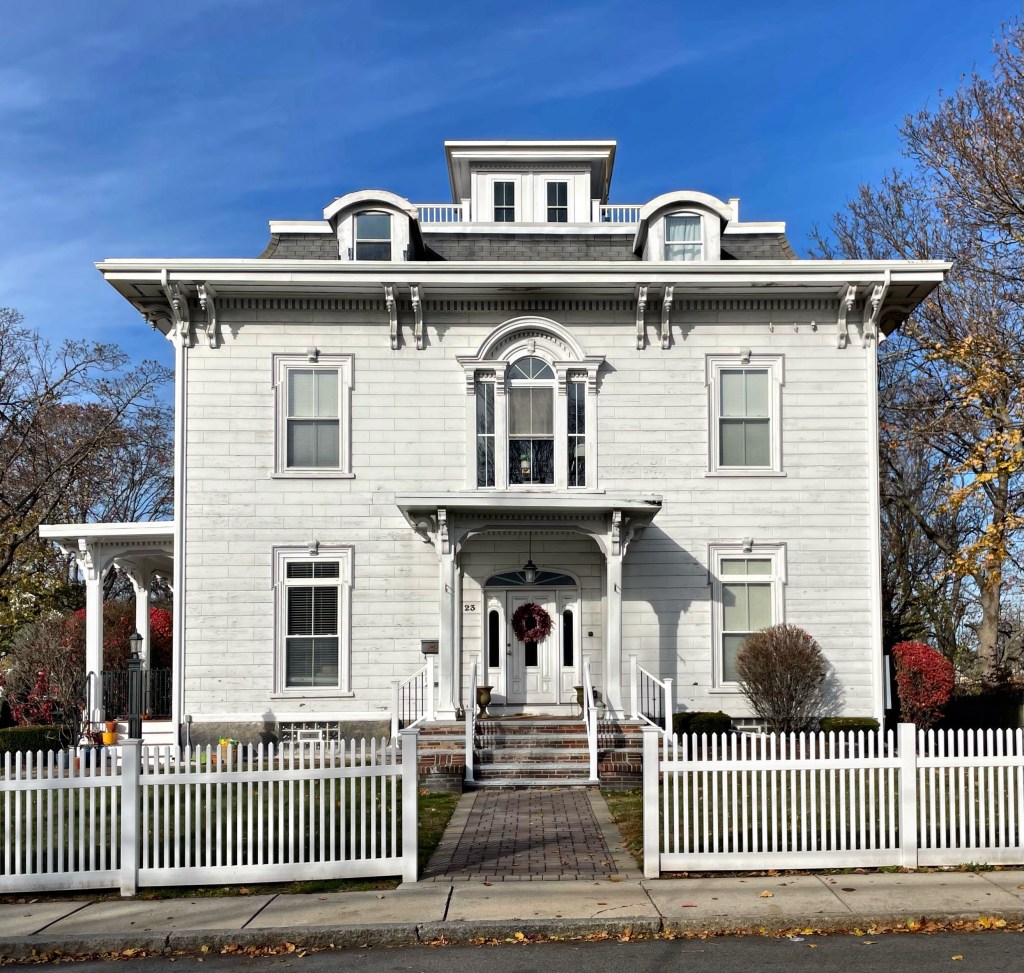
Shaw-Shepard House // c.1860

Originally built for Charles E. Jenkins, a partner in Bailey & Jenkins, suppliers of doors and blinds, this house in Dorchester’s Clam Point neighborhood stands out as one of the earliest and high-style mansions in the area. It appears to have been designed by local architect Luther Briggs, Jr. Shortly after its completion, the property was purchased by Theron and Rebecca Shaw. Theron was a partner at Lindsley, Shaw & Co., boot dealers in Downtown Boston. He died in 1870 and the house was sold to Dr. Luther Dimmick Shepard, a dentist. While the house (like many in Boston) is covered in later siding and has a plain white color scheme, the building retains its architectural integrity and would really shine when restored! What color would you love to see this Italianate/Second Empire style mansion be painted?
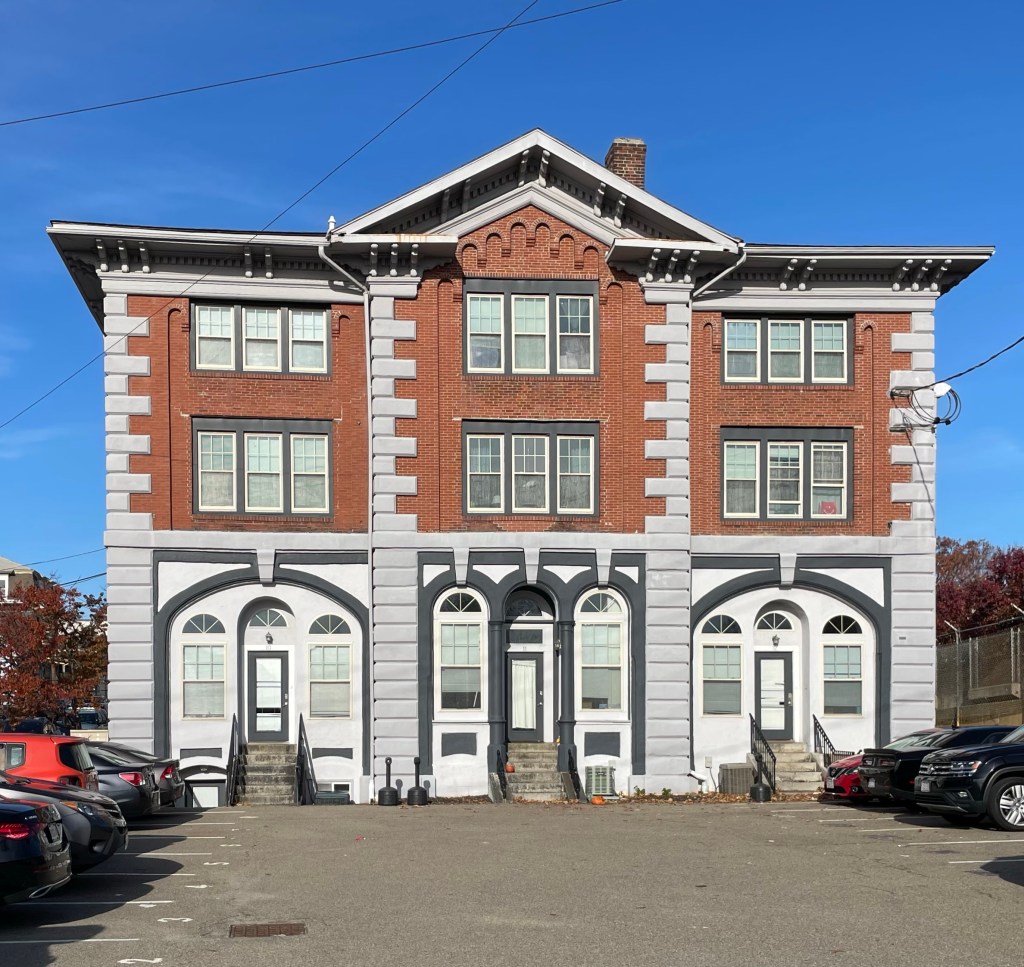
Dorchester Mutual Fire Insurance Building // 1860

This is your sign to take a different route! When exploring a new town or neighborhood, I love to explore the obscure streets just as much as the iconic Main Streets as hidden treasures can always be found! This building in Dorchester’s Port Norfolk neighborhood was constructed in 1860 as the new home of the Dorchester Mutual Fire Insurance Company, which was incorporated in 1855. The company seemingly hired Dorchester-based architect Luther Briggs, who also laid out the streets for Port Norfolk and the Clam Point neighborhoods and designed many buildings in the area at the time. The high-style Italianate building features bold proportions, quoins, and cornice. While the former round-arched windows have since been enclosed and are traditional double-hung windows, they building still stands out! At the rear, Second Empire style rowhouses were built for private ownership. The building is now all condominiums following a renovation.

Freeman House // c.1870

One of my favorites in Dorchester is this Second Empire manse, built c.1870 for cotton broker Freeman S. Packer. The house at 14 Everett Street in the Clam Point/Harrison Square neighborhood is a handsome, formal example of a Luther Briggs-designed Italianate Mansard residence. Although today sheathed in vinyl siding, much of the original siding and trim detail are likely still under there, preserved. Set back from the street facing an ample hedge-enclosed front yard, the three bay main façade exhibits a center pavilion and full-length front porch which undoubtedly appealed to summer guests who vacationed here when this house was known at the Russell House, an apartment hotel during the 1890s and early 1900s.

Freeport Street Power Station // 1896

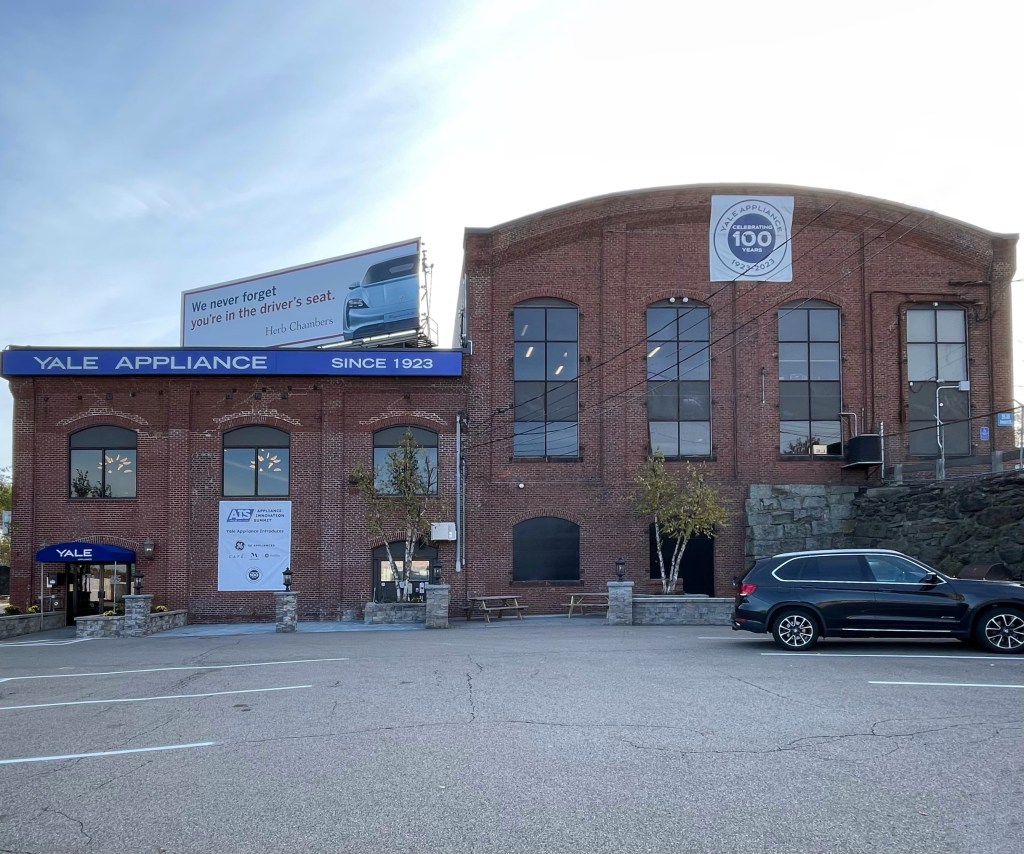
The West End Street Railway was established in 1887 originally as an offshoot of a land development venture, but it rose to prominence when it merged several independent streetcar companies into a single organization. Over the next decade, it became the primary operator of public street transit within the Boston area! During this time, the company maintained one of the largest street railway systems in the world, the first unified streetcar system in the United States, and first electrified system in a major US city. Now, it’s the infamous MBTA. How far they fall… Power plants were needed all over the city to provide electrical power for the company’s street cars, this was the fourth (and final) power station built, and it powered the Dorchester, Neponset, Ashmont and Milton lines. The station was constructed in 1896 on the shores of Dorchester Bay, which allowed for coal to be delivered in barges to the plant. Old stone walls formerly lining the shore can be seen to this day. Landfilling in the second half of the 20th century and the construction of I-93 have since cut off the building from the shore. Eventually the building was sold off and today is home to Yale Appliance, good thing none of their products are coal powered!

Putnam Nail Company Factory // 1860+

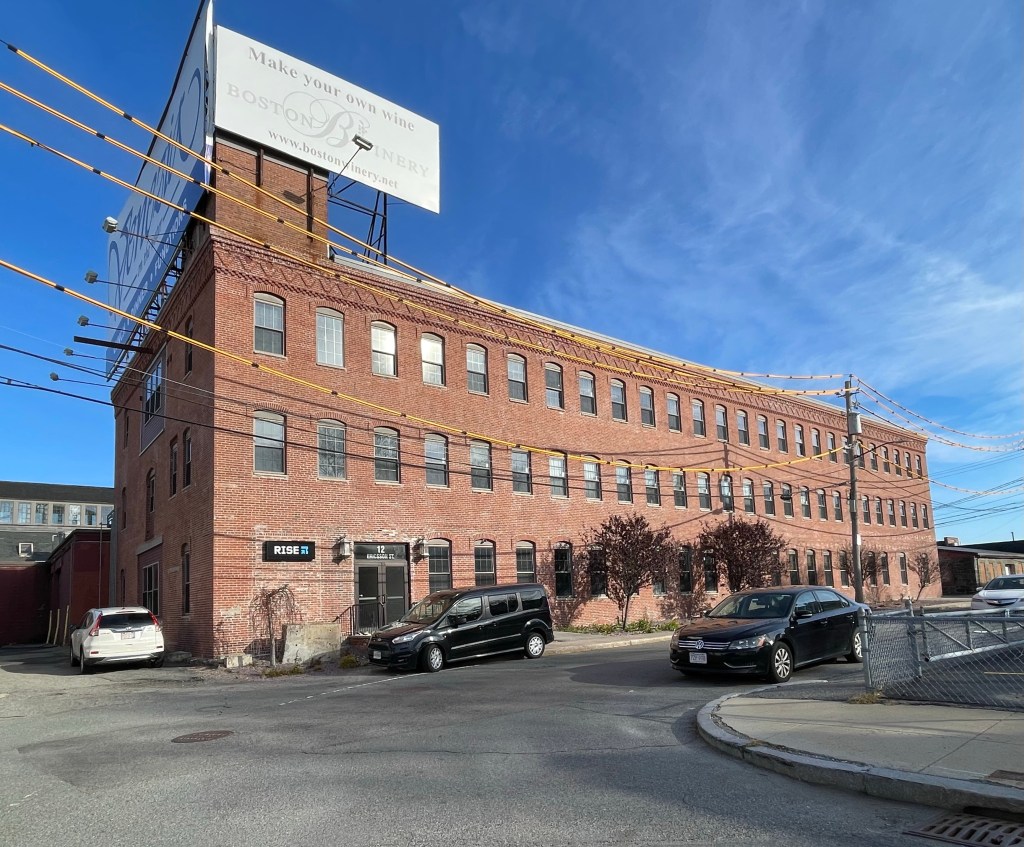
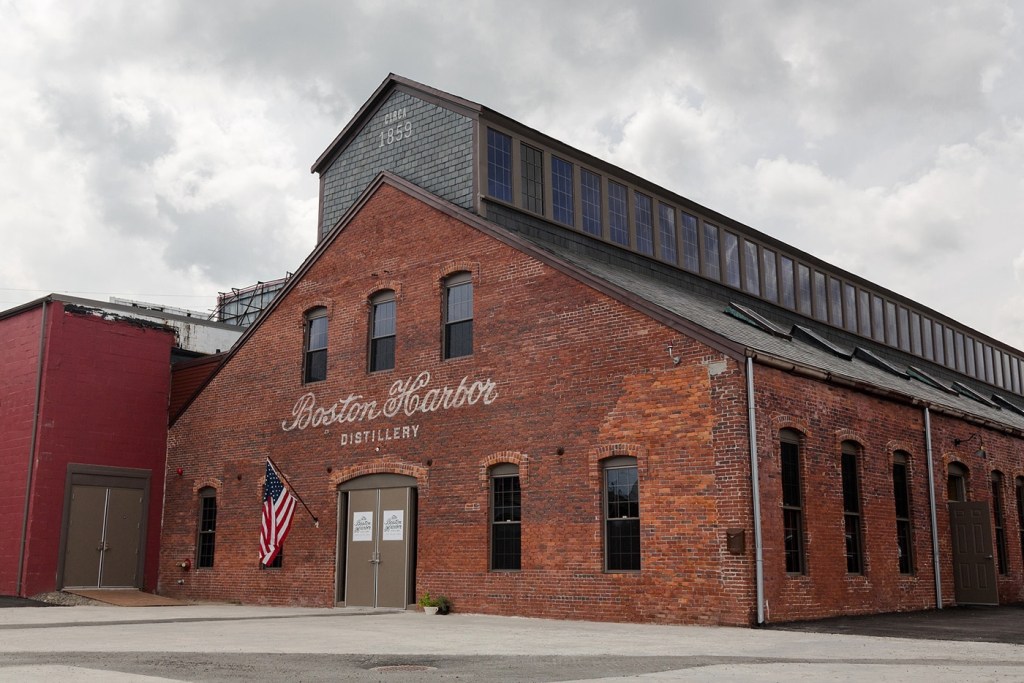
The Putnam Nail Company was founded in 1860 and located at the northern tip of the Port Norfolk neighborhood of Dorchester, Boston, Massachusetts. The company was founded by Silas Safford Putnam (1822-1895), who was the seventh of nine children by Israel Smith Putnam and Charlotte Safford of Hartford, NY. He moved to Boston and found work as Boston’s industrial growth took-off. He owned a curtain factory before patenting a process to manufacture wrought nails in the 1850s. After some time in Abington and Roxbury, he moved to Dorchester, purchasing large pieces of land and began building a manufacturing complex for his new Putnam Nail Company. The company made world-class horseshoe nails until it closed in the early 1900s. The property here was acquired by the George Lawley & Son Shipyard, who moved from their cramped City Point, South Boston shipyard to this newer yard. Already an established and respected New England manufacturer, the Lawley company had been building wooden ships in Massachusetts since 1866. The site was later the home to Seymour’s Ice Cream and was abandoned in the late 20th century. The large 1890s brick factory is now occupied by RISE, a development/construction management firm, with other buildings occupied by the Boston Winery and Boston Harbor Distillery.

Albert T. Stearns Lumber Company Office // c.1855

The Stearns Lumber Company, which originally covered forty acres, was opened by Albert Thomas Stearns in 1849 at Port Norfolk, in Dorchester, Massachusetts. The location was ideal for transportation as wood could arrive by ship via the harbor or by rail. Stearns made everything from greenhouses, to water tanks, to millwork, but they specialized in wooden gutters, a necessary component in housing construction, and even invented a machine just for this purpose. Stearns’ machine removed the core of the gutter in one piece with a cylinder saw, which allowed the leftover product to be reduced into moulding, trim, ect. Stearns specialized in Cypress lumber and erected a saw mill in Florida, having it shipped up to his lumberyard in Port Norfolk. He became known as the Apostle of Cypress. The company eventually closed in 1968, after decades in losses of national lumber production and an increase in the use of cement and steel in building. The former Stearns Lumber Company yards were redeveloped and is now the site of Joseph Finnegan Park. The brick company office building is the last extant building from the historic A. T. Stearns Lumber Company, and its future is uncertain. The building is currently owned by the Massachusetts Department of Conservation and Recreation (DCR), who asked for the building to be demolished, causing the local neighborhood to speak out for its preservation. This is one to watch out for!

Broad Street Association Building // 1805

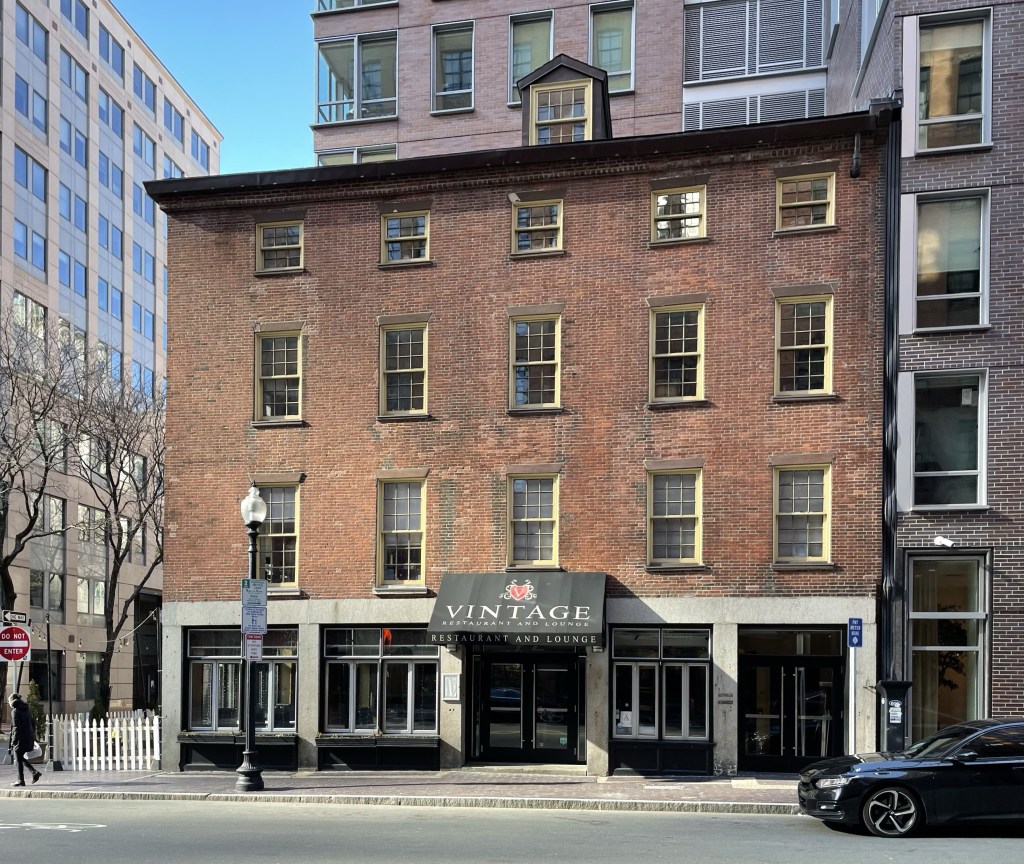
One of the few remaining Federal period buildings in Downtown Boston is this survivor located on Broad Street, one of the best streets in the city! The building was constructed for the Broad Street Association, which was made up of members: Uriah Cotting, Harrison Gray Otis, Francis Cabot Lowell and other prominent Boston entrepreneurs with the goal to upgrade Boston’s waterfront south of Long Wharf which comprised of an outdated system of individual wharves. The organization hired the esteemed Boston architect, Charles Bulfinch to furnish plans for the building, of which they paid him $100. While this modest example of the Federal style is not Bulfinch’s best work, is is notable as he was largely responsible for changing the architectural face of Boston, not only through own designs, but also through influence on other architects and builders of the time. This building was long owned by Francis Cabot Lowell and was rented out to commercial ventures, including some of the later decades of the 1800s when it was occupied by C. D. Brooks, a maker of pickles and preserves. The building was restored by CBT Architects in 2005 as part of a larger redevelopment of the block which includes a mid-rise apartment building, Folio.

Long Wharf Hotel // 1982

In the second half of the 20th century, much of Downtown Boston and the Waterfront areas were blighted with decaying buildings. Seeing tax dollars flee to the suburbs, the City of Boston used Urban Renewal to demolish large areas to erect new neighborhoods and blocks to revitalize the city. Much of it was done with a heavy hand, evicting largely minority and immigrant residents and razing of traditionally walkable neighborhoods for more car-centric districts. The Waterfront was traditionally the economic hub of Boston, with large commercial wharf buildings jutting out into the harbor symbolizing the economy’s strong ties to maritime trade for centuries. Boston Properties was an early developer who saw the potential of the revitalized waterfront, and developed this hotel off Long Wharf. Architect, Araldo Cossutta, (who was originally picked 8th of 8 submissions in a design competition) was ultimately selected to design the hotel, which at first glance may look out of place. However, the building draws cues from the area, evoking the Quincy Market warehouses as well as the attributes of a modern ocean liner on its head. Relatively simple massing with rectilinear and semi-circular fenestration at the lower level rises to a complex series of stepped back balconies, which form a steep gabled roof. To me, its the right amount of recessiveness and boldness in Postmodernism.

Tower Records Building // 1918 & 1986

New England is home to just three projects by world-renowned (and sometimes maligned) architect Frank Gehry. To me, architecture is best when it makes you stop, look, critique, and comment on it. Architecture is an art, and it should evoke emotion and discussion. Gehry’s work does just that. His only project to date in Boston is located at the corner of Newbury Street and Massachusetts Avenue in the Back Bay, a project I would assume most don’t realize was a Frank Gehry design. The building was originally built as a seven-story office building (originally planned as eight stories) over an MBTA station lobby in 1918. Designed by Arthur Bowditch, the building was completed a year later, built of buff brick and concrete. The Boston Elevated Railway Company (BERy) moved into the top floors of the building and it became known as the Transit Building. The construction of the Massachusetts Turnpike in the 1960s removed neighboring buildings to the south, exposing the southern, unadorned façade of the building. By 1986, owner-developer Richard Cohen began a major renovation of the building with Tower Records as the main tenant. Gehry worked with local architects Schwartz-Silver who added an eighth floor with a cornice support by angled struts. The south and east sides of the building were sheathed in lead-coated copper with the street-facing west and north sides retaining their original brick and stone, but with added glass canopies supported by more angled struts. As housing became more desirable, the top five floors were converted into 54 condominiums. The design is timeless and showcases how new and old can work together in a juxtaposition of styles well! What do you think of the building?

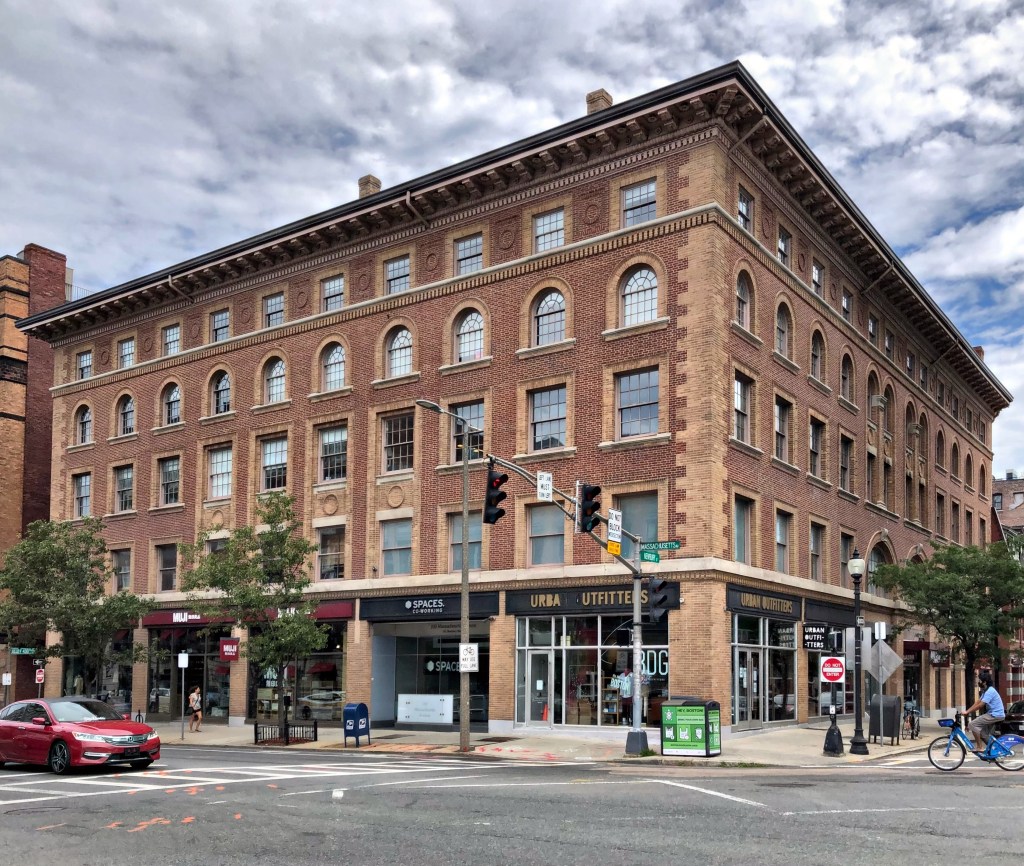
Charlesgate Stables // 1892

Buildings not built for people, but for horses! This handsome masonry building sits at the heavily trafficked corner of Newbury Street at Massachusetts Avenue in the Back Bay neighborhood of Boston. It may get overlooked by some, but when you are not attempting to avoid shoppers on Newbury and cars and bicycles speeding along Mass. Ave., you’ll notice the amazing brickwork and details found on the former Charlesgate Stables. The building was constructed in 1892 as a five-story plus basement brick livery stable for owners Charles Kenney and Eugene L. Clark. Their permit called for storage of over 200 horses and other goods. The architectural firm of Peabody and Stearns designed the building to fit well within the surrounding area which is dominated by large, ornate townhouses and institutions. Inside the building horses were led up ramps to second floor stables leaving the first floor for carriage storage. This layout made it very difficult to save horses when fires occurred. The Renaissance Revival style building with contrasting brick was purchased by the Maxwell-Briscoe Trust after owners Eugene Clark died in 1907 and Charles Kenney died in 1909. The trustees were manufacturers of the Maxwell automobile, and they converted the former stable into an auto salesroom and garage, to keep up with the shift from horses to automobile. The building today has been converted to commercial use with retail on the ground floor and offices above.

Knoll International Furniture Showroom // 1980

An exemplar of late International Style, this stucco-clad concrete building stands apart from its traditional Back Bay neighbors and is located on one of the city’s most busy streets, Newbury Street. Built as the showroom and offices for Knoll International furniture, its crisp design is an elegant statement in form and details of Bauhaus- and Le Corbusier–inspired architecture, including its asymmetrical composition, curvilinear lower facade, horizontal window bands, and stairwell located behind a glass brick wall. The building was designed by Gwathmey, Siegel and Associates who have a great diversity of commissions, all with thoughtful site-specific designs. The building reinforced the positive qualities of modernist architecture at a time when some architects were advocating for historic revivals and Post-Modernism. The building was later occupied by DKNY and is presently rented out by Lenscrafters.

Garden Building // 1911

The only building that survived the wrecking ball of Urban Renewal on the stretch of Boston’s Boylston Street, south of the Public Garden was this six-story commercial building, known as the Garden Building. In 1911, architect Julius Adolphe Schweinfurth furnished plans for the new commercial building which was in the Beaux Arts style. The first floor was originally planned for three stores, with the upper five floors containing offices. A recessed penthouse floor served as studio space for artists and photographers with the large windows and skylights, the unobstructed views of the Public Garden didn’t hurt either! When the bulldozers of urban renewal came in the 1970s and 1980s to the area, this building surprisingly survived, and was reincorporated into the larger Heritage on the Garden condo development.

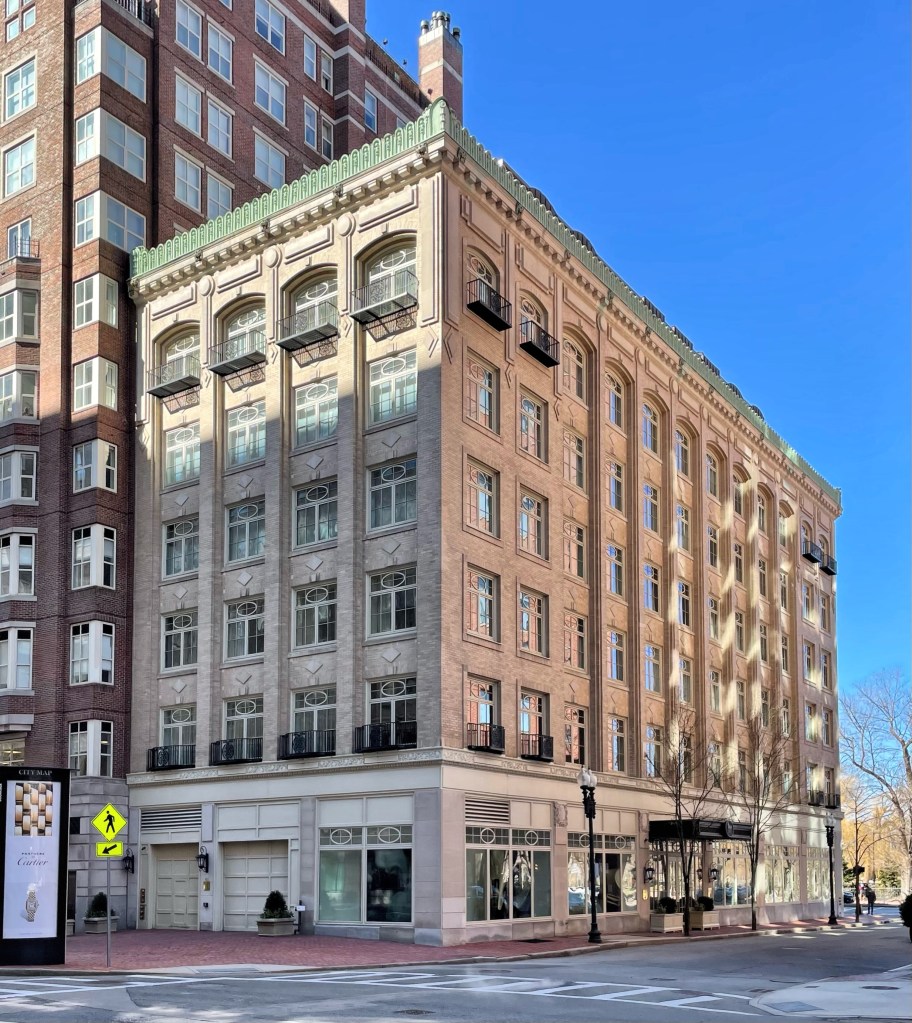
Heritage on the Garden // 1988

Located across Arlington Street from the since demolished Shreve, Crump & Low building (last post), Heritage on the Garden stands overlooking the Boston Public Garden. Heritage on the Garden was a result of a redevelopment initiative known as the Park Plaza Project, one of the city’s many urban renewal projects of the 1960s and 1970s, where buildings, blocks, and sometimes neighborhoods were razed and redeveloped. As part of the city’s effort of dramatic urban renewal, the Park Plaza area was identified as a site for intensive new uses, including hotel and apartment towers ranging from thirty to fifty stories! The impact of these buildings on the Public Garden and Boston Common was considered unacceptable by many residents of the city, with citizen participation helped to require lower-height buildings which would front the iconic Public Garden. In the 1980s, nearly the entire block of Boylston Street between Arlington and Hadassah Way was razed for the erection of the new condominium building, developed by the Druker Company and designed by The Architects Collaborative (TAC). The project was one of the last of the iconic TAC firm, once led by Walter Gropius, who helped bring Modernism to the United States. The Post-Modern style building ranges from five- to twelve-stories tall and is constructed of brick with cast stone, a nod to the historic Boston architecture, but with modern forms and projections. I think it works quite well, but maybe that is because I wasn’t around to see what was there before…

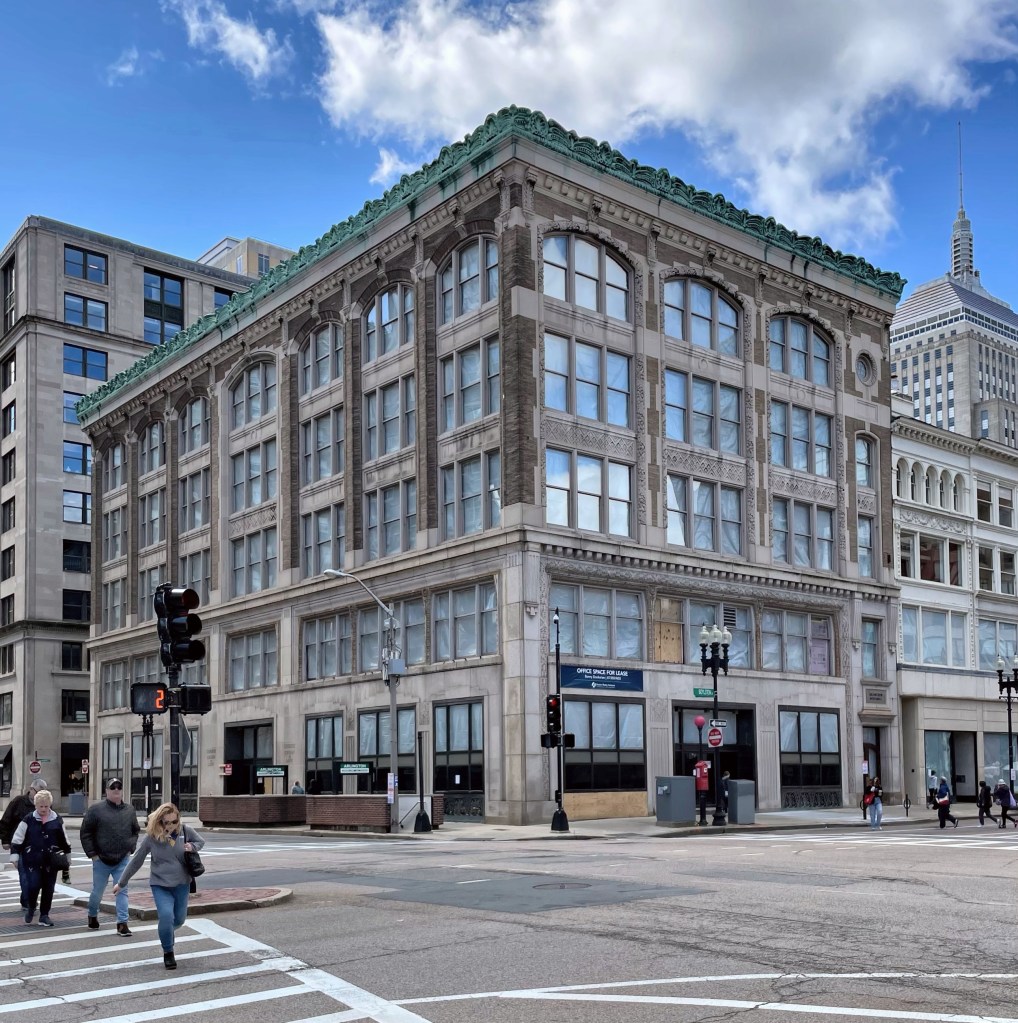
Arlington Building // 1904-2022

This one took me a while to write about because it still pains me to see it was demolished… The Arlington Building was constructed in 1904 as a mid-block building on Boylston Street, across from the Public Garden for the Bryant and Stratton Commercial School. It was designed by architect William Gibbons Rantoul of the firm Andrews, Jacques & Rantoul in the Beaux Arts style. The school building was significantly altered when Arlington Street was extended southward through Boylston Street, making this building suddenly a corner landmark. The new Arlington Street elevation was modeled after the Boylston Street facade. By 1929, Shreve, Crump & Low, established in 1796, the oldest purveyor of luxury goods in North America, moved into the building. The next year, they hired architect William T. Aldrich to add Art Deco embellishments and storefront designs, along with interior renovations to modernize the structure. The luxury company had downsized and moved out of the building, and its prominent site was threatened when owner/developer Druker Co. submitted for a demolition permit to raze the building (and others on the block) to erect a modern office/commercial building. After years of fighting between local preservationists and business interests and developers, the latter won and the building was demolished by late 2022. The new building, 350 Boylston Street, is presently undergoing construction, and in my opinion, is a poor attempt to fit into the surrounding context and is neither as unique or inspiring as the former building.

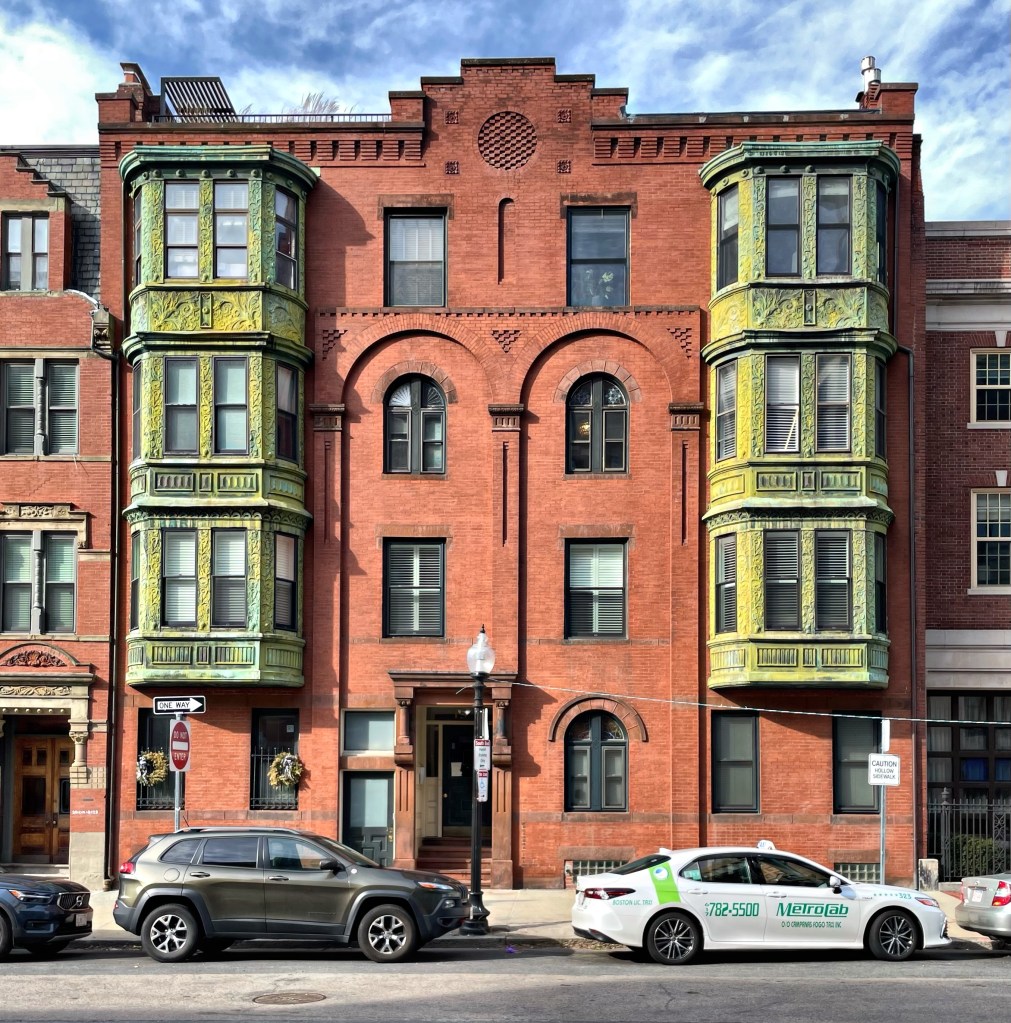
The Atherton // c.1890

About ten years after the nearby Carlisle building (last post) was completed by owner Jonas Gerlusha Smith (1817-1893), he began construction on another large, apartment hotel next door. He again retained architect Arthur Vinal, who was acting City Architect for the City of Boston to furnish the plans on the building, which would be attached to the older portion which fronts Gray Street behind. The building is extremely well-preserved and has some stunning metal bays with decorative details which really pop!