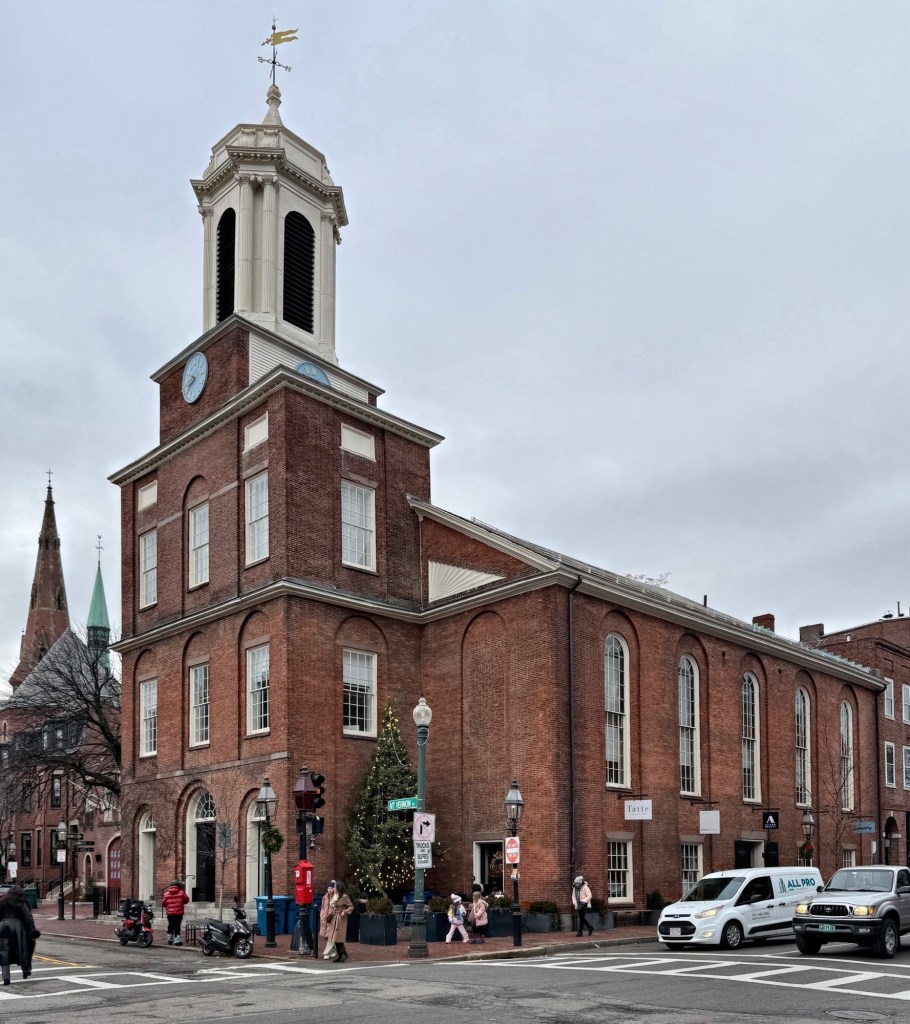
The Charles Street Meeting House at the corner of Charles and Mount Vernon streets in Boston’s Beacon Hill neighborhood is one of the finest examples of a Federal period meeting house in New England. The building is thought to have been designed by architect, Asher Benjamin, due to its similarities to his Old West Church on Cambridge Street built a year prior. At the time of construction in 1807, the church stood near the banks of the Charles River, but is now a distance away from the Charles following a land-filling campaign to expand buildable land in the city. The Charles Street Meeting House consists of a two-story gable-roof main structure with a three-story tower on the south (primary) elevation that supports a clock tower and wooden cupola with double Ionic pilasters supporting the domed roof. The building was constructed for the Third Baptist Church congregation, who used the nearby Charles River for baptisms. In the years before the American Civil War, it was a stronghold of the anti-slavery movement, and was the site of notable speeches from such anti-slavery activists as Frederick Douglass, William Lloyd Garrison, Wendell Phillips, Harriet Tubman and others. The Baptists sold the structure to the First African Methodist Episcopal Church in 1876, which was part of the first Black independent denomination in the United States. The AME Church sold the building in 1939 to the Charles Street Meeting House Society, and after a period of use as an Albanian Orthodox church, it was sold to the organization that is now, Historic New England, who were required to keep restrictions to preserve the building’s exterior. It served as a Universalist church from 1949 to 1979 with rented space inside to tenants, including a LGBT newsletter, Gay Community News, which was founded in the building in 1973. In 1980 the Meeting House was purchased by the Charles Street Meeting House Associates, who worked with the architectural firm of John Sharrat Associates to restore the building and adaptively reuse it into four floors of offices, with retail on the ground floor.
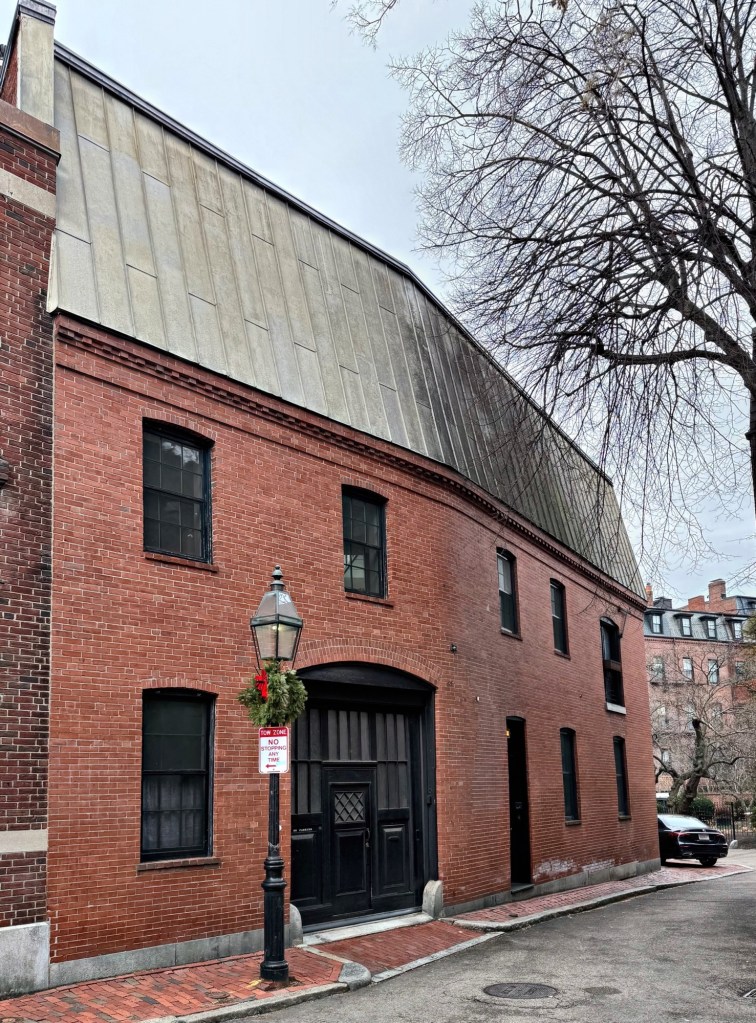
Located behind the iconic former fire station on Mt. Vernon Street in Boston, this converted stable maintains the important nickname for the Beacon Hill Flat as the “horsey” part of the neighborhood, which developed on filled land and contained many stables for wealthy Beacon Hill residents. This two-story stable fronts River Street and dates to 1870 and was built along with the townhouses fronting the hidden Mount Vernon Square for Grenville Temple Winthrop Braman (1832-1902), who partnered with a builder, Daniel Davies, to develop the lots here. The stable, which originally had a flat roof, was occupied as private stables and later as storage for the townhouses for nearly 100 years until it was purchased in 1968 and converted into residences by architects and partners, Joan E. and Marvin Goody, who established Goody/Clancy, a Boston architectural and design firm. The interior was modernized and the addition of a contemporary metal “mansard” roof fits well within the context of the neighborhood and was an important early “remodel” in the Beacon Hill Historic District.
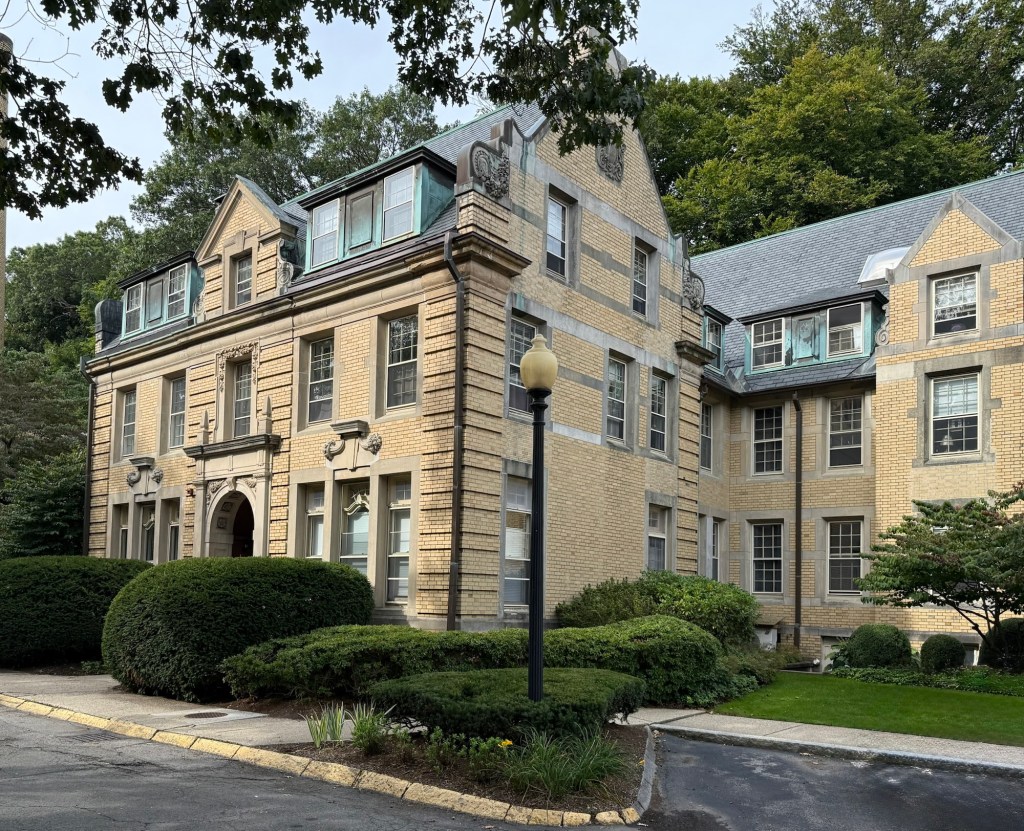
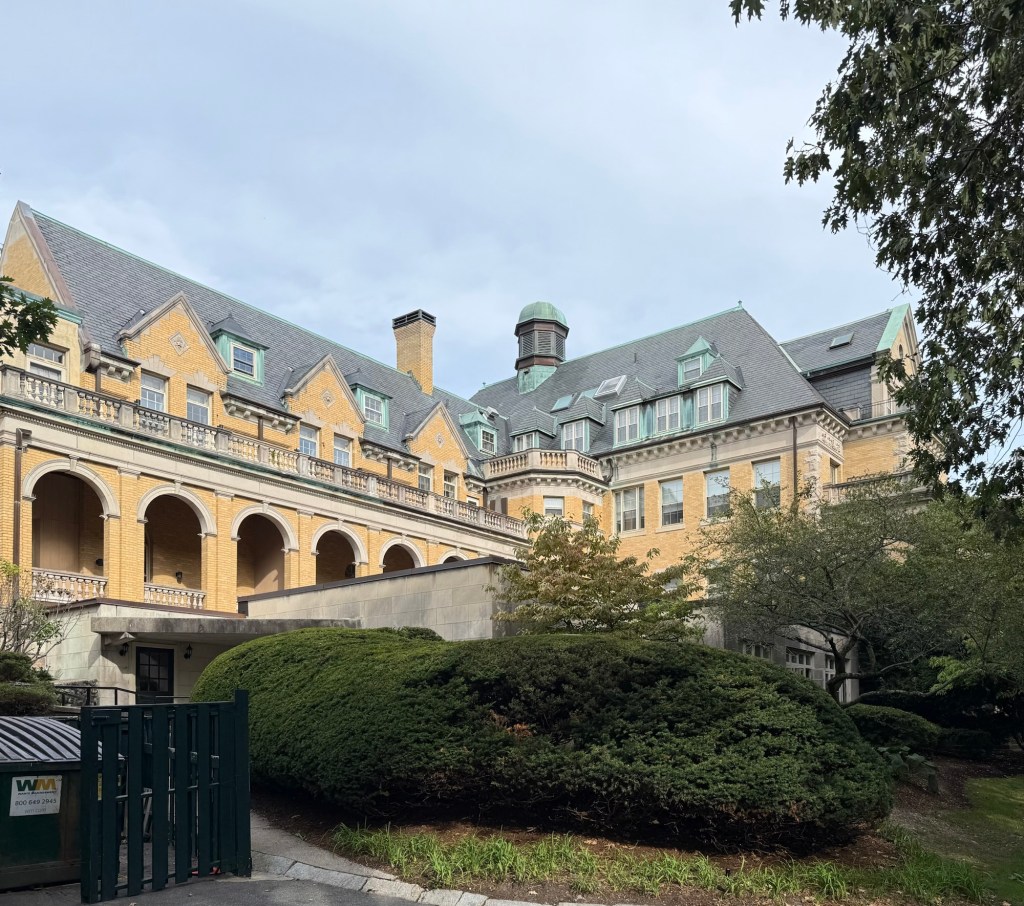
Located behind the former Boston Free Hospital for Women in Brookline, this charming yellow brick building employs materials and design elements of its neighbor, but was designed and built by different architects nearly a decade later. Built in 1908 as a nurse’s residence this handsome building was crucial to the expansion and growth of the women’s hospital here, providing much-needed living space for employees of the hospital who worked around the clock to provide some of the highest-quality medical care in the Boston area. Designed by the firm of Coolidge & Carlson, the nurse’s residence employs intricate limestone detail
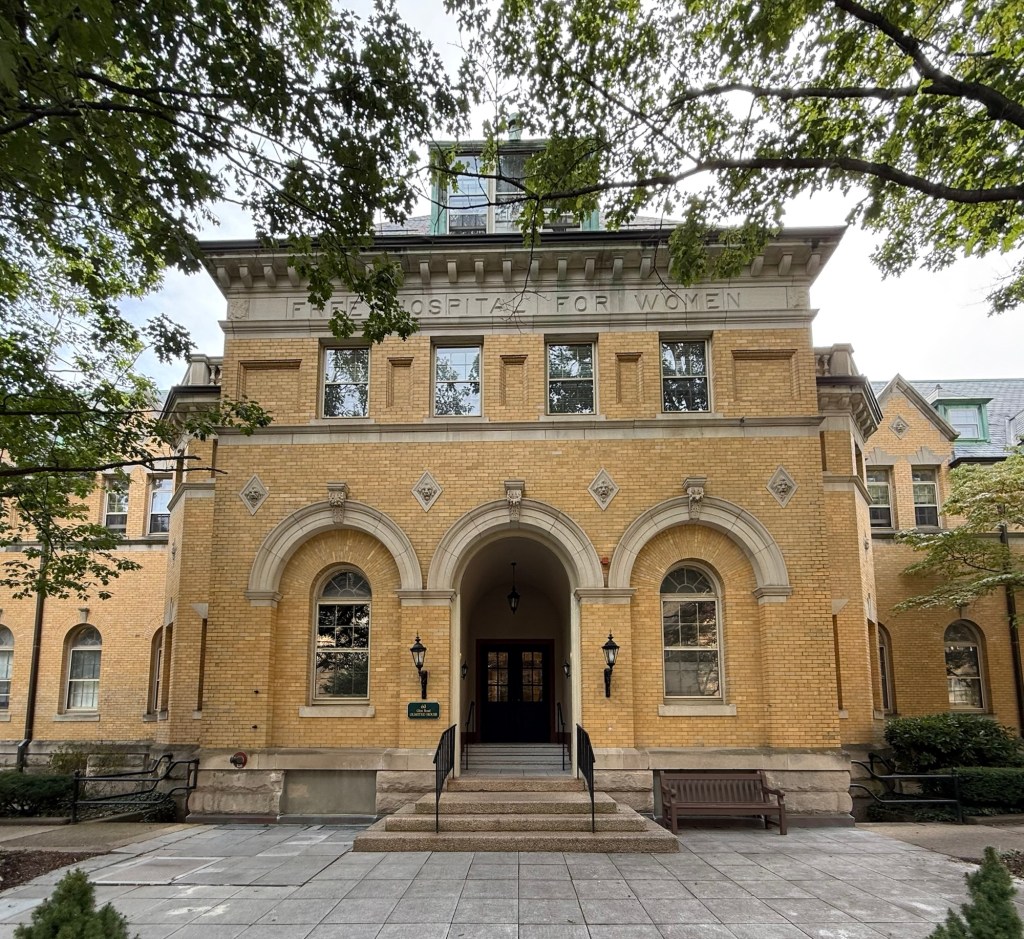
This handsome yellow brick building, designed by architects, Shaw and Hunnewell, was completed in 1895 as the Boston Free Hospital for Women. The hospital was organized in 1875 in a converted rowhouse in Boston’s South End, and after relocating once, it was decided that a purpose-built hospital was needed for the growing demands of the institution. A site in Brookline on the Muddy River, overlooking Frederick Law Olmsted’sRiverway and Olmsted Park, was purchased and the hospital was opened in 1895. The brick and limestone hospital building is somewhat Chateauesque in style and when opened, had no electricity and no telephone. The hospital is historically significant as the first teaching hospital for Harvard and as the first hospital in the country to apply radiation treatment for cancer, along with being a major research facility in fertility, especially the work of Dr. John Rock (who lived nearby) on the development of the birth control pill and research on in-vitro fertilization. The Free Hospital for Women merged with the Boston Lying In Hospital (now part of Brigham & Women’s), which closed its Brookline Campus in the 1960s. In 1984, the firm of Childs, Bertman and Tseckares oversaw the conversion of the buildings to condominiums, called The Park, with sympathetic new construction.
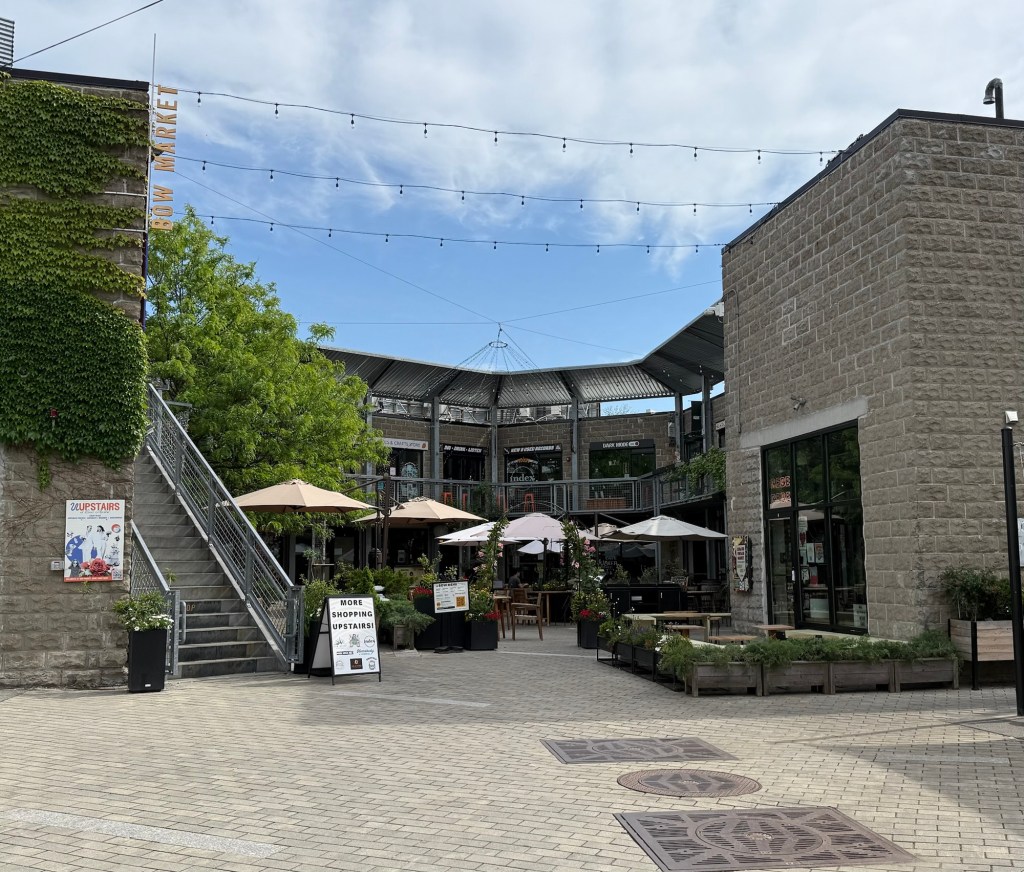
One of the best and most successful examples of adaptive reuse in the Boston area has to be Bow Market in Somerville’s Union Square commercial district. Tucked away behind buildings on the busy streets, a former concrete block storage facility was reimagined as a vibrant, European style marketplace of local vendors and businesses. The project was envisioned by business partners Matthew Boyes-Watson and Zach Baum, who worked with Matthew’s father, architect Mark Boyes-Watson, to renovate the storage building to create storefronts. The team worked with landscape architects, Merritt Chase, to make the public courtyard more enticing, which each micro-commercial space opening onto the landscaped communal courtyard. Design elements include seat walls constructed from recycled granite from the renovation of the Longfellow Bridge and reclaimed wooden beams from a ship building facility in Hingham. If you haven’t been to Bow Market yet, you must. This project is exactly what good urban planning and design is all about!
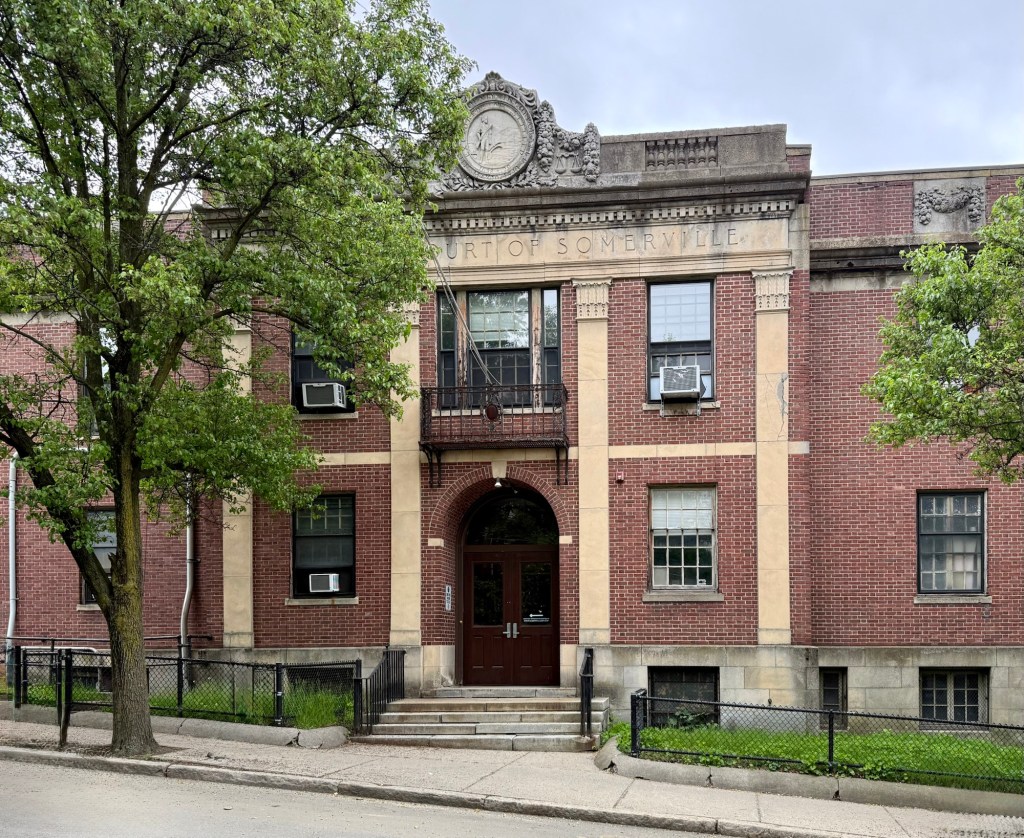
The former Somerville District Courthouse at 19 Walnut Street in Union Square, is a two-story masonry building constructed in 1925. While much smaller and less ornate than other courthouses, the small building is significant as the first courthouse built in the young city and an architecturally significant example of a Classical Revival style civic building designed by architect Charles R. Greco. The building served as the Somerville District Courthouse until the late 1960s, when the legislature authorized a new district courthouse. The City of Somerville purchased the old courthouse in 1969, and the building has housed offices for the City’s Recreation Commission since that time. Interestingly, the building was used for the filming of a courthouse scene in the 1980’s “Spencer for Hire” TV detective show.
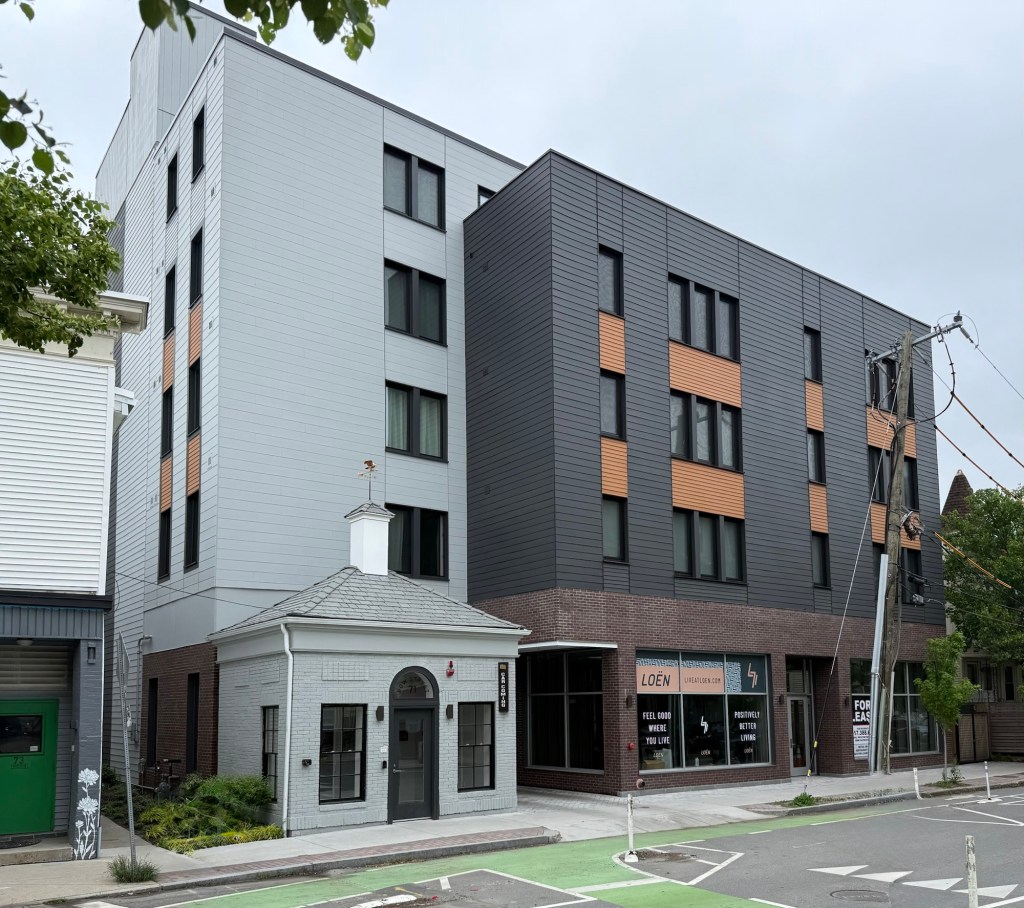
Union Square is the oldest and largest commercial district in Somerville, and its growth is tied to the residential and commercial growth of the City. The three main streets that form Union Square—Somerville Avenue, Bow Street, and Washington Street—were originally 17th- and 18th-century trade routes used by farmers in Somerville to transport products, mostly dairy and produce, to larger markets in Charlestown and Boston. As the region grew, so did Union Square, with later hotels, civic buildings, churches and later, more car-centric uses like automobile garages and gas stations. By the 1920s, prosperity stagnated and one-story commercial blocks replaced larger, more ornate structures. This small building, the Cities Service Refining Co. Fuel Station at 69-71 Bow Street, was built in the mid-1920s and is an example of the wave of automobile-oriented development that occured here at the time. Before WWII, many service station companies created brand-identities by designing the appearance of their service stations like the Cities Service Stations and Beacon Oil Company, who regionally, developed distinctive Colonial Revival cottage prototypes for their chains to fit better within local context. This small service station, now 100 years old, is Colonial Revival in style with a hipped roof with cupola, symmetrical facade, and fanlight transom over the center entrance. When a developer proposed to demolish the station, the local preservation commission found the building preferrably preserved, initiating a delay on the demolition, forcing the developer to either wait out the delay or incorporate the structure into the new building. They chose the latter, and now we can visually see the layering of history on this site in Union Square, incorporating preservation with a 24-unit passive house development with the old station used as a mailroom. What do you think of this story?
Built in 1904 as one of the finest Tudor Revival style residences in the Boston area, this residence in the Cottage Farm neighborhood of Brookline showcases all of the important elements of the iconic architectural style. The residence was built for Harry and Carrie Curtis, with Mr. Curtis being a partner with Curtis & Sederquist, bankers and brokers, with offices on Congress Street in Boston and in New York City. The couple hired architects Howard B. Prescott and William Sidebottom of the firm, Prescott & Sidebottom, to design the house. Rectangular in plan with massing enlivened by numerous cross gables and dormers, the house is decorated with exterior walls covered with wood shiplap at first story and half-timbered stucco at second story. The property was sold to Helen and Edward Mills by 1913. Mr. Mills was president and treasurer of the Edward C. Mills Leather Company. By 1931, the residence was owned by Erland F. Fish (1883-1942), a prominent lawyer and politician as well as the son of Frederick Fish, who owned the house across the street. Boston University purchased the property in 1964 as part of their institutional expansion into this neighborhood. Originally used as an alumni house, it later became the location for the Department of African American Studies. After an extensive expansion and restoration by Studio MLA (now Ashley McGraw Architects) and Kaplan Construction, the Tudor mansion is now a children’s daycare for Boston University faculty, staff, and graduate students.
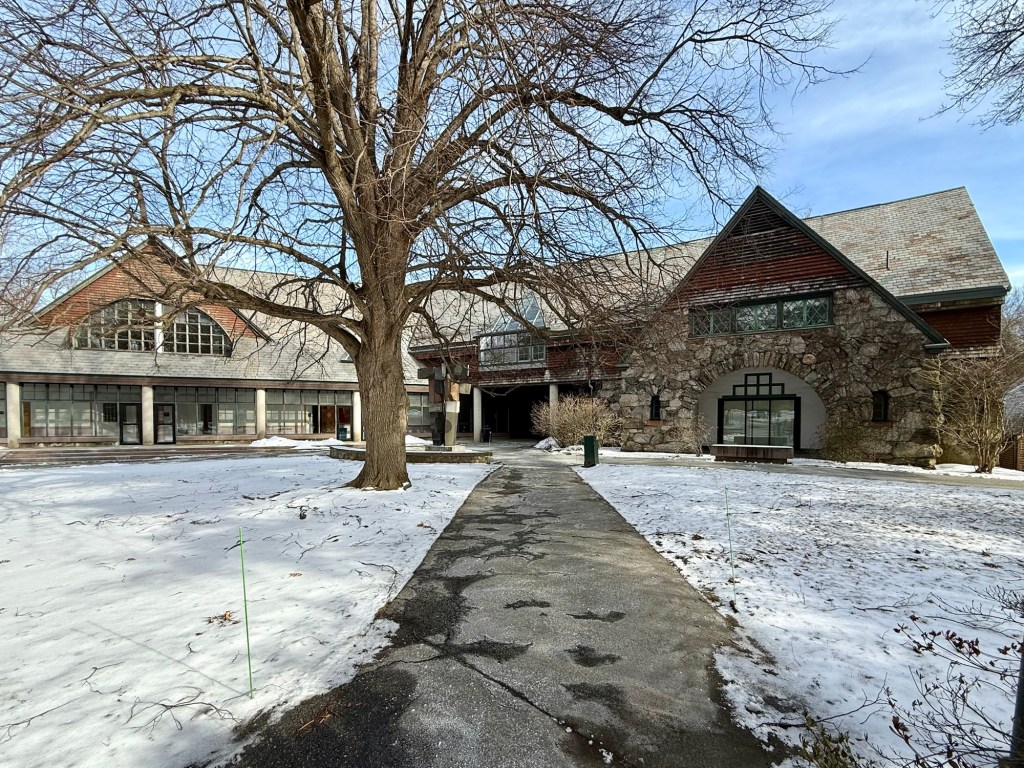
Built on the expansive grounds of “Roughwood”, a country estate in Brookline, Massachusetts, this former carriage house has seen many iterations in its lifetime. Like the mansion house, the carriage house is a blending of Queen Anne/Shingle styles with fieldstone and shingle construction, designed by the architectural firm of Andrews, Jacques & Rantoul. When the Roughwood Estate was purchased and converted to Pine Manor College, the carriage house was adaptively reused and added onto as the Annenberg Library with a large imaginatively designed wing by Shepley, Bulfinch, Richardson and Abbott completed in 1986. The building remains as a library as part of the newly established Messina College, a campus of Boston College, which opened in July 2024 for over 100 first-generation college students. Gotta love adaptive reuse!

 Buildings of New England