Norwood Press Complex // 1897

Now that is an interesting example of adaptive use… What do you think of this?

The Norwood Press was formed in 1894 by several companies which consolidated to form a company that covered all aspects of the book-making process. AII three companies had been located in Boston, but were lured to Norwood by free land offered by the local Business Association along with tax incentives that were too good to pass up. The underutilized land was quickly redeveloped in the 1890s with the several-building complex built on Washington Street in Norwood, Massachusetts with the largest building (pictured) constructed in 1897. By 1904,the press room of this plant was one of the largest in the U.S.,producing nearly seven million volumes ranging from 100 to 1,600 pages each. By 1917, the Norwood Press employed 600 workers in town! The Romanesque Revival style brick factory stands out for its five-story clocktower with (now enclosed) arches and corbelling. The Norwood Press closed after WWII and the plant was purchased by the Northrup Company. Today, the warehouse is under new ownership and is used as a storage facility, with many of the windows enclosed for the storage units.

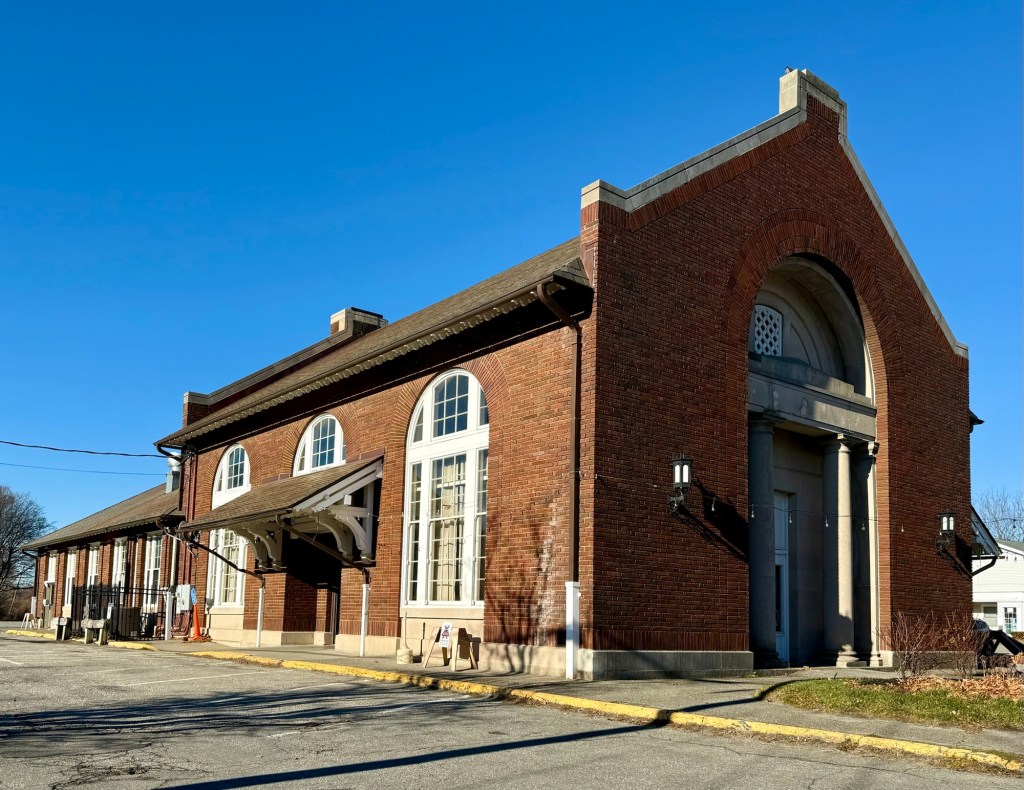
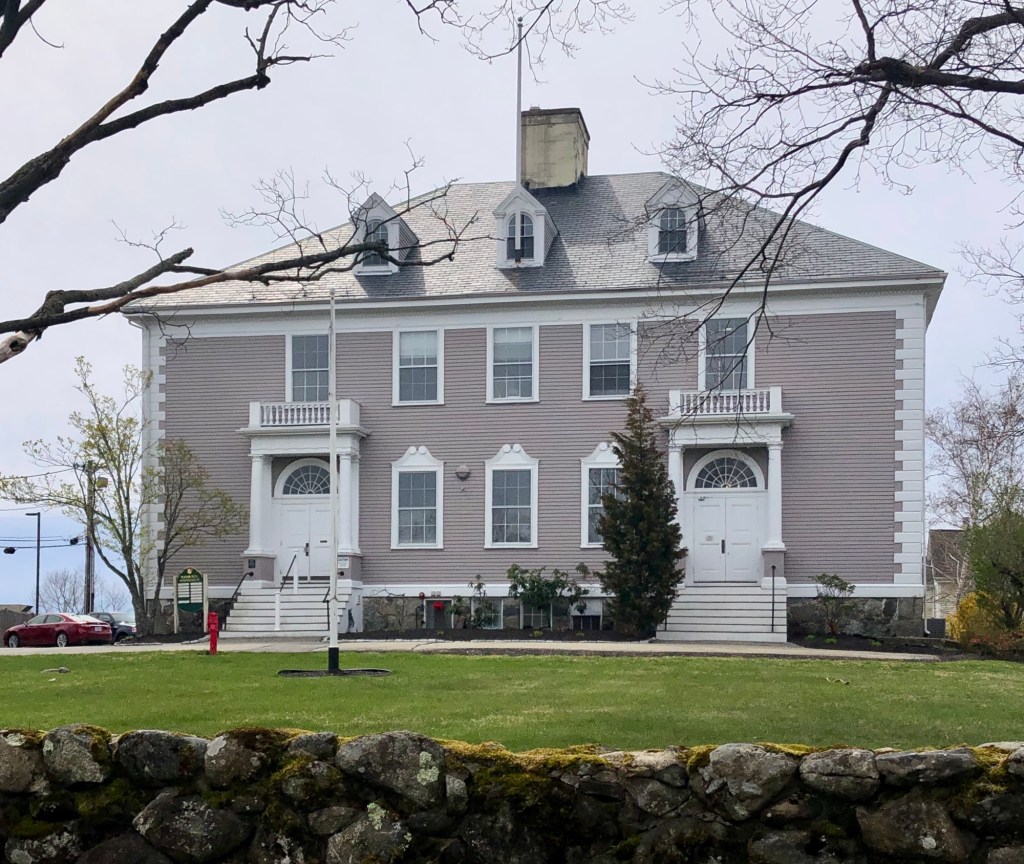
Atlantic Hall // 1920

Atlantic Hall is one of the most iconic buildings in the well-visited town of Kennebunkport, Maine. The landmark structure was completed in 1920 as a volunteer fire station, by the Atlantic Hose Company. The volunteer fire-fighting company was founded in April 1906, and different members kept different parts of fire fighting equipment in each of their barns without a consolidated station. With the advent of the automobile, the community raised funds and purchased a Chevrolet hose truck, but had no station to put it. Without having the town pitch in money, residents (both permanent and summer “rusticators”) donated funds and a central location in Cape Porpoise was selected as a site for the new station. Construction started on a modest building in 1914, but was halted during WWI. After the war, local resident, Marion Goodall Marland hired the well known firm of Kilham, Hopkins and Greeley to furnish updated designs for the station, in a more elaborate version of the Colonial Revival style, fitting for the charming town. The building opened in 1920 with an engine room at the first floor and a meeting hall on the second floor. It was in 1958 that the Atlantic Hose Company outgrew its station at Atlantic Hall, and a new fire house was built across the street. Atlantic Hall was renovated for library and event use and has remained a significant piece of Cape Porpoise ever since!

Dutch Arms Chapel // 1875

Tucked away on a side street in Saugerties, New York, this Victorian Gothic chapel has recently been given a new life for the arts. The chapel was constructed in 1875 as part of the Reformed Church of Saugerties (1852), designed by famed architect James Renwick, Jr., the architect of St. Patrick’s Cathedral in Manhattan and the Smithsonian in D.C. The architect of the chapel is not clear, but it retains similar detailing and materials to the main church. The structure was used for smaller religious meetings and a sunday school for decades until it eventually closed. The chapel was recently acquired by Isabel Soffer and Danny Melnick, co-founders of Hudson Valley Live, and has been restored and transformed into The Local: a year-round, multi-arts venue, breathing new life to the building and culture to the artistic town.

Former Sheffield Mill // 1887

The former Sheffield Mill is historically and architecturally significant as one of the last remaining large-scale manufacturing complex to survive in the village of Saugerties, New York. The building was constructed in 1887 as the J. B. Sheffield Paper Company and was used for the manufacturing of envelopes and bank bookbinding. In the 1930s, the building was purchased by the Knaust Brothers, who grew and harvested mushrooms in nearby towns, making mushroom beds or trays in this building. The Knaust Brothers were at one time, one of the largest firms growing and canning mushrooms in the world. The former mill was vacant by the late 20th century and its future was uncertain until it was renovated at the turn of the present century into senior housing. What a great rebirth of a great old mill!

Peep Toad Mill // c.1850

The Peep Toad Mill (also known as the Elliottville Lower Mill) was built in Killingly, Connecticut, around 1850 by the Elliottville Manufacturing Company, whose larger main mill was upstream from this complex. The Elliottville Manufacturing Company was formed in the 1830s and later acquired by Albert Elliott and Nelson Eddy, who expanded operations here. This structure, the lower Mill was used for spinning and preparing the warps for cotton sheetings, the firm’s principal product. In 1870, the two mills employed 18 women, 18 children and 13 men. The business closed in the 1880s, and the building was vacant for some time before being converted to a residence and artist studio. The old mill is a rare surviving example of a wood-frame textile mill, many of which were built but few of which survive, due to fires and/or later expansion of the premises. The present owners have done an amazing job restoring and maintaining this rare treasure!

Former St. Mary’s of the Bay Catholic Church // 1928

Catholic residents of Hull, Massachusetts surged in the early 20th century with many well-to-do Irish families settling in town as year-round or summer residents. As a result, the cramped original St. Mary’s of the Bay Catholic Church was deemed too cramped, and a site in Hull Village was selected for a new church. In 1927, ground was broken for the new stucco church, which was partially funded by the Kennedy Family, who had a summer house nearby. The first service took place in 1928 and the church was in use as a religious building until the 1990s when it was sold to a private owner. The church was converted to a single-family residence and recently sold to new owners, who preserve the significant Spanish Colonial Revival style edifice.

Ivy Glenn Memorial Hall // 1847

Methodists established a small congregation in Eastford, Connecticut by 1826, and by 1831, a new meeting house was built in the center of the village. The meeting house was used jointly by Methodists and Universalists, each having the right to occupy it half the time. By 1847, Methodists here were able to erect their own church, this building, in the Greek Revival style. Originally, the building had two doors on either side of a center window in the façade. There was a steeple and, rare in those days, a pipe organ in the sanctuary.  In 1916, the church joined with the nearby Congregational church, requiring them to sell the building ten years later. The town of Eastford bought the structure for $200 in 1926 for use as a town hall. In 1934, the Civil Works Administration provided funds to renovate the building with the town library being installed in a portion of the basement along with town offices and a vault. Town meetings were held in the former sanctuary space upstairs. When the space was outgrown for town offices, a new building was constructed elsewhere and this building transitioned to solely library use. The renovation project was paid for by money bequeathed by Wilmer Glenn, a New York stockbroker who spent summers town. He donated funds in memory of his late wife, Ivy.  The present-day name of the building came to be the Ivy Glenn Memorial and the library moved into its new spacious home in 1972.

Old Swedish Lutheran Church, Newport // 1896

By the end of the 19th century, the summer colony of Newport, Rhode Island continued to see the erection of large summer cottages which required large staffs to maintain them. Scandinavian girls were preferred by the wealthy residents for maids and drivers, and beginning in the 1870s; they joined other ethnic groups, such as the Irish in establishing their own communities in the coastal city. In 1892, organized under the New York Conference of the Augustana Synod, a Lutheran Church for Swedish-speaking residents was established. A small lot on Corne Street was purchased and work began on this small wood-framed church. Completed in 1896, the church was designed by by architect James W. Smith in the Gothic Revival style. It has a central bell tower and a spire and the interior of the church originally had an hourglass pulpit. Gold and white decorations surrounded an oil painting of the risen and ascending Christ. In the 1950s, the congregation purchased land on Broadway in the north end of Newport and built St. Peter’s Lutheran Church. The Corne Street church was sold and is now a private residence.

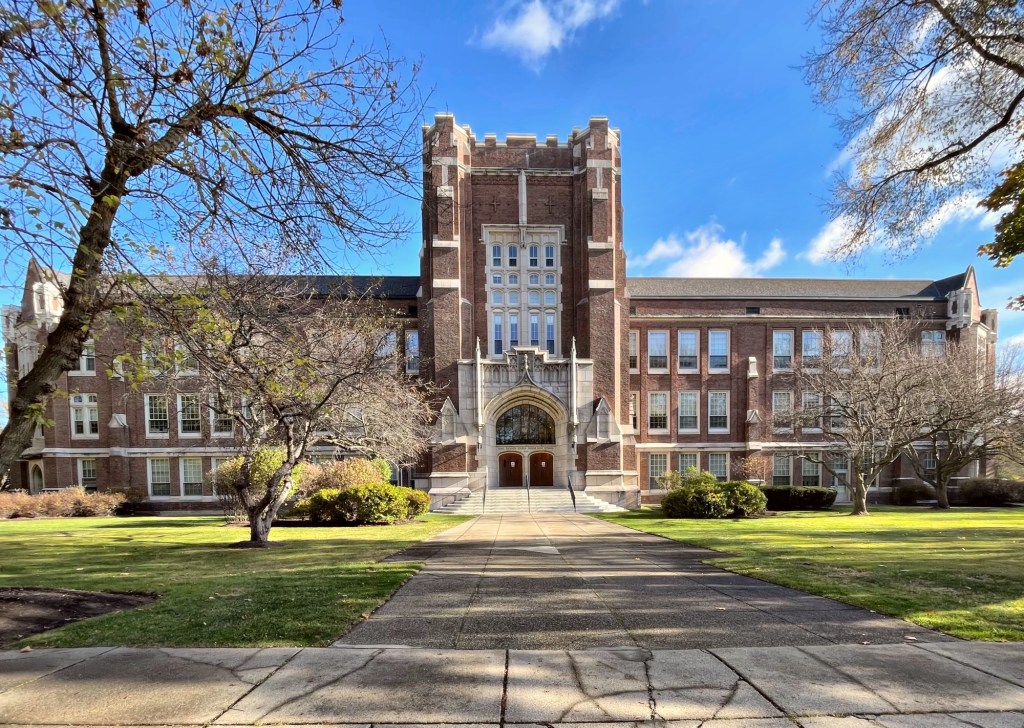
William Lloyd Garrison School // 1910

Tucked away in a residential neighborhood, the William Lloyd Garrison School in Roxbury’s Washington Park neighborhood is among one of the more successful school building designs of the early 20th century. Built in four stages between 1910 and 1929 to service a growing neighborhood over time, the school is named for abolitionist William Lloyd Garrison, who formerly lived in a home relatively closeby. The school complex consists of several different sections organized around a central courtyard and joined by passageways, all designed by the extremely underrated architectural firm of Newhall & Blevins in the Tudor style. Following the period of Urban Renewal in the neighborhood, the school district built contemporary schools and deaccessioned older schools. Today, the former William Lloyd Garrison School houses apartments.

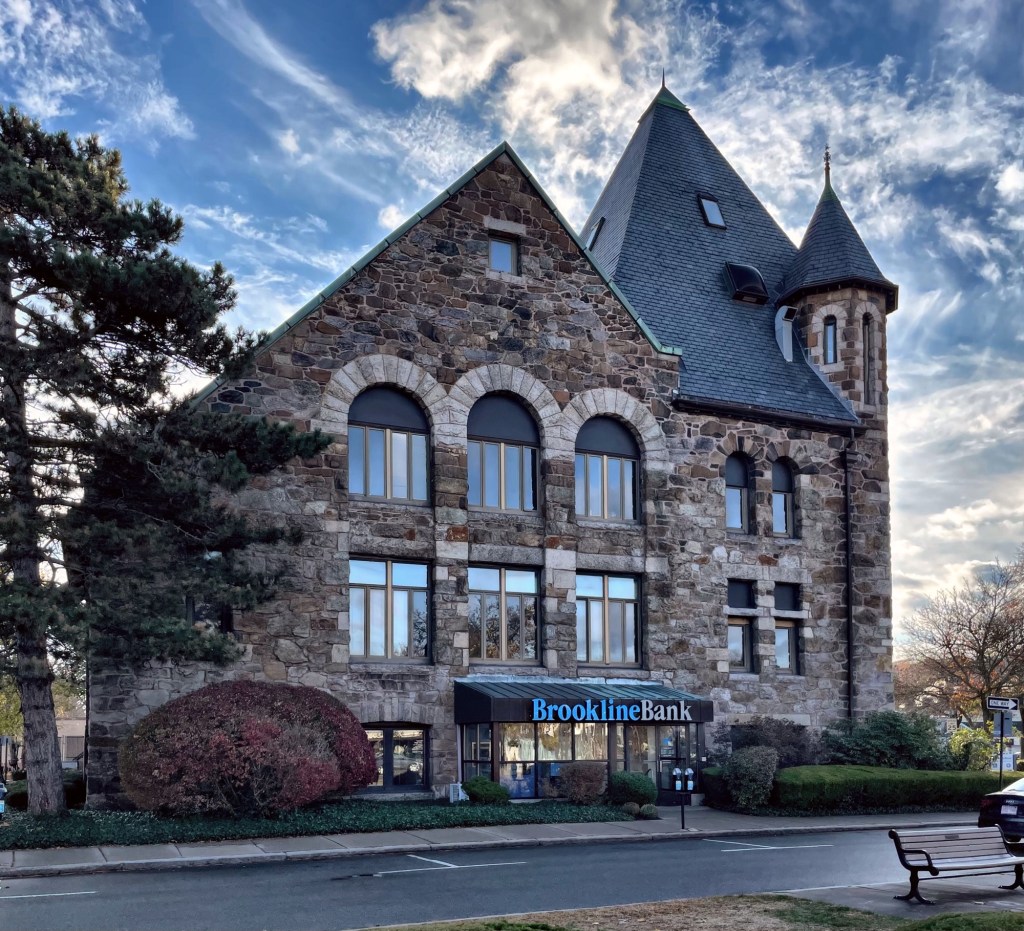
Lowney Chocolate Factory // 1903

The Lowney Chocolate Factory is a historic industrial complex in Mansfield, Massachusetts and was established there after town officials took advantage of rail access provided by the Boston and Providence Railroad and enticed businesses to establish themselves in Mansfield. The Walter M. Lowney Company was a chocolate and candy business founded in Boston in the early 1880s by Walter M. Lowney, who started his business by manufacturing chocolate bonbons. The company built offices and factories in Boston, Montreal and here in Mansfield, where they would ship out boxed sweets to stores all over the country. The Mansfield factory was designed by the architectural and engineering firm of Dean & Main in 1903. The firm was
comprised of partners Francis W. Dean and Charles T. Main, who had offices in Boston and specialized in mill design and engineering from 1893 to 1907, originally designing Lowney’s Boston factory in the North End. A later fieldstone addition was added in 1910 and housed the company’s office and shipping facilities. After Walter Lowney died in 1921, the Walter M. Lowney Company continued to operate under the ownership of Lowney’s wife. In the 1930s the factory property was wholly purchased by the Rexall Drug Company, who renamed the Lowney company, United Chocolate Refiners. The Mansfield factory was later owned by Nabisco to make chocolate for oreo cookies for a number of years until it again changed hands. The factory had been largely empty since 2010 until it was recently converted to mixed-income housing (the best kind of redevelopment)! Who doesn’t love a happy ending?