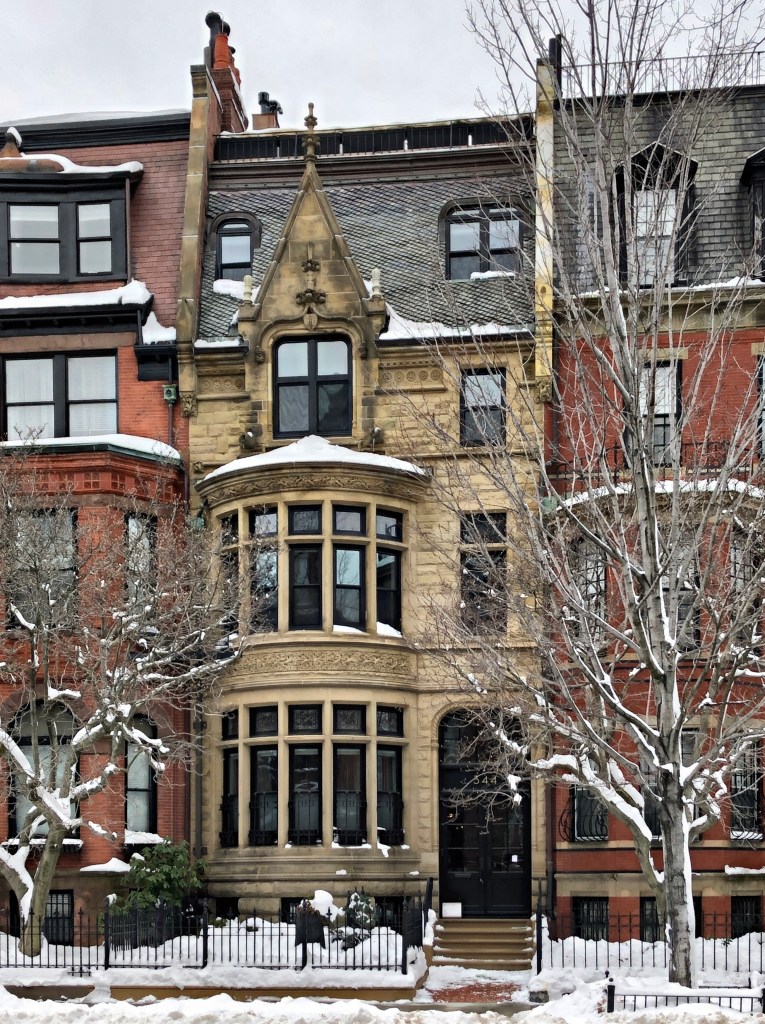
Daniel and Mary Knowlton House // 1880

Another of my favorite townhouses in the Back Bay neighborhood of Boston is this Victorian Gothic mansion on Beacon Street, built for Daniel and Mary Knowlton. The residence was designed by the firm of Allen and Kenway and built in 1880 and stands out architecturally for its use of style and use of material amongst a sea of brick. A former cotton merchant, Daniel Knowlton was treasurer of the Flexible Shoe Nail Company and later worked as a stockbroker. The large single-family dwelling was converted into four condominium units in 1989, but has since been switched back to a single-family residence. It sold for $11.2 million dollars as a five bedroom, six full and two half bath home in 2017. Yikes!
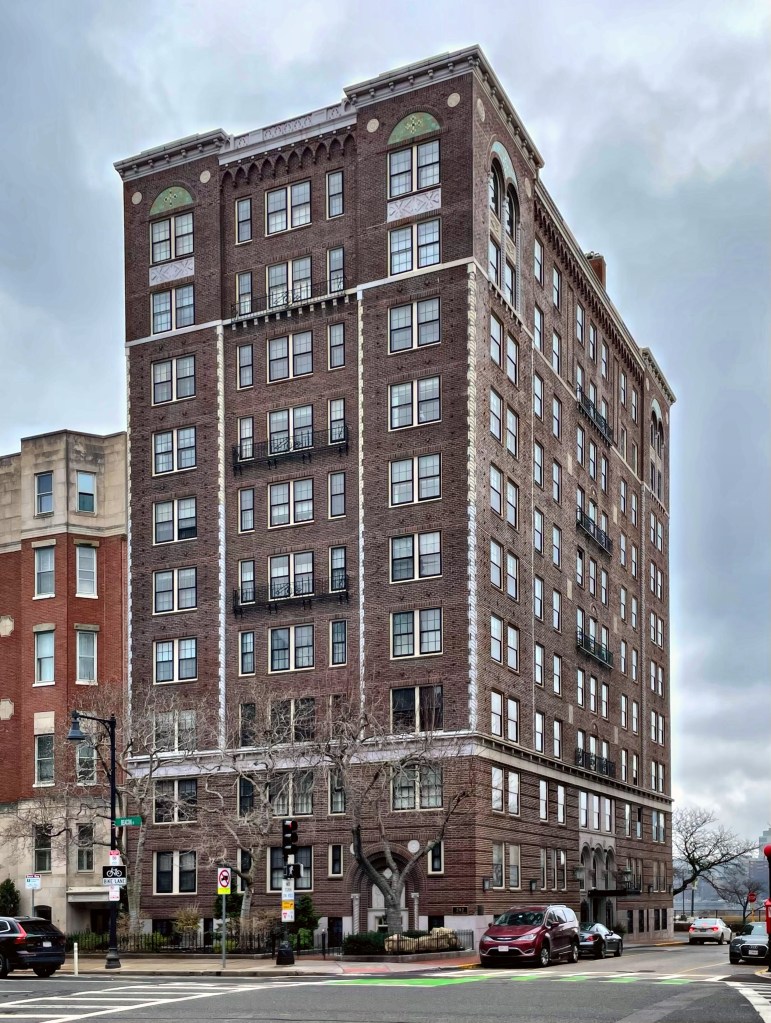
282 Beacon Street // 1927

One of the finest apartment-houses in Boston is this towering building at the corner of Beacon and Exeter streets in the Back Bay neighborhood. In 1926, real estate dealers Elliott Henderson and Roger B. Tyler purchased two townhouses on small lots and demolished them for the present structure. They hired the architectural firm of Blackall and Elwell furnished the plans for the 11-story Renaissance Revival style residence which included ten large apartments. The design is unique to the Back Bay with amazing cast stone details at the entries with rounded arch windows, fanciful brickwork, and spiral columns!

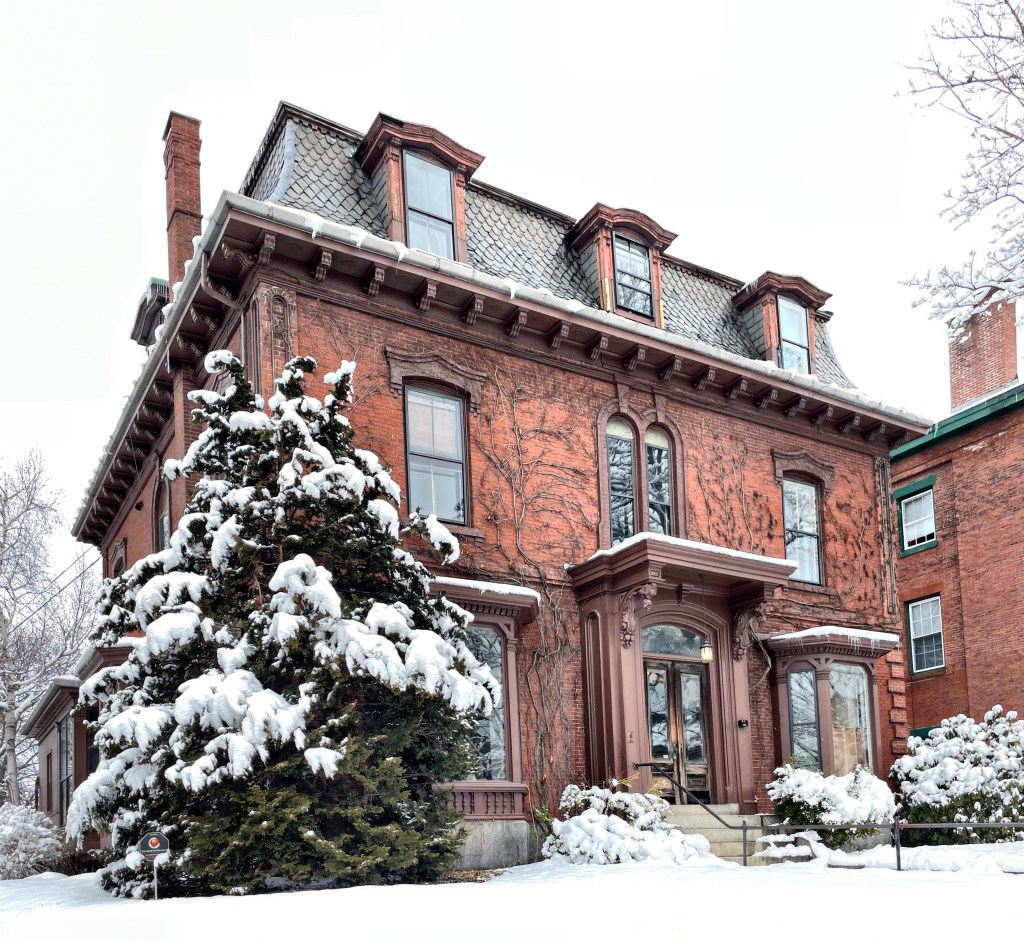
William Allen Jr. House // 1866

Italianate style houses dominate the Deering Street area of Portland architecturally, but there are definitely some great Second Empire residences and other styles seen here. This house (like seemingly every building in Portland in the 1860s) was designed by architect George M. Harding for William Allen Jr. The house would soon be Harding’s neighbor, so he made an effort to site and design this residence with care. The brick building is capped by a slate mansard roof and it has a beautiful projecting door hood with pendants carved of grapes. Sadly, like some others on the street, the belvedere was removed in the mid-20th century.

George M. Harding House // 1868

Architect George M. Harding built this boxy Italianate style house as his personal residence on Deering Street in Portland, Maine. Harding was very busy in the late 1860s after the destructive Great Fire of Portland in 1866. He designed some of the finest commercial blocks Downtown, including the Rackleff Block and Woodman Block, both excellently preserved landmarks in town today. For his own residence, he pulled out all the stops, with bold proportions, carved trim details, and a center tower capped with a mansard roof. The tower was removed in 1956, but the rest of the house is just stunning. Architect-designed houses for their own residency are always fun to find!

Francis Waldron House // 1867

Francis Ashby Waldron (1816-1898) was born in Buckfield, Maine to an old New England family. He moved to Portland for job opportunities and worked as a merchant, eventually establishing Waldron and True with business partner Samuel True. The firm was engaged in dealing grain, salt, corn, and more. After a few years of profits, Francis had this Italianate style mansion built on the fashionable Deering Street just west of Downtown. The property was passed down to his children after his death in 1898, and it remained in the family until 1950. The house originally had a prominent belvedere at the roof, but it was eventually removed. The former Waldron House is now maintained as a law office.

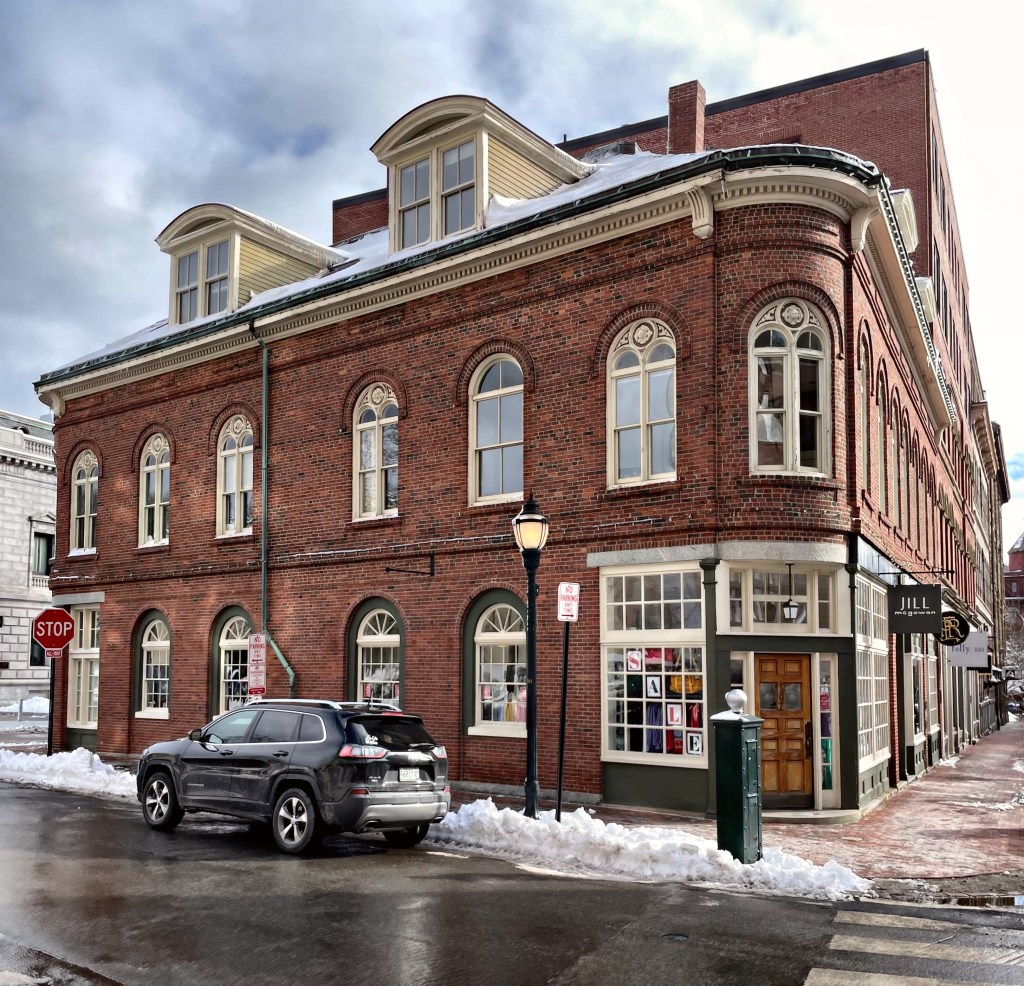
Printer’s Exchange Building // 1866

Why is commercial architecture from the second half of the 19th century so perfect? This structure in Downtown Portland is known as the Printer’s Exchange Building and was built in 1866, amongst the ashes of the buildings lost in the Great Fire of 1866. Charles Quincy Clapp is credited as the designer of the structure, which is Italianate in style with the paired round arched windows set into larger openings. The rounded corners are a really subtle but splendid touch in the design. The building got its name as it was home to the Eastern Argus and the Portland Daily Press, among other newspapers who rented the space from owner, Horatio Nelson Jose. I really like this one!

Thompson Block // 1868

Another of Portland’s stunning mid-19th century commercial blocks is the Thompson Block, built in 1868. The structure is one of the most high-style commercial buildings in Maine and is in a great state of preservation. The building was designed by George M. Harding, a VERY busy architect after the disastrous Great Fire of 1866, which destroyed much of Downtown Portland. The building stands three-stories tall with a polychrome slate mansard roof providing a full fourth floor, a subtle and great way to get extra height without making a building too overbearing. The mansard is broken up at the facade by dormers with round-arch windows and keystoned and eared hoods. If only all cities held off urban renewal, we would have so many more structures like this!

Portland Mariner’s Church // 1828

Talk about a unique church! The Mariner’s Church in Downtown Portland was built in 1828 and is modeled after Faneuil Hall in Boston and East India Hall, Salem, Massachusetts; and was the first Greek Revival building in Portland (with some lingering Federal flair). It also for many years was Portland’s largest building! Its concept was that of a place of worship and education center for seamen of the port city between their voyages on the open sea. The ground floor was designed to house shops for merchants whose rent would support and maintain the building. The structure is virtually unchanged from how it looked nearly 200 years ago and showcases the importance of the sea to the port towns and cities of New England!

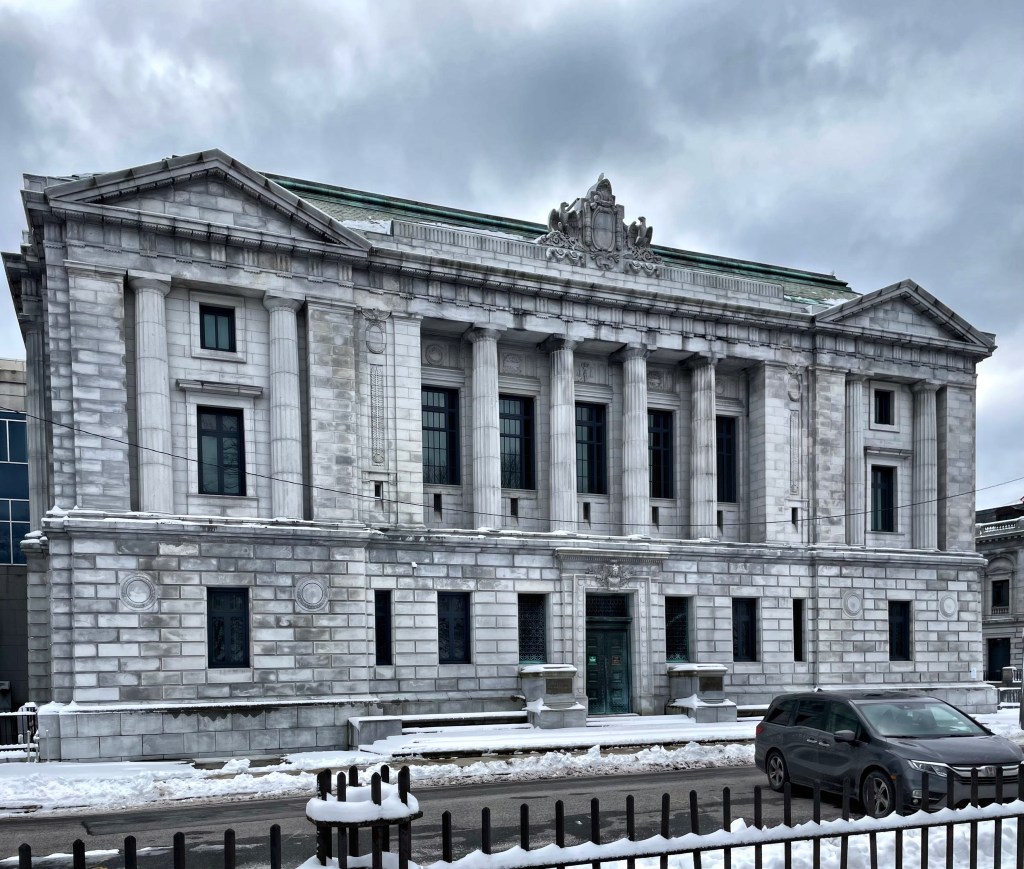
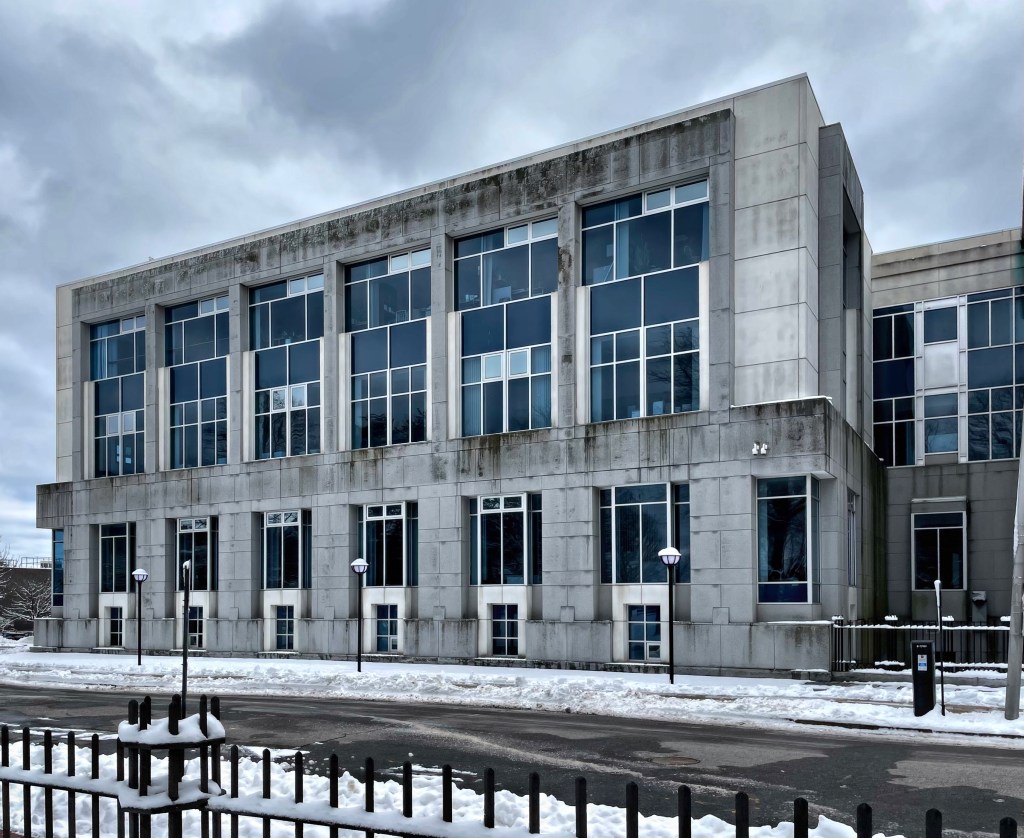
Cumberland County Courthouse // 1910

The Cumberland County Courthouse in Portland, Maine, designed by Guy Lowell, architect of Boston with local associate architect George Burnham was designed in 1906 and completed in 1910 and is the best in Classical Revival architecture. On the north and east sides is a three-story addition built between 1988 and 1991 by Terrien Architects Inc., showcases how Modern additions can be contextual and recessive, highlighting the historic buildings which they are attached to. What do you think of the original courthouse and its addition?

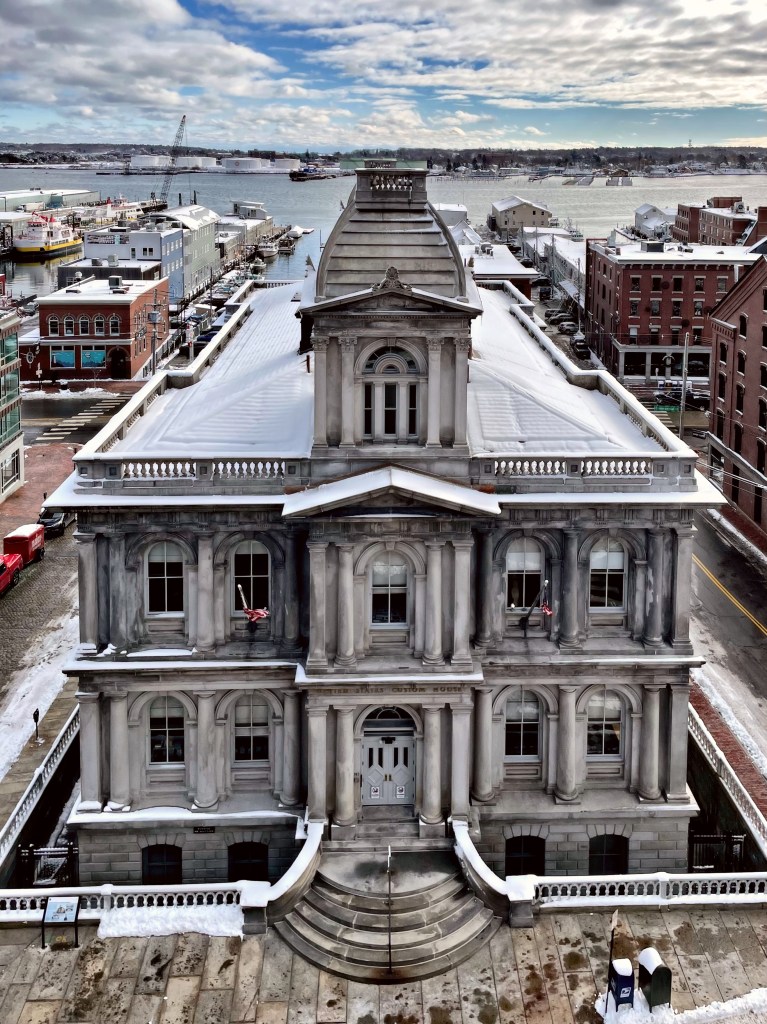
Portland Custom House // 1868

Probably my favorite building in Portland, Maine is the former Custom House building, an imposing granite building located a stone’s throw from the Portland Harbor. It was built to accommodate the city’s growing customs business, which, by 1866, was collecting $900,000 annually in customs duties—making Portland one of the most significant seaports in the country. The building is typical of the notable designs completed under the direction of Alfred B. Mullett, Supervising Architect of the Treasury from 1865 to 1874. Constructed between 1867 and 1872 (due to delays in obtaining granite for the upper stories) the U.S. Custom House combines elements of the Second Empire and Renaissance Revival styles and is one of the best preserved custom houses in New England. The interior custom hall is especially remarkable.