Ashby Public Library // 1902

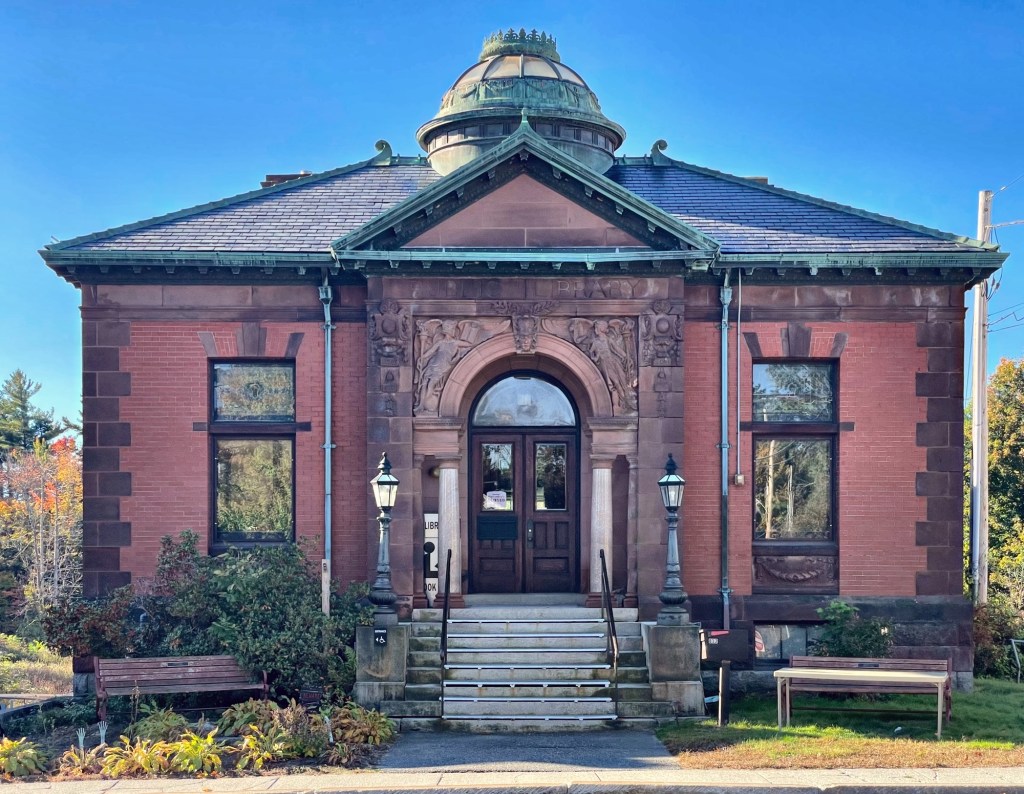
The Ashby Public Library in Ashby, Massachusetts, was built in 1902, completely funded by a donation from Edwin Chapman (1841-1915) who lived across the street from the new library. Mr. Chapman was raised in Ashby and became a wealthy Boston-area merchant in the meat trade by the late 19th century. Before this library was built, the town’s library collection was housed in the Wyman Tavern. The building was designed by architect Henry M. Francis in the Neoclassical style with Romanesque detail in brick and brownstone to make the building fireproof. The library was added onto in the rear in 2006 by The Galante Architecture Studio, which is recessed and mostly visible from the rear parking area. The addition is Modern in style to distinguish itself from the main library building.

Gould-Goodnough-Lyman House // 1816

The largest house in the smallest town (in Middlesex County) of Ashby, Massachusetts, is this towering, three-story Federal period home on South Road. Local history states that the home was originally a two-story Federal style home with shallow hipped roof. The Goodnough’s “modernized” the home by the 1870s, adding a mansard roof and built a stable on the property. Lastly, the third major owner, Jesse P. Lyman, and his wife, Mary Chapman Lyman, had the home “modernized” again, in 1898, but in the Colonial Revival style, harkening back to the house’s original Colonial-inspired roots. Fitchburg-based architect Henry M. Francis converted the old mansard roof to a full third-floor, updated the carriage house, and added side wings to flank the main block of the house (similar to his design at the old Lyman School in town). The house recently sold for over $600,000 in 2020, which may be the best steal ever! This house is a stunner!

Lyman School – Ashby Town Hall // 1903

Originally built in 1903 as the central school for the town of Ashby, Massachusetts, the significant Colonial Revival style Lyman Building is one of the most significant and well-preserved buildings in the village. The building was designed by architect Henry M. Francis of Fitchburg and educated pupils in town from grades 1-12. The two-story, hip-roofed building displays a symmetrical facade with a central section displaying five arched upper story windows, flanked by two pediment-topped pavilions atop projecting, flat-roofed arched entrance vestibules with quoined corners. The symmetry of the original design was preserved when the identical side wings constructed in 1922. Ashby public schools merged with Pepperell and Townsend and this building was later converted to the town hall. I love when towns value their historic buildings and retrofit them for new uses!

Wellington-Sears House // c.1810

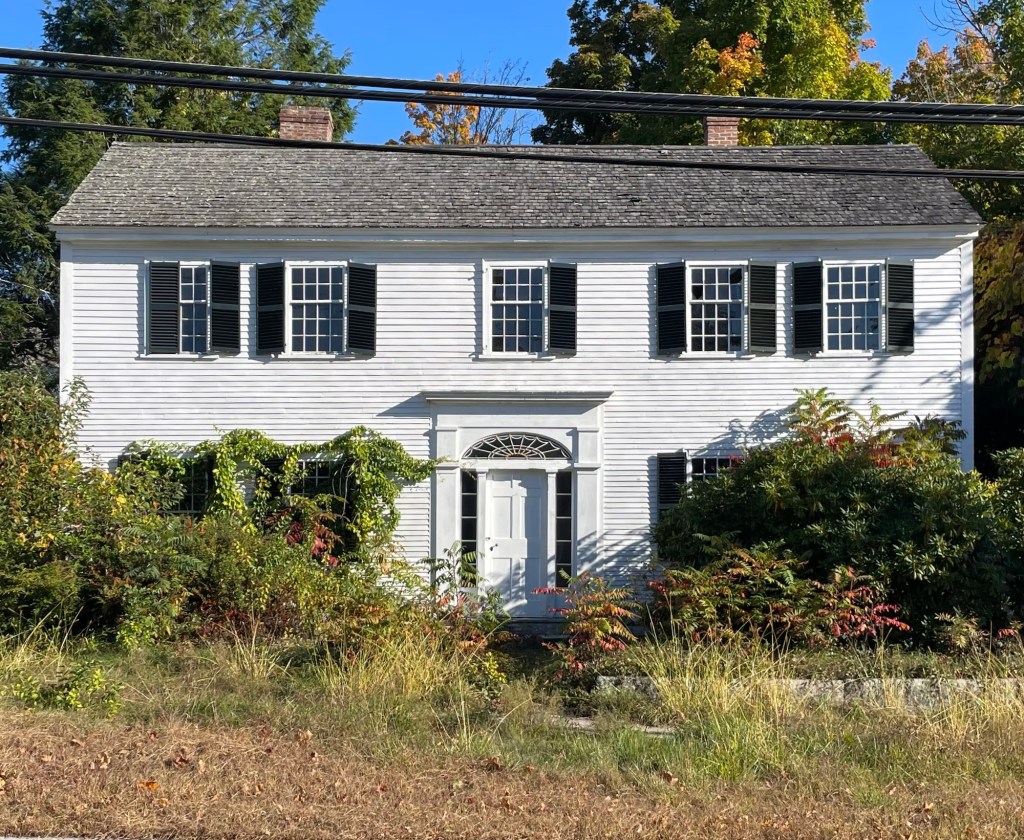
One of the many Federal period houses in Ashby Center is this lovely c.1810 residence on Main Street. The house is known as the Wellington House, and was possibly built by Darius Wellington, a carpenter who assisted with building the town’s First Parish Church in 1809. The house exhibited a symmetrical facade with stunning fanlight transom over the main entrance and eight-over-twelve sash windows. In the latter half of the 19th century, the property was owned by Cyrus Sears, a prominent sea captain, who sought a life inland with his family. He would serve in the Civil War, but had the half-decade house “modernized” with new bay windows and an entry porch. He would later move to Baltimore and serve as a port captain and consul to Cuba. In the past few years, the owners have restored the home to its original Federal design, re-emphasizing the stunning fanlight transom and sidelight details.

Asa C. Everett House // c.1824

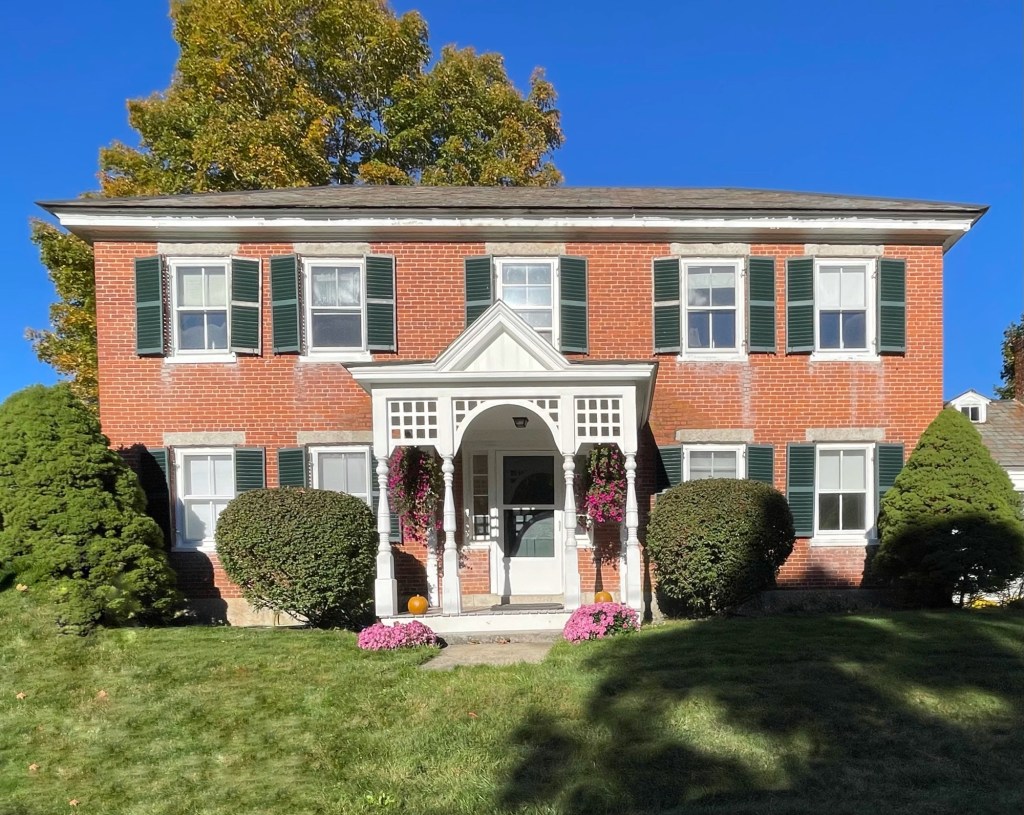
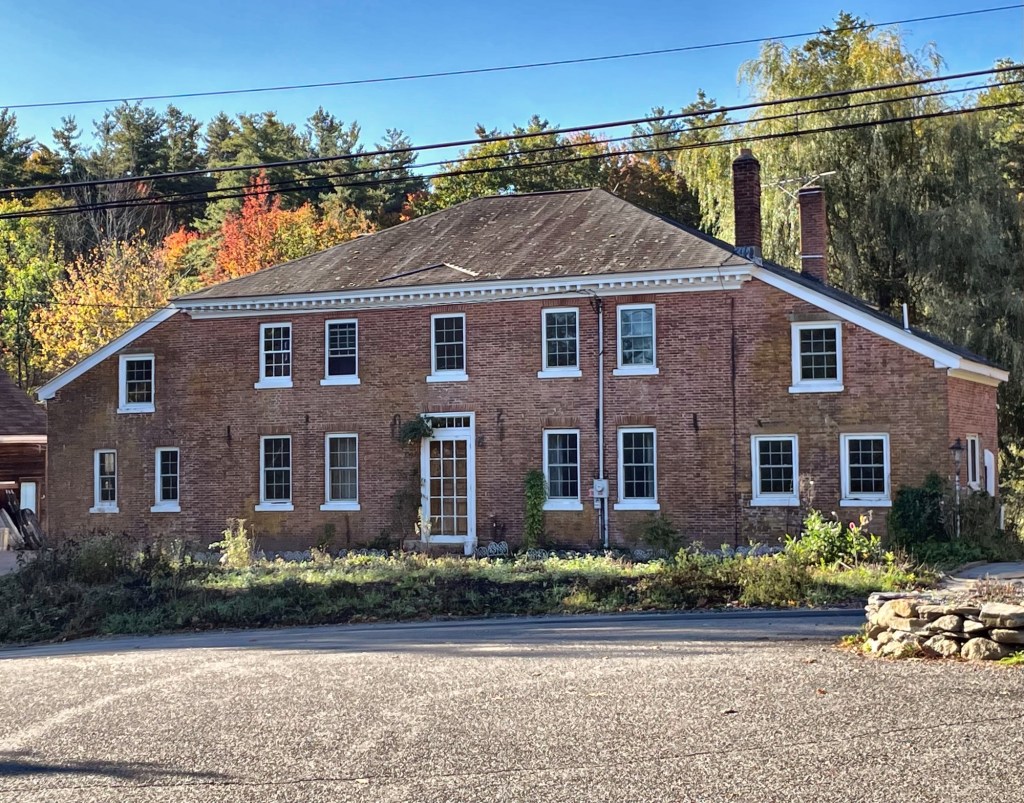
The Asa C. Everett House on Allen Road in Ashby, Massachusetts, was built around the time of the wedding of Asa Cutter Everett, a saddle- and harness-maker, and Rowena Spaulding in 1824. The house was built of brick and in the Federal style with a shallow hipped roof and symmetrical facade, and was “modernized” in the late 19th century. Victorian-era alterations include the entrance porch with turned posts and spindle frieze and two-over-two sash windows. Blending of vastly different architectural styles can be tough to pull off, but this example really looks great! What do you think?

Ashby Congregational Church // 1835

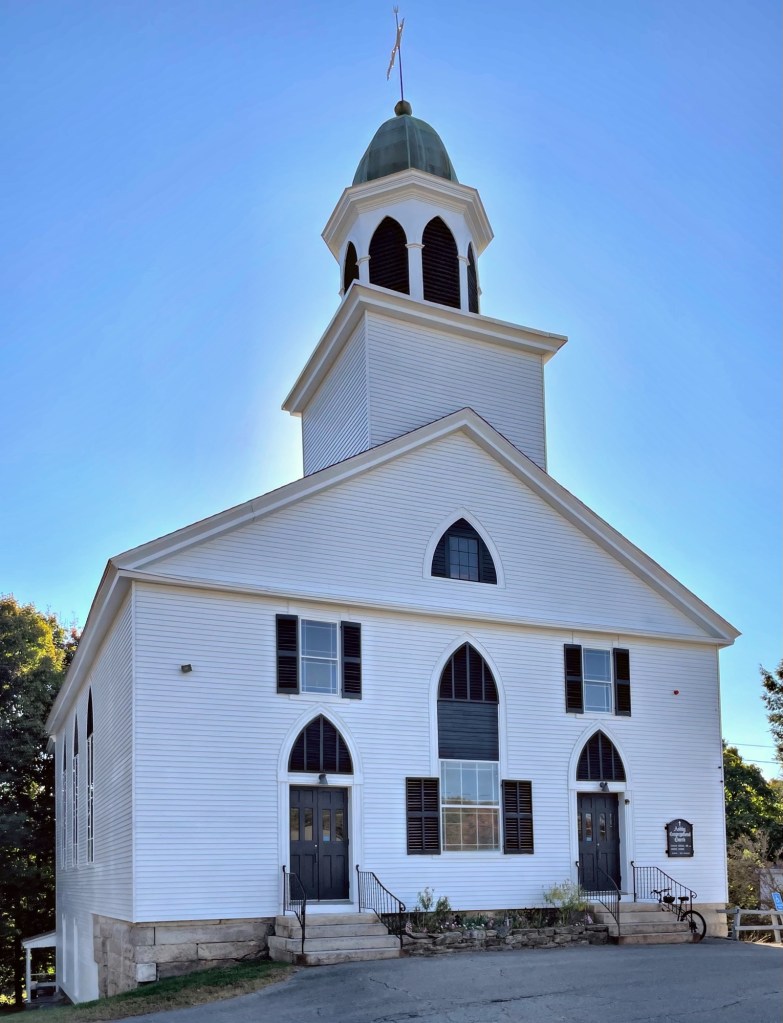
Combining Greek and Gothic revival styles, the 1835 Ashby Congregational Church in Ashby, Massachusetts, is a significant building showcasing the transitional tastes of ecclesiastical architecture in 1830s New England. The church had its beginnings in 1818, when a group of church members disillusioned to the current teachings separated from the town’s Unitarian roots and the accompanying meeting house, the First Parish Church. In 1820 a church for the Congregationalists was built on the opposite end of the town common. In 1835 it was sold and this, the current church building was constructed on a new site facing the Common. The original 1820 church building became the Ashby Academy and is now a Grange Hall. The design of the Ashby Congregational Church shows the leaning towards Gothic detailing wit its prominent pointed arch detailing, yet retains some traditional Greek Revival features like the two-story pediment and pilasters at the belfry.

Old Ashby Academy – Ashby Grange Hall // 1820

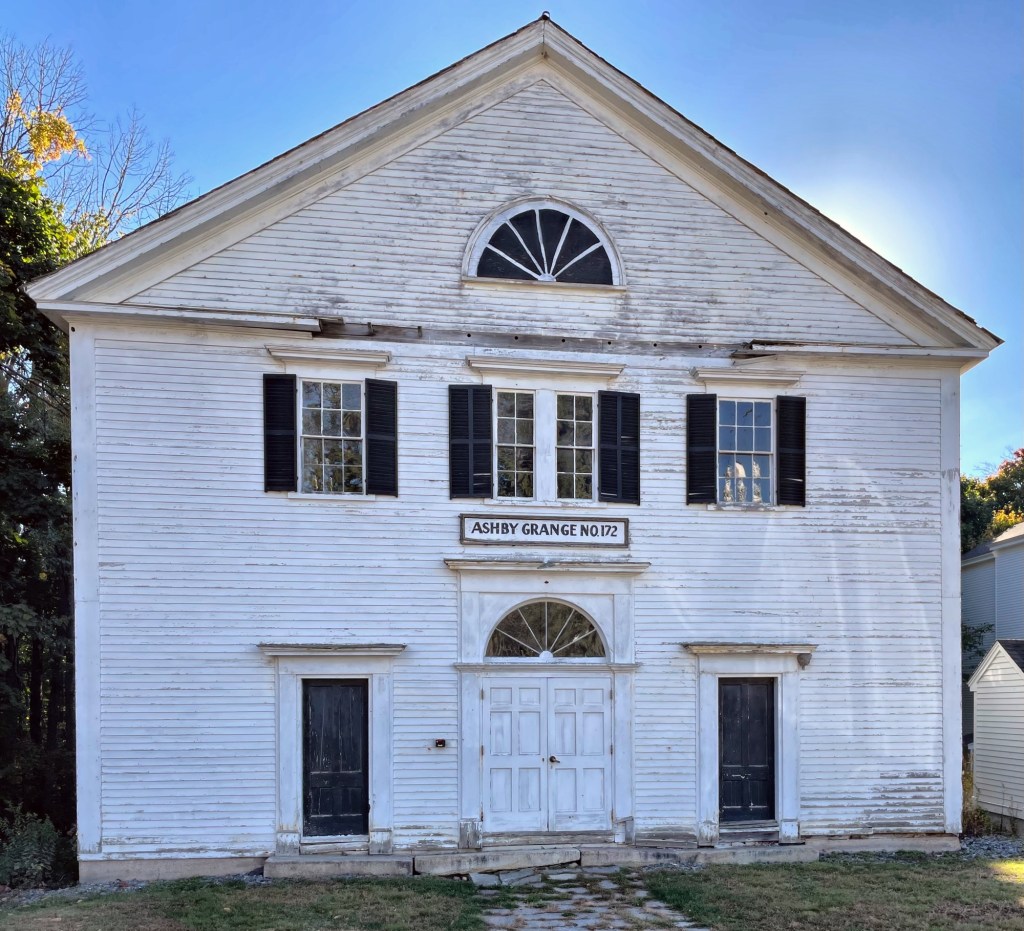
In 1819, less than a decade after the First Parish Church in Ashby, Massachusetts was built, a group of parishioners split to form their own congregation, erecting this Federal style building as its new house of worship a year later. The congregation grew and eventually would build a new church, the Ashby Congregational Church, in 1835. The building was soon after, sold to a group of citizens interested in starting an academy. In 1836 they opened Ashby Academy, which offered education beyond the eighth grade for those who could afford it. Ashby Academy closed in 1860 and the Town of Ashby purchased the building in 1864 for a high school and town offices, a use that remained until a new school was built in 1902. Since the 1970s, the building has been occupied as a local grange hall, and maintained by a local group, the Friends of the Ashby Grange Hall. The building is a significant, transitional Federal/Greek Revival style building in town with its pediment and elliptical windows.

Wyman Tavern // c.1780

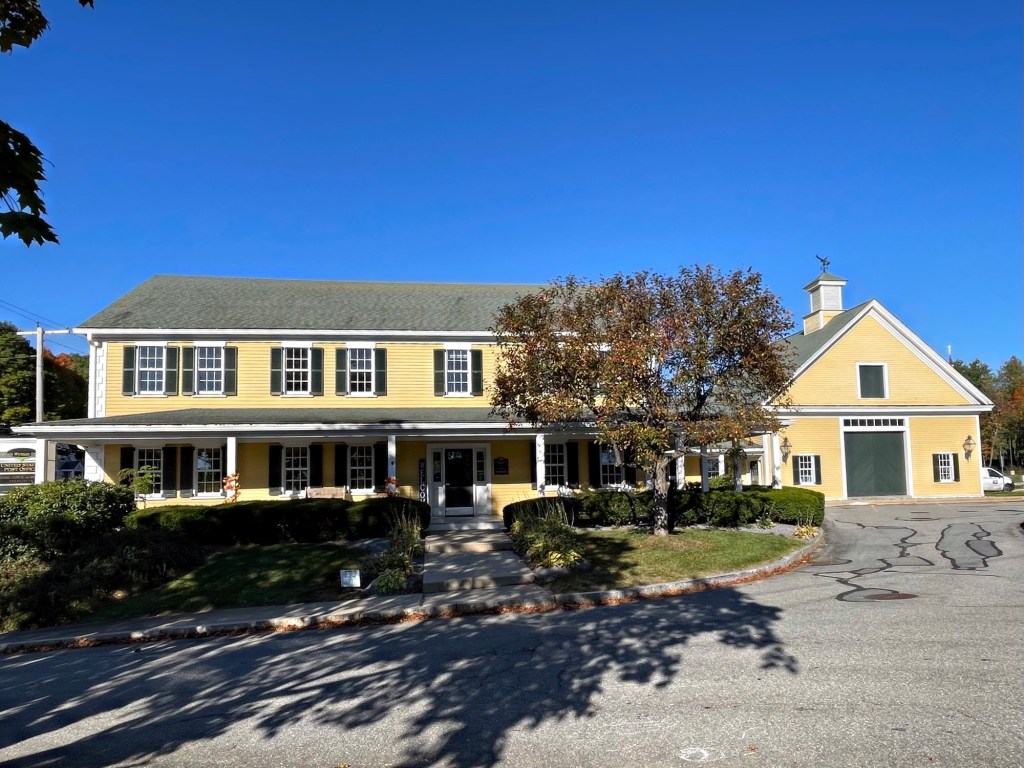
This large Colonial house sits on the Ashby town common adjacent to the town’s meetinghouse. The structure was built by Abijah Wyman, a Captain in the American Revolution, in about 1780 as a family home. In 1803 a turnpike was established and was well travelled by heavy wagons and stagecoaches travelling between Boston, NH, and VT. Taking advantage of the location, Abijah’s son John expanded the building and began operating a tavern from the house. It would become a drinking establishment, post office, and inn during the 19th century. Later owners modified and expanded the building further, adding a porch and connecting the tavern to the barn. The building is now occupied by commercial uses including the local post office!

Asa Kendall House // c.1790

The Asa Kendall House is a significant Federal period house from the late 18th century on Richardson Road in Ashby, Massachusetts. The house here is actually believed to be the second built on this location, the first being the John Fitch House and Garrison. John Fitch was one of the earliest settlers in present-day Ashby, which in the mid-1700s, was sparsely developed and threats of attack by Native peoples limited development for decades. Due to raising tensions in the years leading up to the French and Indian War, Fitch petitioned the government for a garrison manned by three soldiers, which was approved. In 1745, the garrison was attacked and Fitch with his family, were kidnapped by Native Americans, held hostage for six months and brought up to Canada. The homestead and garrison were burned. He and his family were ransomed and would later return settling elsewhere in town. The former location of the garrison was purchased by Asa Kendall and this house was built around 1790 for him. The brick house with sloping wings was extensively documented as part of the Historic American Building Survey in 1936 and has been preserved by later owners ever-since!

First Parish Church of Ashby // 1809

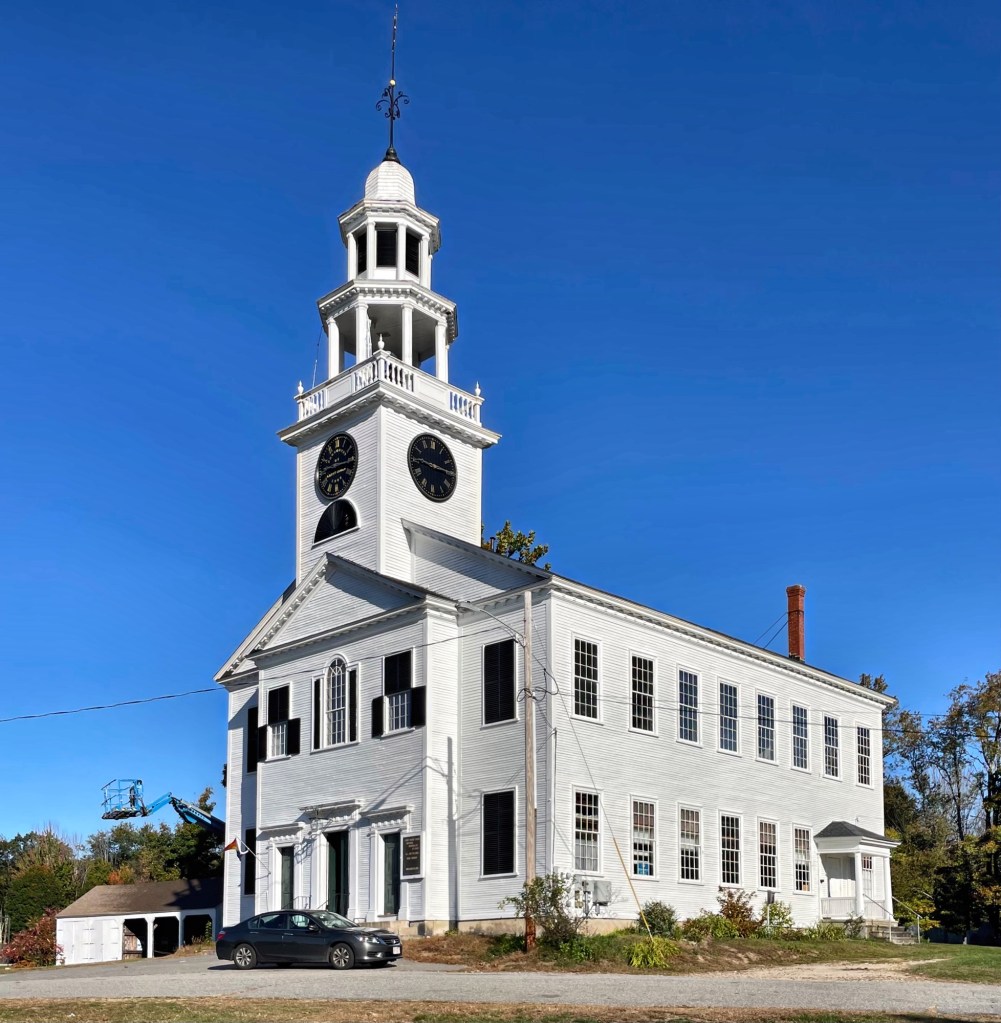
Welcome to Ashby, Massachusetts; a rural and historic town that was first settled in 1676 but due to the continued threat of native hostilities, permanent European settlement in the town did not occur until about 1750. The town incorporated in 1767 and was reputedly named for the abundance and quality of white ash trees found in the area by early settlers. Today, the town has just over 3,000 residents. At the center of the town village, the First Parish Church of Ashby stands as a significant Federal-period meetinghouse, and an integral piece of the town’s history. The present building was constructed in 1809, replacing an earlier structure from 1771. Carpenters for the building were Joseph Kendall and Darius Wellington of Ashby, who utilized plans from Asher Benjamin’s American architectural pattern book of 1797. Facing the town common, the church is a two-story gable front building with a three-stage tower including an octagonal open belfry rising from the pedimented front pavilion.