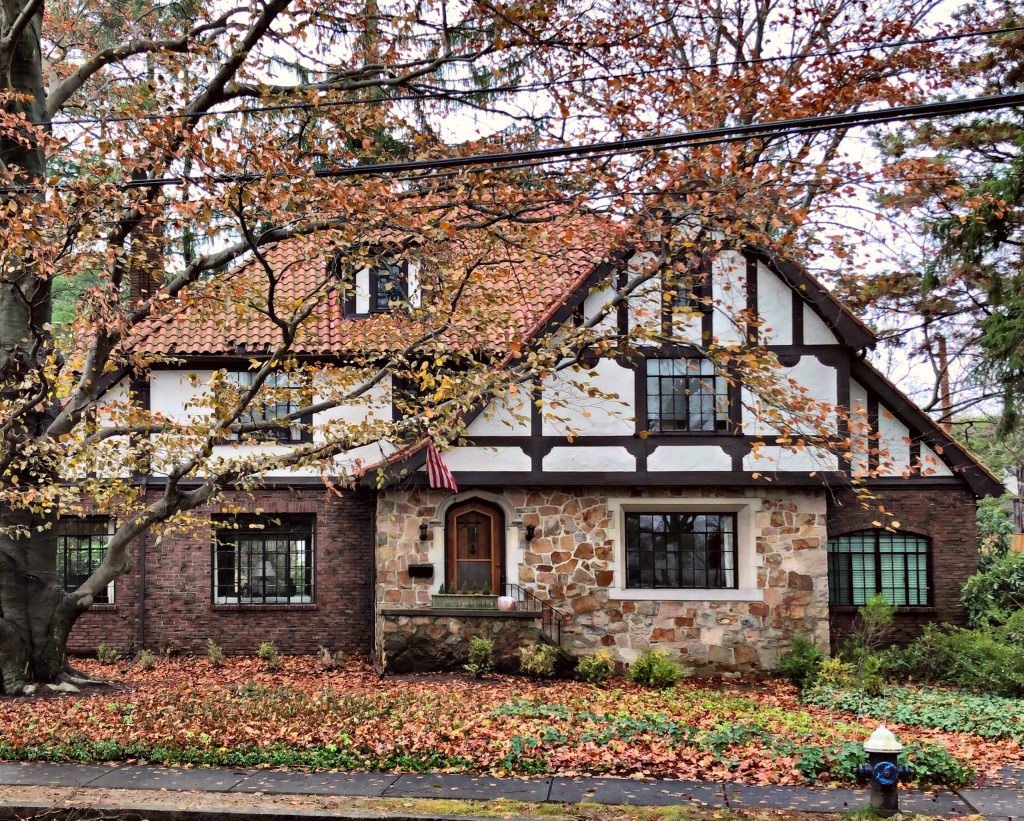
Glacy House // 1930

Residential architecture of the early decades of the 20th century is among my favorites as the Tudor Revival movement took off and was sometimes mixed with other revival styles at the time, creating really unique homes. The Glacy House in South Brookline, MA was built in 1930 as one of the earlier homes in the Walnut Hill development. It was likely designed and built by Walter L. Fernandez, a contractor who appears to have design-built a handful of spec homes to help get the neighborhood’s development going in the early stages. This home was originally occupied by George and Mary Glacy. George later worked as Vice President of the Boston & Maine Railroad, though he later got into legal trouble for hiring companies for railroad projects where he had financial interests, becoming indicted in an antitrust case by a Federal grand jury. The home features a first floor constructed of stone and brick with half-timbering on the floor above. The building is topped by a terracotta red tile roof, which is fairly uncommon for the region.
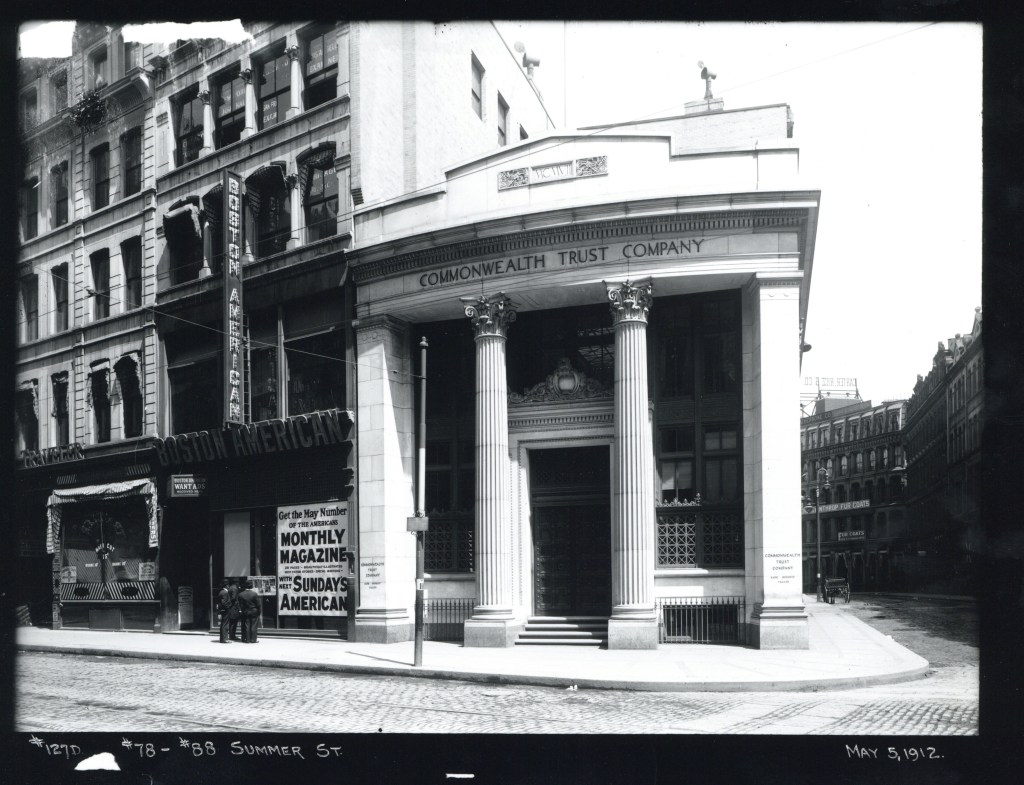
Commonwealth Trust Company // 1908-c.1974

Ca. 1910 image courtesy of Boston Public Archives.

Located at the corner of Summer and Devonshire Streets in Downtown Boston, the Commonwealth Trust Company’s two-story marble banking house commanded the corner, despite its short stature. The building, completed in 1908, was constructed with Lee marble and decorated with ornate wrought and cast-iron grilles over windows. The building was designed by the architectural firm of Parker, Thomas & Rice in the Classical mode with large, fluted Corinthian columns and boxed corner pilasters framing the recessed center entrance, Corinthian pilasters ran along the side facade. At the inside, the building was coated with Cararra and Blanco marble with paneled oak offices. At the ground floor, offices and banking stations framed the outer walls, with the safety deposit boxes located on the second floor. The building was demolished by the 1970s and replaced with a one-story minimalist Modern building (I could not figure out why the former building was razed). The new building was demolished after a few decades with a larger building, better fitting the commercial district.

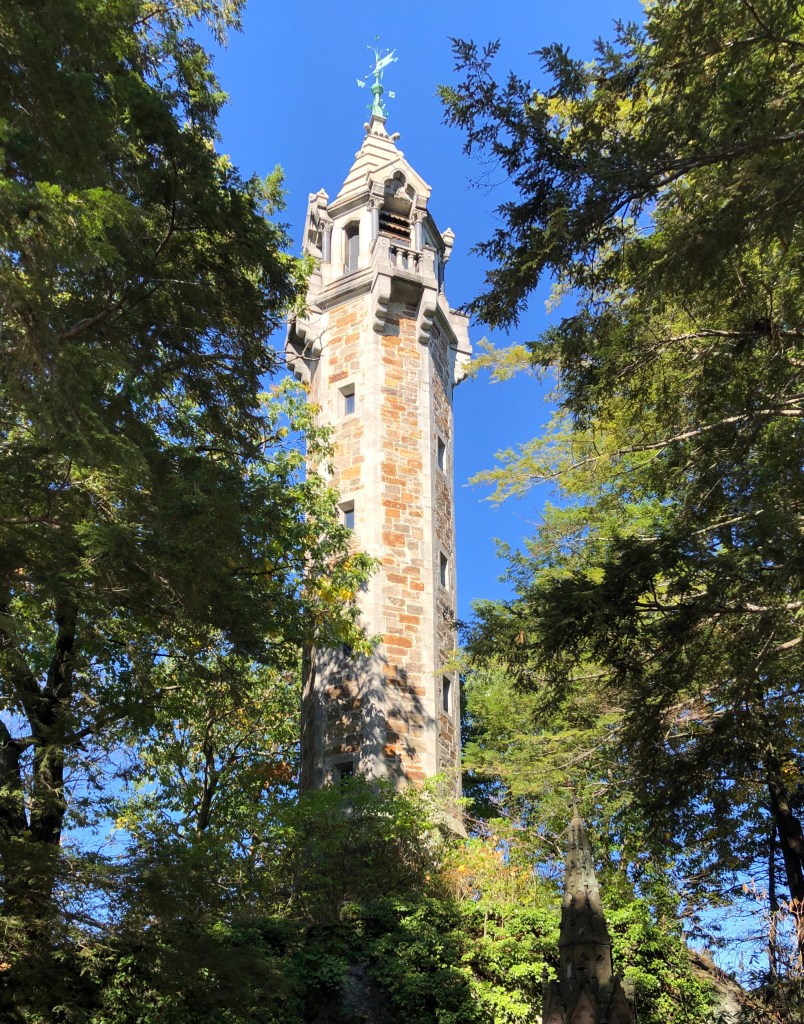
Forest Hills Cemetery Bell Tower // 1876

The bell tower at Forest Hills Cemetery is an octagonal Gothic revival structure located on Snowflake Hill just past the entrance gate and administration building and was completed in 1876. The 100-foot tower is constructed of Roxbury puddingstone and trimmed with granite. The roof is clad with granite tiles and topped with an ornate copper weathervane. Originally its swinging bell tolled, but it has since been replaced with an electronic carillon. The bell tower rises dramatically from massive
outcrop of Roxbury puddingstone known as Snowflake Hill which is offset by smooth lawns and Victorian planting beds. While the large trees surrounding partly obscure the tower, it truly is a stunning building.

Old North Church // 1723

One of the most visited buildings in New England is the stunning Old North Church in the North End of Boston. Old North Church (originally Christ Church in the City of Boston) was established when the cramped original King’s Chapel, then a small wooden structure near Boston Common, proved inadequate for the growing number of Anglicans in the former Puritan stronghold. Subscriptions for a new church were invited in 1722. The sea captains, merchants, and artisans who had settled in Boston’s North End contributed generously to the building fund, and construction began in April, 1723. The church was designed by William Price, though heavily influenced by Christopher Wren’s English churches.

Before the American Revolution, both Patriots and Tories were members of the church, and often sat near each-other in pews, clearly adding to bubbling tensions. The enduring fame of the Old North began on the evening of April 18, 1775, when the church sexton, Robert Newman, and Vestryman Capt. John Pulling, Jr. climbed the steeple and held high two lanterns as a signal from Paul Revere that the British were marching to Lexington and Concord by sea across the Charles River and not by land. This fateful event ignited the American Revolution.

A full scale restoration of Old North was carried out in 1912-14 under the direction of architect R. Clipson Sturgis and a number of 19th century alterations were then eliminated. In this work, floor timbers and gallery stairs were replaced, the original arched window in the apse at the east end was replaced, and the old square box pews and raised pulpit were reconstructed. Additionally, the interior woodwork was incorrectly repainted white rather than the rich variety of original colors described in the early documents of the church, clearly submitting to Colonial Revival sensibilities. The iconic white steeple is also not original. The original steeple of the Old North Church was destroyed by the 1804 Snow hurricane. A replacement steeple, designed by Charles Bulfinch, was toppled by a hurricane in 1954. The current steeple uses design elements from the original and the Bulfinch version. Even with all these differences, Old North lives up to her name and stands proudly as a symbol of freedom and revolution.

McLaughlin Tenements // c.1875

After the American Civil War, the North End of Boston saw a massive phase of redevelopment, replacing the dilapidated wooden dwellings with larger brick tenements to house the neighborhood’s growing immigrant population. Nearly all of the North End was replaced with these dwellings, which has now added so much to the appeal of the neighborhood. One of the earliest and notable examples is this building on Endicott Street. Built around 1875, the tenements were owned by George T. McLauthlin (also spelled McLaughlin), who owned the engineering and machinery company on Fulton Street, housed in one of the last remaining cast-iron facades in Boston. The tenement house was later owned by George’s son Daniel, likely providing housing for the company’s employees and/or providing additional income for the family. The building also appears to have always had commercial use on the ground floor, allowing merchants to also rent the space. The late-Italianate panel brick block is modest in design, but contributes to the diverse population and worker’s housing in the North End.

Hotel Boylston // 1870-1894

C.1875 image of Hotel Boylston, BPL image.

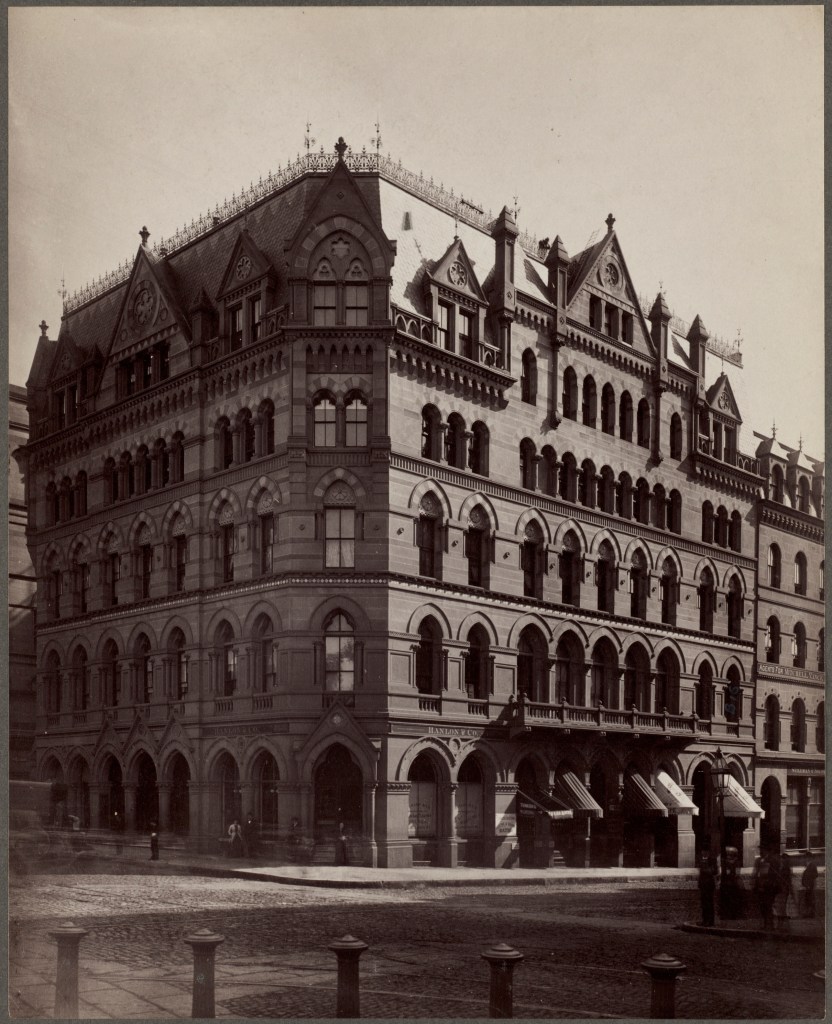
Standing just 24 years, the Hotel Boylston at the corner of Boylston and Tremont Streets, evoked the Victorian-era grandeur of Boston. Built in 1870, the Victorian Gothic hotel (what we consider apartment building today) was designed by the architectural team of Cummings and Sears, who were very busy at the time in Boston and beyond. The 5 1/2-story building was constructed of sandstone and featured Gothic arches, dormers of varied sizes and shapes, and a mansard roof with iron cresting. The building (and the three others on Tremont Street) was razed in 1894 and replaced with the Hotel Touraine a few years later.

General Crane House // c.1670-1908

Crane House c.1900, courtesy of BPL.

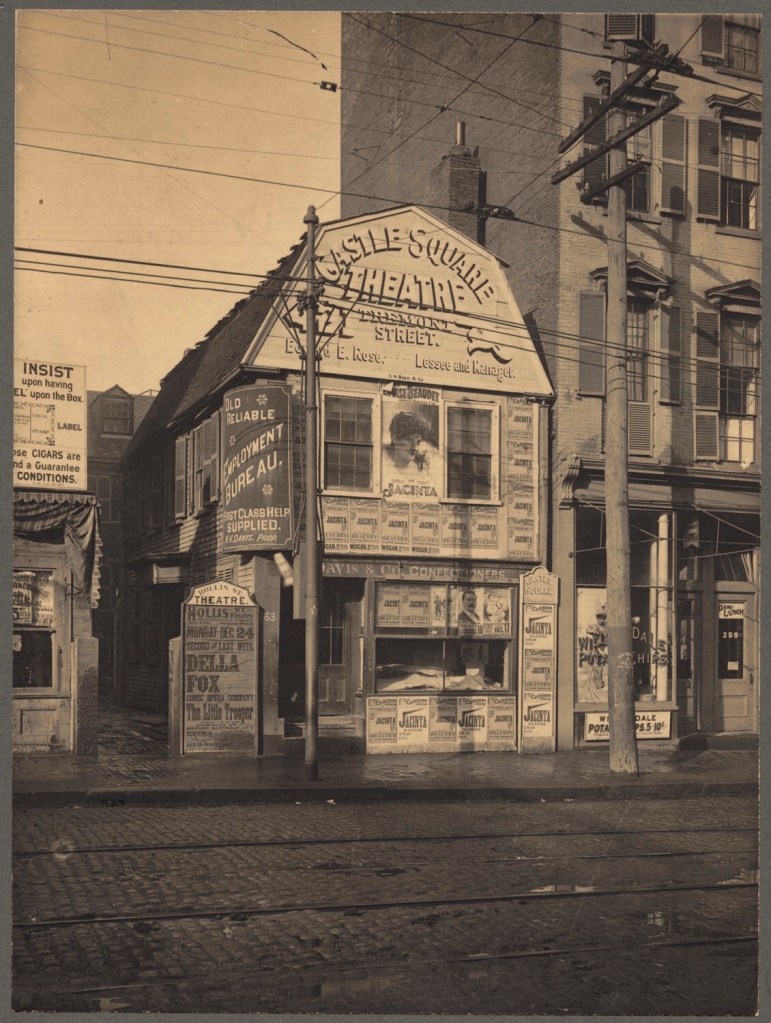
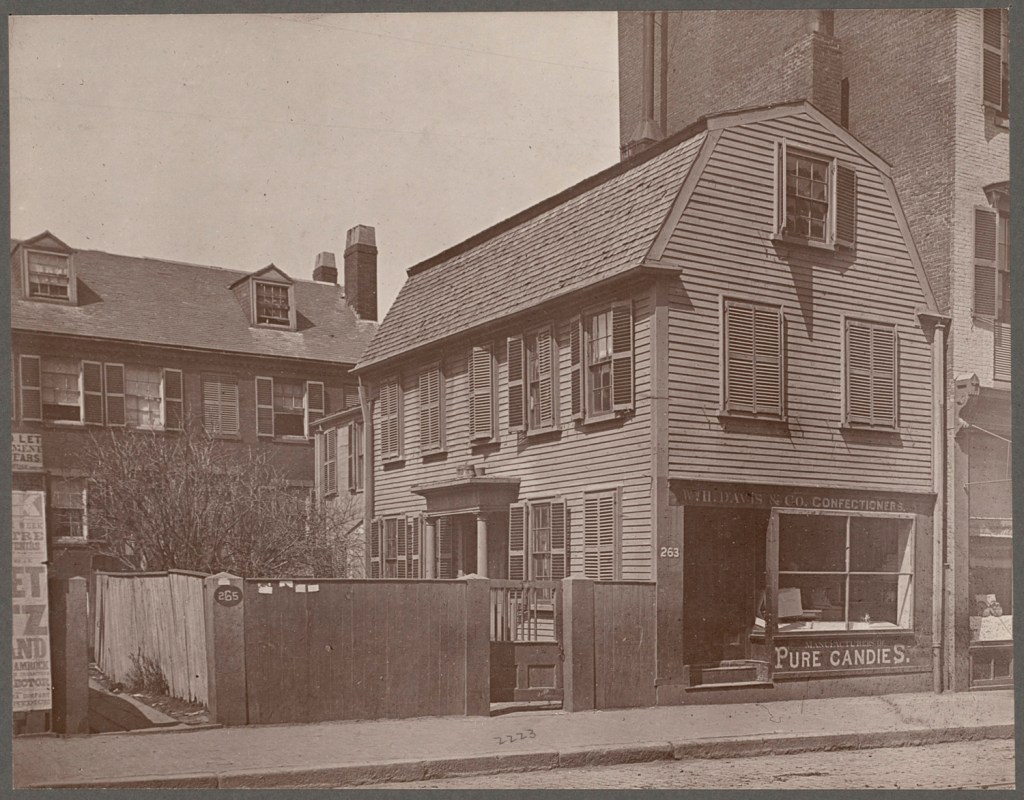
Formerly located on Tremont Street in Downtown Boston, this ca.1670 Georgian gambrel home went from residence to candy shop to billboard in its lifetime. The home was constructed by John Crane (1744-1805), who was a housewright by trade but a patriot and soldier most importantly. At the tender age of 12, he had an early military experience when he substituted for his father in the French and Indian War when his father received the draft. Records state that Crane was an active member the Sons of Liberty, a secret revolutionary organization that was founded by Samuel Adams to fight taxation from the British government. Hours before the Boston Tea Party, Crane and the other participants met at his shop at his home to disguise themselves as American Indians as disguises for the events that would take place that night. He was in the hold of one ship when he was knocked unconscious by a falling crate of tea. His fellow patriots thought him dead and hid him under a pile of wood shavings in a carpenter’s shop off the harbor, only for Crane to recover later. Less than a year later, Crane and his family moved to Providence, Rhode Island where he would later serve under a militia there in the Revolutionary War. After serving, and seeing battle, he was awarded land in Whiting, Maine (Maine was part of Massachusetts at the time) where he built a home and spent his last days.

Crane House, c.1880s, courtesy of BPL.

His former house on Tremont Street in Boston was occupied as a home until the late 19th century until it was occupied by a confectionary shop, with a storefront added on the street. Due to the shifting demand for theater-oriented development and lodging, the candy shop began struggling. The owner, James Grace, then allowed for the home to be covered with signage and notices advertising various theaters nearby. Ironically, the home was demolished by 1908 for the Shubert Theater, which remains today.

Old State House // 1713

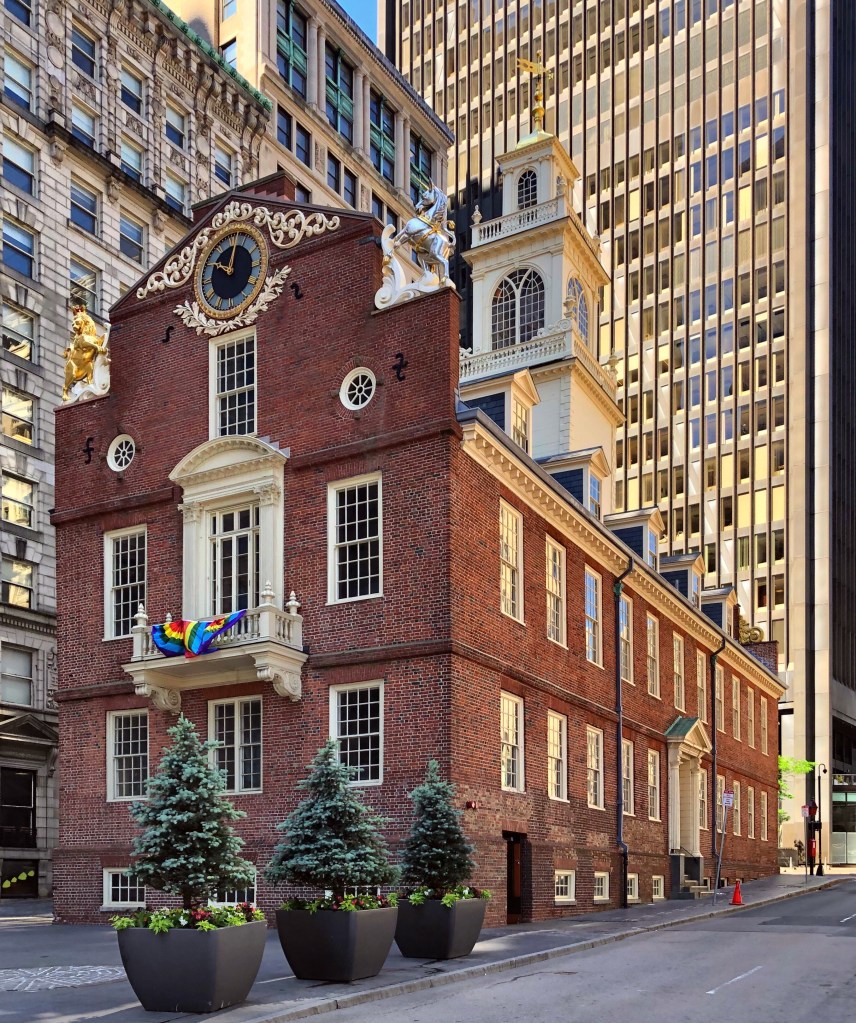
Nestled among the towering skyscrapers of Downtown Boston, the Old State House stands proudly, giving us a glimpse into pre-Revolutionary life and events. Happy Fourth of July!

Built in 1713, the “Town House” as it was originally known, served as a merchants’ exchange on the first floor and the seat of colonial and later state government on the second floor throughout the 1700s. The royal governor, appointed by the King of Great Britain, held his office in the building until 1775, and from the balcony gave voice via decrees and speeches to the King 3000 miles removed from London. Above the balcony, a lion and unicorn—royal symbols of the King of Great Britain—graced the main façade facing the public square.

“A cobblestone circle beneath the Old State House balcony marks the site of the 1770 Boston Massacre. Tensions ran high in Boston in early 1770. More than 2,000 British soldiers occupied the city of 16,000 colonists and tried to enforce Britain’s tax laws, like the Stamp Act and Townshend Acts. American colonists rebelled against the taxes they found repressive, rallying around the cry, “no taxation without representation.” On the frigid, snowy evening of March 5, 1770, Private Hugh White was the only soldier guarding the King’s money stored inside the Custom House on King Street. It wasn’t long before angry colonists joined him and insulted him and threatened violence. Calling reinforcements, a group of British soldiers stood near the Town House and were pelted with snowballs and rocks, with one soldier firing out of panic. Once the first shot rang out, other soldiers opened fire, killing five colonists–including Crispus Attucks, a local dockworker of mixed racial heritage–and wounding six. The event was one of the flashpoints which began the American Revolution.

Six years later, on July 18, 1776, Colonel Thomas Crafts read the Declaration of Independence from the balcony of the Old State House as a statement of strength from where the King’s declarations were given just years prior.