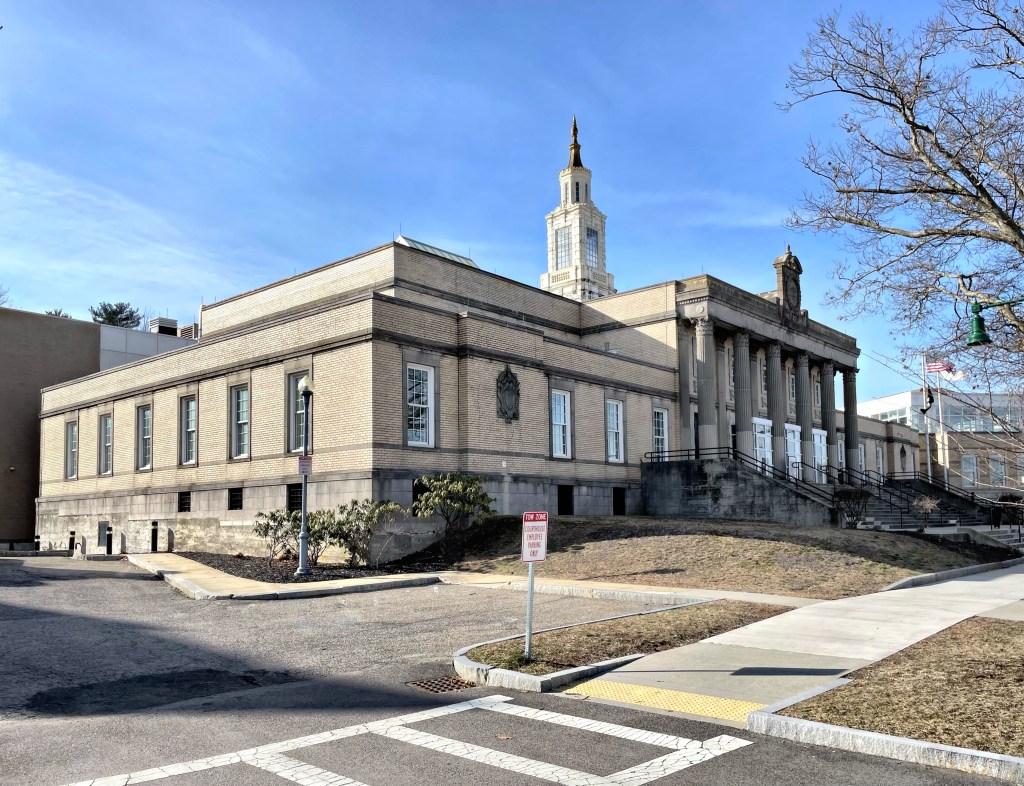
Boston neighborhoods are very confusing, and how the West Roxbury District Courthouse came to be located in Jamaica Plain is just one example. The independent Town of West Roxbury was in existence from 1851 until 1874, a mere 23 years, bookended by its time as a section of the Town of Roxbury and being annexed into the City of Boston. West Roxbury originally included parts of the Jamaica Plain and Roslindale neighborhoods. Ultimately, West Roxbury became one of the city’s eight large districts and its municipal court division is served by this Neo-Classical style building. Built in 1922, the current West Roxbury Courthouse building on Arborway, was and still is, from a municipal court perspective as well as an historical perspective, in West Roxbury. The West Roxbury District Courthouse was designed by Timothy G. O’Connell and Richard Shaw of the firm O’Connell and Shaw who were best known for their ecclesiastical designs in New England, largely specializing in the Gothic and Arts and Crafts styles. Their design for the West Roxbury Courthouse remains one of their finest non-religious buildings and a departure from their traditional styles.
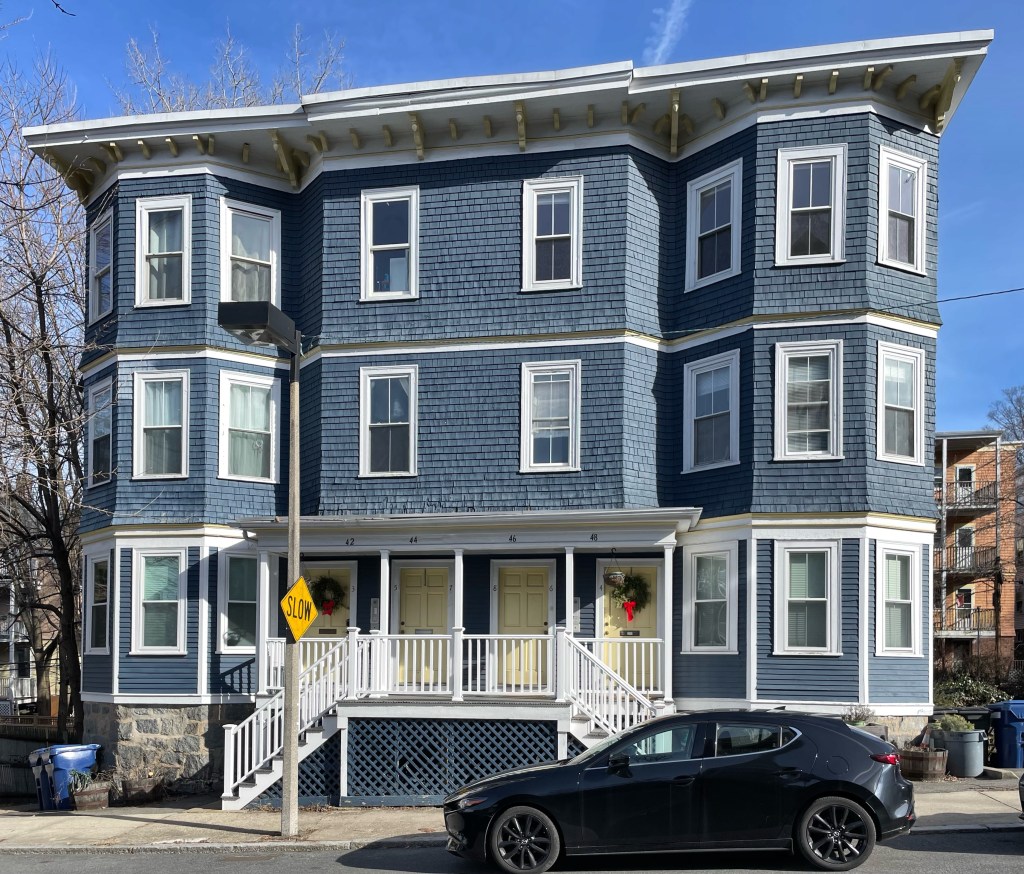
Across the street from the Lannin Triple Deckers (last post) this large triple decker (and the others in the row) was built in 1904 for developer John B. Mulvey. Mr. Mulvey was born in Ireland and migrated to Boston at the age of 16. He climbed his way up the ladder and worked as a builder and developer, largely in Boston-area suburbs and neighborhoods. At the turn of the century, these triple deckers (also known as three deckers) proliferated throughout the Boston suburbs around train stations providing affordable flats to residents. Many were built and rented out by developers, but eventually, owners would live in one unit and rent the other flats for additional income, providing upward mobility and equity, largely benefiting immigrant communities. This high-style example is very well maintained and is a more uncommon double-three decker.
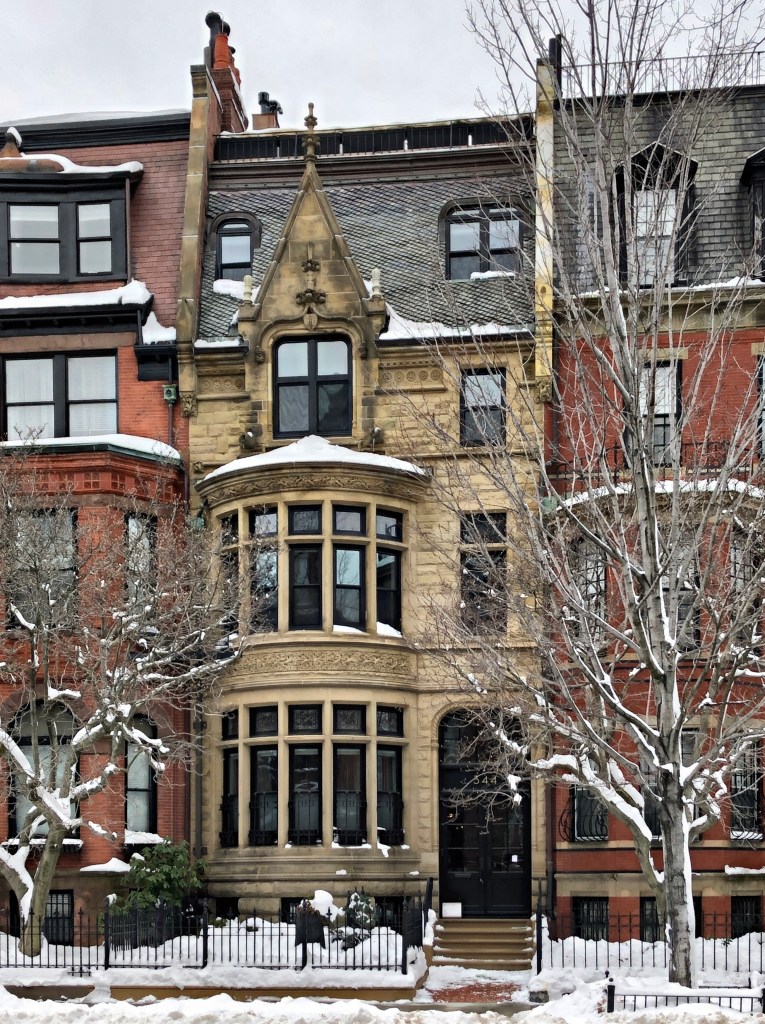
Another of my favorite townhouses in the Back Bay neighborhood of Boston is this Victorian Gothic mansion on Beacon Street, built for Daniel and Mary Knowlton. The residence was designed by the firm of Allen and Kenway and built in 1880 and stands out architecturally for its use of style and use of material amongst a sea of brick. A former cotton merchant, Daniel Knowlton was treasurer of the Flexible Shoe Nail Company and later worked as a stockbroker. The large single-family dwelling was converted into four condominium units in 1989, but has since been switched back to a single-family residence. It sold for $11.2 million dollars as a five bedroom, six full and two half bath home in 2017. Yikes!
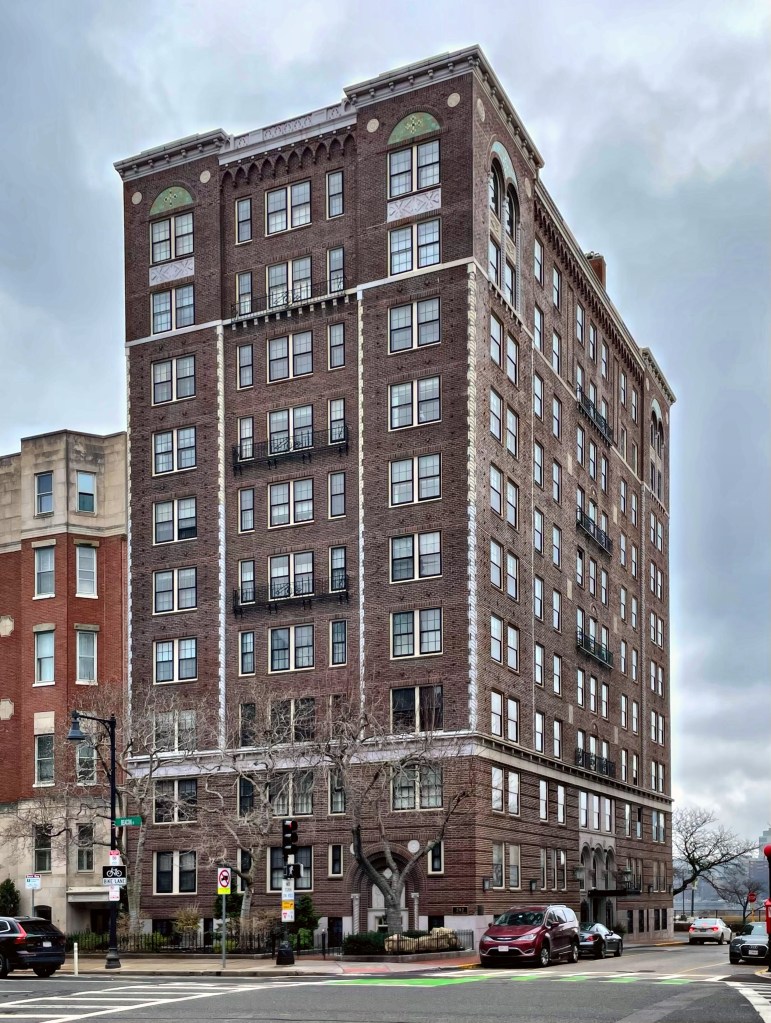
One of the finest apartment-houses in Boston is this towering building at the corner of Beacon and Exeter streets in the Back Bay neighborhood. In 1926, real estate dealers Elliott Henderson and Roger B. Tyler purchased two townhouses on small lots and demolished them for the present structure. They hired the architectural firm of Blackall and Elwell furnished the plans for the 11-story Renaissance Revival style residence which included ten large apartments. The design is unique to the Back Bay with amazing cast stone details at the entries with rounded arch windows, fanciful brickwork, and spiral columns!
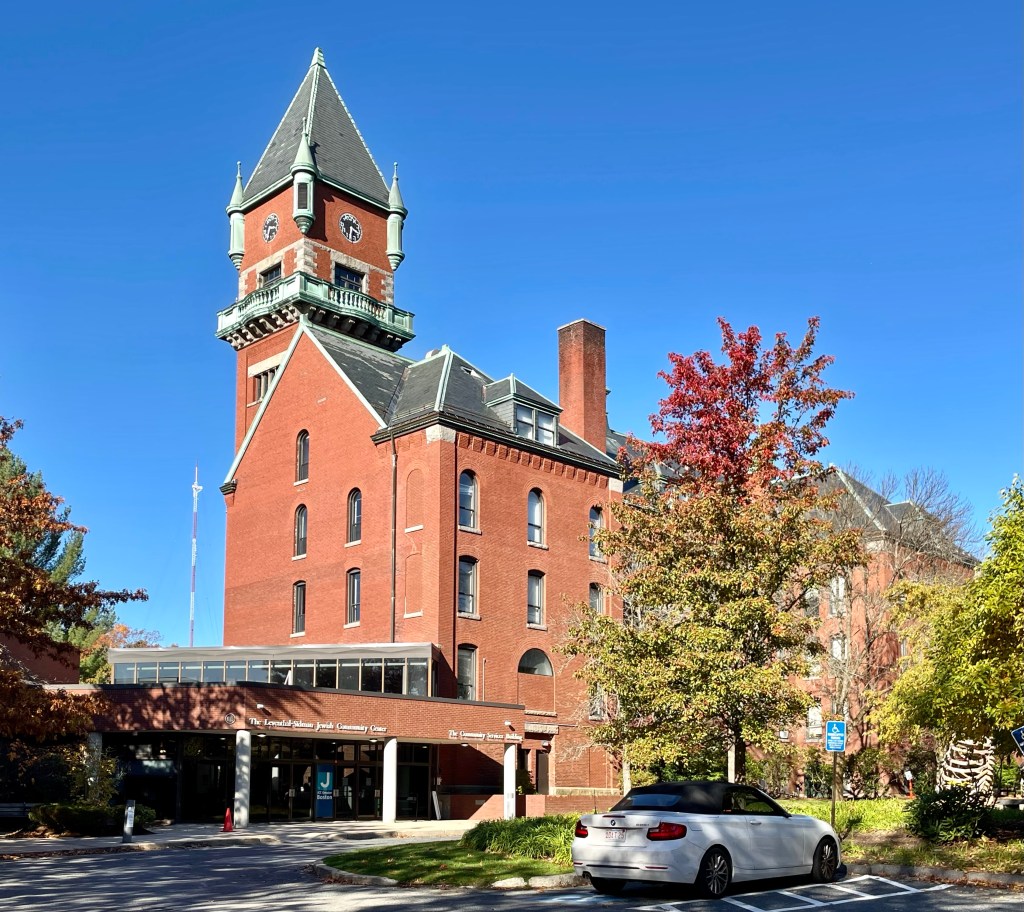
At the edge of the Charles River at the far edge of Newton, Massachusetts, homeless working boys of the Boston area had a place to rest their head. The Working Boys Home was established in 1883, as a new Catholic charity in Boston. Its mission was to provide a home for working adolescent boys (messenger boys, newsboys, boot blacks, etc.) who had no place to call home and often slept in abandoned buildings, alleys, stables, and other such places. The Working Boys Home was open to homeless boys between 12 and 17 years of age, and all were expected to work and contribute a part of their wages to the support of the home. The original space in Jamaica Plain and subsequent Bennett Street (North End) locations were deemed too inadequate. In 1890, the 48-acre estate in the Oak Hill section of Newton was purchased and this four-story brick building built from plans by William H. McGinty. After WWII, city prosperity other services reduced childhood homelessness, and the last group of boys moved out of the Working Boys Home in 1961. The property was sold in 1979 to the Combined Jewish Philanthropies of Greater Boston to be used as a center for activities meeting cross-generational needs, now known as JCC Greater Boston.
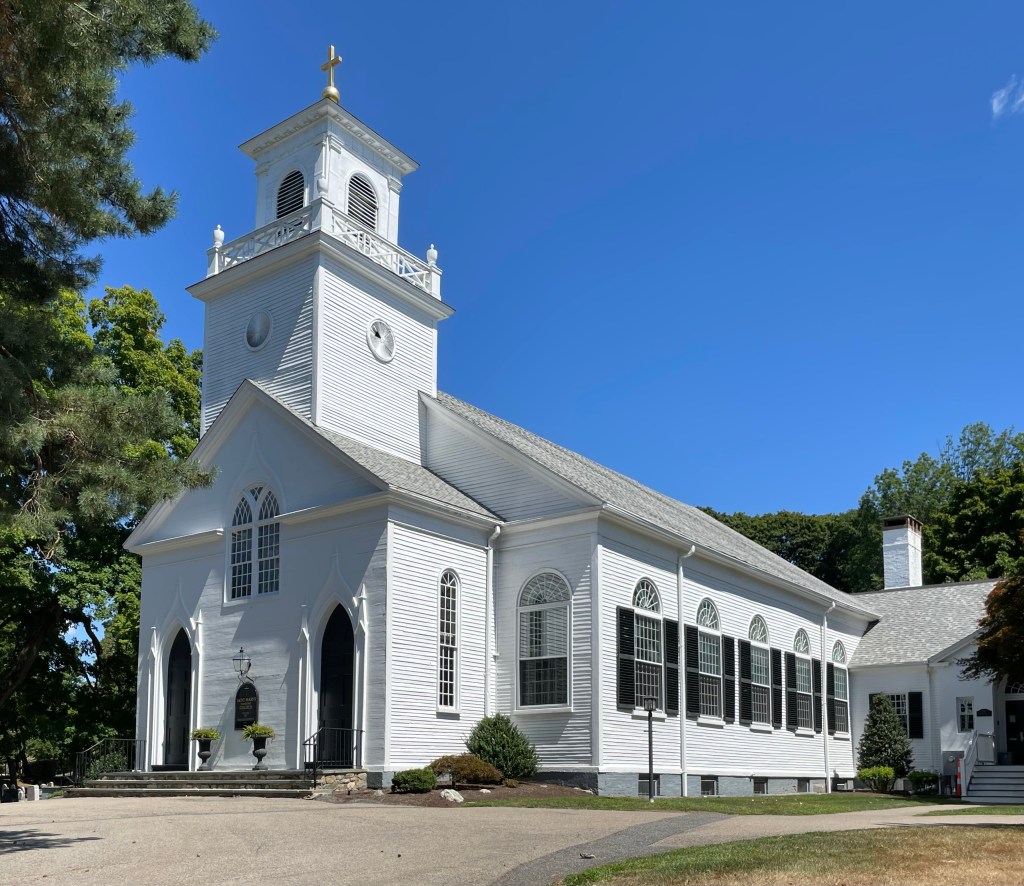
Lower Falls Village in Newton, Massachusetts was first settled in the early 18th century by colonists due to the area’s natural waterfalls and rapids which was perfect for early industry. By the early 19th century, up to four paper mills lined the Charles River here at a dam which provided power and steady water supply for their facilities. The village saw a large population increase from that point until the end of the 19th century when larger mills in the state were built. One of the major community spaces for the growing village was it’s main church, St. Mary’s Episcopal Church, which is the oldest extant church in Newton and the first Episcopal church built immediately west of Boston. The cornerstone for the building was laid in September 1813 containing a package of coins and a silver plate. Previously services had been held in the Lower Falls schoolhouse, with the first Episcopal service held in 1811. The land for the church was donated by Samuel Brown a wealthy Boston merchant who invested in the paper mills in Lower Falls. Many of the founding members and parishioners were in the paper making business in Lower Falls and buried in the adjacent cemetery. The Federal style church was altered in 1838 and given Gothic detailing, including lancet windows and finials at the steeple. In 1954, the bell tower was altered with the gothic finials replaced with the current urns on the balustrade, the gothic arched openings were changed to the current arched shape, and entablature, pilasters, and a cross were added.
For the last on this series of Lost Boston buildings, I present this little-known landmark which was once neighbors to the Old State House. The Pagoda Building as it was named, was located on the corner of Washington and State Streets and was one of the tallest buildings on the street upon completion. The seven-story building of Quincy granite exhibited round arched windows and an interpretation of a belvedere at the roof which served as a penthouse. The building’s upper six stories were residential, including the spectacular Oriental penthouse at the top, with retail space at the ground floor. The architect was a recent immigrant from Britain named GeorgeSnell, who clearly made a name for himself, later entering a partnership with James R. Gregerson. The Pagoda Building, which was originally an early “skyscraper” in Boston was quickly surpassed in height and floor plate size and was deemed inadequate for such a prominent location. It was demolished by 1917.
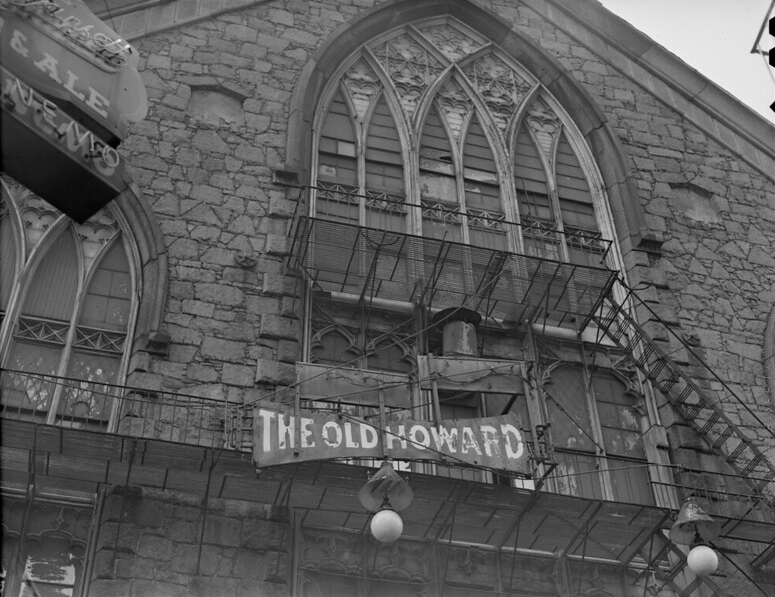
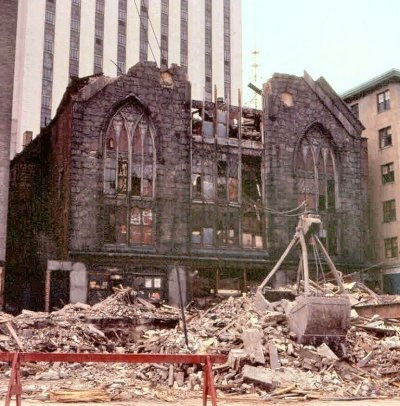
One of the more iconic theater buildings to ever stand in Boston was the Howard Athenaeum, later the Old Howard, which stood on the former Howard Street in Downtown Boston. The origins of the building begin in 1843, when a flimsy, tent was built to serve as a church for the small Millerite sect. The small but loyal congregation eventually abandoned the site following disappointment with the minister’s promise that the world would end in 1844. After Armageddon failed to materialize, the founder of the sect, William Miller, an ex-Deputy Sheriff from Poultney, Vermont, was discredited and the Millerites moved on. After running their former minister out of town, several church members (who had given up all their worldly possessions in preparation for their trip to heaven,) decided to recoup some of their losses by selling the property to Messers Boyd and Beard, who opened a theater here in 1845. A fire destroyed the structure, and it was replaced by a larger, fireproof building that same year. The new building was constructed in 1845 and was designed by architect Isaiah Rogers in the Gothic Revival style with massive granite blocks from Quincy.
The Howard Athenaeum saw many iconic performers and historical events in its 100 years. A young John Wilkes Booth, played Hamlet at the Howard before becoming famous for a more nefarious deed in Washington in 1865. Also, Sarah Parker Remond, a Black anti-slavery activist and lecturer with the American Anti-Slavery Society (and later a medical doctor), had bought a ticket through the mail for the Donizetti opera, Don Pasquale, but, upon arriving, refused to sit in a segregated section for the show. She was forcibly removed and pushed down a flight of stairs. She eventually won a desegregation lawsuit against the managers of the Howard Athenaeum and received $500 in a settlement.
The theater was quickly deemed obsolete and second-tier compared to more modern theatres built nearby. By the mid-20th century, the Old Howard was largely featuring burlesque shows. To keep bringing in audiences, the burlesque performances got more risqué with each year. As a result, the Boston vice squad made the Old Howard the object of their attention. The Boston Vice squad made a 16 mm film during one of their raids in 1953 and captured on film the performance by “Irma the Body”. This film footage resulted in an indecency hearing which eventually led to the closing of the Old Howard in 1953. A fire a few years later along with Urban Renewal led to the demolition of the Old Howard by 1962. Like the former Suffolk Savings Bank (featured previously), the present Center Plaza Building is on the site.
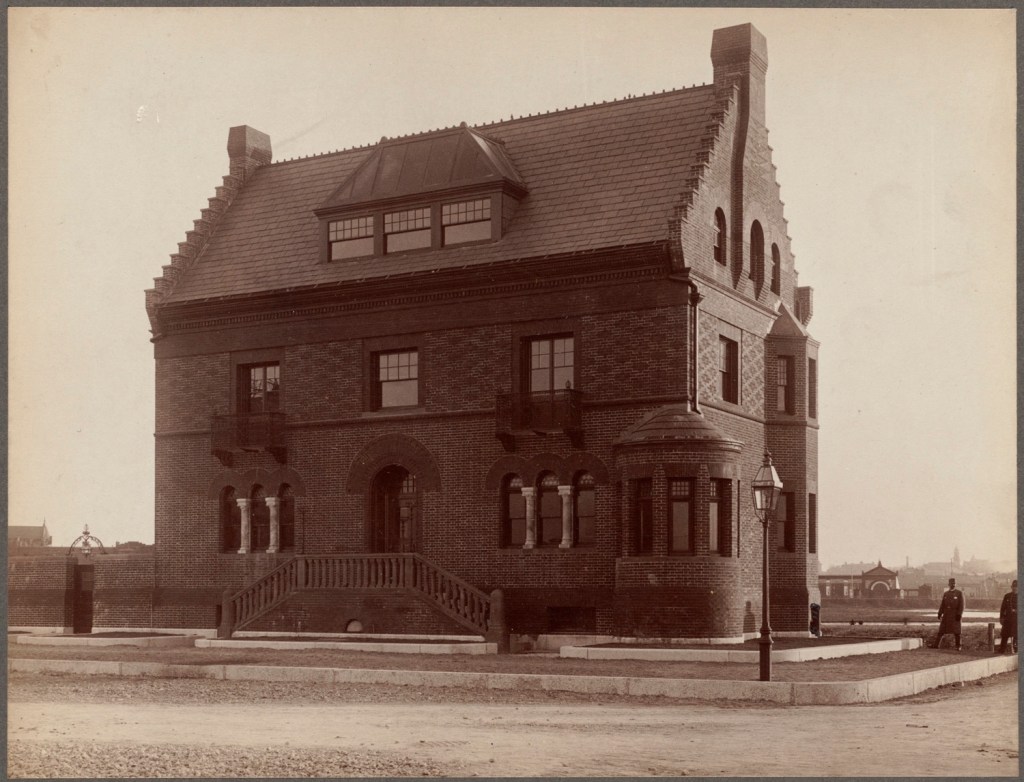
In 1888, Kate and Charles Page purchased a house lot in the sparsely developed Fenway section of Boston. The corner lot at Westland and Parker (renamed Hemenway) provided views to natural scenery and access to many Boston amenities. The couple worked with architect Herbert Langford Warren, who had previously apprenticed under the great H. H. Richardson. Warren took many of the common motifs seen in Richardson’s own style, but he was also a fan of the Arts and Crafts Movement, with its love of fine handicraft. You can see that in the elaborate diaper-patterned brick and in the stepped gables. The gables were a revival of a motif from old Flemish, Dutch, and Scottish architecture, sometimes called corbie-step gables, because corbies (crows) liked to stand on the steps. The interior was just as stunning, with massive brick arches, fanciful woodwork, and a prominent stairhall at the entrance. The couple was likely inspired to hire Warren by their son, Walter Gilman Page, a young artist who maintained a studio space in the home for some time. The home was sold out of the family by 1912. In 1917, the whole house was lifted up one story and a strip of retail stores was inserted beneath it. The original arched entryway then became a second-floor window. It was replaced with a taller building by 2003. Interestingly, upon the opening, the Commissioner of the Boston Parks and Recreation Department and long-time Boston Preservation Alliance Executive Director stated that the 1888 house “looked like a missing front tooth” and was happy to see it demolished.

 Buildings of New England