A playful interpretation of a medieval English cottage, with its stucco cladding, half-timbering, weatherboards in the gable ends and ornamental well enclosure in the front yard, can be found on Woodland Road in Brookline. The whimsical cottage was built in 1928 for Arthur B. Bernard, the son of the president of the New England Leather Company in Boston’s Leather District. Arthur would follow his father’s footsteps and join the business himself. Architect and builder, Fred S. Wells of Newton designed and constructed the house (and others in the area in the same style). What’s your favorite part of this house?
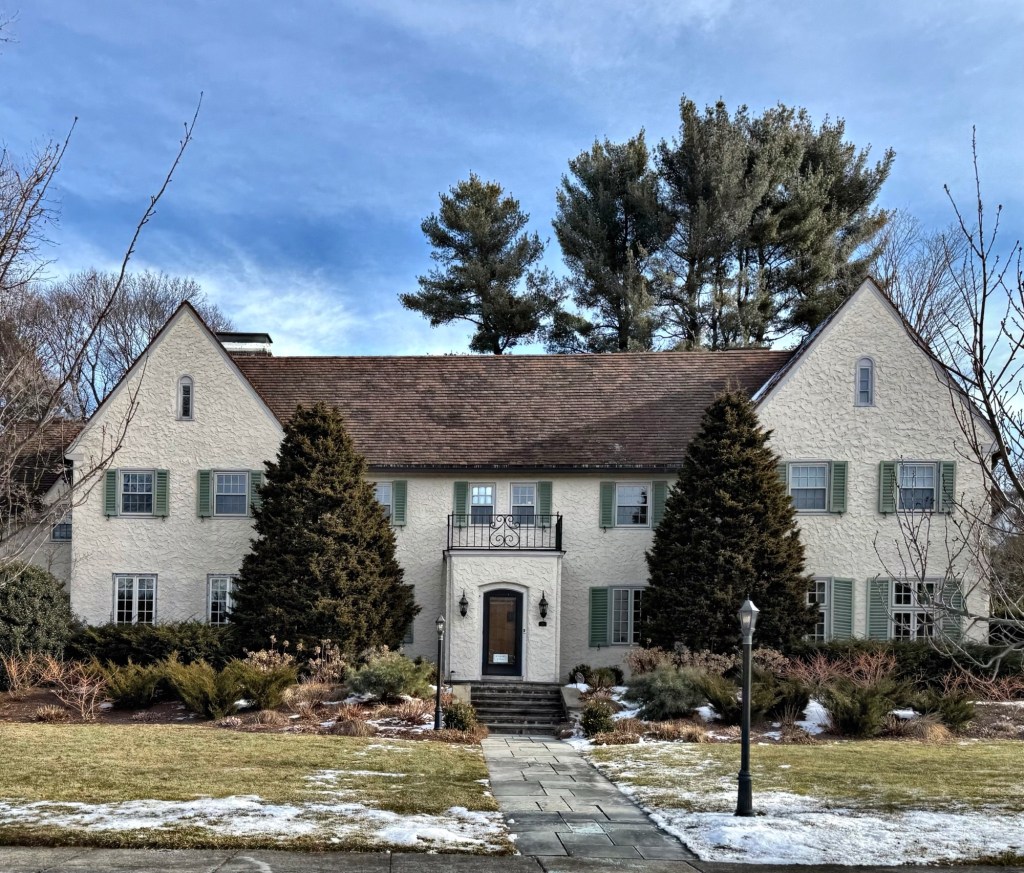
The early decades of the 20th century were the golden years for suburban development in the Boston area. With personal automobiles better-connecting the city to lesser developed areas like Milton, Newton and Brookline, middle-upper class residents were able to relocate to the suburbs and build stately homes, typically in one of three architectural styles: Colonial Revival (most common), Tudor Revival, or Arts and Crafts (least common). This large house is located on Randolph Road in the Woodland/Heath area of Southern Brookline, and dates to 1928. The residence was constructed for Dr. Walter C. Miner, an orthopedic dentist, and his wife, Ethel and designed by the firm of Strickland, Blodgett & Law. The large house sits on a double-lot, and is notable for its symmetry, slate tile roof, and rough-faced stucco walls.
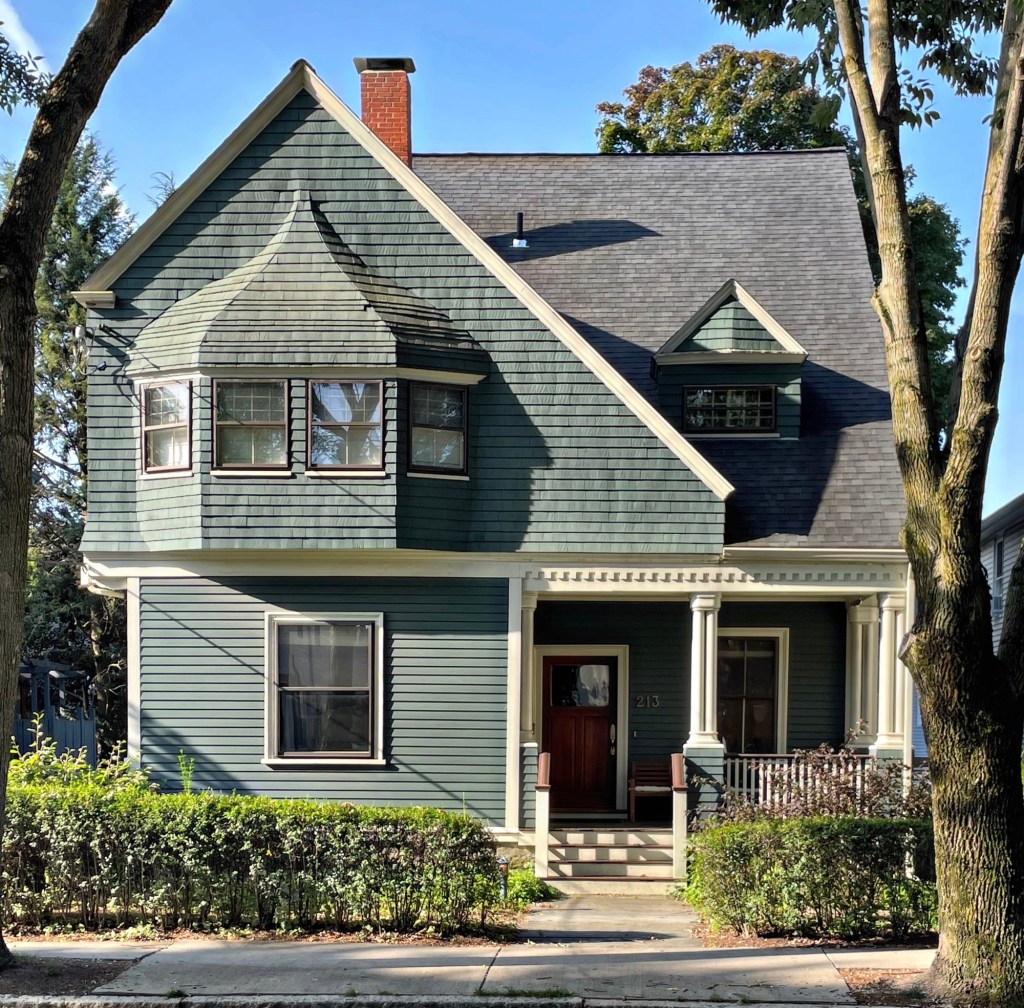
The Frederick & Arabella Holden House sits on Aspinwall Avenue in the Brookline Village neighborhood of Brookline, Massachusetts. Built in 1893, the excellently designed Shingle style dwelling was actually built on speculation by developers, and sold upon completion to the couple. Fred G. Holden (1858-1927) was a marble dealer who managed the Boston Marble Company and had connections in his home state, Vermont for the highest quality marble to sell around Boston, largely for building products and grave memorials. Arabella Proctor Holden (1859-1905) was born in Cavendish, Vermont, as the eldest daughter of Redfield Proctor, 37th Governor of Vermont and the founder of the Vermont Marble Company, the largest such company in the world. I could not find the architect of the house, so any more information, let me know. I’d love to solve the mystery!
The St. Paul’s Episcopal Church of Brookline, Massachusetts is an architecturally and historically significant landmark to the area. The congregation was established in 1849, and within months, in May 1850, the corporation, which was made up of wealthy Boston-area residents, accepted an offer from Augustus Aspinwall of a building lot to erect a church. Esteemed ecclesiastical architect, Richard Upjohn, the architect of Trinity Church in New York, was hired to design the church in Brookline of the same, Gothic style. The wealth of the congregation was evident by the consistent expansions of the complex, to include a chapel, rectory, parish house, and other expansions to those buildings. St. Paul’s Church is the oldest religious structure in Brookline, and almost was lost when the sanctuary was devastated by fire in 1976, leaving only its exterior walls and two stained glass windows. The congregation rebuilt the interiors and the building remains well-preserved at its exterior, built of Roxbury Puddingstone.
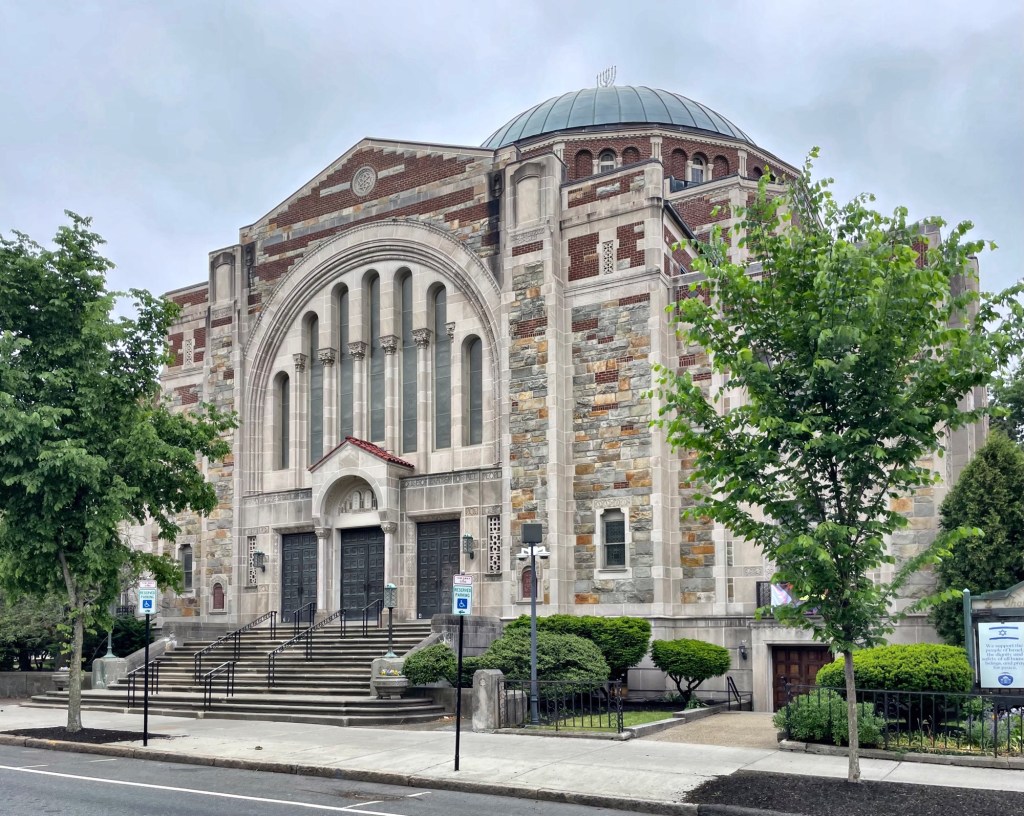
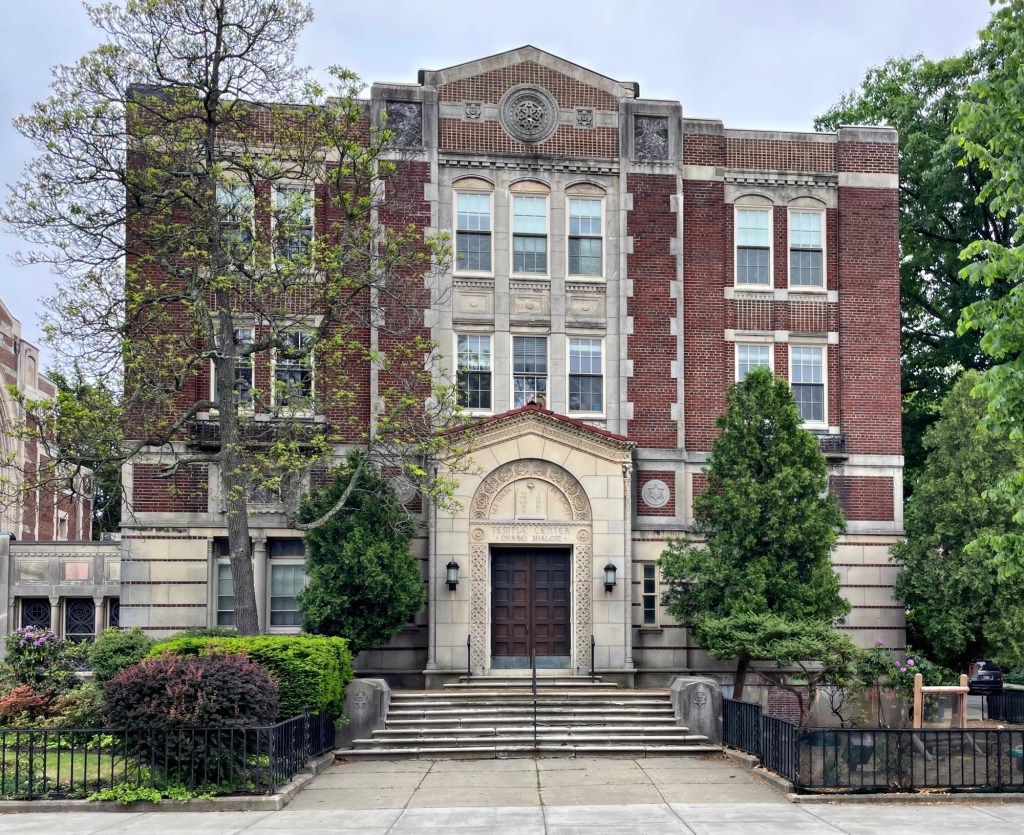
The congregation of Ohabei Shalom is the oldest jewish congregation in the greater Boston area and the second oldest in New England. It was formed in 1843 and was the first formal congregation in Boston. After a smaller space, they purchased the former South Congregational Unitarian Church on Union Park Street in the South End of Boston. The congregation split over ideological differences and the decision was made for one half of the congregation to build a new temple in Brookline, where many of the members began to move to. Land on Beacon Street, just west of the Longwood section of Brookline was purchased in 1921, and it would be four years until a temple center (now the hebrew school) was built in 1925. The larger temple was built just after on the corner of Beacon and Kent streets in Brookline from plans by Clarence Blackall, a noted architect in the area. With its lively use of polychromatic masonry and Byzantine ornament, all surmounted by a great copper dome, the congregation boasts the most architecturally outstanding synagogue in the Boston region and it has been maintained well for the almost 100 years since it was built.
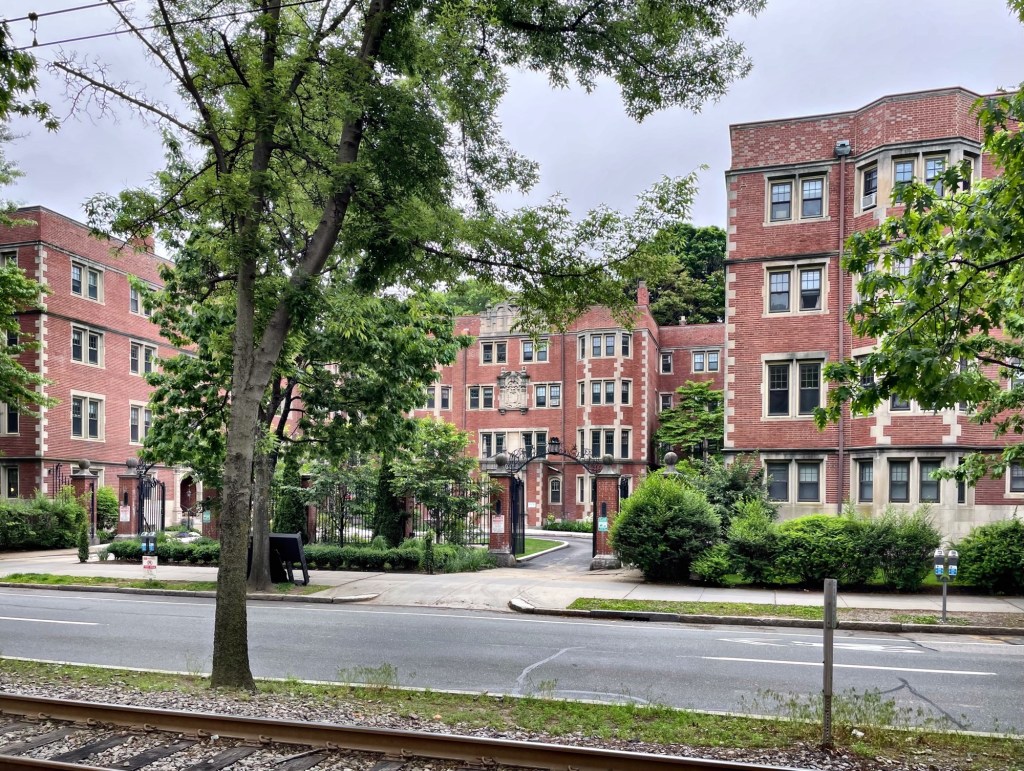
Believe it or not, but this apartment building on Beacon Street in Brookline, Massachusetts is one of the most significant buildings of the type in the Boston area! This is Richmond Court, which is one of the oldest (if not the first) apartment house built in the northeastern United States that resembled an English Tudor manor house. The apartment building was constructed in 1898 from plans by architect Ralph Adams Cram, one of the best American architects of the late 19th and 20th centuries. Cram even moved into the building briefly before moving into a townhouse in the Back Bay neighborhood of Boston. The building set the tone architecturally for later apartment buildings in the Boston area, with many architects attempting (largely not as effectively) to design Tudor-influenced apartment buildings regionally. The development is also significant in that at a time when most Boston-area developers were building apartment houses that maximized the buildable square footage, as they do to this day, Richmond Court included a landscaped courtyard to provide residents with more light and air circulation. The development also included two separate town houses on either side of the apartment block.
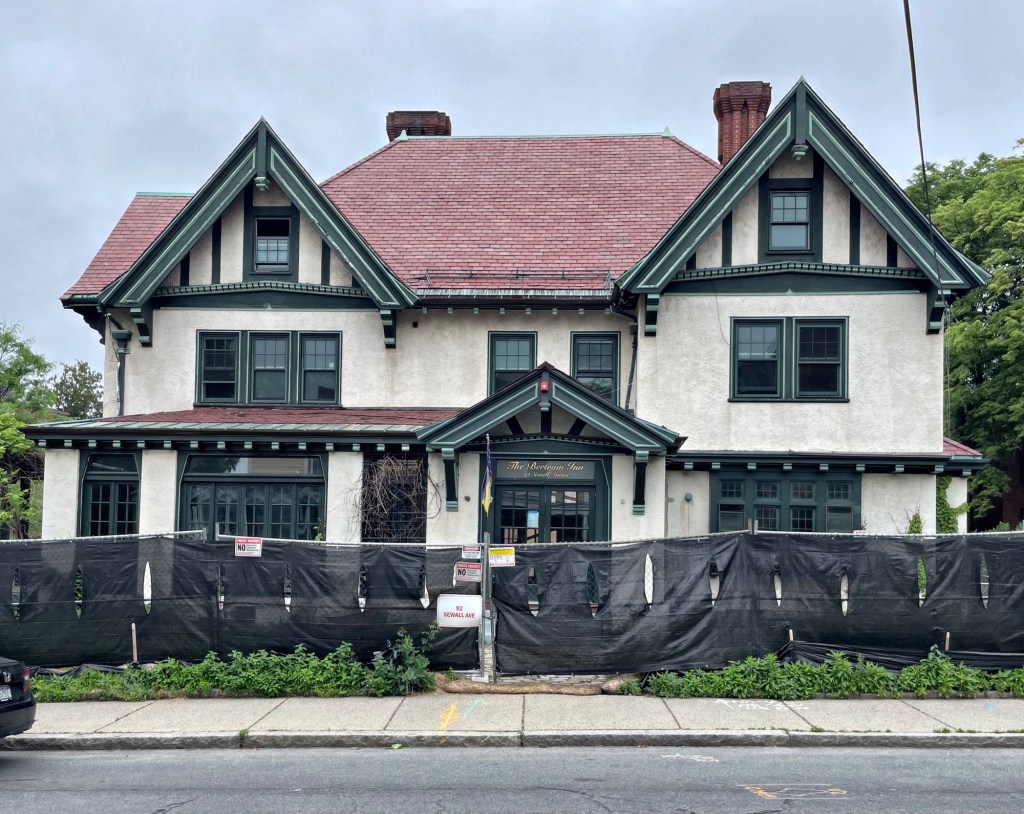
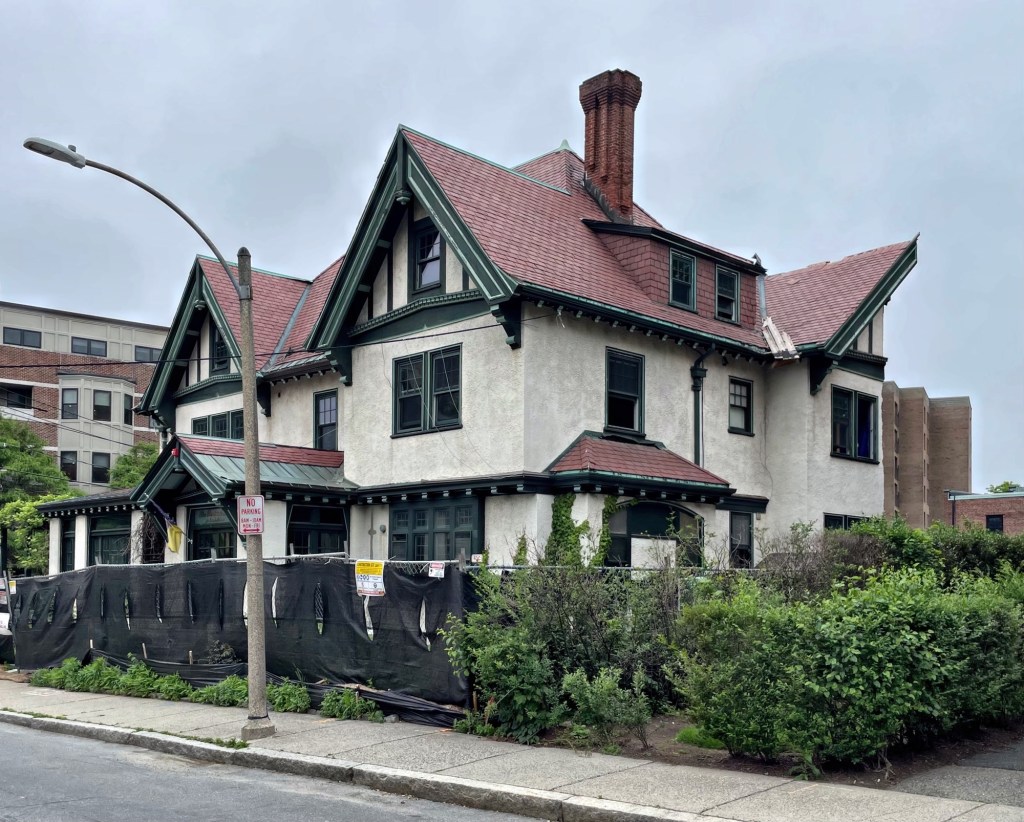
Across the street from the C. D. Hammer House on Sewall Avenue in Brookline, Massachusetts, this later take on the Queen Anne style with Tudor Revival elements is about to go through quite a transformation!
A little history before I share the proposal for the site… This house was built around 1910 for Bessie V. and Carl J. Kaffenburgh, a tobacco dealer with a store in Downtown Boston. The house was from plans by architect Harry E. Davidson, who had previously designed stucco houses with Tudor influences for both the Vorenberg and Kaffenburgh family including 20 Amory Street in the nearby Cottage Farm neighborhood. By 1940 the house was owned by Hazen Blood and his wife. The Bloods had rented out rooms in the house totalling 13 lodgers here as a rooming house in the 1940 directory. In 1987, owner, Bryan Austin purchased the property restored it, and opened it as the Bertram Inn.
In recent years, the adjoining lots were eyed for redevelopment and demolition was proposed for this property. Neighborhood opposition and the demolition delay process allowed for review of the plans, which now includes the “restoration” of the main house with a six-story boxy addition on the rear containing condominium units. While the proposed addition is not contextual to the historic Tudor Revival house, it does save the original building and provides much-needed housing for others, so I guess this is a win! What do you think?
Before the turn of the 20th century, William L. and Elizabeth G. Phinney purchased a narrow house lot at the corner of Hawes and Chatham streets in the desirable Longwood neighborhood of Brookline. They then retained the young architectThomas Marriott James, to design this massive Federal Revival style mansion. After William died in 1911, Elizabeth remained in the house until 1920, when it sold to C. Willard Bigelow a wool dealer and his wife, Ruth. The Phinney-Bigelow House is an exemplary Federal Revival style house on a narrow lot which takes full advantage of its boxy form. The slightly asymmetrical facade with Palladian window, limestone trimmings, and bold entrance are all great additions to the design.
Another of the early homes of the affluent Longwood subdivision of Brookline, Massachusetts is this painted brick house which dates to the 1850s. The house was developed by Amos A. Lawrence, who developed much of the neighborhood, renting out suburban houses to wealthy Boston-area residents. In 1866, Lawrence sold the property to Samuel S. Allen of Roxbury and it would change ownership a half-dozen times in the next century. The property was added onto and modernized a few times, notably during the ownership of Henry A. Christian, MD, the first Chief-of-Medicine at Peter Bent Brigham Hospital over the Muddy River in Boston. The streamlined late-Colonial Revival look with vestibule side entry, windows, and shallow hipped roof are all likely later alterations from the 1850s house.




 Buildings of New England