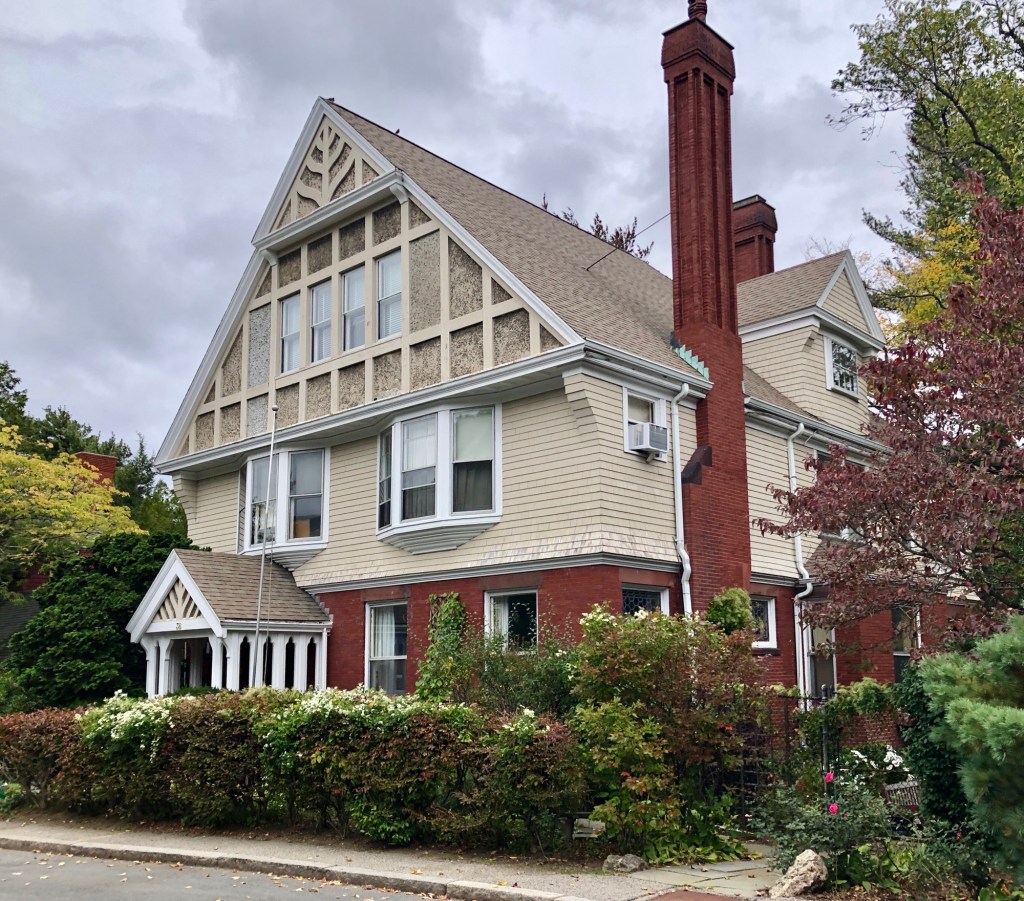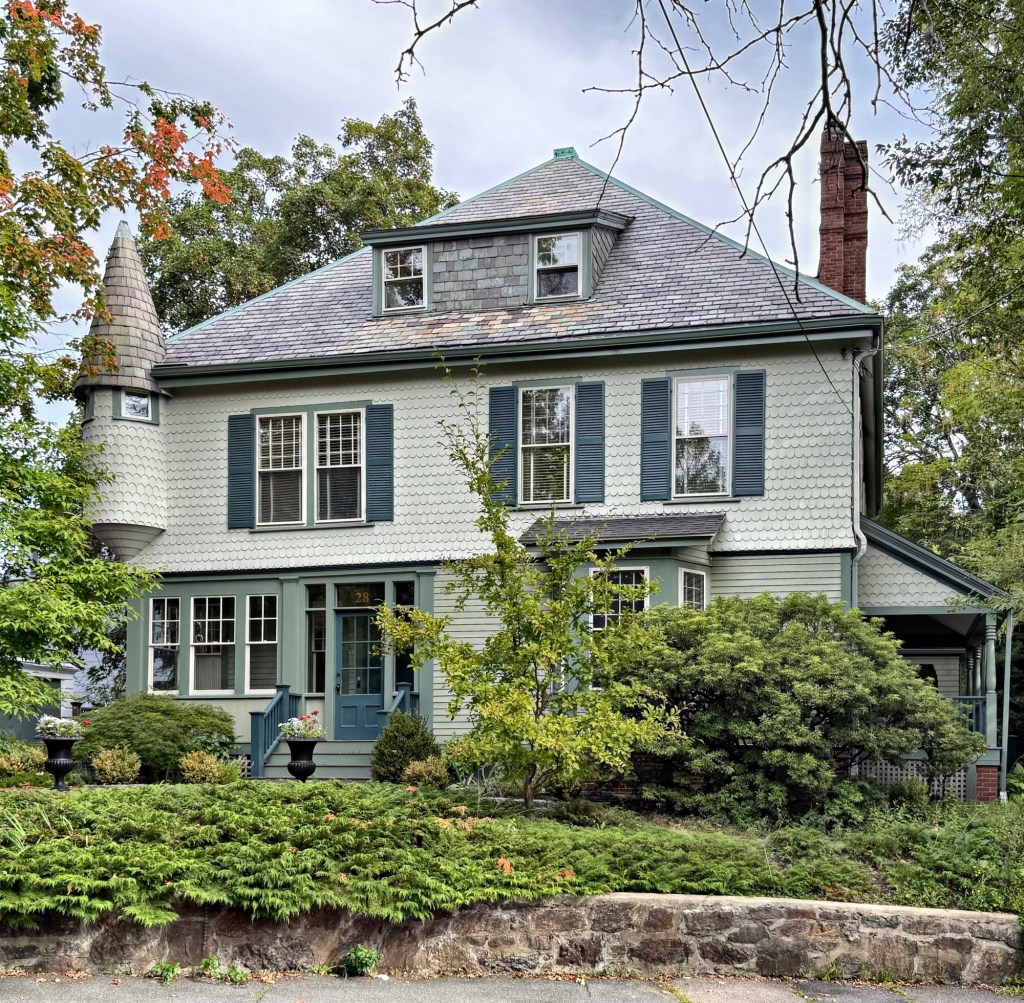
Charles Torrey House // 1889

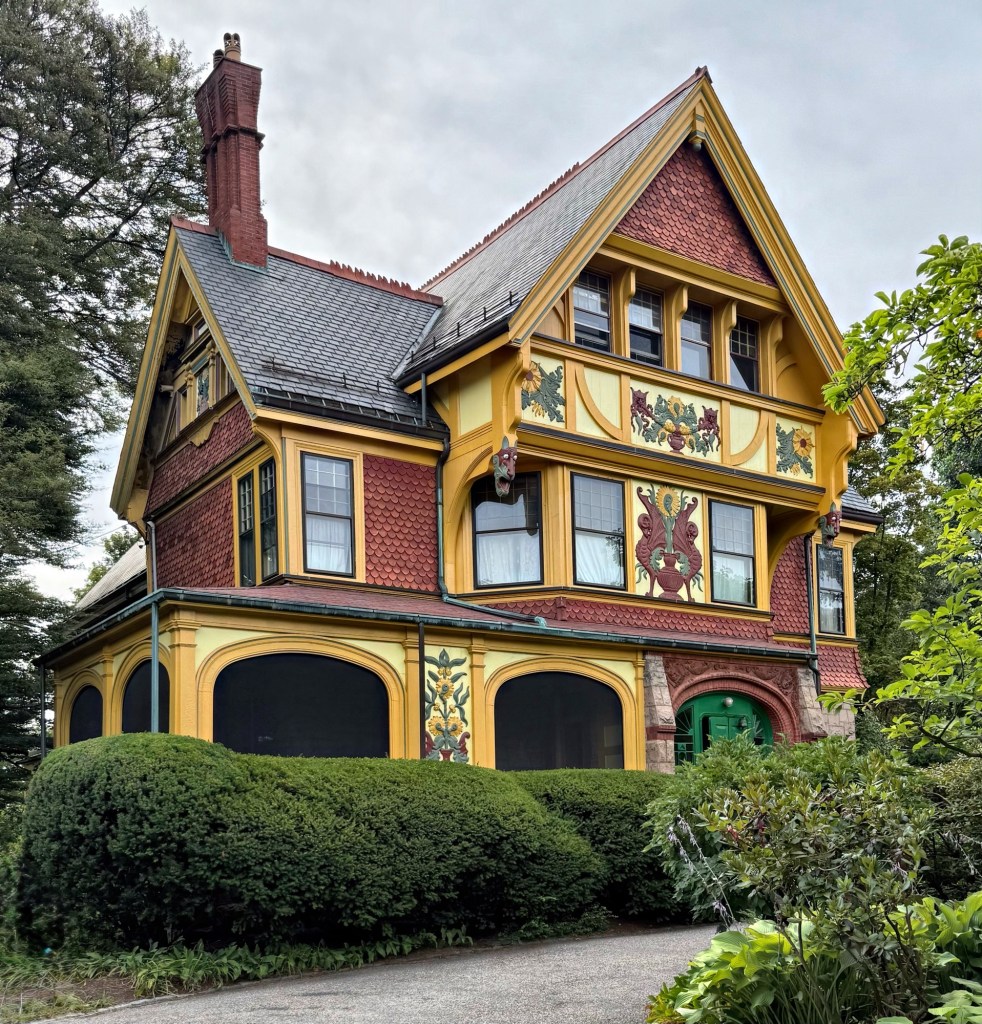
The Charles Torrey House at 36 Edgehill Road in Brookline, Massachusetts, is a great example of a Queen Anne style residence in the Boston suburbs. The stately home was constructed in 1889 for Charles Torrey, an artist who specialized in nautical scenes. The house is unique for its brick first floor, shingled second and stucco with half-timbering in the gable, a feature that suggests the renewed interest in English medieval motifs. The architect for the Queen Anne style home could not be located, but it appears to be from a more prominent Boston-area firm of the late-19th century. The house is currently (2025) undergoing a renovation.

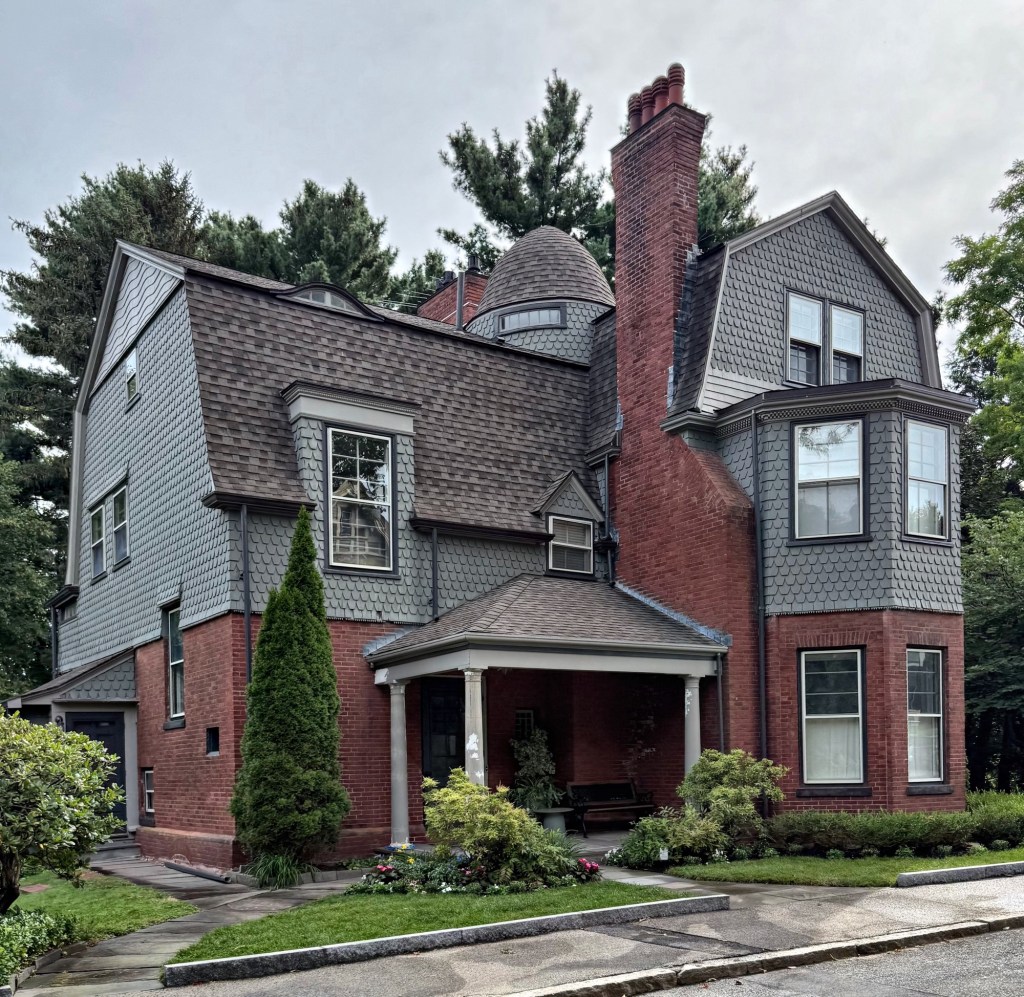
Moorfield Storey House // 1875

The house at 44 Edgehill Road in Brookline, is a brick Queen Anne style residence built for Moorfield Storey (1845-1929) by architect and neighbor, Robert Swain Peabody, who was Moorfield’s friend and college roommate. Both Peabody and Storey would later move in the early 20th century to the Fenway in neighboring houses, also designed by Robert S. Peabody. Moorfield Storey was a president of the American Bar Association and the president, for most of its existence, of the Anti-Imperialist League, an organization founded to oppose the annexation of the Philippines as a colony and to support free trade and the gold standard. Storey consistently and aggressively championed civil rights, not only for African Americans, but also for Native Americans and immigrants. He opposed immigration restrictions, and supported racial equality and self-determination. He would become the first president of the National Association for the Advancement of Colored People (NAACP), from its founding in 1909 until his death in 1929. The Storey House in Brookline is a well-preserved and early example of the Queen Anne style, that would dominate architectural tastes for the following decades.

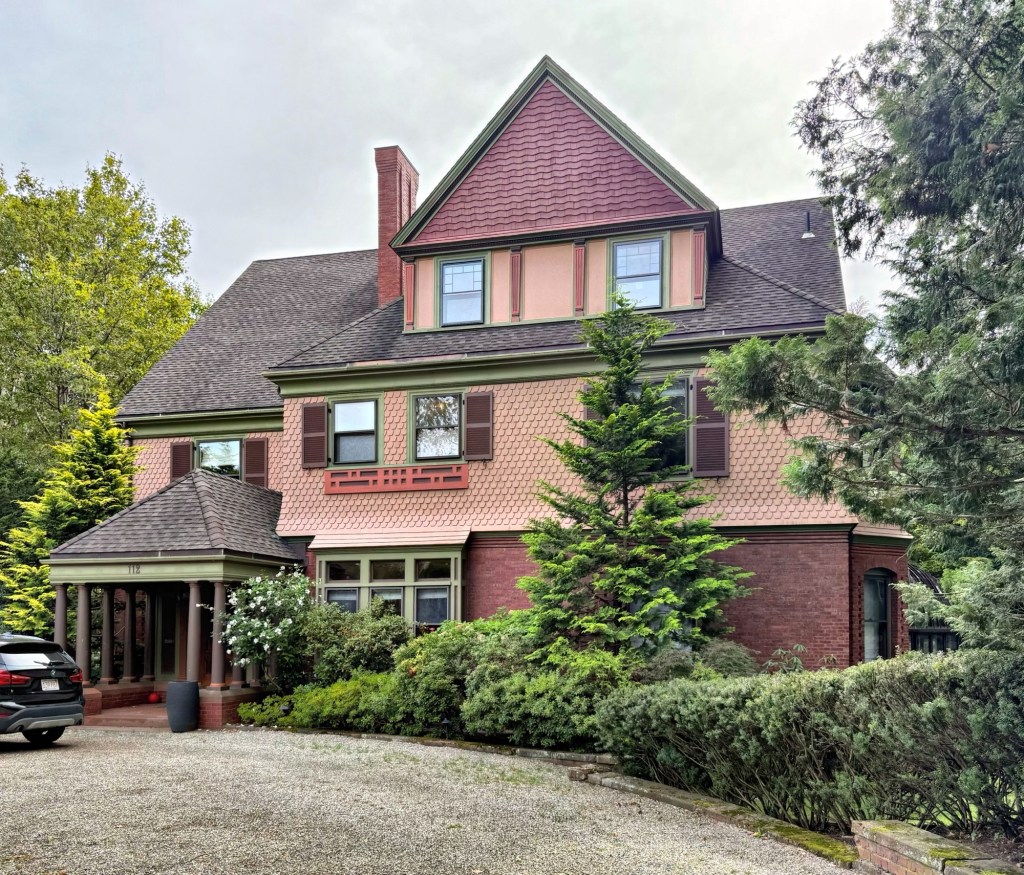
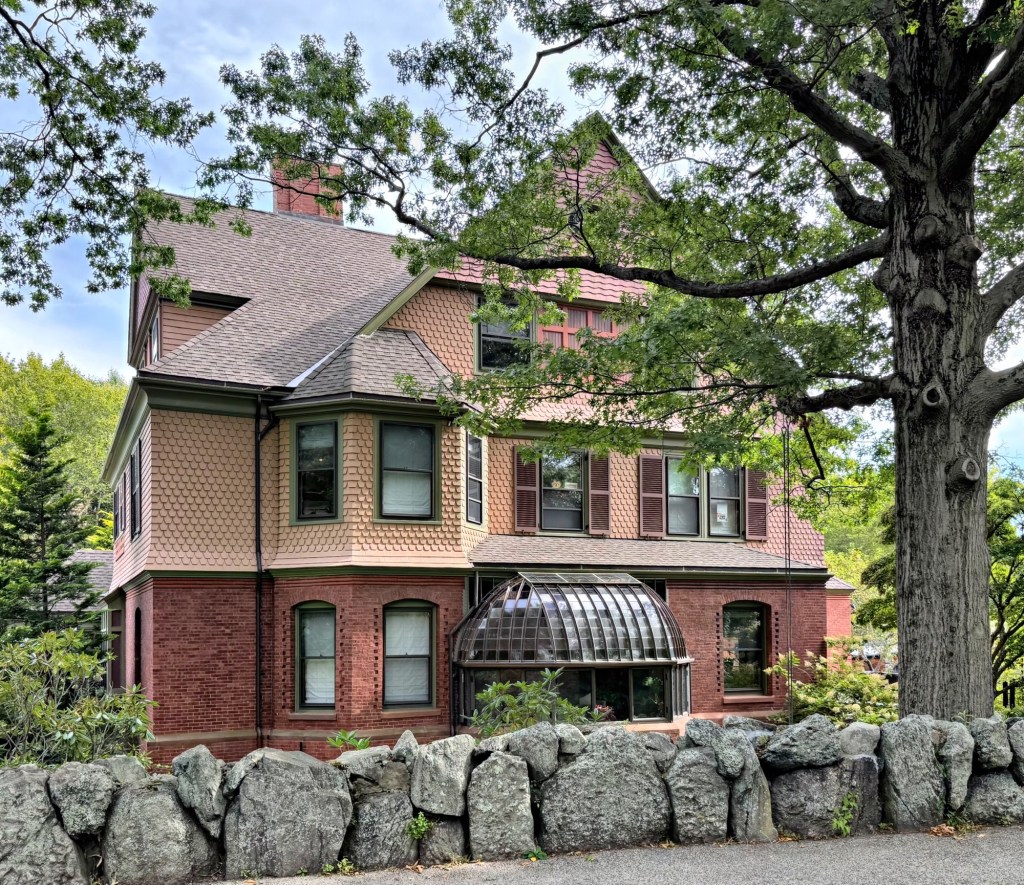
Low-Rock House // 1888

This handsome shingled Queen Anne style home on Allerton Street in Brookline, Massachusetts, is part of the reason why the “Pill Hill” neighborhood gets its name. The residence was built in 1888 for Mr. Sumner Flagg, likely as an investment property as the neighborhood developed into one of the finest in the Boston area. An early resident here was Judith Motley Low (1841-1933), founder of the Lowthorpe School of Landscape Architecture, which was the first school intended solely to prepare women as landscape professionals in a field dominated by men. In 1945, the Lowthorpe School merged into the Rhode Island School of Design and became the basis of RISD’s Landscape Architecture Department. Another prominent resident of the house in the 20th century was Dr. John Rock (1890-1984), a physician and scientist who worked nearby at the Massachusetts Hospital for Women. As a Catholic doctor, John Rock is best-known for two groundbreaking medical discoveries in women’s health: the birth control pill and in-vitro fertilization. Dr. John Rock and his lab technician, Miriam Menkin, were the first researchers to fertilize a human egg outside of a human body in February of 1944, this research was compounded and later led to in-vitro fertilization as we know it today. Additionally, while running his clinic, Dr. Rock encountered a number of women bearing unwanted children that they could neither afford financially nor handle physically. Rock observed numerous women who, after giving birth to multiple children, had prolapsed uteri, malfunctioning kidneys, and were prematurely aging. In 1952, Rock was recruited to investigate the clinical use of progesterone to prevent ovulation. Enovid, the brand name of the first pill, was approved by the U.S. Food and Drug Administration (FDA) and put on the market in 1957 as a menstrual regulator. In 1960, Enovid gained approval from the FDA for contraceptive use.

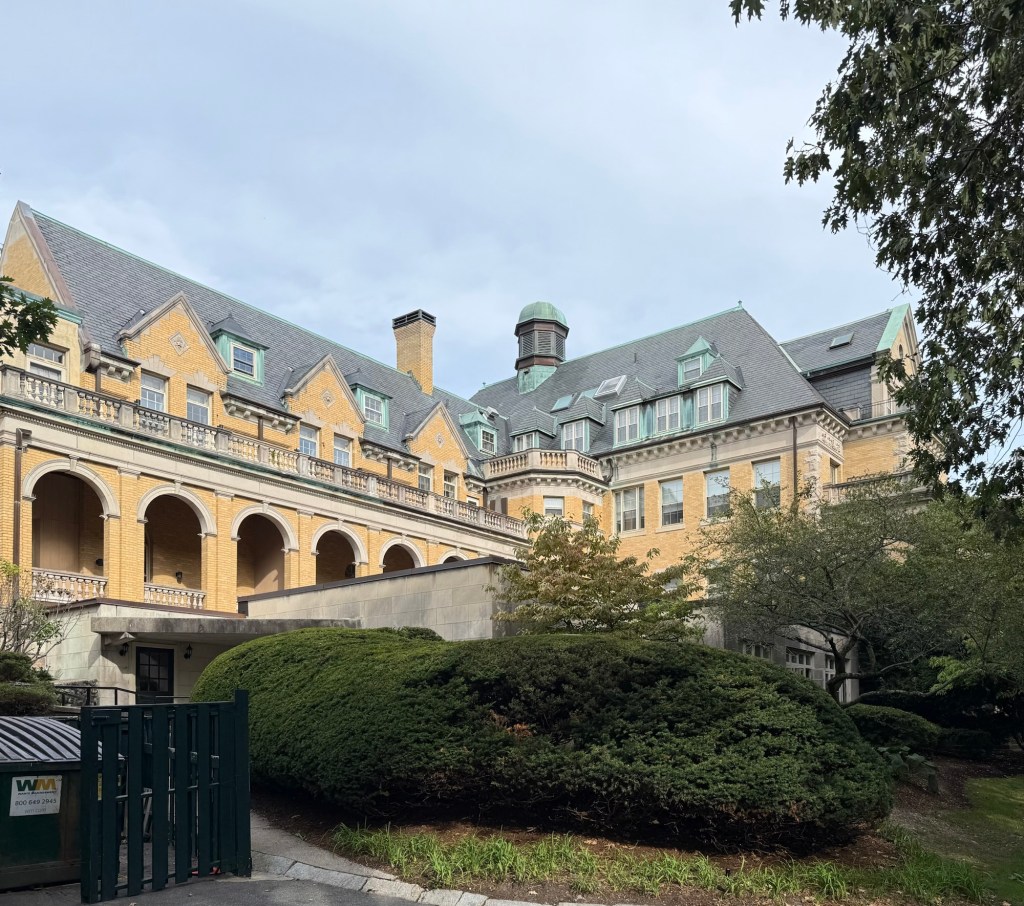
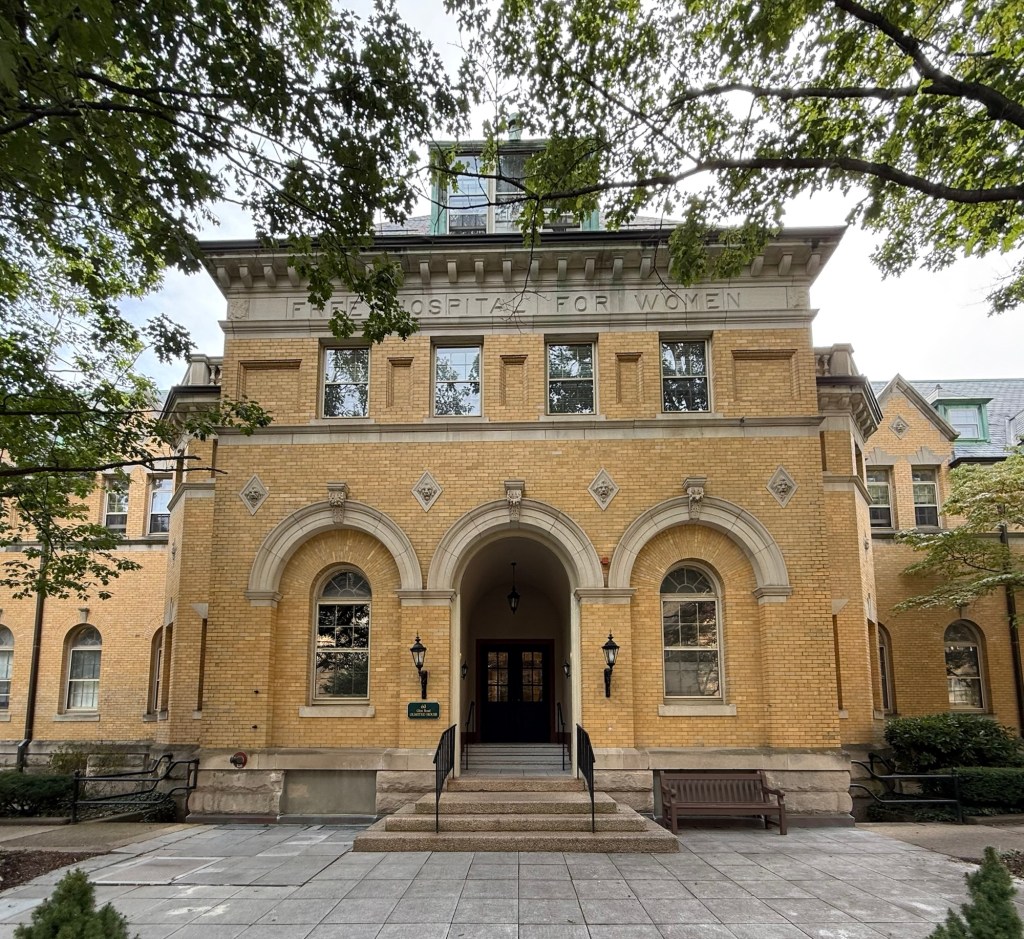
Boston Free Hospital for Women // 1895

This handsome yellow brick building, designed by architects, Shaw and Hunnewell, was completed in 1895 as the Boston Free Hospital for Women. The hospital was organized in 1875 in a converted rowhouse in Boston’s South End, and after relocating once, it was decided that a purpose-built hospital was needed for the growing demands of the institution. A site in Brookline on the Muddy River, overlooking Frederick Law Olmsted’s Riverway and Olmsted Park, was purchased and the hospital was opened in 1895. The brick and limestone hospital building is somewhat Chateauesque in style and when opened, had no electricity and no telephone. The hospital is historically significant as the first teaching hospital for Harvard and as the first hospital in the country to apply radiation treatment for cancer, along with being a major research facility in fertility, especially the work of Dr. John Rock (who lived nearby) on the development of the birth control pill and research on in-vitro fertilization. The Free Hospital for Women merged with the Boston Lying In
Hospital (now part of Brigham & Women’s), which closed its Brookline Campus in the 1960s. In 1984, the firm of Childs, Bertman and Tseckares oversaw the conversion of the buildings to condominiums, called The Park, with sympathetic new construction.

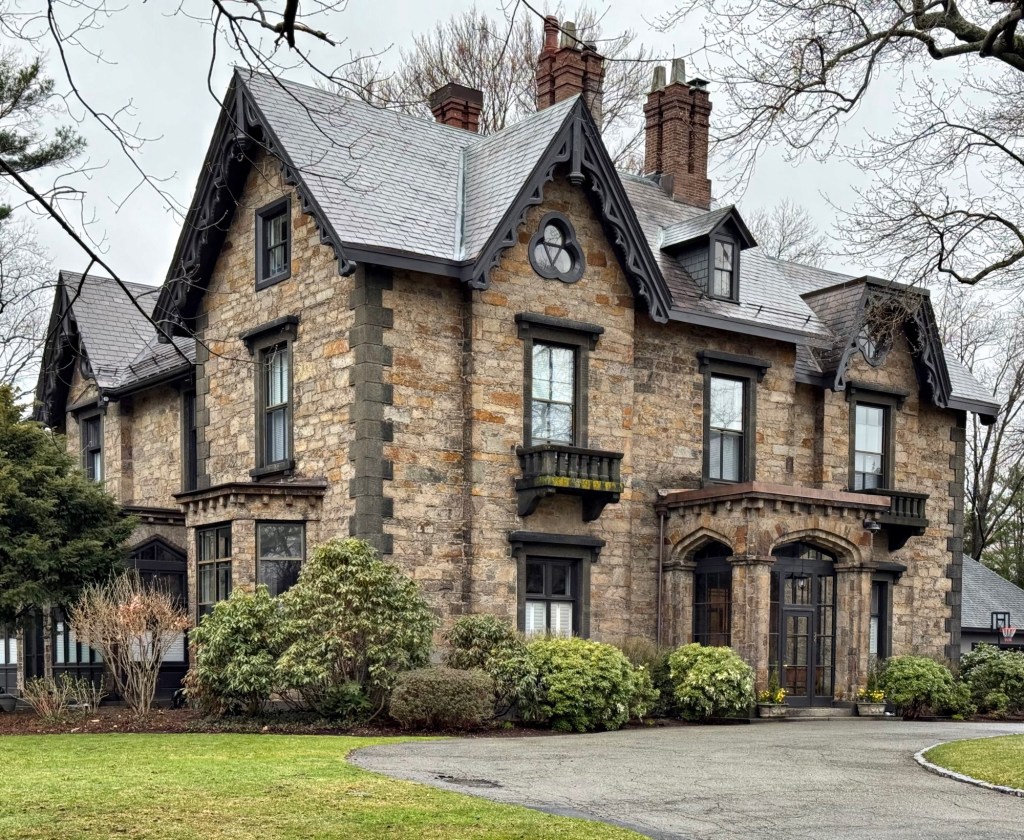
Frederick Sears Cottage // 1851

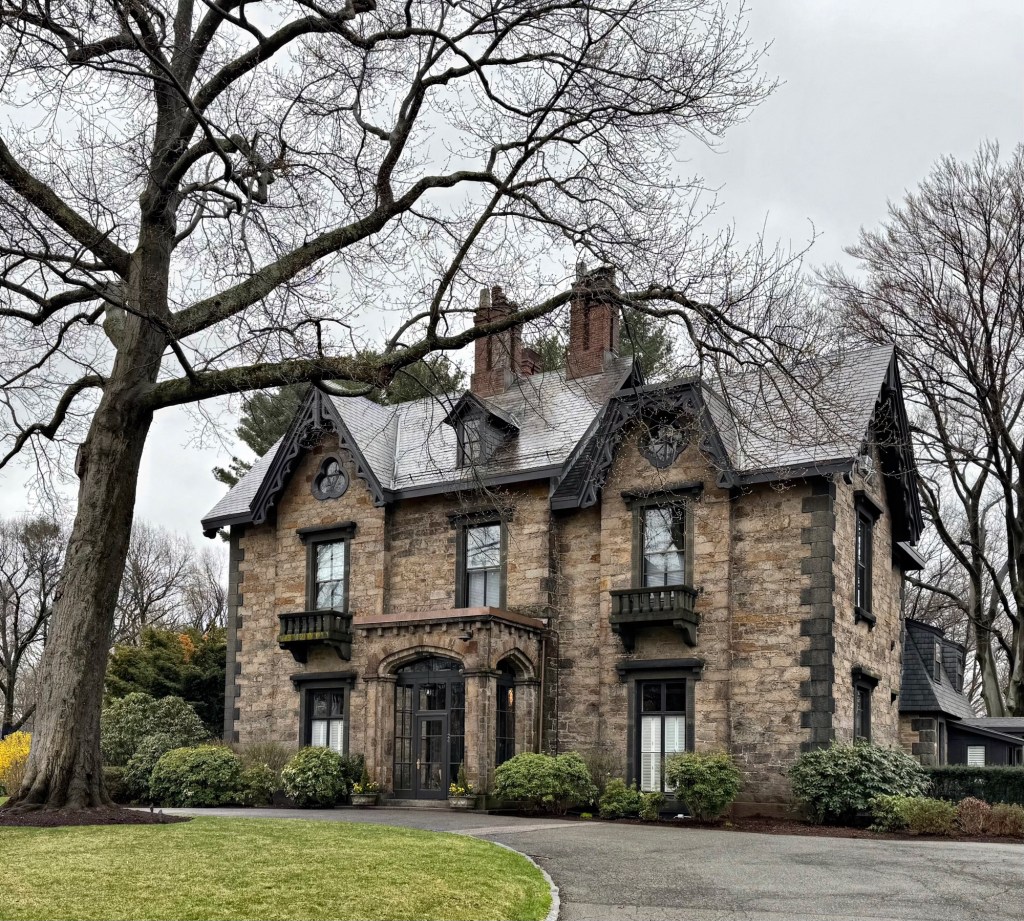
The Frederick Sears Cottage in the Cottage Farm neighborhood of Brookline, Massachusetts, is significant as one of the major surviving examples of Gothic Revival domestic architecture in the Boston area. In 1849, wealthy Bostonian, David Sears (1787-1871) laid out parks and squares in the Cottage Farm neighborhood, and built houses for himself and his children. His own house, erected in 1843, was the oldest, soon followed by houses for his four daughters, Ellen d’Hautville, Harriet Crowninshield, Anna Amory, Grace Rives, and son, Frederick. The Frederick Sears Cottage is the only surviving Sears residence in the Cottage Farm neighborhood. Frederick Sears‘ cottage was built in 1851, though he did not occupy the house long, as just three years after he and his wife married in 1852 to move into this home, Marian died. The house was inherited by Frederick Sears Jr. , and was acquired by Boston University in 1960, who began to expand into this neighborhood. They maintain the significant property very well. The Sears Cottage is an excellent example of the Gothic Revival style in stone with scalloped vergeboards, quatrefoil motifs, corner quoins, and projecting entry. The house is constructed of Roxbury Puddingstone and is said to have been designed by George Minot Dexter.

John Wales House // c.1885

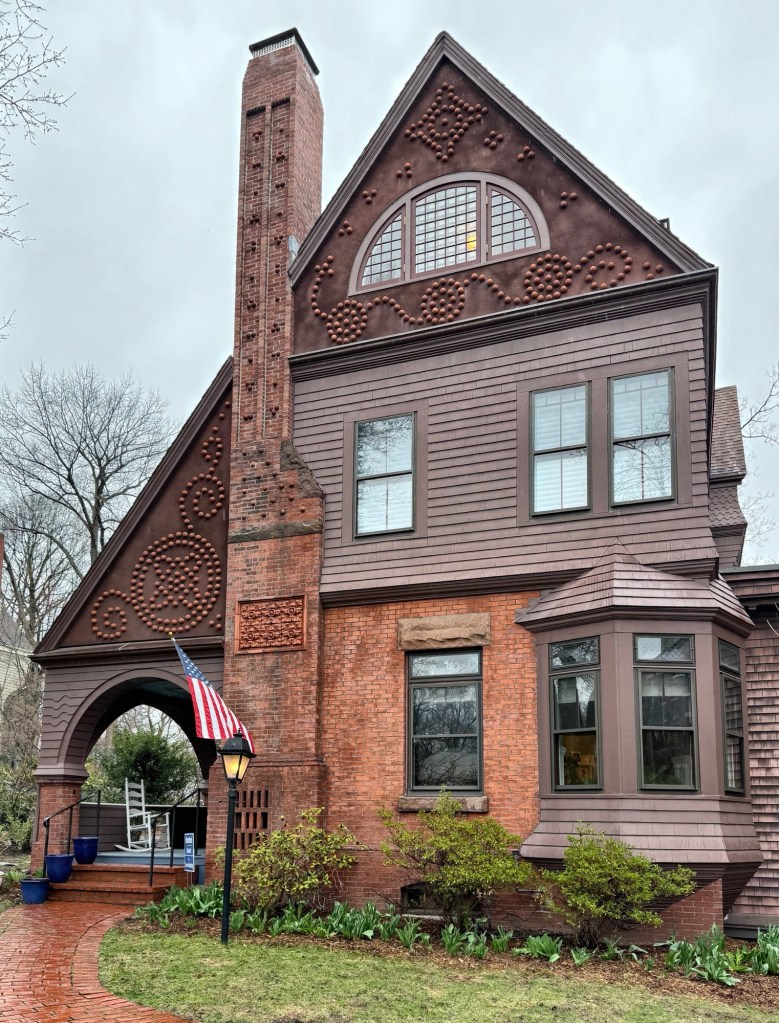
In the mid-1880s, John Wales, a wealthy hardware dealer with offices in Downtown Boston, purchased house lots in the Cottage Farm area of Brookline from Amos A. Lawrence, and set out develop the site with two stately Victorian homes. This lovely home was first occupied by John’s son, George Wales and his wife, Mabel, the year of their marriage in 1885. While the architect is unclear, it is probable that the design can be attributed to architect William Whitney Lewis, who was hired by John Wales the year prior to design a stable near his home in an adjacent neighborhood. The house was rented by Wales and subsequent owners for years. The elaborate Queen Anne style house exhibits an asymmetrical plan with recessed entrance set within an arched opening, shinged and brick walls with a prominent chimney at the facade containing a decorative terra cotta panel, and the most unique stucco gables containing what appear to be terracotta balls in geometric forms. This house is a perfect example of what is so special about the Queen Anne style!

Lawrence-Parker House // 1864

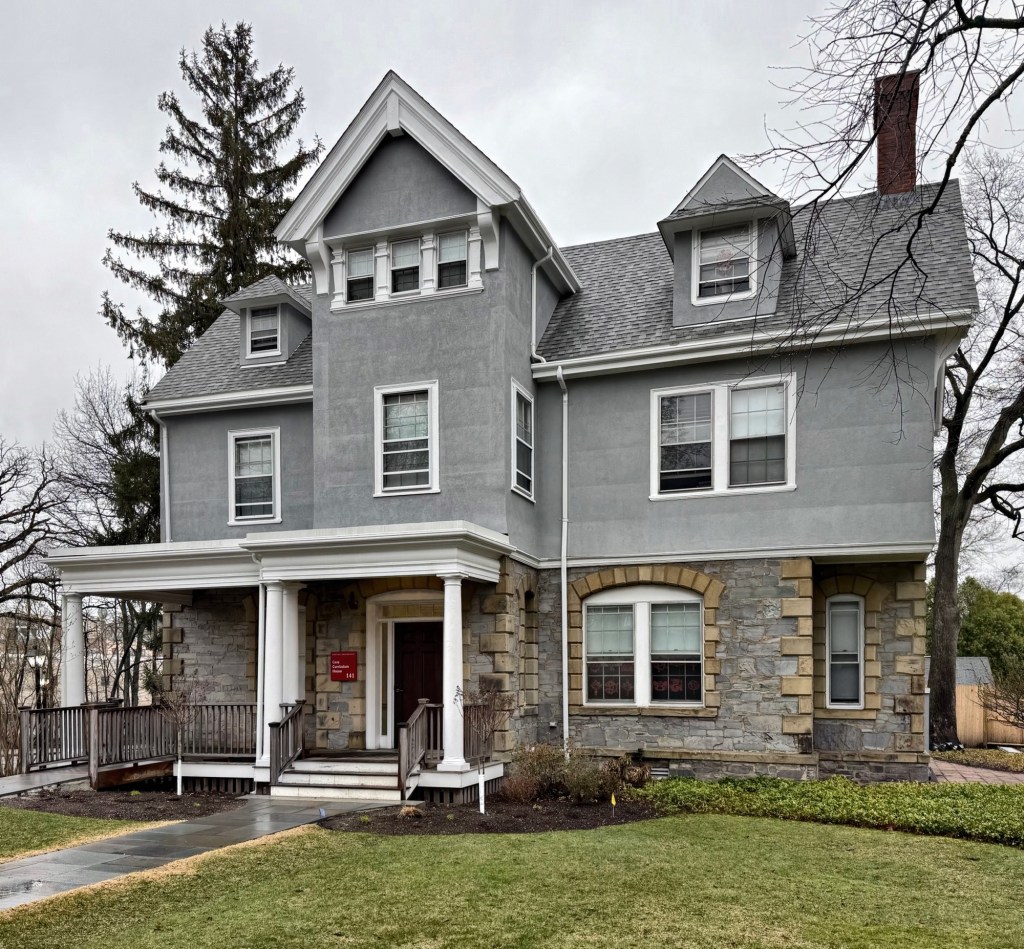
Built in 1864 as one of the rental properties owned by Amos A. Lawrence as part of his exclusive Cottage Farm neighborhood in Brookline, this house has been extensively altered and even moved but retains significance as a surviving mid-19th century “cottage” in the neighborhood. The house was likely constructed as a one-story, stone cottage with a second floor contained within a mansard roof. In 1903, Mrs. Francis W. Lawrence hired the well-known architect and Brookline resident, Julius A. Schweinfurth, to make extensive alterations to the cottage, replacing the mansard roof with a new second floor with gable roof, along with a new porch. Schweinfurth’s design included wood shingle siding for the upper floors, which were replaced with stucco in 1970. The house was moved to its current site at the corner of Carlton and Mountfort streets in 1929 when the street was re-oriented to follow the old Boston & Albany Railroad tracks. When moved, the cottage was occupied by Philip Stanley Parker, a judge, and his wife, Eleanor. Today, the cottage is owned by Boston University and known as the Core House.

Kramer-Duane House // 1895

One of five houses built by developer Albert Jewell along Powell Street in the Cottage Farm neighborhood of Brookline, this residence stands out for its materiality and stately design. The house was designed by J. Williams Beal, an architect who trained at Massachusetts Institute of Technology and then worked for McKim, Mead & White before opening his own business. The house was first purchased from Mr. Jewell by Grace and Edwin Kramer, who worked as superintendent for R. H. White & Co., the large dry goods store in Boston. The next long-term owner was Harry B. Duane, a wealthy grocer. The Kramer-Duane House is unique for the stone veneer at its facade, gambrel roof covered in slate, and varied window styles including: bay windows, dormer windows, and an eyebrow dormer window at the roof.

Dana-Jewell House // 1872

This house at the corner of Freeman and Powell streets in the Cottage Farm area of Brookline, Massachusetts, was one of the first to be built on Sears family land in the years following the death of the family patriarch, David Sears. In 1871, Dennison Dean Dana (1827-1899) purchased land here from the Sears heirs and constructed this Italianate house with three-story square tower. Dana owned the house through the 1880s, and by 1893 it had been acquired by Albert L. Jewell, a real estate developer who added the large veranda and a two-story addition to the house, and would subdivide the property, developing fashionable houses along Powell Street to the south. The house (while clad in asbestos shingles since the 1960s) is an important early residence in the neighborhood which is today, dominated by late 19th and 20th century architecture.