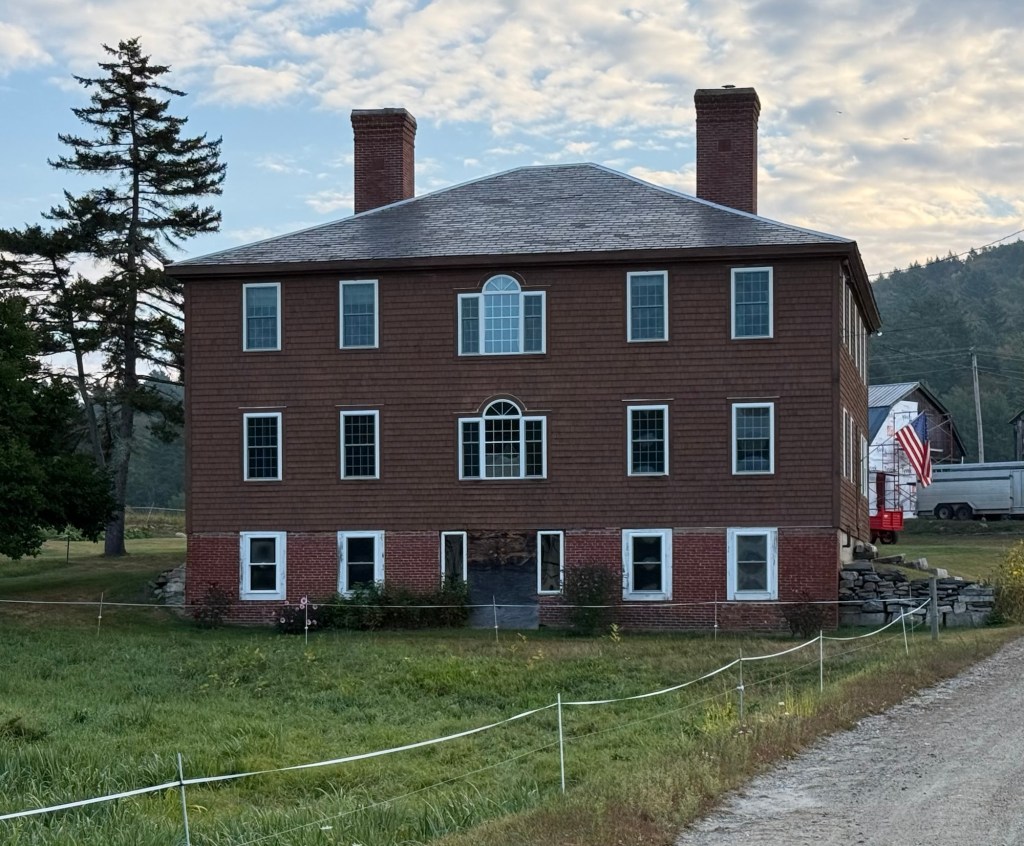
Jabez Sargeant Jr. House // 1797

Deacon Jabez Sargeant (1720-1788) was born in Malden, Massachusetts, and later moved to the newly established town of Chester, Vermont in 1763. He is thought to have been the first settler of European ancestry in the town. Upon the outbreak of the Revolution, he served in Captain Little’s Company in 1778, returning home to Chester after. His son, Jabez Sargeant Jr. built this stately three-story late-Georgian residence in 1797 as a tavern along the Green Mountain Turnpike, a highway connecting Boston and Montreal. The dwelling originally fronted directly on the road, but was moved back sometime in the 19th or 20th centuries. The building boasted a large ballroom on the second floor, likely for community and fraternal organizations, and a tavern in the brick first floor. It is likely that Jabez and his family lived on the third floor. Outside, the property contained a large apple orchard and cider house, providing drinks to weary travellers. Although the tavern is built to a large size, it lacks many of the high-style features often found in large Georgian houses, telling for its time of construction in a sparsely developed area without seasoned builders.
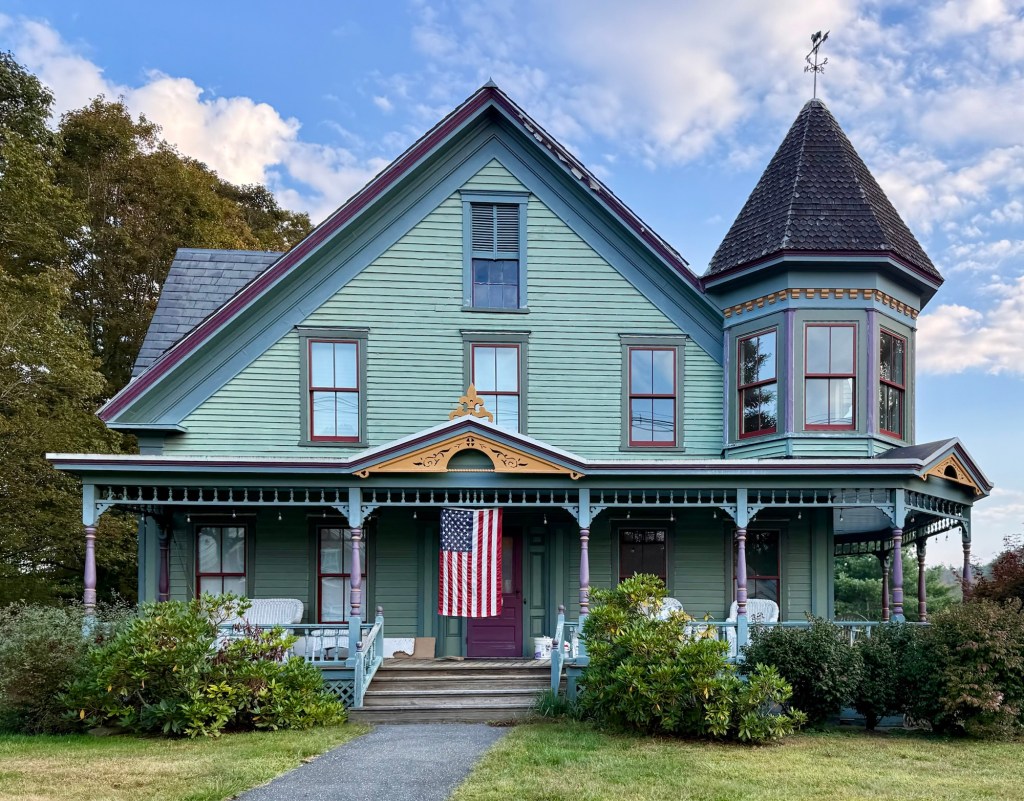
Robbins House // c.1850

Originally built in the 1840s or 1850s, this stunning house on Main Street in Chester, Vermont, was “Victorianized” in the late 19th century through applied ornament, a tower, and porches. Historic maps show that this house was owned by Cyrus Robbins and his wife, who likely had the residence built in a vernacular example of the Greek Revival style, with a 2 1/2-story form with gable roof oriented towards the street. The corner pilasters remain as do the original facade windows with five on the first floor, three on the second, and a single window in the upper floor. By the late 1800s, the house was modernized with the addition of the wrap-around porch with decorative spindles and ornament and the octagonal turret with wood shingle conical roof. Today, the house is painted colors to highlight the Queen Anne appearance and details.

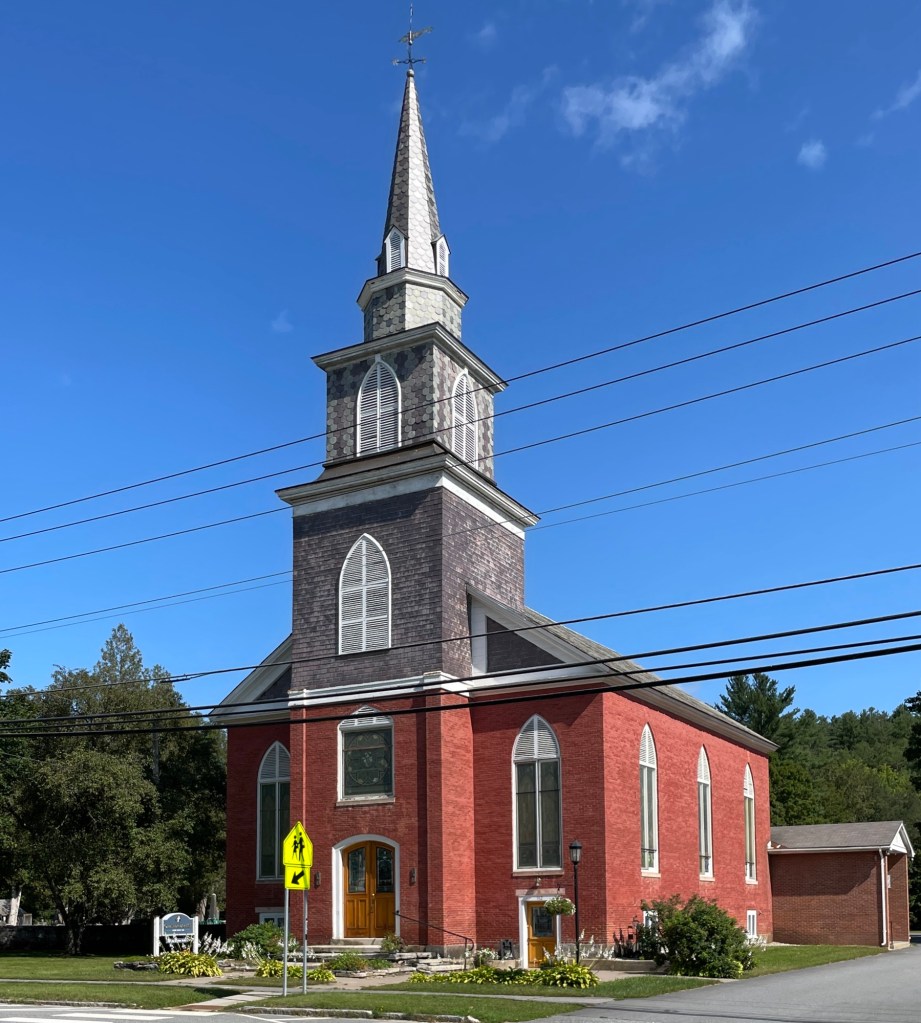
Chester Baptist Church // 1835

The Baptists of Chester, Vermont, first built a wood-frame meetinghouse in 1788 for meetings and worship. The congregation here was established a year prior by Aaron Leland (1761-1832), a successful pastor and preacher, who settled in town with the task of building up a church there. Active in politics, Leland served in local offices including Town Clerk and Selectman, and was Windsor County Assistant Judge for eighteen years, he was later elected into the Vermont House of Representatives and served as Lt. Governor. After his death, the Federal style building was outgrown and sold by the 1830s. The original meetinghouse was moved to its current location across from the town’s Congregational Church and planning began for a new house of worship. The current Baptist Church, an impressive brick edifice in the Gothic Revival style, features a high slated spire that was likely added in the early 1870s, replacing a more traditional wooden crenelated tower. The 1870s spire was destroyed in 1953 and reproduced in 1999. The congregation here remains active and maintains the church well.

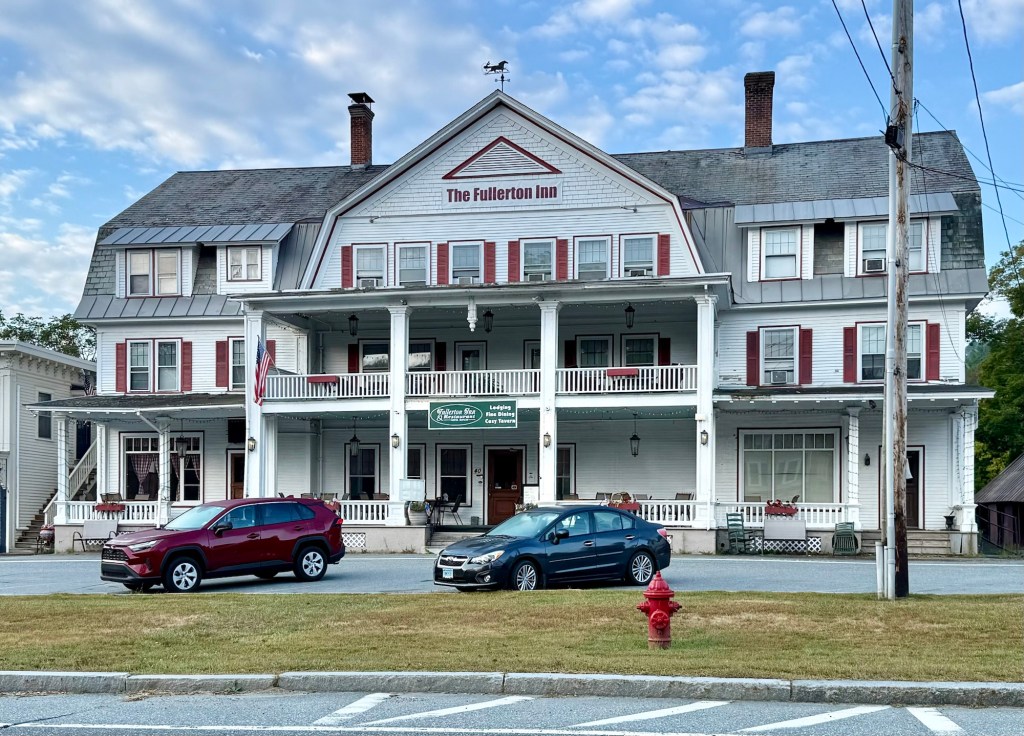
Fullerton Inn // 1921

The Fullerton Inn, overlooking the Town Common in Chester, Vermont, is an imposing Colonial Revival style hotel that has been in operation through many iterations, and contributes to the strong commercial character of the Chester Village streetscape. The inn was first developed here following the arrival of the railroad to Chester, which brought new business and travellers to the formerly agrarian and light industrial community. The original 1862 inn building, known as the Ingraham House, was destroyed following a large fire in the village, and its replacement burned as well in January 1920. Within a year, the present building was built from the ashes in a style typical of the early 20th century, Colonial Revival. Dominated by the large slate-shingled gambrel roof and projecting front veranda, the building’s most iconic feature is said to be inside, a fireplace inside the lobby which contains 27 stone varieties from the area.

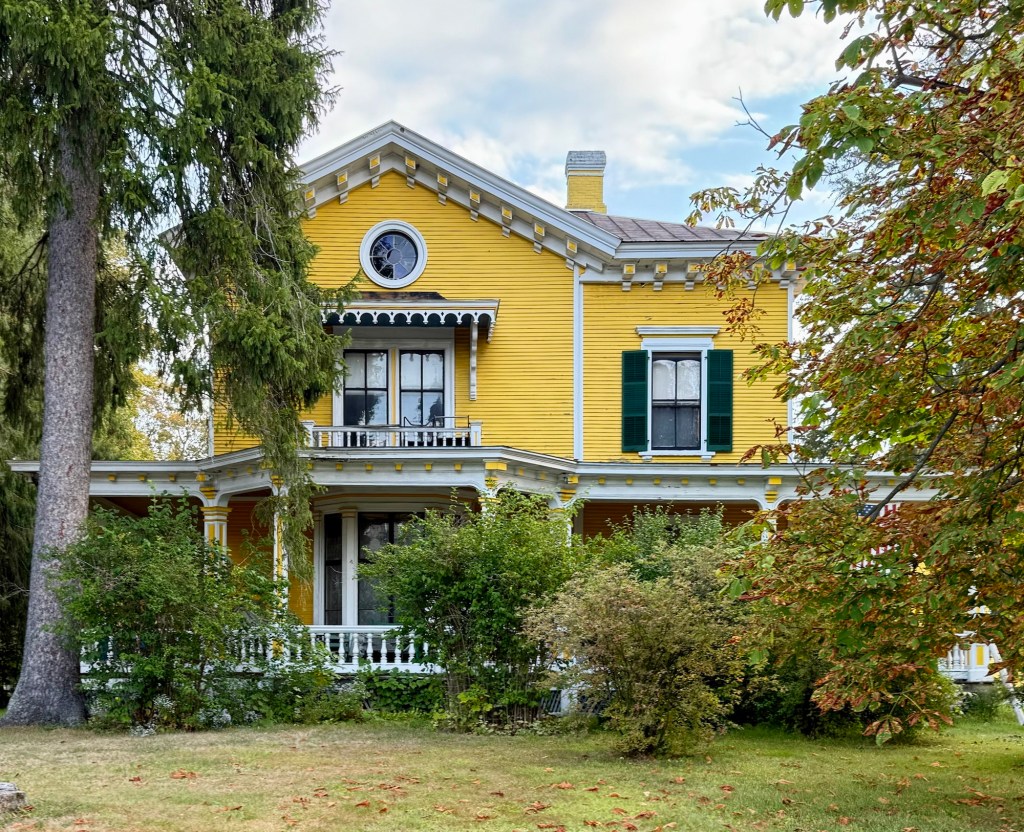
Frederick Fullerton House // 1861

This distinctive Italianate Villa style house in the charming village of Chester, Vermont, was built in 1861 for wealthy merchant, Frederick Fullerton (1817-1869). Mr. Fullerton worked in his family’s mercantile business in Chester, and was involved with cotton manufacture in Springfield and with the Cavendish woolen mill managed by his older brother, Henry, who built an equally distinctive residence in Cavendish called “Glimmerstone“. Basically cubic with asymmetrical gabled corner pavilions, the Fullerton House is an excellent example of an Italianate Villa with bracketed cornice, two-over-two sash windows, a wrap-around porch, and second floor balcony with a bracket-supported hood with decorative valance and an oculus window above. The residence is said to have been designed by architect, William P. Wentworth, who designed the St. Luke’s Episcopal Church across Main Street a decade later.

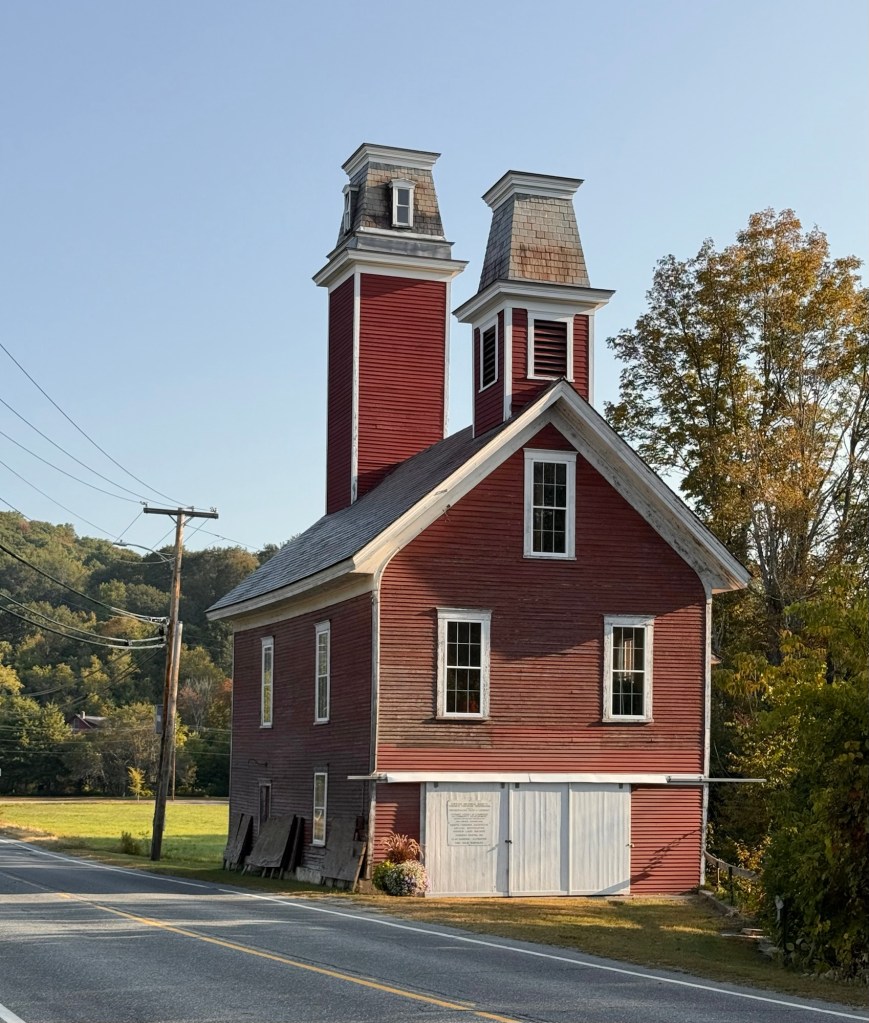
Yosemite Engine House // 1879

The Yosemite Engine House on Route 103 in Chester, Vermont, is a unique and iconic architectural landmark that has stood for almost 150 years. Chester’s second fire district was established in 1871, following a number of large fires in the village, prompting funding from businessmen and the town for a new engine house. Built in 1879, the Yosemite Engine house was built as a fire station for the village defined by its rectangular massing, first-floor engine hall, second-floor meeting hall, and twin bell and hose-drying towers that are capped by mansard roofs. The station originally housed horse-drawn and human-operated fire engines until the 1920s, when the doors were enlarged for the first engine-powered fire truck. The fire district, a separate taxing entity from the town since its creation, was dissolved in 1967, and its properties, including this iconic fire station, reverted to the town. It was eventually sold into private hands, and was operated for a short time as a museum by the local historical society before being reacquired by the town in 2018. The building is awaiting a full restoration.


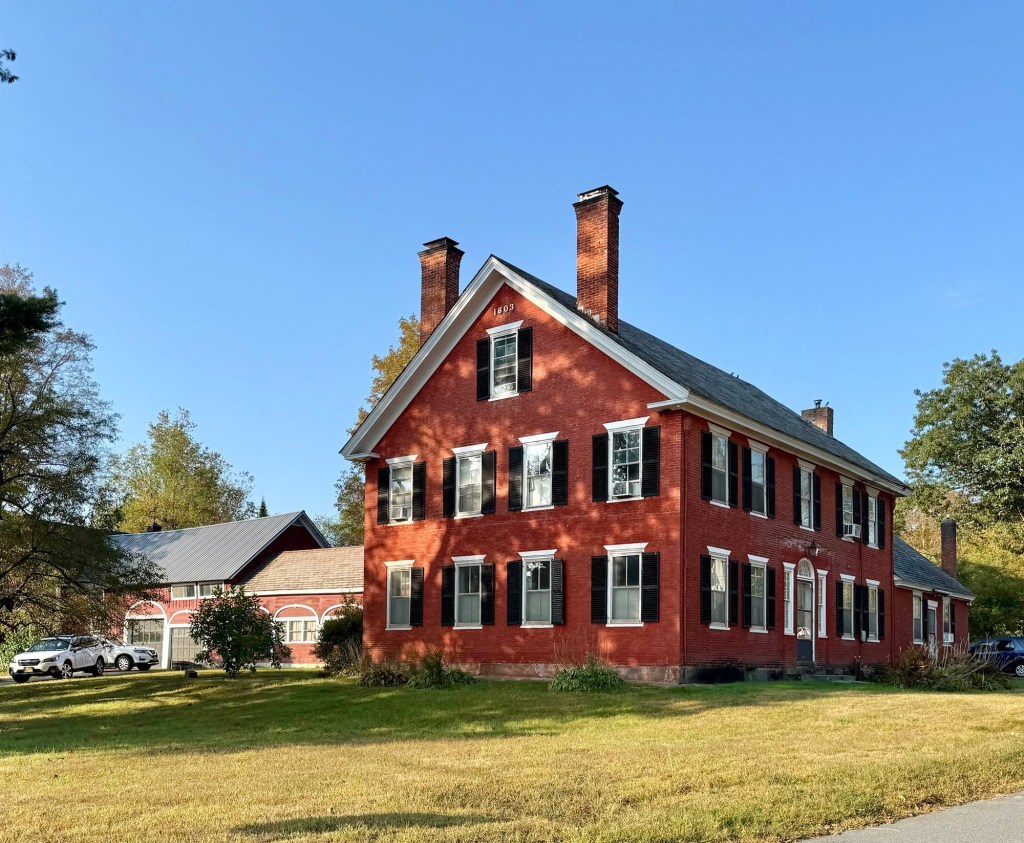
Amos Heald House // 1803

This large brick Federal period house in Chester, Vermont, was built in 1803 and is said to have been a stop on the Underground Railroad. The large residence was built for Amos Heald (1767-1849), who was born in Concord, Massachusetts, and when just a boy of nine years, Amos witnessed the Battle of Concord kicking off the American Revolution. In about 1777, his father, Daniel Heald, moved the family to Chester, Vermont, which was then named New Flemstead, to escape the conflict. Daniel Heald acquired land near the Williams River and built a large Federal style home. He later deeded his son, Amos, land on which he too would build a residence. Amos Heald lived in this brick home and served in many positions in town until his death. The estate was bequeathed to his son, Amos Heald Jr. (1804-1873), who also served in the town offices. Locals state that Amos would shelter escaped enslaved people from the south on their way north to Canada. After his death, his son Prescott took over the property and built a wood-frame addition off the rear stables and barns, which became the town clerk’s office during his tenure, as well as the office for his insurance business. Sometime in the 19th century, the house was renovated with the addition of porches, and later, the building became the Weathervane Inn.

Chester Public Tomb and Hearse House // 1850

Near the entrance to the Brookside Cemetery in the charming village of Chester, Vermont, these two very different looking buildings were constructed for one purpose, death. Before the proliferation of funeral homes and cremation, infrastructure for the dead was a necessary piece of the built environment for towns and cities all over the region. The wood-frame building seen here was built as a hearse house, which would shelter the horse-drawn hearse for the town. Prior to the advent to funeral homes, most wakes were held at the home of the deceased, after-which, the body would be transported by the horse-drawn hearse to the cemetery for burial. This was followed by a memorial service at the nearby church. If the ground was frozen or if the family did not yet have the funds to bury their family member, the body would be held in the public tomb until the burial. The Chester Public Tomb dates to 1850 and was built by local mason, Arvin Earle from stone  quarried near Gassetts, a hamlet in the north part of Chester that was shipped to Chester Depot by the newly completed railroad. While no longer in use, these two vernacular buildings hold a very important history of the town and have been lovingly preserved by local residents. 

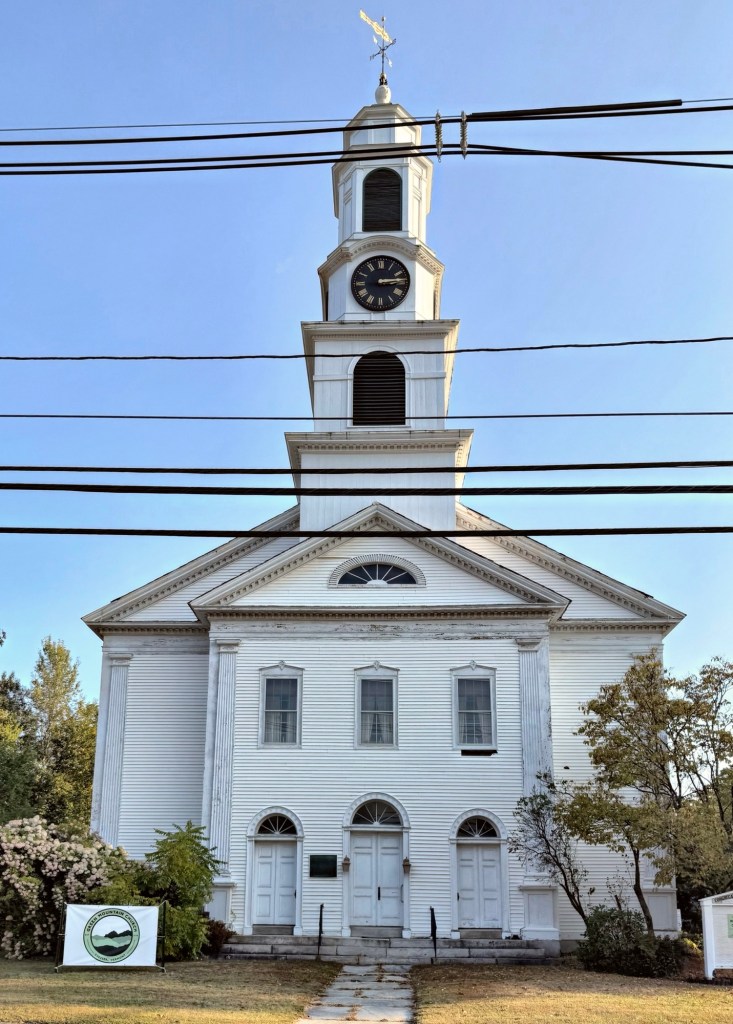
Chester Congregational Church // 1828

A significant landmark in Chester, Vermont, the Congregational Church of Chester is a sophisticated interpretation of ecclesiastical Federal architecture. Built in 1828, the soaring, five-stage clock-and-bell tower with bellcast cap and weathervane rises above a pedimented three-bay entrance pavilion with semi-elliptical fanlight, a common motif in the style. It is believed that local carpenters, Comfort Carpenter Dresser and his son, Charles Dresser, built the church, likely from planbooks for specific details. The church originally served as the Union Meeting House for Congregational, Methodist, and Universalist parishioners until around 1848, when other churches set off to build their own structures, after this, the Congregationalists remained here. Today, due to years of dwindling membership and a small population in the surrounding area, the church is “replanting” to reactivate membership and realign with community needs. Hopefully this significant church will be preserved in the future, possibly through preservation grants!

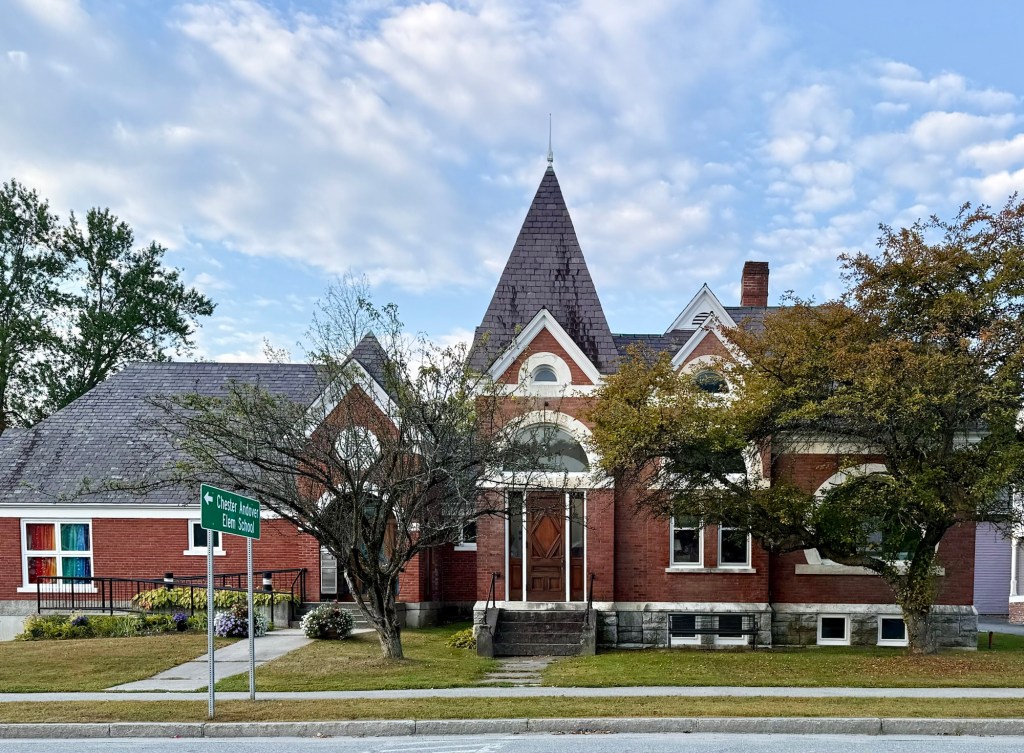
Whiting Library // 1891

The Whiting Library in Chester, Vermont, was designed by architect George H. Guernsey, and is said to be the only building in the village designed by a regionally significant architect. For the design, Guernsey created an eclectic library blending Romanesque and Queen Anne influences that strikingly enhance the library’s relatively modest physical stature. The building was named to honor Chester physician, Laurin G. Whiting and his wife, Abigail, who donated funds for the land and building. The polychromatic brick and granite building features unique gables, corner tower, and arched openings, which were carried over to a lesser scale into an addition a few decades ago.