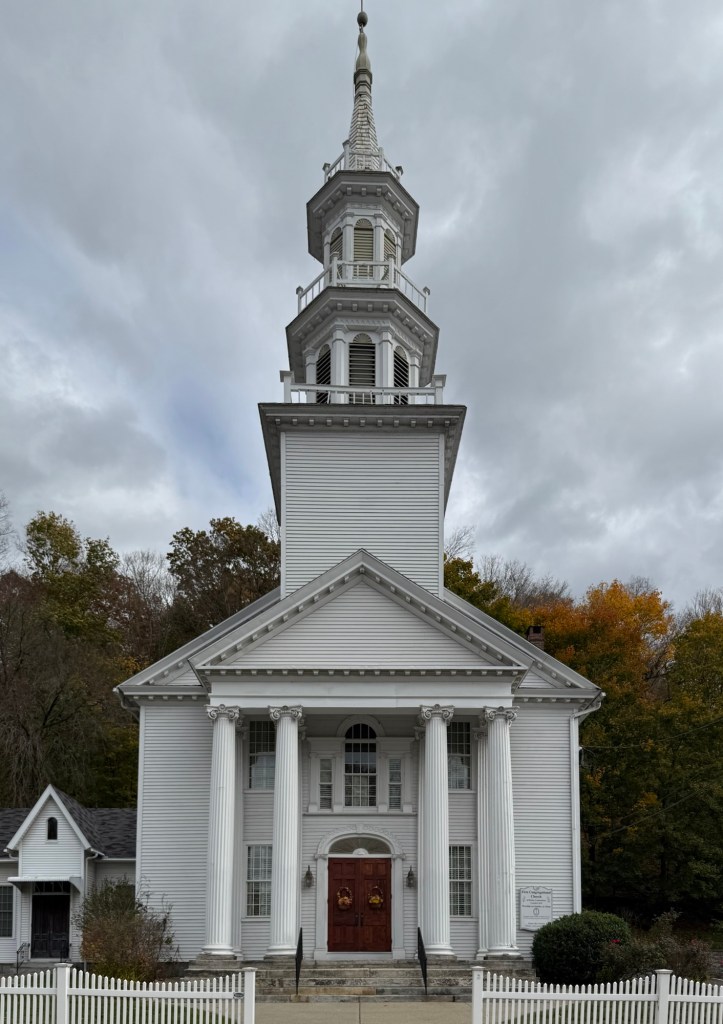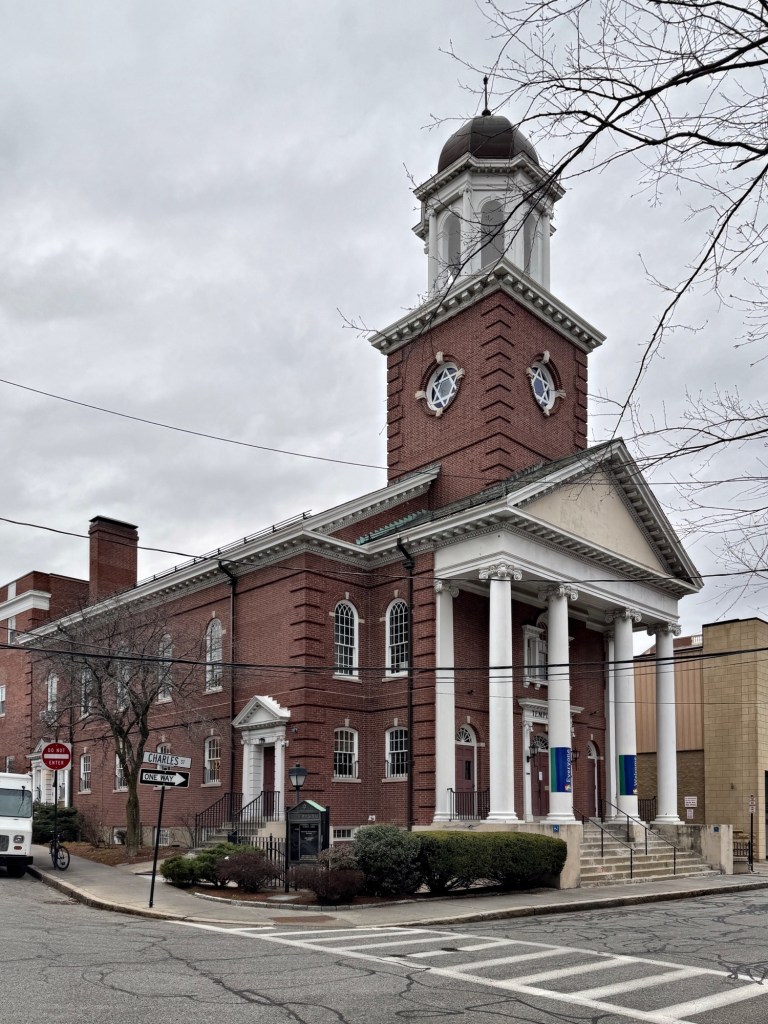
First Congregational Church of Derby // 1821

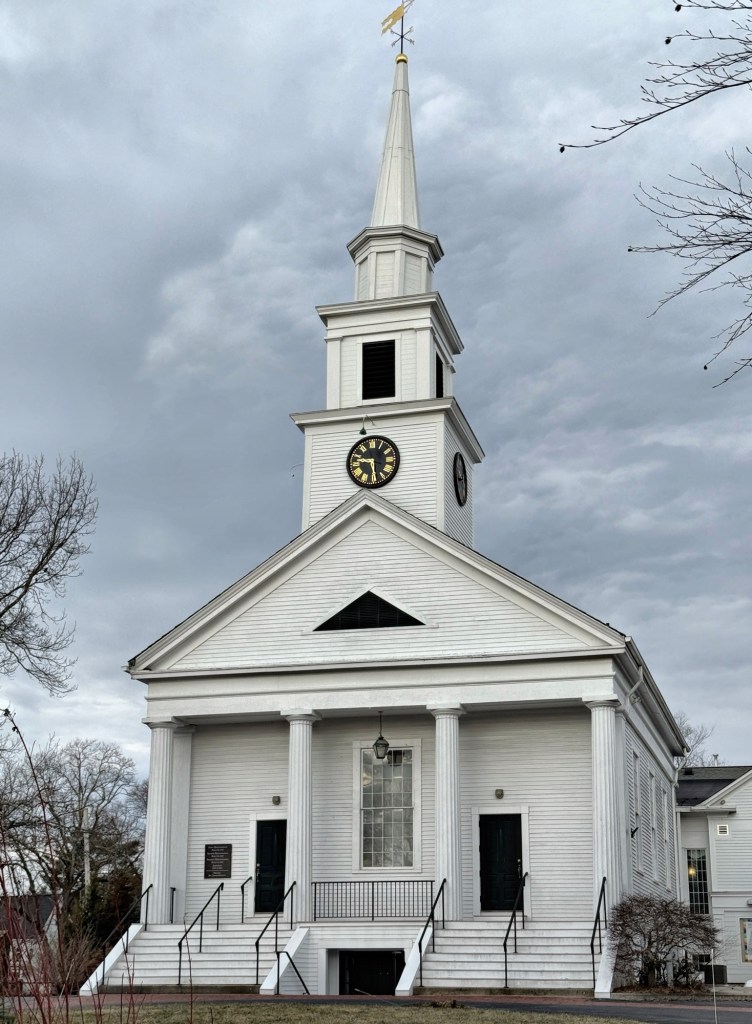
Derby, Connecticut was settled by colonists in 1642 as a trading post with local Native people under the name Paugasset. The community was eventually named after Derby, England, in 1675 and incorporated 100 years later in 1775. Like all communities in New England, it was required to have a meeting house, where religious services and town business would take place. Derby had its first meeting house built in 1681, a rustic, square structure which was eventually replaced with a new meeting house on “The Common”, now the East Derby Green. The building served its purpose for over 100 years, with sermons led by Rev. Daniel Humphreys (1706-1787) for 54 years. In that church, his son, David Humphreys (1752-1818) was baptized, he later became George Washington’s aide and most trusted general, later becoming the first presidential speech-writer. That meetinghouse was eventually outgrown, and the present Congregational Church of Derby was built on its present site on the eastern banks of the Naugatuck River in 1821. The Federal style church building was built by Williams and Barnum from Brookfield, who likely utilized plan books by Asher Benjamin for the finishes. The Congregational Church of Derby has watched as the commercial “downtown” of the city shifted to the other side of the river and has stood here for over 200 years as a landmark of “old Derby”.

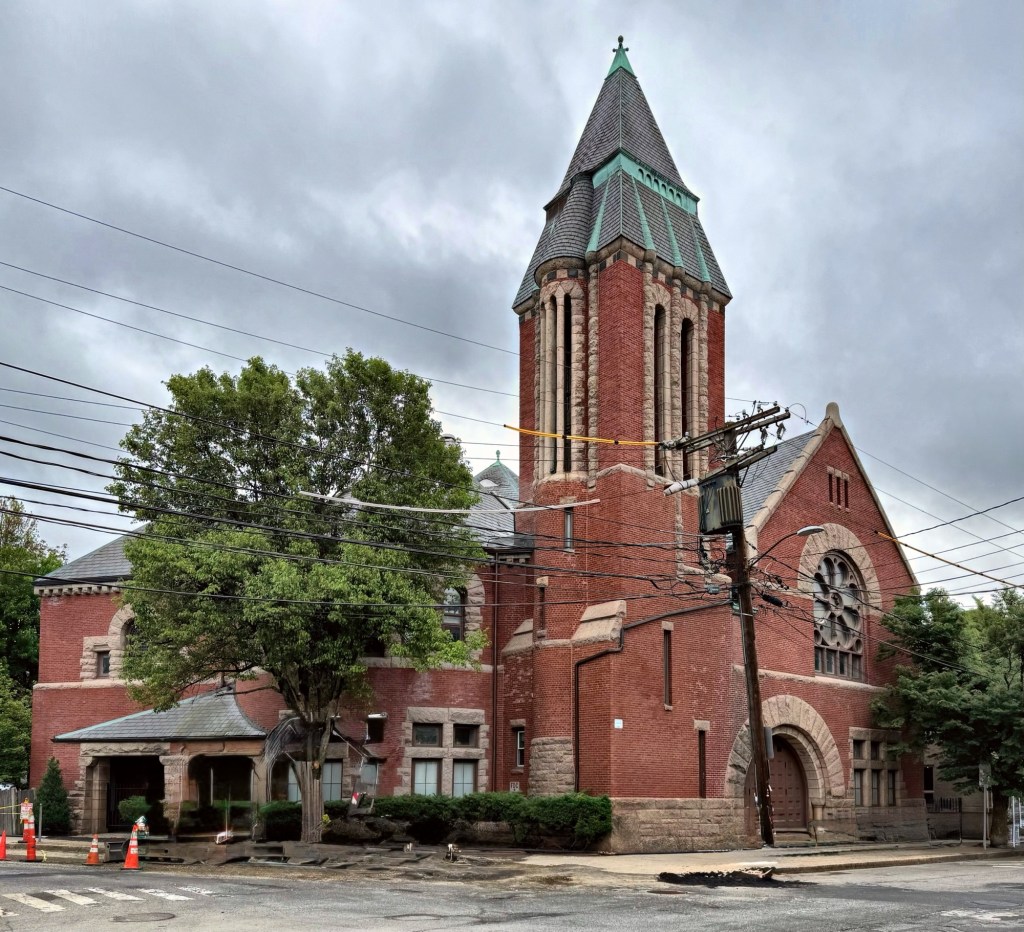
Prospect Hill Congregational Church // 1887

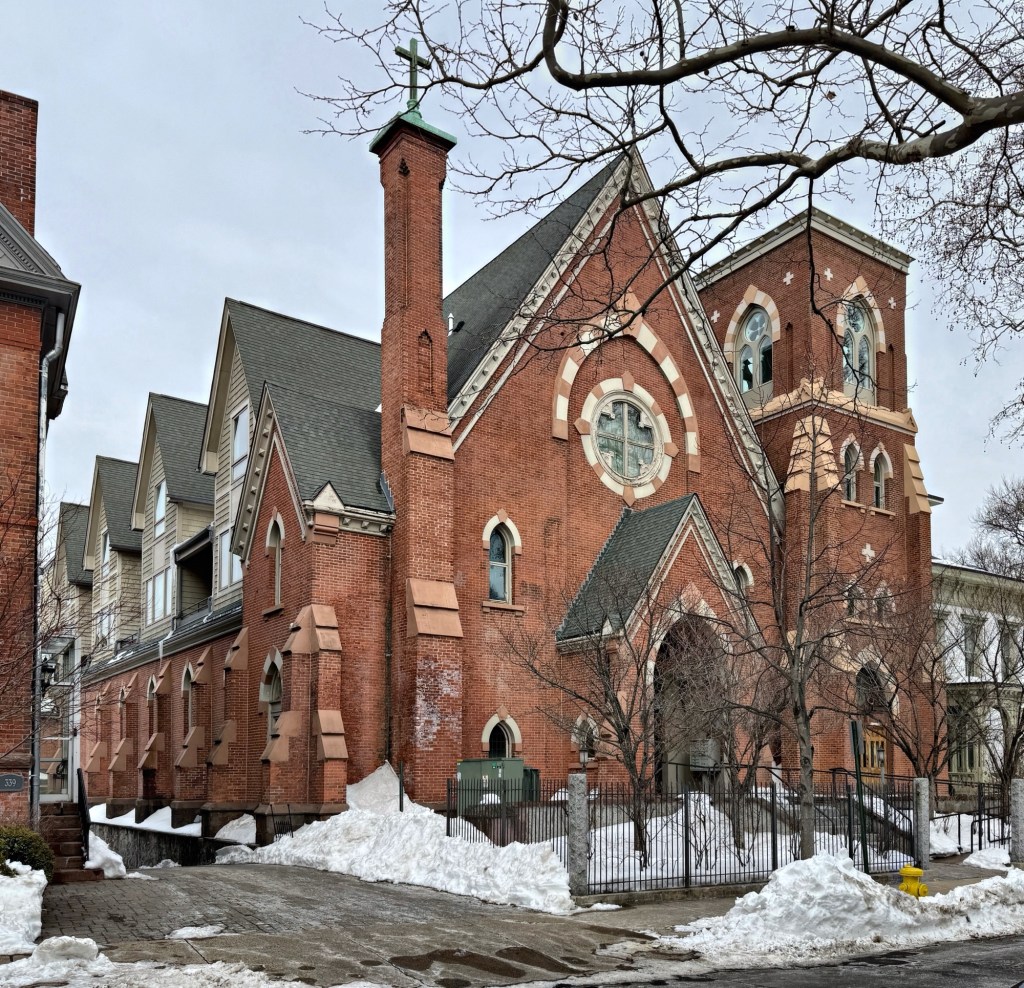
Located at the corner of Bow and Walnut streets in Somerville’s Union Square commercial center, the former Prospect Hill Congregational Church is one of the finest examples of the Richardsonian Romanesque style in the city. The congregation here was established in 1874 and originally met in private residences before erecting its first building on Warren Street in 1876. After two decades, the membership and prosperity of the congregation grew, allowing it to purchase a more prominent lot nearby and the ability to hire an architect for a new, substantial building. Architect Henry Squarebridge McKay furnished plans for the masonry building in 1887, clearly taking inspiration from the late Henry Hobson Richardson, who died the year prior. The church is constructed of brick with stone trimmings, features irregular massing with tall belfry tower, and a large arched entrance. After WWII, the congregation dwindled, and the building was later sold off. In the 1980s, the church was converted to residential use but without altering the exterior. 

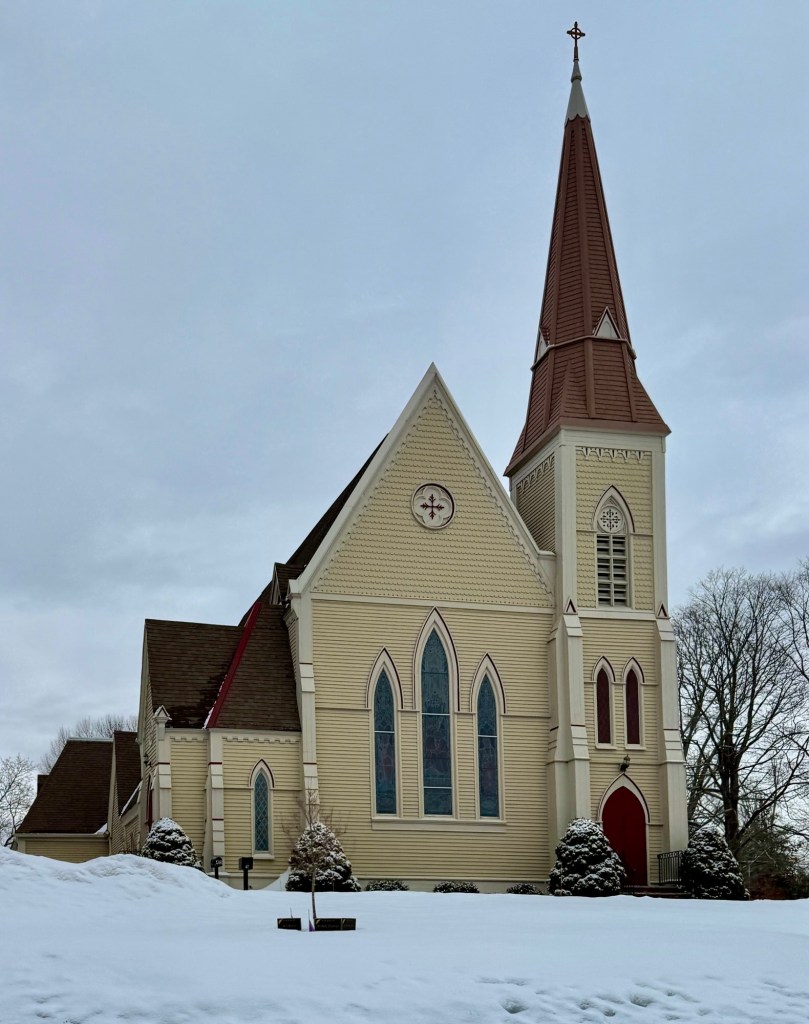
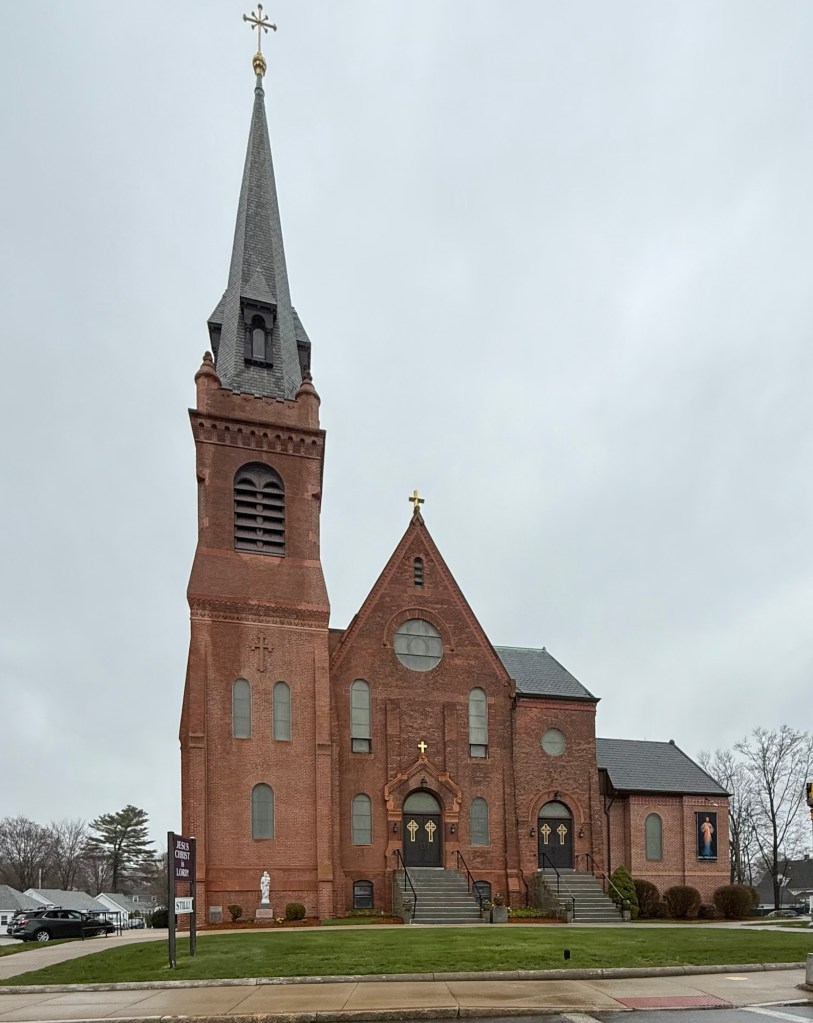
Holy Family Parish Church // 1882

In 1872, due to industrialization and increased numbers of immigrants settling in the area for work, it was decided that a new Catholic parish should be established in East Abington. Two years later, the village of East Abington incorporated as Rockland. It would be a decade later, in 1882, until the Holy Family Parish would be established, beginning planning of a true house of worship for the growing number of Catholics here. When the Holy Family Church was constructed in 1882, only a quarter of the Rockland’s approximately 4000 residents were Catholic at that time. Most of the original congregation consisted of Irish immigrants who worked in the town’s boot and shoe manufacturing industry. As the industry continued to flourish in the 1890s and 1900s, new shoe factories were built, bringing more workers to Rockland, including: Canadians, Italians, and British to the area. The town’s Catholic community grew as a result. The Victorian Gothic style Catholic church was built in 1882, with no known architect at this time. A complex of other buildings, including a school, rectory, and community center.

First Congregational Church of Abington – Abington Masonic Hall // 1819

The First Congregational Church of Abington, Massachusetts, was established in 1711. Besides the First Church, there were three additional churches founded in the town’s other villages: The Second Church in South Abington (now Whitman) Third Church of East Abington (now Rockland), and the Fourth Church at North Abington. This edifice was the third building of the congregation, and was built in 1819. The structure was only used as a church for 30 years until 1849, when the congregation built a new church nearby. This structure was sold and converted to a Masonic Hall and District Court for some years. Major changes to the building include the destruction of the steeple from the Gale of 1869, and in 1885, the present entryway was added, extending about 20 feet from the facade to provide a more adequate stairway to the second floor. Today, the building is used as a church for a local Brazilian congregation.

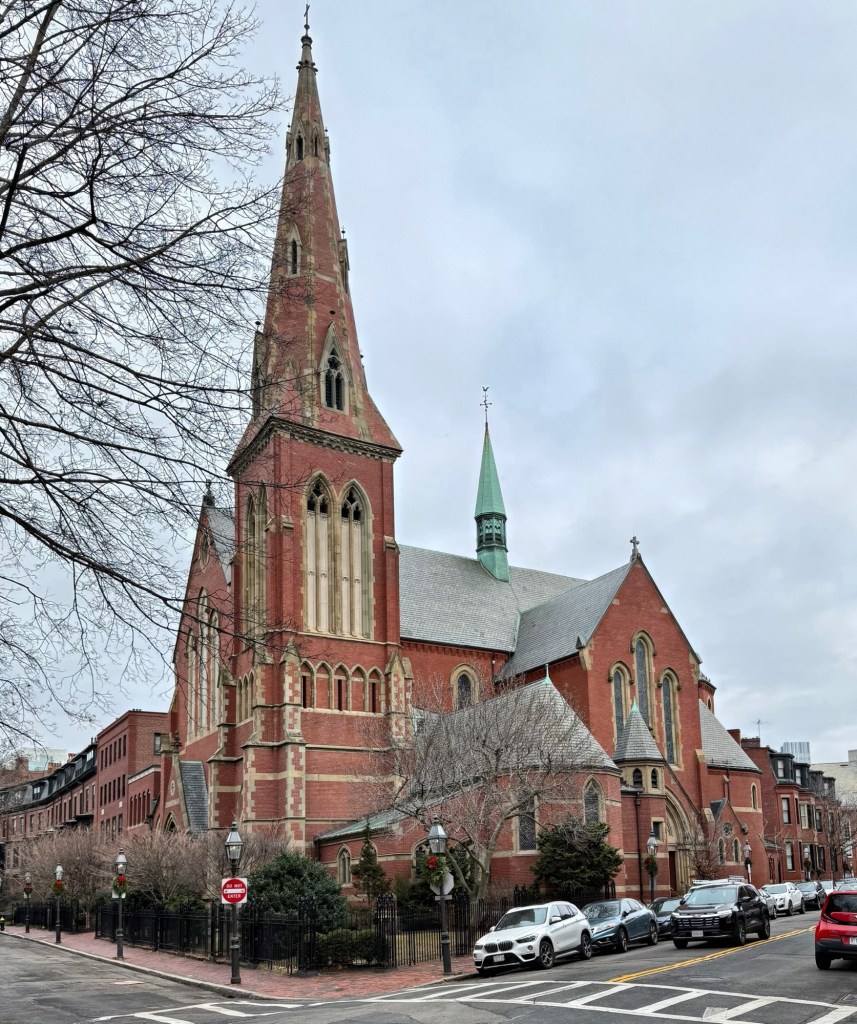
St. Joseph’s Catholic Church // 1915

As the city of Central Falls, Rhode Island, continued to see population growth spurred by the industrial development, immigrant groups began to seek to establish their own community centers and houses of worship. The local Polish population was a major immigrant group that organized and became one of the Polish Catholic Churches in New England. Founded in 1905, the St. Joseph Parish waited years until it had the funding to erect this church, which was designed in 1915 by Providence architect John F. O’Malley. The brick and stone church is Neo-Gothic in style with ornate masonry and detailing. 

East Church of Salem – Salem Witch Museum // 1844

One of the most recognizable buildings in Salem is the former East Church, now occupied by the Salem Witch Museum. The East Church was constructed between 1844 and 1846 for the oldest branch of the First Church of Salem, which originally organized in 1718. The stunning Gothic Revival church has been credited to architect Minard Lafever (1798-1854), a prominent New York architect known for his Gothic, Greek and other Exotic Revival style buildings. Constructed of brownstone, a material Lafever utilized for his New York City churches built at the same time, the East Church exhibited pointed arch stained glass windows, crenellation resembling battlements, and once featured two, four-stage octagonal towers, which were cut down in the 1920s to their current height. The church suffered from a massive fire in the early 20th century and the church eventually moved out in the 1950s. The building was occupied by the Salem Auto Museum until another fire in 1969. In 1972, the Salem Witch Museum moved in and completely updated the interior.

Tabernacle Congregational Church of Salem // 1923

The Tabernacle Congregational Church at Washington and Federal streets in Salem, Massachusetts, was built in 1923 for one of the oldest congregations in the Commonwealth. The Tabernacle Church’s congregation traces its origins to the founding of the First Church of Salem in 1629. The church was originally located a few blocks away until a fire destroyed the wooden building in 1774. The congregation built a new wooden church on this site by 1777, and have remained on the site ever since the United States was established. The present, stone church building, was constructed from designs by the Boston firm of Philip Horton Smith and Edgar Walker in 1922. This dignified and graceful Colonial Revival church building (with attached parish house) is the third ecclesiastical structure to stand on this site. It replaced a large wooden Italianate church which the parish occupied from 1854 until it was torn down in 1922. Its predecessor, which stood from 1776 to 1854, possessed an elegant three-stage tower which Samuel McIntire added in 1805. The Tabernacle Church is a stone-veneered masonry building with a prominent engaged tower which contains a large arched entry, and a giant order porch consisting of four Tuscan columns and associated pilasters of the same type, which supports a pedimented roof that shelters the entrance. The tower is surmounted by a square, wood-frame belltower with pilastered corners above which is an open octagonal cupola with bell-cast roof. What a great Colonial Revival style church!

Goshen Congregational Church // 1832

The town of Goshen, located in Litchfield County, is located in the northwestern part of Connecticut was first settled by European colonizers in 1738, with the town incorporating a year later. The community was named after the Land of Goshen, a part of ancient Egypt in the Bible. Goshen primarily grew as rural and agricultural in character, with limited industry and commercialization compared to other nearby towns. The town center village was home to the Congregational Church as far back as 1750. In 1832, the present Congregational Church was built from plans by Benjamin E. Palmer, a carpenter-builder who also built the Windham County Courthouse in Brooklyn, Connecticut. The church blends both Federal and Greek Revival styles, and Palmer likely took inspiration from Asher Benjamin’s design guidebooks. The church retains much of its original character even with the altered steeple, porte-cochere, and conversion of three-door facade to a single-entrance in 1894.

First Parish Congregational Church of Pownal // 1811

Completed in 1811, the First Parish Congregational Church of Pownal, Maine, is an excellent and well-preserved example of a vernacular Federal-period church in a rural setting. Located across from Mallett Hall and built at the foot of Bradbury Mountain, the church was built by a crew headed by master-carpenter Uriel Whitney, a Revolutionary War veteran who moved to the area after the war. He was active in this church and is buried in the church cemetery. Little remains of the original Federal Style architecture, as its current Greek Revival Style (architects unknown) dates from remodeling apparently undertaken in 1838 and 1857.

New Gloucester Universalist Meeting House // 1839

Constructed in 1839 by local carpenter/builder Jeremiah Cotton, the Universalist Meeting House of New Gloucester, Maine, is a dignified example of the Greek Revival style in a rural context. The First Universalist Society of Christians in New Gloucester was organized in 1805 with members drawn from nearby communities including those of Gray and Poland. In 1830, the congregation reorganized itself into the First Universalist Society of New Gloucester and Pownal. During its early history services were apparently held at various places in the community for it was not until November of 1838 that a meeting was called “…to take such measures for Building a meeting house as a majority of Subscribers or proprietors may think proper.” After World War I, membership began to decline and from the 1930s until the society’s demise in 1957 services were infrequently held. In 1969 the property was acquired by the New Gloucester Historical Society, who maintained and restored the building. The flushboard siding, fully pedimented gable, pilasters, and symmetrical façade containing two entry doors, all work together to display the Greek Revival style in a high-style example, but in a rural setting. The building appears to be opened periodically by the Historical Society.