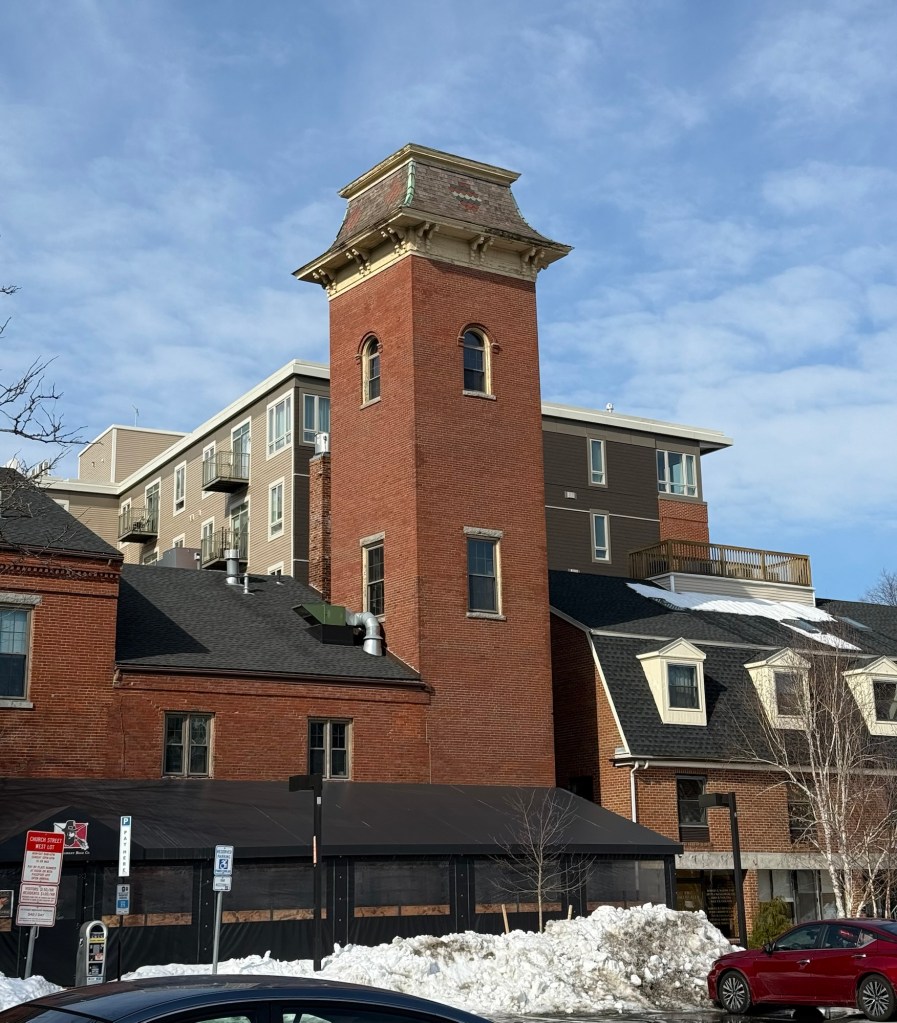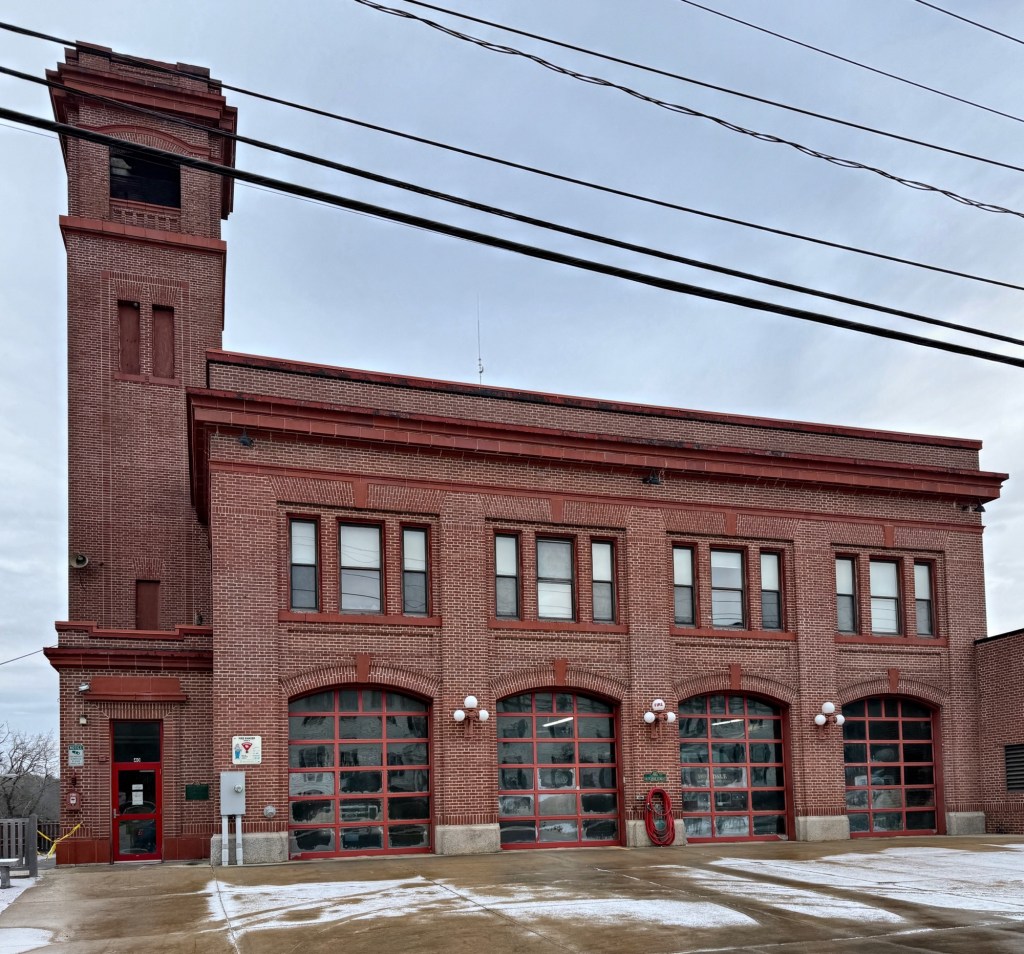
Hopedale Central Fire Station // 1915

Hopedale’s Renaissance Revival Central Fire Station on Dutcher Street was designed by Milford architect, Robert Allen Cook, a favorite of the Draper Corporation, who had oversaw the design of the Draper Company Offices just five years earlier. Very similar in style and detailing to the Draper Offices, Cook created a fire station of brick and terra cotta with a monumental hose tower at the corner, all in the Renaissance Revival style. The building was largely funded by the company, who was by far the largest employer in town and had funded many municipal and institutional buildings in the community as part of the company town. As fire prevention was important for the Draper Corporation, they even funded some of the first fire trucks in Massachusetts, even for such a small community. The town has done a great job preserving this architectural landmark for over 100 years. 
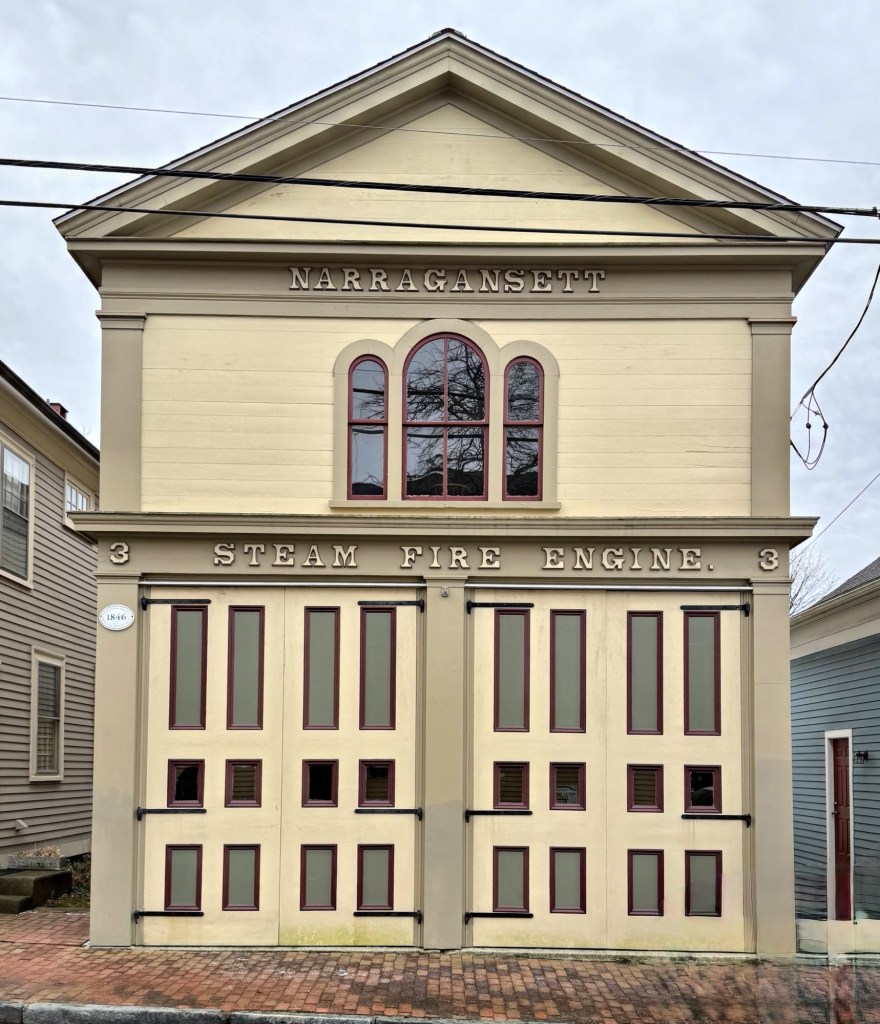
Narragansett Engine Company No. 3 // 1846

The Narragansett Engine Company No. 3 Station is an absolutely charming two-story building tucked away on Baker Street in Warren, Rhode Island, and is one of the oldest extant historic fire stations in New England. Built in 1846, the building features a flushboard-façade, pedimented-gable end oriented to the street, paneled double-leaf engine doors, and a rundbogenstil Palladianesque window centered on the second story. The small fire station was built to house, “Little Button”, a fire engine manufactured in Waterford, New York. This building served as a fire station well into the 20th century, and was restored decades ago by local preservationists. The building is open by appointment and houses the Warren Fire Department Museum.

Former Boston Fire Department Engine House No.10 – Hill House // 1949

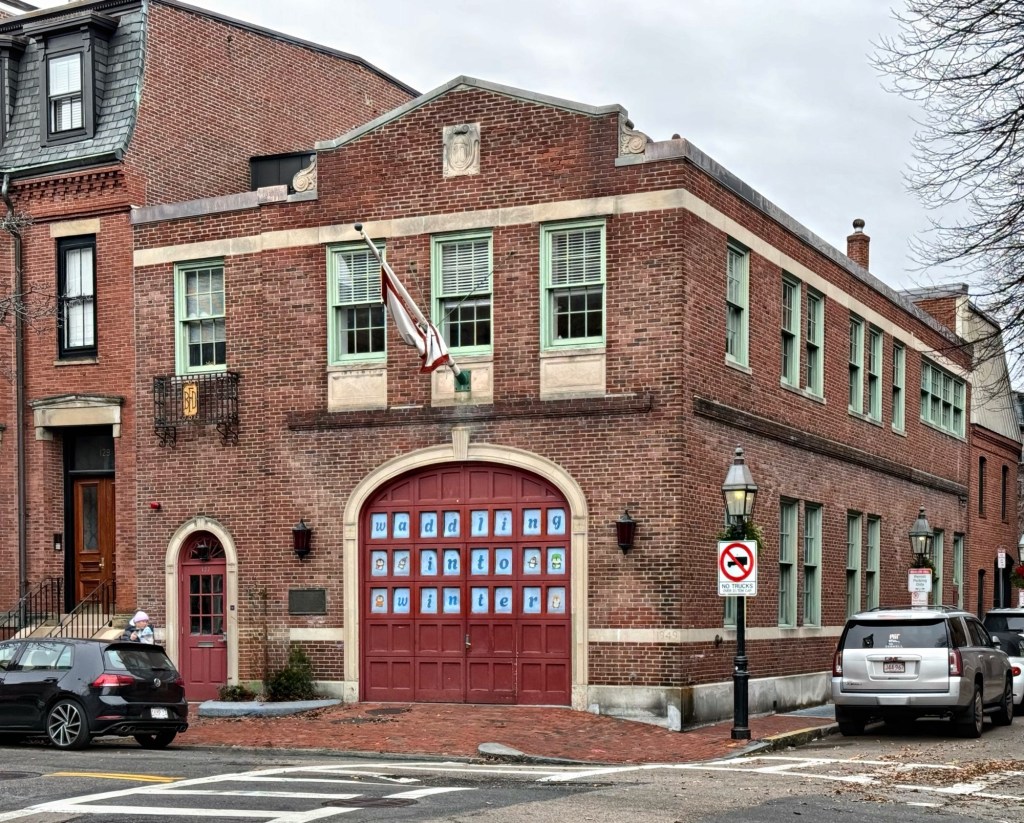
This iconic former firehouse at the corner of Mount Vernon and River streets in Beacon Hill, was built in 1949 and despite its relatively young age, has become an iconic landmark in the neighborhood. Since the mid-19th century, this site has been occupied by a fire station, most of which as a Second Empire, brick engine house with a mansard roof. After WWII, the Fire Department struggled to use the 1860s station which was built before the large, vehicular fire trucks replaced horses-drawn apparatus. In 1946, the Victorian station was razed and architect, John Mathew Gray, furnished plans for a new, Colonial Revival style station that could accommodate the larger fire trucks. The new station opened in April 1949 and Engine 10 remained here until 1982, when the company moved to 123 Oliver Street, Downtown. The Fire Department retained ownership of the building until 1995, and around this time, the building served as the filming location for television shows Spenser For Hire, which ran from 1985 to 1988 and the MTV series The Real World, which was broadcast in 1997. Since 1998, the property has been home to Hill House, Inc. a long-standing non-profit providing sports activities for children, adult education classes and programs for senior citizens.

Brookline Village Fire Station // 1908

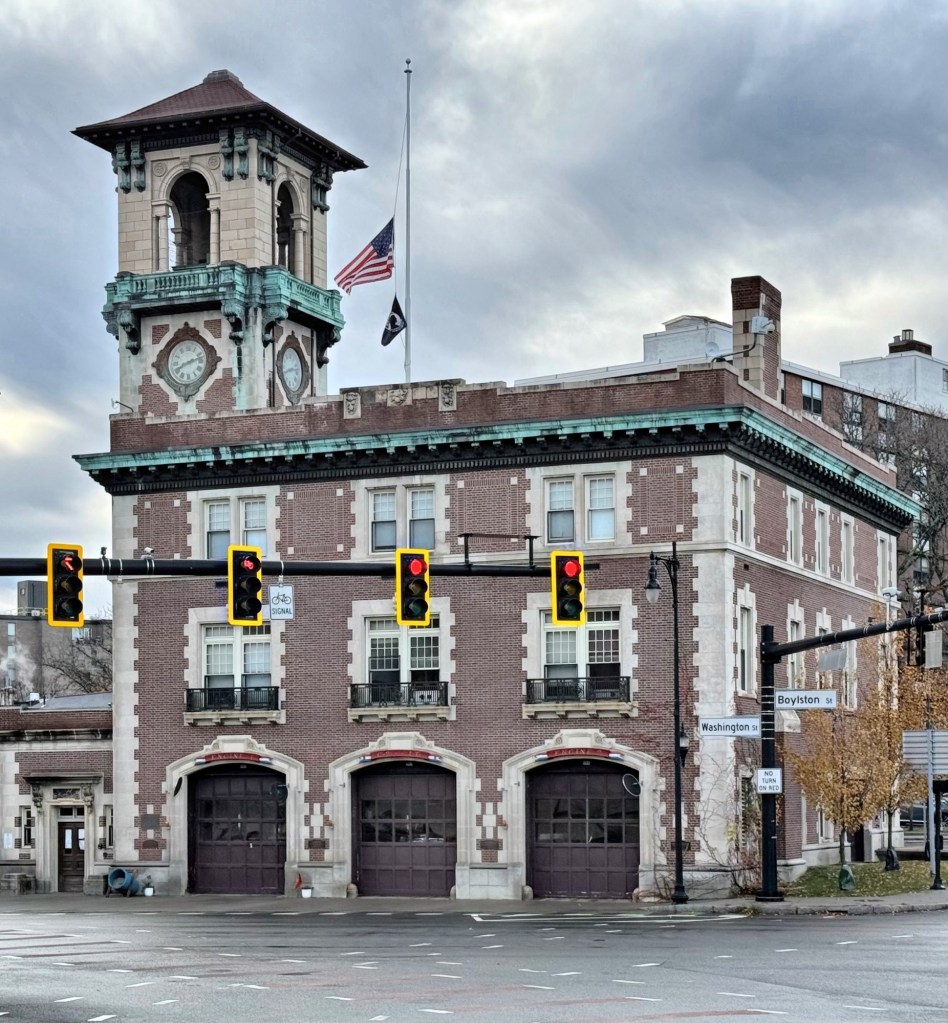
Built in 1908 from plans by the architectural firm of Freeman, Funk and Wilcox, the Brookline Village Fire Station is a massive, red brick structure with white sandstone trim and a copper cornice. Located on Washington Street in Brookline Village, the station stands out for its high-style Italian Renaissance style, notable for the use of brackets and off-center hose-drying tower with arched openings. The station replaced an earlier hose house, and was built before the fire department shifted to fire trucks, but was adapted later for larger fire apparatus. The station is one of the finest in the Boston area, and the Town of Brookline have done a great job preserving this significant structure.

South Lancaster Engine House // 1888

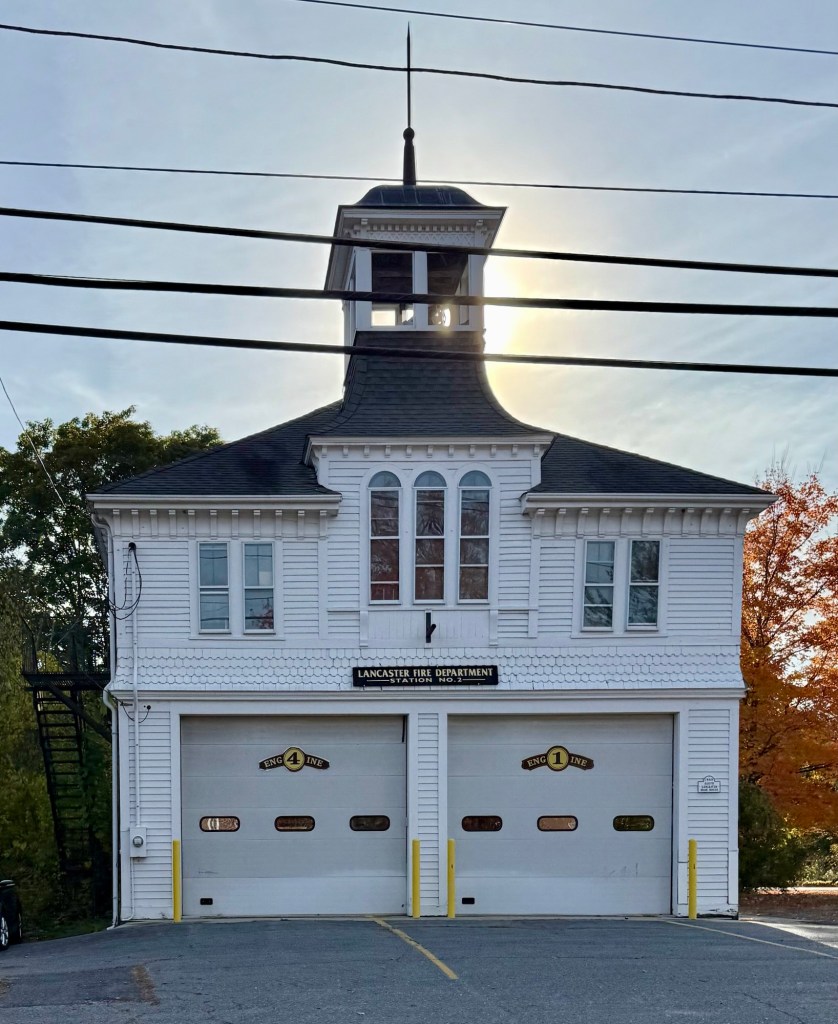
The South Lancaster Engine House is located in the village of South Lancaster, Massachusetts, and is one of the town’s three remaining historic fire stations and the oldest that remains in use by the local fire department. At the Town Meeting of June 18, 1887, it was decided that $3, 500 would be expended to build a station for the Fire Department in South Lancaster. Construction began in 1887, and was completed in March of 1888 from plans by architect, C.A. Woodruff. The station housed horse-drawn wagons, including one sleigh, and featured a bell in the belfry to call attention to the public. The station appears much like it did when built in 1888, besides the bright white paint color and the modification of the engine doors for the new, larger fire trucks. 

Yosemite Engine House // 1879

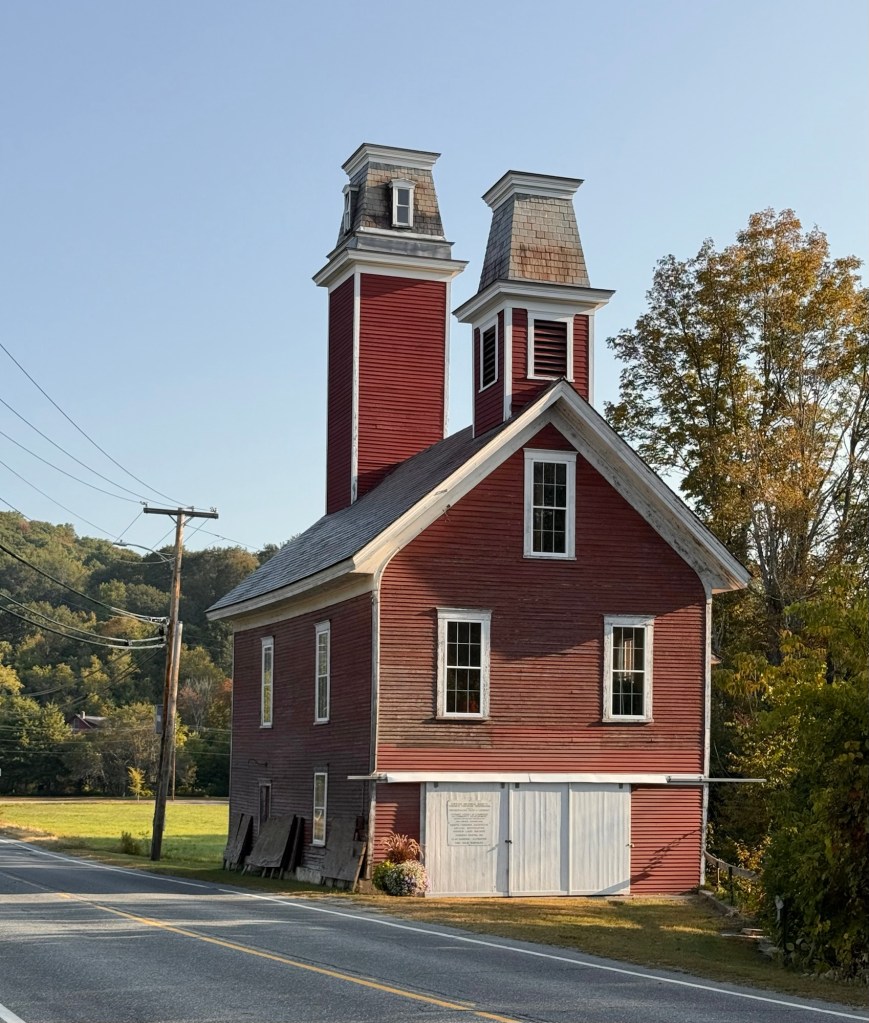
The Yosemite Engine House on Route 103 in Chester, Vermont, is a unique and iconic architectural landmark that has stood for almost 150 years. Chester’s second fire district was established in 1871, following a number of large fires in the village, prompting funding from businessmen and the town for a new engine house. Built in 1879, the Yosemite Engine house was built as a fire station for the village defined by its rectangular massing, first-floor engine hall, second-floor meeting hall, and twin bell and hose-drying towers that are capped by mansard roofs. The station originally housed horse-drawn and human-operated fire engines until the 1920s, when the doors were enlarged for the first engine-powered fire truck. The fire district, a separate taxing entity from the town since its creation, was dissolved in 1967, and its properties, including this iconic fire station, reverted to the town. It was eventually sold into private hands, and was operated for a short time as a museum by the local historical society before being reacquired by the town in 2018. The building is awaiting a full restoration.


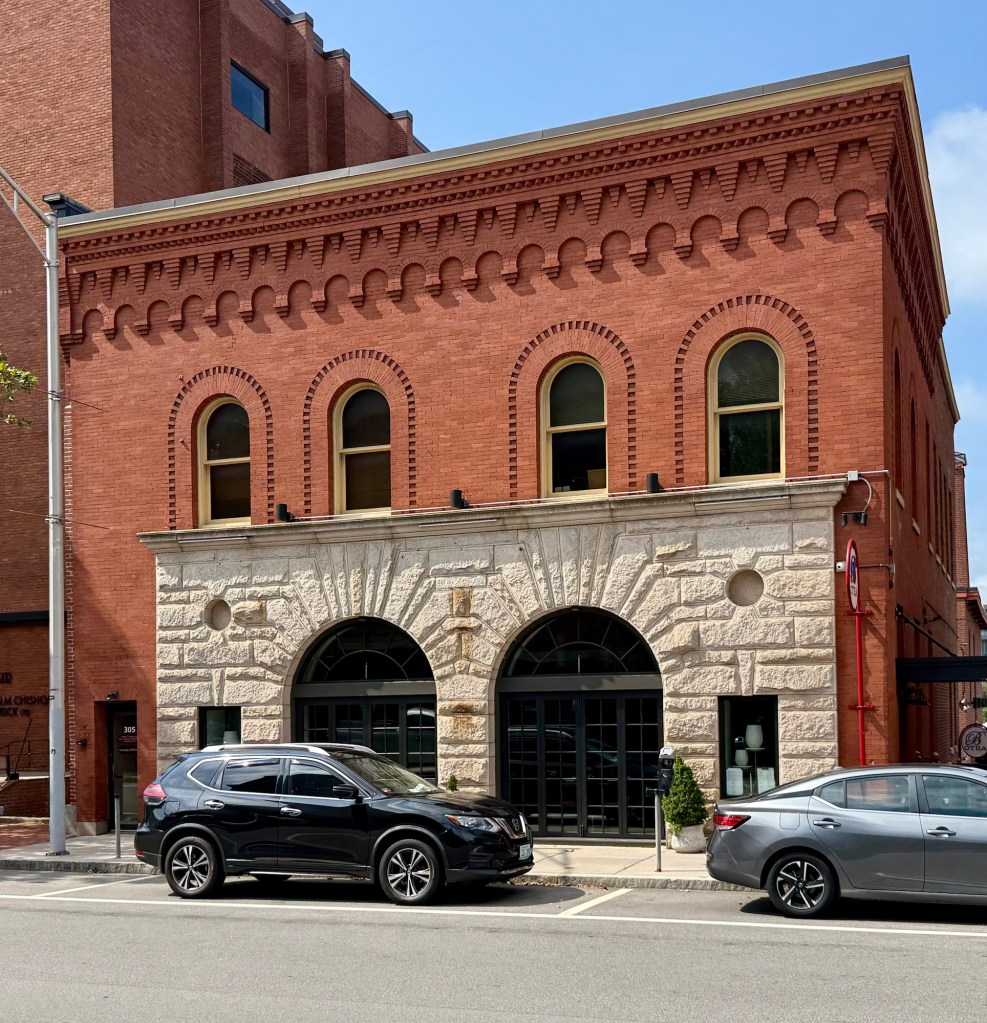
South Main Street Engine House, Providence // 1892

Built as a neighborhood fire station by the City of Providence in 1892, this handsome brick structure on South Main Street showcases how infrastructure and civic buildings can (and should) still contribute to the streetscape. Constructed along a streetscape of early 19th century brick buildings, the local architectural firm of Stone, Carpenter & Willson, sought to take cues of the materiality and massing of nearby structures, but employ new detailing and vocabulary for the fire station here. The result is a Romanesque style fire station with a pair of round-arched engine portals surrounded by stone facing, with the showstopping second floor and roofline with ornate brickwork around the arched windows and multi-staged corbeled cornice. The building with its smaller engine doors became obsolete with newer, larger fire trucks, and the building has since held a variety of commercial uses, today as a up-scale Italian restaurant.

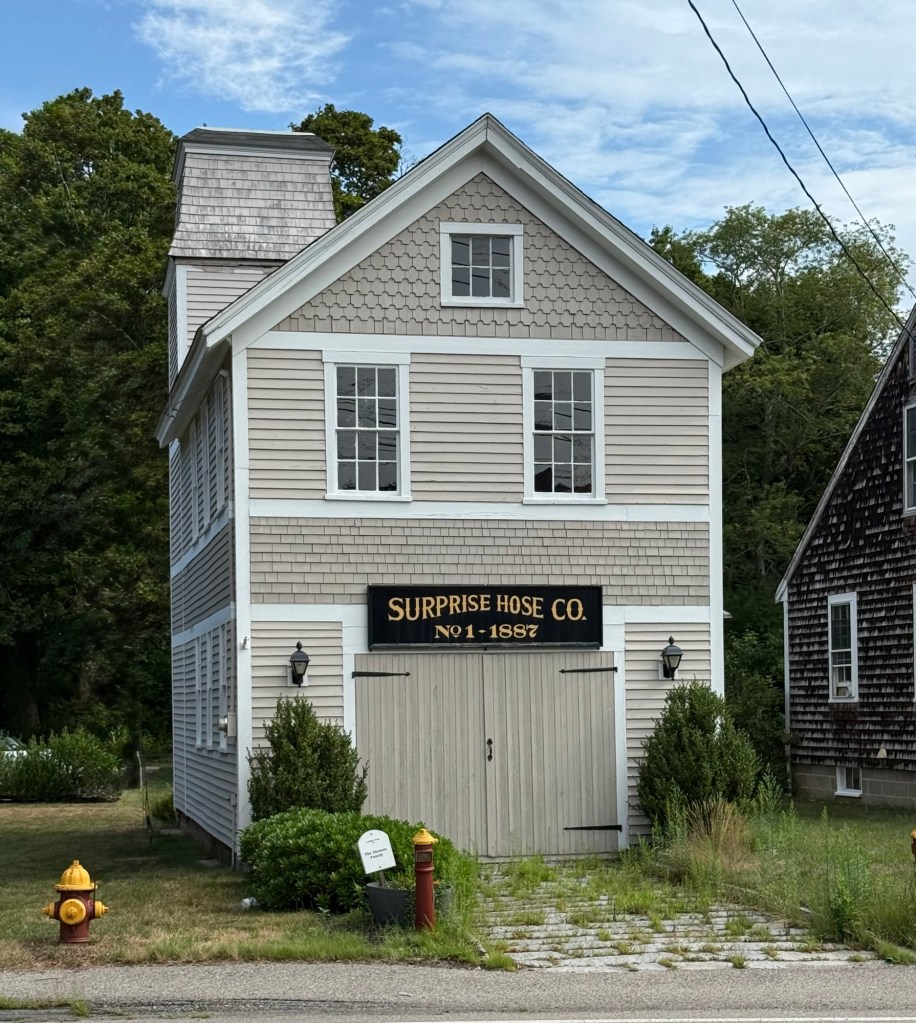
Surprise Hose Company Fire Station // 1888

The Kingston Fire Department was officially established in 1887, and previous to this, the town had generally relied on individual action and volunteers to provide fire protection for the Town and its many buildings. In 1888, the town of Kingston purchased this building, a storage facility constructed in 1860 on Main Street, with the aim to convert the building into a hose hose. Soon after purchasing the structure, funding was set aside to renovate the building, adding a hose tower at the rear of the building, shingle siding, and double doors to make the Hose House more equipped for the fire department. The local fire department, known as the Surprise Hose Company operated here until 1940, when a new, modern facility was built, leaving this structure for storage and hose drying. The building was restored in recent decades and is now a landmark on the town’s Main Street.

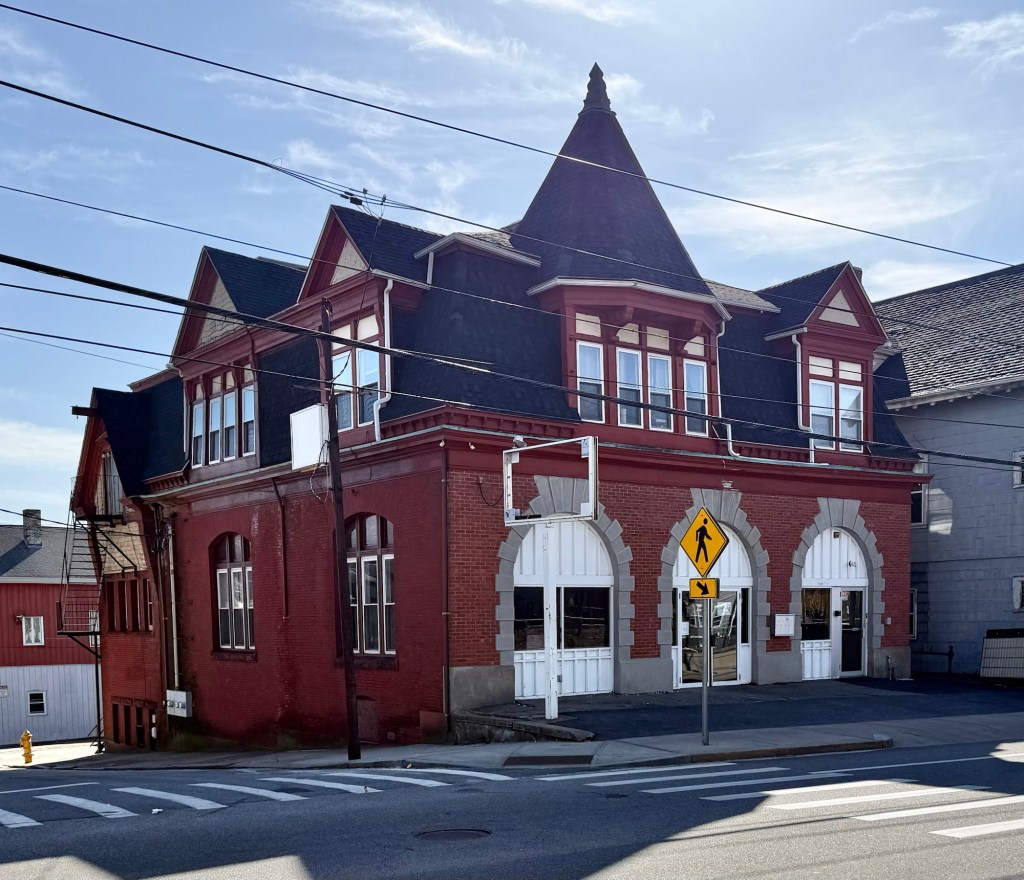
Broad Street Fire Station // 1889

Built in 1889 at the same time as the Central Falls City Hall across Broad Street, this former fire station in Central Falls, Rhode Island, is a great example of late 19th century architecture for a civic use. The fire station was built in the dense Central Falls village, before it separated from Lincoln, creating their own city. The brick, Queen Anne style structure features a unique mansard roof which is broken by a series of pedimented dormers. The original arched doors have since been infilled, but maintain the original openings, awaiting a thoughtful restoration. The fire station was designed by Pawtucket-based architect, Albert Humes. Due to ever-growing fire trucks, the historic station was eventually deemed obsolete, and a new station was built elsewhere. Today, the former Broad Street Fire Station is occupied as the Morabeza Health Center.

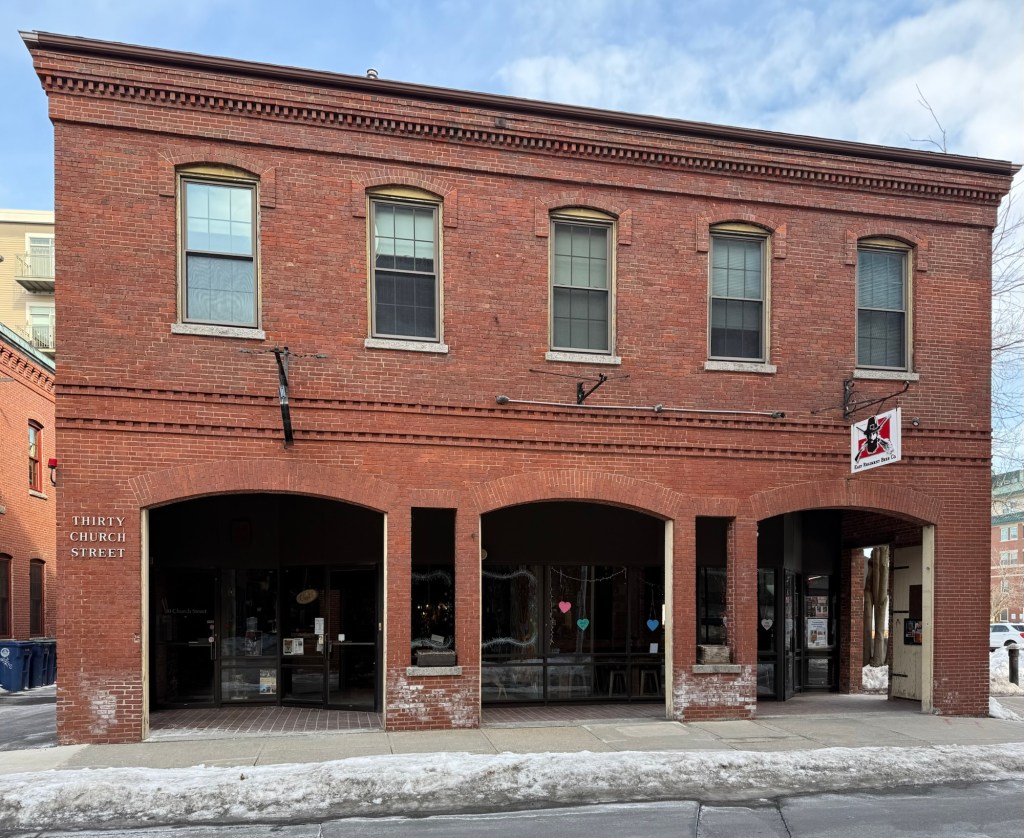
Old Salem Central Fire House // 1861

This mid-19th century brick structure on Church Street in Salem, Massachusetts, was built as the Central Fire House for the City. The Salem Fire Engine House was erected in 1861 from plans by an unidentified architect, in an eclectic style focused on function over frills. The façade is dominated by three engine bays with five windows on the second floor, surmounted by a decorative brick cornice. The hidden feature of the fire house is the three-story hose-drying tower capped by a slate mansard roof at the rear of the building. This building remained a fire house for 115 years until 1976, when due to larger fire engines and the tight constraints of the lot and surrounding streets, made use of the building a burden for fire-fighting. The City of Salem sold the building to private owners in 1976  for $24,000, and they underwent renovations to the building from designs by David Jaquith undertaken under the direction of the Salem Redevelopment Authority which sought to promote renovation of select historic buildings within the Downtown Salem Historic District. The recessed entrances through the old engine doors is a nice touch and retains the original fabric of the building. The old Salem Central Fire House is now occupied by Crazy Good Kitchen and the East Regiment Beer Company.