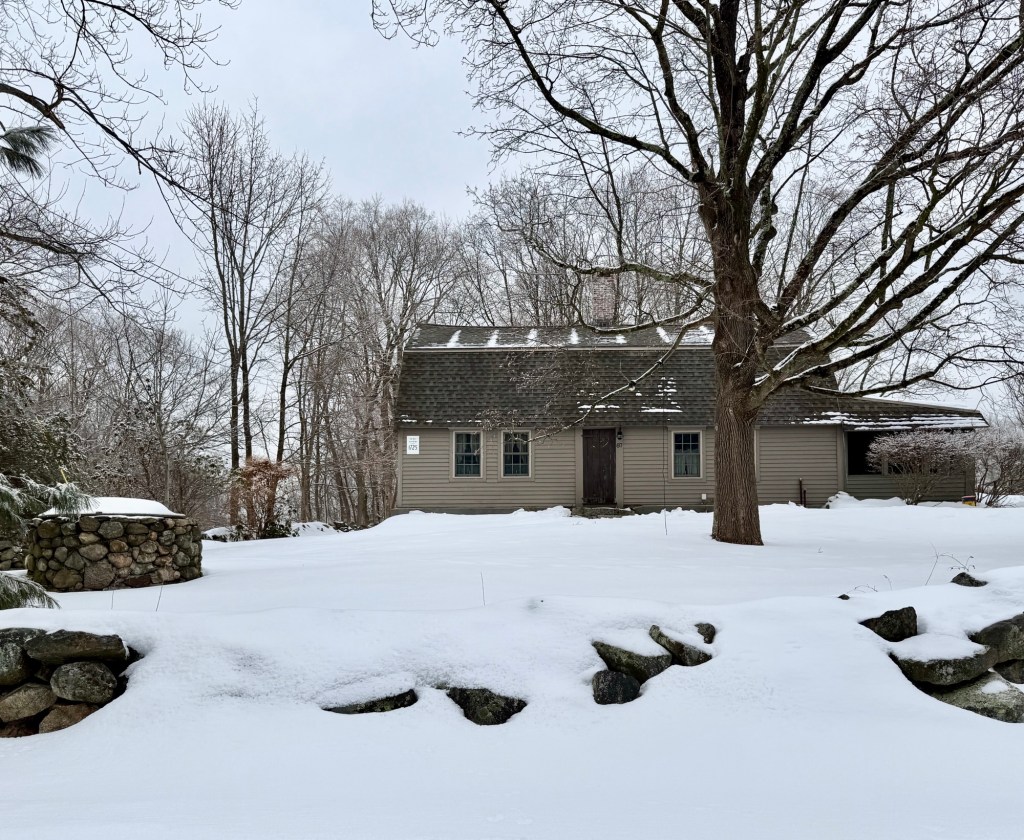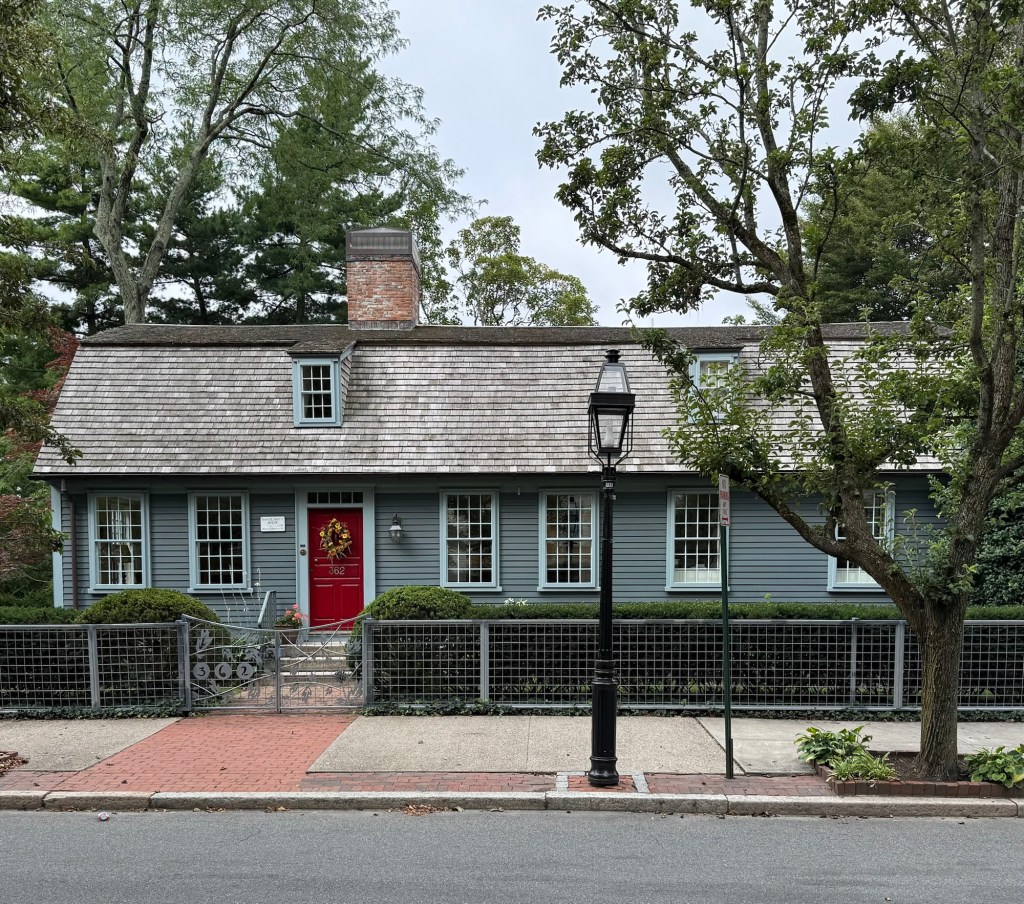
Daniel Smith House // c.1750

The Daniel Smith House at 362 Benefit Street in Providence, Rhode Island, stands out in the neighborhood as an uncommon gambrel-roofed Georgian-era residence, but it was not built here! The home was built by about 1750 for Daniel Smith, and may possibly date to around 1725 a year after he was deeded land from his father and the same year he married his wife, Dorcas Harris. If the home does indeed date to around 1725, it would likely be the oldest extant house in Providence! The home was originally located across town on Chalkstone Avenue, and moved to the present site on Benefit Street in 1982 to save it from institutional expansion by Roger Williams Hospital. The hospital set a date to demolish the farmhouse, then covered in asbestos siding, and offered the building for free to someone who could move it off the site. After tense weeks and a nearing deadline, Angela Brown Fischer, a real estate executive, agreed to pay the costs to move the building across town to a site on Benefit Street, where it remains today. The home was put back together and restored by Newport-based architect, Richard Long, who worked as principal architect for the Restoration Foundation of Newport before opening a private architectural practice. What a great preservation success story!

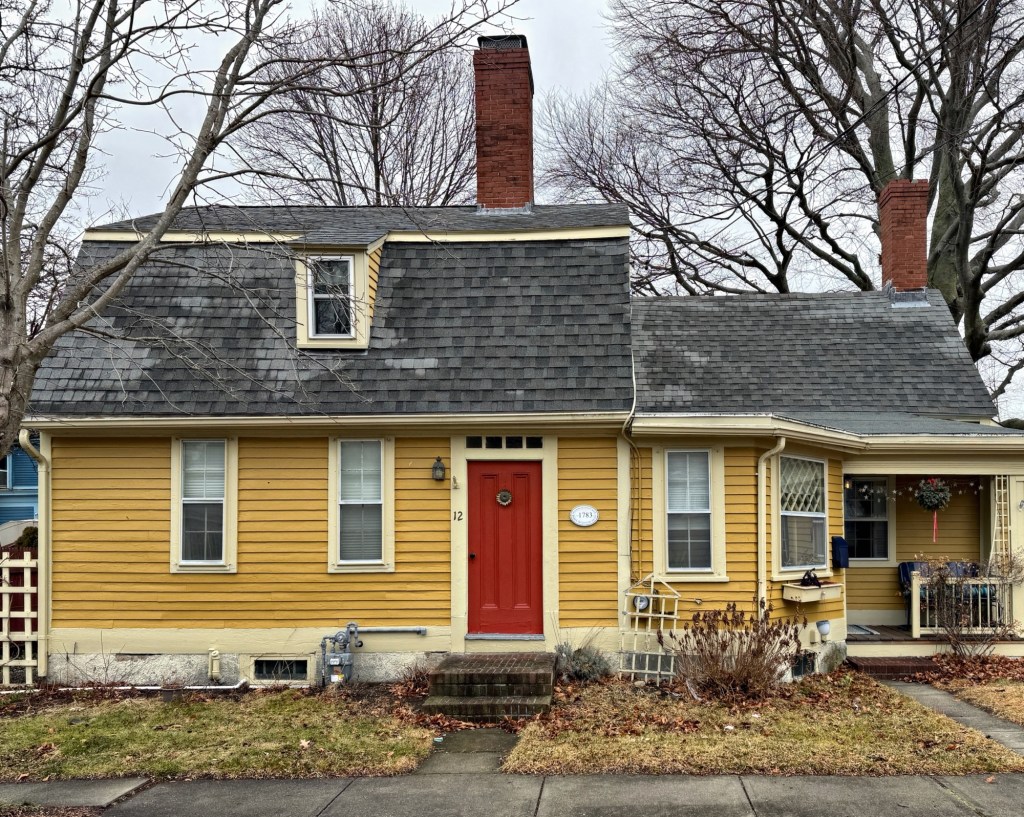
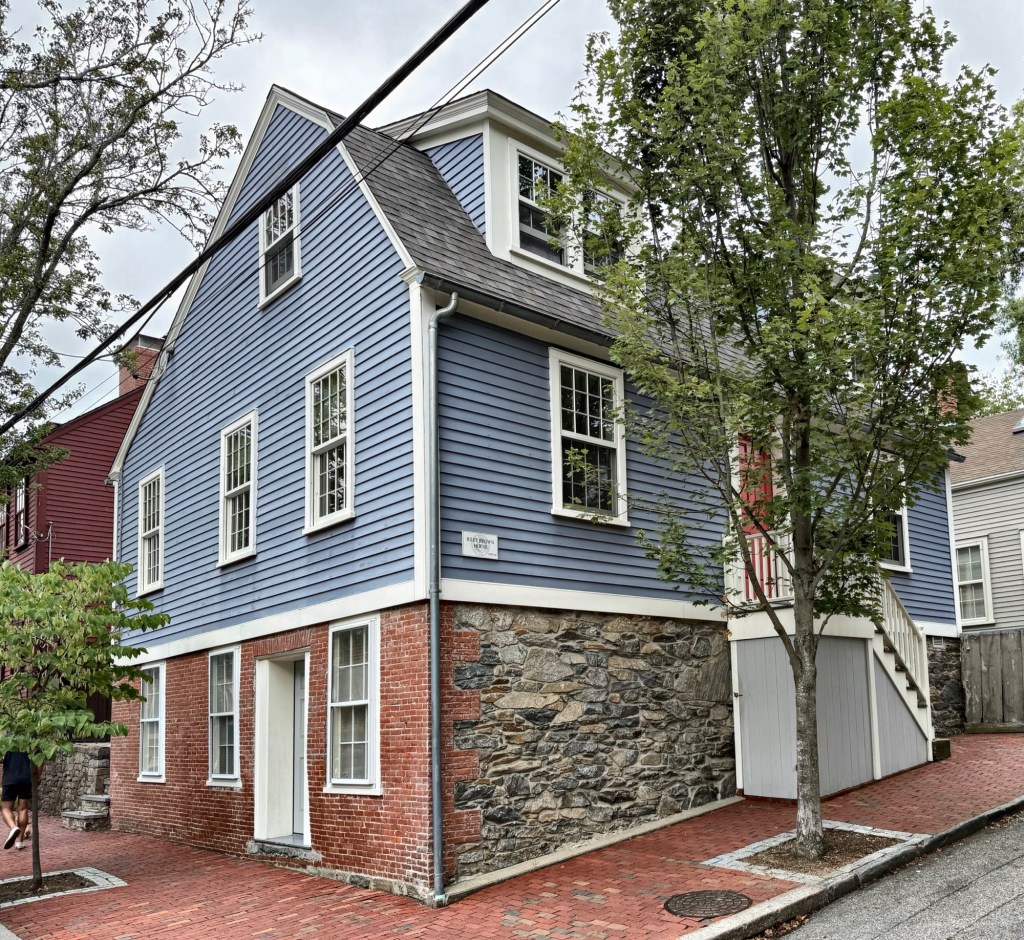
Brown-Crocker House // c.1836

In 1829, Riley Brown, a housewright, purchased a house lot at the corner of Thayer and Transit streets in Providence, and by 1836, built this charming gambrel-roofed cottage, which is one of the most charming in the city. Riley Brown lived in the house next-door at 6 Thayer Street (1829) and on available land, built this 1-1/2-story dwelling on a full-height raised basement on speculation. It is possible that the house could have dated to the 18th century, and was possibly moved to the site from a nearby location, given the distinct gambrel roof and Georgian qualities. The residence here was sold in 1836 to John Crocker, who resided here with his family until his death in 1865. The Brown-Crocker House stands out for its unusually high basement of brick and stone, with a stair ascending up to the central entry and the gentle saltbox roof off the rear. Two shed dormers were likely added in the 20th century to make the house’s second floor more liveable.

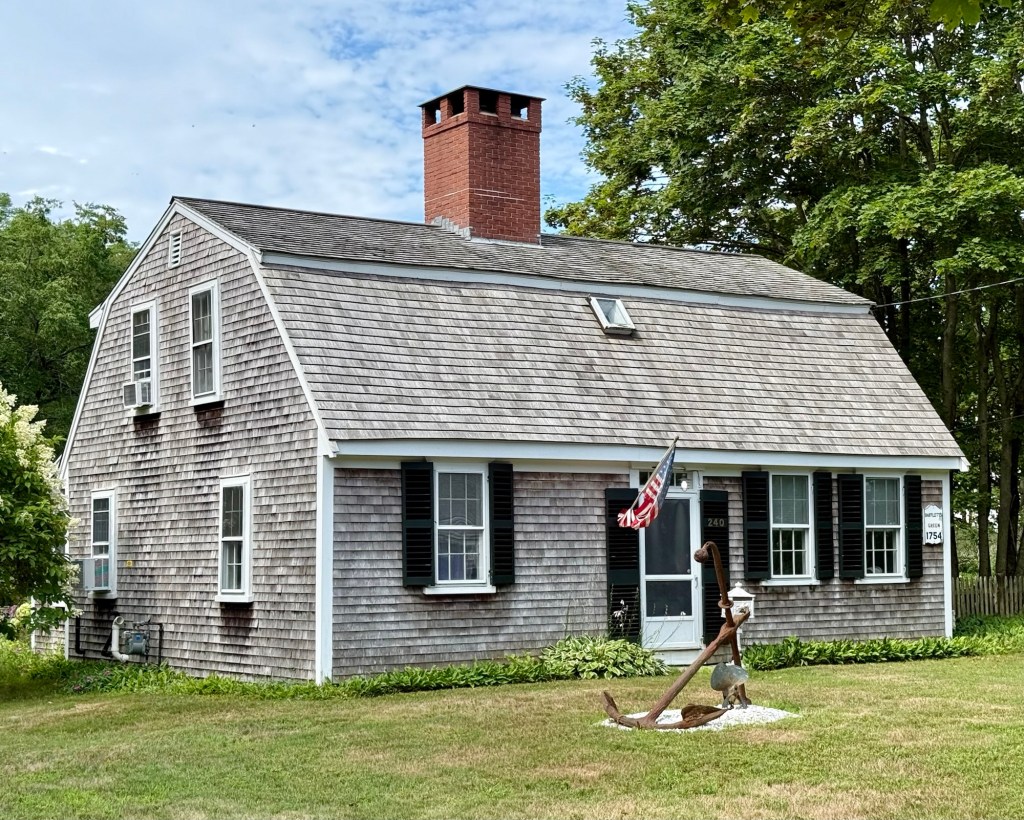
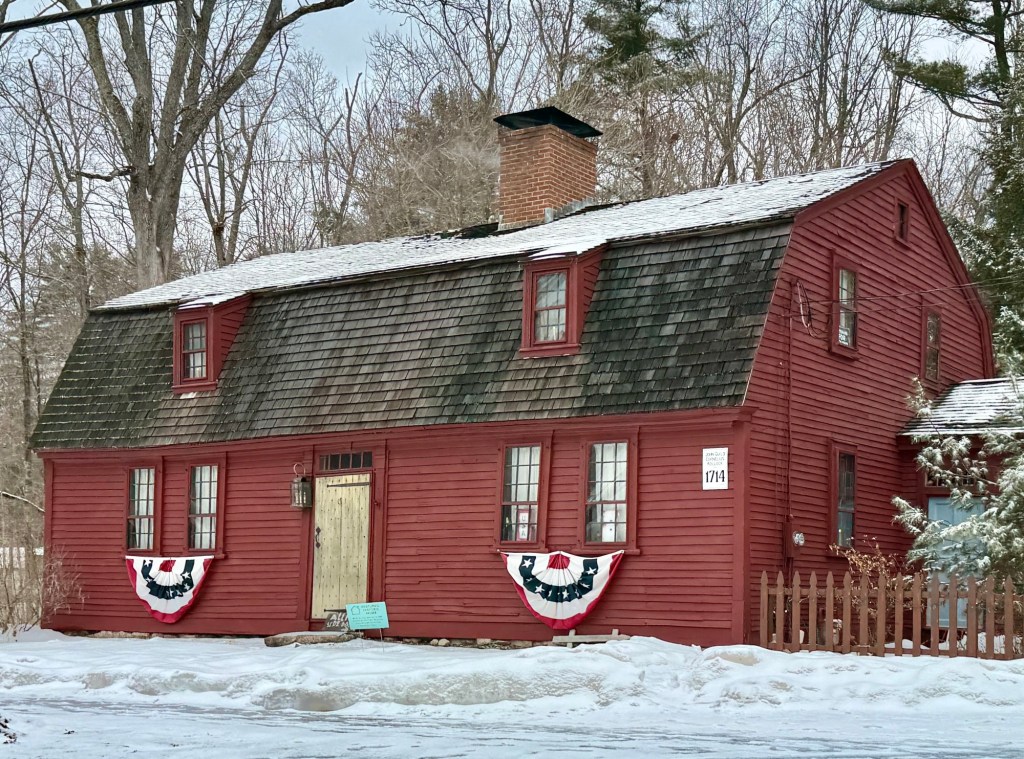
Cobb-Bartlett House // 1754

The Cobb-Bartlett House at 240 Main Street in Kingston, Massachusetts, was built around 1754 for Gershom Cobb (1717-1799) where he raised his family. The gambrel-roofed Georgian house was built before the revolution, and may have originally been a half-cape and expanded to a full-cape in the late 18th or early 19th century. The property was sold by Cobb in 1768 to Captain Joseph Bartlett, and the property remained in the family for generations after his death in 1788. The house is a well-preserved example of a Cape style house with large, central chimney and clad with cedar shingle siding and roof.

Gott House // 1702

Halibut Point State Park in Rockport is one of the most enchanting places in Massachusetts and it has so many layers of history! Before white settlement, Halibut Point was used seasonally by the Pawtucket people who came to harvest its wild fruits, fish and game on the land. In 1702, Samuel Gott (1677-1748) purchased eight of the 6-acre lots on Halibut Point. At the time, there were no roads to Halibut Point, but Samuel built this house on the land, and he began to farm here. The property passed down the family line and was later owned by Joshua (1754-1846), who came of age just as the War for Independence began. Joshua enlisted with the Revolutionary Army as it was being formed in Boston, and in 1776, he joined General Washington’s forces in the unsuccessful defense of New York. He returned home to lead a long and useful life as farmer and fisherman and was known as Captain Gott. As of the 2010s, the property remained in the same family, handed down through the generations from Samuel Gott over 320 years to today. How cool!

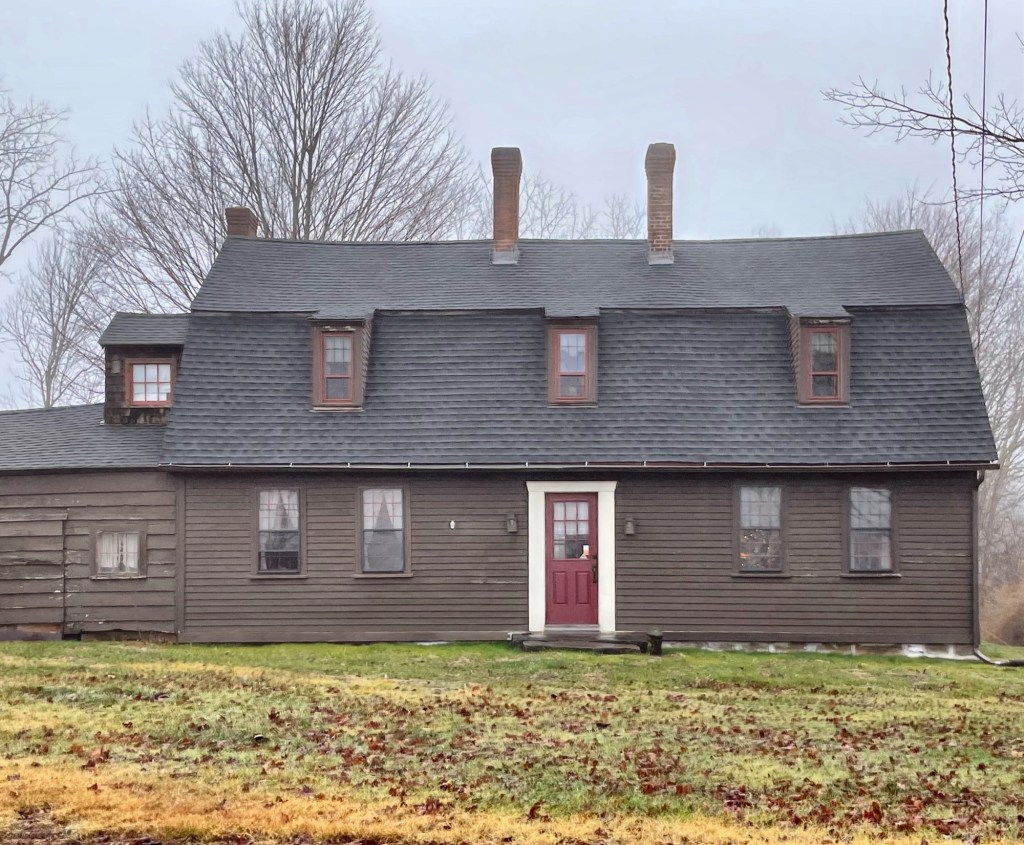
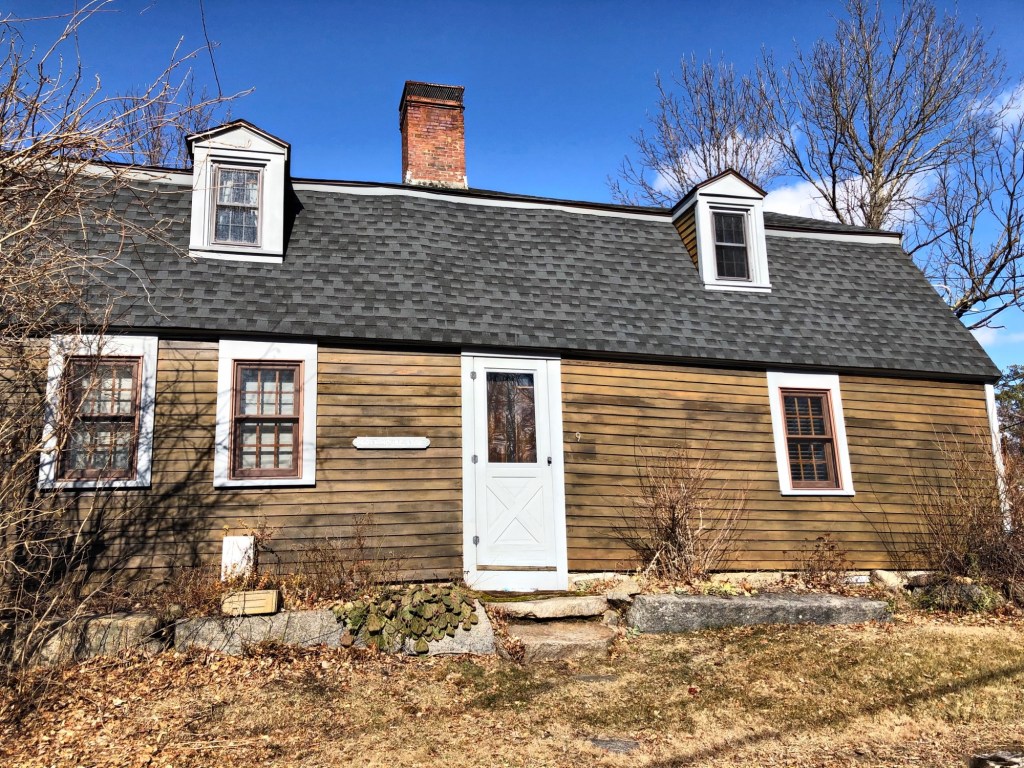
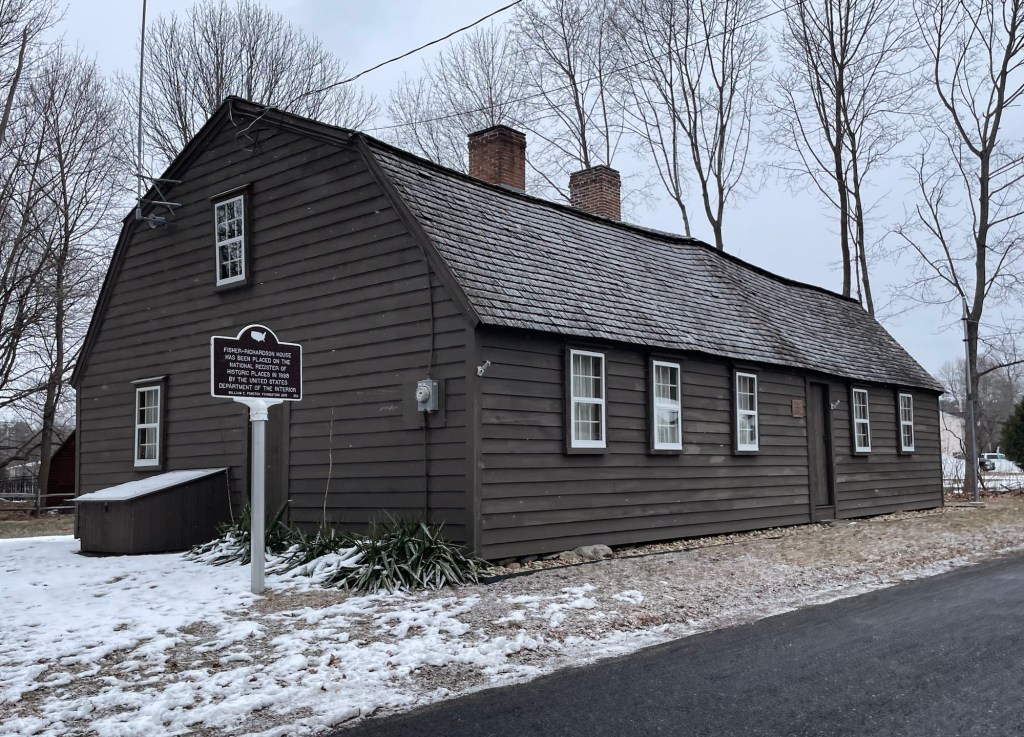
Wellman-Fisher-Richardson House // c.1745

The Fisher-Richardson House in Mansfield, Massachusetts is considered to be one of the oldest buildings in the suburban town. The home dates to sometime between 1743 and 1751 and was built for its original owner Ebenezer Wellman (1720-1776). The property was eventually owned by Lemuel Fisher, who in about 1800, doubled the size of the house adding its western half. When Lemuel died in 1820, the property was inherited by his youngest son, Daniel, a farmer and blacksmith who also built a gristmill nearby. The home was later inherited by Daniel’s daughter, Evelina and her husband, Captain Ira Richardson. By 1930, the gambrel-roofed Georgian house was in disrepair, and the owner at the time contacted SPNEA (now Historic New England) who drafted an agreement to acquire and restore the house. However, as local interest in the property increased, the owner deeded the property to the town, and the town took on the costs of restoration. The property is now managed by the Mansfield Historical Society.

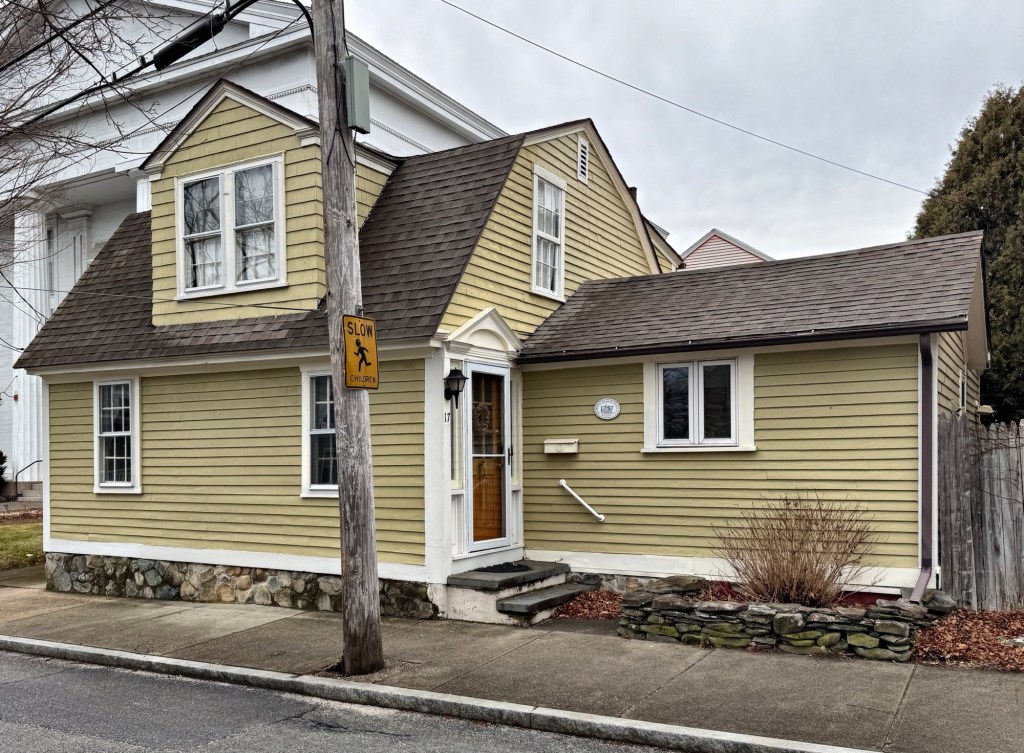
Harkness House // c.1730

The award for the cutest house in Newport goes to this c.1730 beauty on Green Street! This charming Georgian cape house sits just one-and-a-half stories tall under a squat gambrel roof. The house was originally located at the corner of Thames Street and was moved at least twice until it was placed on its present site by the Newport Restoration Foundation, after they acquired it in 1983, restoring it soon after. The center-hall house has just two rooms on each floor with a central staircase and chimney. The small dormers add some light to the second floor without compromising the historic and architectural integrity of the cottage.