Old New Ipswich Center Schoolhouse // 1829

Presently owned and occupied by the New Ipswich Historical Society, this handsome brick building was originally constructed in 1829 as a schoolhouse for young students in town. The structure is located on Main Street and replaced wood-frame school that was located on the other side of the road. Almost immediately after it was built, the building and its location were heavily criticized as early as 1847. There were up to 92 pupils in its two rooms, both of which were accessed by a central entrance, causing those entering and leaving to disrupt both classrooms. Additionally, the closeness to the road caused noise and dust to enter the classrooms. The school closed in 1860 and was used for a time as a blacksmith shop before it was acquired by the New Ipswich Historical Society in 1939.
Former Appleton Academy Building // 1942

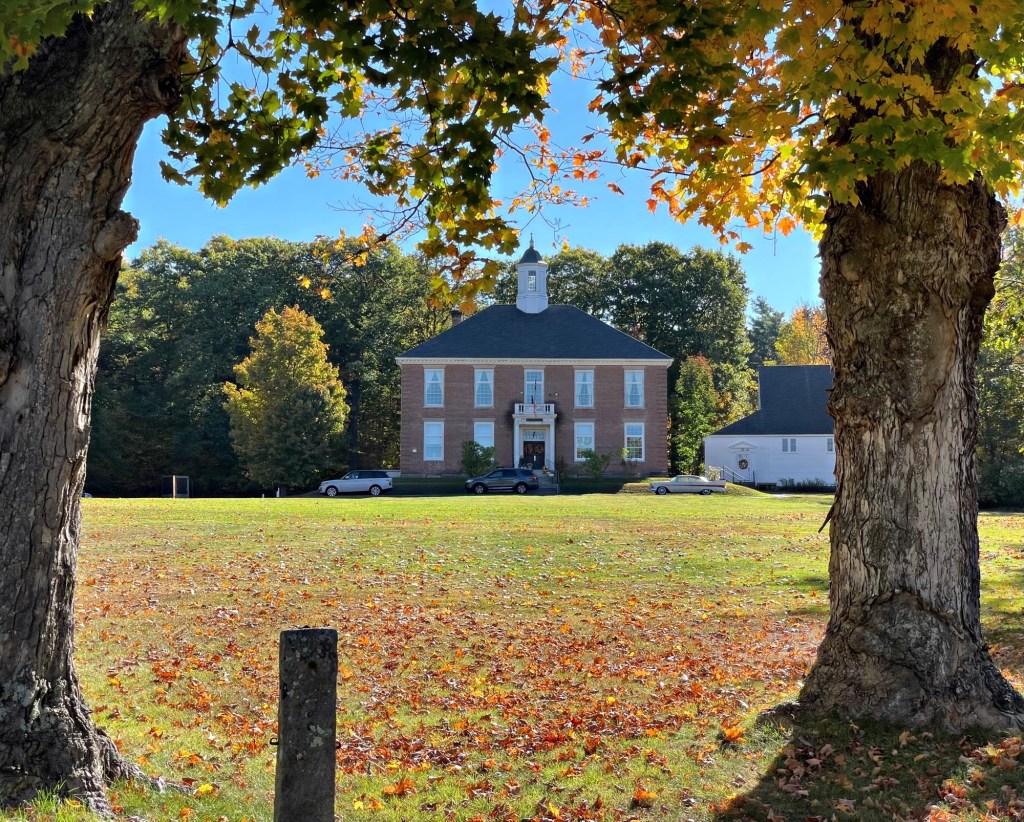
Appleton Academy (aka the New Ipswich Academy) was established in New Ipswich, New Hampshire, in 1789, being the second oldest private academy in the state. The school was named after benefactor Samuel Appleton, the largest early donor, who grew up in town at his father, Isaac Appleton’s homestead. This is the fourth Academy building in New Ipswich. The original 1789 frame building was outgrown and in 1816, it was decided that the academy would be shared with the new town hall building, occupying the second floor. Sharing a prestigious academy building with the town functions was deemed insufficient, and a new prominent site near Appleton Common was acquired, with a new brick academy building constructed there in 1853. The Italianate style structure was funded by the Appleton Family, and was designed by Boston architect, William Washburn. In January 1941, the main Academy building was destroyed by fire. The next year it was rebuilt, closely following the design of the earlier brick structure. The school closed in 1974 and was used by a non-profit and schools until it sold in 2018 and appears to be a residence now.

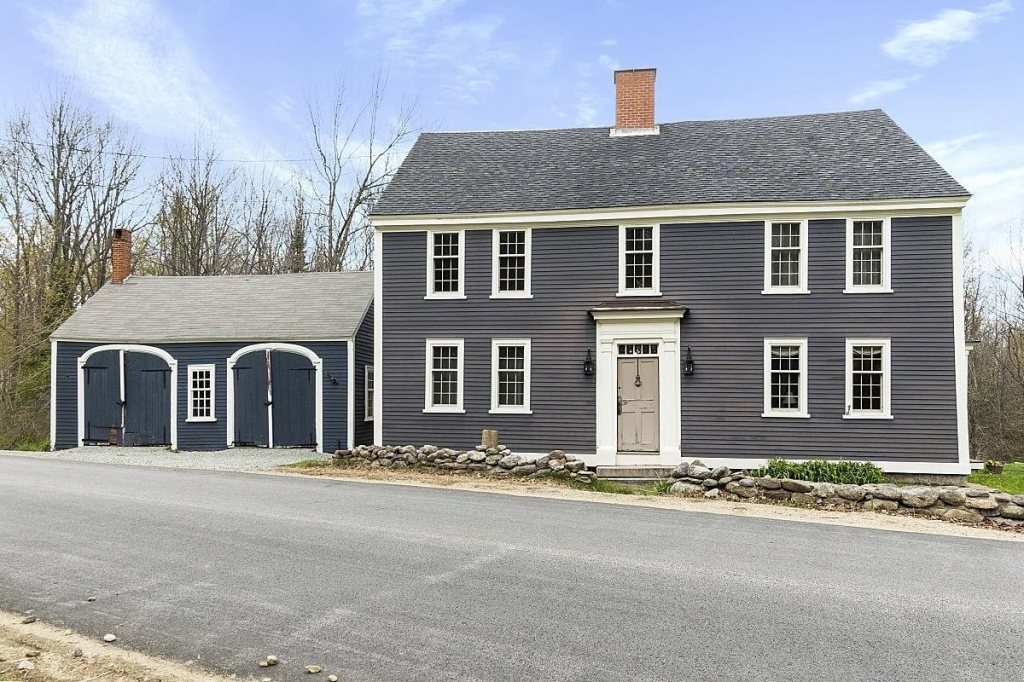
Preston-King House // 1764

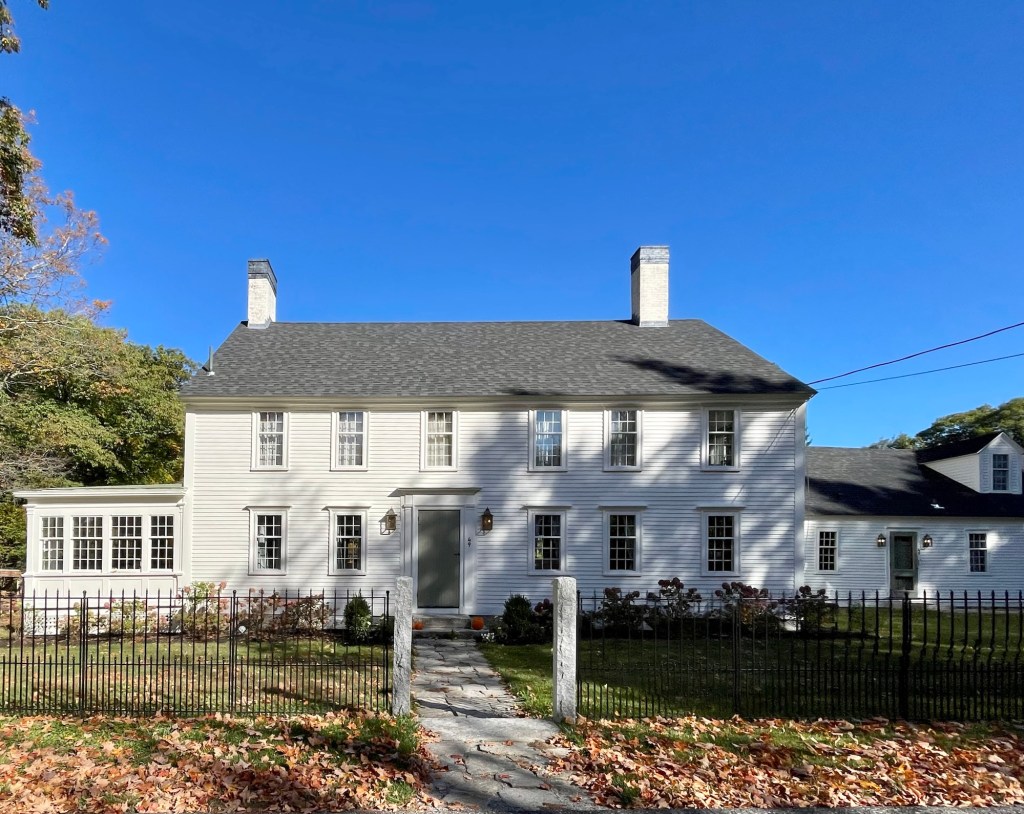
The Preston-King House of New Ipswich, New Hampshire, is a 2 1/2-story wood frame Georgian house and unique for its asymmetrical six-bay facade. John Preston I (1739-1803) built this house in 1764. Preston was a doctor, a profession followed by his son of the same name. As well as being the town’s leading physician, he was a member of the first Board of Selectmen and a member of the Convention for framing the State Constitution, also holding many local offices. Following his death, the house passed to his youngest daughter Anna, and her husband, Seth King, a manufacturer, in 1808. The house has been restored to its Colonial appearance and makes a statement without the frills and detailing of the Victorian style.

Charles Barrett House // c.1780

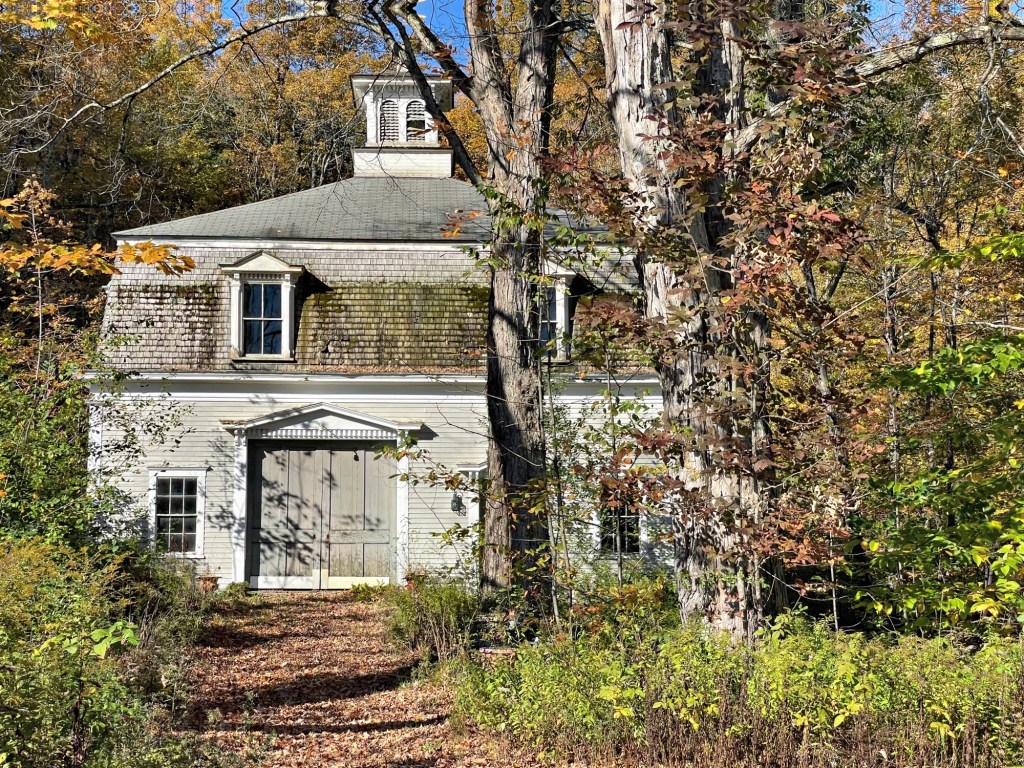
Built on a terraced knoll on Main Street in the enchanting village of New Ipswich, New Hampshire, the Charles Barrett House is a stunning late-Georgian residence that was restored in the 20th century. Charles Barrett (1739-1808) moved to the town from Concord, Massachusetts, and did quite well for himself, as just decades later, he would build his son one of the finest homes in the state, the Barrett House, next door. The house’s current appearance reflects a restoration circa 1960. Like many 18th century houses, it was altered in the 19th century with Victorian-era embellishments, including a Mansard roof, 2/2 sash, and a matching carriage house. Under the direction of Historic New England, the house was returned to its more simple, original, Georgian design.

Ms. Dolly Everett House // c.1825

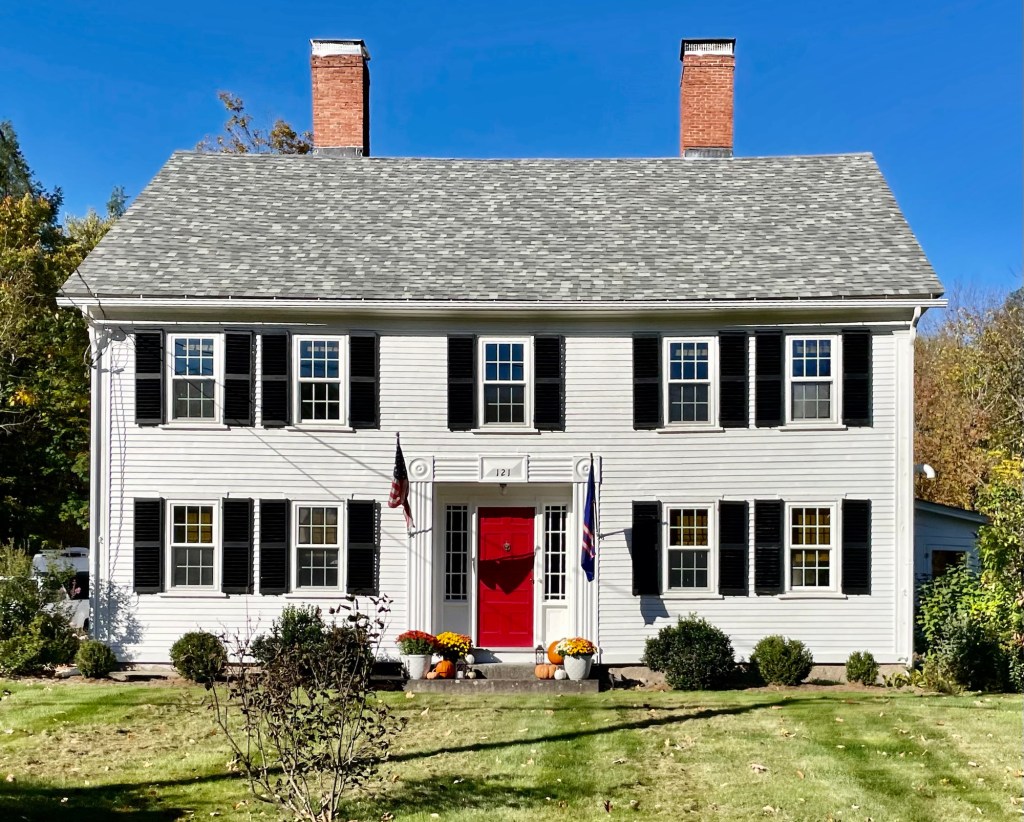
This house on Main Street in New Ipswich, New Hampshire, was built for Mrs. Dorothy “Dolly” Everett, (1770-1859), a sister of Samuel and Nathan Appleton, who returned to New Ipswich after her husband’s death. Her husband was David Everett (1769-1813), who had been a student at New Ipswich Academy, then attended Dartmouth, after which he studied law and practiced in Boston where he founded the Boston Patriot in 1809, and published works of drama and poetry, as well as political writings and died while on a trip to Ohio. Dolly’s house in New Ipswich is a unique, high-style blending of Federal and Greek Revival styles, with a notable entry with its recessed paneled entry, narrow paneled doorway surround with small corner blocks and paneled door. The wide, molded outer surround with its pateras and corner blocks, faceted tablet over the door and partial sidelights show the influence of architectural plan books of the period. In her will, Dolly Appleton Everett left her home to the local Congregational Church, who used the property as a parsonage into the 20th century. It was purchased in the mid-20th century as a summer residence and has remained a private home ever since.

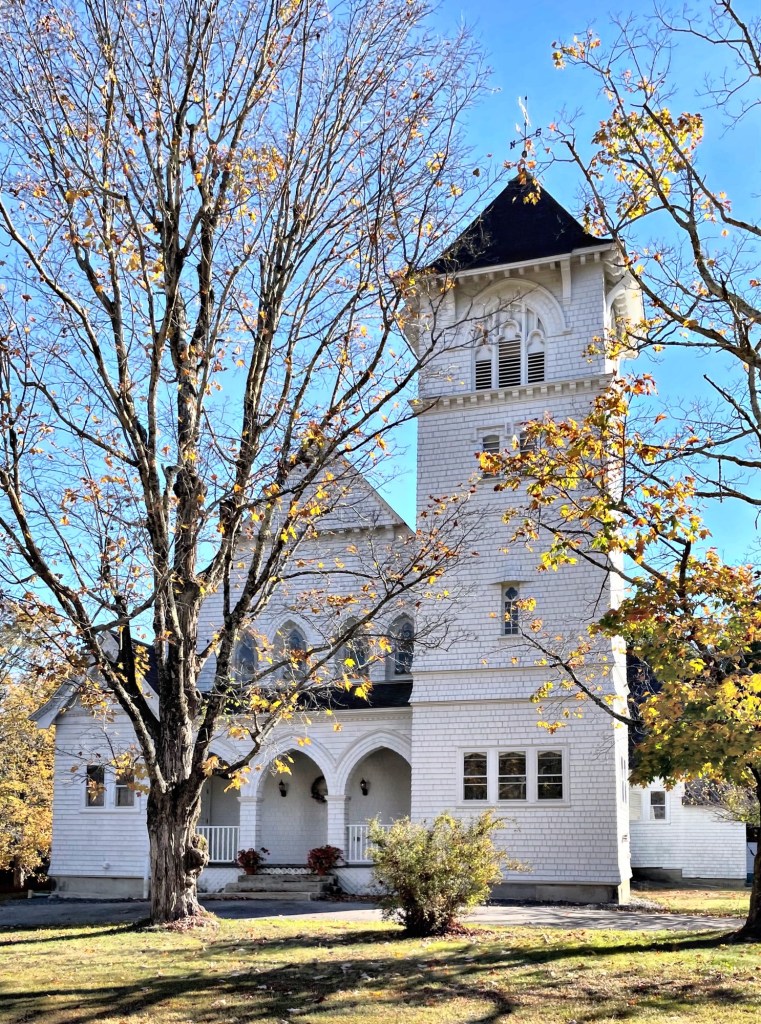
New Ipswich Congregational Church // 1903

The New Ipswich Congregational Church was built in 1903, replacing the former 1813 Meeting House on the site, the fourth in the town, which stood here until a fire caused by lightning destroyed it in 1902. Interestingly, the design is more Victorian than Colonial Revival, which makes this church stand out amongst the village dominated by Georgian, Federal and Greek Revival style residences. The present building blends the Shingle style with Gothic elements with the tracery at the belfry and lancet windows. The architects were Gay & Proctor of Massachusetts who created a statement building with iconic tower that has been well-preserved by the congregation ever since.

Isaac Appleton Homestead // 1756

One of the oldest (if not the oldest) extant houses in Ipswich, New Hampshire is this Colonial home on Appleton Road, which gets its name from the first owner, Isaac Appleton. Deacon Isaac Appleton III (1731-1806) was one of the town’s original settlers who came to New Ipswich from Ipswich, Massachusetts. He held the office of town clerk and of selectman and was a deacon for thirty years. He responded to the call to arms from Concord to fight in the American Revolution. Deacon Isaac Appleton III was the father of Samuel Appleton, a wealthy Boston merchant; and Nathan Appleton, a merchant and politician in Boston and head of the famous Appleton Family which would influence Boston business and politics for generations. Samuel Appleton would fund and establish the Appleton Academy in New Ipswich, the second oldest in New Hampshire after Phillips Exeter Academy. The Isaac Appleton Homestead remains in a great state of preservation and sits just outside the town center.

Old New Ipswich Town Hall // 1817

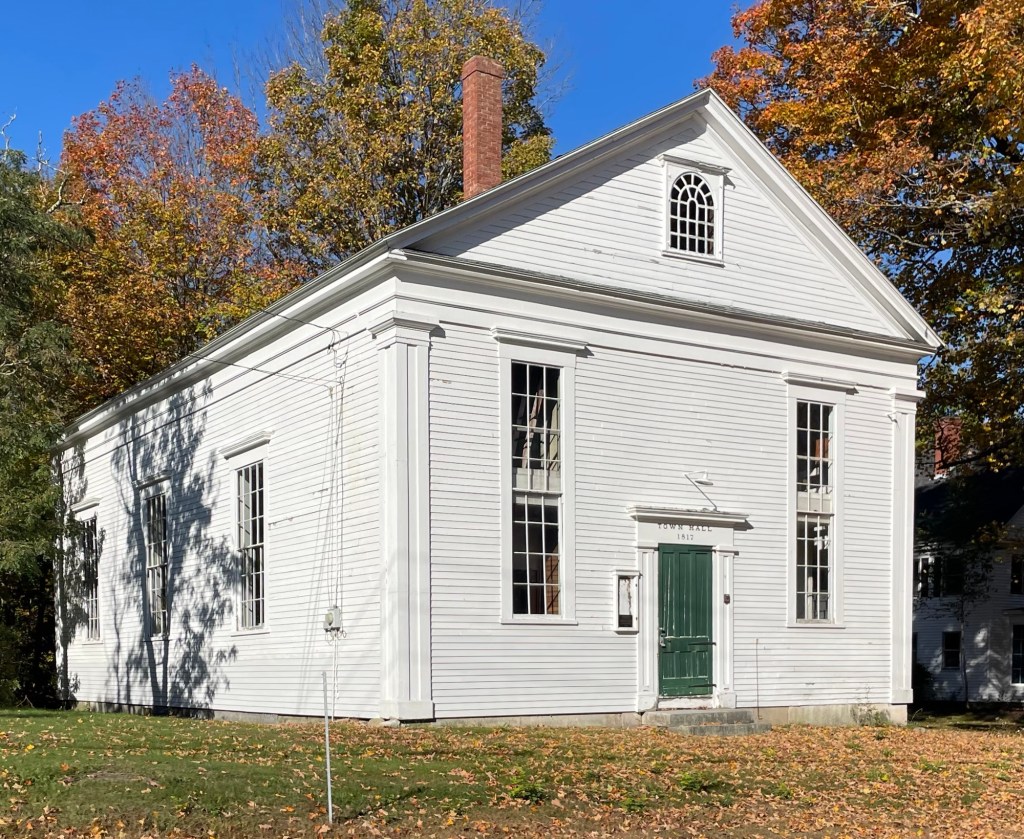
New Ipswich, New Hampshire, is a town that oozes New England charm! Winding back roads are lined with Colonial-era homes and buildings, lovingly maintained by stewards and neighbors to create the quintessential small town feeling. New Ipswich was granted in 1735 to 60 inhabitants of Ipswich, Massachusetts, where the name is derived, by colonial Governor Jonathan Belcher and the General Court of Massachusetts. European settlement began here in 1738, when Abijah Foster arrived to the area with his wife and infant daughter. At the center of town, a new Town Hall was built in 1817 as a combination town hall and private academy with funds provided by the town government and by the trustees of New Ipswich Academy. The building was constructed under the direction of Deacon Nathaniel Gould, using materials salvaged from a disused meetinghouse of 1770. The arched gable window is reputed to have been taken from the meeting house, as are twisted balusters on the gallery stairway inside. As completed in 1817, the building had a full second floor which provided the academy with a lecture room, a small library, and a laboratory, but that was taken over by 1869 when the Town renovated the building, removing a tower and belfry, and occupied the second floor spaces. The building is still owned by the town, and is used occasionally for civic functions, with town offices in a mundane, newer building a short distance away.

Sumner Stanley House // c.1850

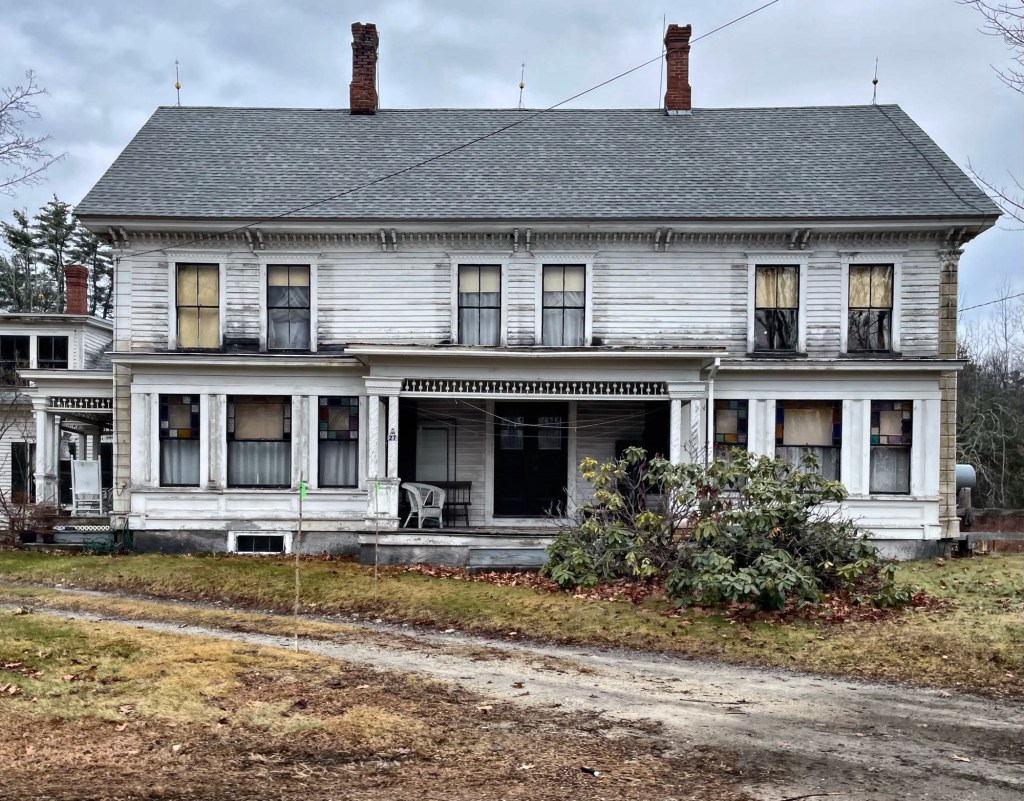
One of the larger homes in Weare, New Hampshire is this sprawling mid-19th century residence, seemingly built around 1850 for Sumner Stanley and his wife, Ruth. Stanley and Ruth (née Dow) acquired land from Ruth’s family and they built their home here. By 1856, Stanley sold a small piece of land to town just to the east of his house for the construction of the North Weare Schoolhouse. The Italianate style house with its Stick style attached barn structure have some amazing detailing!

North Weare Schoolhouse // 1856

The Town of Weare, New Hampshire was first divided into thirteen school districts in 1805 as a result of a state law to divide each town into school districts to service all students equally. Over the years the number of school districts fluctuated and were periodically redefined based on population distribution and class sizes. The North Weare Schoolhouse was built in 1856 and was operated as a one-room school until 1952 when a consolidated school was built in town. Architecturally, the building blends multiple styles, most notably the Greek Revival and Italianate styles. The property was later occupied as a Grange Hall with a 1960s addition to the rear. It was purchased in 1985 by new owners who had spent years restoring the building as a residence before they sold it more recently. Today, the former schoolhouse has modern additions and windows, but maintains its charm and uniqueness.