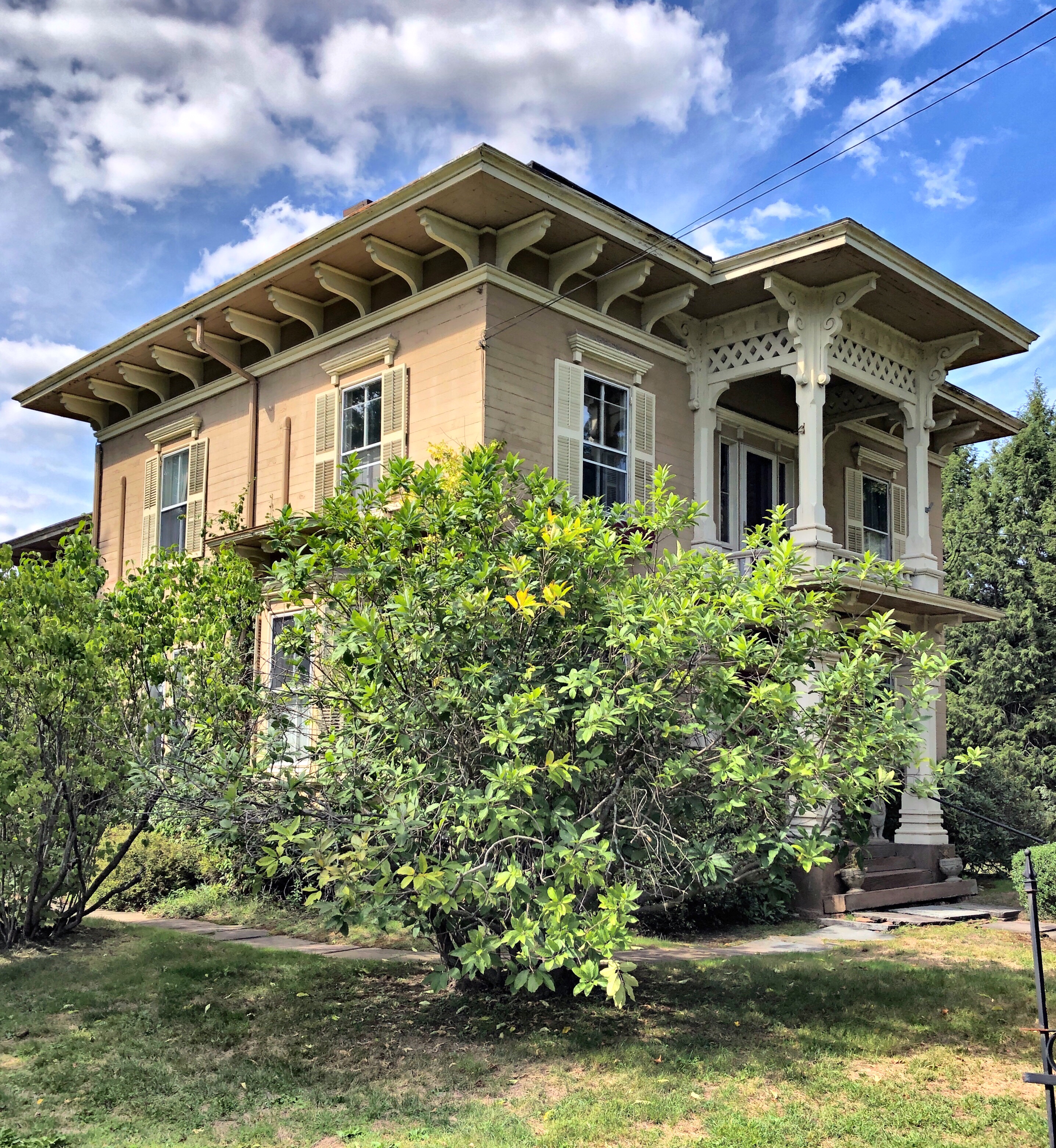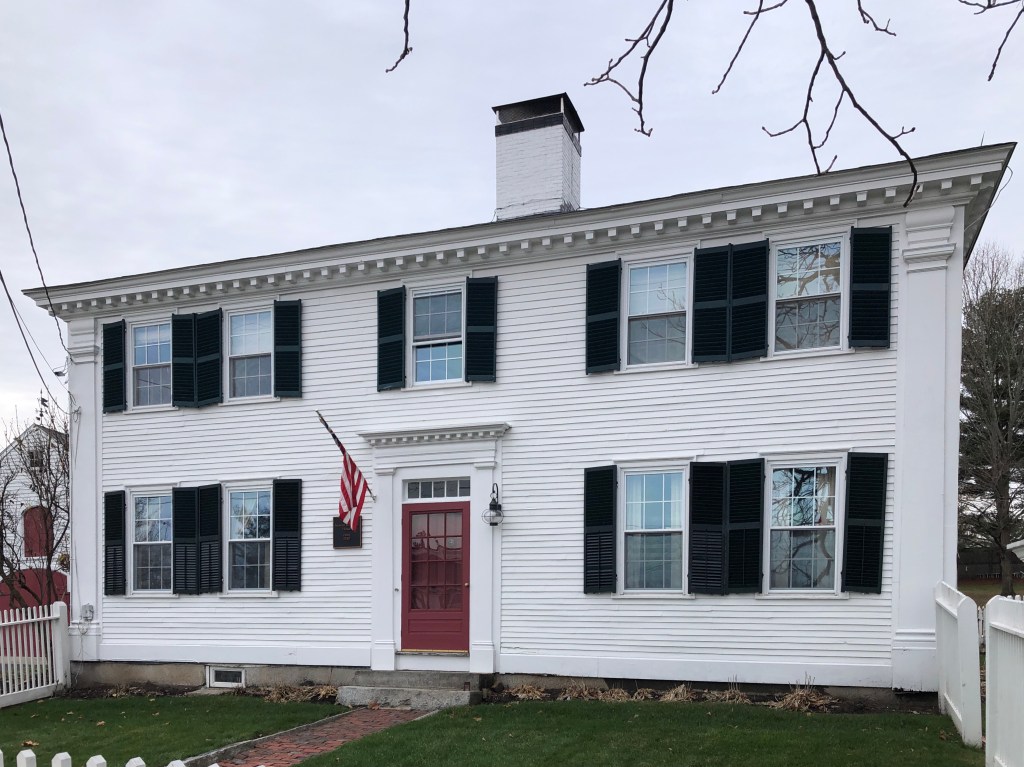
Cummings-Abbott House // c.1735

Samuel Cummings (1709-1772) married Prudence Lawrence (1715-1796) and moved to Hollis, NH from Groton, MA. The couple had a home built in town and raised at least four children, Samuel Jr., Mary, Sibbel, and Prudence. The original house built by Cummings was a single-story, four room, center chimney type. After his death in 1772, the property passed to Cummings’ son, Samuel Cummings, Jr., an acknowledged Tory. Interestingly, Samuel’s sister Prudence was an ardent patriot, who moved to Pepperell, MA and married a militia man, David Wright. While the Revolutionary War was raging, Prudence visited her brother in the old family home, when she overheard her brother Samuel talk to his friend, a British army officer about passing information to the British. Prudence returned to Pepperell and gathered the women of the town. Then a 35-year-old mother of five, she organized 30 or 40 of them into a militia called ‘Mrs. David Wright’s Guard.’ The women dressed in their husbands’ clothes and carried whatever they could for weapons. As the men had probably taken muskets with them, the women probably used farm implements such as pitchforks. The women patrolled the roads leading into town. The group eventually captured two British soldiers on horseback and let them go only once they agreed to never come back to the colony. Due to this event, Prudence never spoke to her loyalist brother again.

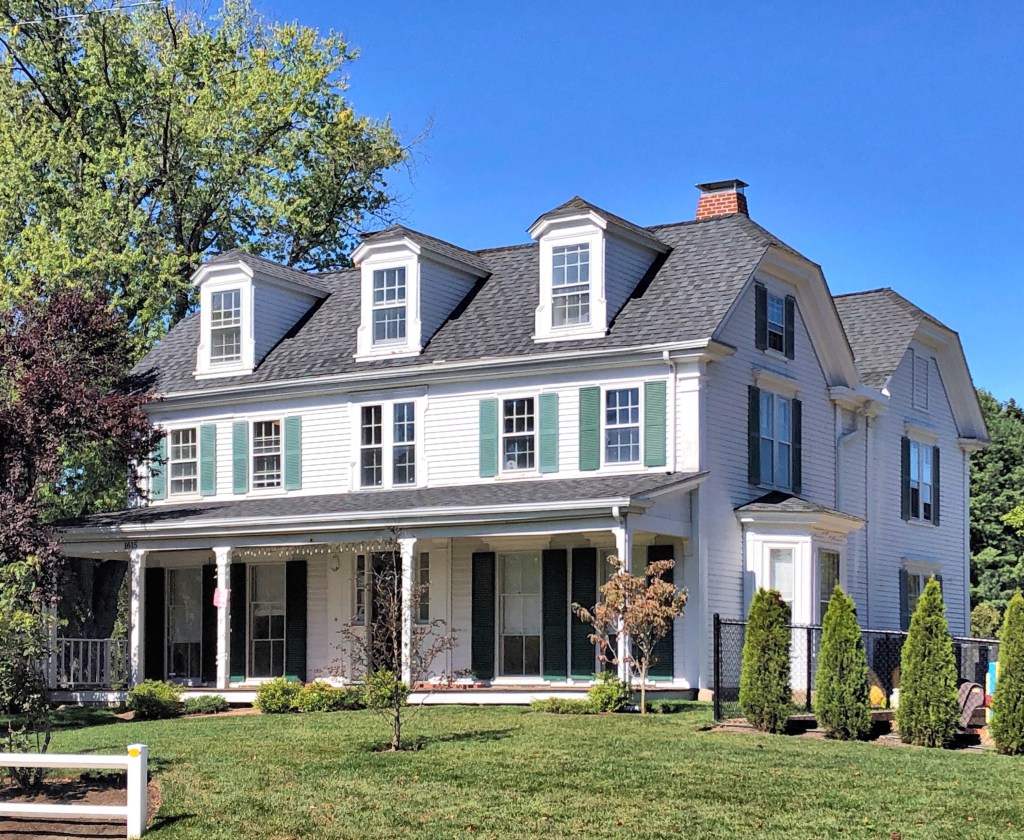
In the 1850s, the house was owned by Superintendent of Schools, Levi Abbott and his wife, Matilda. It was the Abbotts who reportedly added a second story to the house with a hip roof, cornice and corner pilasters, giving it the appearance we see today.
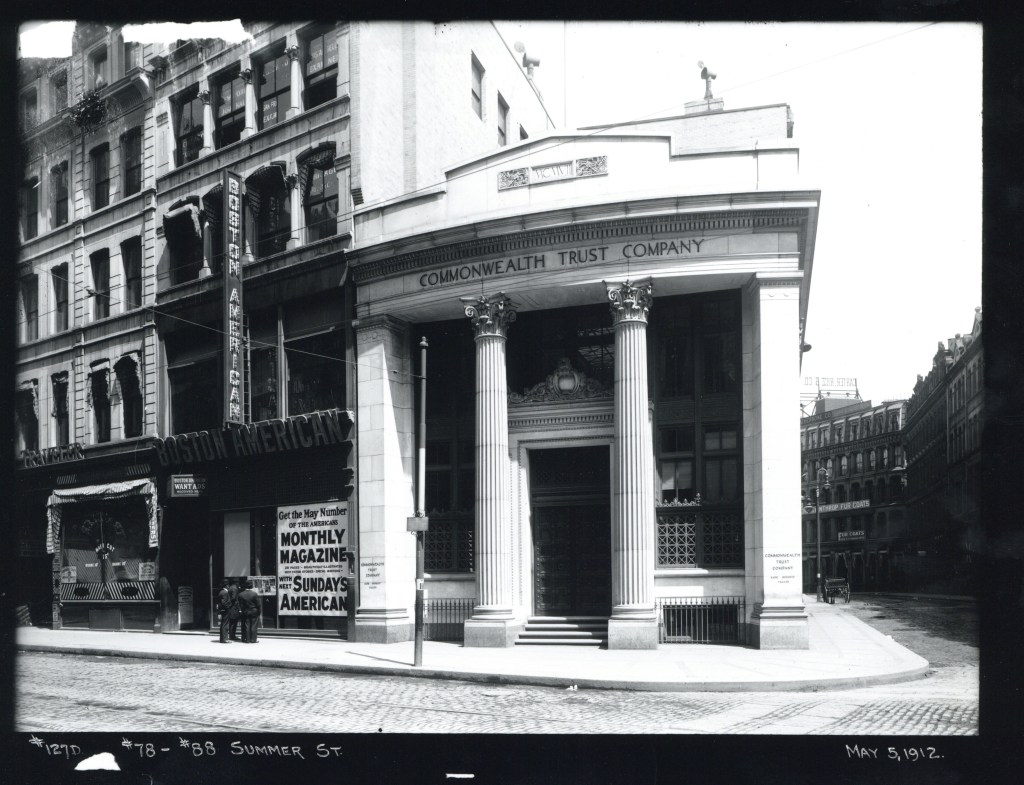
Commonwealth Trust Company // 1908-c.1974

Ca. 1910 image courtesy of Boston Public Archives.

Located at the corner of Summer and Devonshire Streets in Downtown Boston, the Commonwealth Trust Company’s two-story marble banking house commanded the corner, despite its short stature. The building, completed in 1908, was constructed with Lee marble and decorated with ornate wrought and cast-iron grilles over windows. The building was designed by the architectural firm of Parker, Thomas & Rice in the Classical mode with large, fluted Corinthian columns and boxed corner pilasters framing the recessed center entrance, Corinthian pilasters ran along the side facade. At the inside, the building was coated with Cararra and Blanco marble with paneled oak offices. At the ground floor, offices and banking stations framed the outer walls, with the safety deposit boxes located on the second floor. The building was demolished by the 1970s and replaced with a one-story minimalist Modern building (I could not figure out why the former building was razed). The new building was demolished after a few decades with a larger building, better fitting the commercial district.

Justin Morrill Homestead // 1851

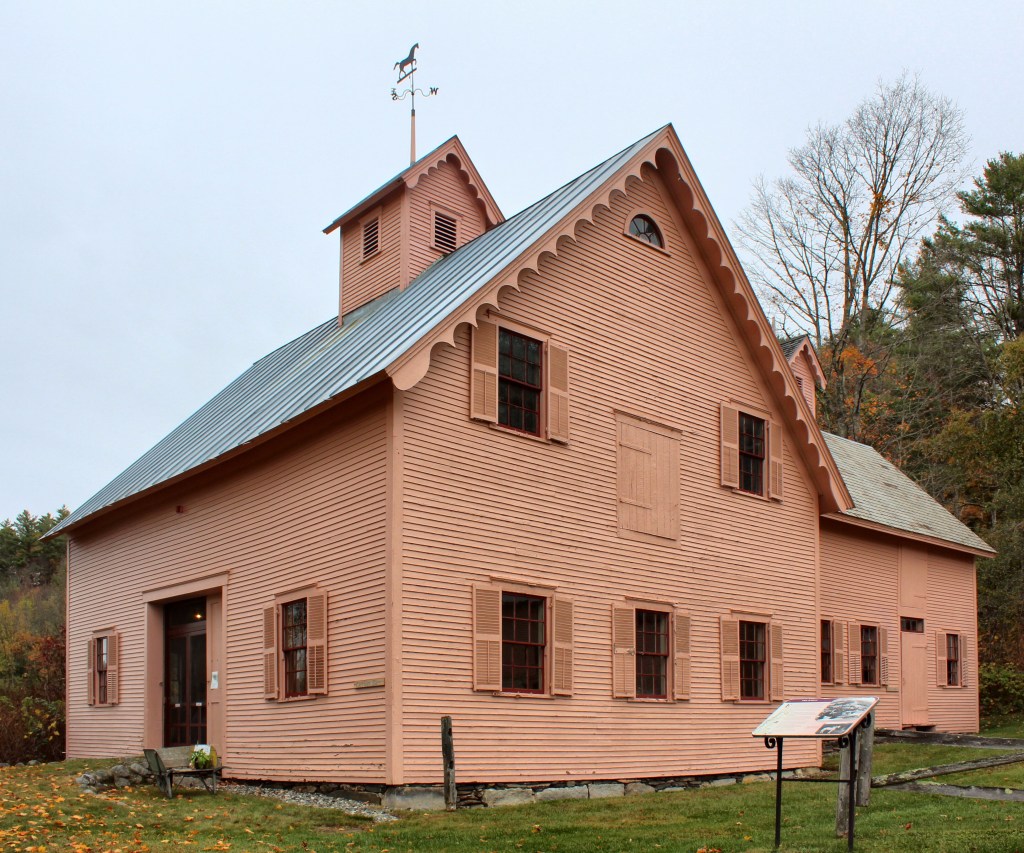
One of the most stunning Gothic Revival homes in New England has to be the Justin Morrill Homestead in the tiny town of Strafford, Vermont. The home was designed by and built for Senator Justin Smith Morrill (1810-1898), who was born in town and worked with his mentor Jedediah Harris at the local store. He later expanded and owned numerous stores in the area and diversified, investing in railroads, banks and real estate in the region. He retired in the late 1840s and became a gentleman farmer, building this Gothic Revival home in town. In 1854 Morrill was elected to the Thirty-fourth Congress as a Whig. He was a founder of the Republican Party, and won re-election five times. In 1866, Morrill was elected to the U.S. Senate as a Union Republican, serving until his death in 1898. Morrill is best known for sponsoring the Morrill Act, also known as the Land Grant College Act. This act was signed into law by Abraham Lincoln in 1862, and established federal funding for higher education in every state of the country. Senator Morrill primarily used this house as a summer residence, as he spent much of his time in Washington, DC. The property remained in the Morrill family, until World War II. The house was eventually acquired by preservationists, who sold it to the state in 1969 for use as a Historical Site and museum.

Justin Morrill Barn

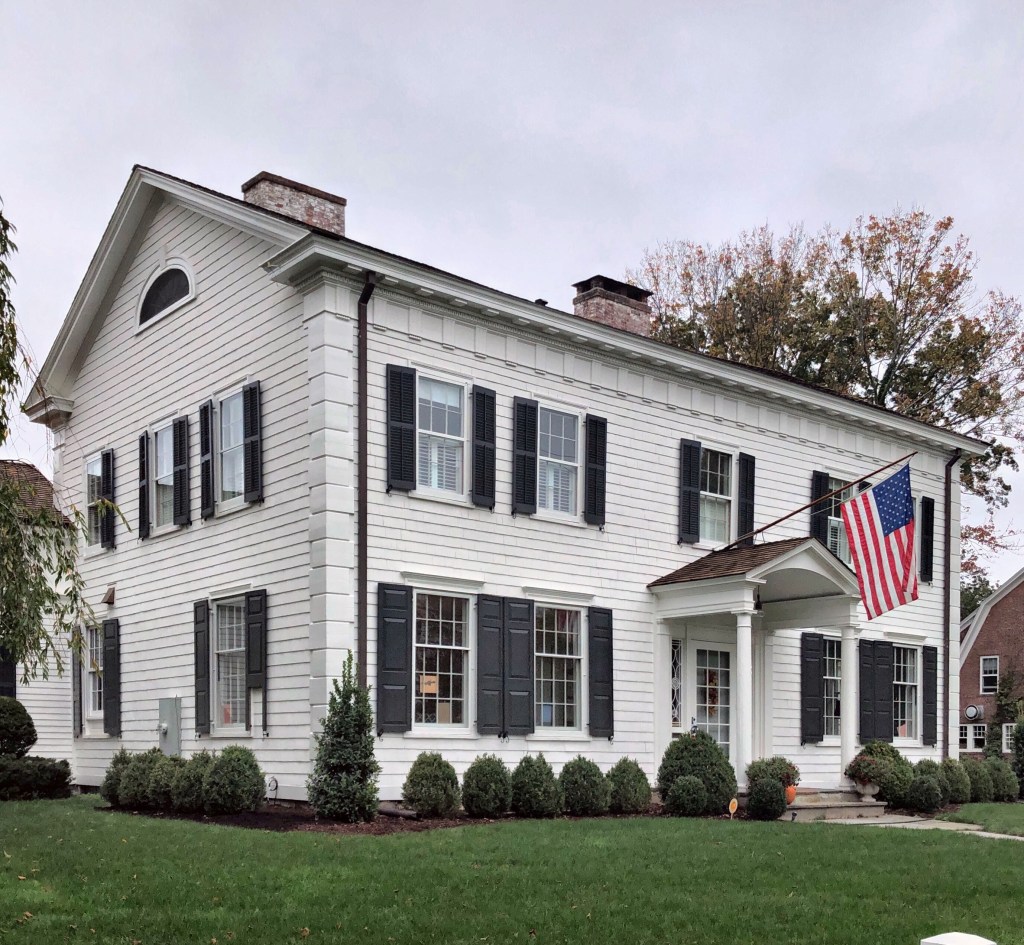
DeForest House // c.1800

At the beginning of the 19th century, Fairfield, Connecticut was slowly recovering from its destruction by the British at the end of the Revolution. By around 1800, a member of the DeForest family appears to have built this home, across from the Town Common, overlooking the recently completed Fairfield County Courthouse. Before the American Civil War, the home was significantly altered, with a central pavilion, new round arch windows, and a full-length front porch, showcasing early Victorian-era desire for detail. The house changed hands several times over the next century, at one point becoming a boy’s school from 1891 to about 1909. In 1930, the house was renovated by architect Walter Bradnee Kirby, who restored the home back to its Colonial past, showing how the pendulum of architectural tastes can change back-and-forth with every passing generation.

Ames Memorial Hall // 1881

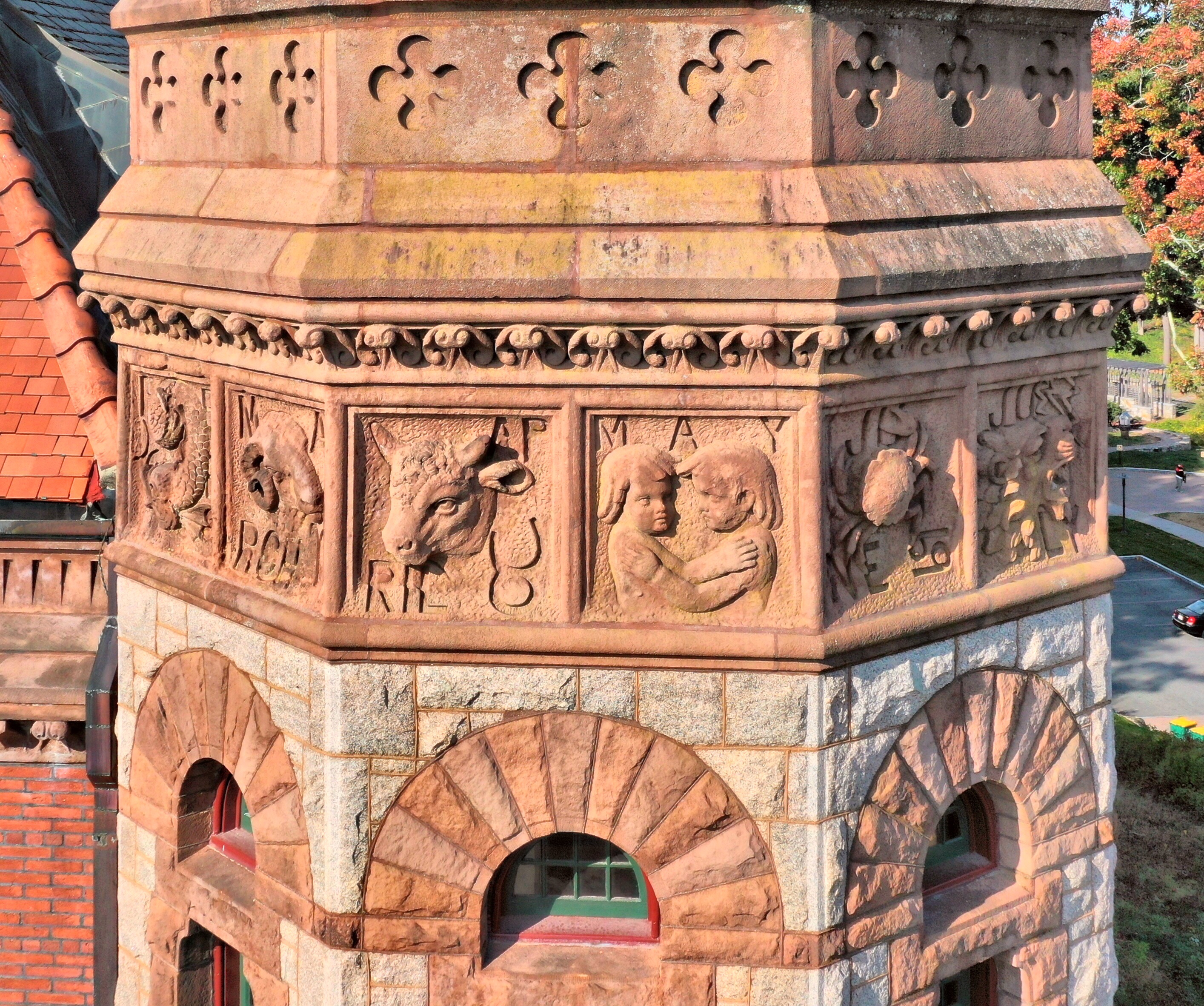
There are few buildings that make you stop and stare in marvel at their perfect architectural proportions, detailing and design, the Ames Memorial Hall in Easton, Massachusetts is one of them for me! In the late 1870s, the children of Oakes Ames commissioned the great American architect Henry Hobson Richardson to design the Memorial Hall as a tribute to their father. Richardson, the architect of Boston’s beloved Trinity Church in Copley Square, responded with a picturesque masterpiece using his signature architectural elements of rounded arches, dramatic roof lines, and heavy masonry adorned with carvings. The building was provided to the inhabitants of Easton “for all the ordinary purposes of a town hall”. Oakes Ames (1804-1873) was partner in the family business, O. Ames & Sons, a U. S. congressman, an early investor in the Central Pacific Railroad, and, at the urging of President Abraham Lincoln, a prominent force in the building of the first transcontinental railroad. The Richardsonian Romanesque building stands on the solid foundation of a natural ledge, from the northeast corner of which rises the beautiful octagonal tower, on whose frieze are carved the twelve signs of the zodiac.

Brethren’s East Shop // 1819

This 1819 building was originally located next to the first dwelling house on the present location of the Great Stone Dwelling in Enfield Shaker Village. The Shakers moved this structure to its current location in 1834 to make room for their new stone dwelling house. The building was primarily used as a school building for the Shaker children, but was soon converted to a tailor’s shop after the boy’s and girl’s schools were joined into one room. In Shaker communities throughout the United States, it was customary for Shaker tailors to create the clothing for the men of the community. A brother’s standard uniform consisted of a great coat, dress coat, waistcoat, and trousers.

Staples-Crafts Farm // 1750

In 1688, John Staples, settled in the untouched landscape seven miles west of Boston, now known as Waban Village in the town of Newton. John was a weaver by trade but he ended up as the first public school teacher, the town clerk, a policeman, and an alderman. John married and lived in a modest farmhouse for decades here, witnessing the birth of a new nation nearby. The couple had no children of their own but raised some of Mary’s relatives including Moses Crafts, who would eventually take over the home. Craft rebuilt the house on the original foundation around 1750, constructing a colonial farmhouse two and a half stories high with five windows and two rooms across, one room wide.

Joseph Crafts died in 1821 at the age of 85, leaving no will and considerable
debts owed. The Judge of Probate ordered the property to be auctioned, and
Joseph’s son, Moses Crafts II, made the winning bid of $5.50 for the house,
barn, and a large tract of land! In 1824, Moses Craft II sold the property to his cousin William Wiswall, who gave the house a Federal period remodeling.

By the late 19th century, the home and ample farm land were acquired by William Strong and his wife Mary. William, President of the Massachusetts Horticultural Society, used the property for some time as a nursery, with apple orchards and rose gardens. After his petitioning for a train station in Waban, he parceled up the farmland into large house lots for sale, seeing the neighborhood shifting to a suburban village. He soon after built the Strong Block, the first commercial building here.

Church of the Good Shepherd, Waban // 1896

For the small population living in the farming village of Waban in Newton, MA, every Sunday, they had to take a horse and carriage or walk to church in a nearby village. The Waban Christian Union was the first religious organization to be established in Waban, 1894-1895 after seeing a suburbanization of the village. The church was to be for services of the Protestant Episcopal Faith, though the group claimed no allegiance to the Diocese, nor was it organized according to the laws of the church. It was independently owned by a corporation that felt the need for a religious association in the community. This church structure was constructed in the
summer of 1896 at a cost of $5000 with William F. Goodwin, a charter member of the group (and resident nearby), donating his services as the architect. The organization leased the space to a pastor for $200 a year, later selling it to the congregation, known now as the Church of the Good Shepherd.

Bryon Loomis House // c.1850

This Italianate mansion was built around 1850 for Byron Loomis (1831-1896) possibly as a gift from his father Neland. Neland Loomis was the brother of John Loomis, and was part of the wealthy tobacco farming family who later packaged, rolled, and shipped tobacco from Suffield all over the country. The home is a large Italianate mansion is in the symmetrical form and covered with flush board siding. The low sloped roof with broad overhanging eaves is topped with a large belvedere. The home is somewhat difficult to photograph due to large bushes in front.

Williston Saddle Shop // 1776

Before the invention of the automobile, horses cluttered American streets. Every town would have a saddle shop with a skilled leatherworker who would manufacture saddles, bags, stirrups and other equestrian gear. In Suffield, Connecticut, a man named Consider Williston had a shop built to make and sell saddles. According to the sign on the building, it was built in 1776, which is odd as Consider Williston fought in the Revolutionary War at that same time. The building was eventually converted to a private home and was listed for sale, with images showing the stunning Colonial era wood beams and floors.