Hall’s Block // c.1883

This diminutive commercial block sits on Water Street in Warren, Rhode Island while small in size, packs an architectural punch! The late-Italianate style wooden block exhibits its original wooden storefronts, second floor round arched windows with stained glass, and ornate detailing including the brackets, parapet and period-appropriate paint colors which allow those details to pop. The shop was owned in its early days by the Hall family, who sold drygoods. Later, the building was used as an antiques shop on the ground floor with a studio for author and illustrator, David Macaulay on the second floor. These types of smaller-scale commercial spaces are some last remaining (relatively) affordable spaces for small businesses to operate. So lets make sure we

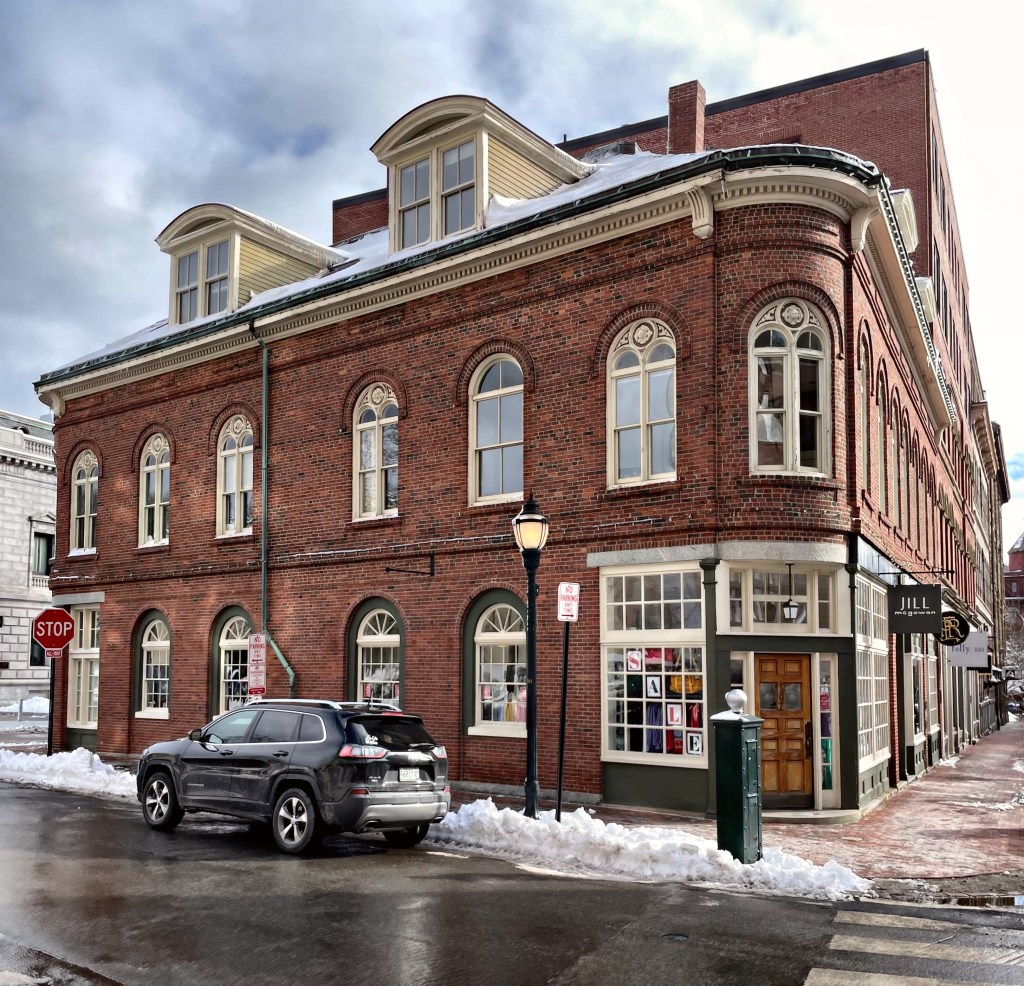
Grader Block // 1885

Commercial districts and Main Streets in historic New England towns are full of amazing architecture that is meant for pedestrians. Strolling through these areas, the varied styles, materials, storefronts, and signage provides a sense of artistry and community that is impossible to achieve in suburban strip-malls and shopping centers. Historic buildings serve not only as visible anchors to communities, but are more often occupied by local, women, and/or minority-owned businesses compared to modern buildings and districts. Marblehead has many historic (sometimes Revolutionary-era) buildings that are commercial and contribute so much to the town’s vibrancy. This building was constructed in 1885 as a high-style Italian Renaissance Revival style commercial block, replacing a late 18th or early 19th century building. The Grader Block features a rounded corner, scored siding to resemble ashlar masonry construction, and Classically inspired design features like pilasters and pediments. Today, the storefronts are occupied by local small businesses.

Printer’s Exchange Building // 1866

Why is commercial architecture from the second half of the 19th century so perfect? This structure in Downtown Portland is known as the Printer’s Exchange Building and was built in 1866, amongst the ashes of the buildings lost in the Great Fire of 1866. Charles Quincy Clapp is credited as the designer of the structure, which is Italianate in style with the paired round arched windows set into larger openings. The rounded corners are a really subtle but splendid touch in the design. The building got its name as it was home to the Eastern Argus and the Portland Daily Press, among other newspapers who rented the space from owner, Horatio Nelson Jose. I really like this one!

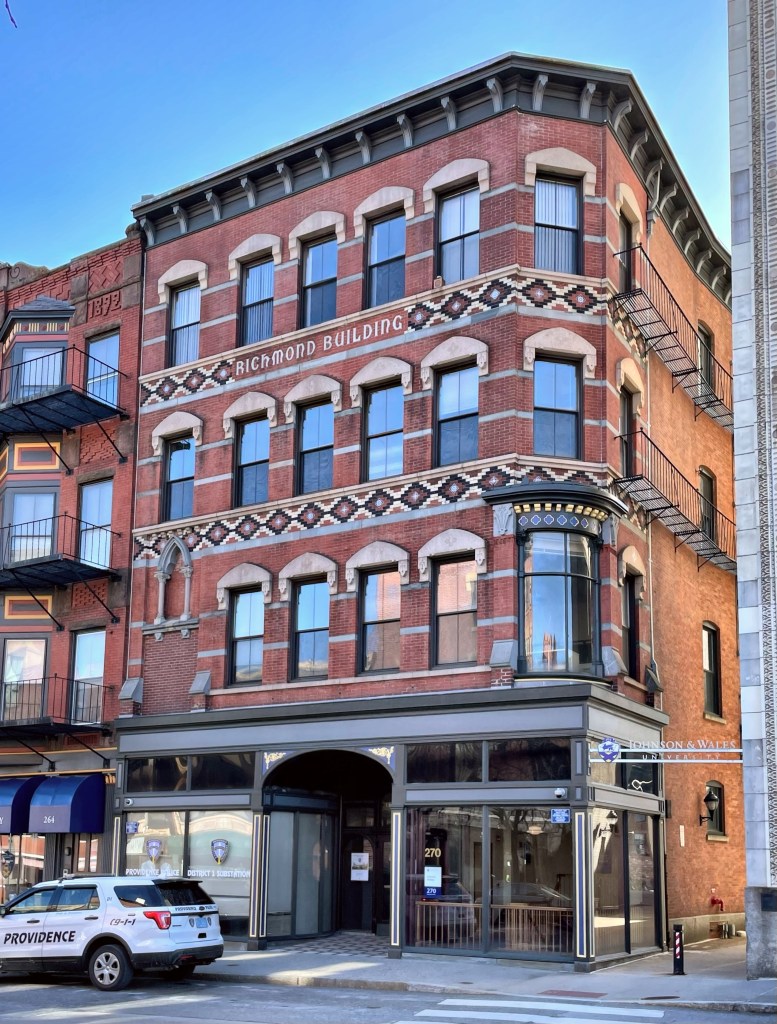
Richmond Building // 1876

The Victorian Gothic style Richmond Building in Downtown Providence always catches my eye for its polychrome brickwork. The building was constructed in 1876, seemingly as an investment property for Dr. F. H. Peckham, a surgeon. The Richmond Building was used for many years for offices and retail use. Also, look at that amazing curved sash window!

Paine Furniture Building // 1914

Located on Arlington Street between St. James and Stuart streets in Boston’s Back Bay, this gorgeous masonry commercial block stands as a testament to the amazing architecture built in Boston in the early 20th century. The Paine Furniture Building was constructed in 1914 to house the extensive showroom, offices, and manufacturing operations of the Paine Furniture Company. Founded in 1835, the company was at one time the largest furniture manufacturer and dealer in New England and had a nationwide business. The company was founded by Leonard Baker Shearer, who was joined in business in 1845 by John S. Paine. Upon the death of Shearer in 1864, the name of the firm was changed to Paine’s Furniture Company, a name which stuck until the company closed in 2000. The architects for the building, Densmore & LeClear, were very busy in the early decades of the 20th century and designed many iconic buildings nearby and in towns surrounding Boston through the 1940s.

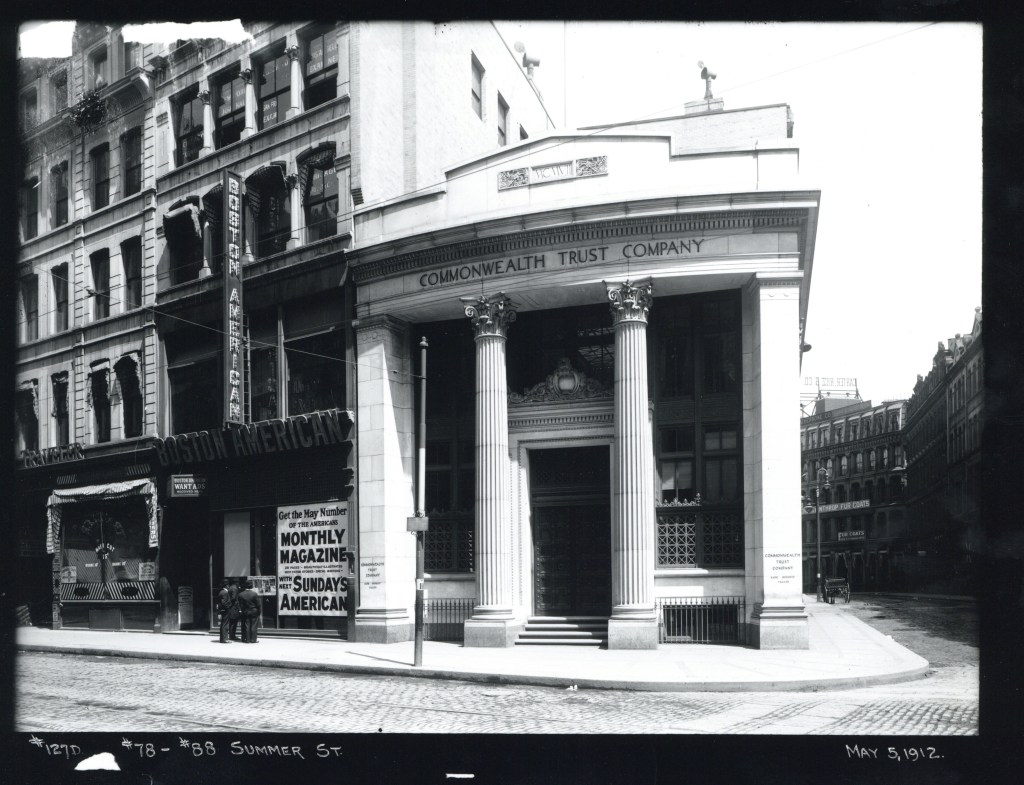
Commonwealth Trust Company // 1908-c.1974

Ca. 1910 image courtesy of Boston Public Archives.

Located at the corner of Summer and Devonshire Streets in Downtown Boston, the Commonwealth Trust Company’s two-story marble banking house commanded the corner, despite its short stature. The building, completed in 1908, was constructed with Lee marble and decorated with ornate wrought and cast-iron grilles over windows. The building was designed by the architectural firm of Parker, Thomas & Rice in the Classical mode with large, fluted Corinthian columns and boxed corner pilasters framing the recessed center entrance, Corinthian pilasters ran along the side facade. At the inside, the building was coated with Cararra and Blanco marble with paneled oak offices. At the ground floor, offices and banking stations framed the outer walls, with the safety deposit boxes located on the second floor. The building was demolished by the 1970s and replaced with a one-story minimalist Modern building (I could not figure out why the former building was razed). The new building was demolished after a few decades with a larger building, better fitting the commercial district.