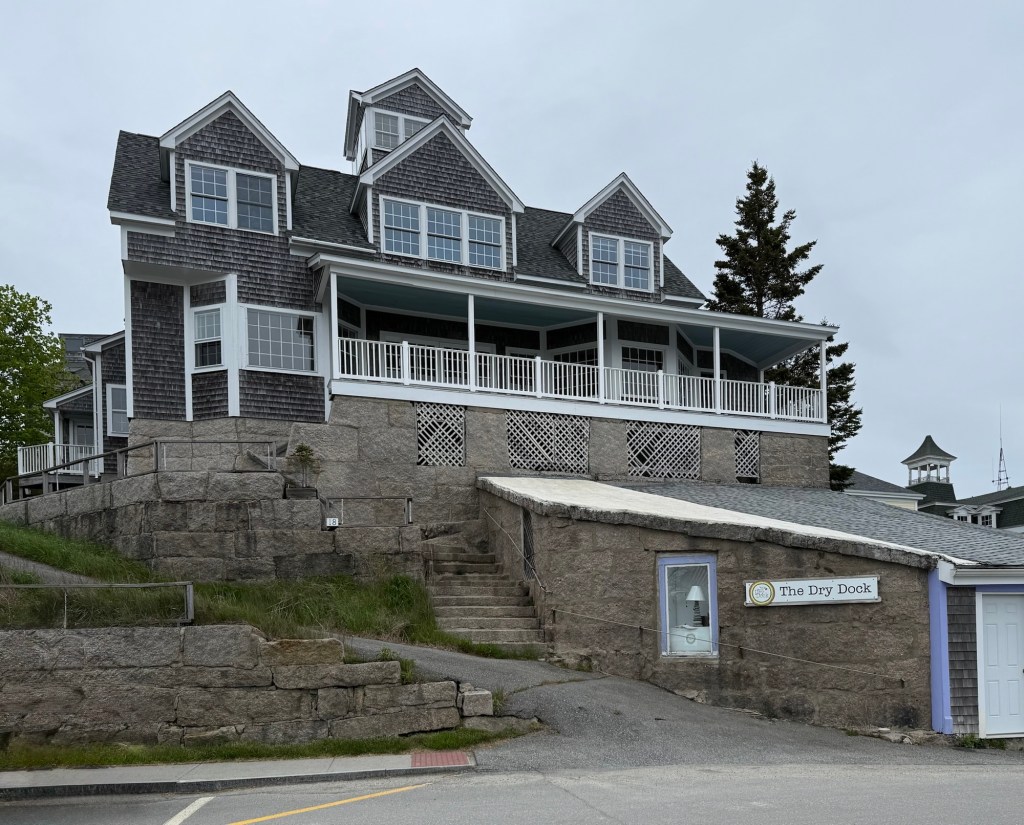
Dr. Benjamin L. Noyes House and Vault // 1903

Benjamin Lake Noyes (1870-1945) was born in Lisbon Falls, Maine, but grew up on Grand Manan, New Brunswick, Canada. He worked at his father’s hardware store before entering Bowdoin Medical College. After graduating, he moved to Stonington, Maine, to work as a physician. Here, he met his wife, Linnie Howard, and they married in 1899. In 1903, the couple had a large Queen Anne style house built on a bluff, overlooking the Stonington Harbor. Dr. Noyes was a physician, surgeon, occultist, inventor, surveyor and antiquarian, who took interest in genealogy and local history in his spare time. By the time of his death Dr. Noyes had completed 100 volumes of material on island history and genealogies of its people. To house his massive collection, he constructed a fire-proof vault of local granite at the base of his home opened his record collection to the public known as the Penobscot Bay Archives. After his death in 1945, much of the collection was sent to the local historical society for preservation. A fire in 1981 destroyed much of the house except the first floor and the granite, fire-proof building, and the upper floors of the Noyes house were rebuilt.
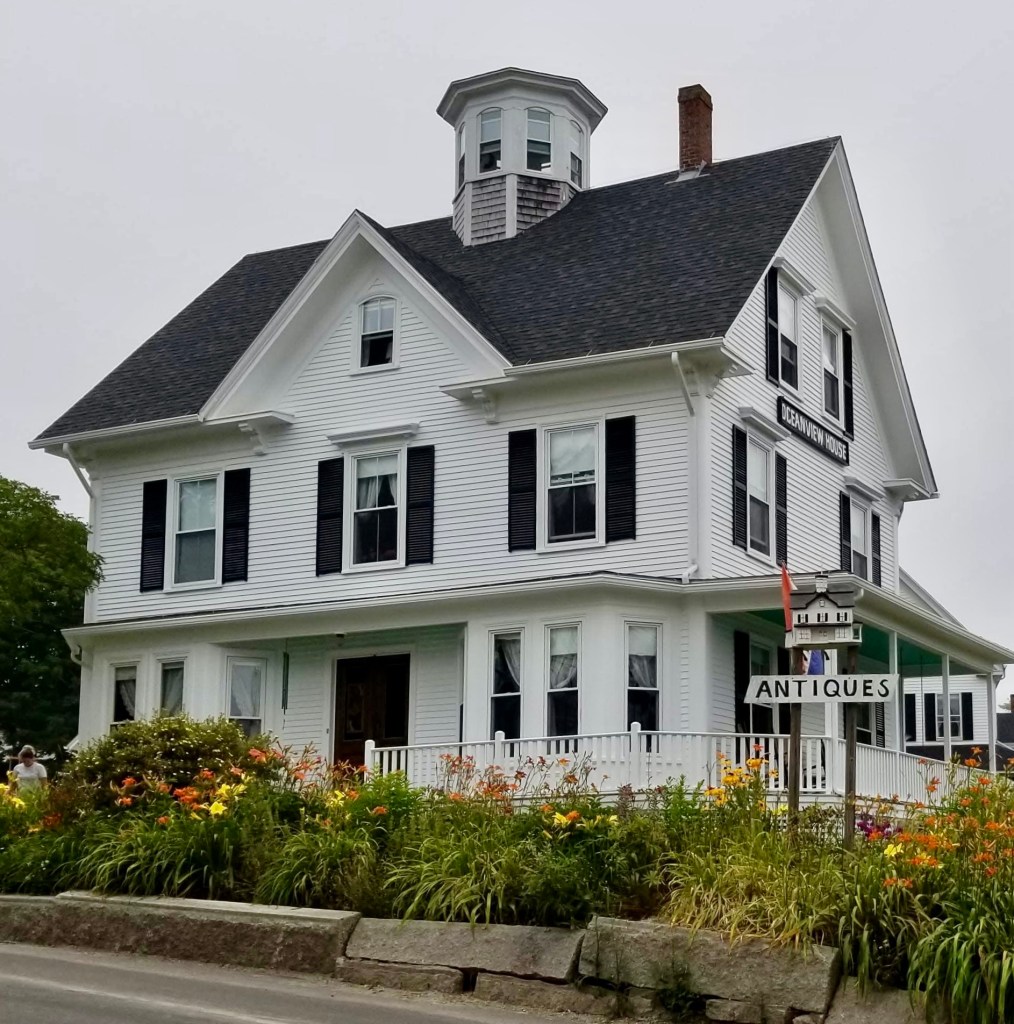
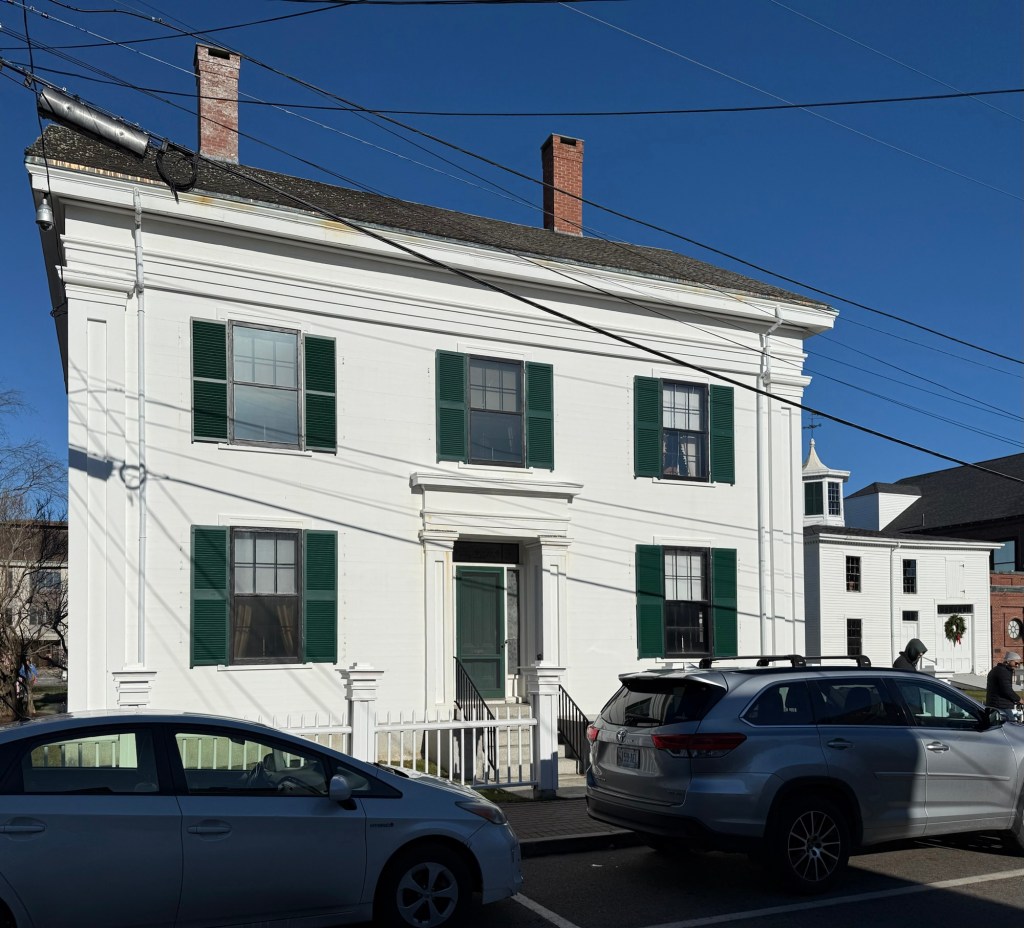
Oceanview House // 1883

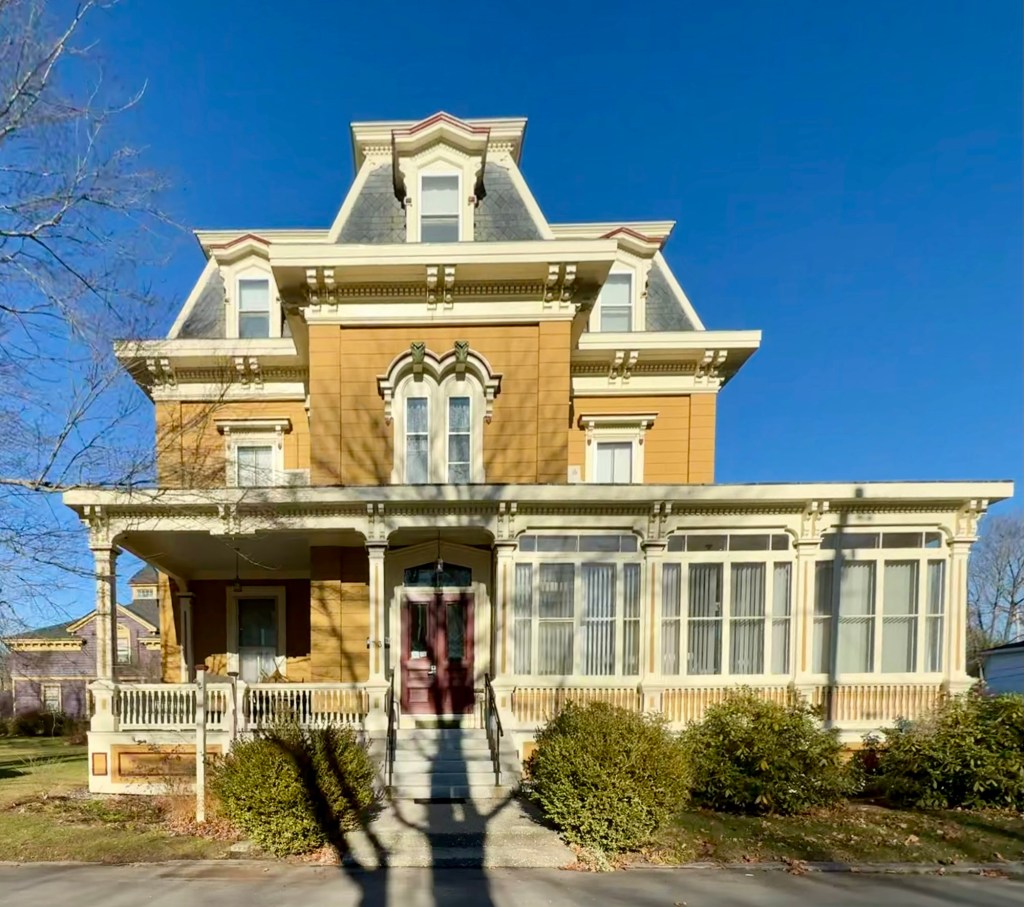
At the tail-end of the 19th century, the active fishing town of Stonington, Maine, like many other coastal communities Down East, began to see growing seasonal tourism and summer residents escaping the woes of city life for the cool sea breezes. Although there were neighborhoods of summer cottages built and occupied in the 1890s on Deer Isle, no summer colonies formed in Stonington in the late 19th century, likely due to its industrial nature with fishermen and quarry-workers living in the village. There were however, visitors, and the 1883 Oceanview House was built to house “people from away” every summer. The Oceanview House property also included its own water tank and windmill along with a meeting room for local groups. The late Italianate style building has been lovingly maintained by later owners and most recently, housed an antique store!

Farnsworth Homestead // 1850

The Farnsworth Homestead is located on Elm Street in Downtown Rockland, Maine, and is an excellent example of a mid-19th century residence in the Greek Revival style. The home was built in 1850 for Rockland businessman William Alden Farnsworth, who gained his income from lime-rock quarries and the Rockland Water Company. Mr. Farnsworth was a leading businessman who helped establish Rockland as the number four port in the United States, largely exporting lime for masonry construction all down the east coast. After William died in 1873, the property was inherited by his heirs, the last of which, Lucy Farnsworth, lived here until her own death in 1935. The 96-year-old Lucy Farnsworth died in the home and in her will, bequeathed the family property and ample funds to establish the Farnsworth Art Museum, and included preservation of the family homestead as a mid-19th century house museum, which it remains to this day. The Greek Revival style house with its flushboard siding and bold pilasters, was recently restored by the museum, along with the carriage house which stands to its east.

Captain Albert F. Ames Mansion // 1874

Located next door to the William H. Glover House on Talbot Avenue in Rockland, Maine, this equally impressive Second Empire style Victorian residence stands as one of the finest in town. The abode was built in 1874 for Captain Albert Franklin Ames (1831-1887) by the architectural firm of Kimball & Coombs of Maine. Albert F. Ames was a sea captain and merchant who would later own many ships to distribute his manufacturing of lime casks which were sold and transported all down the east coast to build American cities. The stately home would later be the subject of one of artist Edward Hopper‘s paintings in Rockland, titled, “Talbot House” after a later owner.

Gen. Davis Tillson House //1853

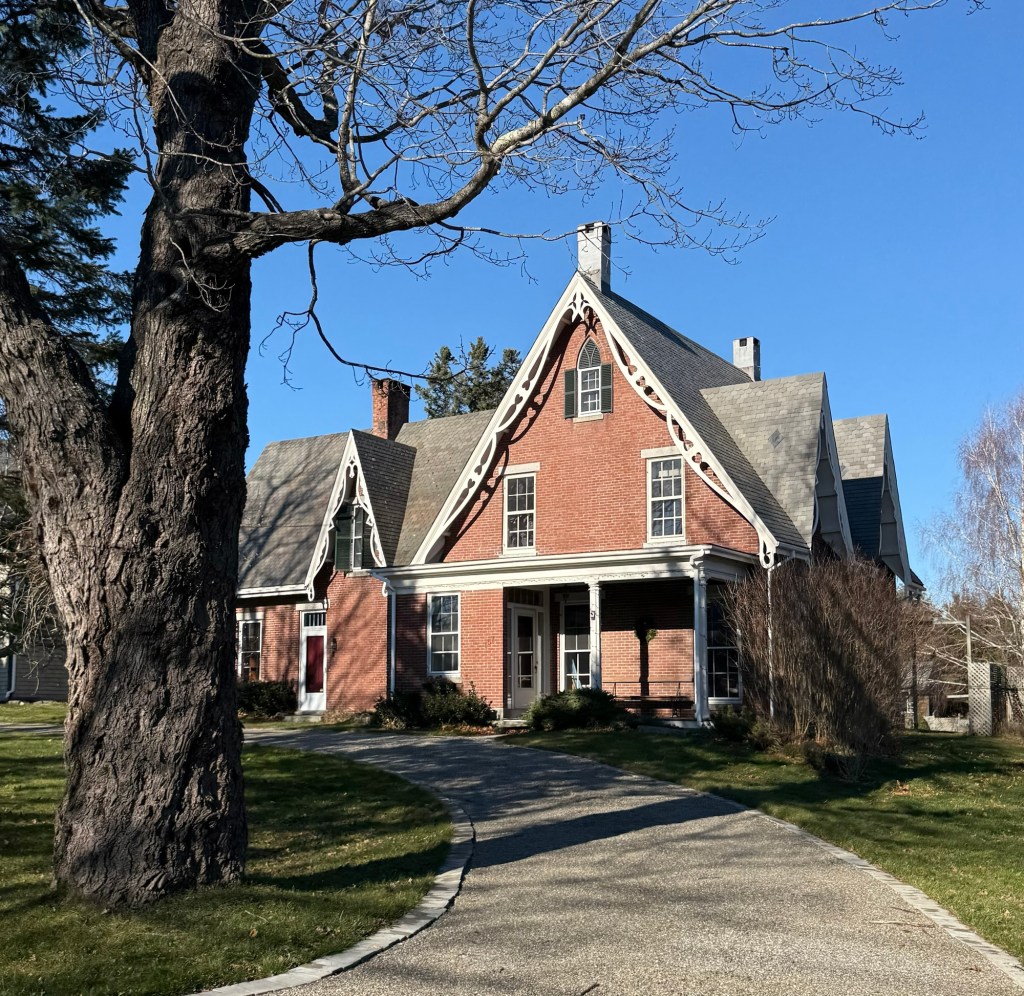
The General Davis Tillson House was built in 1853 and is one of the best examples of a high-style Gothic Revival residence in the Mid-Coast region of Maine. Located on Talbot Avenue in Rockland, Maine, the house was first owned by General Davis Tillson (1830-1895), a prominent local businessman who owned lime manufacturing facilities and the town’s main wharf before enlisting for service in the American Civil War. Tillson had attended the United States Military Academy at West Point (1845-1851) but did not graduate due to an injury which forced the amputation of one of his legs. During the Civil War, Davis Tillson fought with distinction at the Battles of Cedar Mountain and Second Bull Run. Promoted up to Lieutenant Colonel, then Brigadier General, US Volunteers on March 21, 1863, he later served as Chief of Artillery, and commanded defensive fortifications in the siege of Knoxville before the conclusion of the war. Afterwhich, General Tillson was selected to serve as Director of Freedmen’s Bureau in Georgia and Tennessee. The Bureau was established in 1865 by Congress to help millions of former Black slaves and poor whites in the South in the aftermath of the Civil War. The Freedmen’s Bureau provided food, housing and medical aid, established schools and offered legal assistance. It also attempted to settle former slaves on land confiscated or abandoned during the war. After two years in Tennessee, Tillson would return to Rockland to his home and spend the rest of his life in Maine from this home. The General Tillson House is notable for the use of brick and the steeply pitched gable roof with jigsawn bargeboards.

Custom House Block // 1853

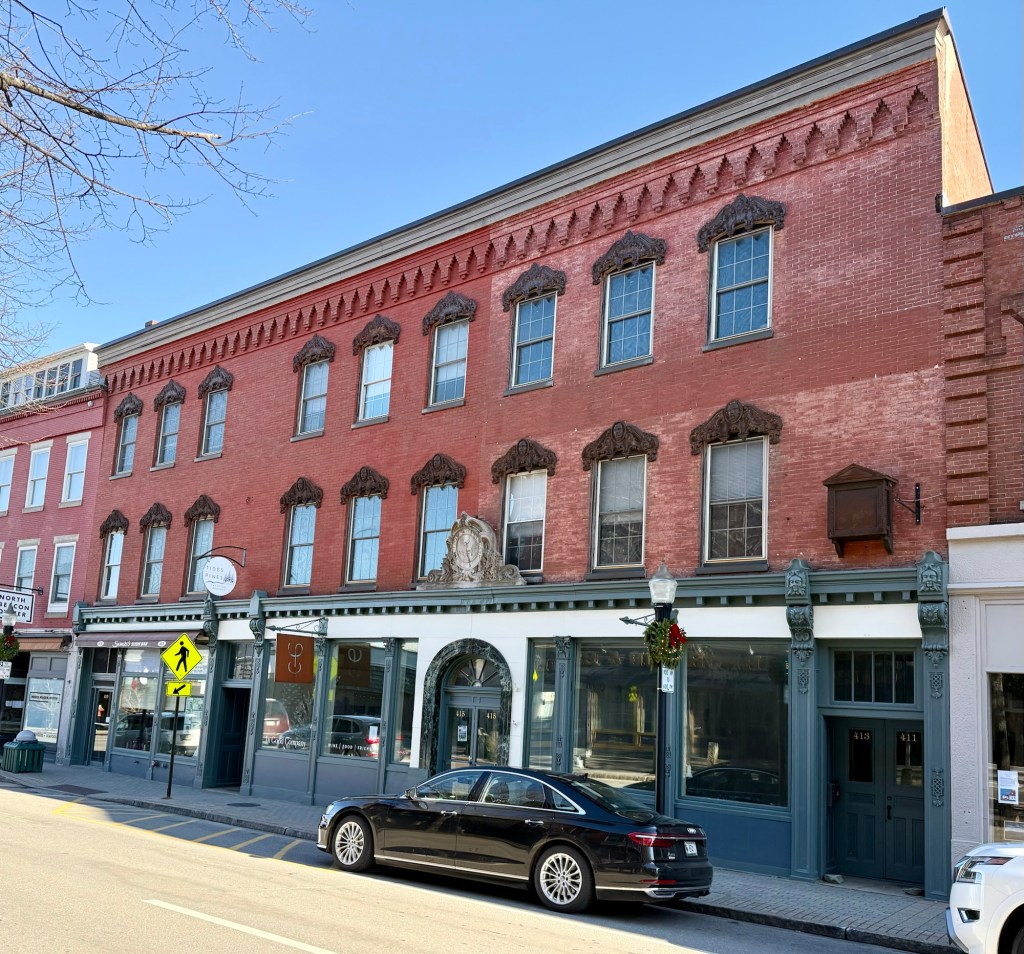
This stately commercial block is found on Main Street in Rockland, Maine. The block originally housed the local custom house (before a larger, purpose-built custom house was erected nearby in 1873) with other retail and commercial spaces at the ground floor with offices and meeting space above. The block is a great example of the Italianate style with an intricate brick corbeled cornice and cast iron and marble storefronts. The commercial space occupied by the First National Bank also exhibits a stone medallion with deer set within a wreath over the entrance. The detail that stood out to me most was the cast iron lintels over the windows, with the second floor lintels including a man’s face! The building is well preserved and is today occupied by local businesses.

First Parish Congregational Church of Pownal // 1811

Completed in 1811, the First Parish Congregational Church of Pownal, Maine, is an excellent and well-preserved example of a vernacular Federal-period church in a rural setting. Located across from Mallett Hall and built at the foot of Bradbury Mountain, the church was built by a crew headed by master-carpenter Uriel Whitney, a Revolutionary War veteran who moved to the area after the war. He was active in this church and is buried in the church cemetery. Little remains of the original Federal Style architecture, as its current Greek Revival Style (architects unknown) dates from remodeling apparently undertaken in 1838 and 1857.

Rockport Union Hall // 1856

Union Hall sits in the middle of the charming coastal village of Rockport, Maine. The Second Empire style building was built around 1856 as an original mixed-use structure with the first level containing retail spaces, the second level as a hall, and third level providing either office or living spaces. Rockport’s Union Hall was also once home of the town Post Office, a barrel factory, and a residence before it began to suffer from neglect and deferred maintenance at the end of the 20th century. In 2010, the owners underwent a massive restoration of Union Hall, which included: structural remediation to wood framing, a new elevator, slate roof repair, all new mechanical, electrical and plumbing systems, masonry repointing, restoration of windows and doors and more. These types of restorations are vital to small New England towns, providing jobs and the properties are often occupied by local small businesses, as is the case here!

Alna Center School // 1795

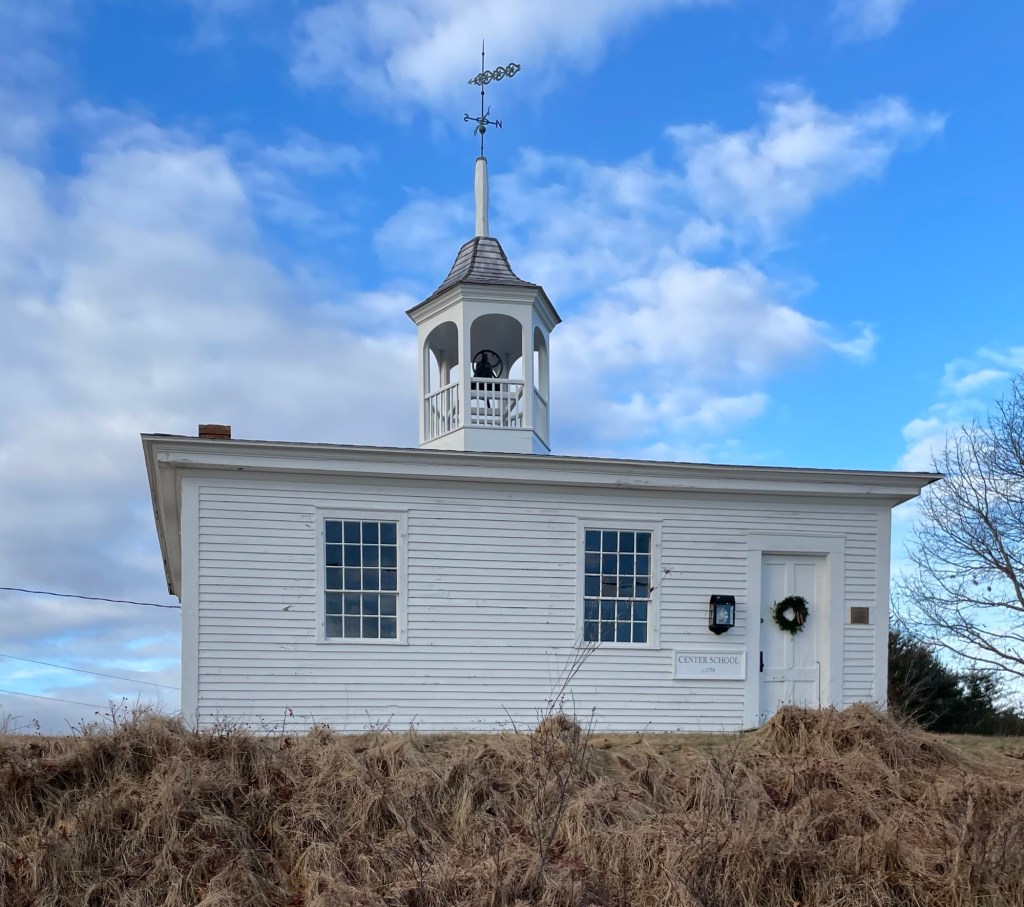
Built in 1795, the Alna School is one of the oldest extant purpose-built school buildings in New England. The small frame structure sits a short distance from the Old Alna Meetinghouse and is one of the finest 18th century buildings in town. The Federal period one-room school building features a square footprint with graceful cupola housing a bell projecting from the roof, which was added a few years after the building was completed. The school was one of two early school buildings for the newly incorporated town of Alna, soon after its separation from Pownalborough and incorporation in 1794 (originally as New Milford, and later at Alna in 1811). The school remained in operation through the 20th century and is no longer used.

Thomas Lord House // 1847

This 1847 Greek Revival home sits in Blue Hill Village, Maine and it was built by and for local architect and builder Thomas Lord (1805–1880), who is credited with bringing the classical motifs seen in Greek architecture to Blue Hill. Mr. Lord had little formal education, spending much of his youth grinding bark at Ellsworth, sailing and working on his uncle’s farm. When he was 22, he apprenticed himself to a carpenter and began working for George Stevens in the shipbuilding yards of Blue Hill. From 1828 to 1880, Thomas Lord worked on 83 vessels, 84 dwellings, 12 school buildings, 14 meeting houses, 10 stern moldings and figureheads, 250 coffins and many barns and sheds. Lord is especially known in the area for his churches, including remodeling the First Baptist Church of Blue Hill in 1856. Just before building the house, Thomas married Matilda Carlton (1811-1898) and the couple had three children while living in the home. When Thomas died in 1880, Thomas Lord’s elder son, Roscoe Granville Lord took up residence here, where the 1900 census lists him as a painter. The home remains extremely well preserved and is one of the finer homes in the village of Blue Hill.