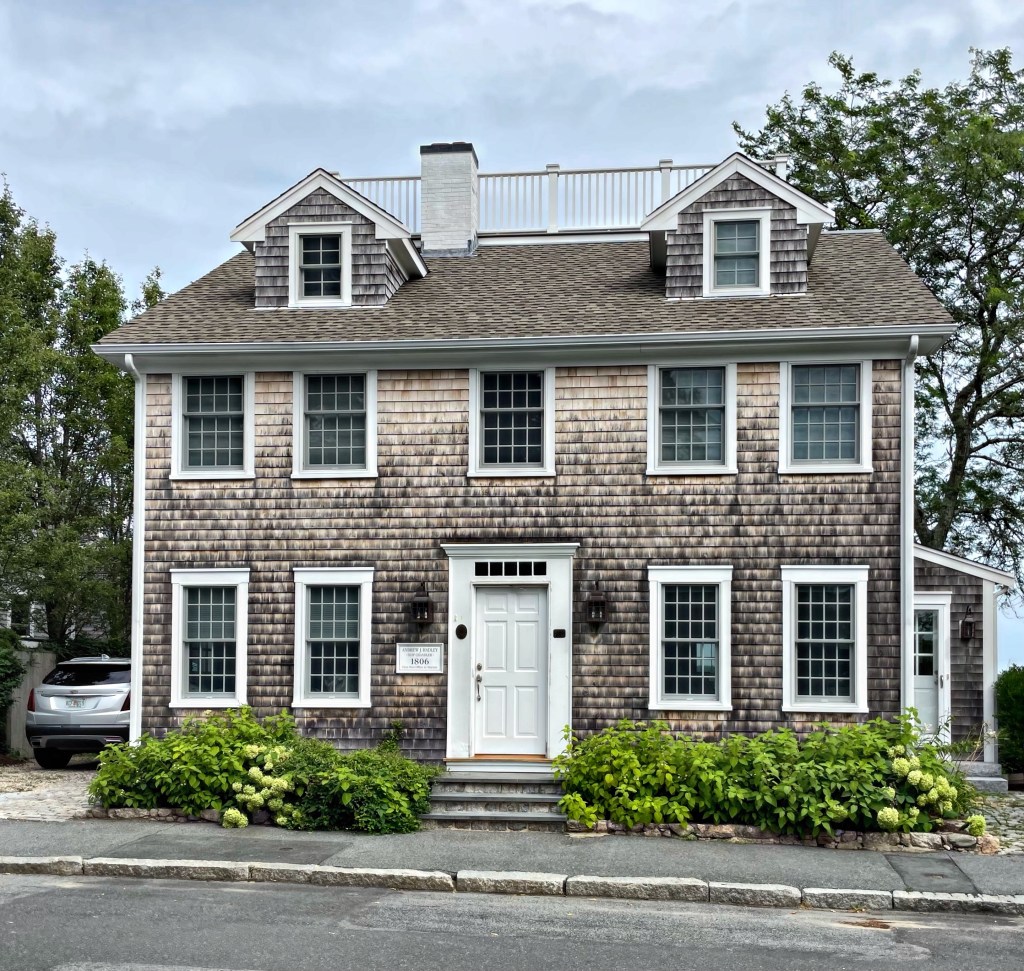
Hadley’s Chandlery // 1806

At the corner of Main and Water streets in Marion’s Wharf Village, this beautiful building has long ties to the town’s rich maritime history. The building was constructed by A.J. Hadley in 1806 as a ship chandlery, a shop selling all the goods necessary for sailors and fishermen who were docked just steps away. While Hadley’s store occupied the right half of the first story, the western (left) segment housed the first Post Office in the village, leaving Hadley and his family on the second floor. There is something so special about fishing villages in New England, while the populations of these towns are very different than they once were, the buildings and history still convey martime history and the way of life here over 200 years ago.
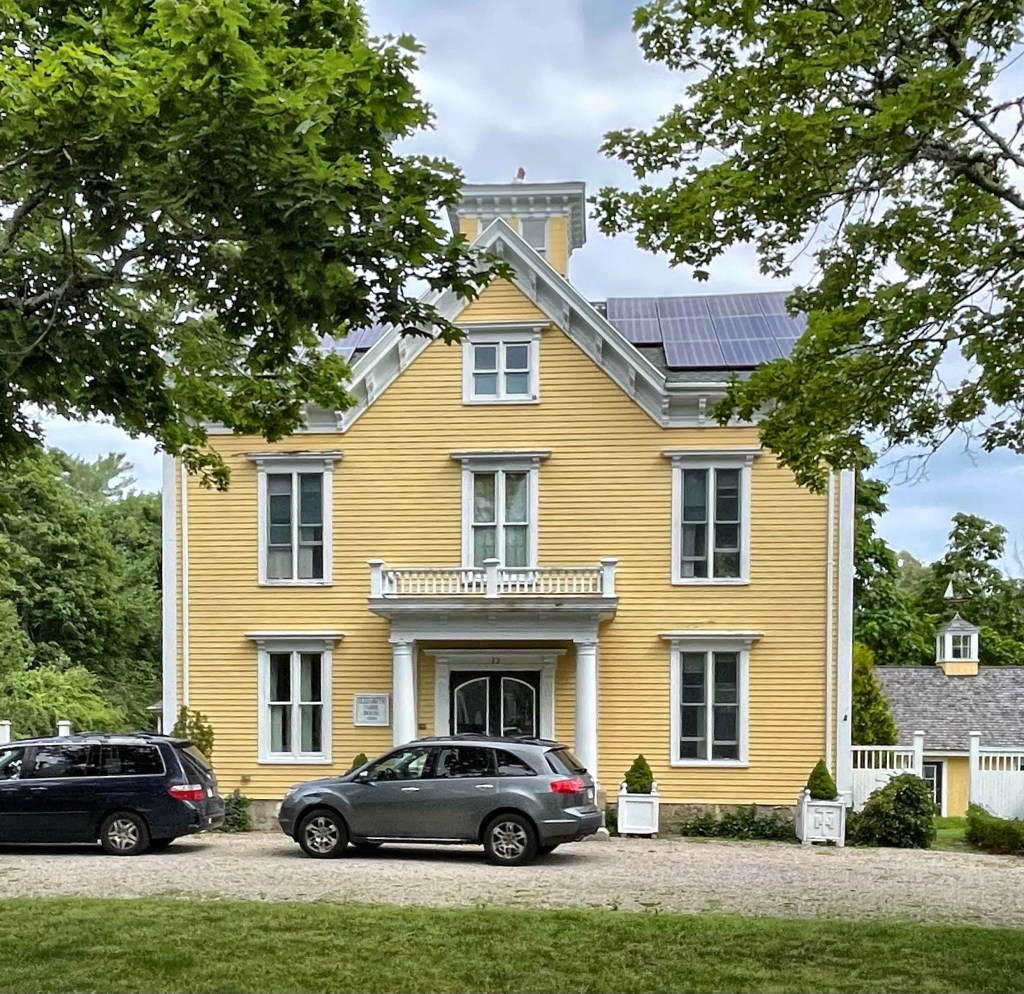
Cobb House // 1841

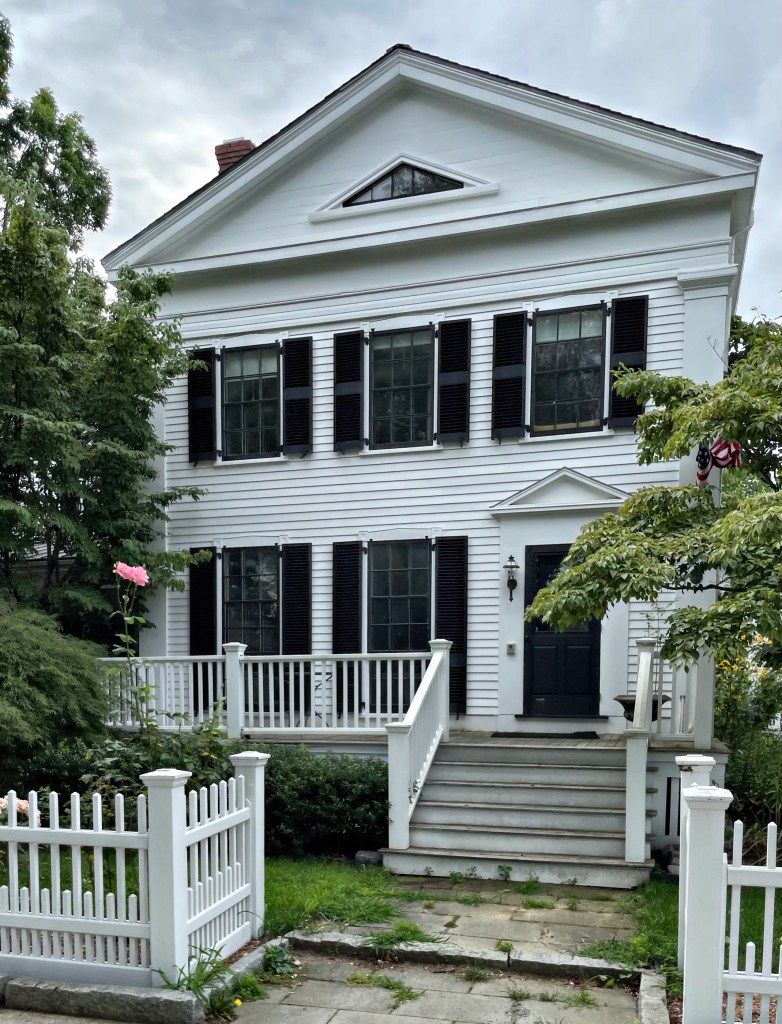
The highest-style Greek Revival house in Marion is this home, built in 1841 as a parsonage for Marion’s Congregational Church. The first pastor to reside here was Rev. Leander Cobb. He assisted his father, Rev. Oliver Cobb, who had been preaching in Marion since the completion of the first meeting house in 1799. Leander’s daughter, Sarah Elizabeth, married Captain Benjamin Briggs, who’s father ran the local post office (see last post). In 1872, Captain Briggs set sail aboard his ship, Mary Celeste, with his wife and two year old daughter Sophia, and seven crewmates. Their school-aged son was left at home with his grandmother. They sailed from Massachusetts on November 7, 1872, bound for Europe with a cargo of commercial alcohol. Less than a month later, on December 4, the ship was found sailing erratically off the coast of Gibraltar. A local crew boarded the ship to investigate when they saw no one on deck. The sails were furled and the ship was in excellent condition. In the infant’s crib remained the impression of a sleeping child. However, no sign of the crew or the Briggs family was ever found. There are many theories about what happened, with the most likely being that some alcohol barrels got loose and flammable liquor poured out near the kitchen. It is possible the family and crew became frightened and boarded the safety boat incase of an explosion. The boat was not tethered and they likely could not reach the main ship as her sails were up. They were probably capsized by a wave and drowned to death in the open ocean.

Marion Post Office // 1830

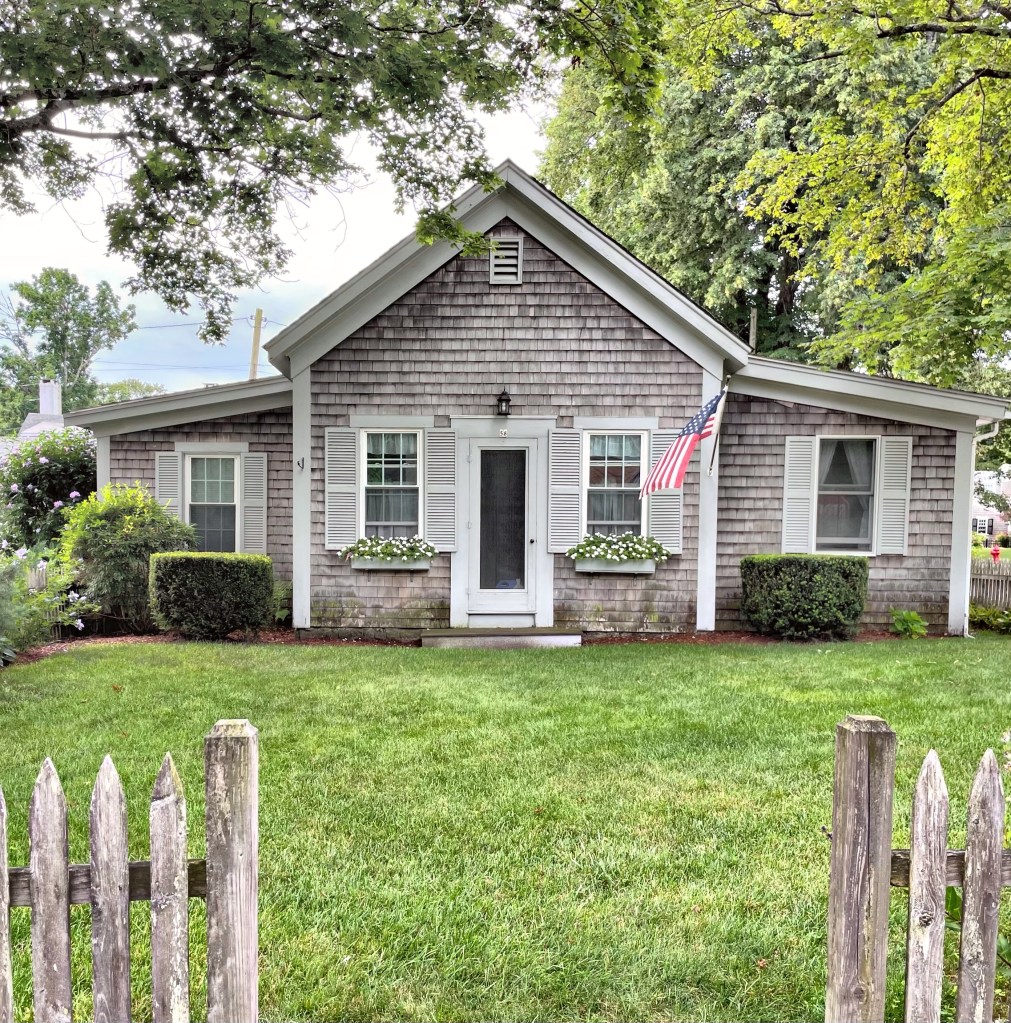
Built around 1830, this little cottage is set behind a front lawn and is among the many photogenic buildings along Marion’s Main Street. Originally located behind the Marion Congregational Church, this structure was moved to its current site between 1855 and 1879, and run as a post office for the village. During the mid-19th century, the job of post-master was a political appointment. For a time Captain Nathan Briggs, a retired sea captain and Democratic party appointee, operated a post office in this structure, competing with Republican Dr. Walton N. Ellis who was in charge of a rival Post Office nearby. He ran the post office until he was struck by lightning in the doorway of his home. Who knew that everything was as political then as they are now? Things do not change!

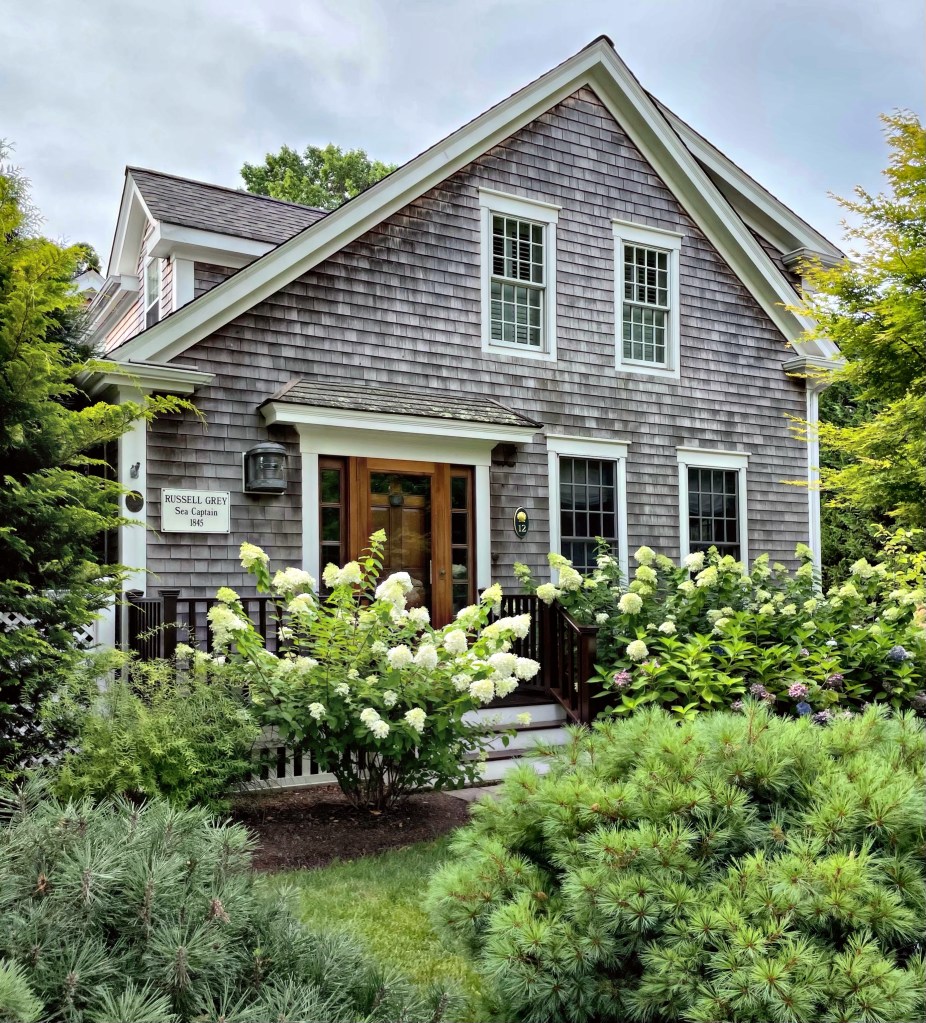
Captain Grey House // 1845

Captain Russell Grey (Gray) was one of a handful of sea-captains who lived in Wharf Village, the downtown of present-day Marion, Massachusetts. The men would own ships that were docked in the harbor or in nearby New Bedford, and would leave for months-long excursions chasing whales, fish, or other treasures. Behind, they left their young wives and growing families, who braved the harsh New England winters and the unpredictable coastal weather events. This small cottage was built around 1845, for a young Russell Grey and his wife, Sarah Luce, who’s own family was full of mariners as well. The couple’s Greek Revival style cottage remains as one of the most charming in the village.

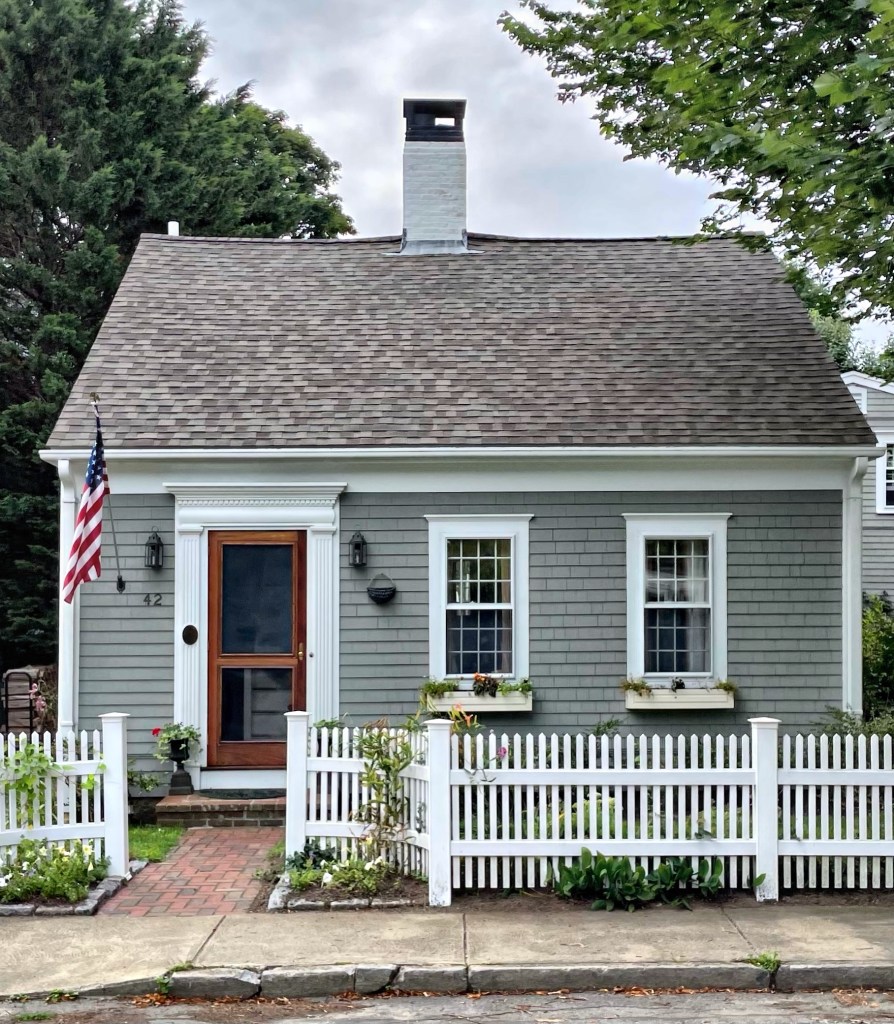
Briggs House // c.1850

This tiny half-cape house in Marion was built in the mid-19th century for Timothy Hiller Briggs (1822-1877), a whaler. Based on the Federal/Greek detailing on the house, it is also likely the home was built much earlier for Timothy’s father, Silas, a sea captain, and was willed to his only son upon his death in 1833. Timothy died at the young age of 54 and his widow, Josephine, maintained the cottage until her death in 1924! The home is a half-cape as it has an off-center door with two bays of windows at the facade. A full-cape would be symmetrical with a central door and two windows on either side. The central chimney would provide heat to all rooms in the cold winter months.

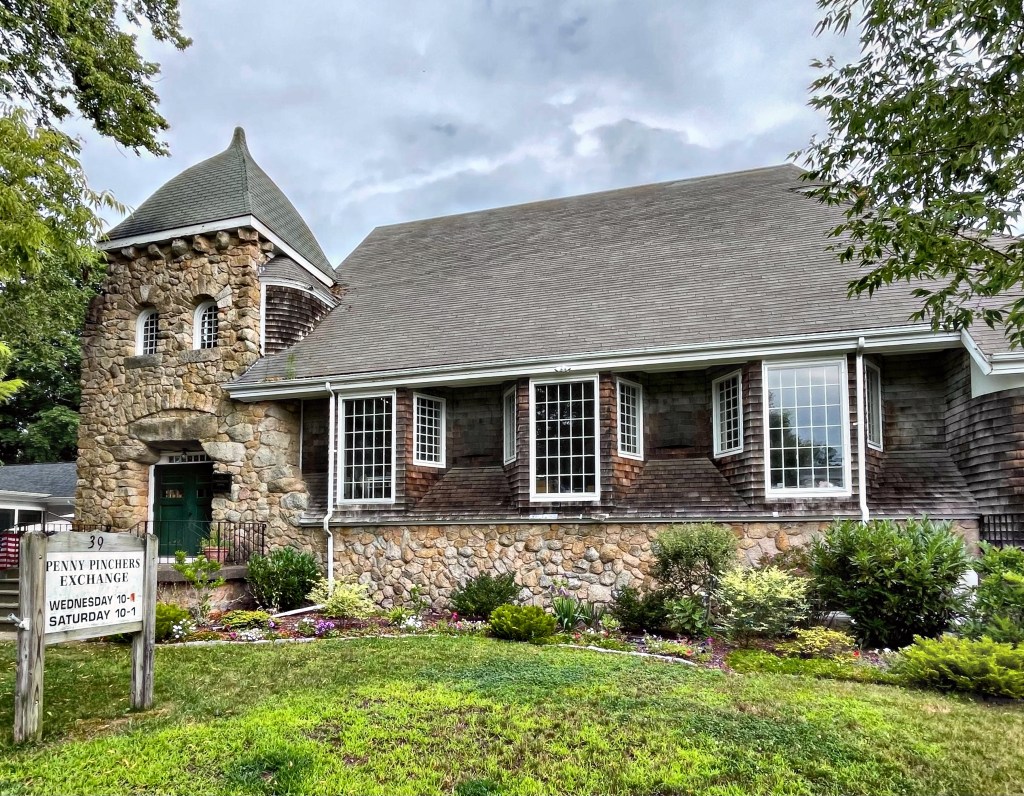
Marion Congregational Chapel // 1885

Built in 1885, Marion’s Congregational Chapel represents one of Elizabeth Pitcher Taber’s last substantial gifts to her community. Born in Marion in 1791, Mrs. Taber taught grammar school in Marion as a young woman, marrying, Stephen Taber, clock maker and whaling ship-owner in 1823, subsequently living in Acushnet and New Bedford. She refocused her interest in Marion after the death of her husband in 1862. A wealthy, childless widow, Mrs.Taber funded a library/natural history museum, music hall, and during the mid-late 1870s, she set about the daunting task of founding a private academy in Marion which still thrives in the town as Tabor Academy. Three years before her death in 1885, Mrs. Taber, in one of her last acts of generosity to her church and town, purchased a vacant lot owned by her Tabor Academy’s principal and her downstairs neighbor in Tabor Hall, Clark P. Howland. She paid him $300.00 for his land and subsequently had the Congregational Chapel built in the up-to-date Shingle Style. Composed of rubble stone, the church features a south-facing wall with a trio of polygonal bays that add depth and provides the hallmark cedar shingle siding in the style. The church is one of the most rustic and beautiful in the state of Massachusetts. The church here also runs Penny Pinchers Exchange, a church-run thrift shop.


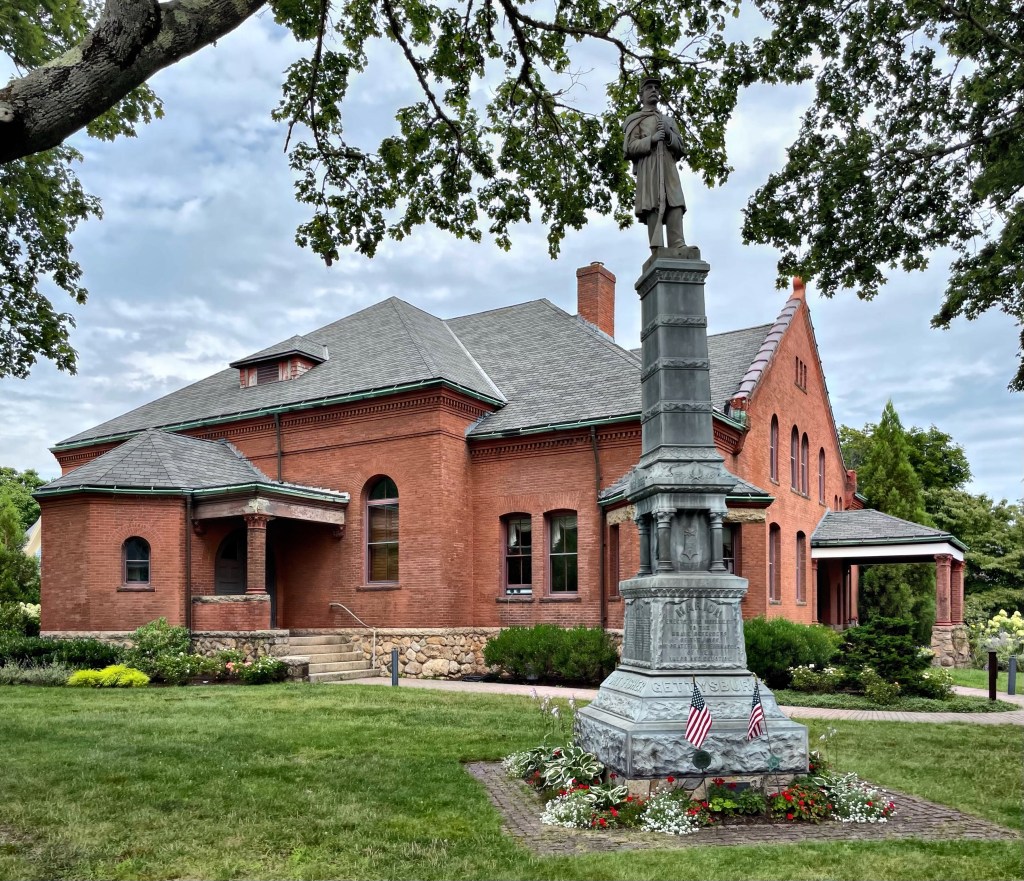
Marion Music Hall // 1891

You know a town is fancy if it has its own music hall! The Marion Music Hall was (you guessed it) largely funded by none other than Elizabeth Taber the prestigious benefactor of Tabor Academy, the Library, and more in her hometown. This building was first envisioned after Ms. Taber was dismayed by the poor quality of “worldy theatricals” that were taking place in the only such venue at the time, the Congregational Chapel. Her last gift to the town via a provision in her will, allotted money for the construction of a “suitable building for a lecture and music hall”, costing a total of $23,000. Her go-to architect, William Gibbons Preston, was hired to design the Music Hall, which is a pleasing late-Victorian, Queen Anne-Romanesque Revival building constructed of brick. The Music Hall’s lawn was deemed worthy as the site of a handsome cast-iron Soldiers Monument which was dedicated during the summer of 1894 and remains on the site today.

Tabor Hall // c.1880

This beautiful Italianate building was constructed around 1880 for the newly established Tabor Academy, which was founded in Marion, Massachusetts by Ms. Elizabeth Taber in 1876. After Ms. Taber funded the constructed of a town library and museum and oversaw construction of the new academic building for her school, she endowed money for Tabor Hall, which was to house the school’s Principal, some boarding students, and most importantly, herself. The structure was located on Spring Street, just north of the library, until 1937, when the “Tabor Swap” was finalized. The swap was a deal between the academy and the Town of Marion, who exchanged properties in 1937. The town received the library building, the academic building (soon after converted to Town Hall) and land where this building once sat. The town erected Sippican Elementary, a public school on the land, and Tabor Academy moved this building a block over.

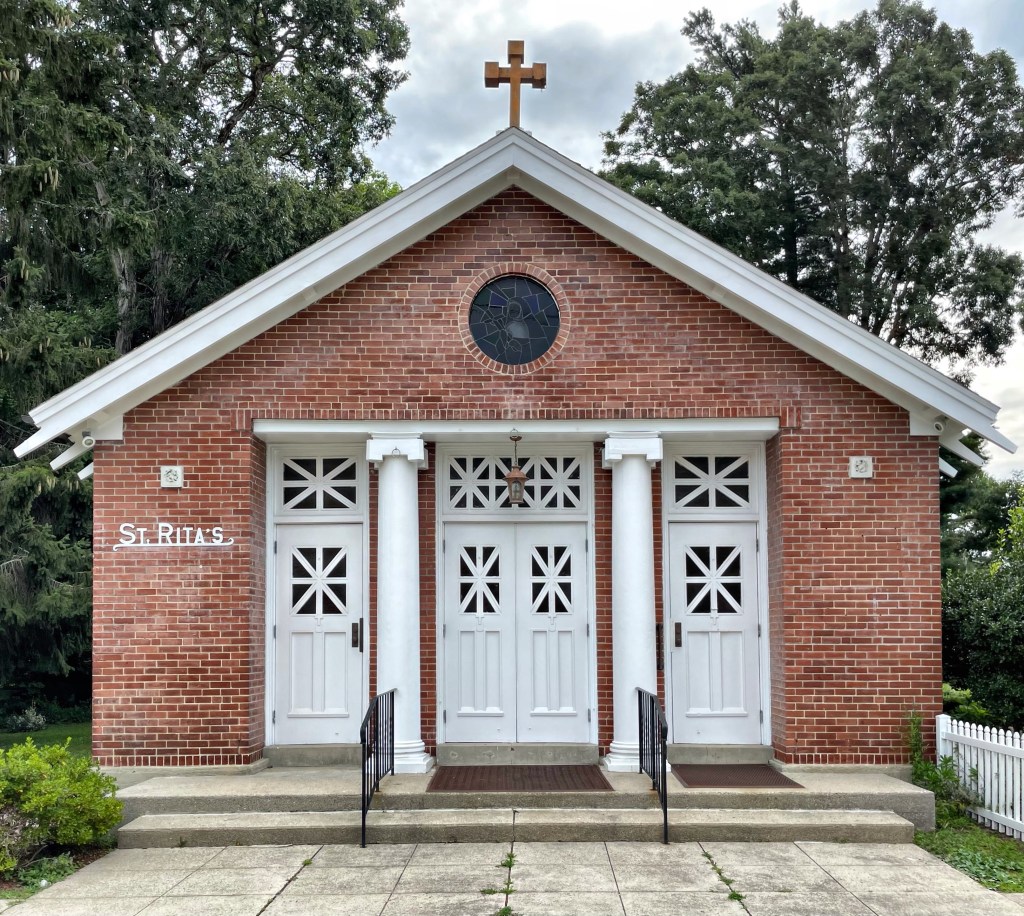
St. Rita’s Roman Catholic Church // 1916

A Roman Catholic parish was established in the South Coast/Cape Cod area by 1830 in Sandwich, where a large glass company employed a number of Irish immigrants. Over the course of the 19th century, several mission churches were established, and eventually a second parish, St. Patrick’s, was established in Wareham in 1911. Soon after, a mission was established in nearby Marion to serve the summertime Catholic community there. A parcel of land was acquired by the Roman Catholic Bishop of Fall River and they hired architect Matthew Sullivan to furnish plans for the small church. Matthew Sullivan (1868–1948) trained in the office of Edmund M. Wheelwright, Boston City Architect (1891-1894). Sullivan succeeded Wheelwright as City Architect and served in that position from 1895 to 1901, when he became a junior partner in the firm of Maginnis, Walsh and Sullivan, which was widely known for its ecclesiastical work, where he too specialized in religious buildings. St. Rita’s Roman Catholic Church is an example of an early 20th century chapel in the Craftsman style, characterized by eaves marked by long projecting rafter tails and a bold entry framed by Tuscan columns.

Look-Coggeshall House // 1828

Believe it or not, this beautiful home was once a one-story Cape house! Built in 1828, the home was constructed for Captain Hiram Look, a sea captain, and his new wife Kezziah (Kezia) within a year of their marriage. They had two daughters. Hiram died in 1865, possibly related to the Civil War, which ended that year. After his and his widow’s death, the home was willed to their daughter and her husband, Bernard Coggeshall, who was likely a descendant of the Coggeshall Family of Bristol, RI. The Look daughter died in 1890, and Bernard remarried a year later. Sometime after 2008, this home was enlarged, giving it the second story we see today. If you look closely at photos from before 2008, you can see the matching door surround, window lintels, and window spacing seen today. While the home is completely different, the “updated” version is still appropriate and conveys the home’s history.

What do you think?