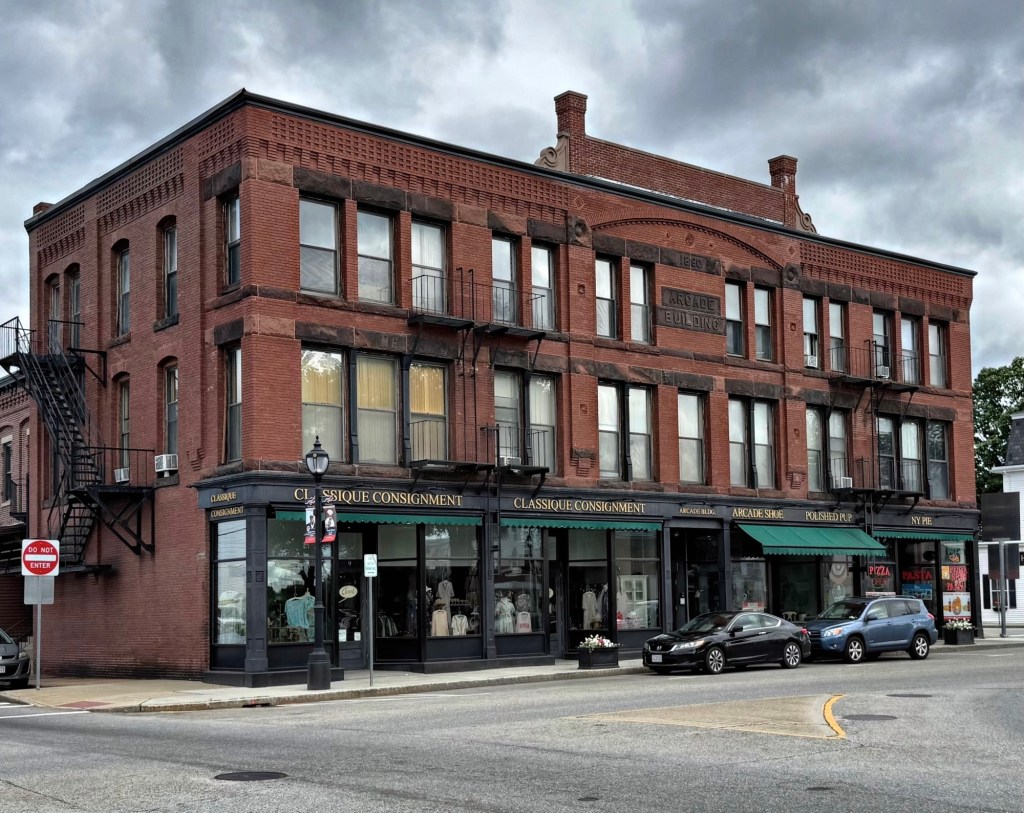
Westborough Arcade // 1890

 The Second Meeting House of Westborough, Massachusetts, was built on this important site in the center of the village in 1749. It was a plain, wooden building and was used for both church services and town meetings, since church and state were essentially inseparable at the time. When a new church was built in 1837, this building was purchased and converted to commercial use. The first floor of the building was raised, and another floor was added underneath. The steeple was also removed. The building then became known as “The Arcade Building,” a kind of mall with small shops opening onto the porch. By the end of the 19th century, the old wooden building was nearing 150 years old and owners decided to demolish the structure, and replace it with a more permanent and stately block. The New Arcade was built in 1890 and is more Romanesque in style. The handsome brick block has retail spaces on the ground floor with residences above, a great example of mixed-use.
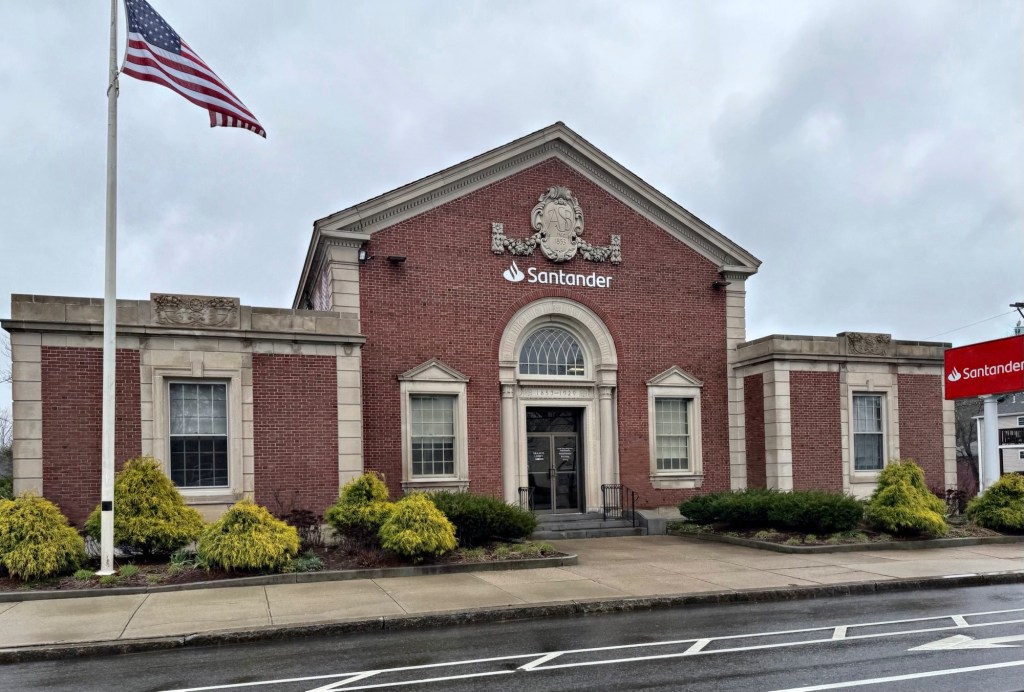
Abington Savings Bank // 1930

Built in 1930 for the Abington Savings Bank, this handsome Colonial Revival style building is located in the center of Abington, Massachusetts and has been a bank for almost 100 years! The bank was originally incorporated in 1853 and grew as Abington and adjacent towns saw suburban growth. The corporation hired the firm of J. Williams Beal & Sons, who specialized in commercial developments, to furnish plans for the building, resulting in the present structure. The firm also designed the Abington Mutual Fire Insurance Company Building (1931) across the street and the Dyer Memorial Library (1932), the town library. The brick and limestone building has three main bays, with the center rising above with a gable, resembling as a pediment of a Roman temple. In the gable, a shield with swags is adorned with the letters “ASB” (Abington Savings Bank) with the original incorporation date of 1853. The bank merged with others and eventually became a Sovereign Bank, and later Santander Bank, which remains in the building to this day.

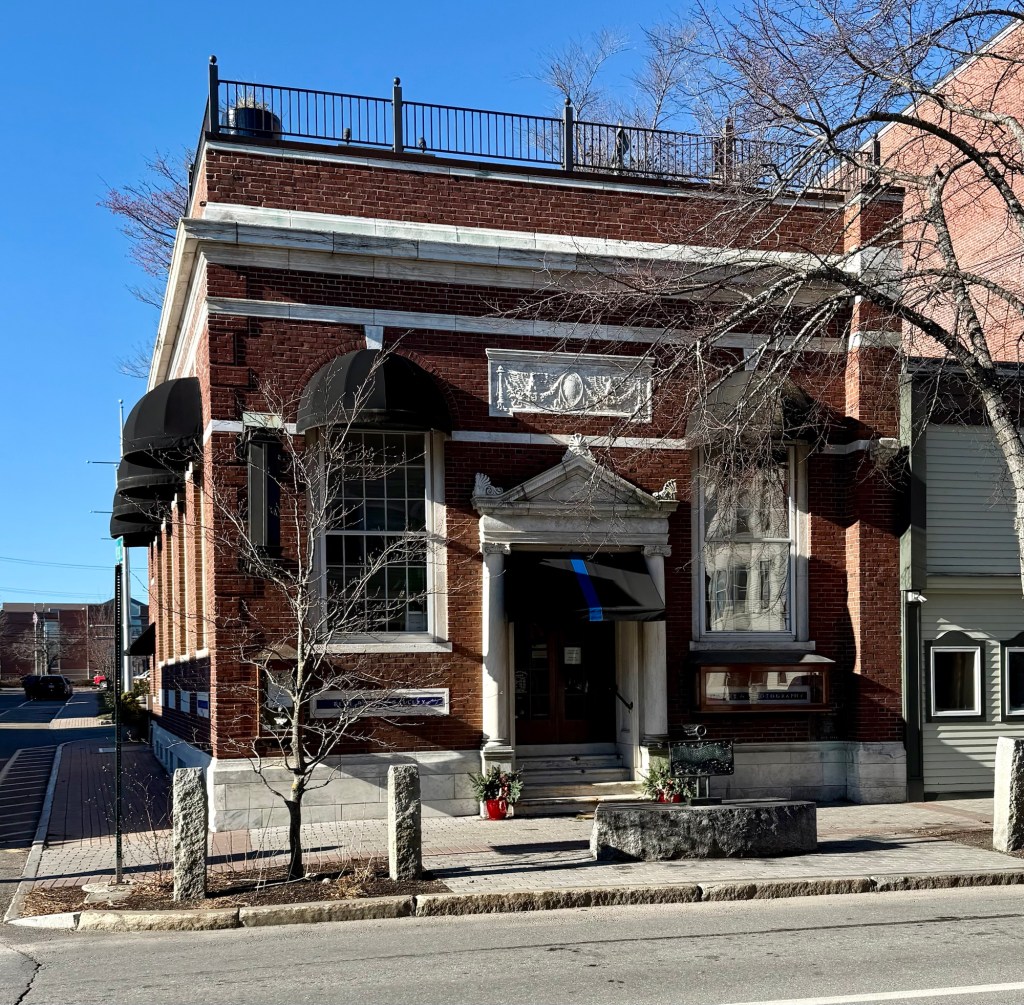
Rockland Security Trust Building // 1912

The Rockland Security Trust Building is a significant Colonial Revival style bank structure located on Main Street in Downtown Rockland, Maine. Built in 1912 from plans by Boston architect Richard Clipston Sturgis, the brick building is trimmed in marble, to provide a visual representation to the financial wealth and stability the bank could provide its clients. The bank closed and the building is presently occupied by an art gallery. Sadly, the rooftop deck railing takes away so much from the building’s presence.

Custom House Block // 1853

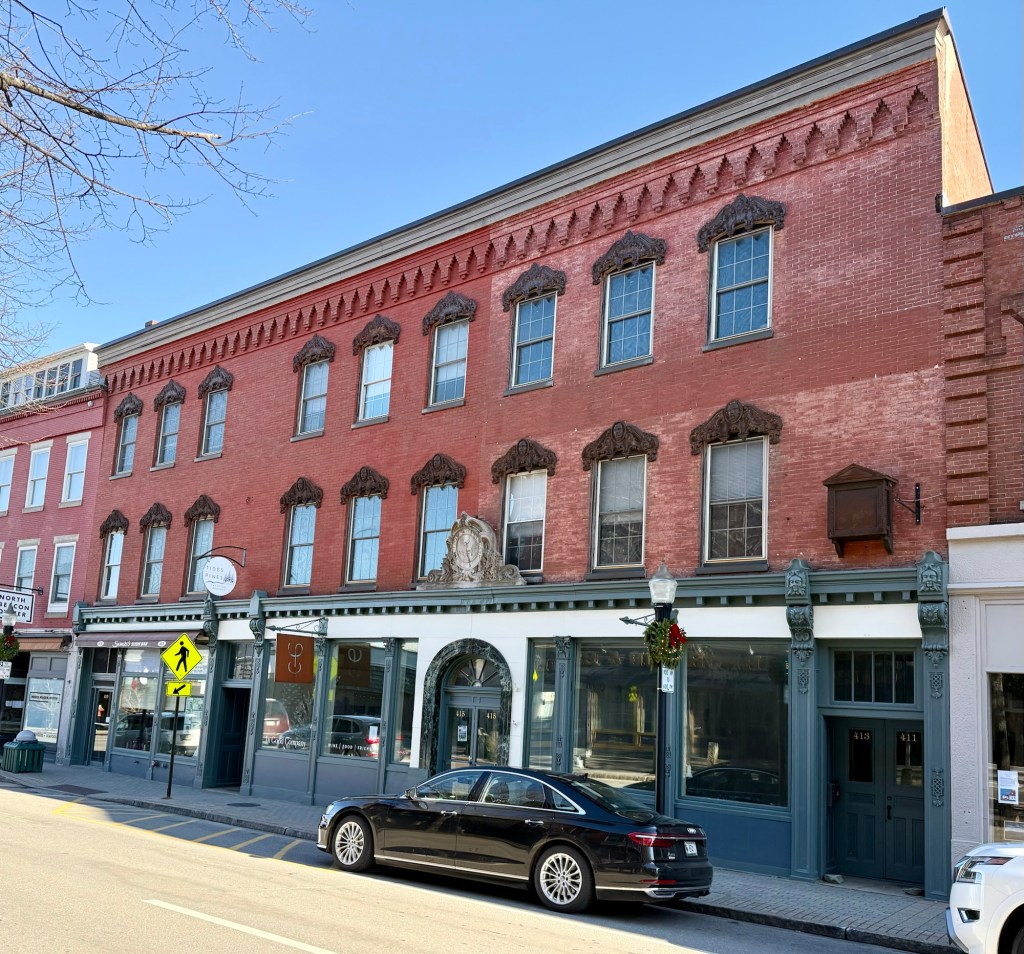
This stately commercial block is found on Main Street in Rockland, Maine. The block originally housed the local custom house (before a larger, purpose-built custom house was erected nearby in 1873) with other retail and commercial spaces at the ground floor with offices and meeting space above. The block is a great example of the Italianate style with an intricate brick corbeled cornice and cast iron and marble storefronts. The commercial space occupied by the First National Bank also exhibits a stone medallion with deer set within a wreath over the entrance. The detail that stood out to me most was the cast iron lintels over the windows, with the second floor lintels including a man’s face! The building is well preserved and is today occupied by local businesses.

Van Buskirk Block // 1895

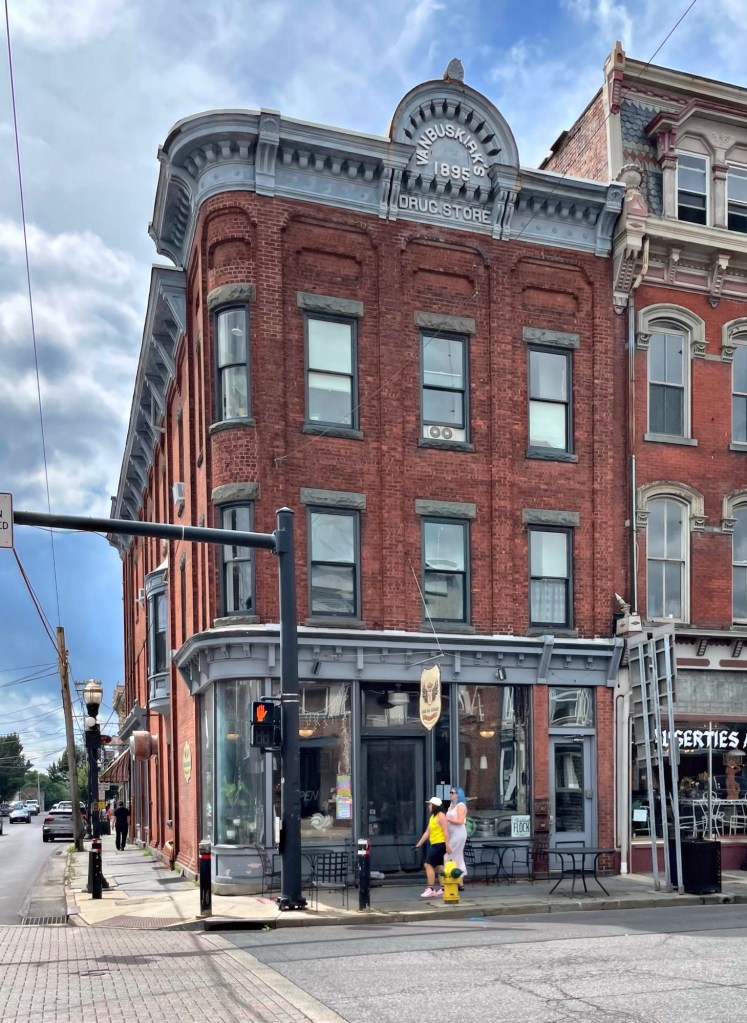
Built at the corner of Main and Partition streets in Saugerties, New York, this handsome 19th century commercial building is located next door to the Whitaker Block – featured previously. The Van Buskirk Block was built in 1895 for the Van Buskirk Brothers, who were pharmacists in town. The building has a unique rounded corner, inset brick paneling, and a bold metal cornice at the roof.

Old Brooklyn Savings Bank // 1928

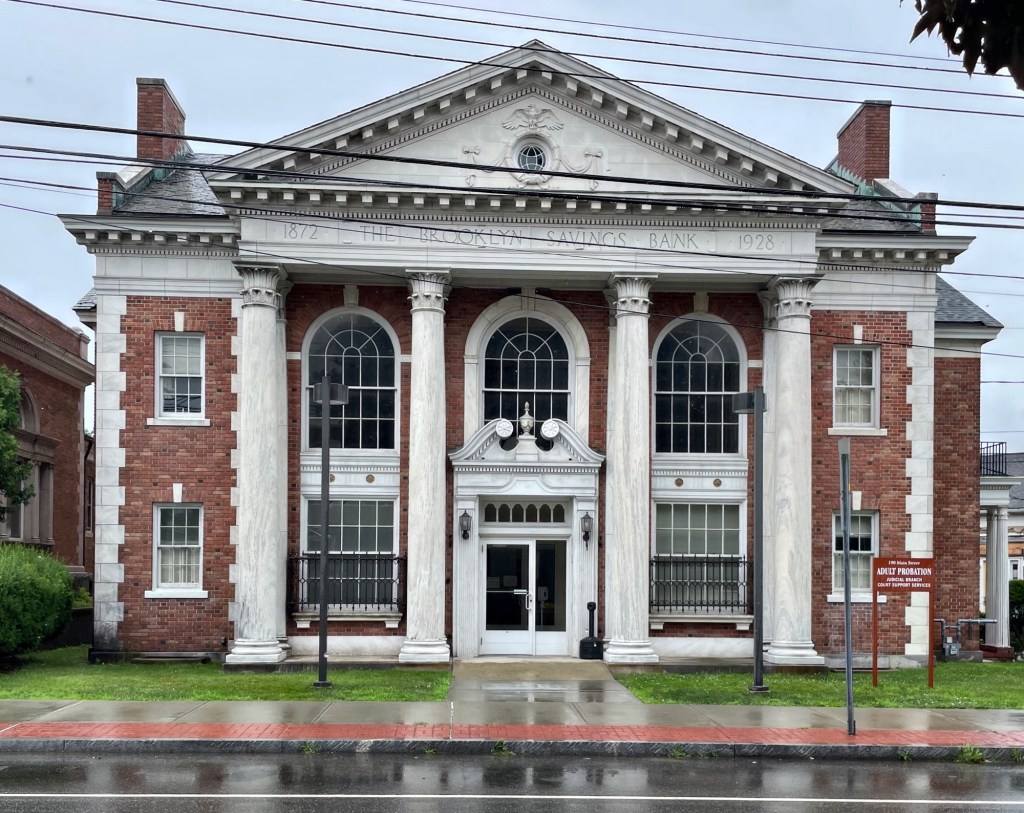
One of the most intact and architecturally significant buildings in Killingly is this stunning example of a bank built in the Georgian Revival style. Located on Main Street in the village of Danielson, the former Brooklyn Savings Bank was designed by the New Haven-based architectural firm of Norton & Townsend for the Brooklyn Savings Bank, which was founded in the adjacent town, Brooklyn, in 1872. The bank relocated to the economic center of the two towns, Danielson, in 1915, later building this landmark bank structure as its primary facility. The two-story bank is covered in red brick with elaborate limestone and marble trim and detailing, showcasing the wealth and stability of the banking institution for potential members. The façade features a two-story pedimented pavilion, round arched windows, and an elaborate swans neck pediment over the door. The structure has been very well-preserved in its nearly 100 year existence and now appears to be the home of a state judicial court.  

Printer’s Exchange Building // 1866

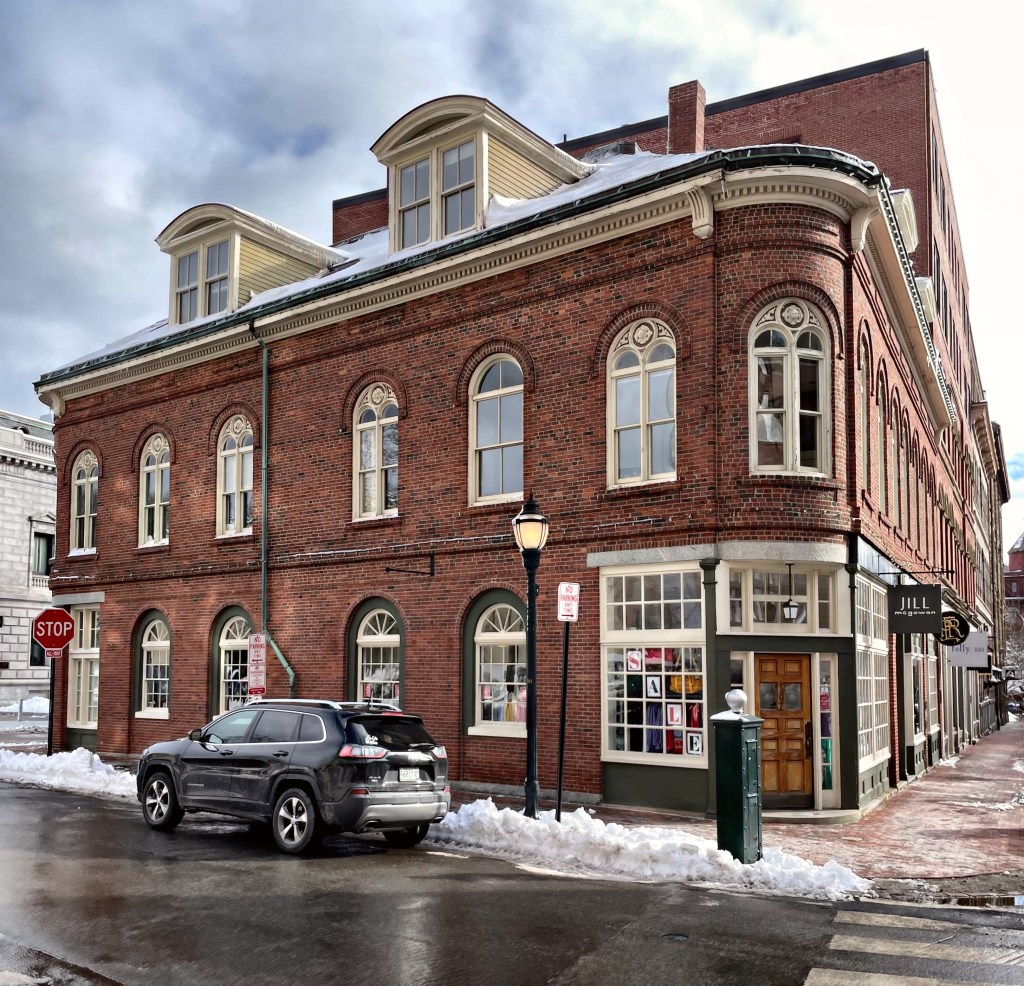
Why is commercial architecture from the second half of the 19th century so perfect? This structure in Downtown Portland is known as the Printer’s Exchange Building and was built in 1866, amongst the ashes of the buildings lost in the Great Fire of 1866. Charles Quincy Clapp is credited as the designer of the structure, which is Italianate in style with the paired round arched windows set into larger openings. The rounded corners are a really subtle but splendid touch in the design. The building got its name as it was home to the Eastern Argus and the Portland Daily Press, among other newspapers who rented the space from owner, Horatio Nelson Jose. I really like this one!

Thompson Block // 1868

Another of Portland’s stunning mid-19th century commercial blocks is the Thompson Block, built in 1868. The structure is one of the most high-style commercial buildings in Maine and is in a great state of preservation. The building was designed by George M. Harding, a VERY busy architect after the disastrous Great Fire of 1866, which destroyed much of Downtown Portland. The building stands three-stories tall with a polychrome slate mansard roof providing a full fourth floor, a subtle and great way to get extra height without making a building too overbearing. The mansard is broken up at the facade by dormers with round-arch windows and keystoned and eared hoods. If only all cities held off urban renewal, we would have so many more structures like this!

Congregational Church of Peru // 1845

The centerpiece of the Village of Peru, Vermont is the Congregational Church, a stunning edifice and example of Greek Revival architecture in the small town. Construction on the church began on the Fourth of July in 1845, with contractor and resident J.J. Hapgood utilizing much of the timbers of the former church building in the new church. Since the interior of the old church had been left natural, they decided that wood in the new building should be left unpainted as well. The bell was financed by contributions, most particularly by J.J. Hapgood. In 1853, a tornado swept through Peru, damaging the west end of the church and moving it from the foundation, it survived. The church remains a center of Village life in Peru and is well-maintained by the congregation.

Peru Creamery House // 1895

The Creamery House in Peru, Vermont is perhaps the most “Vermont” building I have ever heard of. The building was constructed in 1895 George Richardson (1852-1920), a local farmer who operated the use as a place where cheese was made from the excess (unsold) milk of the area farmers. Eventually, the building was acquired by the Town of Peru and converted to a town hall, used for meetings, dances, dinners and parties, serving as the true town gathering place. The town relocated its offices to the former Peru Schoolhouse (featured previously) and this building went back to its roots and is presently home to the Peru Historical Society and the Main Street Makery, a community craft workshop and new town gathering place!