First Stockbridge Town Hall // 1840

The Town of Stockbridge, MA was incorporated on June 22, 1739. After that time the town held meetings and conducted business in the First Congregational Meeting House until 1840 when this Greek Revival town hall building was erected on the church’s property as a gift. A stipulation was made that if the Town government constructed or moved to a new town hall building, the property ownership would revert to the Church. The town outgrew the building and constructed a new building toward the center of town, but named it Town Offices, a cheeky way to retain ownership of this building. Eventually, that building too was outgrown, and the town hired Pittsfield-based architect Harry E. Weeks to modify and enlarge the building in 1903, in the Neo-Classical style to compliment the original Greek detailing. As expected, the town moved again in the 2000s to a former school, on Main Street, but again retained the building.
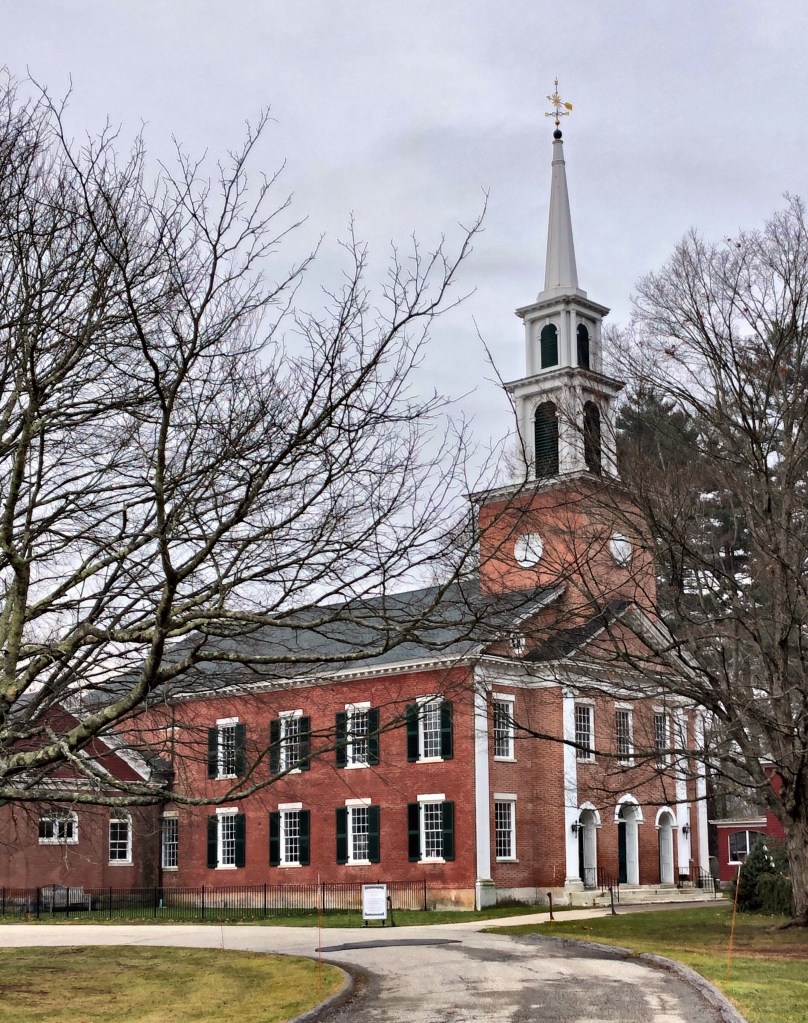
First Congregational Church, Stockbridge // 1824

Stockbridge, Massachusetts was settled by English missionaries in 1734, who established it as a praying town (an effort to convert the local Native American tribes to Christianity), for the Mohican tribe known as the Stockbridge Indians. The township was set aside for the tribe by English colonists as a reward for their assistance against the French in the French and Indian Wars. From this, a Yale-educated missionary, John Sergeant began converting native people to Christianity, essentially stripping them of their own religious culture and practices. Although Massachusetts General Court had assured the Stockbridge Indians that their land would never be sold, the agreement was rescinded. Despite the aid by the tribe during the Revolutionary War, the state forced their relocation to the west, to New York and then to Wisconsin. The village was then taken over by British-American settlers who created the township.

The first congregational church here was formed by Sergeant in 1734, and later succeeded by Jonathan Edwards, another minister. During his time in Stockbridge, Edwards wrote his masterpiece, Freedom of the Will, which remains one of the most studied works in American theology. Edwards later left the church to become the President of The College of New Jersey, now known as a little school by the name of Princeton. The first church was built in 1739, later replaced by a second church building that stood from 1785 to 1824. The present brick building was built in 1824 in the Federal Style. The space was occupied for town functions until the 1840s, when an official town hall was erected next door, demarcating the separation of church and state. The stunning church marks the immense influence religion had in the early colonial days of New England and the impact it had on native peoples (for better or worse).

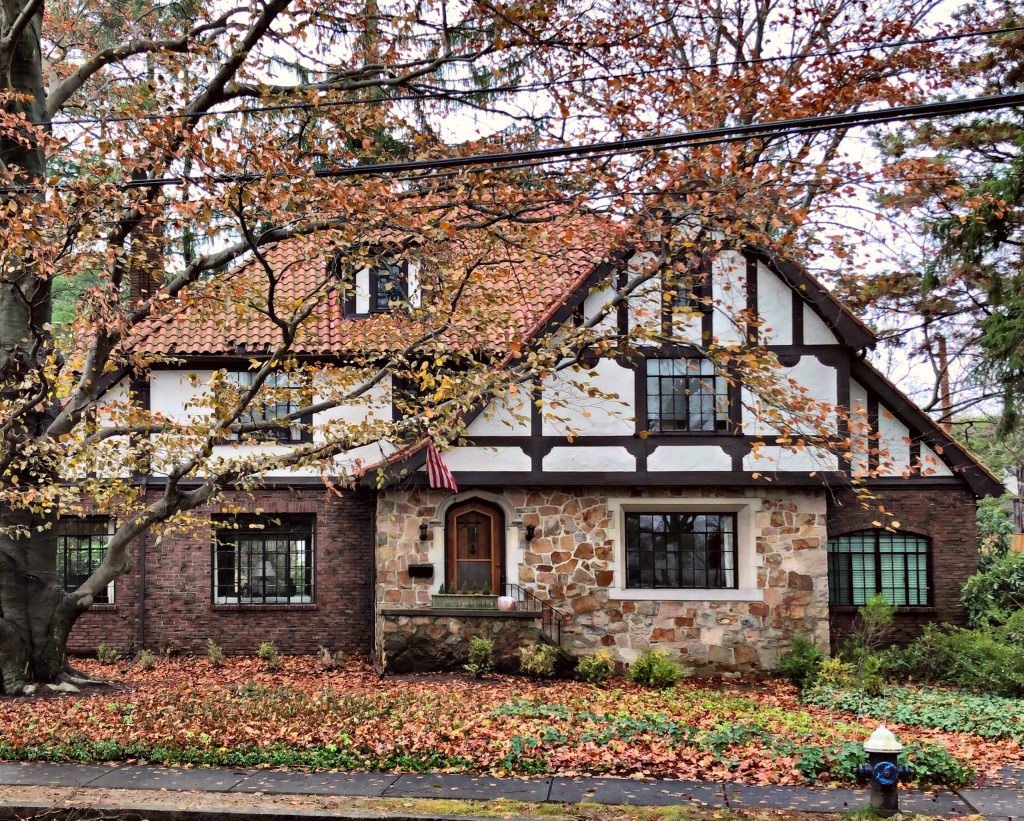
Glacy House // 1930

Residential architecture of the early decades of the 20th century is among my favorites as the Tudor Revival movement took off and was sometimes mixed with other revival styles at the time, creating really unique homes. The Glacy House in South Brookline, MA was built in 1930 as one of the earlier homes in the Walnut Hill development. It was likely designed and built by Walter L. Fernandez, a contractor who appears to have design-built a handful of spec homes to help get the neighborhood’s development going in the early stages. This home was originally occupied by George and Mary Glacy. George later worked as Vice President of the Boston & Maine Railroad, though he later got into legal trouble for hiring companies for railroad projects where he had financial interests, becoming indicted in an antitrust case by a Federal grand jury. The home features a first floor constructed of stone and brick with half-timbering on the floor above. The building is topped by a terracotta red tile roof, which is fairly uncommon for the region.

Webber House // 1935

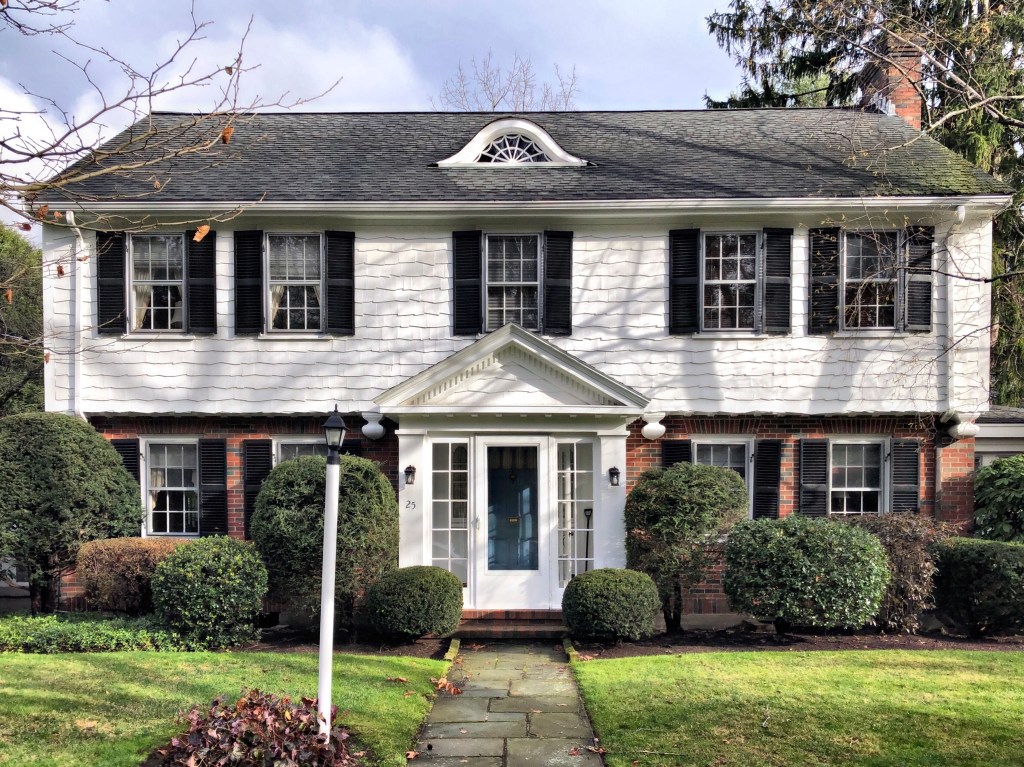
Located in South Brookline, a neighborhood of mostly early-mid 20th century architecture, you can find amazing residential designs for middle-class suburban families in the Boston area. This home was built in 1935 for Max and Rebeccah Webber in the Garrison Colonial Revival style. The home, designed by architect Harry Morton Ramsay, is characterized by a second-story shingled overhang with decorative pendants reminiscent of 17th century American homes. Adding some extra flair, an eyebrow dormer can be found at the roof, as well as a glazed projecting entry porch with a broad pediment and corner pilasters.

Oliver Ames High School // 1896

I’m starting to see a trend in Easton, almost everything is named after the Ames Family! In 1893, Oliver Ames (1831-1895), a grandson of shovel company founder Oliver Ames and son of Oakes Ames, offered to fund the construction of a new high school building if the town would pay the cost of building its foundation and grading the site. While governor of the Commonwealth of Massachusetts (1887-90), Ames had hired Boston architect Carl Fehmer as consulting architect to the State for the extension to the Massachusetts State House, and it was Fehmer who secured the design contract for the new school in Easton. The refined Colonial Revival school building features a central pavilion with an entrance set within an ornate stone architrave with a Classical entablature with central pediment. The school was outgrown in 1957 and became the town’s middle school, outgrown again in the 1990s. The town sold the school to a developer with preservation restrictions and it is now used as apartments!

Ames Shovel Works // 1852-1934

Oliver Ames began producing shovels in North Easton, Massachusetts at three pre-existing factory sites in the early 1800s. By 1852, O. Ames & Co., now run by Oliver Ames’s sons, Oakes and Oliver, Jr., was prompted to construct stone shops on the west side of the Shovel Shop Pond. In 1851, the original shovel shop was destroyed by fire. The company would soon rebuild, and by 1852 the first of the new shops, of fireproof stone construction had been completed. From 1852 to 1953 the company hired hundreds of men, women, and boys to make dozens of different kinds of shovels as well as hoes and, later, lawn and garden tools. Strong demand for shovels would continue in the mid 19th century, with the great expansion of railroads and later the American Civil War. Abraham Lincoln personally asked Oakes Ames to supply shovels to the Union Army, and he obliged. By 1879, the company is said to have produced 60% of all the shovels in the world!! The Ames Shovel Company ceased production in Easton in 1952. After, the buildings started to suffer from neglect with only a few buildings occupied by commercial uses. Thankfully, in 2014, the complex was redeveloped into a local YMCA and apartments as the Ames Shovel Works Apartments!

Waban Station // 1886-1958

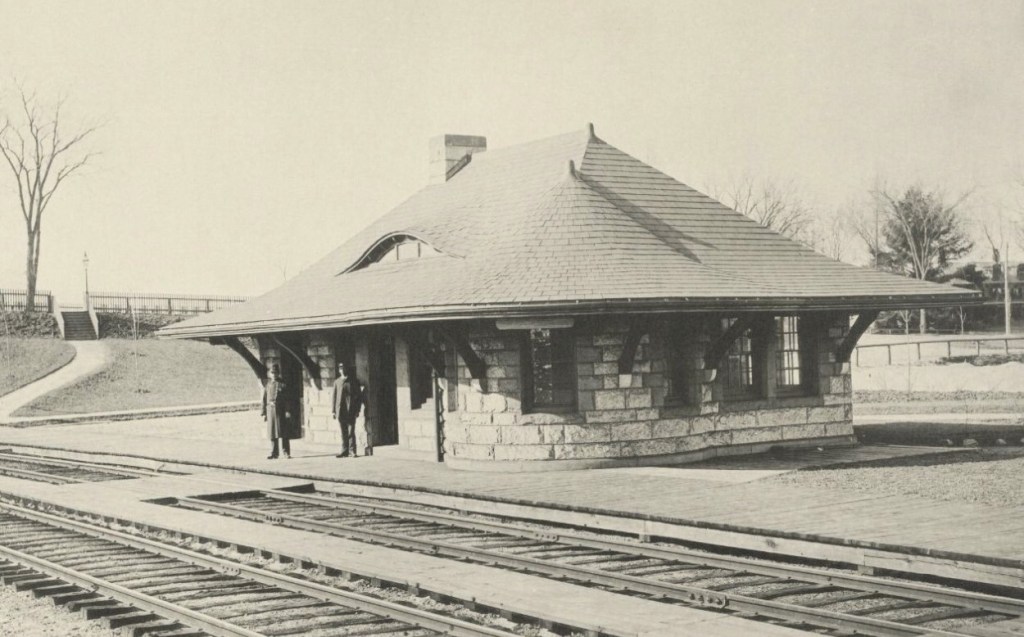
Image from Harvard Archives.

The village of Waban in Newton, Massachusetts, was named after a Massachusett Chief who had previously resided atop Nonantum Hill on the Newton-Brighton line. This location is believed to have been a favorite hunting ground for Waban (the Wind) and his people. Throughout much of the 19th century, Waban remained a quiet agricultural region. As late as 1874, fewer than 20 families held title to all of its land. In the mid-1880s, however, interest in suburban developments near the Boston and Albany Railroad became increasingly widespread. Seeing suburbanization in the late 19th century and into the early 20th century.

The station that allowed all the development in the early days of Waban was built in 1886. The Boston & Albany Railroad hired renowned architect Henry Hobson Richardson to design the station, and many others on branches of the various lines radiating out from Boston. The Highland Branch (which this station was on) was later acquired by the MBTA in Boston, which operated it as a Commuter line. Waban Station closed along with the rest of the Highland Branch commuter rail line in 1958 and reopened a year later in 1959 as part of the Green Line’s D Branch. The gorgeous H.H. Richardson-designed station was demolished in order to build a 74-space parking lot. They literally paved paradise, and put up a parking lot

Agawam High School // 1921

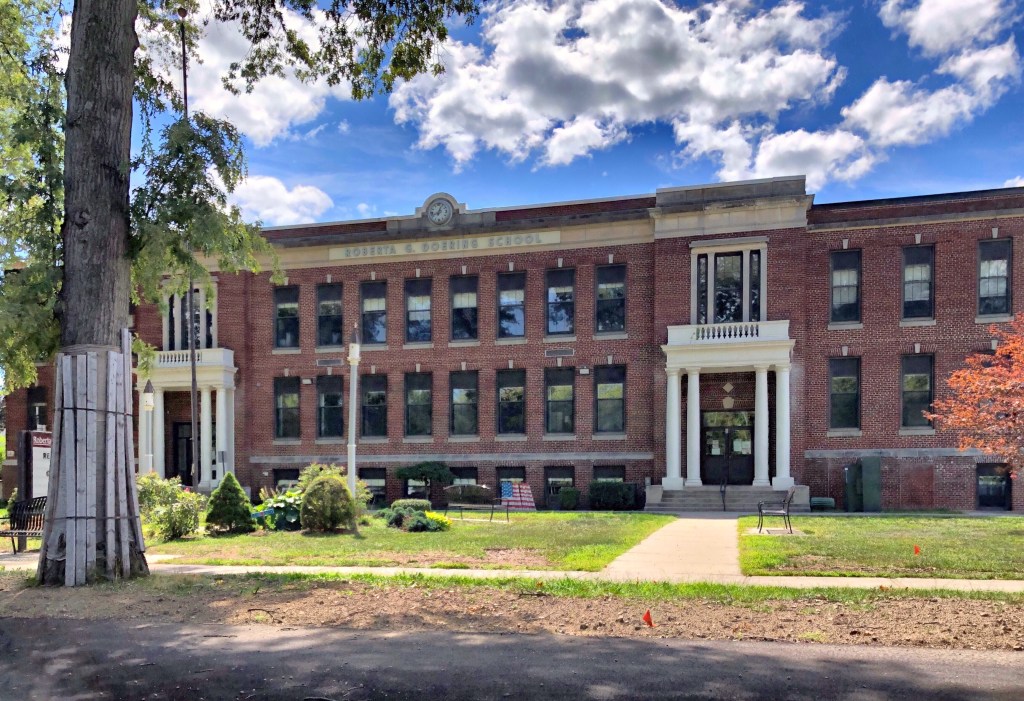
This stunning High School building in Agawam was built in 1921 as the town’s first high school. William Pynchon purchased land on both sides of the Connecticut River from the local Pocomtuc Indians known as Agawam, which included present-day Springfield, Chicopee, Longmeadow, and West Springfield, Massachusetts. The purchase price for the Agawam portion was 10 coats, 10 hoes, 10 hatchets, 10 knives, and 10 fathoms of wampum. Agawam and West Springfield split in 1800, with Agawam incorporating as a town on in 1855. The town stayed fairly rural until the 20th century with the proliferation of the personal automobile and suburbanization from the industrial and urban center of Springfield. This increase required a new, modern high school to be constructed in town. The building was converted to a middle school in 1972.

Thomas and Esther Smith House // c.1758

The Thomas and Esther Smith House in the Feeding Hills area of Agawam, Massachusetts is a 1½ story, vernacular Georgian style house with a gambrel roof. Feeding Hills, so named for its bountiful soils, is an agricultural plain approximately five miles west of the Connecticut River at the eastern foot of Provin Mountain. The land was highly sought after by farmers, with many agricultural uses still taking place here to this day. This parcel of land was purchased by Thomas Smith, a carpenter, in 1757, who likely built the home soon after for his new family. The family occupied the home into the mid-19th century, harvesting crops and raising cattle for sustenance and sale. The agricultural property was subdivided numerous times and now sits on just an acre. The home and remaining land was purchased by the Agawam Historical Society in 2002, who maintain the property and educate on Agawam’s agricultural heritage.

West Tisbury Grange Hall // 1859

Image courtesy of @MarthasVineyardonisland

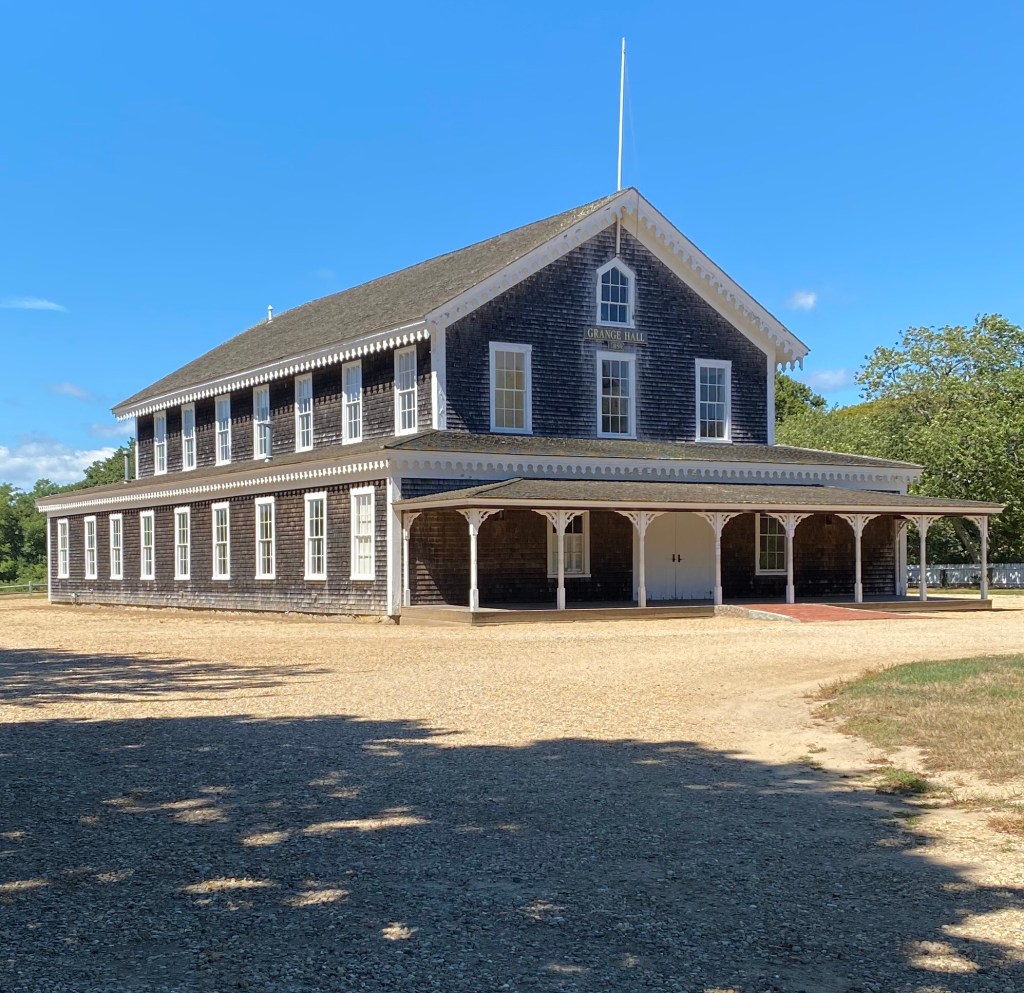
Constructed by the Martha’s Vineyard Agricultural Society at the crossroads of the island, this Grange Hall in West Tisbury on Martha’s Vineyard, is the center of agriculture and commerce for the Vineyard. Grange Halls are traditionally where farmers have gathered to learn new agricultural practices, develop strategic business partnerships, and barter for goods and services. The building was the hub of weekly farmers markets for decades and eventually owned by the Vineyard Trust in 1997, being restored soon after. The building is a vernacular Gothic Revival building with decorative bargeboard (gingerbread trim) and full-length porch.