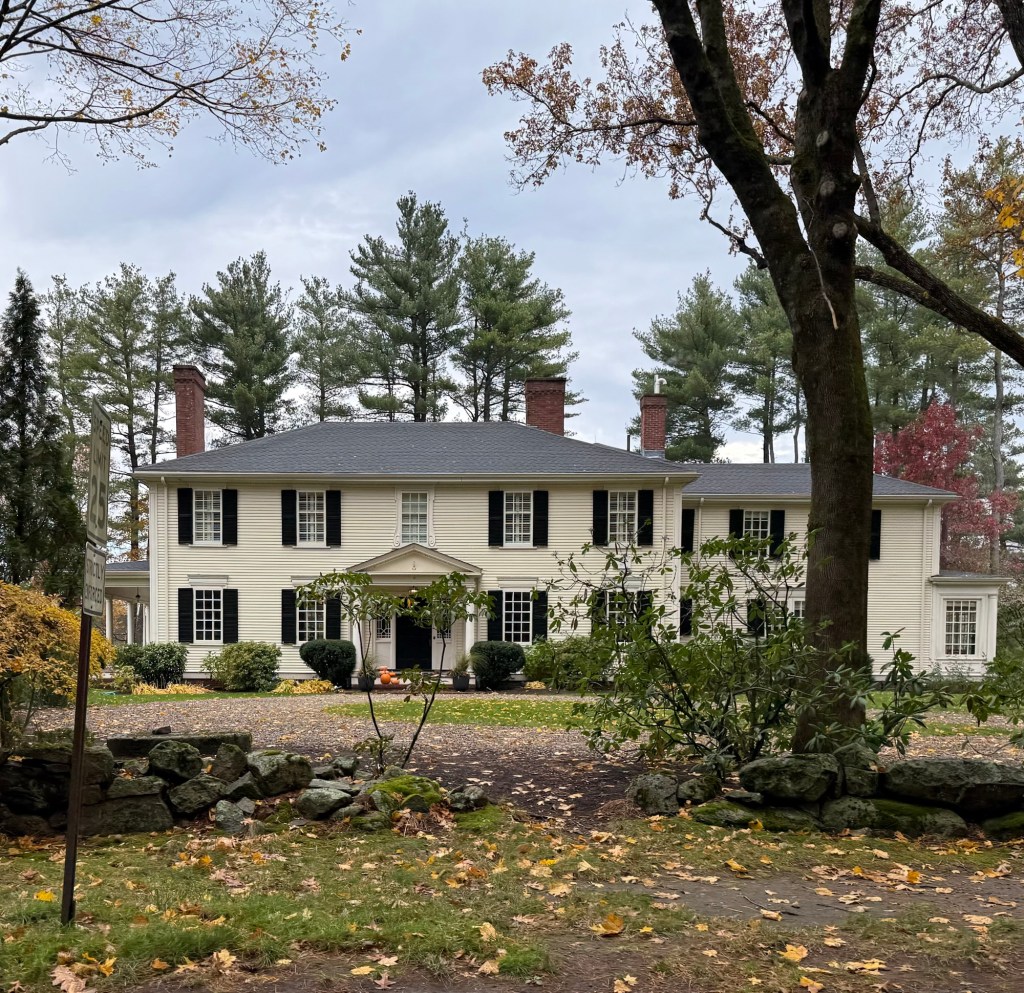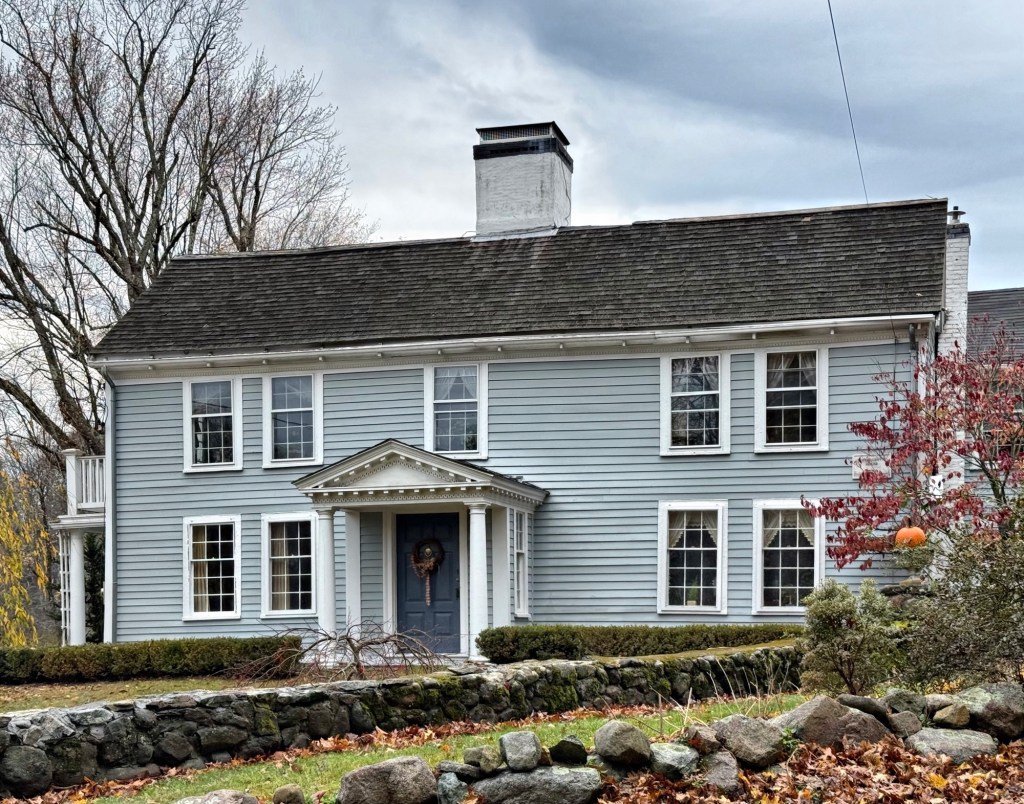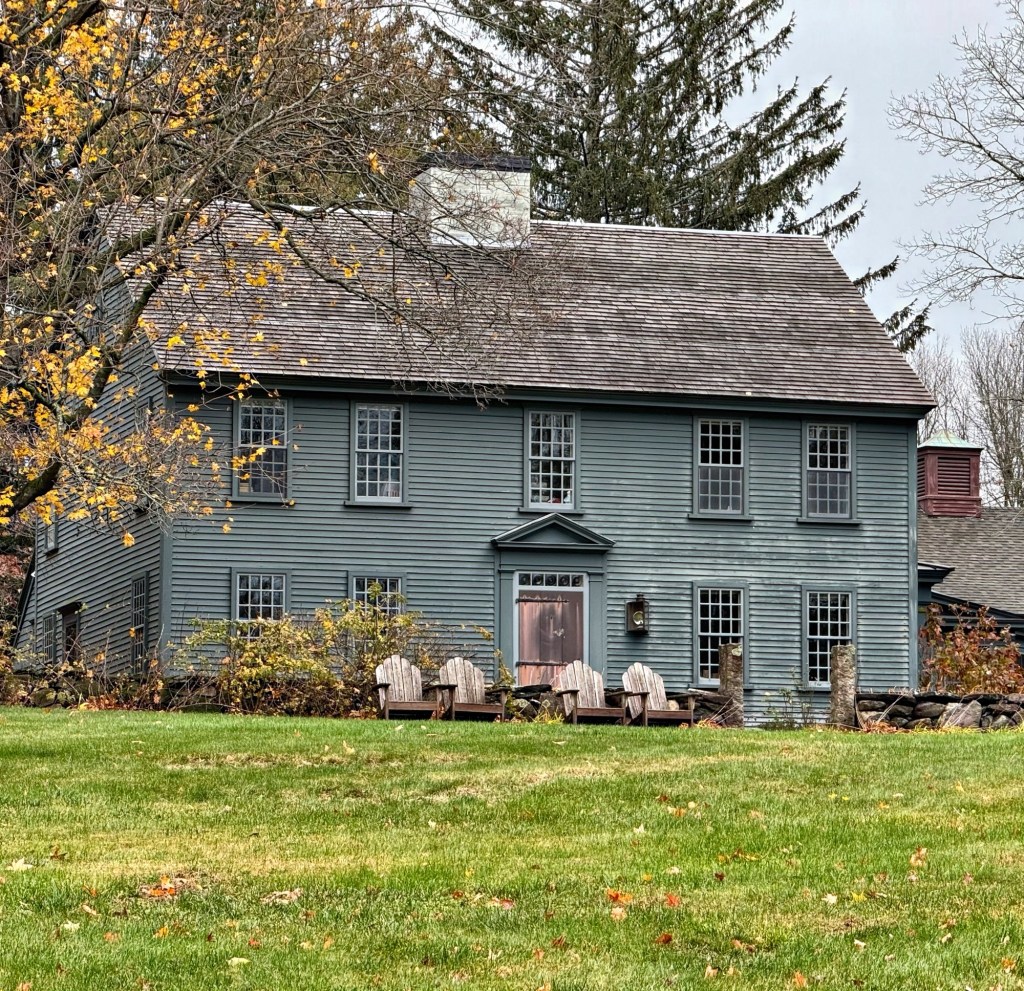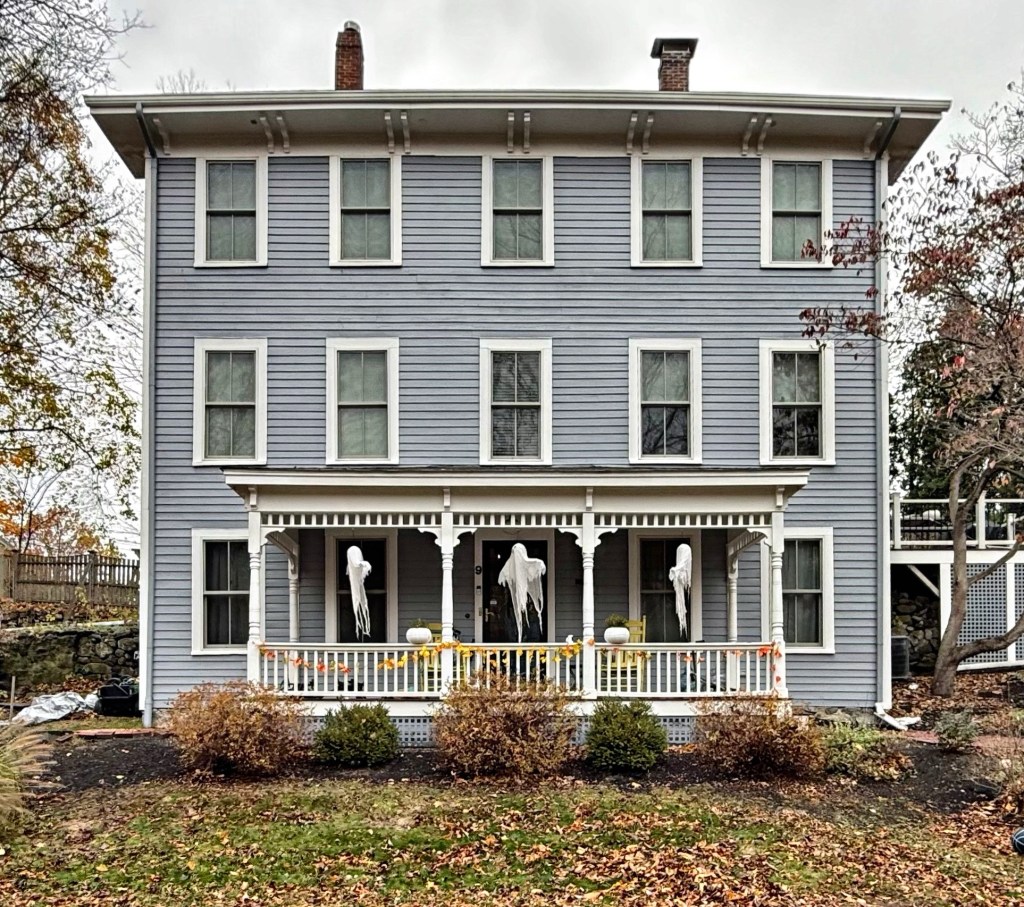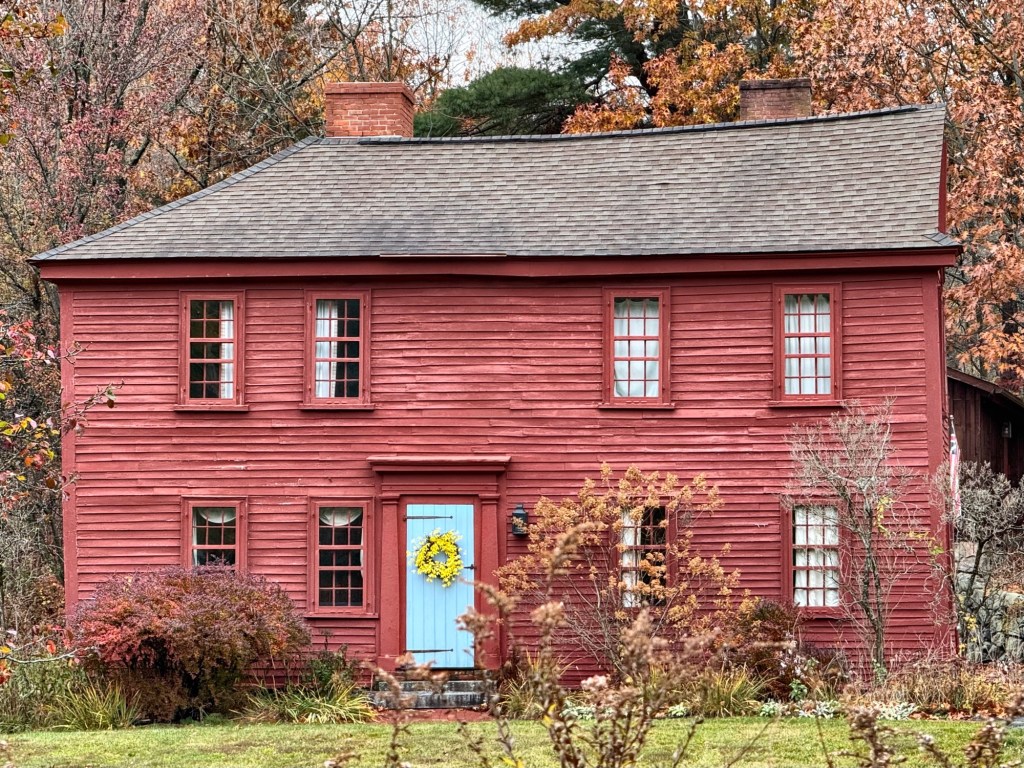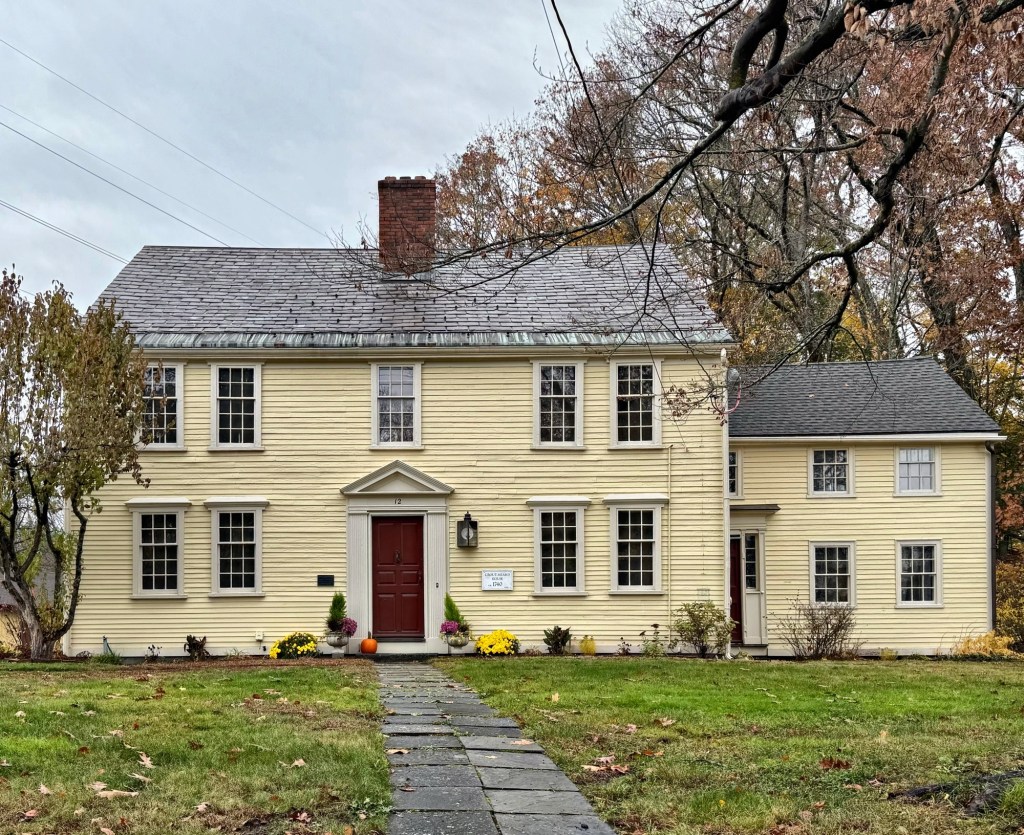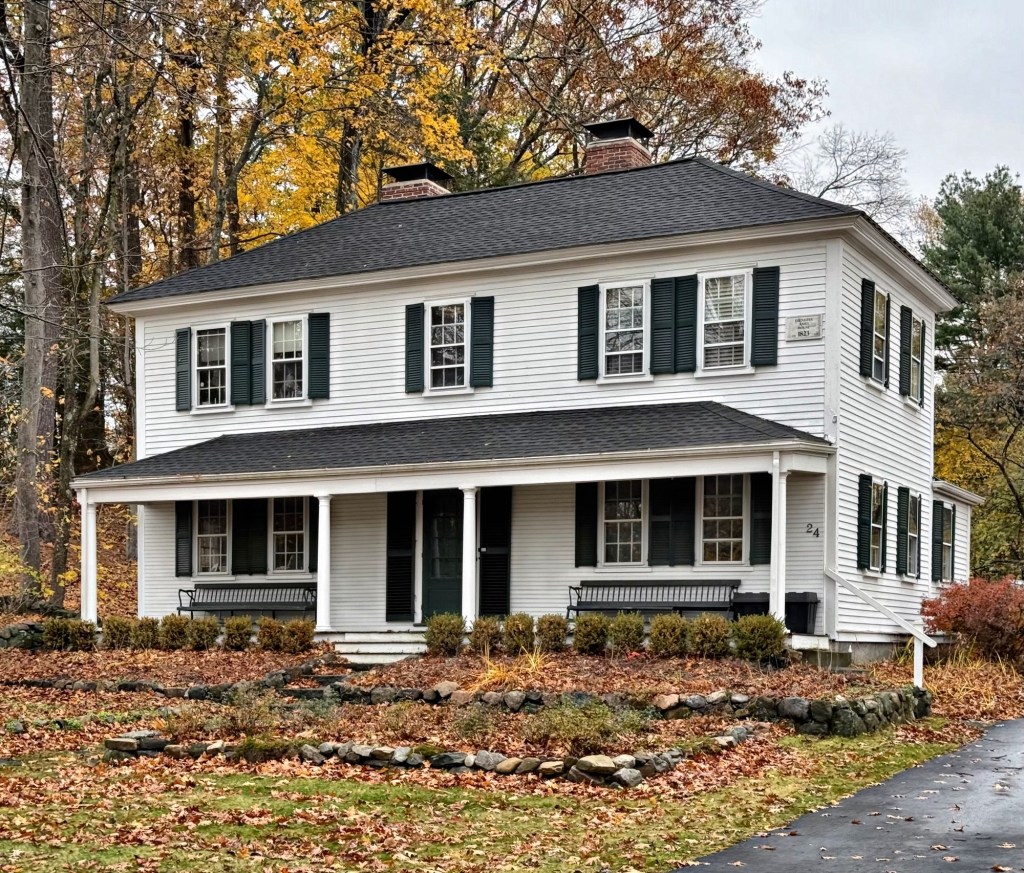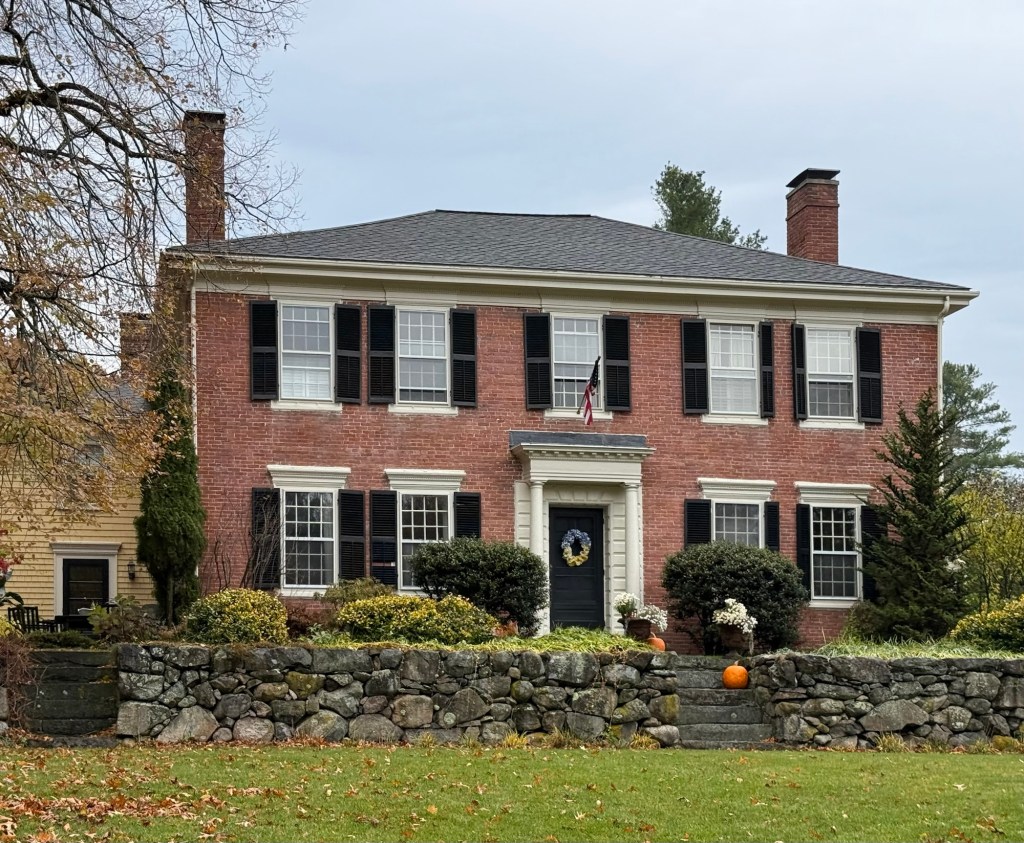
Nourse-Sawyer House, Bolton Historical Society // c.1805

The building that became the Bolton Historical Society in Bolton, Massachusetts had unusual beginnings. According to town records, this residence-turned-historical society was built around 1805 as an addition to the famed Holman Inn, which stood in town from 1767 until its demolition in the 1870s. The wing contained a ballroom on the first floor, and guest chambers on the second. The main part of the inn was eventually torn down in 1874, but the east wing, this structure, was moved down the street to the present site, where it was converted to a house by owners Charles S. Rich, a Civil War veteran, and his wife Mary. In 1904, the house was bought by Arthur H. Nourse, who enlarged the property by purchasing adjacent land from his uncle, and bought two small buildings from the Town of Bolton, the historic engine house and old hearse house, which he moved to the site. The house was purchased in 1923 by Perley and Florence Sawyer. Mrs. Sawyer was a charter member of the Bolton Historical Society at its founding in 1962, and later, by 1970, she gave the house, with over three acres of land, to the Society. The property is still owned by the Historical Society, which operates it as a house museum and a repository for local historical documents.

Dr. Amos Parker House // 1801

Built in 1800-1801, this house on Main Street in Bolton, Massachusetts, had multiple owners in quick succession until 1806, when it was purchased by Dr. Amos Parker. Amos Parker (1777-1861) was born in Hubbardston and later moved to Bolton to work as the town’s doctor, and also served as Bolton’s first Postmaster, from an ell that was once attached to this residence. Dr. Parker and his wife, Elizabeth (Whitney,) had at least four children, who of which died as infants and two daughters remained unmarried. Elizabeth Lydia Parker (1809-1882) and Louisa Jane Parker (1812-1900) inherited their parent’s home and lived here until their deaths. Louisa worked as a teacher in Bolton schools, and was forced to remain unmarried to keep her teaching position by law. In 1904, the Parker home was acquired by the local Baptist church and occupied as a parsonage and was later sold to private owners who restored the home to its near-original condition.

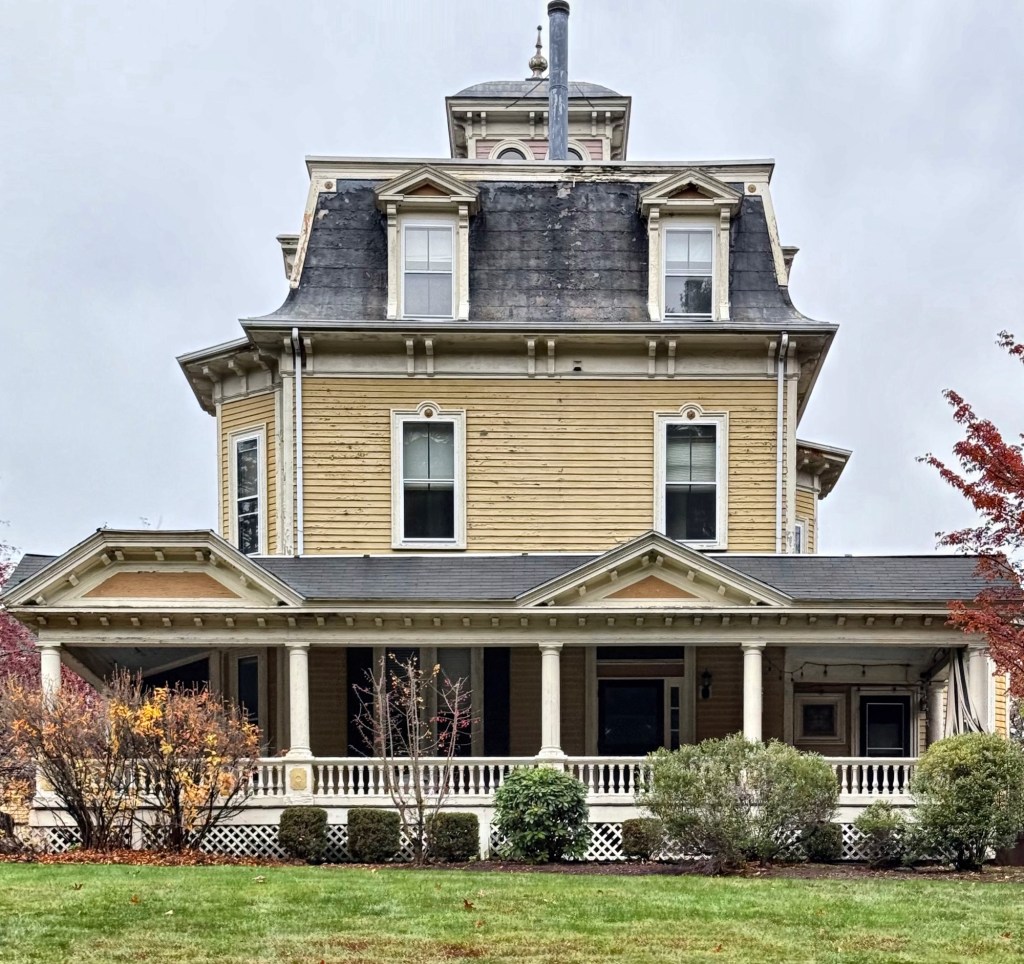
John E. Thayer Mansion // 1883

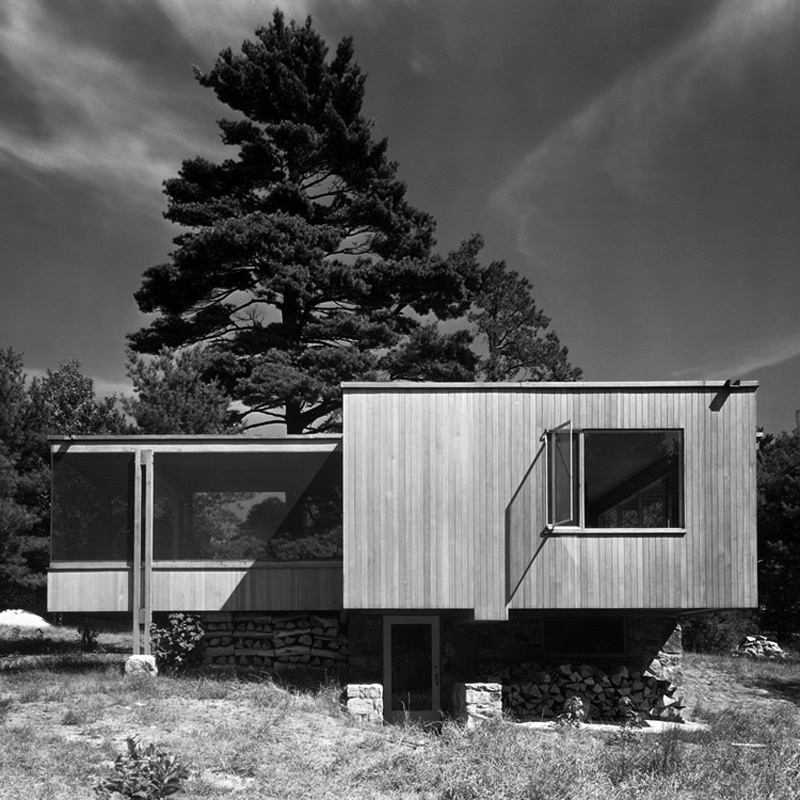
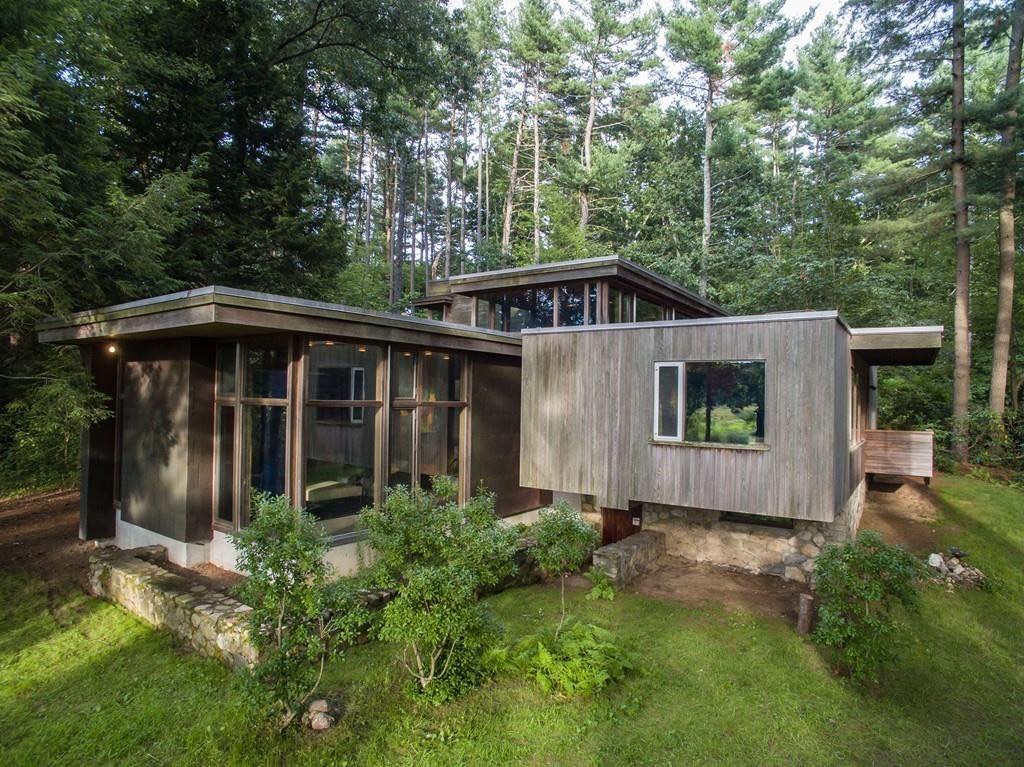
Photo from real estate listing.

A lesser-known residence built for a member of the wealthy Thayer Family is this stately Queen Anne mansion tucked away in South Lancaster, Massachusetts. The John E. Thayer Mansion was built in the 1880s for its namesake, John Eliot Thayer (1862-1933), who graduated from Harvard College in 1885 and engaged in business before becoming one of the world’s most prominent ornithologists. John began collecting and housed his collections in several wooden buildings close to his home in Lancaster, but when these became unsafe and crowded he built a beautiful brick building in 1903 nearby, opening it to the public as a museum a year later. John Thayer hired esteemed Boston architect, John Hubbard Sturgis, who was then working with his nephew, Richard Clipston Sturgis, to design the English Queen Anne style country mansion. The residence features a stone first floor with wood-frame above that is given half-timbering treatment, suggesting the English design. John Thayer’s country mansion was a short walk away from his twin brother, Bayard Thayer’s mansion, and his other brother, Eugene’s country house, both in Lancaster. The house remained in the Thayer family until the 1960s, and was recently sold to new owners. The interiors are some of the best preserved for a country estate I have seen and worthy of the Thayer name. 

Thomas Jones House // 1834

Thomas Jones of Lancaster married Mary Tweed of Lunenburg, Massachusetts, in June 1834 and immediately began building this house on Main Street in Lancaster for his new family. The Greek Revival style house is a refined example of brick with six-over-six sash double-hung windows and a Classical entry portico supported by Doric columns. The house was later owned by Sewell T. Rugg (1821-1892), a blacksmith who had a shop nearby.

John Bennett House // 1717

The oldest residence in the North Village of Lancaster, Massachusetts, the John Bennett House dates to 1717 and evokes the old Colonial days of New England towns. John Bennett settled in Lancaster and built this large First Period house for his family and operated it as a tavern to weary travellers passing through town along the main turnpike. After Bennett’s death, local legend identifies that the property was a stopping place on the Underground Railroad for runaway slaves escaping to Canada. This, however, has never been substantiated. From 1872 to 1874, the house was occupied by the first Adventist missionary, John Nevins Andrews, co-founder of the Seventh-day Adventist Church. The house is well-preserved and remains as one of the oldest in Lancaster and an important landmark of the early days of the community.

John Sprague House // 1785

Judge John Sprague (1740-1800) was a Harvard graduate and settled in Lancaster, Massachusetts as one of only three lawyers in Worcester County following the departure of his Tory colleagues during the Revolution. From this, a young Sprague climbed the professional ladder quickly and represented Lancaster in the General Court beginning in 1782 and occasionally sat in the Senate. He was first appointed judge in 1784 and in 1798 became chief justice of the Court of Common Pleas for Worcester County. After being appointed a judge in 1784, Sprague purchased a house lot on Main Street in Lancaster and hired local housewrights Eli Stearns and Jonathan Whitney, to design and build this stately home. Judge Sprague moved from his 1771 houseshort distance away, to this more substantial late-Georgian home with projecting entry with pilasters and pediment. After his death in 1800, the property was inherited by his daughter, Ann Sprague Vose and her husband, a merchant, Peter Thatcher Vose

Sprague-Waldo House // c.1771

Just outside of the village center of Lancaster, Massachusetts, this Georgian style house stands out as one of the town’s finest Colonial residences. The residence was built for John Sprague (1740-1800), who settled in Lancaster and was one of only three lawyers in the county following the departure of his Tory colleagues during the Revolution. Sprague represented Lancaster in the General Court beginning in 1782 and occasionally sat in the Senate. He was first appointed judge in 1784 and in 1798 became chief justice of the Court of Common Pleas for Worcester County. He was active in Shays’ Rebellion, and later, along with John Hancock and Samuel Adams, was one of the antifederalists who converted and helped ratify the U.S. Constitution. Sprague moved to a new house in 1785, and sold this property to Daniel Waldo (1724-1808), a wealthy Boston merchant who started America’s longest-running hardware store, in Worcester (Elwood Adams). Waldo was a great-great-grandson of Anne Hutchinson, America’s first major female religious leader/dissenter. The house has had many other notable owners, all of whom have preserved this stunning five-bay colonial house for nearly 250 years.

Mary S. Johnson Mansion // 1910

Mary Elizabeth Spiers (1847-1915) married Iver Johnson (1841-1895) in 1868 and raised their children until Iver’s death in 1895. The couple lived in Worcester before moving to Fitchburg where Iver Johnson was head of the Iver Johnson’s Arms & Cycle Works in Fitchburg, and had sporting goods stores in Worcester, Fitchburg, and Boston. After his death in 1895, his widow Mary, became president of the stores and trustee and operator of the Iver Johnson Sporting Goods Co. in Fitchburg. Ms. Mary S. Johnson sought retirement and purchased land on Main Street in the bucolic town of Lancaster and built this large mansion in 1910. The estate sat on 75-acres of land and comprised of an older farmhouse, the 20th century mansion, two caretaker’s cottages, and a large stable. Ms. Johnson died suddenly in 1915 and the estate of over $4 Million dollars was distributed amongst the couple’s children. In 1934, the estate became the Dr. Franklin Perkins School, a K-12 school for students with special needs.

Rice-Carter House // 1796

In 1796, attorney Merrick Rice (1764-1819) built this stately Federal style farmhouse on Main Street in Lancaster. The house exhibits a symmetrical facade with hipped roof and twin chimneys and portico at the entrance sheltering the front door with fanlight transom. The house has end porches which may have been added sometime in the 19th century. The property was later purchased by Rev. Asa Packard, who rented the residence to his daughter, Ann, and her husband, James Gordon Carter, a state representative and education reformer who wrote Influence of an Early Education in 1826, and in 1837, as House Chairman of the Committee on Education, contributed to the establishment of the Massachusetts Board of Education, the first state board of education in the United States. The Rice-Carter House is excellently preserved both inside and out.

Willard-Stedman Mansion // c.1760

This stately Federal period mansion in Lancaster, Massachusetts, was originally constructed as a Georgian, two-story, five-bay house for Levi Willard (1727-1775), the son of a major landholder and descendant of one of the earliest settlers in the town. The residence is said to have been built by Levi’s cousin, Aaron Willard around 1760. Sometime after Levi’s death in 1775, the property was acquired by William Stedman (1765-1831), a notable attorney who served as town clerk of Lancaster 1795-1800, later becoming a member of the Massachusetts House of Representatives from 1802-1810. It was during Representative Stedman’s ownership that the house was remodelled into the fashionable Federal style appearance we see today, with the third floor added with shallow hip roof and classical entrance with pilasters and fanlight. In the mid-19th century, the house was operated as different boarding schools, though more information is needed. Today, the residence has been preserved and maintained as a single-family home, contributing to the charming Lancaster Center Village.