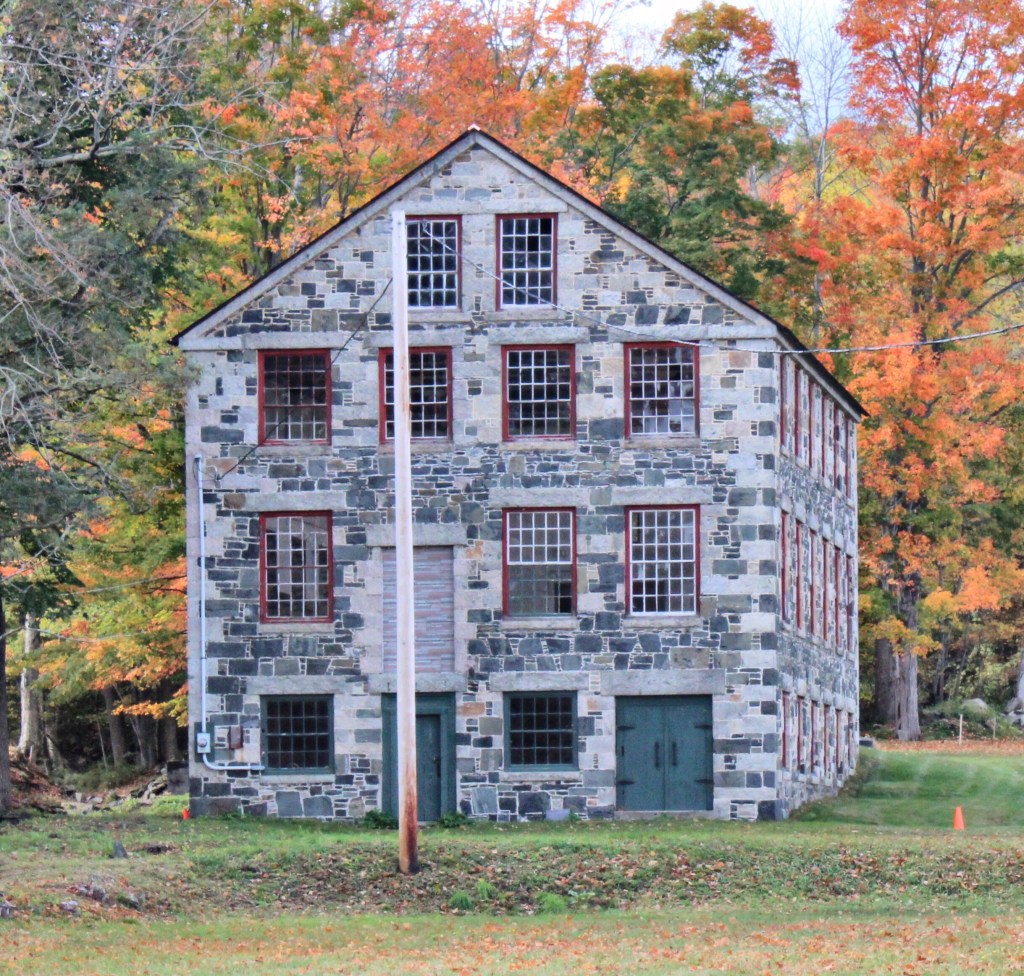
Located across the street from the main collection of remaining Shaker buildings in the Enfield Shaker Museum campus, this historic stone structure stands as a lasting remnant of the workspaces built for the active Shaker community there. Once part of a larger group of structures that once stood here (the machine shop being the only extant), including a tannery, blacksmith shop, animal sheds, and broom shop, this stone structure shows the significance of rural industry in Enfield. This structure was built in 1849 and was water powered. Stone Machine Shop was powered by a nearby stream and mill pond. Water flowing through the stream would enter into the mill’s head race, move across several water wheels, and exit through the tail race before being dumped back into the stream
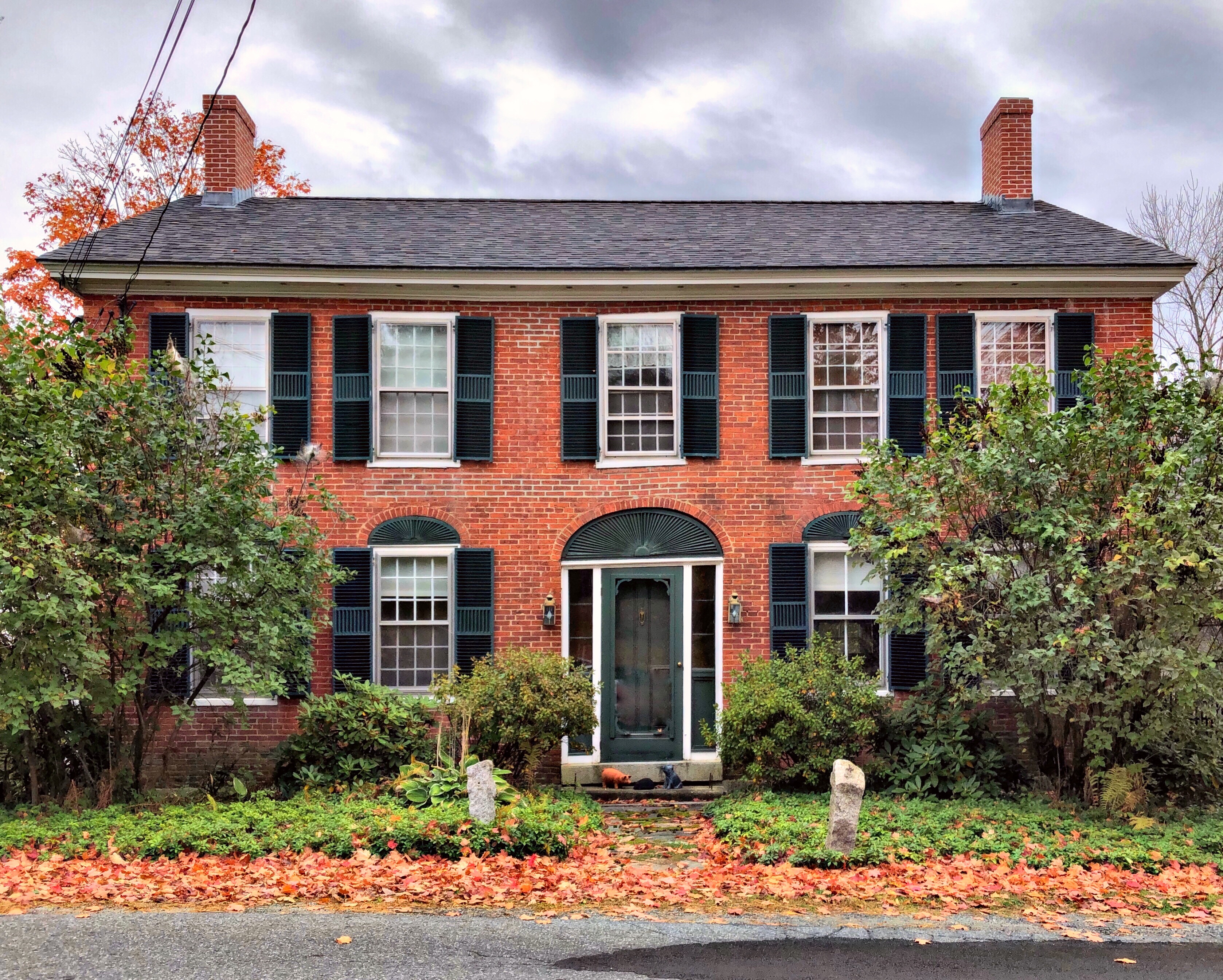
This 1819 building was originally located next to the first dwelling house on the present location of the Great Stone Dwelling in Enfield Shaker Village. The Shakers moved this structure to its current location in 1834 to make room for their new stone dwelling house. The building was primarily used as a school building for the Shaker children, but was soon converted to a tailor’s shop after the boy’s and girl’s schools were joined into one room. In Shaker communities throughout the United States, it was customary for Shaker tailors to create the clothing for the men of the community. A brother’s standard uniform consisted of a great coat, dress coat, waistcoat, and trousers.
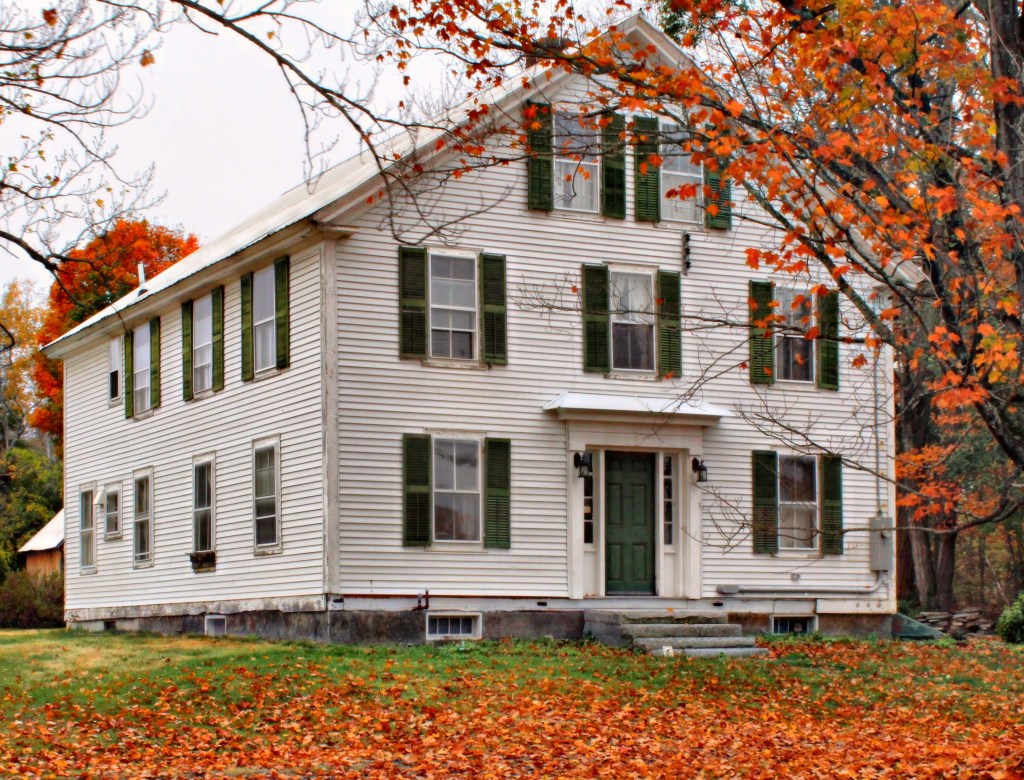
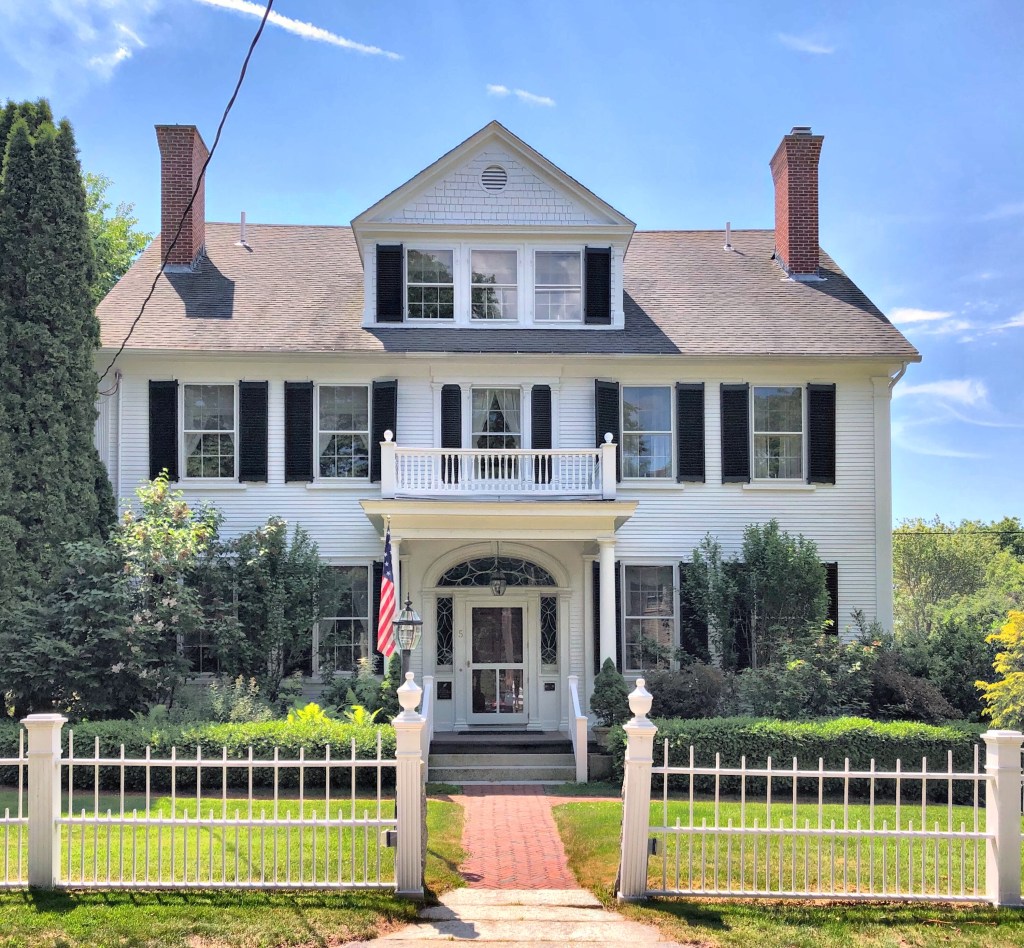
In New England, brick houses are more scarce for the simple fact trees are everywhere, brickyards were not. As towns and cities developed all across the region, some towns found they had a lot of clay in their soil, perfect for the manufacturing of brick. In Thetford, a man named Hezekiah Porter was the first to start a brickyard, manufacturing bricks for construction projects around the area. By the 1820s, a couple brick houses were built in the Thetford Hill area of town including the Hosford House, one of the earliest. Thomas Turner, a builder constructed the Hosford House and this home nearby for his own use, both utilizing Porter’s bricks. This fine Federal home was likely a great advertisement for Turner’s building skills.
Burton Hall was constructed in 1845 as a boy’s dormitory for Thetford Academy on a lot given by Orange Heaton (who lived nearby), just north of the original Academy Building. The structure was named Burton Hall in memory of Asa Burton, one of the Academy’s founders. The structure was sold by the Academy by about 1860 for $200, to a J.H. Huntington, who moved it across the street to its present site to replace his house which had burned the year prior. In the late 1930’s, Dwight Goddard, the owner of the home at the time, gifted the building back to the Academy since which time it has been known as Goddard Hall.
Fun Fact: Buildings historically were much more likely to be moved than demolished as the cost of building materials was much more than labor. Today, the opposite is true so many developers and owners prefer to demolish.
Is there anything better than a brick Federal style house?
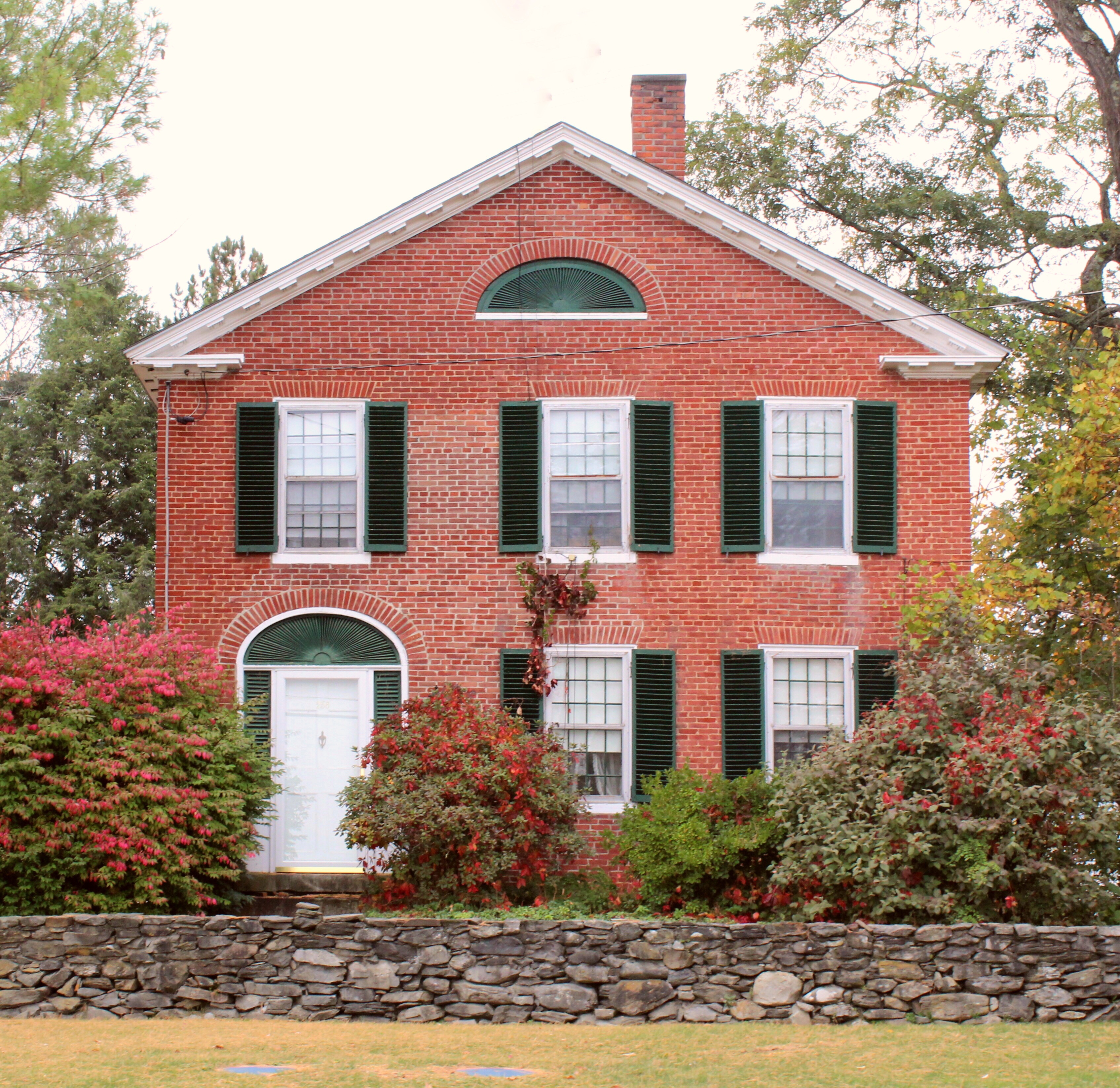
This house in Thetford, Vermont was built for Heman Hosford in 1821 from bricks produced by Hezekiah Porter, who established the earliest known brickyard in Thetford. Hosford sold the house to Enoch Slade in 1837 and it remained in the Slade Family for over seven generations. He became a prominent citizen of Thetford, was a surveyor and for many years justice of the peace, and in the latter part of his life was generally known by the title of “Squire Slade.” He was a supporter and trustee of Thetford Academy, in which his children and grandchildren were educated. He was a member of the Congregational church and an earnest supporter of the principles of the Republican party. The brick gable front home features a louvered sidelights and fan over the front door and in the gable.
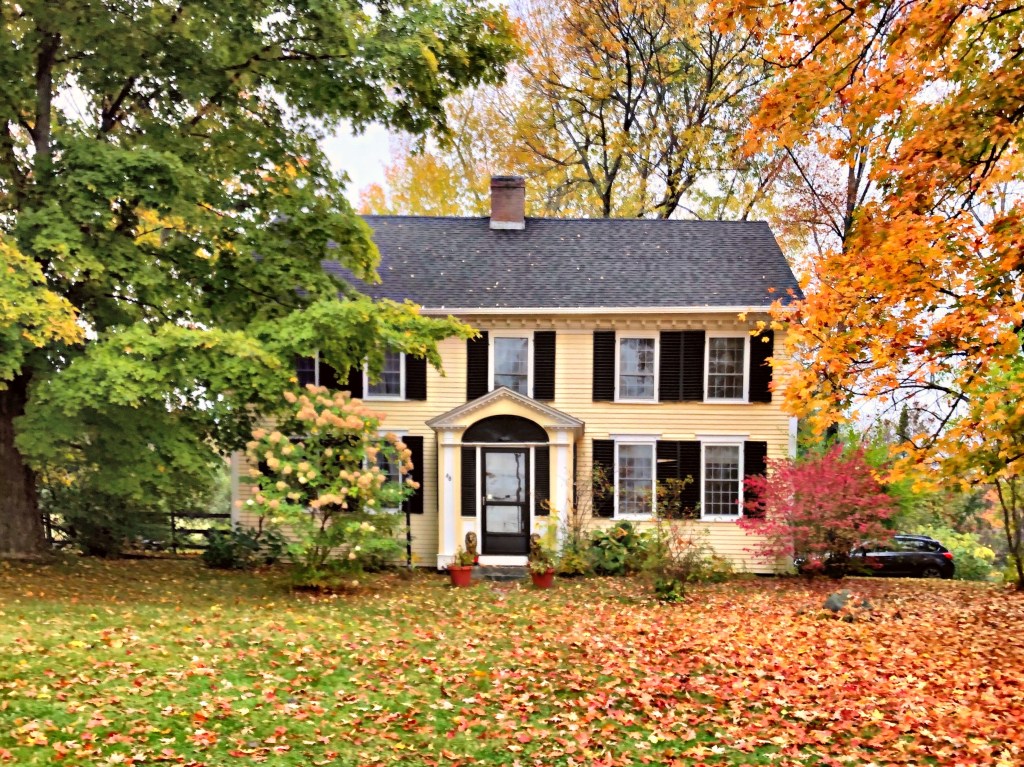
This transitional Federal house in Thetford was built around 1795 for an Isaac White. The house was later owned by Orange Heaton (who’s name perfectly fits the color of the leaves in the photo). The design is refined, yet stately with the enclosed, gabled, projecting entrance porch. Louvered panels and an elliptical louvered fan frame the door.
One of the most photographed buildings in North End is arguably this tenement block, built in 1895 at the corner of Prince and Salem Streets. As the North End continued to redevelop into a diverse immigrant community, tenement houses were constructed by those with the means, providing housing at low cost to those who arrived to Boston in the late 19th and early 20th centuries. Max and Etta “Ethel” Lebowich, Russian Jews, immigrated to Boston, settling in the Jewish quarter of the North End and opened up a dry goods store at the corner. The business did well, and the couple redeveloped their land and hired Swedish-born architect Charles A. Halstrom, to design the prominent apartment house. The Renaissance Revival building features massive pressed metal oriels and brick and stone construction. I am unsure if the oriels are truly copper, which would have been fairly expensive for a tenement building, or if they are pressed tin. Any insight would be much appreciated.
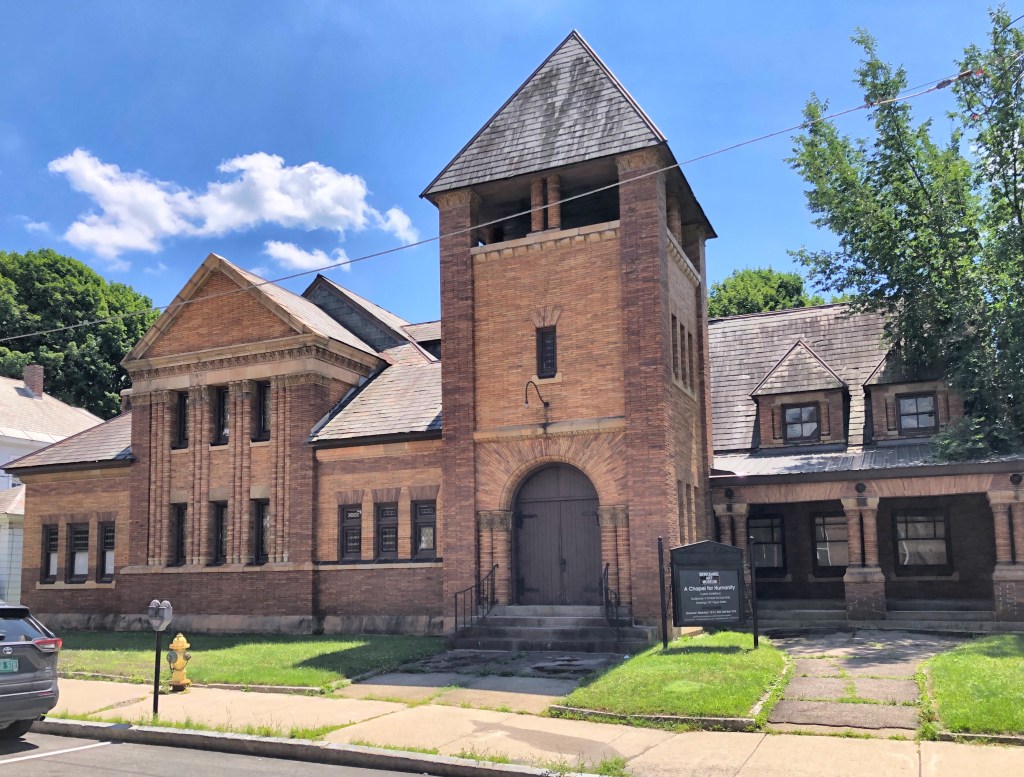
Tucked away off Main Street in North Adams you’ll find this charming little church. The Universalists were organized in North Adams in 1842, restoring an existing church near the Hoosic River. The congregation chose a site for a new church in 1852, and erected a white wooden chapel. It is unclear if the church was outgrown or a fire destroyed it, but the Unitarian society voted to build this church for a cost of approximately $25,000 in 1892. Architect Henry Neill Wilson of Pittsfield drew the plans, and the firm of Porter and Harnam of North Adams constructed the church. Due to the declining population in town in the mid-20th century, the church struggled and was sold to a private owner. The building began to decay by the 1970s and was later sold in 1996 to Barbara and Eric Rudd to house artist Eric Rudd’s installation entitled “A Chapel for Humanity”. The building is currently used as the Berkshire Art Museum Annex.
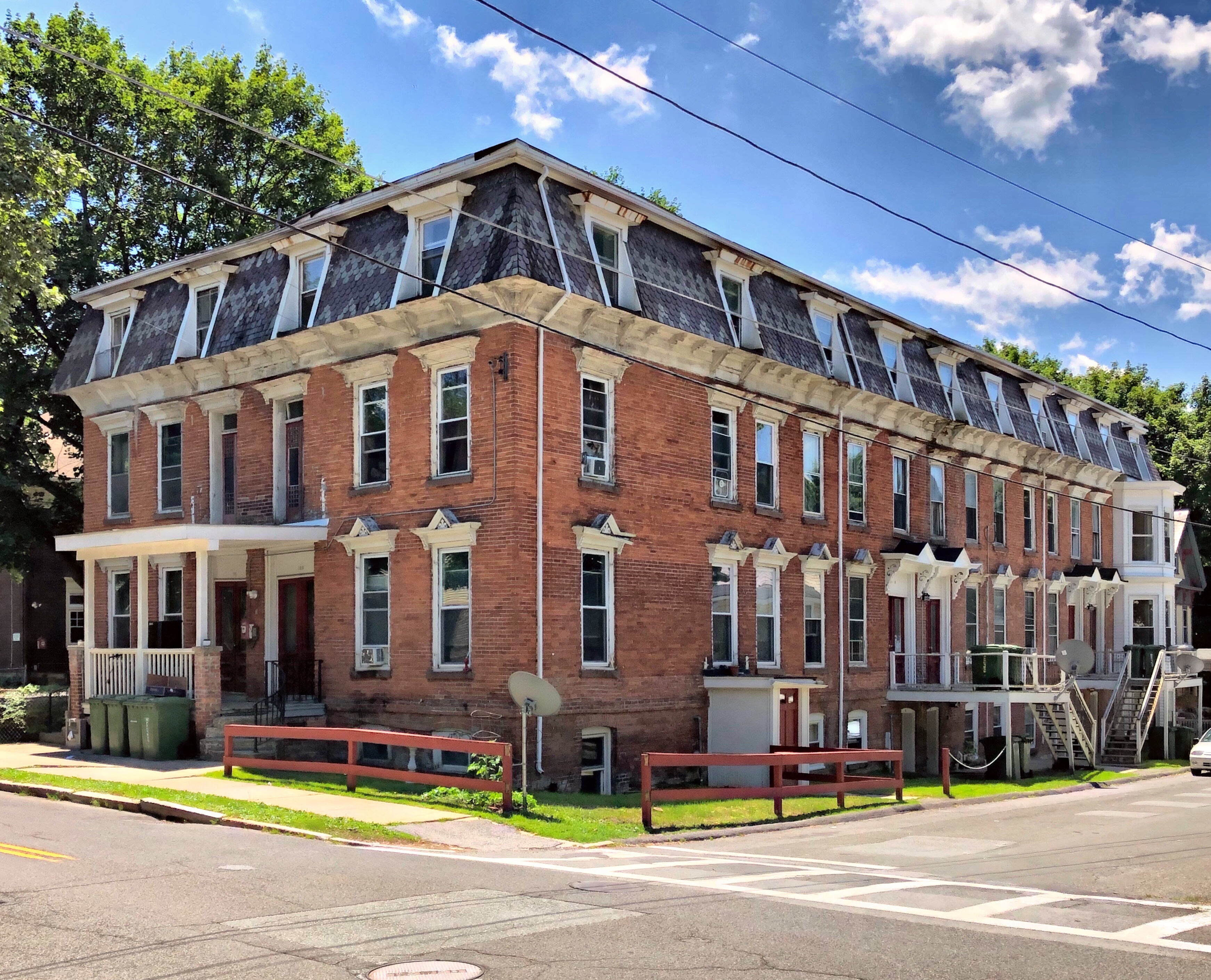
Industrial cities and towns all over New England drew in thousands of European immigrants looking for work. Due to the massive influx of workers and families, many towns and companies constructed tenement housing and other worker’s housing to provide living spaces close to factories and mills. This six-unit tenement house was built in 1872 and is a high-style Second Empire example of worker’s housing in North Adams. The use of brick, mansard roof, and window hoods was likely a concerted choice by the developers as they were located on a street lined by mill owners houses and the who’s who of North Adams.
Located on Trinity Park in Wesleyan Grove (aka the Martha’s Vineyard Camp Meeting Association), this 1878 church served the year round Methodist community in Oak Bluffs. The Trinity Methodist Church is a towered, Victorian Gothic structure of some distinction. Edward M. Hyde, a Methodist minister who had trained in architecture and art, designed it. The property that the church and Parish House sit on belongs to the Association, but the buildings are maintained by the congregation. Interestingly, should the congregation disband, the buildings would return to the Association.
This charming little cottage in Oak Bluffs was built in 1876 for Charles N. Jones, a resident of Medford, MA who had a home built there in 1872. His family’s summer cottage on Martha’s Vineyard was designed by the Ripley Brothers, Alonzo and Walter, carpenters who lived in town and designed and built many of the charming little summer homes there. The home features a wrap-around porch, a covered balcony at the second floor, and pierced board balustrade and cornerboards. Oh, and the paint scheme is perfect!
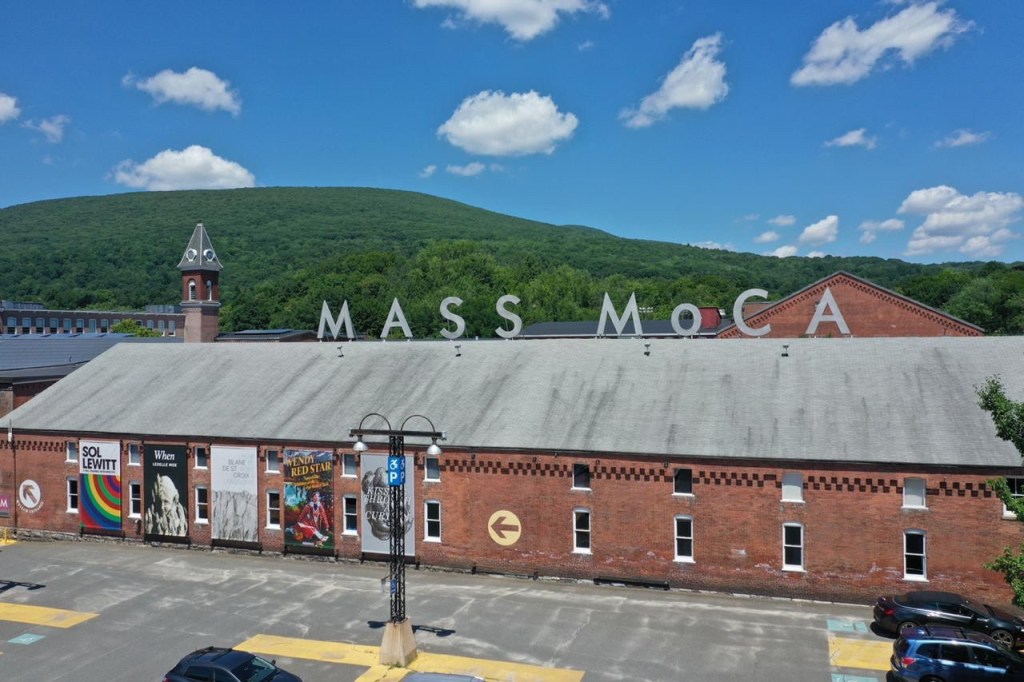
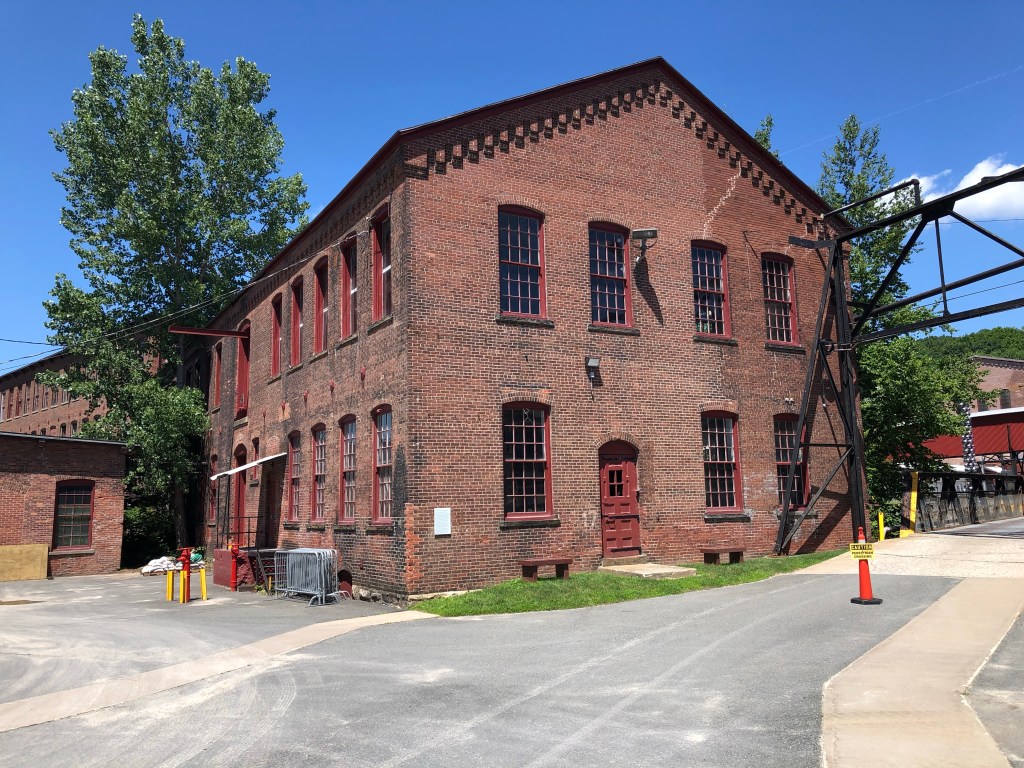
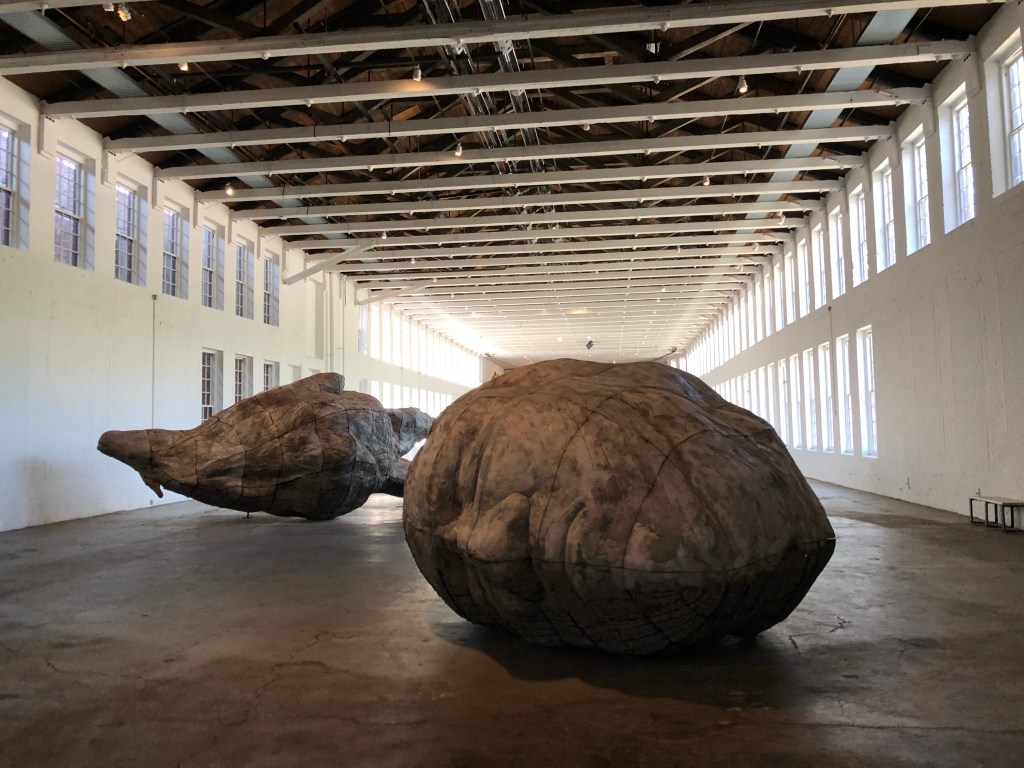
On a last-minute trip to the Berkshires, I couldn’t help but stop at the recently re-opened Massachusetts Museum of Contemporary Art (Mass MoCA) in North Adams. Being a huge nerd for industrial history and repurposed mills and factories, it was an absolute treat to walk through the large brick and steel buildings and wings lined with steel casement windows providing the perfect scenery for some amazing artworks. What is now known as Mass MoCA, – one of the premier art museums in New England – was once Arnold Print Works, a one time world leader in textile manufacturing with offices in New York City and Paris.
The Arnold Print Works were built on the Hoosac River near the center of North Adams. The company was the town’s largest industry during the city’s economic heyday from the Civil War until the early 20th century. The company was founded in 1861 by the John, Oliver, and Harvey Arnold, who began production of printed cloth at an existing cotton mill. At the dawn of the American Civil War, the newly formed company became flush with money due to government contracts for manufacturing Union Army uniforms. The company expanded after the war until a fire destroyed nearly all of the wooden buildings on the site. After the fire, a majority share of the company was purchased by Albert Charles Houghton, who became the first mayor of North Adams, and he oversaw the expansion and prosperity of the company, starting with new buildings of fire-proof construction.
By the early 20th century, many textile and cotton manufacturing shifted to the American South severely crippling the mill’s profits. In 1929, Sprague Electric Company moved to North Adams from Quincy, Massachusetts, and began buying the Arnold Print Works buildings. The print works moved much of its operation to nearby Adams and concentrated on a few particular products in its North Adams plant. The print works was finally sold in 1942 for just $1.9 million dollars, a far departure from its once prosperous past. The plant was shortly thereafter acquired by Sprague Electric Company.
While largely leaving the building exteriors as they were, Sprague made extensive modifications to the interiors to convert the former textile mill into an electronics plant. Sprague physicists, chemists, electrical engineers, and skilled technicians were called upon by the U.S. government during World War II to design and manufacture crucial components of some of its most advanced high-tech weapons systems, including the atomic bomb.
[Outfitted with state-of-the-art equipment, Sprague was a major research and development center, conducting studies on the nature of electricity and semi-conducting materials. After the war, Sprague’s products were used in the launch systems for Gemini moon missions, and by 1966 Sprague employed 4,137 workers in a community of 18,000, existing almost as a city within a city. From the post-war years to the mid-1980s Sprague produced electrical components for the booming consumer electronics market, but competition from lower-priced components produced abroad led to declining sales and, in 1985, the company closed its operations on Marshall Street.] (Mass MoCA History)
The complex sat vacant briefly before the Williams College Museum of Art, led by its director, Thomas Krens—who would later become Director of the Solomon R. Guggenheim Museum—advocated for a museum space for contemporary art that would not fit in traditional art galleries. The nearby Arnold Mills seemed like a perfect, yet daunting task to repurpose. Bruner/Cott Architects of Cambridge were hired to repurpose the mills and oversee the massive adaptive reuse project which today totals nearly 300,000 square feet of galleries and art venues.
William Jefferds Jr. was born August 30, 1779 in Kennebunk. On October 25, 1802 he married Sarah (Sally) Walker who was born in Arundel on March 4, 1783. Twenty years later, in 1803, Captain Daniel Walker gifted his son-in-law, Captain William Jefferds, Jr., “80 square rods of land, with love and affection” on the lane leading to Walker’s Wharf (he also gifted land to his other son in law, Nathaniel Lord. In 1804 the 2-story, Federal-style building that now houses Captain Jefferds Inn was built as their private home.
Capt. Jefferds was a ship owner and captain in the West Indian trade; he later became a merchant in Kennebunkport. He and Sarah had 11 children, and their family was considered one of the most aristocratic in Kennebunkport. Following Sarah’s death at age 88 in 1871 (her husband had predeceased her in 1851), the household furniture was sold at public auction and the home sold outside of the family.
The house was a two-story hipped roof Federal style dwelling, somewhat outdated by the latter half of the 19th century. By the 1880s, the Agnew Family who owned it at the time, had the home remodeled with Colonial Revival detailing, including the portico and large central dormer. The home was eventually converted to an inn, and is known as the Captain Jefferds Inn.
Check the Inn’s website for more images and history!
Away from the busy coast of Kennebunkport, Clock Farm, a mid-19th century farmhouse with an odd clock-tower caught my eye while driving by. Clock Farm is a rambling extended farm complex that remains a landmark in the more rural section of town. According to historians, the oldest part of the complex was a home that was later converted to one of the ells, was built in 1773 by a Peter Johnson. By the 1850s, the 1 1/2-story Greek Revival home and barn were built. In the late 19th century, the property was purchased as a summer residence by Thomas Lemmons, factory owner in Lawrence, MA. The story associated with the clock is that originally was mounted on his factory, but kept such bad time that his employees complained. In the early 20th century Emmons had the tower specially built to house the clock, which was transported here from Lawrence.
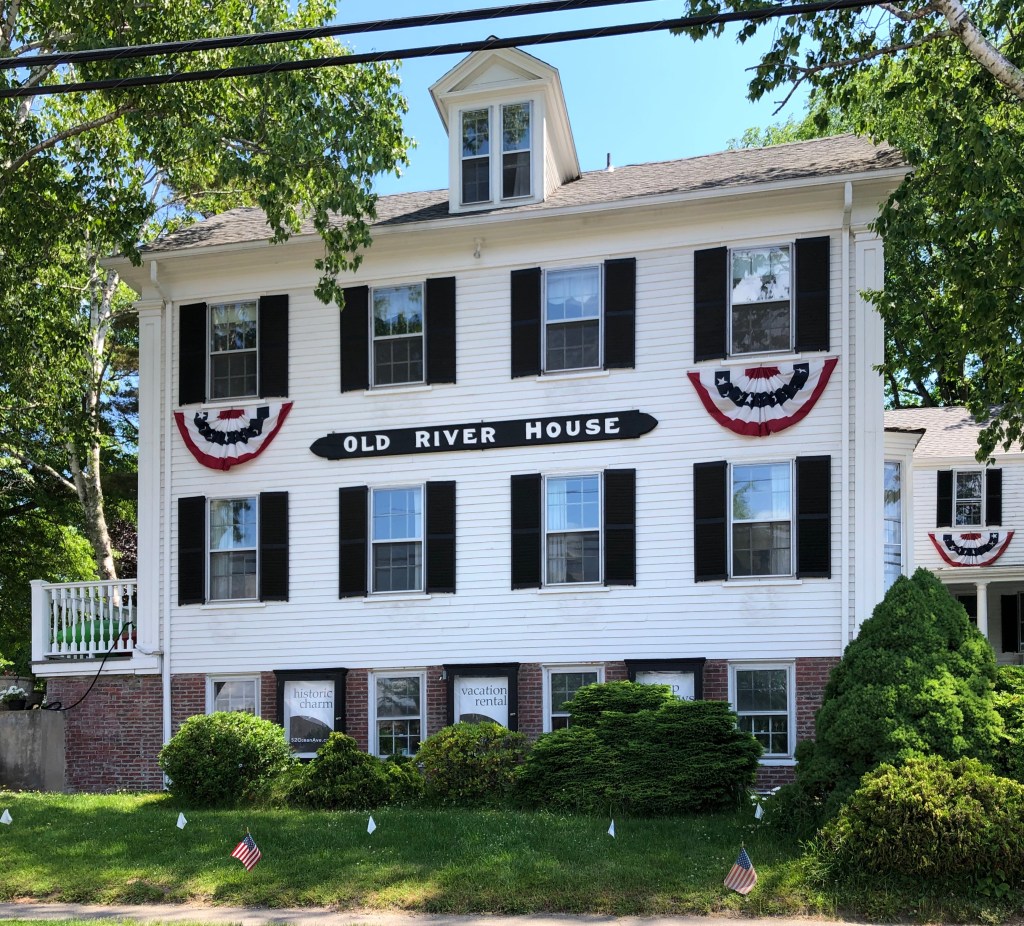
This Greek Revival home was built around 1848 for Thomas Maling, a rigger (person who installs the system of ropes and chains for a ships mast and sails). The home is built upon a raised brick foundation, likely to elevate it from the rising and receding nature of the Kennebunk River just across the street. By the 1890s, the home was converted to an inn, known as the Maling’s Inn, after the original owner. Today, the inn is known as the Old River House. On the lot, the old rigging loft remains and has been converted on the inside as additional rooms.