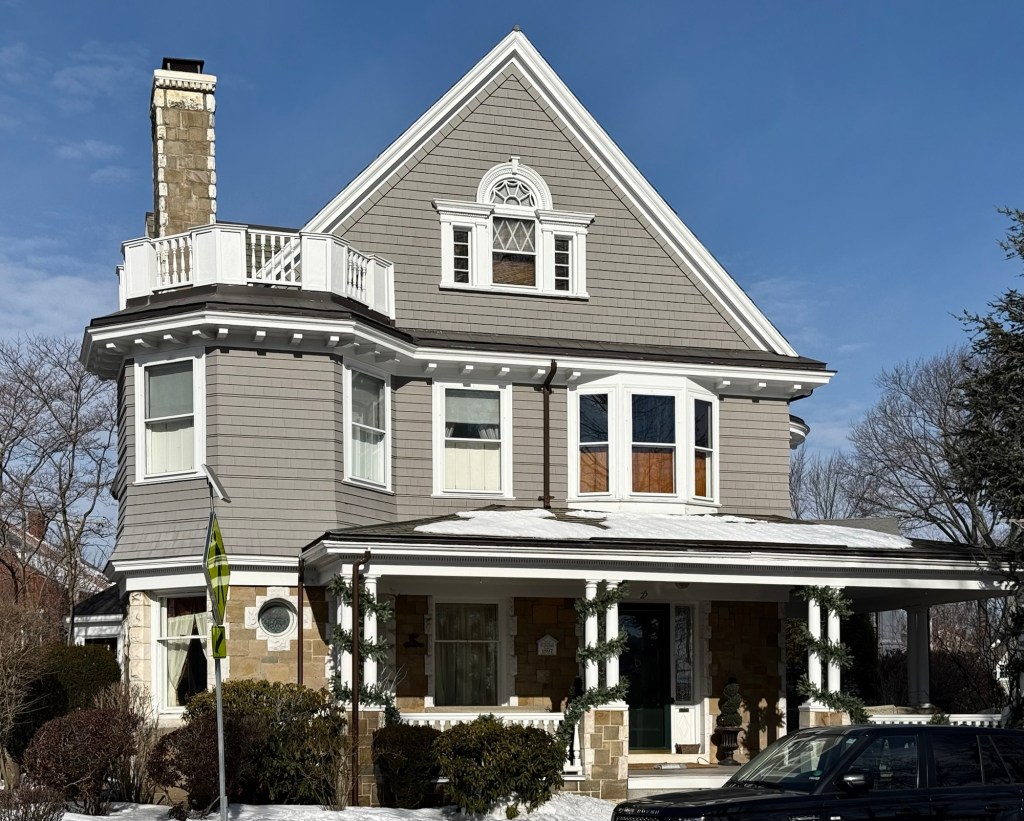
Parsons-Zielinski House // 1897

Bounded by three streets and overlooking the town Common, this stately house in Salem, Massachusetts, showcases a blending of Queen Anne and Colonial revival styles. Built in 1897 from plans by Boston architect, Alfred Fernald, the house was constructed by and for its first owner, Joseph Parsons, a Civil War veteran and house builder. The Parsons family continued to live in the house until Joseph’s death in 1915, after which his widow, Minnie, sold the property and moved to Florida. Dr. Ignatius Zielinski purchased the property in the 1920s and divided the house into a physician’s office and several residential units. Tragically, Dr. Zielinski died while serving his country during WWII, and the family would retain the property until 1987. The house is unique for its materiality with the first floor consisting of ashlar, rough-faced stonework with a wood-shingled second story, stained glass windows and a wrap-around porch.

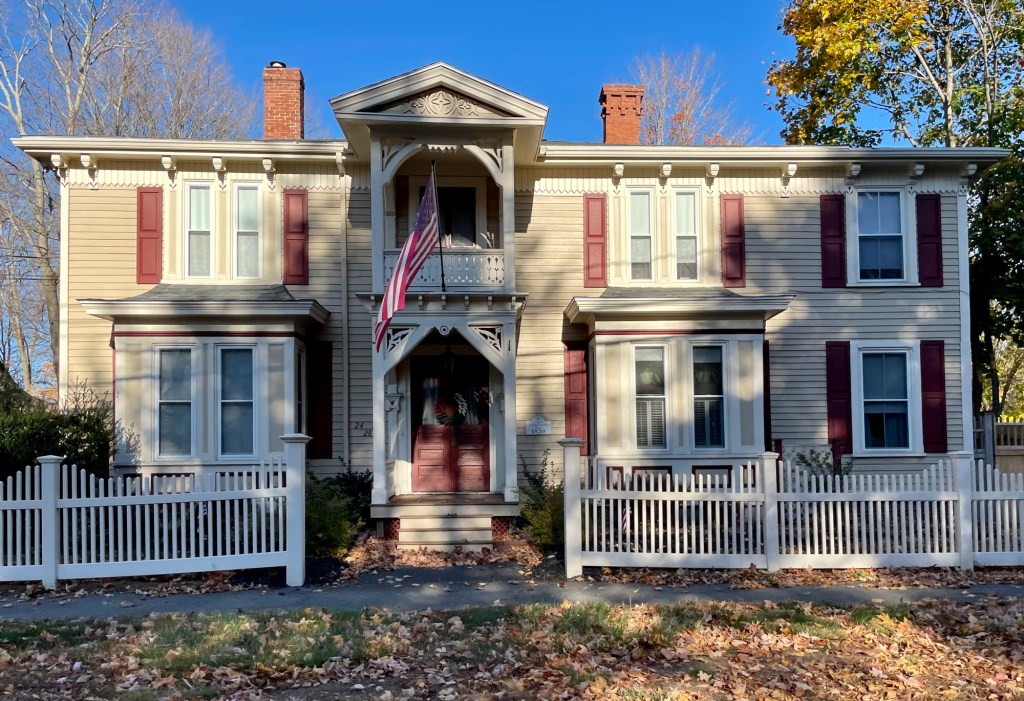
Thomas Hovey House // c.1785

This lovely three-story frame house on Winter Street in Salem was built in the 1780s for mason, Thomas Hovey. The structure’s front-end, five-by-one-bay portion with stone foundation was built first, in the Federal style, likely with traditional finishes seen in the early Federal period. The building’s rectangular shape, hipped roof, molded corner boards, and foreshortened third-story windows are indicative of its Federal-era origins. By around 1870, the Italianate decorative features, including a hooded double-door entrance, two-over-two windows, a second-story bay window, a bracketed cornice, and bracketed window lintels, were added to the exterior in an effort to modernize the home by later owners. Like many other houses in Salem, this building was extensively documented by Historic Salem Inc. who compiled a detailed history of this and hundreds of other homes nearby.

Temple Court Apartments // 1912

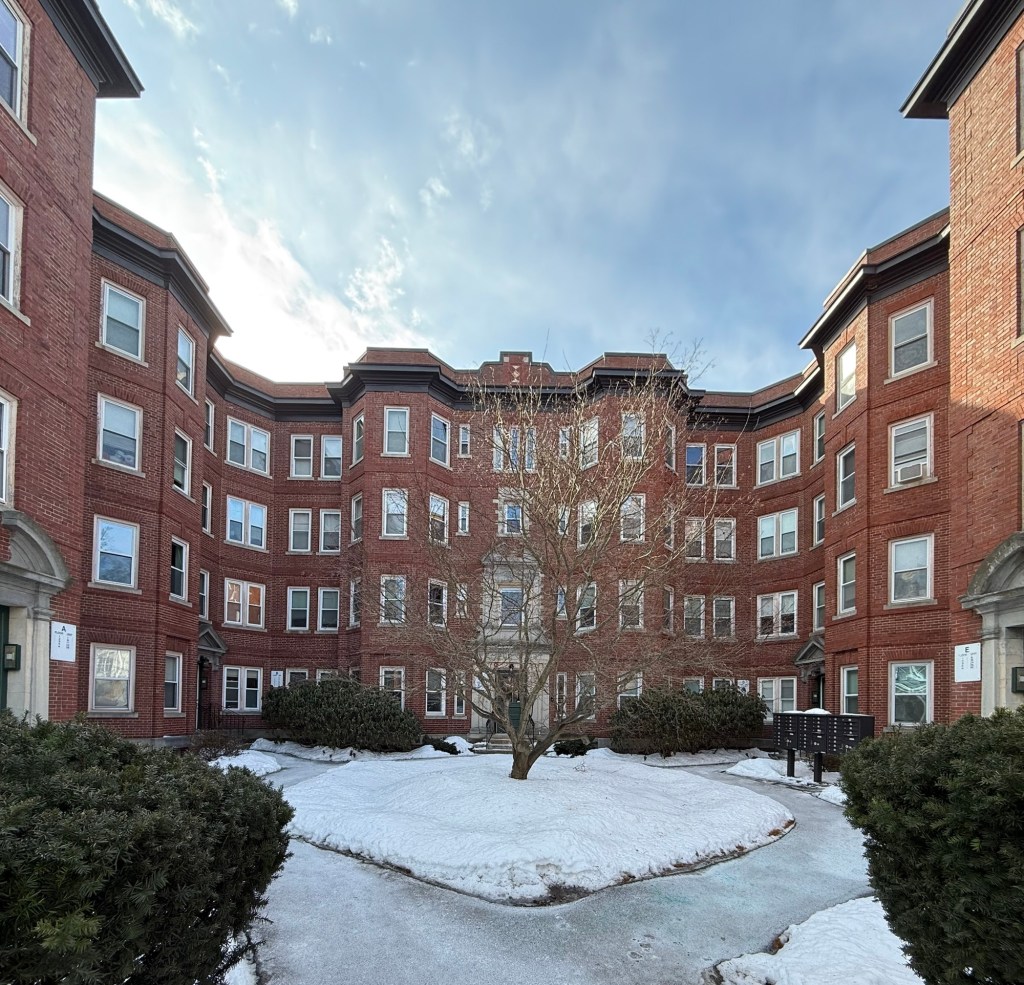
Constructed in 1912, Temple Court at 15 Lynde Street was erected on the site of two earlier buildings during a period of great population growth in Salem. The parcels here were acquired by Aroline C. Gove (1857-1939), a prominent local property-owner and developer between 1908 and 1911. Ms. Gove was a prominent Salem citizen and daughter of notable inventor and businesswoman Lydia Pinkham. With a business-oriented mindset like her mother, Aroline hired architect Harry Prescott Graves of Lowell to furnish plans for an apartment building on this site. Completed in 1912, the apartment building, known as Temple Court, included 36 units with two-, three-, and four-room suites with a live-in janitor. The building is unique for Salem as a courtyard style building, more common in Boston and Brookline. The building’s large mass is broken up by its setback with the U-shaped form and central landscaped courtyard, series of projecting octagonal bays, and multiple entrances. Temple Court was converted to condominiums in the 1980s.

Salem Water Company Offices // 1879

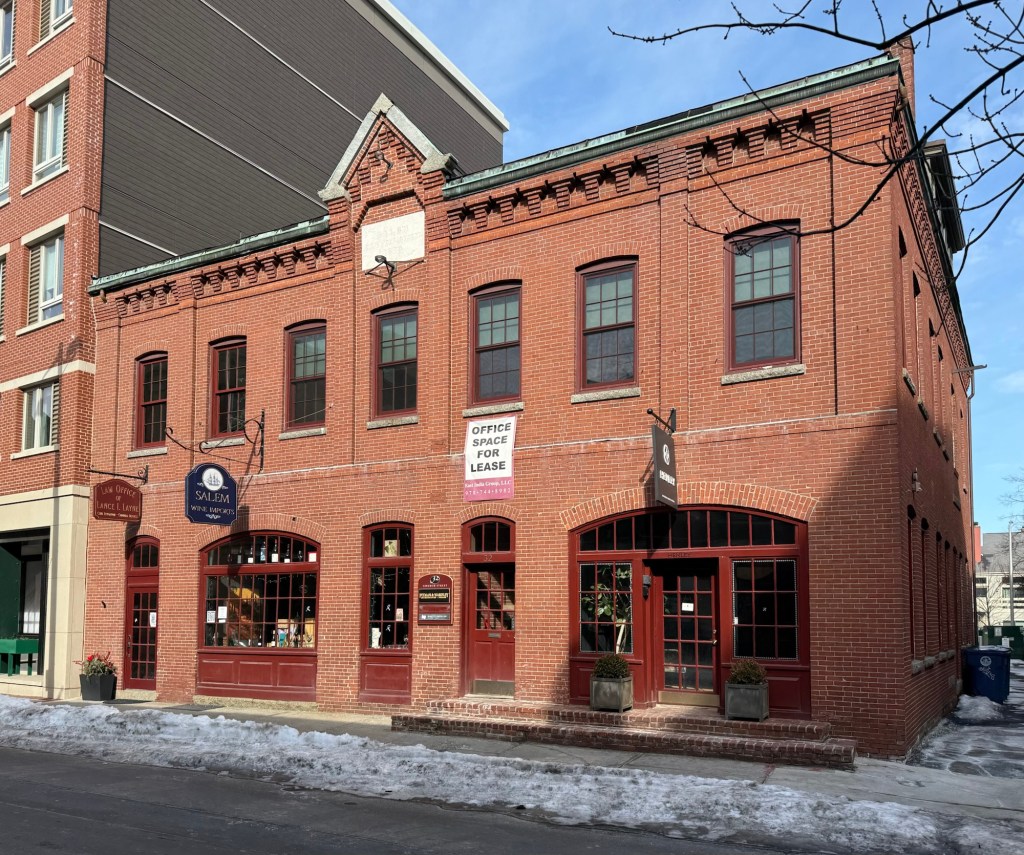
Salem, Massachusetts, was first settled by Europeans in 1626, and it would take 170 years until in 1796, an organization of citizens was established for the purpose of supplying the inhabitants generally of Salem and Danvers with pure spring water. The Salem and Danvers Aqueduct Company was incorporated in 1797  “for the purpose of conveying fresh water by subterraneous pipes into the towns of Salem & Danvers.” As Salem grew, the need for a more central water district and distribution network became a necessity for the health and prosperity of the city. A 1864 law allowed Salem to construct its own water works, and it formed a Board of Water Commissioners who designed and constructed the system. From this, funding was acquired and paid for the laying of tens of thousands of feet of subterranean water distribution pipes connecting the reservoir to buildings and hydrants in Salem. Offices of the Waterworks were scattered and obsolete until 1877, when funds for the construction of this structure at 32-34 Church Street were set aside as the new Water Department Offices. Completed by 1879, the building is a great example of a Romanesque/Italianate style masonry structure with corbelled cornice and arched openings. According to the city directories, this building continued to operate as the Salem Water Works into the late 1930s. By 1945, it was the headquarters of the United States War Price & Rationing Board. In 1964, it held a number of city offices including: Civil Defense headquarters, Fire Department headquarters, Licensing Board, Planning Board, and the City Veterans Service, before being sold by the City of Salem to private ownership in 1976.

Fowler House // 1809

Photo courtesy of Wikimedia commons.

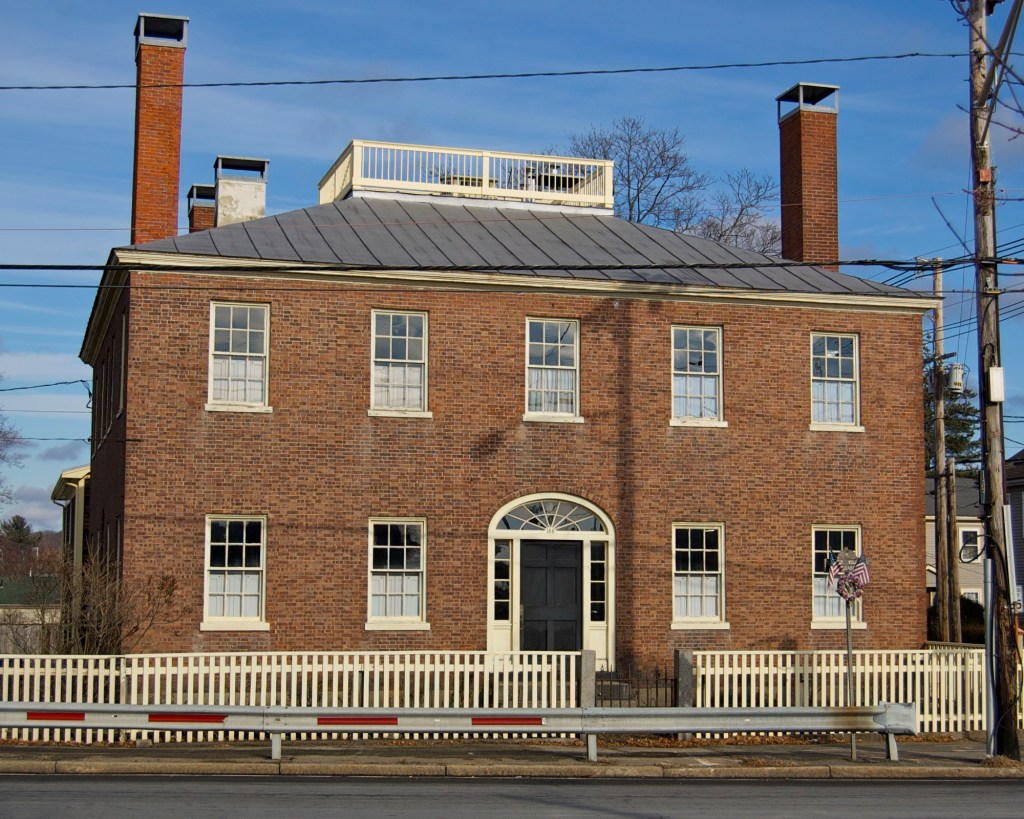
The Fowler House is located in the Danversport section of Danvers, Massachusetts, and is one of the town’s few brick Federal period homes. The residence was built in 1809 by builders Levi Preston and Stephen Whipple for Samuel Fowler Jr., an early Danvers industrialist and landowner in this part of town. The property was passed down through generations of the Fowler family and ultimately acquired by the Society for the Preservation of New England Antiquities (SPNEA, now known as Historic New England) as their second property acquisition in 1912. Uniquely, Historic New England granted life occupancy of the house to the two unwed Fowler sisters, who had resided here, even as it was converted into a museum. When bought by SPNEA, some members were concerned that the Fowler house was not grand or architecturally interesting enough to warrant its acquisition, Samuel Appleton, the founder, stated, “As might be expected, the Fowler home reflects the simple tastes of its owner. As seen from the square the house is as severely simple as it could be. It depends for its effect on its very simplicity and admirable proportions. The principal features of the house may be said to be simplicity, good taste, solid construction, splendid preservation, and homogeneity.” The property was eventually sold by Historic New England to a private owner, but a preservation easement by the Society ensures its preservation for the future. The Fowler House was recently listed for sale, and the property retains many historical features, including original ca. 1810 wallpaper in the main two-story entry hall and a large hearth in the main kitchen, its original floors, plaster, woodwork and other features.

Porphyry Hall // 1880

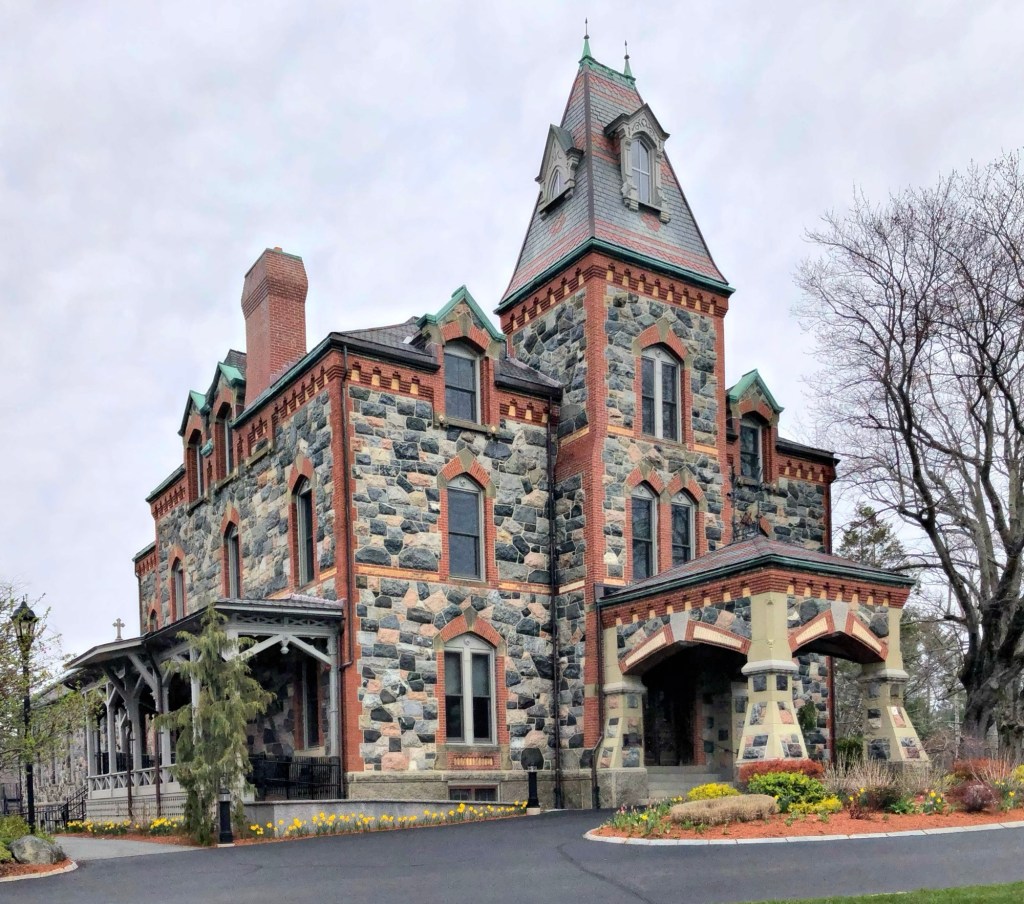
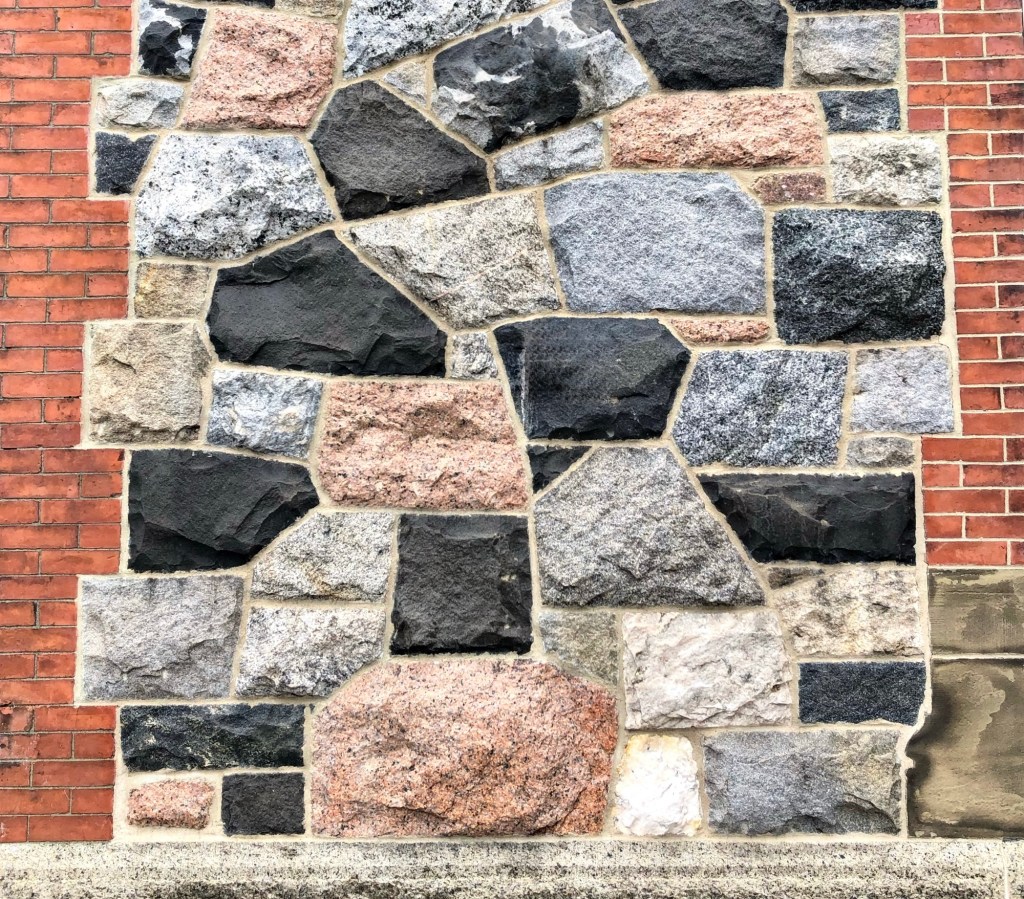
The Jacob E. Spring Mansion, also known as Porphyry Hall, is a high-style estate house located in Danvers, Massachusetts, that is one of the finest and most unique in the state! The house was built in 1880 for Jacob Evans Spring (1825-1905), who was born in Brownfield, Maine, and at the age of twenty, he went to Argentina and amassed a fortune in the wool business in Buenos Aires between 1845 and 1865, when he returned to the United States. Jacob and his wife, Sara Duffy, would purchase a large farm in Danvers and began planning for their family country home. Their residence was built on a high hill over two years and constructed of over 40 types of stones of irregular size and color with door and window sills of Nova Scotia freestone with arches of the doors and windows and corners of brick. The mansion was designed by architect George M. Harding of Boston, and built by several skilled masons over many months. Mr. Spring named his estate, “Porphyry Hall” with Porphyry meaning an igneous rock with large crystals in a fine-grained matrix; suitable for the walls of their mansion. The Spring’s lived lavishly at this home and spent nearly all of their fortune, selling the property after just ten years to the Xaverian Brothers, who opened it as Saint John’s Normal College. In 1907, the compound was re-organized as a Catholic boys prep school. In 1915, a chapel was added to the rear of the building, constructed from gray fieldstone to blend with the main house. Have you ever seen a building like this?

Spofford-Root House // c.1830

The Spofford Family was one of the earliest to settle in present-day Georgetown, with the earliest enclave of homes built along Andover Road in the western part of town. A few generations later, subsequent family members would built in the town center, taking advantage of the growing commercial and business community. This Federal period home (with later alterations) was built around 1830 for Greenleaf Spofford (1801-1887) the same year as his marriage to Emily Willmarth. The couple would move out of town and sold the home to Dr. Richmond Barbour Root (1846-1930),  the second of a highly respected, three generation family to practice medicine in Georgetown. The overlay of machine-sawn Stick Style decorative porch, bracketed cornice and bay windows were likely added by Root sometime after the Civil War. Unlike most owners of Federal and Greek Revival-style dwellings, Dr. Root may have held a valid professional interest in appearing as up-to-date as possible with a “modernized” home that also served as the site of his office and consulting rooms.

Moody-Hall House // 1830

Transitional Federal/Greek Revival style houses are among my favorite. You can see the emergence of Classical architecture blending with American architecture with features of both styles, which work well together. This example can be found on Elm Street in Georgetown, Massachusetts. The dwelling appears to have been built for Dr. George Moody, one of four physicians in Georgetown in 1840, who began his practice in town in 1830. In his first years there, he oversaw patients during Typhus and Dysentery outbreaks and was credited with having determined that a high sulphur content in the local water supply accounted for the increased cases. Dr. Moody died in 1866, and his widow continued to live in the house until her death in 1880, after which it was sold to Mrs. Charlotte Sawyer Hall, the widow of local shoemaker Seth Hall.

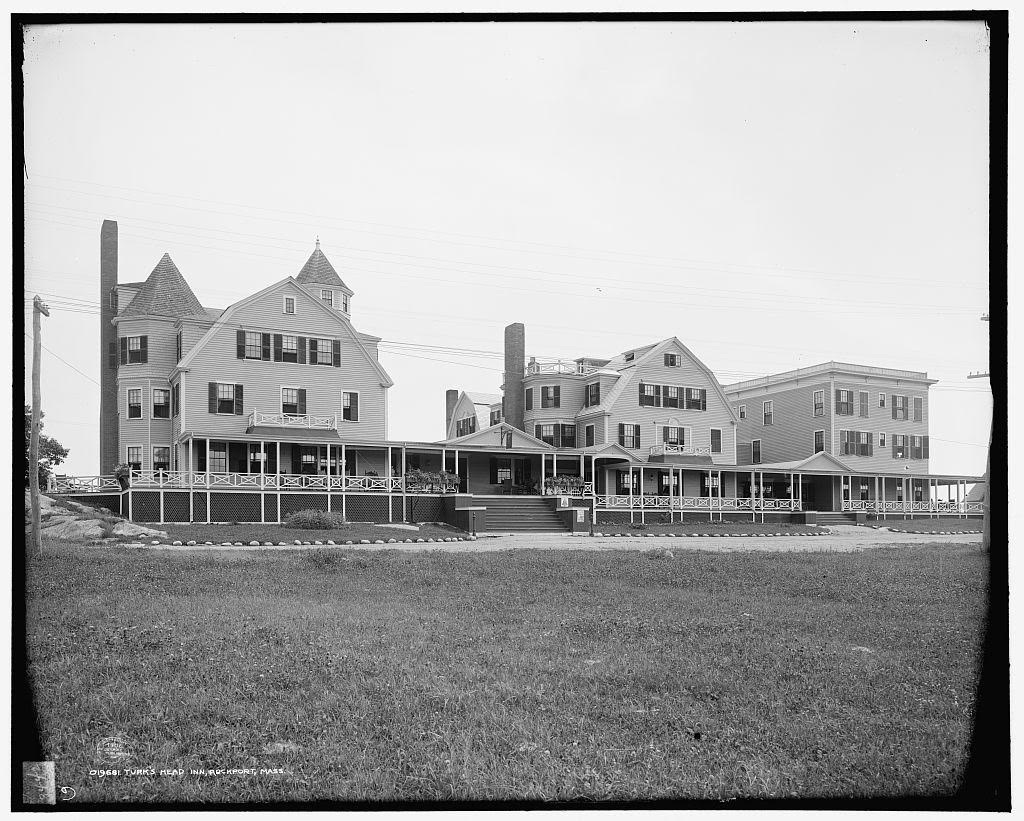
Turk’s Head Inn // 1890-1970

The Turk’s Head Inn was once Rockport’s grandest getaway. For those uninterested in building their own summer cottage to spend the along the coast of Massachusetts, luxury summer resorts provided summer rentals for those escaping the hot and polluted cities in favor of cool ocean breezes. Once situated in the  Land’s End section of Rockport, the Turk’s Head Inn, had sweeping views of the coast and islands in the distance. The initial portion was built from 1889 to 1890 by builder J. M. Wetherill of Rockport based on plans by architect H. M. Stephenson of Boston. It was expanded and became this rambling, E-shaped Colonial Revival structure with a seaboard frontage of two hundred feet and wraparound verandas over three hundred feet in length. Over the years, the Turk’s Head Inn suffered a number of fires, and its central and southeast wings were rebuilt, the latter in 1905 by then owner C.B. Martin. With a peak capacity of 200, the hotel, uncharacteristic of the regional hospitality industry, remained in operation for eighty years before it was closed down, partially destroyed by fire, and the remains removed in 1970.

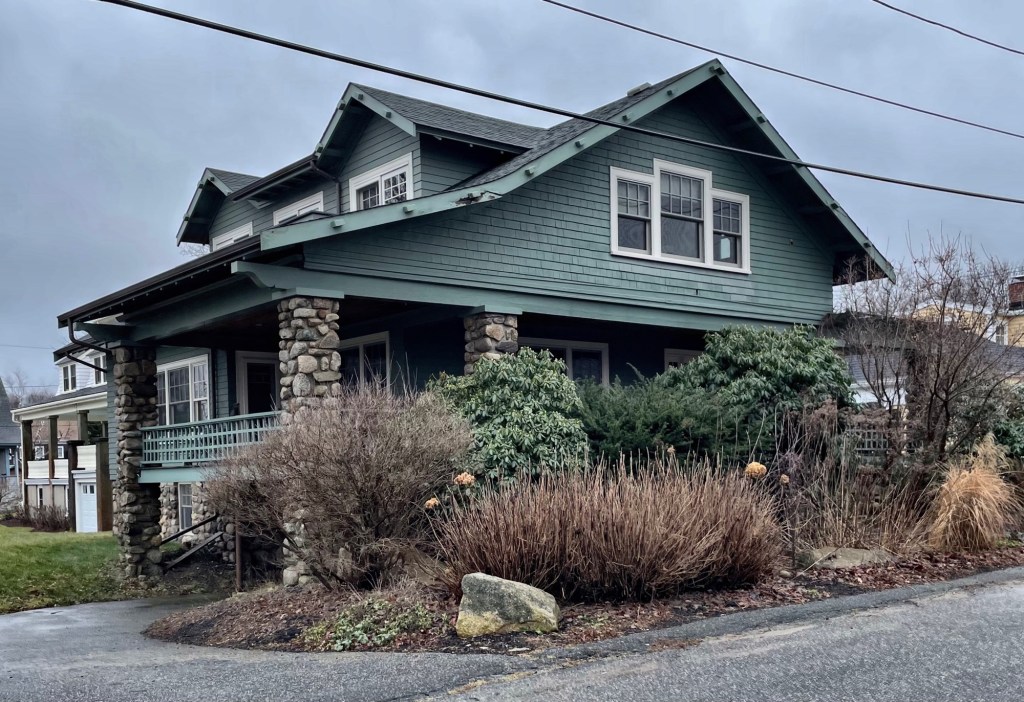
Haskins Cottage // c.1910

Another great turn-of-the-century summer cottage in Rockport’s Headlands neighborhood is this c.1910 Craftsman house on Norwood Street. The listed early owner was L. S. Haskins who likely utilized the house as a summer residence. Architecturally, the cottage follows the Craftsman form with a low-sloped roof with broad eaves, shed dormer, exposed rafters, and rubblestone foundation and columns of stones taken from the site and nearby neighborhood.