Haven Avenue Cottages // c.1877

When Andrews Point in northern Rockport, Massachusetts, was opened for development by speculators Eben B. Phillips and George Babson, they envisioned the colony, “Ocean View” as a rival to other nearby summer colonies of Beverly Farms, Gloucester, and Magnolia. Roads were laid out and house lots were plotted with larger lots for big summer cottages along the coast and smaller cottage lots at the interior of the development. The rocky coast and more limited access compared to its rivals, caused Ocean View to lack in sales, but there are still some great remaining cottages to be found here. These two early cottages are great surviving examples of the modest, middle-class homes for summer residents. These two charming Victorian cottages sit side-by-side and were owned by an L. Brigham and Benjamin Lewis and both are in a great state of preservation 150 years later.

Bailey Cottage // 1896

In 1896, Edward L. Bailey, a carpenter and housebuilder, erected this cottage on Haven Avenue in Rockport, Massachusetts. Bailey resided in the house, likely year-round and ran a store on the nearby main street. His cottage served as both a residence and an advertisement for his skilled carpentry, which likely offered him commissions for other cottages nearby. Bailey was also selected as the builder for the town’s Carnegie Library in 1907. The cottage blends Queen Anne and Shingle styles effectively under one roof.

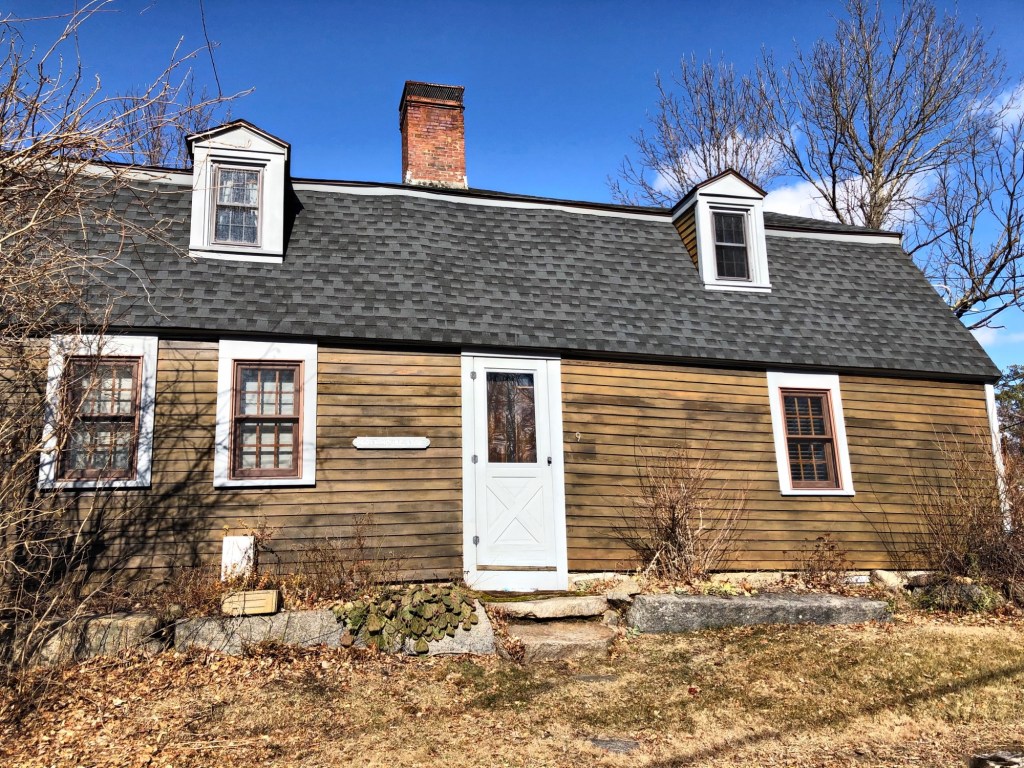
Gott House // 1702

Halibut Point State Park in Rockport is one of the most enchanting places in Massachusetts and it has so many layers of history! Before white settlement, Halibut Point was used seasonally by the Pawtucket people who came to harvest its wild fruits, fish and game on the land. In 1702, Samuel Gott (1677-1748) purchased eight of the 6-acre lots on Halibut Point. At the time, there were no roads to Halibut Point, but Samuel built this house on the land, and he began to farm here. The property passed down the family line and was later owned by Joshua (1754-1846), who came of age just as the War for Independence began. Joshua enlisted with the Revolutionary Army as it was being formed in Boston, and in 1776, he joined General Washington’s forces in the unsuccessful defense of New York. He returned home to lead a long and useful life as farmer and fisherman and was known as Captain Gott. As of the 2010s, the property remained in the same family, handed down through the generations from Samuel Gott over 320 years to today. How cool!

Grader Block // 1885

Commercial districts and Main Streets in historic New England towns are full of amazing architecture that is meant for pedestrians. Strolling through these areas, the varied styles, materials, storefronts, and signage provides a sense of artistry and community that is impossible to achieve in suburban strip-malls and shopping centers. Historic buildings serve not only as visible anchors to communities, but are more often occupied by local, women, and/or minority-owned businesses compared to modern buildings and districts. Marblehead has many historic (sometimes Revolutionary-era) buildings that are commercial and contribute so much to the town’s vibrancy. This building was constructed in 1885 as a high-style Italian Renaissance Revival style commercial block, replacing a late 18th or early 19th century building. The Grader Block features a rounded corner, scored siding to resemble ashlar masonry construction, and Classically inspired design features like pilasters and pediments. Today, the storefronts are occupied by local small businesses.

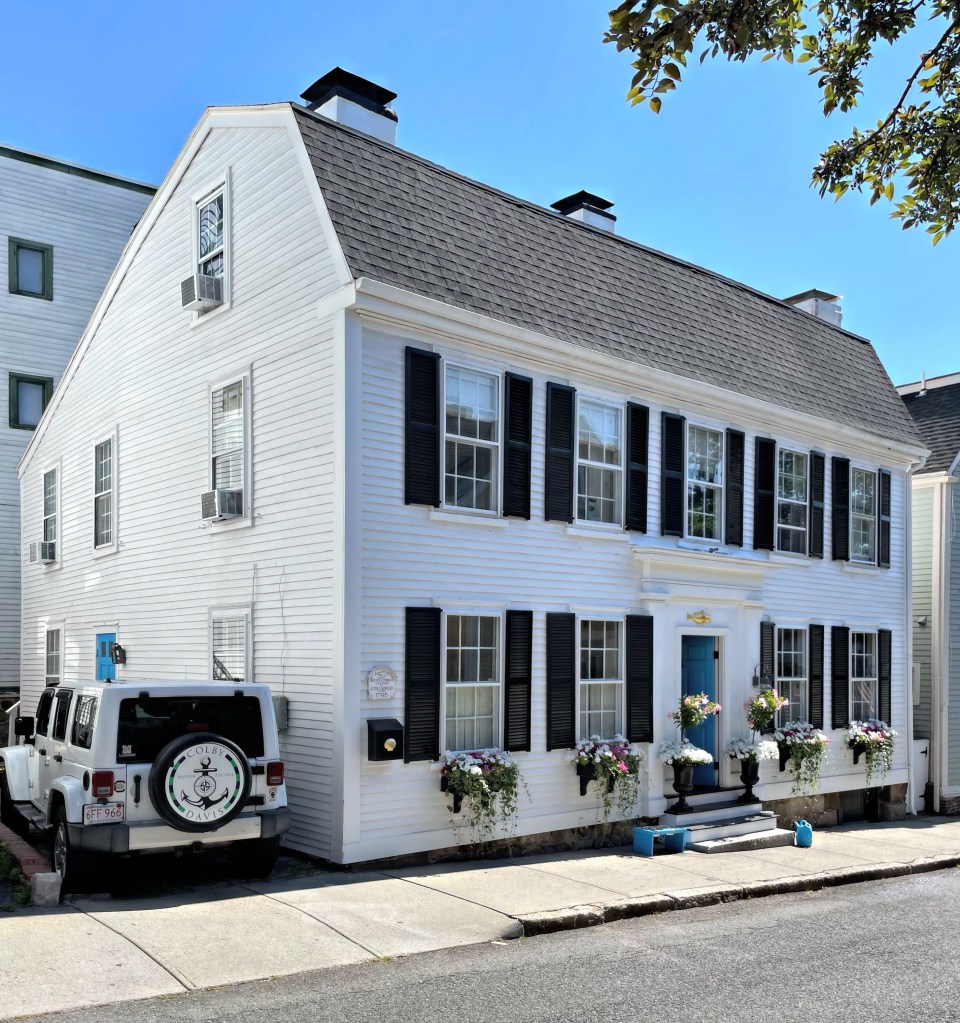
Alexander Watts House // c.1755

In 1748, Alexander Watts, a merchant and sea captain purchased land in Marblehead, building a dwelling house, shop, and barn. This home was likely built in the 1750s, not long after he purchased the lot from David LeGallais, a merchant and prominent landowner in town. The gambrel-roofed Georgian house with its elaborate entry stands out on the street for its large frontage, with many other period homes sited on narrow lots, with the side of the house facing the street. He likely lived in the shop nextdoor until he had enough money to build this separate, more elaborate dwelling. Captain Watts died in 1772, and the property was willed to his “wife Rachel for her widowhood, and at her decease, one-half was to descend to her heirs, and the other half to his kinsman, Alexander Watts of London, England”. By the 1780s, the property was noted as “much decayed” with his widow likely struggling to maintain the property, renting the shop to others for income. On April 13, 1795, the estate was divided, meaning Rachel, Alexander’s widow, likely died at the home.

John Adams House // c.1795

In 1795, mariner and fisherman John Adams had this late-Georgian house built in Marblehead, which resembles many homes in the area built a century earlier. The house was apparently built by Benoice Johnson, a cabinetmaker from Roxbury who settled in Marblehead. The gambrel-roofed house had a later lean-to added on the rear for additional square footage. Adams died in 1816 and the house remained in his family until the Great Depression!

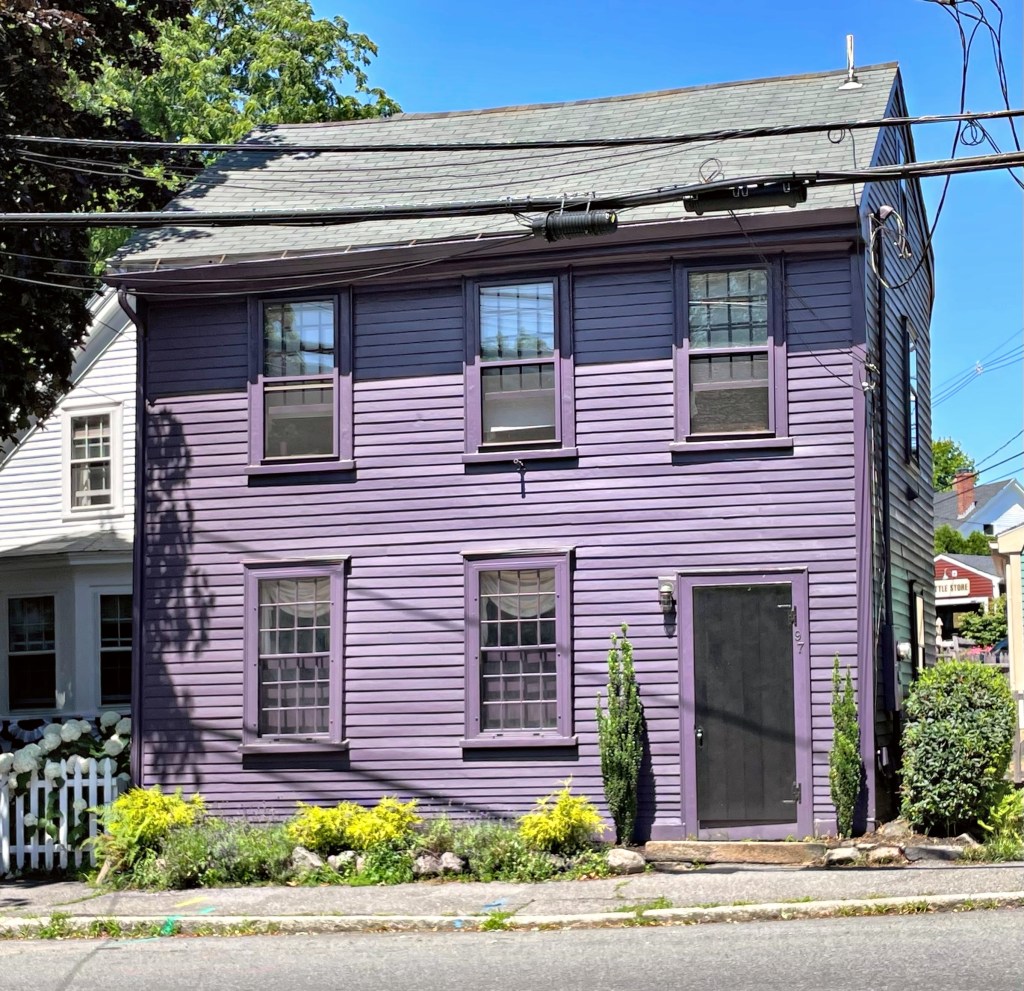
Merritt House // c.1725

In 1725, Samuel Merritt, a fisherman, inherited some of his father’s land in Marblehead and built this house. After Samuel Merritt died in 1743, his second wife Mary, her daughters Mary and Elizabeth and her son-in-law James Dennis, lived in the house. They added the one-story lean-to, giving the house a saltbox roof in 1762. This house, and many others in Marblehead are the reason why human-scaled historic neighborhoods built before the automobile, are some of the best places to explore. Historic preservation equals tourism, which results in tax revenue and property values, stabilizing neighborhoods and cities from the ebbs and flows of the economy. Gotta love it!

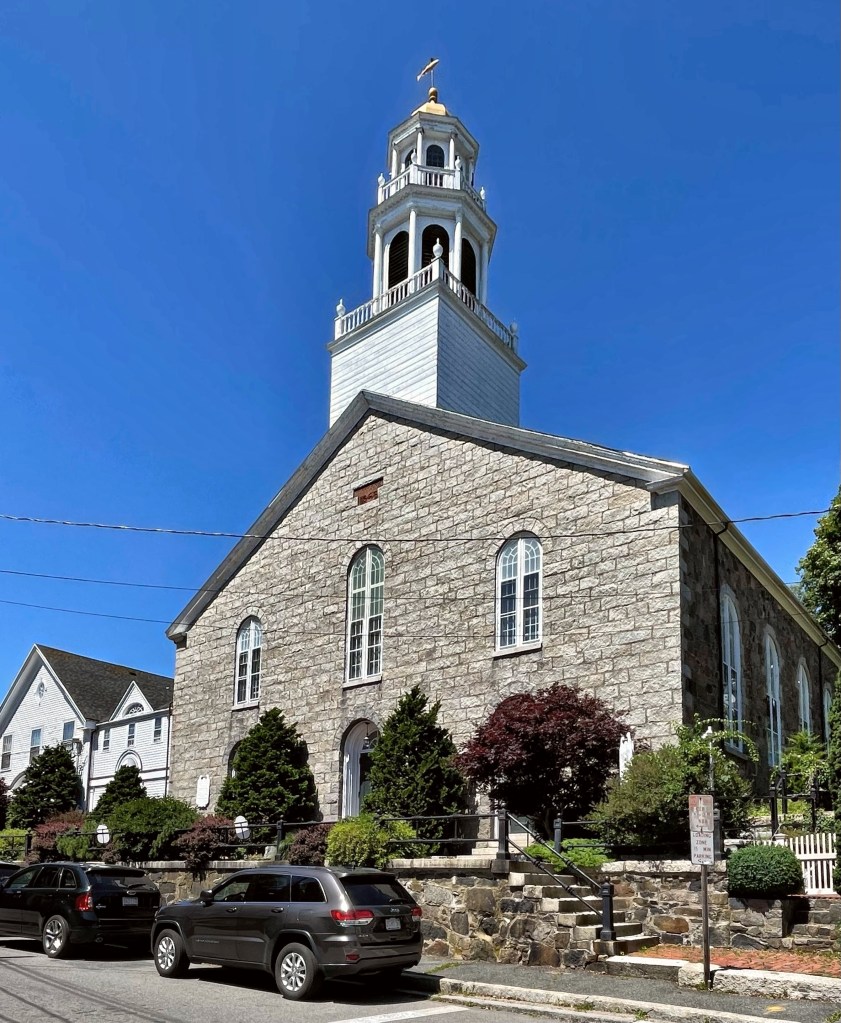
Old North Church, Marblehead // 1825

Old North Church, formally the First Church of Christ Marblehead, was organized in 1635 by fishermen and mariners who formed a church to relieve them of the burden of travel to Salem in order to receive church sacraments and participate in civil affairs (before the separation of church and state). They met in member’s homes until 1638, when a meeting house was constructed overlooking the ocean. By 1695, a “modern” church structure was built on Franklin Street. The structure was not adequate for the growing wealth and prosperity of the town, as Marblehead emerged from local cod fishing to overseas trade. In 1824, merchant-politician William Reed helped the congregation acquire a large lot on Washington Street. Within a year, the new stone church was built. The stone to build the church was blasted from the ledge upon which it stands. In 1879, a wooden meeting house was built to accommodate an increased membership at prayer meetings. The detached meeting house was added onto in 1951, connecting it to the stone church. The two attached buildings were designed/re-designed in the Colonial Revival style to add to the architectural composition of the old Federal period church.

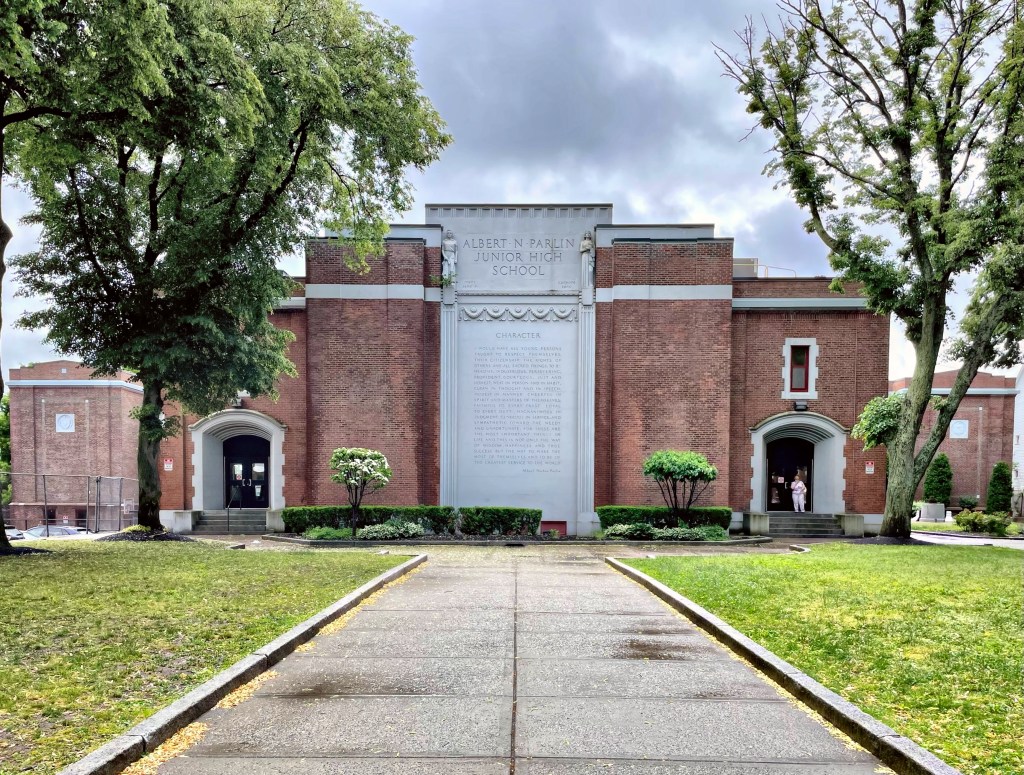
Albert Parlin School // 1931

Albert Norton Parlin (1848-1927) was born in Everett, Massachusetts to Ezra Parlin and Nancy Pickering-Parlin. At a young age, Albert lost both his parents – his mother passed in 1853 at the age of 26 and his father passed in 1858 at the age of 37, both succumbing to “consumption” (tuberculosis). At the age of nine, young Albert had become an orphan, and was raised by his grandmother at the Pickering Estate. He found his first job as a floor-sweep and errand boy in a retail cloak store. At seventeen, Albert Parlin began working with Magee Furnace Company, a Boston-based company where Mr. Parlin spent twenty-eight years of his professional career, moving up the ranks to become treasurer of the company. After he became successful, he gave back to his hometown, when in 1892, he donated his familial home and money to the City of Everett for the erection of the Parlin Memorial Library, to honor his late son. Parlin was not done giving to his hometown. He also left funds and a large piece of land to the City of Everett for a new Junior High School in 1915. The architectural firm of Desmond & Lord was commissioned to design the school which is set deep on the lot to give the building a beautiful front lawn. The 1931 building blends Art Deco and Tudor Revival styles with a large central panel.

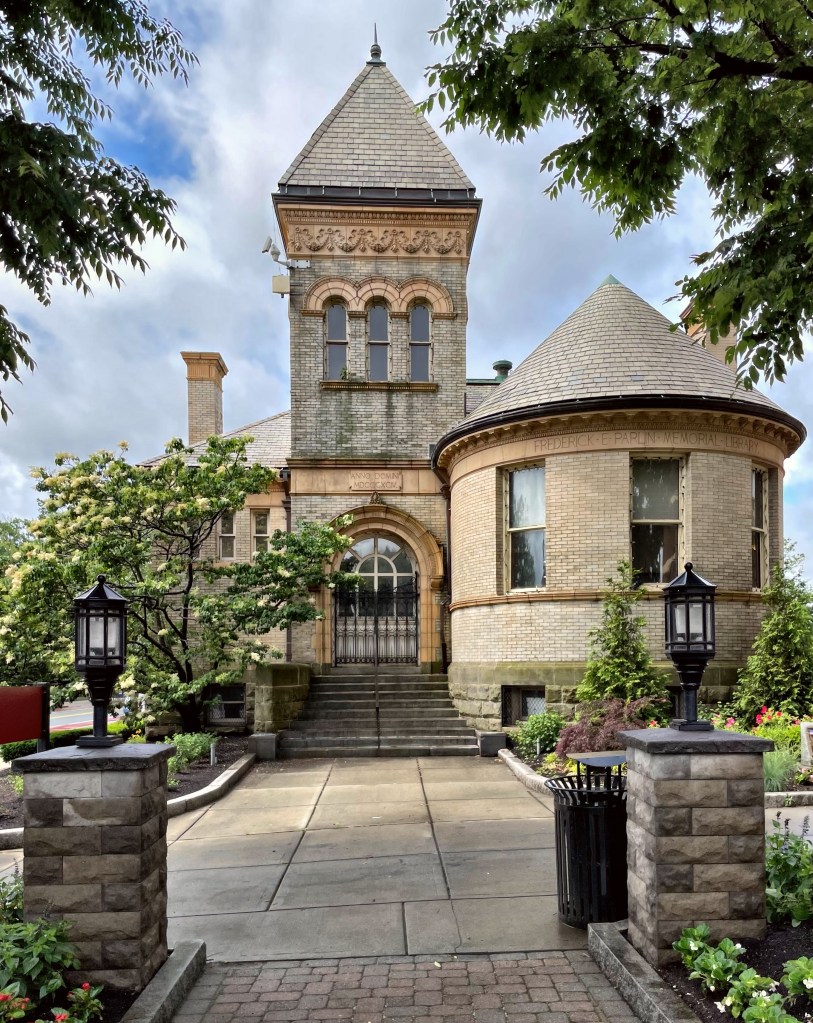
Frederick E. Parlin Memorial Library // 1894

The Frederick E. Parlin Memorial Library is arguably the most architecturally significant building in the City of Everett, Massachusetts. Constructed of buff brick, sandstone and terracotta, it displays characteristics of the Richardsonian Romanesque style including the main entrance set within a recessed arch at the base of a square tower with arched openings. In 1892, Albert Norton Parlin, a local businessman, donated to the City of Everett the Pickering Estate, his birthplace and familial home, to be torn down and a library erected on the parcel in memory of his son, Frederick E. Parlin, who died in 1890 at the age of eighteen. Albert Parlin gave to the City an additional $5,000 to aid in the building of the Frederick E. Parlin Memorial Library. The original 1894 library as well as a 1911-1912 addition were designed by local architect John Calvin Spofford who positioned the building to face a small triangular park. By the 1940’s, the building was outgrown, but it wasn’t until 1982 that a plan was set in motion to renovate the original building and to construct an addition. Childs, Bertman, Tseckares was chosen to draw up the architectural plans, and ground was finally broken in the spring of 1990. With construction of the new addition, the building is almost three times its original size and handicapped accessible, all with an appropriate, Post-Modern design.