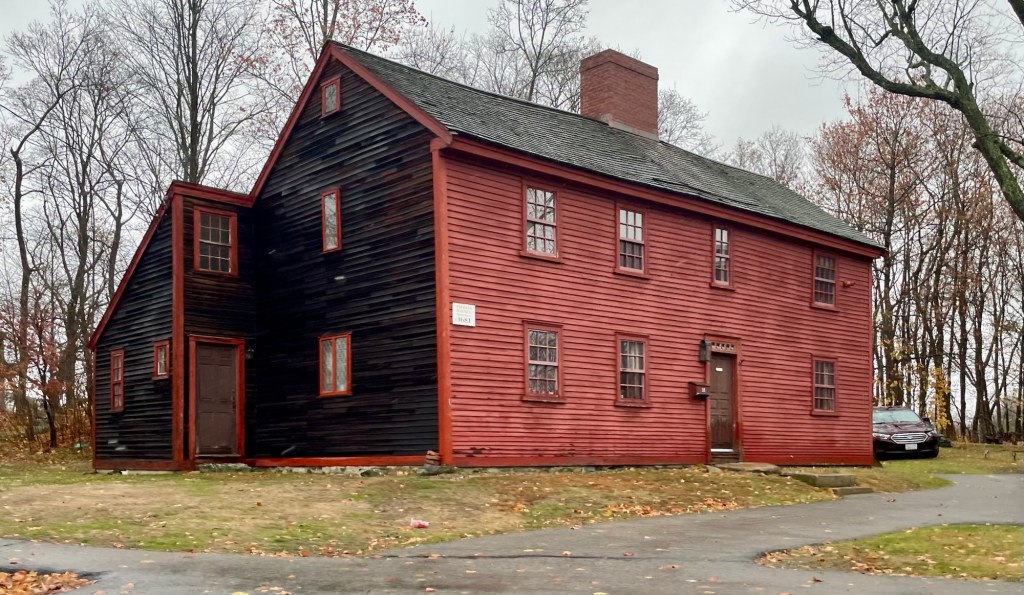
Thomas Haines House // 1681

There aren’t many extant buildings with direct ties to the Salem witch trials of the 1690s, but this First Period house on Centre Street in Danvers is one of them! This is the Thomas Haines House, built in 1681 for Thomas Haines. During the witchcraft hysteria of 1692, Thomas testified in the trials of Elizabeth Howe and John Willard, who were accused of witchcraft. Elizabeth would be executed by hanging on July 19, 1692 and John was hanged on August 19, 1692. Less than a year following the frenzy of the trials, Thomas received a license to keep a public house of entertainment & sell strong drink as an innholder. He remained here until 1703, when he sold his home and land to John Allen, a gunsmith, and removed to Salem, New Jersey. The First Period home with saltbox roof is in great condition and was restored to its historic appearance in the 20th century. The property is privately owned.

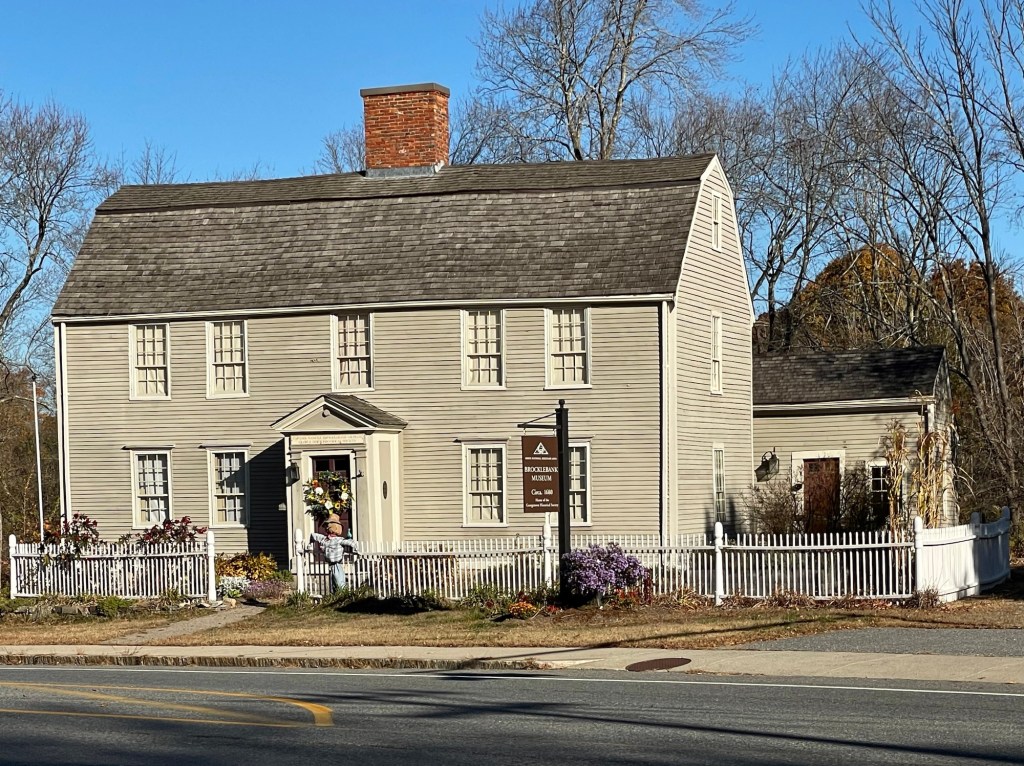
Brocklebank-Nelson-Beecher House // c.1661

The Brocklebank-Nelson-Beecher House is a First Period structure in Georgetown, Massachusetts, believed to have been built in the 1660s. The land on which the house stands was granted in 1661 to Samuel Brocklebank (1628-1676) , a surveyor who, with his widowed mother and brother, left England and were among the first settlers of Rowley in 1639. It was built by Lieut. Samuel Brocklebank who also owned a farm of 72 acres on the site. Lieut. Brocklebank was appointed captain in a militia and was killed with his entire company in Sudbury in 1676 during a raid by Native people during the period of the King Philip’s War. Samuel’s wife remarried and moved to Newbury, and his son, Samuel Jr., resided in the family home which remained in the Brocklebank family until 1754. The house became a tavern by owner Solomon Nelson, who purchased the property in 1765 and made substantial additions and renovations to the house in its current Georgian style. In 1858 the house was bought by Rev Charles Beecher, brother of Harriet Beecher Stowe and Henry Ward Beecher. An ardent abolitionist, he was the pastor of the town’s Old South Congregational Church. Today, the Brocklebank-Nelson-Beecher House is owned by the Georgetown Historical Society, who maintain and showcase the town’s rich history from this important early residence.  

Jethro Coffin House // 1686

Here it is… The oldest house in Nantucket! The Jethro Coffin House dates to 1686, and when it was built, Nantucket’s English population totaled several hundred, and the native Wampanoag outnumbered them by at least three to one. The home was built seemingly as a wedding gift from twenty-three-year-old Jethro Coffin (1663–1727) to his new sixteen-year-old wife Mary Gardner (1670–1767). The marriage merged two of the old Nantucket families and was built on Gardner family land out of lumber transported to the island from Exeter, New Hampshire, where Jethro’s father, Peter Coffin, owned timberland and a saw mill. The First Period house has small windows of small panes of glass as the material was shipped from England at high cost. The large central chimney would heat the entire home on cold winter nights. Mary and Jethro sold their Nantucket dwelling to Nathaniel Paddack in 1708 and moved to Mendon, Massachusetts, when Jethro inherited property there. By the late nineteenth century, the house was abandoned (for some time it was used as a barn) and had fallen into disrepair. A Coffin family reunion held on the island in 1881 renewed interest in the property and off-island members of the family bought the old Coffin House. The Nantucket Historical Association acquired the house in 1923, and four years later, Historic New England), commenced an extensive reconstruction in an attempt to return the house to its historic appearance. It remains a location of pride for residents and visitors to the island to this day.