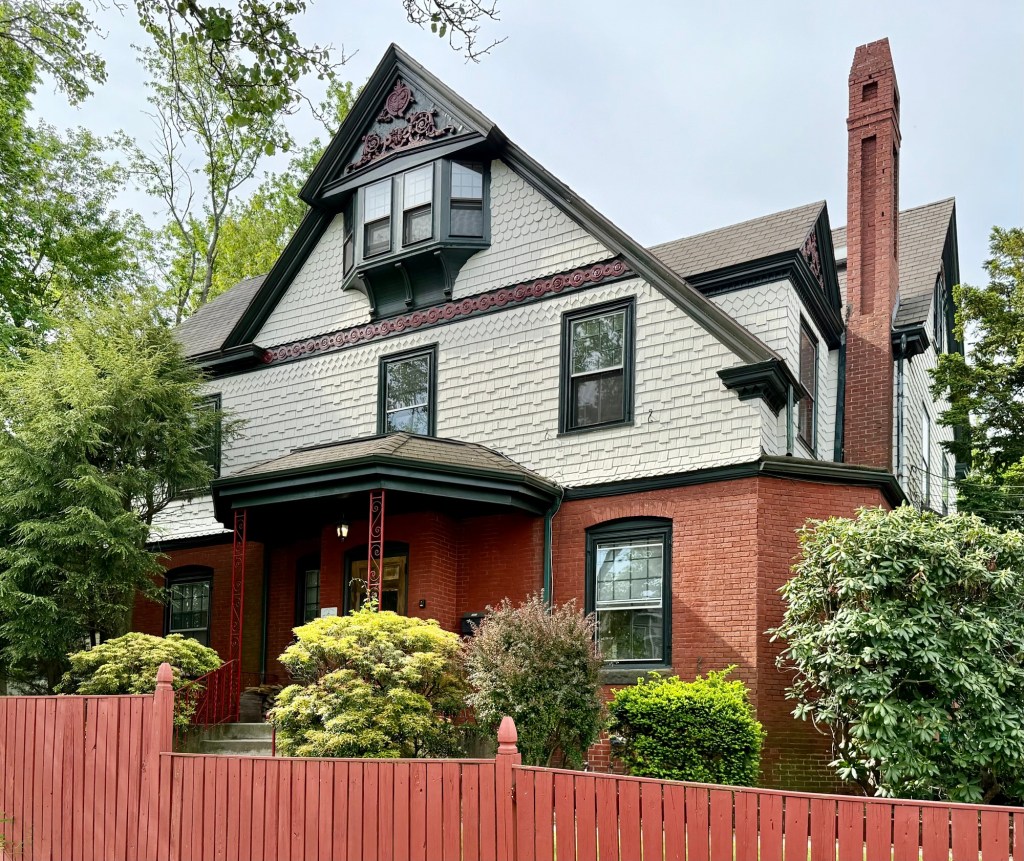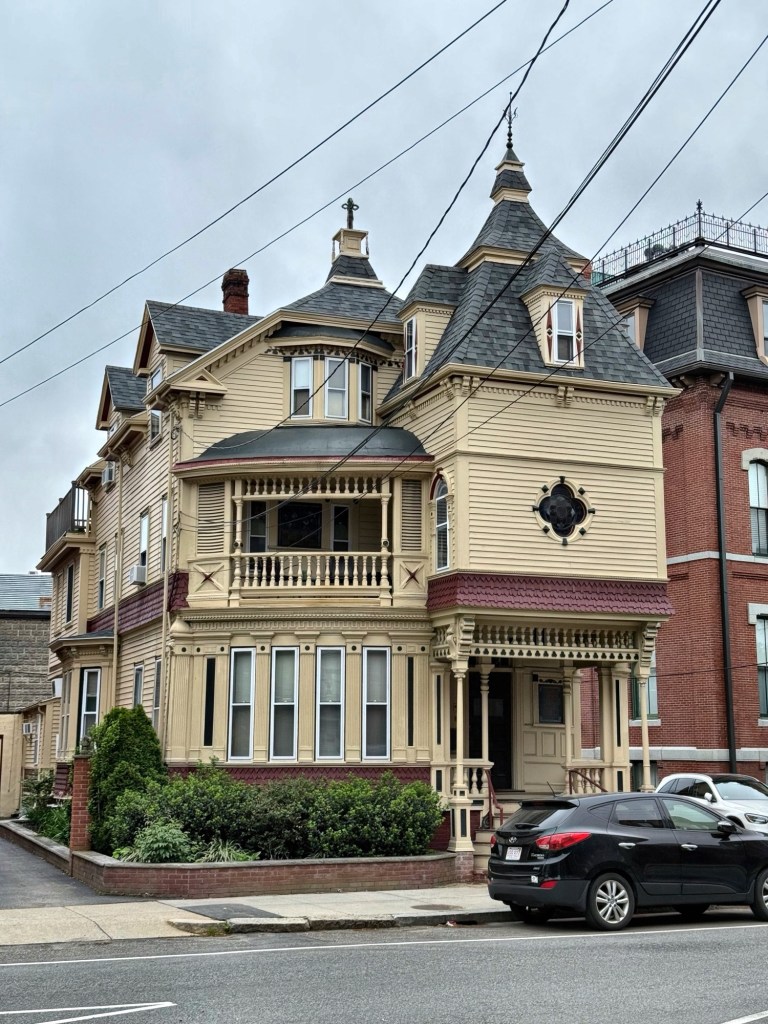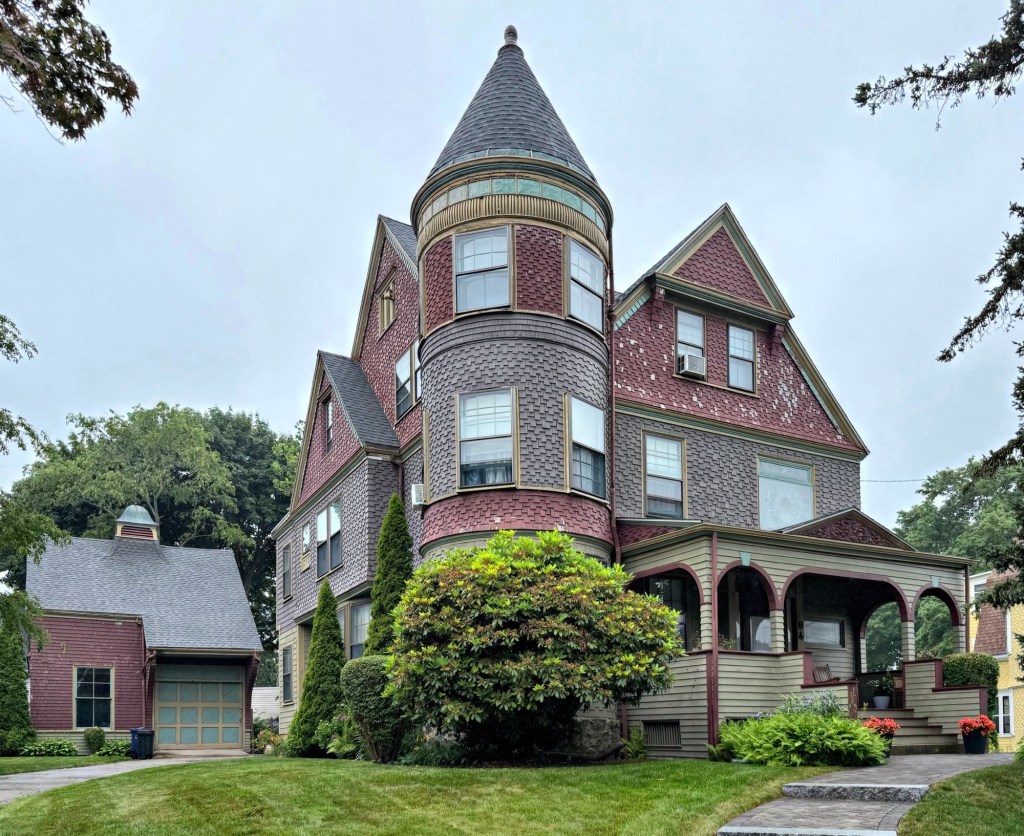
Barnes-Luce House // c.1890

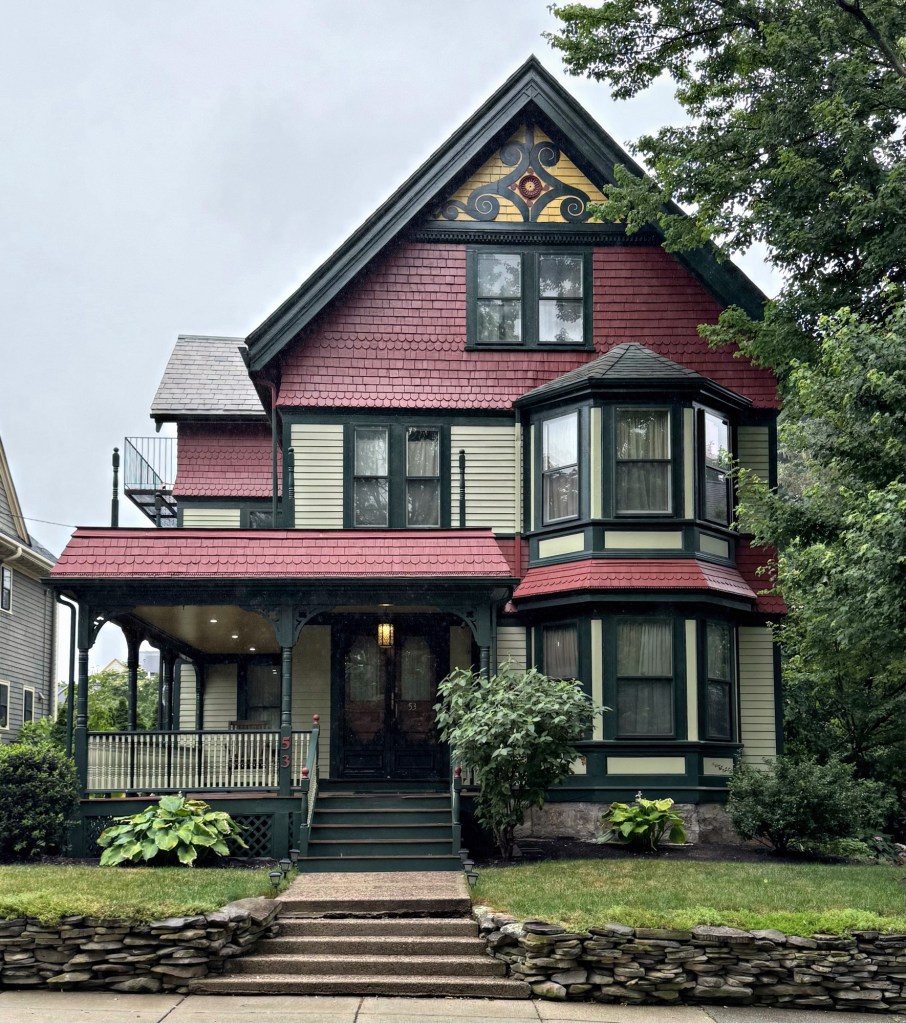
This lovely Queen Anne style home can be found on Highland Avenue in Somerville, Massachusetts. Built around 1890, the residence was built for Walter Saunders Barnes (1838-1931), a manufacturer with a paper box business in Boston. The property was sold in 1903 to Robert Luce (1862-1946), a prominent businessman and politician who founded the Luce’s Press Clipping Bureau before he was elected a member of the Massachusetts House of Representatives in 1899 and 1901–1908. He was elected the 42nd lieutenant governor of Massachusetts in 1912. After serving as Lt. Governor, Luce would spend the next decades in the House of Representatives. His Somerville house is a well-preserved example of the Queen Anne style and includes a steeply pitched hipped roof with gable and dormers, asymmetrical plan, porch with braced supports, and a half-round window in the gable.

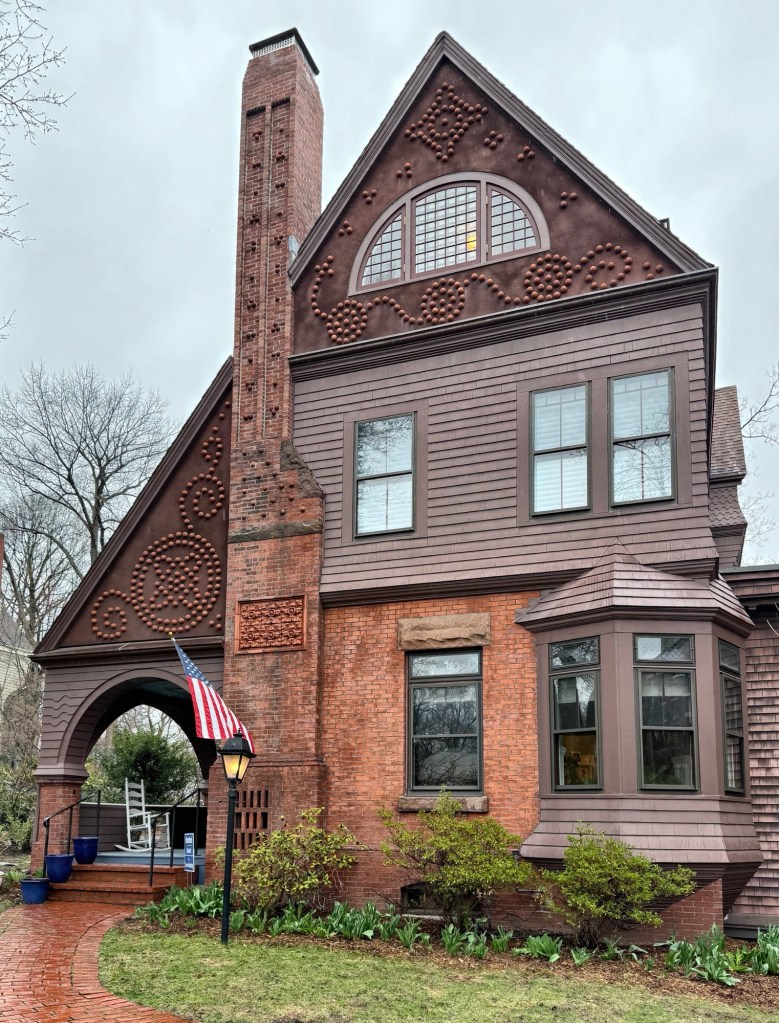
John Wales House // c.1885

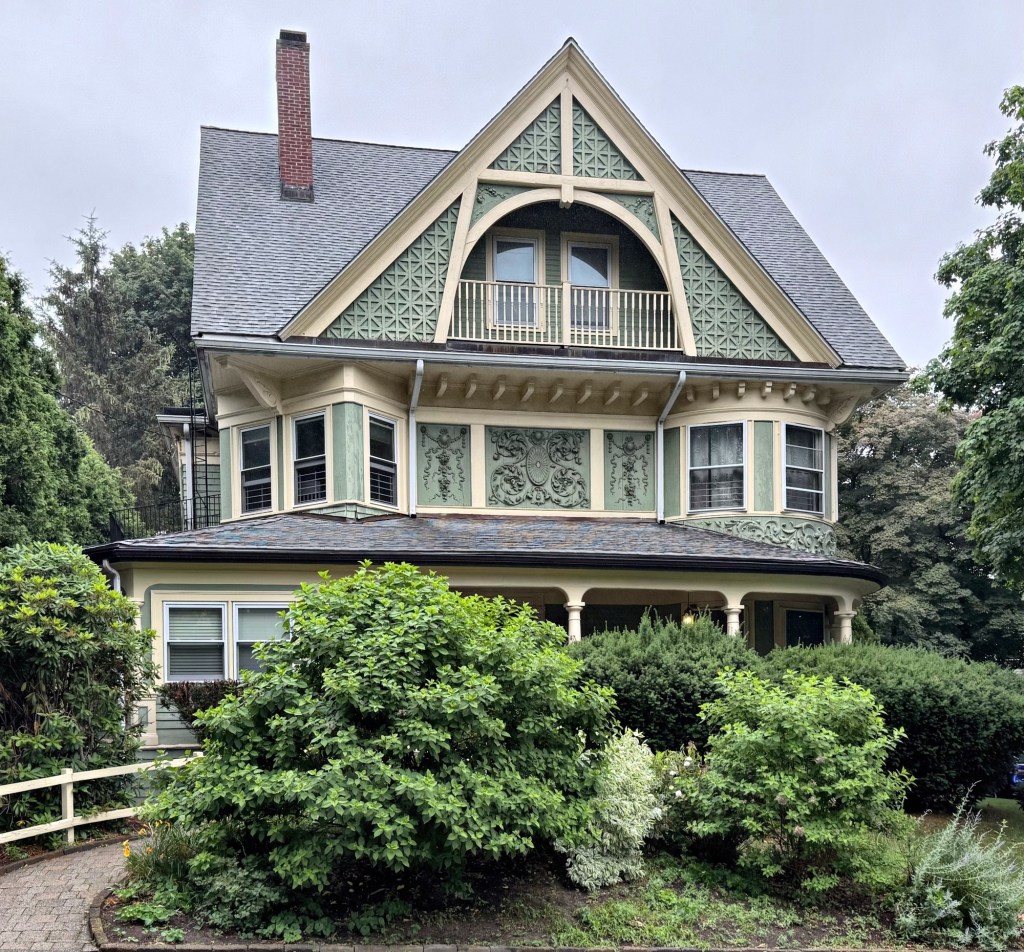
In the mid-1880s, John Wales, a wealthy hardware dealer with offices in Downtown Boston, purchased house lots in the Cottage Farm area of Brookline from Amos A. Lawrence, and set out develop the site with two stately Victorian homes. This lovely home was first occupied by John’s son, George Wales and his wife, Mabel, the year of their marriage in 1885. While the architect is unclear, it is probable that the design can be attributed to architect William Whitney Lewis, who was hired by John Wales the year prior to design a stable near his home in an adjacent neighborhood. The house was rented by Wales and subsequent owners for years. The elaborate Queen Anne style house exhibits an asymmetrical plan with recessed entrance set within an arched opening, shinged and brick walls with a prominent chimney at the facade containing a decorative terra cotta panel, and the most unique stucco gables containing what appear to be terracotta balls in geometric forms. This house is a perfect example of what is so special about the Queen Anne style!

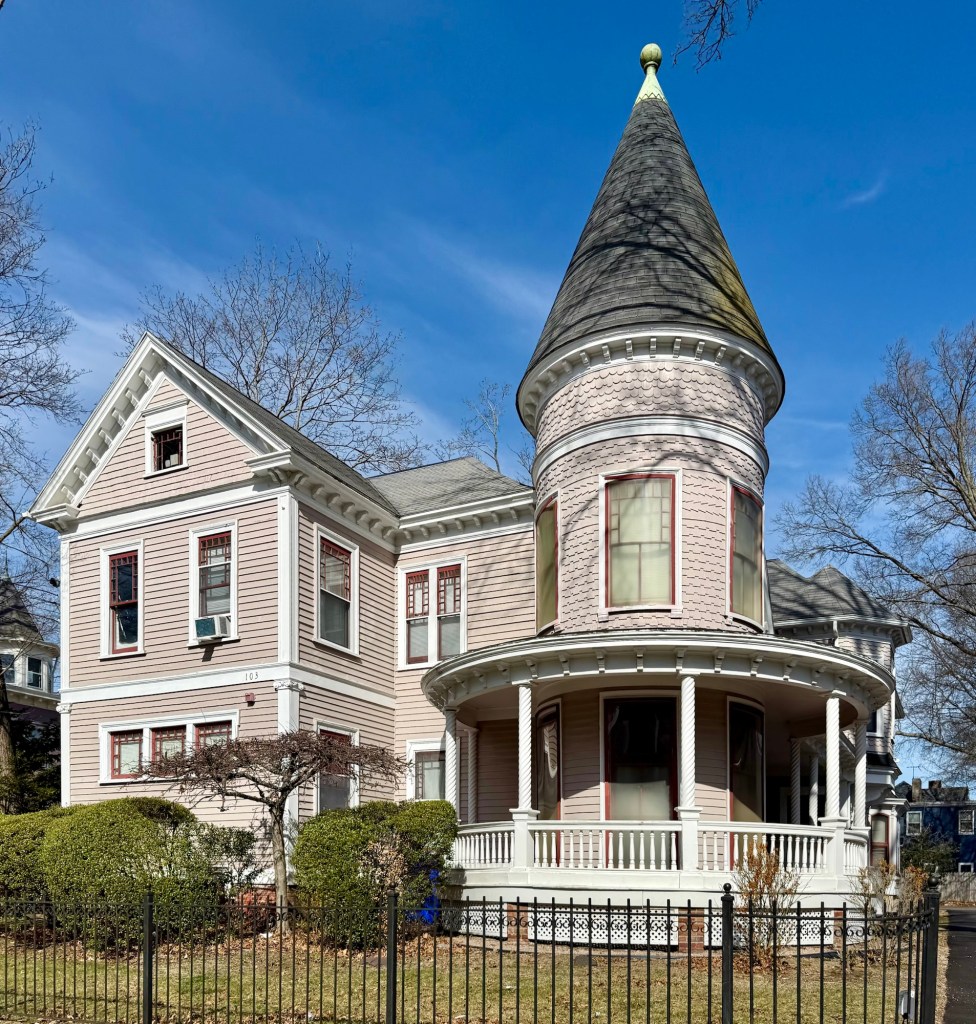
George M. Thornton House // c.1870

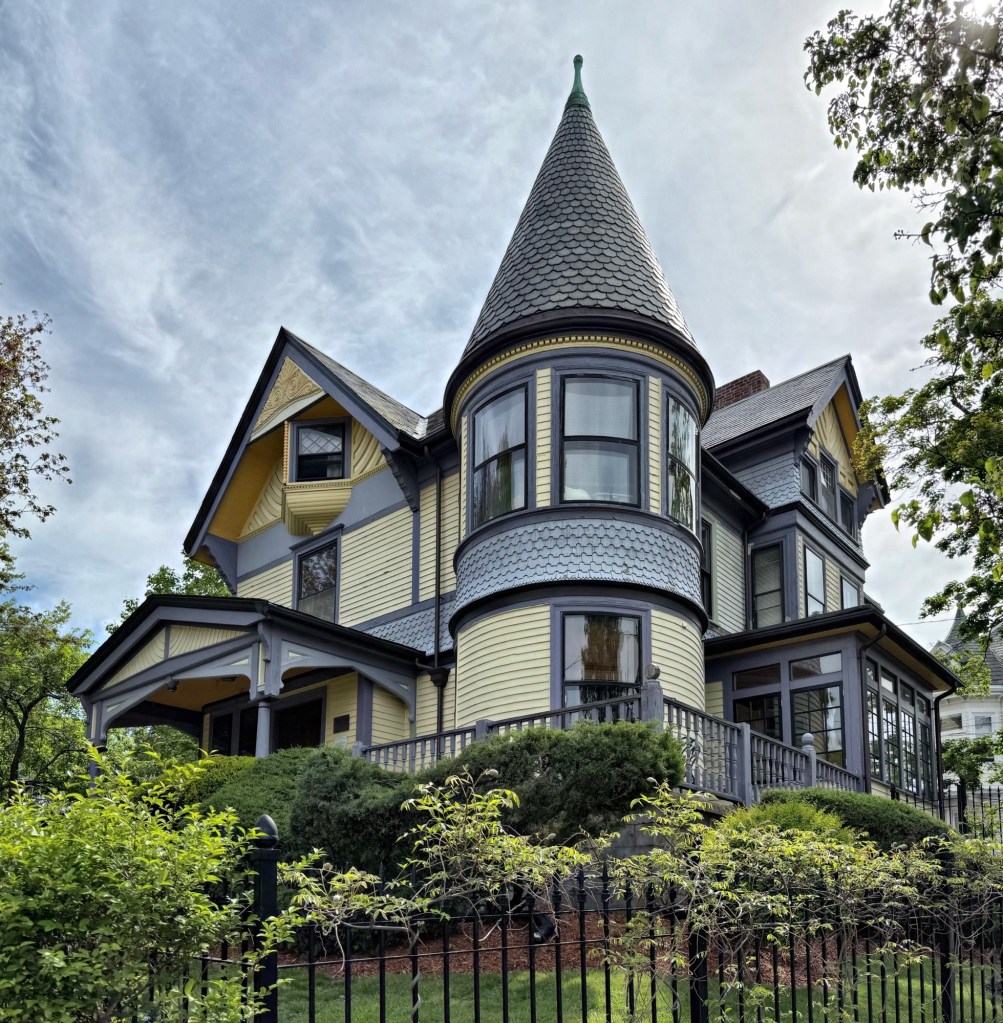
One of the finest homes in Central Falls, Rhode Island, is this eclectic Victorian residence on Clay Street. The home was seemingly built around 1870 and modified by the end of the 19th century by later owner, George Mumford Thornton (1850-1916). Mr. Thornton was an industrialist who was elected as one of the first aldermen when Central Falls incorporated in 1895. The well-preserved house features varied siding, a rounded corner tower with spiral-columned porch and conical roof, and original multi-light sash windows. What a spectacular home.

Edward Johnson House // c.1886

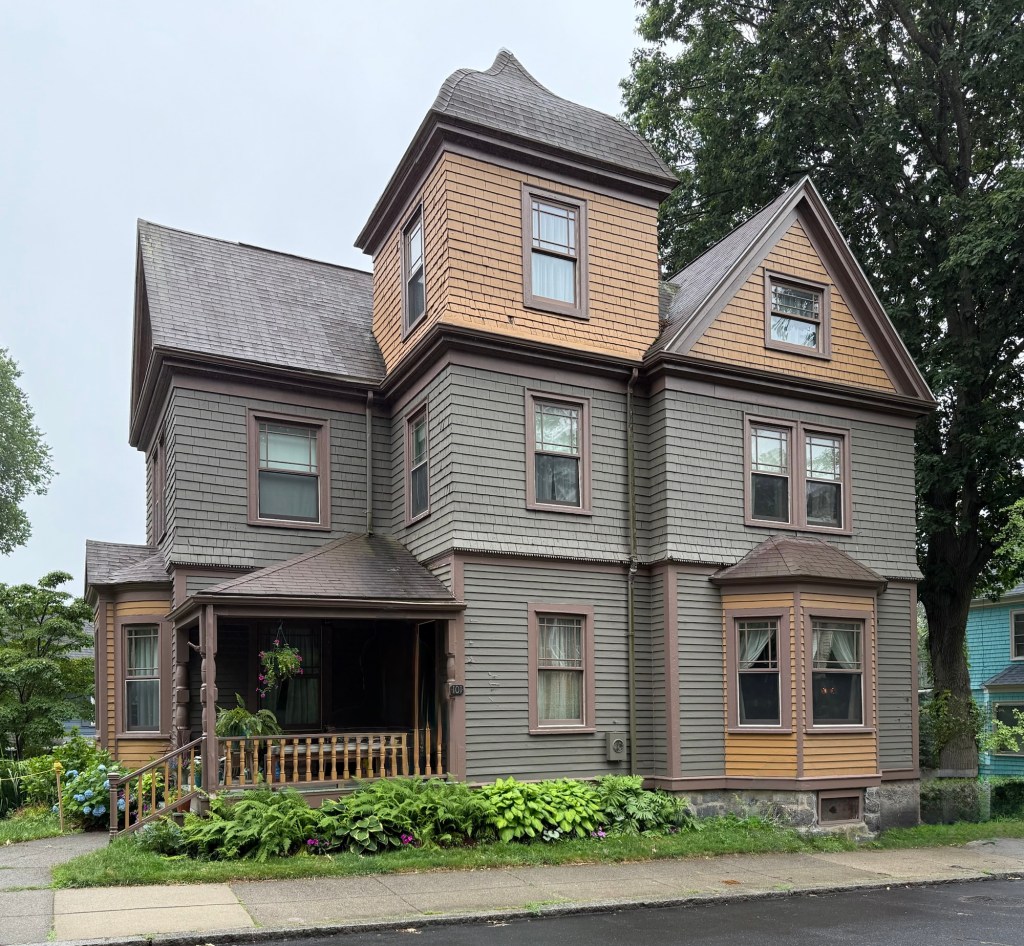
Central Falls, Rhode Island, is not necessarily known for its residential architecture, but like any good industrial city, there are some excellent examples of Victorian houses from the mid-late 19th century to be discovered! This is the Edward L. Johnson House on Cross Street in Central Falls. The house was built around 1886 for Mr. Johnson, a manufacturer, who resided here for some years with his wife, who founded the Pawtucket Women’s Club in 1899 and was an active member of the Daughters of the American Revolution. The house is an excellent example of the Queen Anne architecture style, from the various siding types including clapboard and patterned shingling; its steep cross-gable roof; and its variety of windows, including a shallow bay on the first floor and oval and half-round windows in the 2nd-floor porch. 

Odell House // 1887

Built in 1887 for Charles Odell and his wife, Alice, this Queen Anne house on Winter Street in Salem, Massachusetts, stands out as a high-style example of Victorian architecture on the street notable for early-mid 19th century architecture. The house lot was purchased by the Jewett Family who lived in the brick house next door and long used the lot as a garden. Charles and Alice Odell married in 1888, so this Victorian home was built for the newlywed couple to raise their family. Charles A. Odell (1863-1931) worked at his father’s insurance and real estate business, later assuming ownership of business upon death of his father and was a district agent for New England Mutual Life Insurance Company. Sheathed in a combination of wood clapboards and shingles in a variety of patterns, the house has a steeply hipped, slate roof punctuated by cross gables and hipped dormers. The predominant window sash style consists of a distinctive sash in which the upper displays a triangle with central muntin over a conventional two-light lower sash. The property has been lovingly preserved for well over a century and is a landmark example of a Queen Anne style house in Salem.

Blaisdell-Carter House // 1890

The Blaisdell-Carter House is a great example of a Queen Anne style home in Chicopee, Massachusetts. The house was built in 1890 for Harriet P. Blaisdell following the death of her husband, Samuel Blaisdell, a cotton broker, in 1888. Mrs. Blaisdell hired David B. Griggs, a builder in Chicopee under the firm D. B. Griggs & Sons, to design and build the residence, which sat across the street from Griggs’ own home. Harriet would pass away just three years after her home was built, and the property would eventually be sold to Nathan P. Ames Carter (1864-1959). The residence sits on a large lot and exhibits varied siding, asymmetrical plan with porches, additions, and steep gable roofs, and the use of irregular windows of varied sizing and locations. While the second floor porch has been enclosed, the house retains much of its original fabric and has not been covered by vinyl or aluminum siding, a rarity in Chicopee.

Griggs House // 1891

This fancy Queen Anne Victorian residence can be found in Chicopee Falls, Massachusetts, and is one of the most unique houses in the industrial city. This property was built and occupied by David B. Griggs, a builder in Chicopee under the firm D. B. Griggs & Sons. The firm was very busy in the late 19th and early 20th centuries, as Chicopee saw rapid industrial prosperity followed by a population boom, growing in population from over 9,000 residents in 1870 to 36,000 in 1920. Builders like David Griggs were able to grow to upper-middle class and buy property on desirable house lots and build large homes for their family, as was the case here. David Griggs died in 1896, five years after his home was built, and the property was inherited by his son, Millard Griggs. While the residence is covered in vinyl siding (original siding and trim is likely underneath the present siding), the house retains much of its original fabric including the brackets, delicate open friezes at the porches, and four-story tower.

Justin and Sarah Spaulding House // 1886

Justin Spaulding and his wife, Sarah (Cooley) Spaulding erected this house on Springfield Street in Chicopee, Massachusetts, in 1886, and would later be known for their philanthropic gifts to their home city. Justin Spaulding (1838-1906) was a wealthy grocer who amassed a small fortune operating stores in the industrial Lower Pioneer Valley. The Spaulding House is one of the finest Queen Anne style buildings in Chicopee, and is notable for its asymmetrical form, tower, ornate gable detailing, porches with original balustrade, and the chimney with inlaid terracotta tiles. Justin Spaulding died in 1906, and Sarah C. Spaulding (1840-1907) would pass away a year later. They had no children. In her will, Sarah bequeathed funds for the first purpose-built library in Chicopee and money for a memorial chapel in a local cemetery. The Spaulding House was acquired by the Academy of Our Lady of the Elms (now Elms College), moved to its present location in 1920, and was converted to the Office of Admissions for the College. Besides the need for a new coat of paint, the house is lovingly preserved!

Thurston-Gladding House // 1886

One of the finest Victorian-era houses in the College Hill/East Side area of Providence is this stately residence at 30 Stimson Avenue, known as the Thurston-Gladding House. The house was built for newlyweds, John Russell Gladding and Ellen (Thurston), on land given to the couple by Ellen’s father, attorney and judge, Benjamin Thurston. John Gladding was originally from Connecticut and the couple split their time between their Providence home and a country retreat in Thompson, Connecticut. Architects Thomas J. Gould and Frank W. Angell (Gould & Angell) furnished the plans for the home, which features a ground floor faced with textured brick and walls adorned by continuous wood shingle siding above. A rounded tower, projecting bays and dormers, and a elongated front porch break up the massing into a pleasing composition.

Newton D. Arnold House // 1888

Behold, a Queen Anne Victorian house in all her majesty! This residence, the Newton D. Arnold House, is located at 24 Stimson Avenue in Providence, and is one of the finest examples of its style in the city. Newton Darling Arnold (1843-1916) was employed at the Rumford Chemical Works serving as Treasurer for the company and from this position, accepted additional roles in banking and fraternal organizations, like the Freemasons, where he served a term as Grand Master of the secret society. Newton and his wife, Caroline, purchased a house lot on Stimson Avenue and set out to build one of the finest homes in Providence. To achieve this, they hired local architect, Edward I. Nickerson, to furnish designs. The Arnold House is covered by clapboard and shingle siding beneath a complex, cross-gabled roof of slate, with an ornate gable end and two-story corner tower.