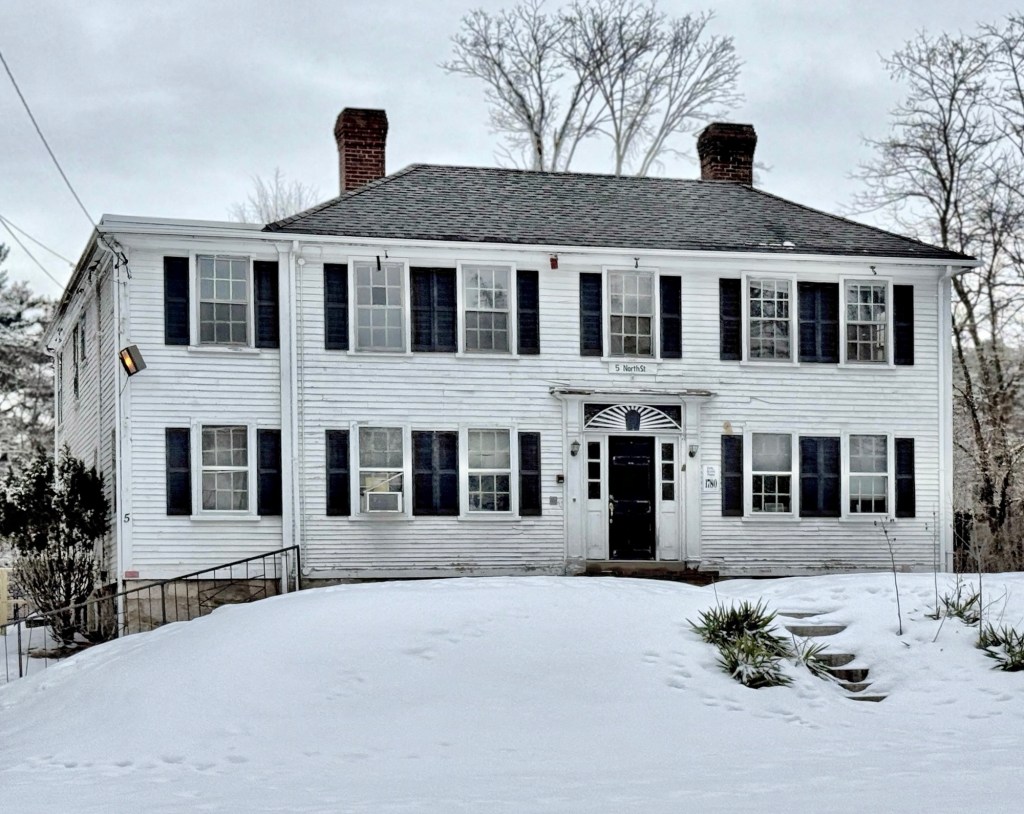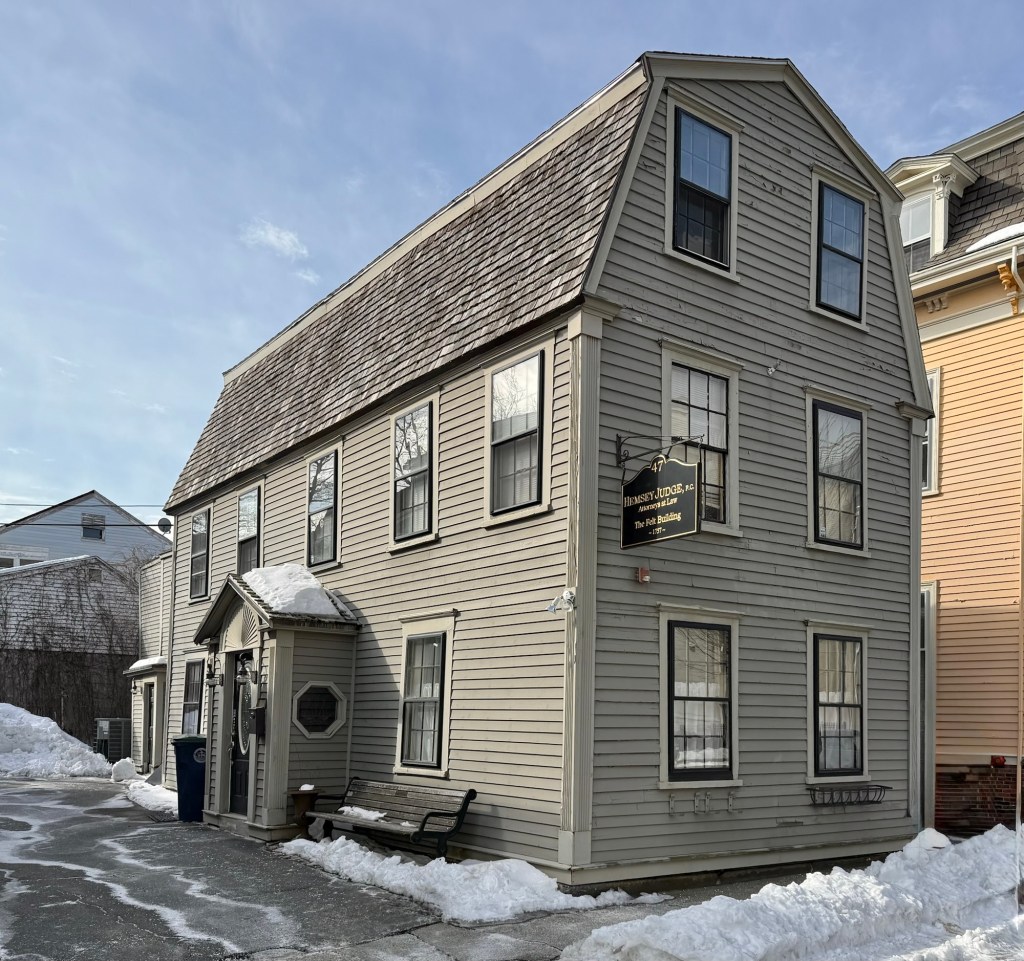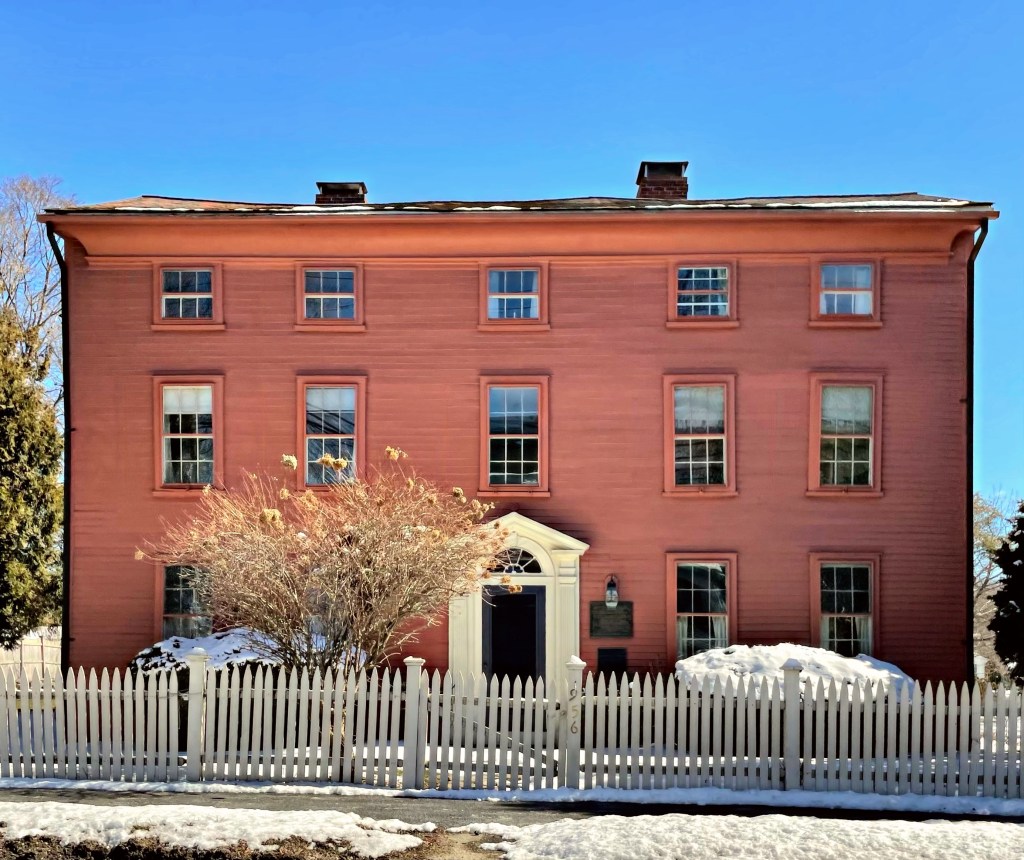
Captain John Felt House // 1757

The Captain John Felt House on Federal Street in Salem, Massachusetts, is a surviving Georgian residence with ties to the American Revolution. In May 1757, John Felt purchased a lot on present-day Federal Street from Benjamin Lynde for 52 pounds, and began building his family home here. John Felt, a Salem native, worked as a “shoreman,” but was primarily an owner of vessels involved in the coasting trade, also owning a large warehouse to store the goods from the West Indies brought in by his ships. Felt’s title of “Captain” came from his involvement in the Essex county militia. Captain Felt was a key figure in Leslie’s Retreat, also called the Salem Gunpowder Raid, which took place on February 26, 1775, in Salem. British Colonel Alexander Leslie led a raid to seize suspected cannons from a makeshift Colonial armory in Salem. Instead of finding artillery, Leslie encountered an inflamed citizenry and militia members ready to stop his search. These colonists flooded Salem’s streets, preventing Leslie’s passage and forcing him to negotiate. Ultimately, the Salemites convinced the British Regulars to stand down and return to Boston. No shots were fired, and no one was seriously injured—but tensions were high and a skirmish was evident until Captain Felt stated, “If you do fire, you will all be dead men.” Had a soldier or a colonist gone rogue and fired their weapon, the American Revolution might have begun in Salem, and not Concord just weeks later. After the Revolution, Captain Felt sold his house and moved to present-day Danvers. After centuries of successive ownership by merchants, today, the Felt House is used (at least in part) as professional law offices.

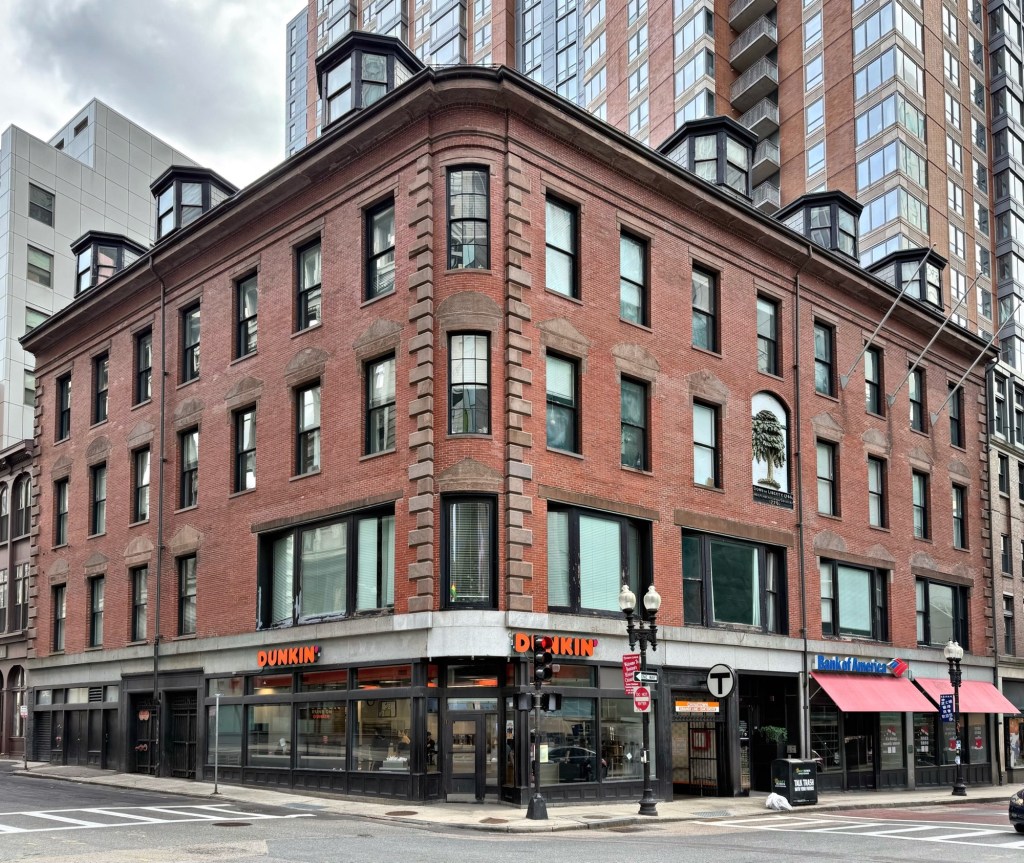
Liberty Tree Block // 1850

The Liberty Tree Block is located at one of Boston’s oldest and most important intersections, Boylston and Essex streets. It is said that near this site, the Liberty Tree stood, and where in 1765, Patriots in Boston staged the first act of defiance against the British government under its branches, The Stamp Act protests. The tree became a rallying point for the growing resistance to the rule of Britain over the American colonies. The Liberty Tree was cut down by British Loyalists in 1775, but the tree’s symbolism lives on in the building constructed on the site 75 years later. Nineteenth-century real estate developer David Sears had this commercial block built in 1850, which housed stores at the street with ballrooms on the upper floors. The Liberty Tree Block is best-known and named so due to the wooden relief plaque of the Liberty Tree on the Washington Street elevation. The motif stands 8′ high and 5′ wide and was carved by ship carvers. The bas relief is inscribed with “Liberty–1765” across the top, “Law and Order” at its roots, and at the bottom, “Sons of Liberty, 1765. Independence of their Country, 1776.” The building (and its carving) are protected Landmarks in Boston.

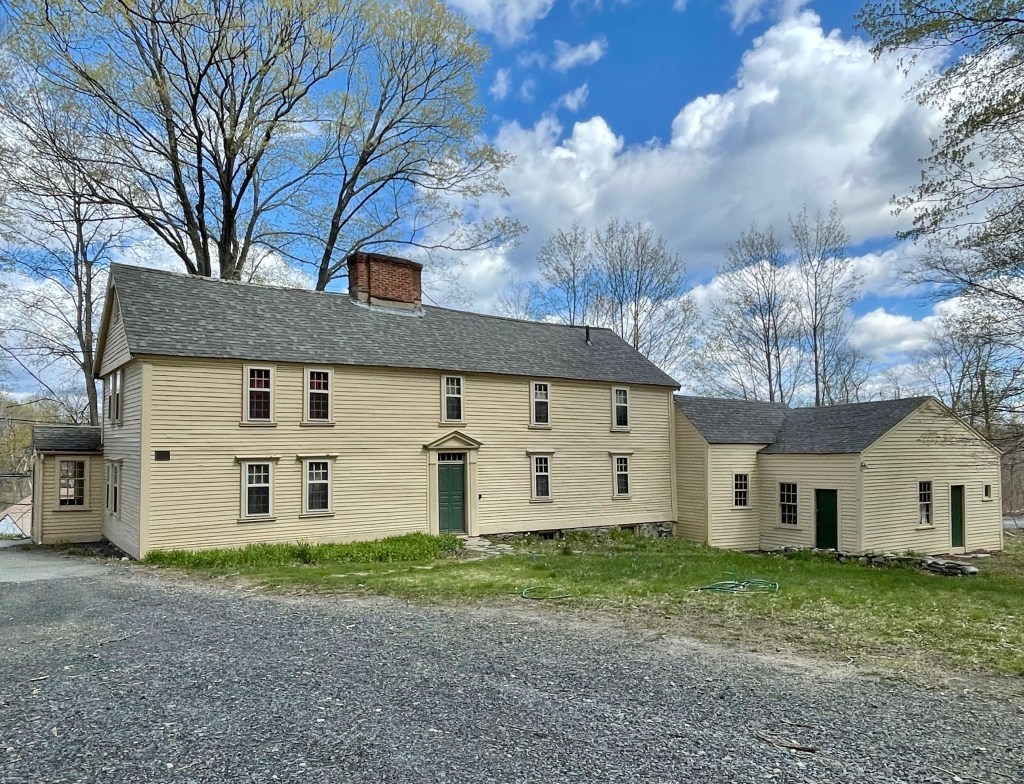
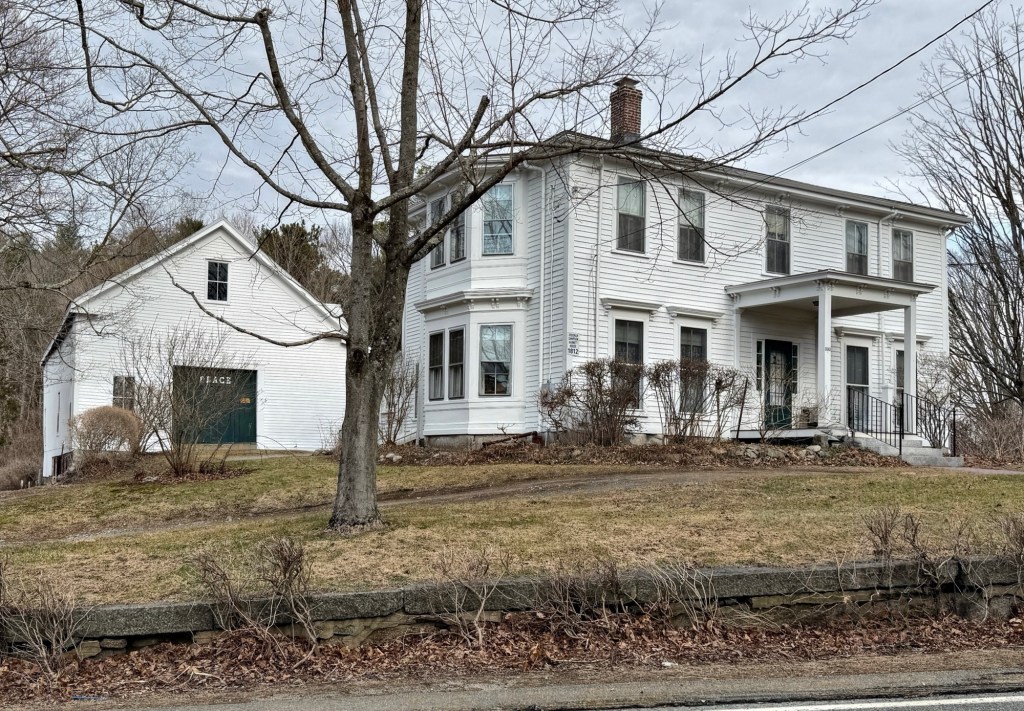
Faulkner Homestead // 1707

One of three pre-1725 houses in South Acton, the Faulkner Homestead is the best preserved First Period house in the area and displays elements from its First Period construction date of 1707 and from the later Georgian period. The home was built for Ephraim Jones, who was one of the first millers starting what was to become the Faulkner mills located near the old homestead. The home was known as a Garrison House, built as a refuge for the settlers in times of Indian raids, but there is no record that it was ever used for that purpose. In the 1730s, the home was rented by Ammi R. Faulkner (1692-1756), who purchased it years after he moved in. The Faulkner Homestead remained in the Faulkner Family for over 300 years, when it sold our of the family in the 1940s.

Joseph Reynolds House // 1698

This three-story wood-frame house is one of the oldest buildings in Bristol and the oldest known three-story building in Rhode Island. The home was built by Joseph Reynolds (1679-1759), a patriarch in the Reynolds Family, who later built the Reynolds-DeWolf House I featured previously. The house is five bays wide and three deep with the roof extending lower to the rear, giving the house a classic New England saltbox appearance. Joseph built this house, and also operated a tannery and gristmill on his land. The home is nationally significant as during the ownership of the house by his son Joseph II, Marquis de Lafayette occupied the north parlor chamber. Lafayette was a general in the Continental Army and was responsible for the defense of Bristol and Warren from September 7 to 23, 1778 during failed military operations to drive the British from occupied Newport. The home was added onto and altered in 1790 to give it the current design, with Federal detailing. The home remained in the Reynolds Family until 1930.

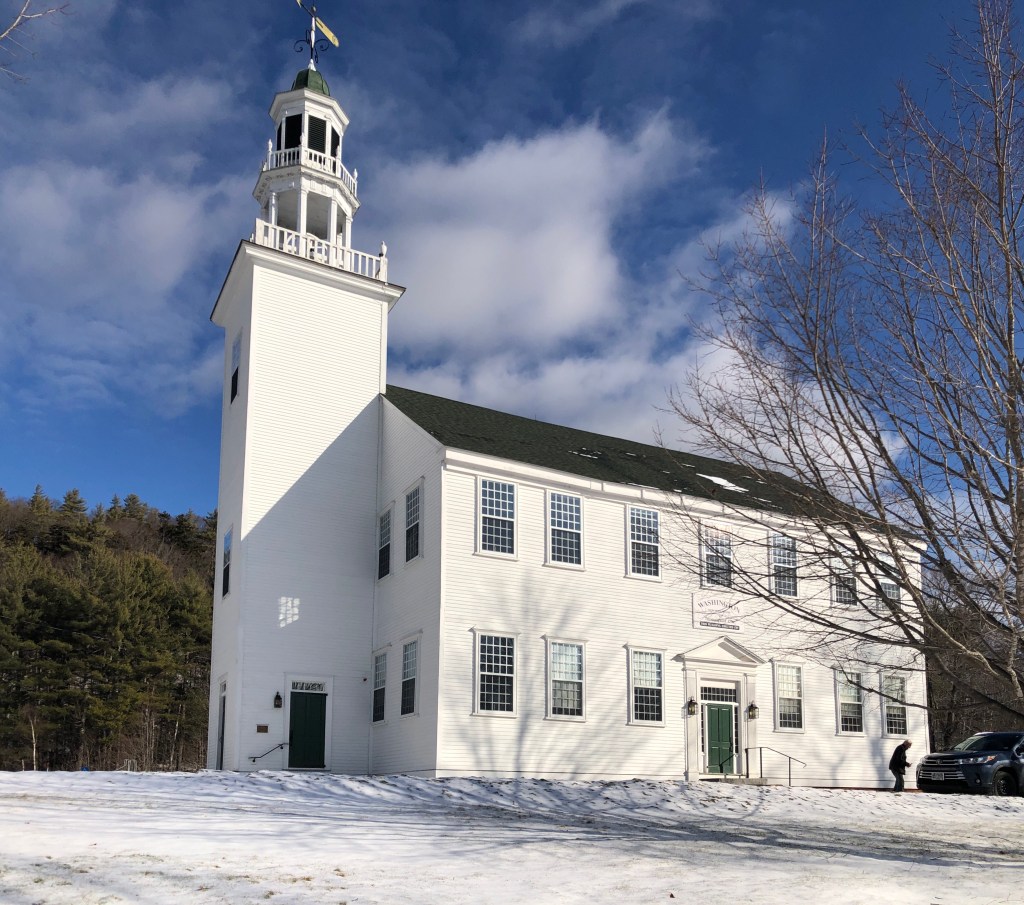
Washington Meeting House // 1787

The Washington Town Hall, originally raised as a meetinghouse in 1787, is the civic and visual focal point of Washington Center in New Hampshire. Land here was first granted in 1735 by Colonial Governor Jonathan Belcher of Massachusetts. The town was one of the fort towns designated to protect the colonies from attack by Native peoples, and it was named “Monadnock Number 8”. The first permanent settlers arrived in 1768 and built log houses. By 1773, the community had 132 inhabitants. On December 13, 1776, the newly established American revolutionary government incorporated the town as “Washington”, after George Washington — one of the first named in his honor. A small townhouse was built but was replaced a decade later with what we see today. The current structure was originally a simple, two-story clapboarded structure, with east and west porches. The tower and belfry rising from the end were added in 1820. The building committee specified all details of the meeting house, including “that the windows should be glazed with squares of glass, seven by nine inches, forty panes to the window”. This attention to detail shows how the meeting house would be a source of pride for the new town and all details were to be discussed to the smallest detail.

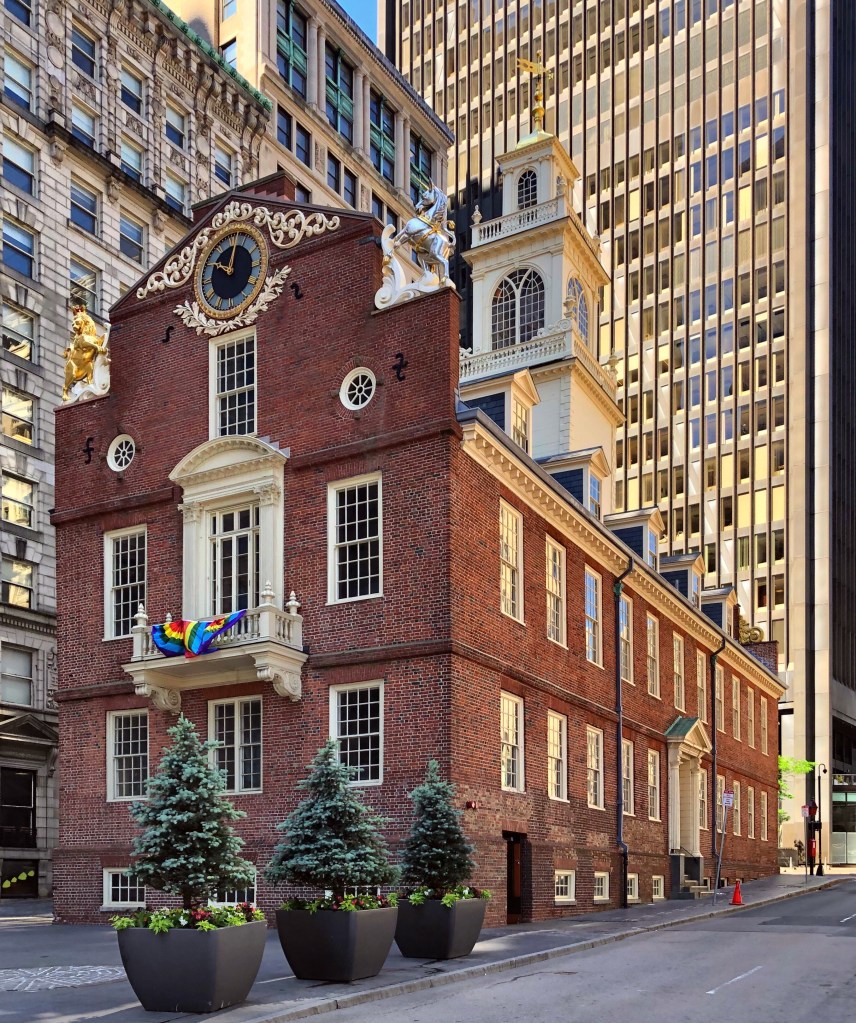
Old State House // 1713

Nestled among the towering skyscrapers of Downtown Boston, the Old State House stands proudly, giving us a glimpse into pre-Revolutionary life and events. Happy Fourth of July!

Built in 1713, the “Town House” as it was originally known, served as a merchants’ exchange on the first floor and the seat of colonial and later state government on the second floor throughout the 1700s. The royal governor, appointed by the King of Great Britain, held his office in the building until 1775, and from the balcony gave voice via decrees and speeches to the King 3000 miles removed from London. Above the balcony, a lion and unicorn—royal symbols of the King of Great Britain—graced the main façade facing the public square.

“A cobblestone circle beneath the Old State House balcony marks the site of the 1770 Boston Massacre. Tensions ran high in Boston in early 1770. More than 2,000 British soldiers occupied the city of 16,000 colonists and tried to enforce Britain’s tax laws, like the Stamp Act and Townshend Acts. American colonists rebelled against the taxes they found repressive, rallying around the cry, “no taxation without representation.” On the frigid, snowy evening of March 5, 1770, Private Hugh White was the only soldier guarding the King’s money stored inside the Custom House on King Street. It wasn’t long before angry colonists joined him and insulted him and threatened violence. Calling reinforcements, a group of British soldiers stood near the Town House and were pelted with snowballs and rocks, with one soldier firing out of panic. Once the first shot rang out, other soldiers opened fire, killing five colonists–including Crispus Attucks, a local dockworker of mixed racial heritage–and wounding six. The event was one of the flashpoints which began the American Revolution.

Six years later, on July 18, 1776, Colonel Thomas Crafts read the Declaration of Independence from the balcony of the Old State House as a statement of strength from where the King’s declarations were given just years prior.