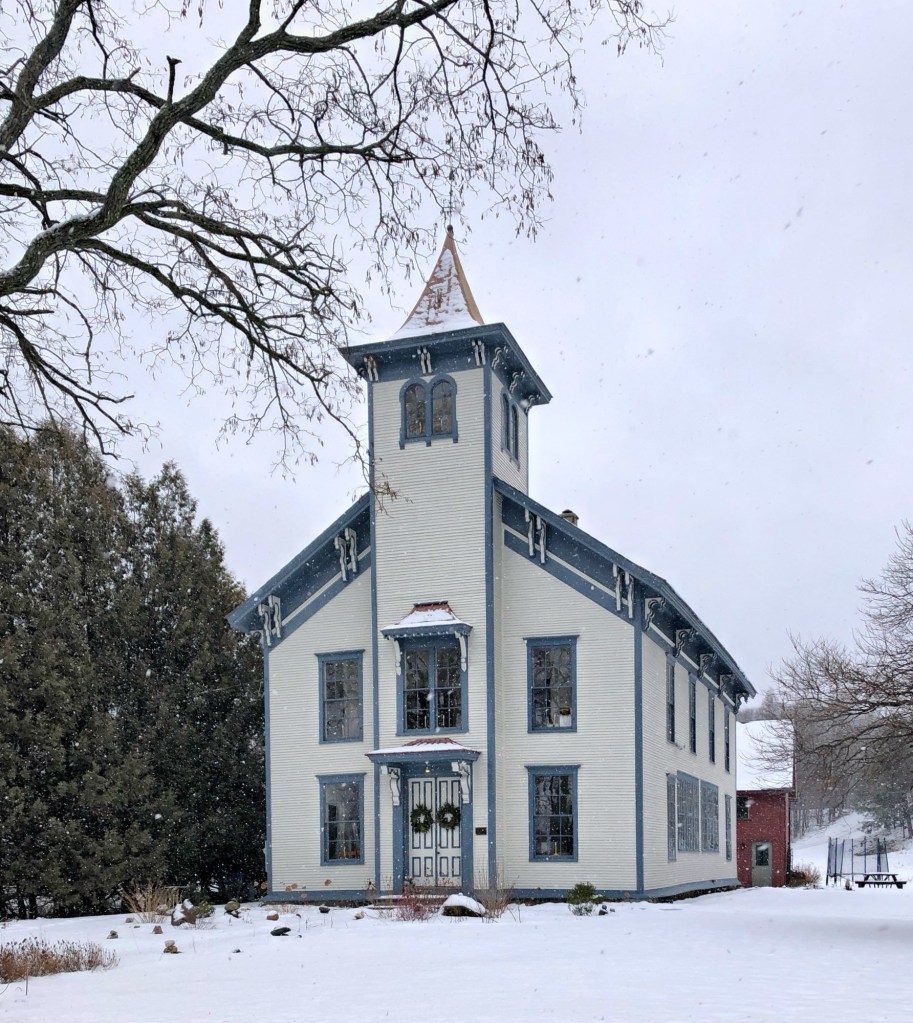
Stone Village Unitarian Church // 1845

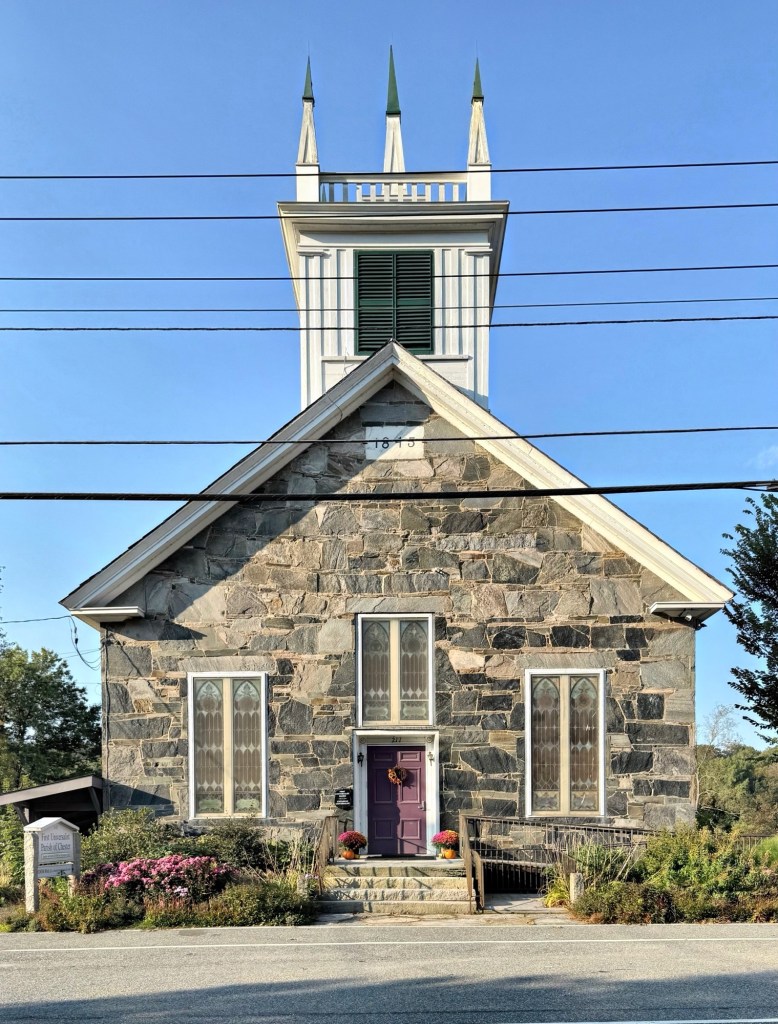
The Stone Village of Chester, Vermont, is said to be the largest collection of stone buildings in the state, and is anchored by its largest building, the Unitarian Church. Built in 1845, the Unitarian Universalist Church is one of a few dozen “snecked ashlar” buildings in the region, where rubblestone is laid up with mortar using small long stones called “snecks” to tie an outer and an inner wall together. The construction method is said to have been brought to the area by masons from Scotland and Ireland which is known there as ‘Celtic Bond’. Oral tradition state that Scottish masons from Canada introduced the technique to local masons while erecting a mill in nearby Cavendish in 1832. Local Chester resident, Dr. Ptolemy Edson became such a fan of the building that in 1834, he had his home, the first stone building in Chester, built in this method. Dr. Edson served on the building committee for the new village church, and likely pushed for a cohesive material and construction method for this church and other buildings soon after. The Stone Village Unitarian Church blends Greek Revival and Gothic Revival styles in a more vernacular way, typical in many rural Vermont communities. The building exhibits stained glass windows that were added sometime in the late 19th or early 20th century.

Chester Congregational Church // 1828

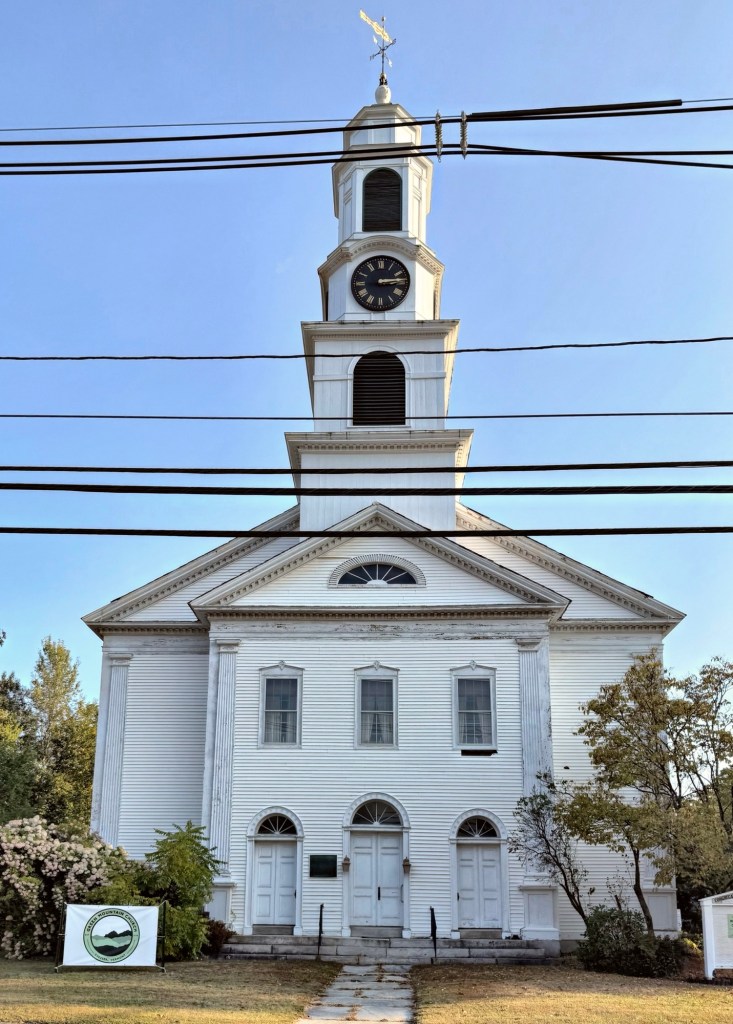
A significant landmark in Chester, Vermont, the Congregational Church of Chester is a sophisticated interpretation of ecclesiastical Federal architecture. Built in 1828, the soaring, five-stage clock-and-bell tower with bellcast cap and weathervane rises above a pedimented three-bay entrance pavilion with semi-elliptical fanlight, a common motif in the style. It is believed that local carpenters, Comfort Carpenter Dresser and his son, Charles Dresser, built the church, likely from planbooks for specific details. The church originally served as the Union Meeting House for Congregational, Methodist, and Universalist parishioners until around 1848, when other churches set off to build their own structures, after this, the Congregationalists remained here. Today, due to years of dwindling membership and a small population in the surrounding area, the church is “replanting” to reactivate membership and realign with community needs. Hopefully this significant church will be preserved in the future, possibly through preservation grants!

Marie Hill Farmhouse // c.1810

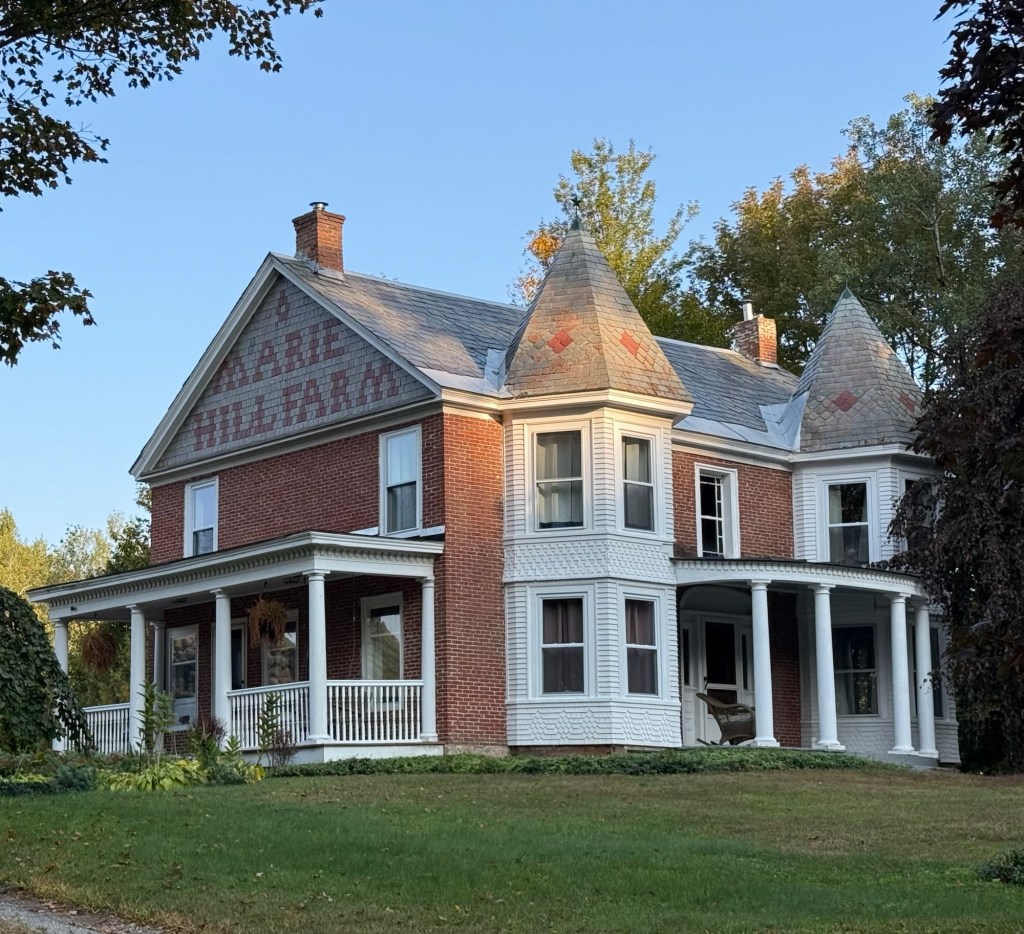
Located in the charming rural town of Andover, Vermont, the Marie Hill Farmhouse is one of the most interesting and charming residences in the area. Built around 1810, the brick farmhouse was designed in the Federal style, with a symmetrical five-bay facade, brick end chimneys, and a fanlight over the front door. The property was purchased by New Yorkers, Laurence Pfluger and his wife Mary “Marie” Pfluger, who operated the farm, raising dairy cows. Laurence would ship eggs, dairy and meat to his market in New York from this farm, which did quite well financially. The farmhouse was “modernized” by the turn of the 20th century with the addition of the two-story octagonal towers on the facade, front and side porches, along with the decorative slate spelling out “Marie Hill Farm” after his Marie Pflueger. The residence was later converted into a guesthouse, a use that remains to this day, still retaining the iconic name and branding in the southern gable.

Simonsville Union Meetinghouse // 1848

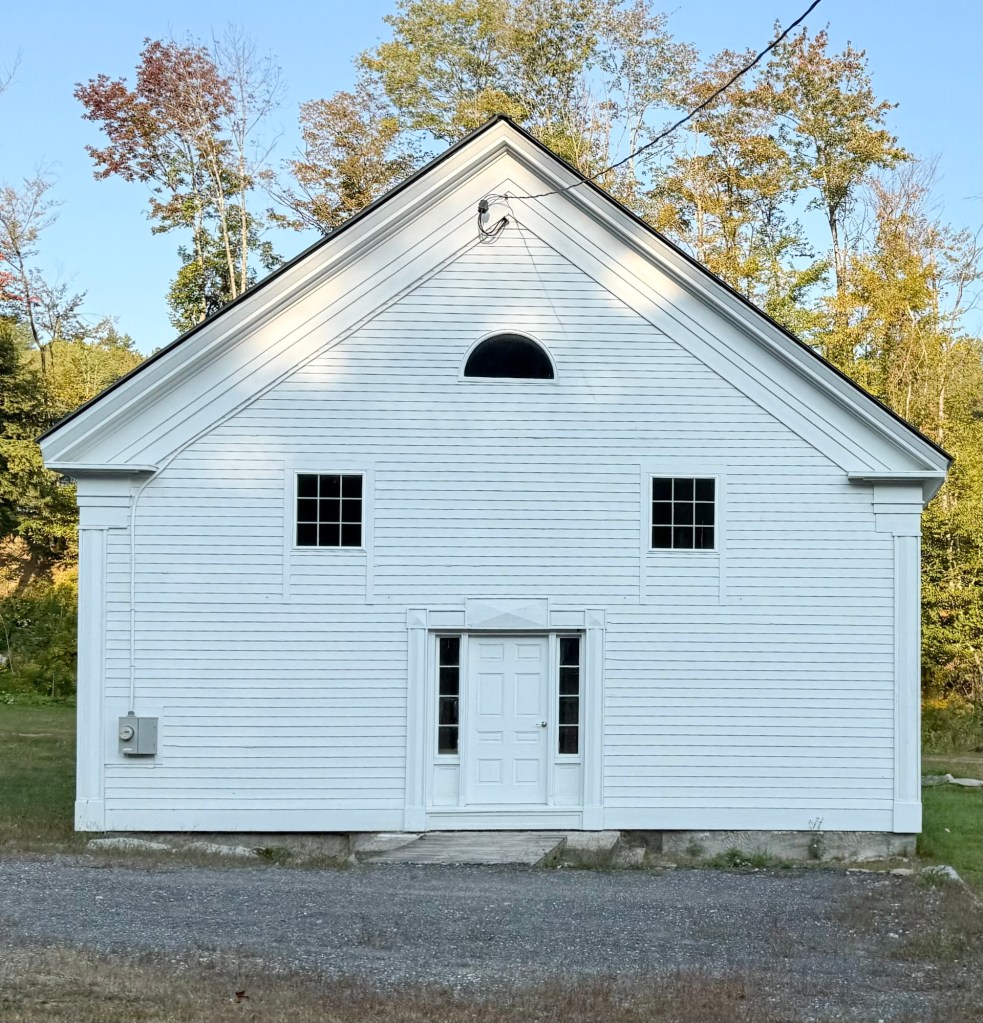
A once excellent example of a Gothicized, vernacular Greek Revival church in Vermont, the former Simonsville Meetinghouse in Andover, Vermont, has since been renovated into a private residence, removing almost all of the original fabric. Long ago in the Simonsville area of Andover, the residents desired to have a meeting house. There was a Baptist church in the village of Peaseville, but not all the Simonsville residents were Baptists, in fact, there were several religious denominations being followed. None of the religious groups had enough followers in Simonsville to be able to afford a minister and a church building, so they got together and combined their efforts and finances to erect a union meetinghouse that they would share. In April of 1847, the Simonsville Union Meetinghouse Society was formed and later that year, construction began, with the building completed in the spring of 1848. By the late 20th century, membership and use of the building dwindled, causing deferred maintenance and threatening the future of the church. The trustees of the church sold the building, and the church has since been renovated for private home. Sadly, the gothic belfry and historic window fenestration were altered in the renovation, but the entry and basic form remain.

Jaquith Homestead // c.1820

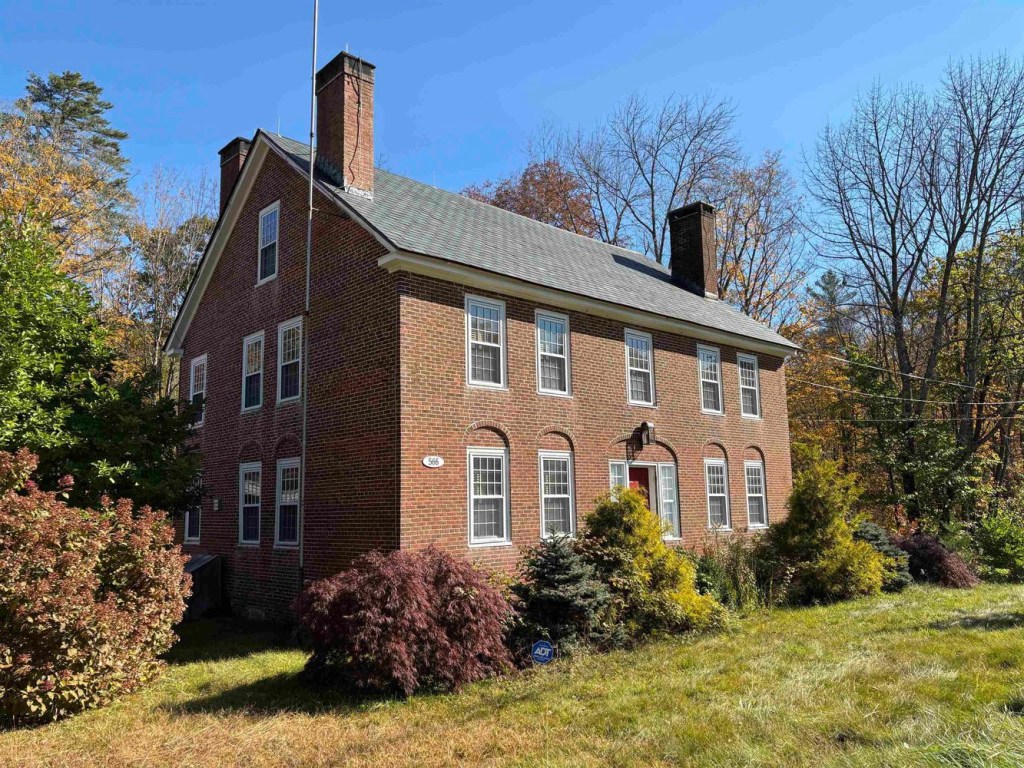
Erected in the 1820s by Joshua Jaquith, a prosperous mill owner who operated a sawmill and grist mill on the river directly behind his house, this residence in Andover, Vermont, exemplifies vernacular Federal period residential architecture in rural New England. The residence is said to have been carved up inside into apartments in the mid-1800s but was restored by Alden Jaquith, the third generation of the family later in the 19th century back into a single-family residence. The handsome brick home is symmetrical with a five-bay facade, 12-over-12 sash windows, and large end chimneys. Of particular note are the relief arches above first floor windows and above the door and the attached sidelight windows.

Leland Homestead // 1843

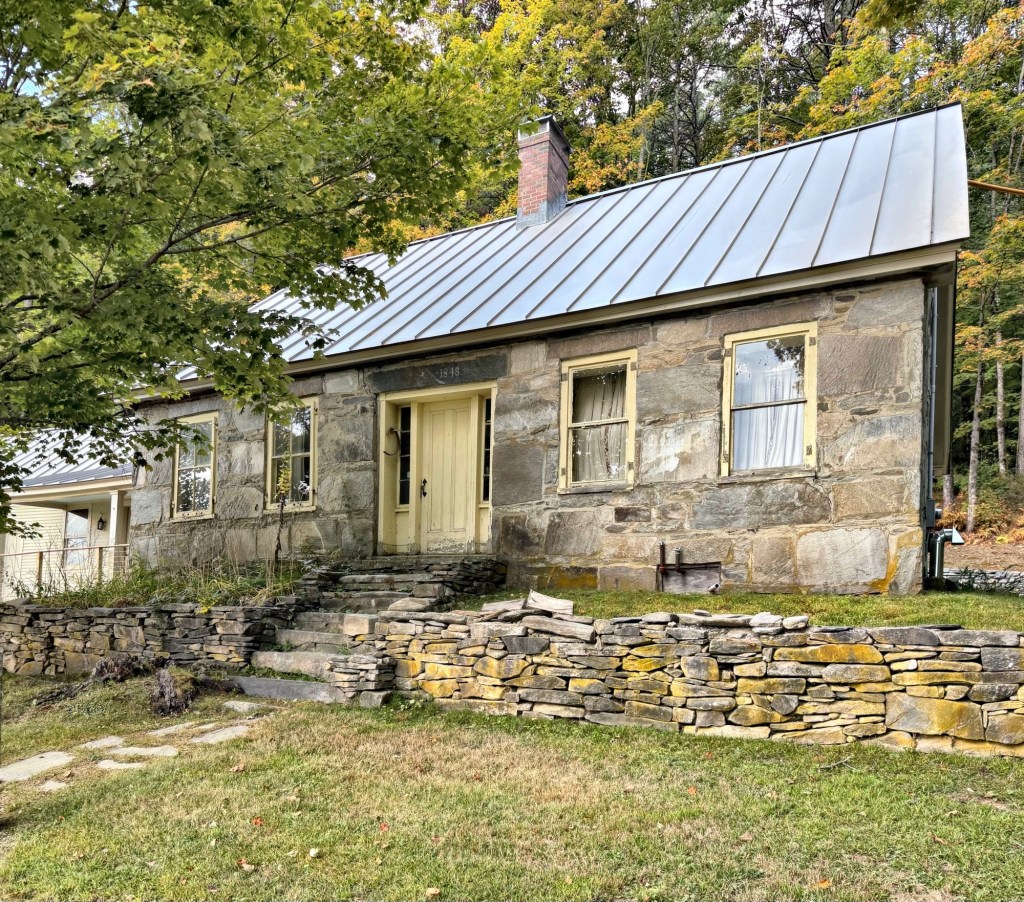
The small, rural Town of Baltimore, Vermont, was originally a part of Cavendish but due to the geography and a mountain separating the village from the main town, residents here voted in 1793 to set off as its own town. The nomenclature of the town name, Baltimore is not clear, as the city in Maryland was named for George Calvert, first Baron Baltimore, who was granted that colony in 1632, but there is no evident connection between the two communities. The word Baltimore itself is Celtic for “large town”; appropriate for Calvert’s colony, perhaps, but hardly for this Vermont town, which is one of the smallest in the state in terms of population or square miles. The town has always been a community without a distinctive village center and has long been primarily farmland, with properties bounded by stone walls and forests. This stone house on Harris Road in Baltimore was built in 1843 by Joshua Leland and his wife, Betsy Boynton. A history of the town speaks of the house, “It was one of the most attractive houses ever built in Baltimore, a well-built front hall and stairway, four fair-sized pleasant rooms downstairs, three well-arranged chambers and a convenient back stairway, all well-finished”. The home, with its date of construction over the front door, remains one of the most historic and well-preserved buildings in the town of just over 200 residents.

Bread Loaf Campus – Maple Cottage // c.1900

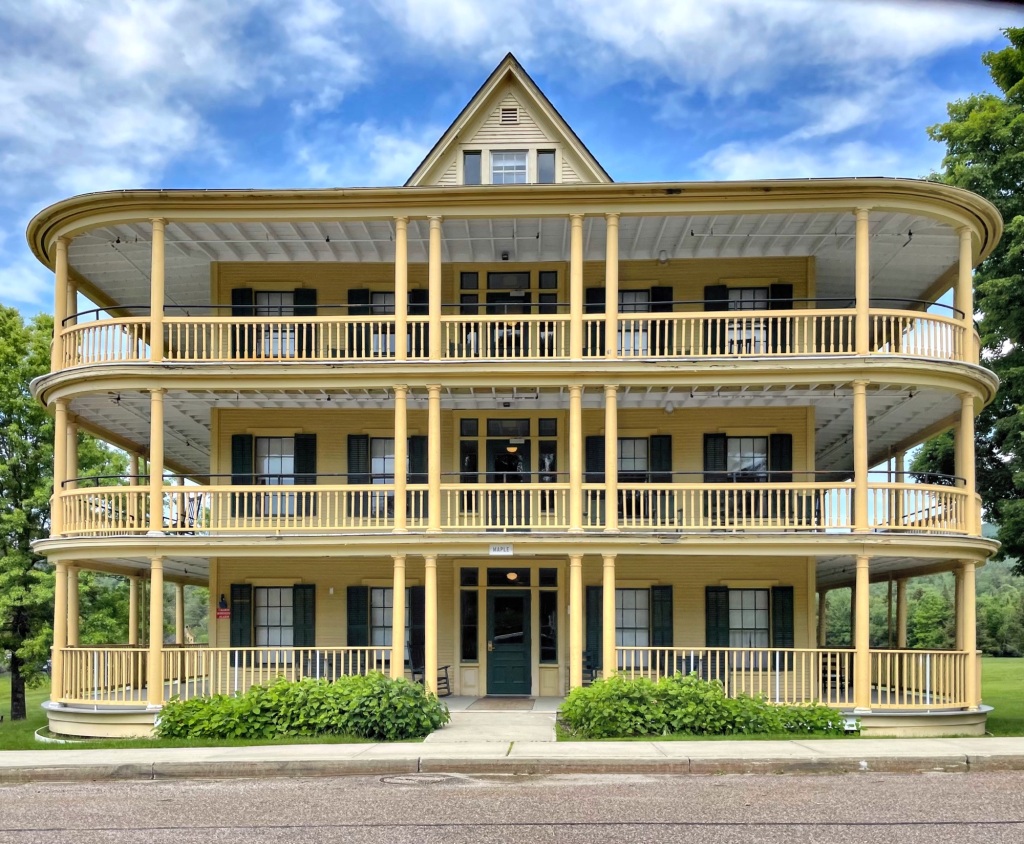
Welcome back to the Bread Loaf Campus! For more early history and context of the complex, check out the post on the Bread Loaf Inn. By 1900, owner Joseph Battell’s enterprise exceeded the capacity of the original inn, and cottages were added to accommodate more guests visiting his new permanent home in the mountains of Ripton, Vermont. Located adjacent to the Mansard-roofed Birch Cottage, one of the most visually striking buildings in the campus is Maple Cottage, which reads more porch than cottage, but it’s 100% perfect. It was the last cottage built by Battell for his family and friends to stay at when visiting. They must have loved evenings on the three-floors of porches looking out over the Green Mountains.

Ripton Community House // 1864

The Ripton Community House stands at the center of the rural village center of Ripton, Vermont, a town in the midst of the Green Mountains. The community house was built in 1864 and is an excellent late-example of the Greek Revival style in this part of the state. The building was constructed on land that was deeded by Sylvester Fisher in 1864 to the local Congregational Society with the proviso that a house of worship costing not less than $2000 must be erected within two years. The church was built and maintained by the Congregational Society until 1920 when it was deeded to the Methodist Episcopal Church to be used for religious, social and educational purposes. This restriction was removed in 1928 and it was deeded to the Ripton Community Club which made renovations and used the facilities for club meetings, social events, community dinners, square dancing and more. The club dissolved in 1964 and the building began to deterioriate for years until the town banded together to protect and applied for grants to restore the building to its former glory, what we can all appreciate today when driving through the quaint town.

The Old Hancock Tavern // c.1810

Before the Centre Turnpike was laid out in 1808, better-connecting Middlebury, Vermont to towns east of the Green Mountains, visitors would have to travel hours longer to divert around the mountains. This new route cut right through the small village of Hancock, Vermont and the town prospered as a result. Along the route, this vernacular, Federal period tavern was built shortly after the turnpike aimed to take advantage of the new visitors driving through the town. This tavern/inn was operated for a time by a J. E. Wright as a hotel and the building has a perfect wrap-around porch.

St. John’s Episcopal Church, Highgate // 1831

St. John’s Episcopal Church stands in a grove of pine trees at the southeastern end of the Highgate Falls village green in Highgate, Vermont. The church is built in a transitional style which combines the pointed arches of Gothic architecture with a unique Gothic-Palladian window, but with a traditional plan and massing commonly found in Federal style churches in New England. The church was built between 1831-1833 by Joel Whitney of nearby Enosburg, and was consecrated on May 21, 1834, by Rev. John Henry Hopkins, the first Bishop of the Episcopal Diocese of Vermont. The congregation was a full parish until 1896 and maintenance has since struggled due to dwindling use. The wooden steeple was removed in the late 20th century, but the church stands as an important architectural landmark for the small town.