Bertram-Jewett-Hale House // 1842

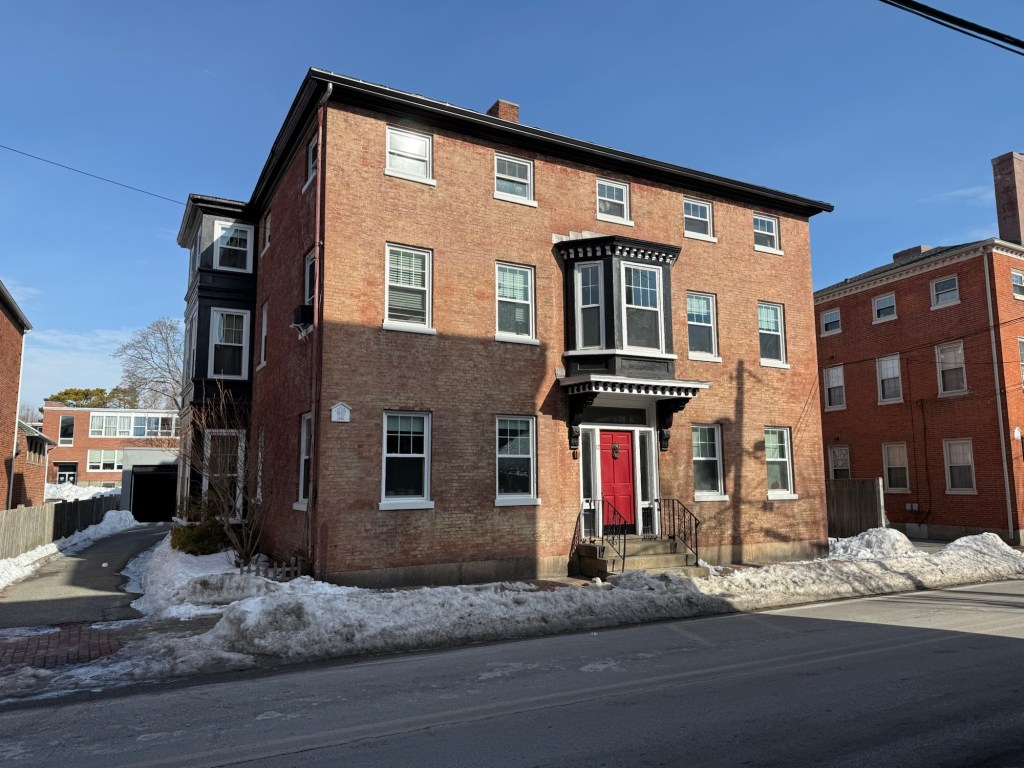
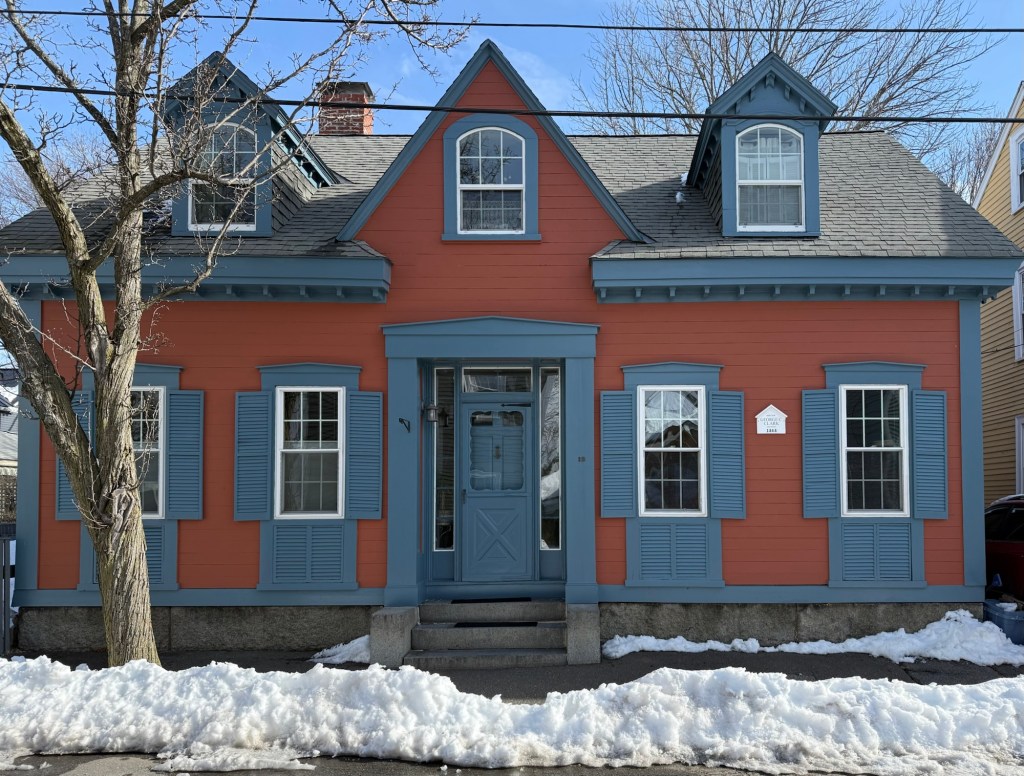
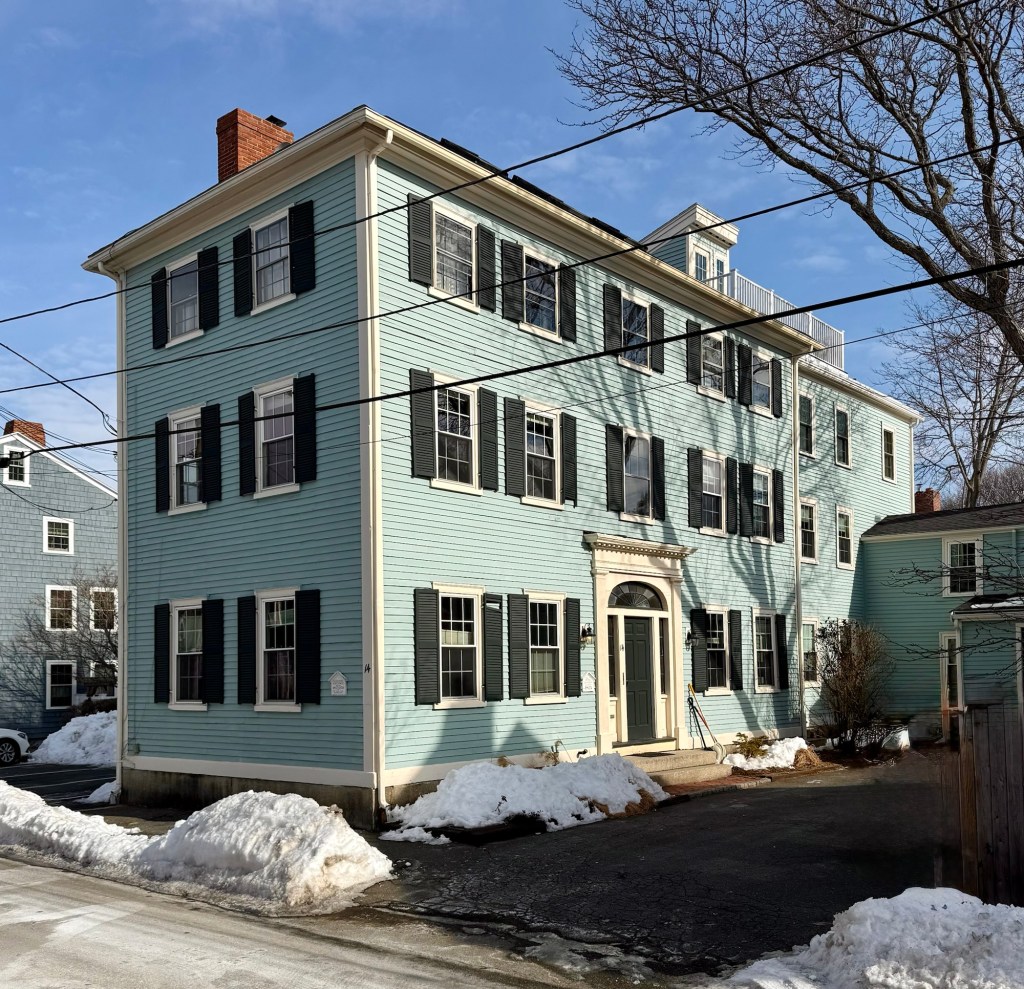
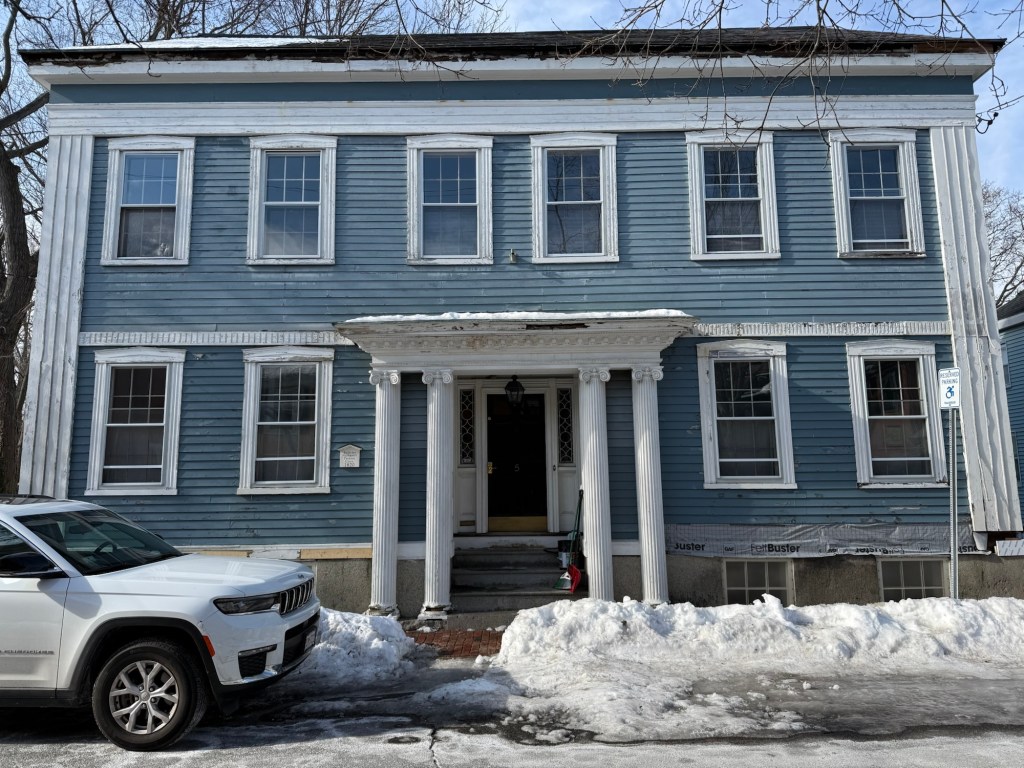
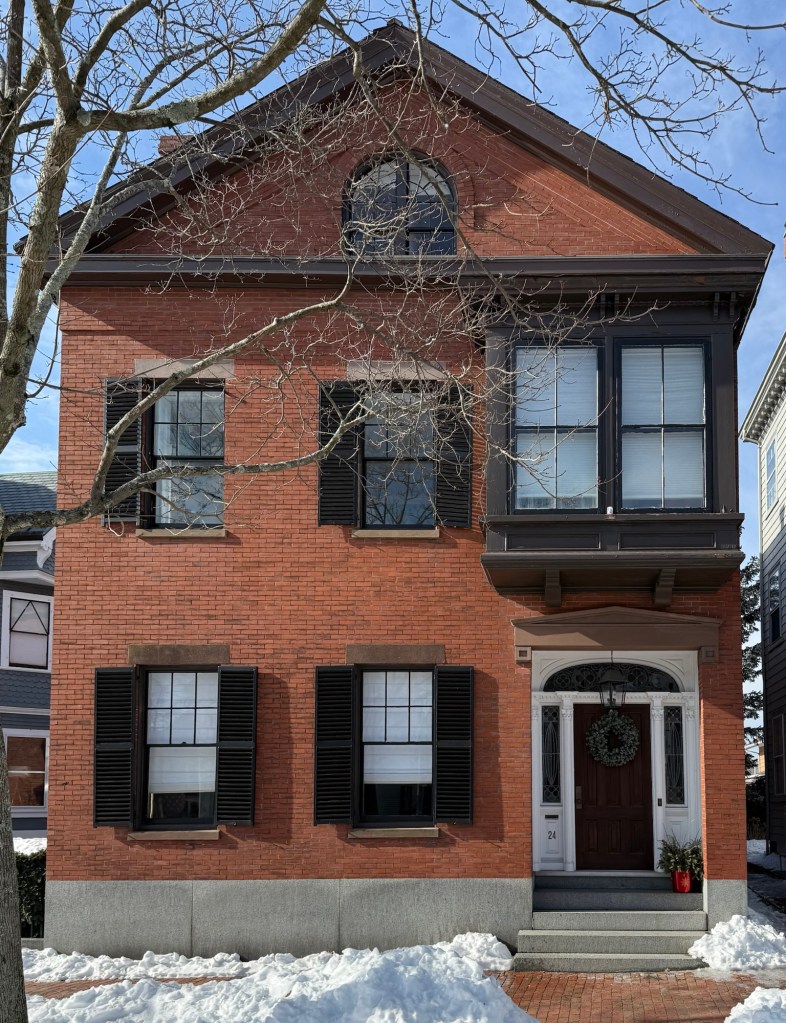
This lovely brick house on Winter Street in Salem was constructed for Capt. John Bertram in 1842-3. John Bertram (1795-1882) as a boy had his first job as a cabin boy and would work his way up to become a commander, ship owner and investor. He was extensively involved in shipping around the world including to Zanzibar, South America, and California and later he invested in railroads and real estate. He retired from actively commanding boats at age thirty-six with a vast fortune which he would become a philanthropist, giving much of it to charitable causes and his home city of Salem. Captain Bertram continued to own this property until 1855, when he moved to his new house on Essex Street, which he later gifted to the City of Salem as its public library. By the time of his death in 1882, he donated funds to the Salem Hospital, Old Men’s Home, Home for Aged Women, and various colleges and scholarships. Bertram sold this Winter Street house to John Jewett in 1855 for $10,000. Jewett began his career as a cabinet maker in Beverly in 1817 and subsequently became a dealer in mahogany, fancy woods, furniture and grain. Jewett died in 1874 and the property was sold by his heirs to Henry Appleton Hale in 1890. Engaged in the hardware business, Hale also served as president of the Salem Gas Light Company and as a vice president of the Salem Five Cents Savings Bank. Mr. Hale also served the country during the Civil War, and was shot in the face at Antietam on September 17, 1862. The bullet knocked out his front teeth and sliced off a piece of his tongue. Despite the severity of his wound, he recovered and returned to the regiment months later, and mustered out in 1865 following another injury. Henry A. Hale died in 1927. The property is significant not only for its owners, but also for its architectural quality and integrity. The transitional Federal-Greek Revival house features a recessed entry with original leaded sidelight and transom windows, brownstone trimmings, and alterations (likely by Hale) from the second half of the 19th century, including the projecting bay and arched window in the gable.

Joseph Story House // 1811

Built in 1811 for Joseph Story, lawyer, politician, and judge of the United States Supreme Court, this stately brick residence on Winter Street in Salem, Massachusetts, is significant, not only for its architecture, but for its esteemed owners. Judge Joseph Story (1779-1845), who was then Speaker of the House of Massachusetts in 1810, purchased this house lot near the Salem Common, and proceeded to have this three-story brick house constructed. By the time it was finished, Story had been appointed by President Madison to the bench of the United States Supreme Court. He was just 32-years-old when nominated to the bench. The house is also the birthplace in 1819 of Story’s son William Wetmore Story, a well-known sculptor. Judge Story would reside here until 1829, when he moved to Cambridge in order to pursue his work at the new Harvard Law School. The property was sold in 1831 to Robert Upton (1788-1863), a self-made merchant heavily engaged with trade in South America. Robert Upton and his sons were among the most important men in Salem in the 1830s-1850s, for they were able to maintain a successful foreign commerce, and keep ships and men employed, at a time when Salem was otherwise fading as a seaport. The house has been lovingly maintained by centuries of stewards, and the house was designated as a National Historic Landmark in 1973.

Brown-Battis House // 1851

Captain Nathaniel Brown (1800-1866), a master mariner in Salem, built this fine brick house on Brown Street in 1851. Captain Brown bought the lot from the heirs of Nathaniel Kinsman in 1850, with an older house already occupying the site. The existing house was razed and construction began on this house, with it completed by 1851. The building is unique as it resembles the Federal period form of the five-bay and three-story residence with shortened third-floor windows under a low hipped roof. Although the Federal period waned in popularity by the 1830s, this house clearly took cues from the earlier homes nearby. Following Nathaniel Brown’s death in 1866, James Herrick Battis, a tobacconist and cigar manufacturer, purchased the home. City records state that Battis was issued a building permit in 1878 for an addition to the dwelling. It is probable that the bay windows and front door hood were also added at this time, giving the residence more of an Italianate style. Battis continued to own the property until his death in 1891. By 1930, the residence was converted into apartments and was known as the Conant Apartments. It remains a six-unit apartment building today.


Kenneally House // 1913

While Salem, Massachusetts, is best-known for its Colonial and 19th century architecture, there are some great 20th century buildings that deserve attention. This is the Kenneally House at 3 Williams Street, just north of the Salem Common, a c.1913 Colonial Revival home with great curb appeal. The house was built for Maurice D. Kenneally, a teamster, who lived here with his wife, Mary, and son, Patrick. Symmetrically arranged, the house has a center entry , with sidelights and an elliptical fanlight. The front facade is dominated by a full-width first story porch on paired Doric columns and a gable roof with Palladian window.

George Clark Cottage // 1847

In 1847, George Clark (1815-1890), a Salem carpenter, purchased a house lot on Oliver Street, a block away from the Salem Common. That year he began constructing this cottage for his family. The Clark Family resided here for just a year until 1849, when George got caught up in the California Gold Rush, selling the property and moving west to make his fortune. Since Mr. Clark was back in Salem by 1850 (according to the federal census), he was likely one of the thousands of forty-niners who did not strike it rich. The Greek Revival style house is unique for its more Gothic style gable, brackets, and segmental arched windows.

Edgerly-Hawthorne House // 1824

The Edgerly-Hawthorne House on Mall Street, near the Salem Common, is one of the most significant residences in Salem, Massachusetts. The Federal style residence was built in 1824 for Peter Edgerly, who ran a teamster/trucker or distribution company in Downtown Salem. After a decade, Peter became insolvent and the property was sold to Joseph Leavitt, a wealthy property owner in Salem. This house is best-known as the place where Salem-born Nathaniel Hawthorne and his family, lived from 1847 to 1850, and where he wrote The Scarlet Letter. It was in the room closest to the street, on the third floor, that Hawthorne sat at his desk and wrote the American masterpiece of fiction. After publishing The Scarlet Letter, Hawthorne moved to the Berkshires and then back to Concord, Massachusetts, never to live in Salem again. In c.1906, the Edgerly-Hawthorne House was photographed by the Detroit Publishing Company highlighting some landmarks in town. The house looks nearly identical from when it was built over 200 years ago!

Nathaniel B. Perkins House // c.1836

Nathaniel B. Perkins (1813-1885) was born in Salem the son of Captain Joseph Perkins (born 1785) and Elizabeth Hunt. Perkins was a wealthy ship owner in Salem and served on the Salem School Committee and was Treasurer of the Essex Marine Railway. He married Susan Breed in 1836 and built this house on Oliver Street in Salem soon-after. The high-style Greek Revival house is notable for its prominent recessed center entry with engaged, fluted Ionic columns and a modillioned entablature. Perkins likely had one of his ship carpenters work on the carvings as they are so unique.

First Baptist Church of Salem – Essex Law Library // 1805

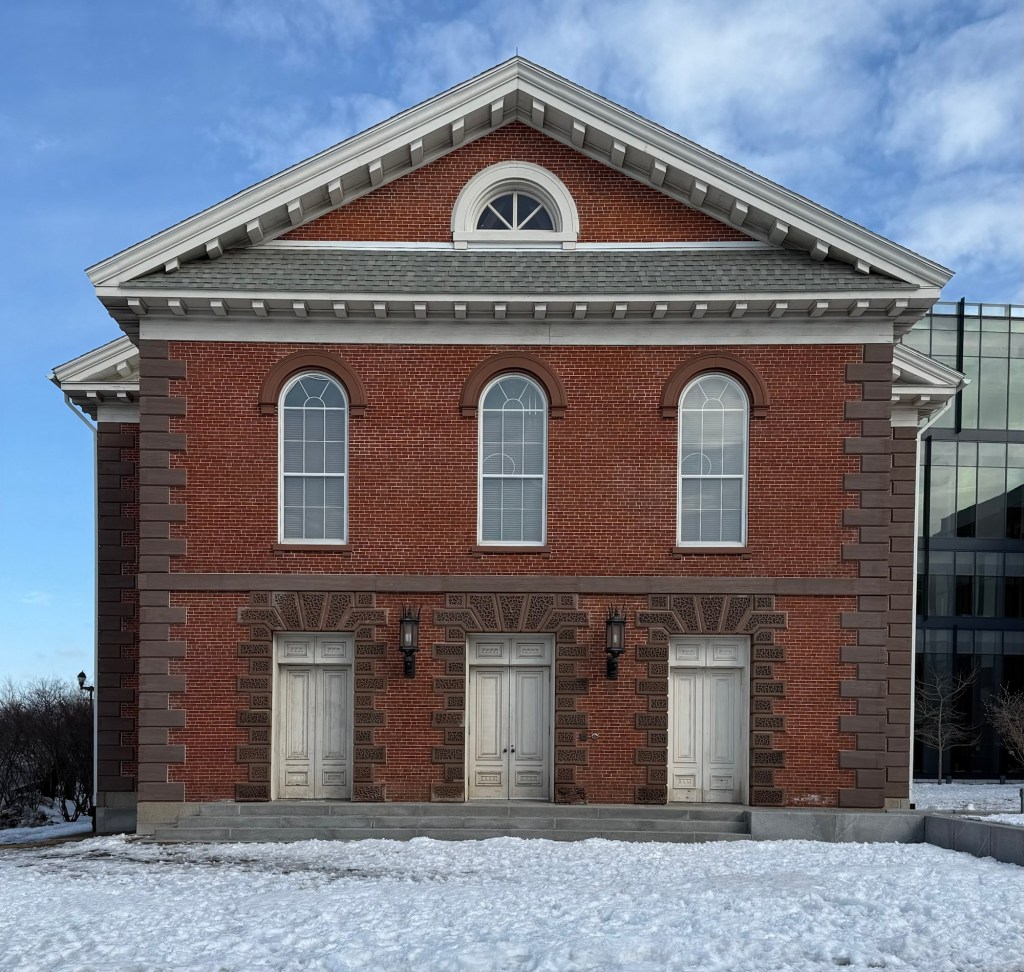
The First Baptist Church of Salem was built in 1805 on Federal Street and is the oldest brick meetinghouse in Salem. The local Baptist congregation was established in 1804 when 24 parishioners formed the First Baptist Church, and began gathering funds to elect a pastor and build a house of worship. At the time, Baptists were a religious minority in Massachusetts, where nearly all churches were Congregational, so against large odds, the parishioners funded a brick building and lot on the prominent Federal Street in Salem. The structure was completed by 1805 and is said to have been one of only fifty brick structures that stood in the city at the time. A major renovation to the building occurred in 1850, when the church was renovated in the Italianate style. Its three bays are articulated as an English basement containing three identical entrances framed in heavy rusticated brownstone. A belt course separates this basement from a principal story composed of tall arched windows capped by drip-molded brownstone. A lunette window is the centerpiece of the strongly projecting modillioned pediment. The entire composition is very pleasing and showcases the ever-evolving architectural tastes in the 19th century. A tower was later removed due to structural issues. In the early 21st century, the site of the church was needed for an expansion of the Essex County Courts. The congregation sold the property and in the following year, the old brick church was moved a couple hundred feet to the west and restored and was converted into a law library for the new courthouse. Talk about historic preservation at work!

Captain John Felt House // 1757

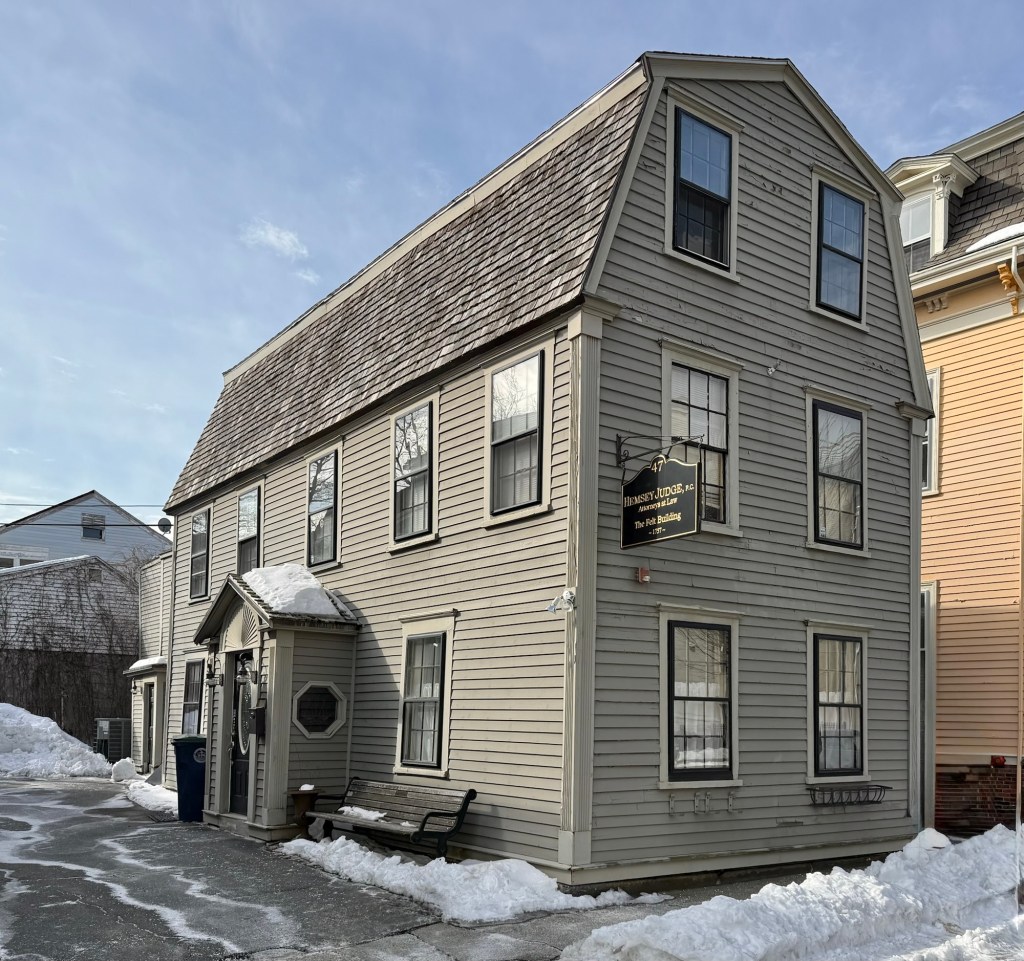
The Captain John Felt House on Federal Street in Salem, Massachusetts, is a surviving Georgian residence with ties to the American Revolution. In May 1757, John Felt purchased a lot on present-day Federal Street from Benjamin Lynde for 52 pounds, and began building his family home here. John Felt, a Salem native, worked as a “shoreman,” but was primarily an owner of vessels involved in the coasting trade, also owning a large warehouse to store the goods from the West Indies brought in by his ships. Felt’s title of “Captain” came from his involvement in the Essex county militia. Captain Felt was a key figure in Leslie’s Retreat, also called the Salem Gunpowder Raid, which took place on February 26, 1775, in Salem. British Colonel Alexander Leslie led a raid to seize suspected cannons from a makeshift Colonial armory in Salem. Instead of finding artillery, Leslie encountered an inflamed citizenry and militia members ready to stop his search. These colonists flooded Salem’s streets, preventing Leslie’s passage and forcing him to negotiate. Ultimately, the Salemites convinced the British Regulars to stand down and return to Boston. No shots were fired, and no one was seriously injured—but tensions were high and a skirmish was evident until Captain Felt stated, “If you do fire, you will all be dead men.” Had a soldier or a colonist gone rogue and fired their weapon, the American Revolution might have begun in Salem, and not Concord just weeks later. After the Revolution, Captain Felt sold his house and moved to present-day Danvers. After centuries of successive ownership by merchants, today, the Felt House is used (at least in part) as professional law offices.

Temple Court Apartments // 1912

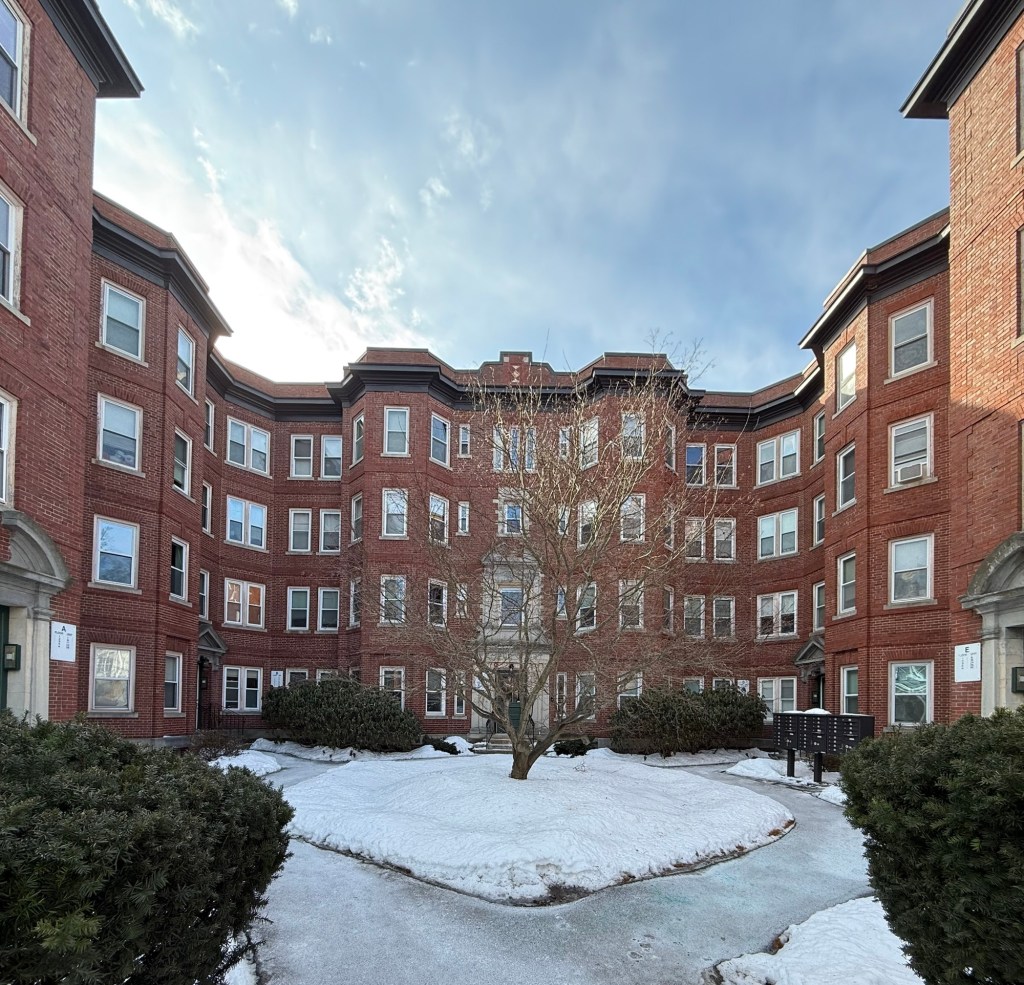
Constructed in 1912, Temple Court at 15 Lynde Street was erected on the site of two earlier buildings during a period of great population growth in Salem. The parcels here were acquired by Aroline C. Gove (1857-1939), a prominent local property-owner and developer between 1908 and 1911. Ms. Gove was a prominent Salem citizen and daughter of notable inventor and businesswoman Lydia Pinkham. With a business-oriented mindset like her mother, Aroline hired architect Harry Prescott Graves of Lowell to furnish plans for an apartment building on this site. Completed in 1912, the apartment building, known as Temple Court, included 36 units with two-, three-, and four-room suites with a live-in janitor. The building is unique for Salem as a courtyard style building, more common in Boston and Brookline. The building’s large mass is broken up by its setback with the U-shaped form and central landscaped courtyard, series of projecting octagonal bays, and multiple entrances. Temple Court was converted to condominiums in the 1980s.