Marie Hill Farmhouse // c.1810

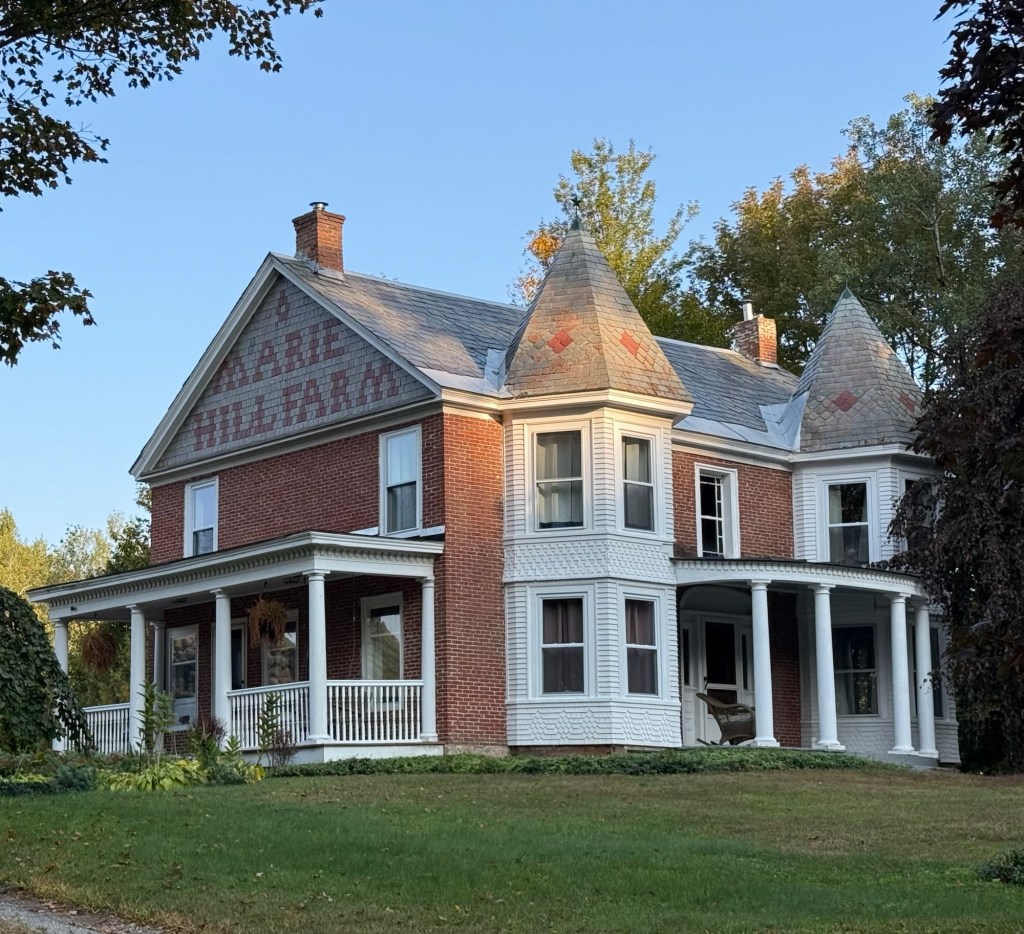
Located in the charming rural town of Andover, Vermont, the Marie Hill Farmhouse is one of the most interesting and charming residences in the area. Built around 1810, the brick farmhouse was designed in the Federal style, with a symmetrical five-bay facade, brick end chimneys, and a fanlight over the front door. The property was purchased by New Yorkers, Laurence Pfluger and his wife Mary “Marie” Pfluger, who operated the farm, raising dairy cows. Laurence would ship eggs, dairy and meat to his market in New York from this farm, which did quite well financially. The farmhouse was “modernized” by the turn of the 20th century with the addition of the two-story octagonal towers on the facade, front and side porches, along with the decorative slate spelling out “Marie Hill Farm” after his Marie Pflueger. The residence was later converted into a guesthouse, a use that remains to this day, still retaining the iconic name and branding in the southern gable.

Thomas Hovey House // c.1785

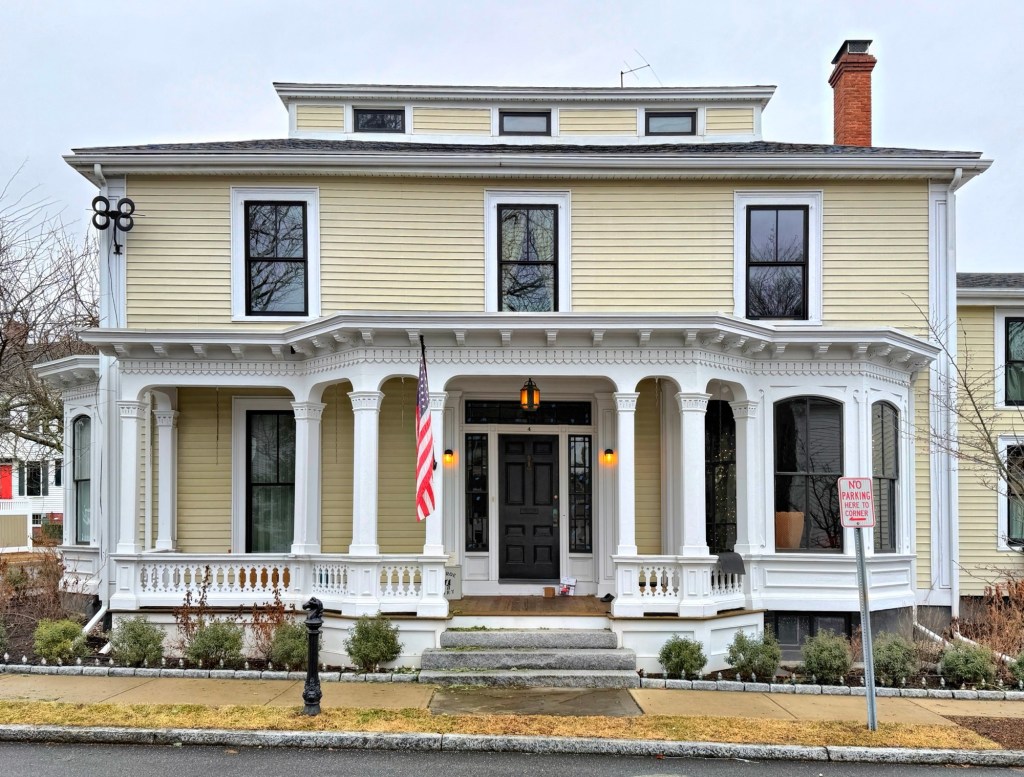
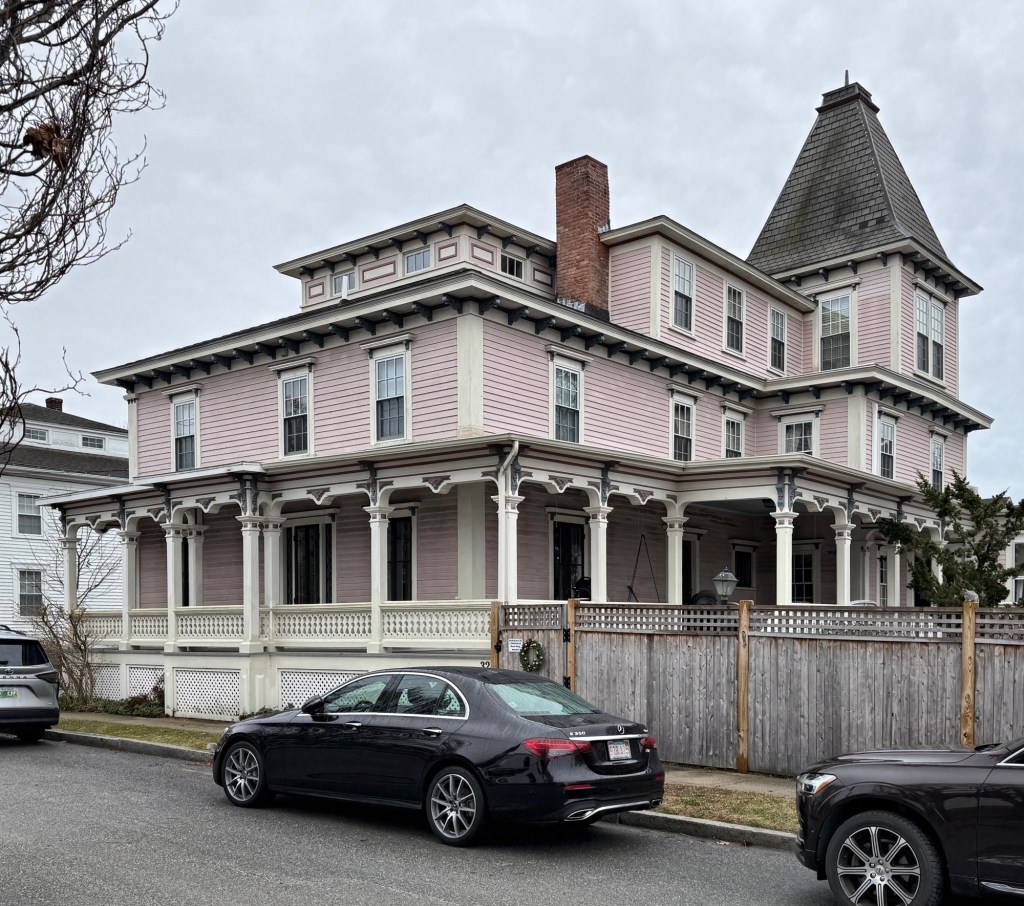
This lovely three-story frame house on Winter Street in Salem was built in the 1780s for mason, Thomas Hovey. The structure’s front-end, five-by-one-bay portion with stone foundation was built first, in the Federal style, likely with traditional finishes seen in the early Federal period. The building’s rectangular shape, hipped roof, molded corner boards, and foreshortened third-story windows are indicative of its Federal-era origins. By around 1870, the Italianate decorative features, including a hooded double-door entrance, two-over-two windows, a second-story bay window, a bracketed cornice, and bracketed window lintels, were added to the exterior in an effort to modernize the home by later owners. Like many other houses in Salem, this building was extensively documented by Historic Salem Inc. who compiled a detailed history of this and hundreds of other homes nearby.

Wellington-Sears House // c.1810

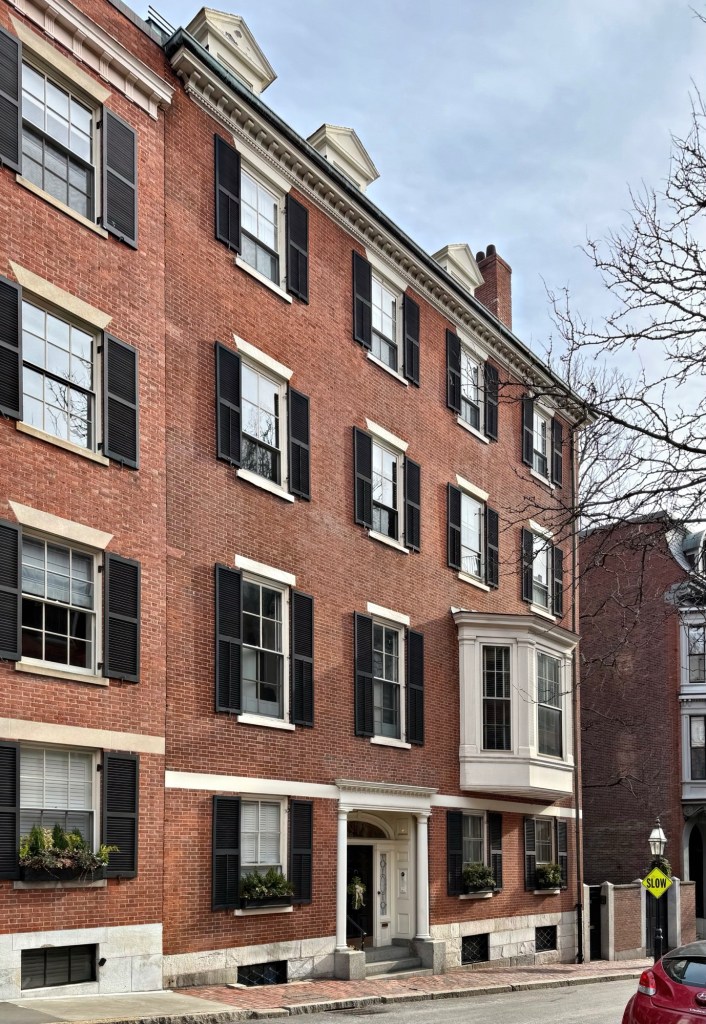
One of the many Federal period houses in Ashby Center is this lovely c.1810 residence on Main Street. The house is known as the Wellington House, and was possibly built by Darius Wellington, a carpenter who assisted with building the town’s First Parish Church in 1809. The house exhibited a symmetrical facade with stunning fanlight transom over the main entrance and eight-over-twelve sash windows. In the latter half of the 19th century, the property was owned by Cyrus Sears, a prominent sea captain, who sought a life inland with his family. He would serve in the Civil War, but had the half-decade house “modernized” with new bay windows and an entry porch. He would later move to Baltimore and serve as a port captain and consul to Cuba. In the past few years, the owners have restored the home to its original Federal design, re-emphasizing the stunning fanlight transom and sidelight details.

Asa C. Everett House // c.1824

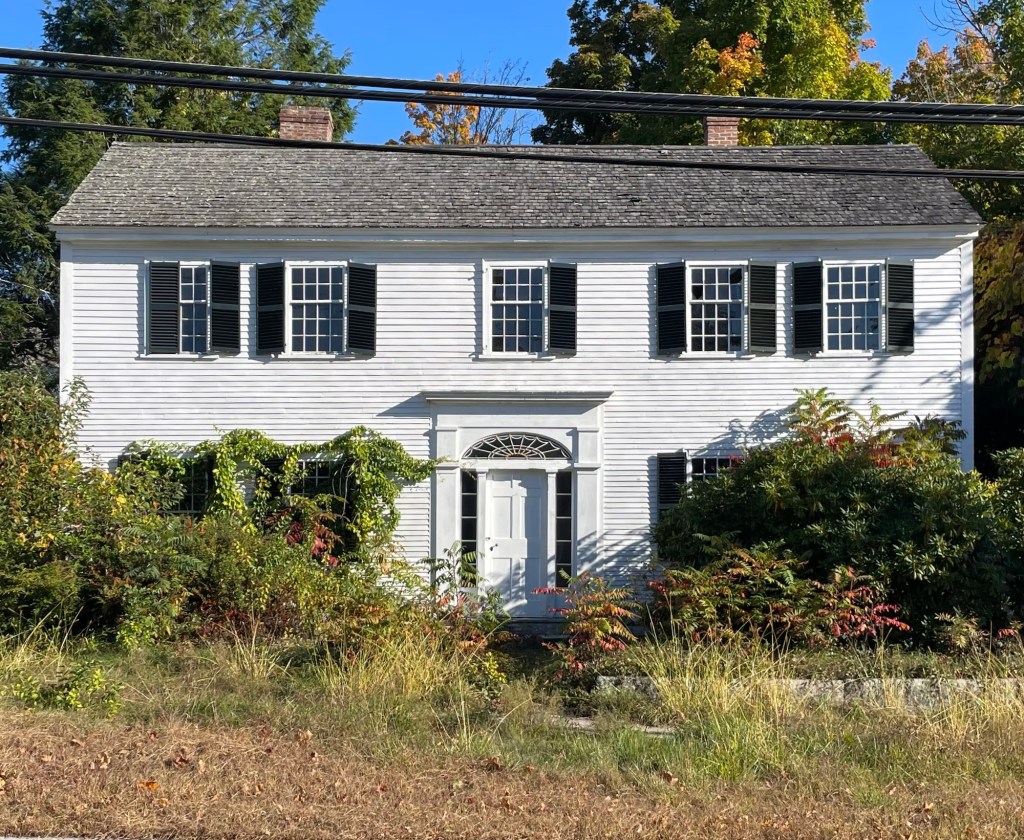
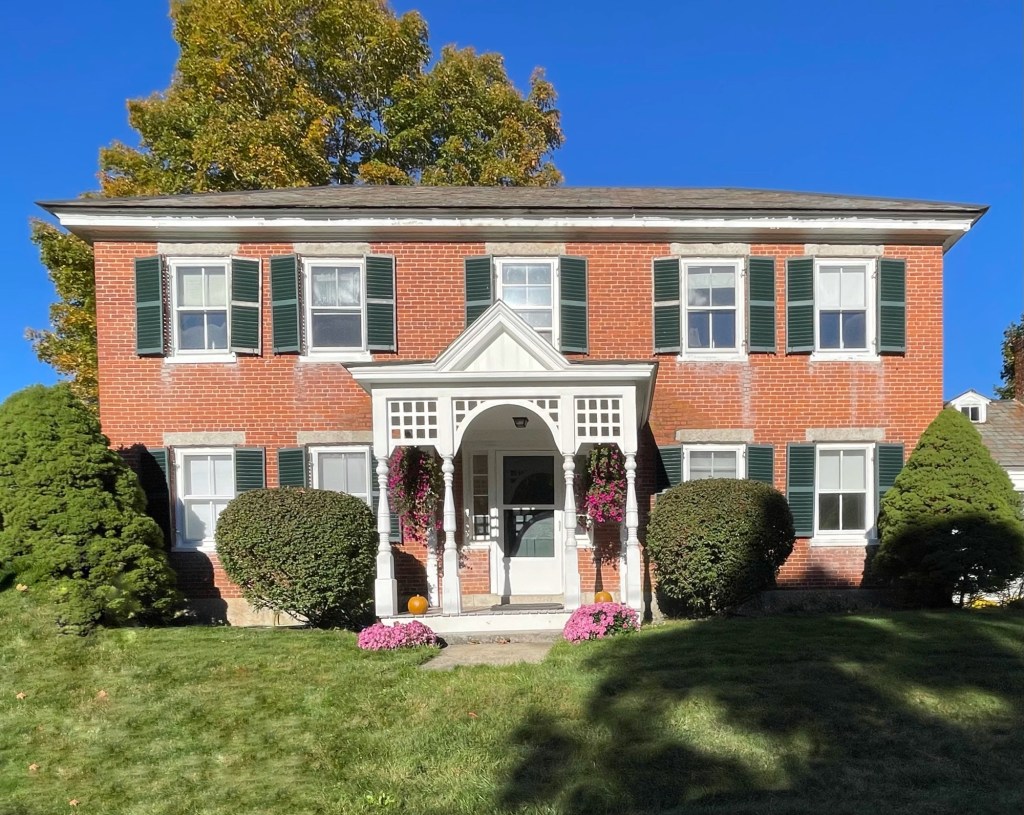
The Asa C. Everett House on Allen Road in Ashby, Massachusetts, was built around the time of the wedding of Asa Cutter Everett, a saddle- and harness-maker, and Rowena Spaulding in 1824. The house was built of brick and in the Federal style with a shallow hipped roof and symmetrical facade, and was “modernized” in the late 19th century. Victorian-era alterations include the entrance porch with turned posts and spindle frieze and two-over-two sash windows. Blending of vastly different architectural styles can be tough to pull off, but this example really looks great! What do you think?