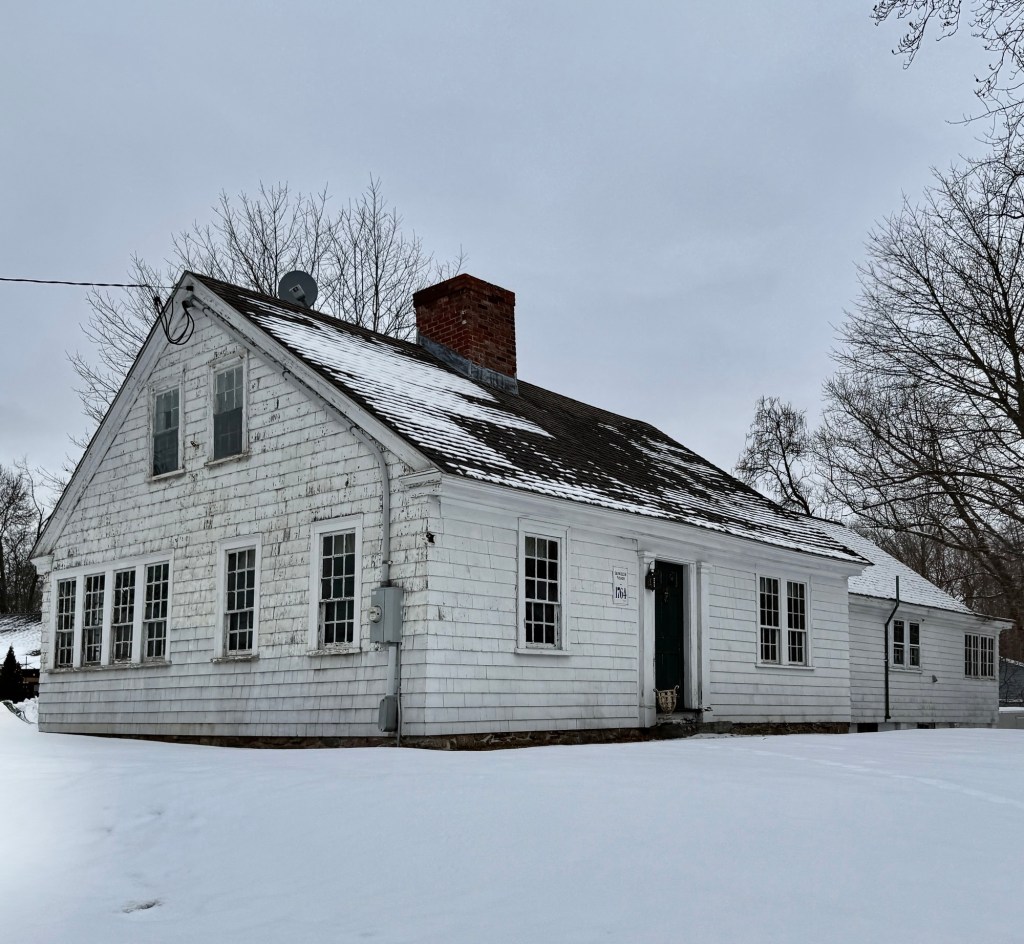
This historic Georgian-era house at 677 South Street in Wrentham, Massachusetts, is one of the town’s most historic and unaltered dwellings. Dating to about 1764, the Georgian Cape farmhouse replaced an earlier house formerly owned by Dr. Cornelius Kollock, the town doctor and later purchased by Ebenezer Fisher. The home is said to have burned and was replaced by the present building around 1764. It is unclear if the original 17th century home was largely rebuilt or if the existing house now was built from the ground up. The home has historically (and even today) been known as the Wampum House, said to have been named after “Wrentham’s last Indian.” This claim highlights a common but harmful misconception that no Indigenous peoples survived colonization and its impacts in New England. However, the name Wampum’s Corner and the Wampum House remain. The house is today owned by the Wrentham Historical Commission, and operates as a historic house museum, though is suffering from some deferred maintenance. It would be important for the community to fully document the home’s history, namesake, and tell a more complete and accurate history of this historic house.
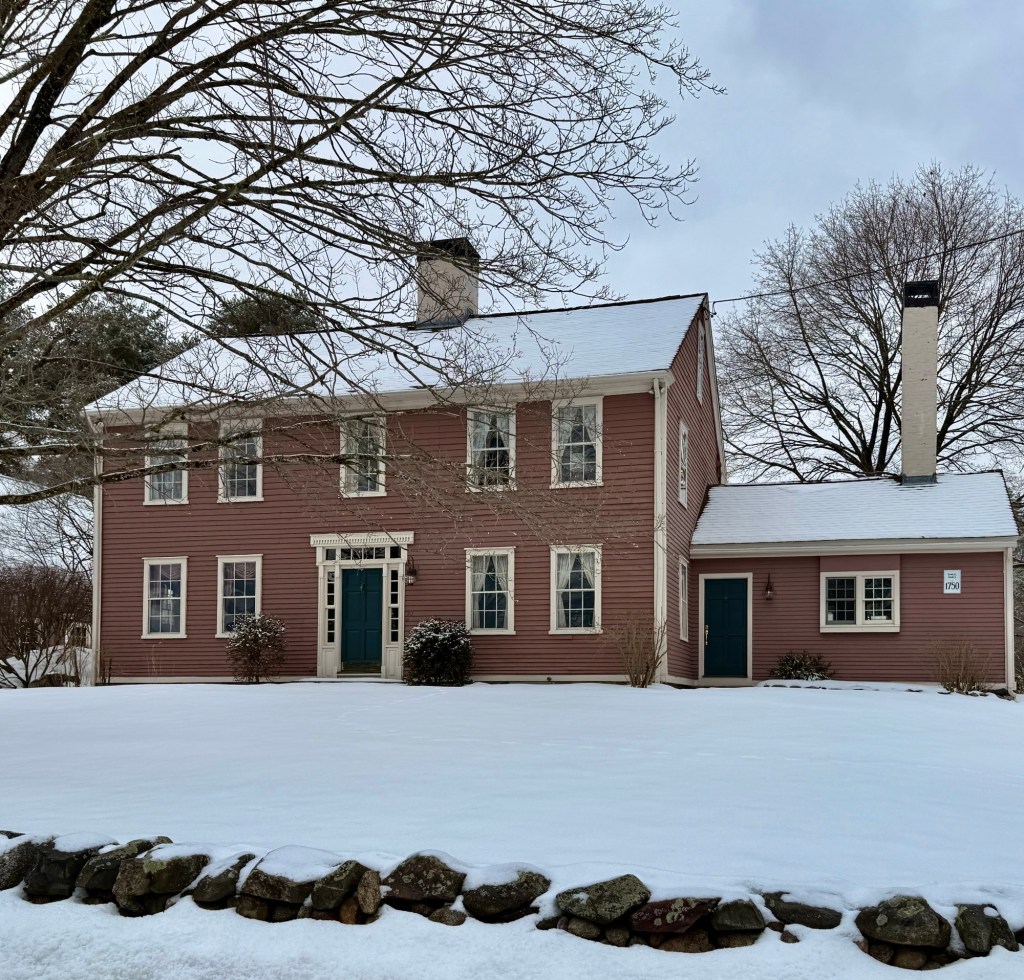
The Hawes’ in Wrentham, Massachusetts, were a prominent local family that largely settled in the western part of the town, building large farmhouses with properties bounded by rustic stone walls. This residence on Spring Street dates to the mid-18th century and was likely built for Samuel Hawes (1713-1795) around the time of his marriage to Priscilla Ruggles in 1741. After the death of both Samuel and Priscilla in 1795, the couple’s only son, David, bought out his two sisters value in the property and lived here with his family. The property was passed down through members of the Hawes Family until the 20th century, though later owners have still maintained and preserved this significant home for future generations.
One of the earliest extant homes in western Wrentham, Massachusetts, the old Hawes Homestead on Williams Street stands as an important Georgian style farmhouse in what was once a more pastoral part of the community. The house likely dates to the mid-18th century (or earlier) and was possibly built by Daniel Hawes, who farmed the land here. Due to the varied sizes of the upper windows, the residence was most probably a three-bay house with central chimney, and the right-most bay and modern chimney were added later. The residence was later inherited by his son, and later by other heirs before the property sold out of the Hawes family in the mid-19th century.
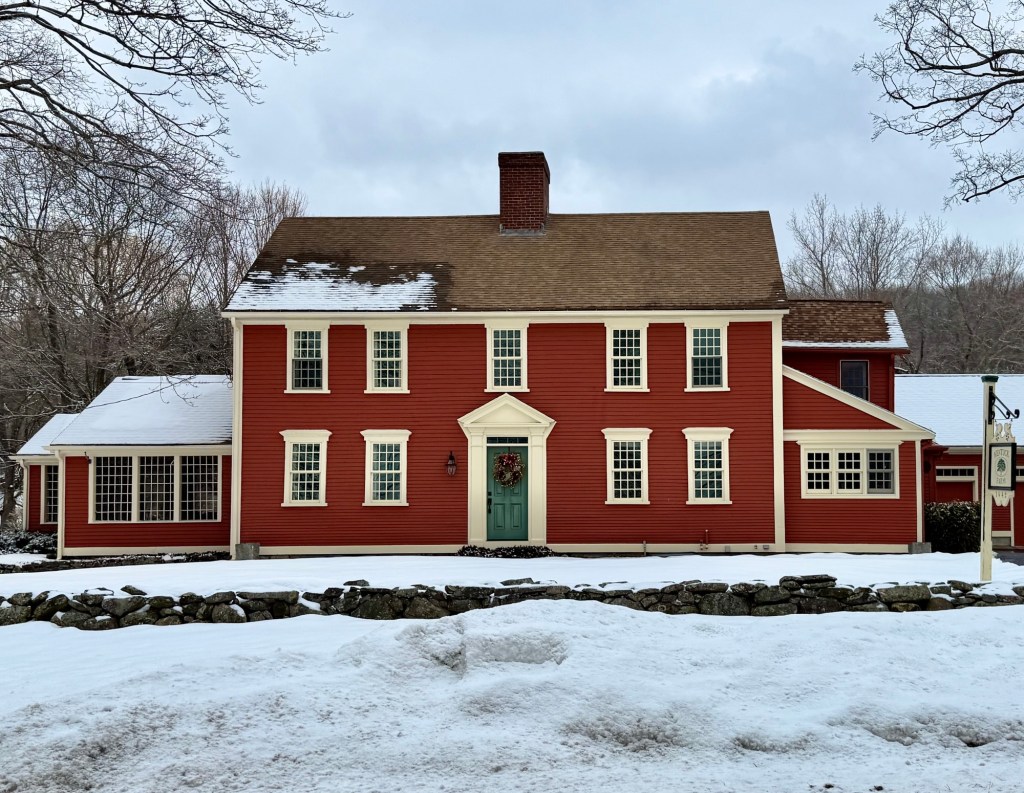
Located on West Street in the rural part of Wrentham, Massachusetts, this historic farmhouse is among the finest homes in the community. Early records are sparse, but the dwelling appears to have been built in the first half of the 18th century by Joseph Grant and later expanded and inherited by other members of the Grant Family who owned the property in the mid-19th century and other nearby farms. Through the 19th century, the farm was owned by George Grant and later by his son, Charles Albert Grant. In the 20th century, the farm was owned by Wentworth and Anne Massie, who operated the property as an apple orchard, known as Kentuck Farm. The home has been restored by current owners and retains its large, central chimney, classical door surround, siding and windows.
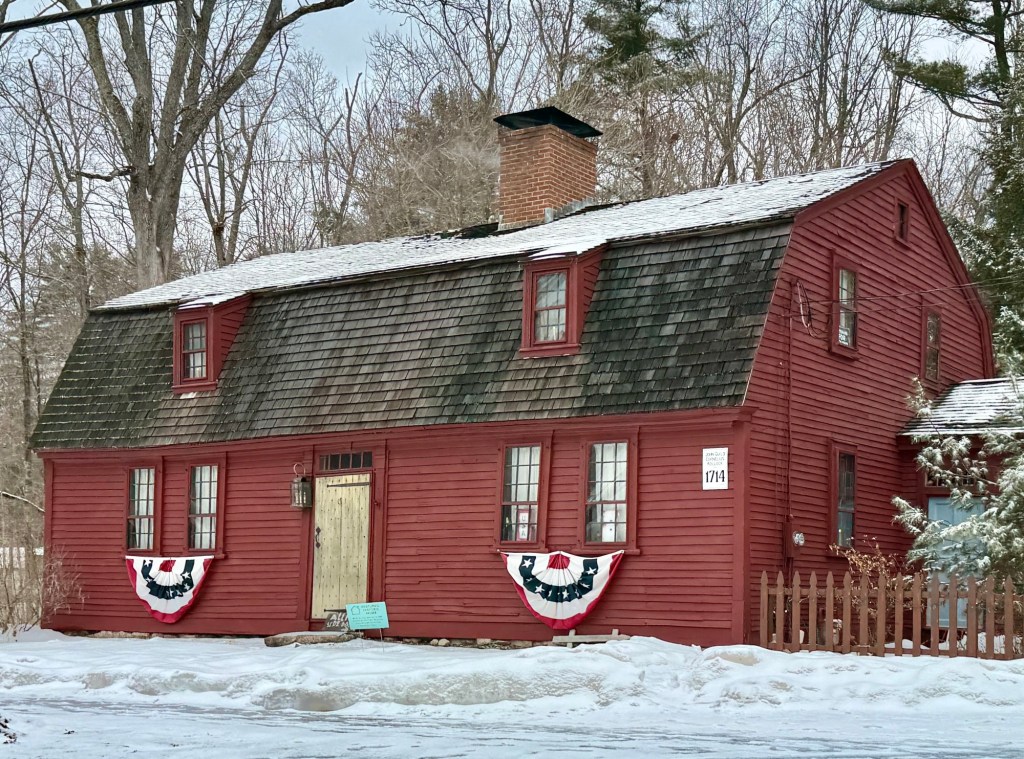
The Guild-Kollock house on East Street in Wrentham, Massachusetts, is one of the oldest and best-preserved historic homes in the suburban community. In 1674, John Guild of Dedham, was granted this lot by the proprietors and later willed the property to his son, Deacon John Guild Jr. (1649-1723). John Guild Jr. had the home built between 1682 and 1714, the first recorded document that acknowledges the existence of this dwelling, giving the home a definitive “built by” date. The Colonial farmhouse remained in the Guild family until 1804, when it was purchased by Cornelius Kollock, a Revolutionary War veteran, surveyor, Justice of the Peace, Town Clerk, Town Treasurer, and Representative to the General Court. The significant early Guild-Kollock House was documented inside and out as part of the Historic American Buildings Survey (HABS) in 1962 and has been lovingly preserved for over 300 years since its construction.
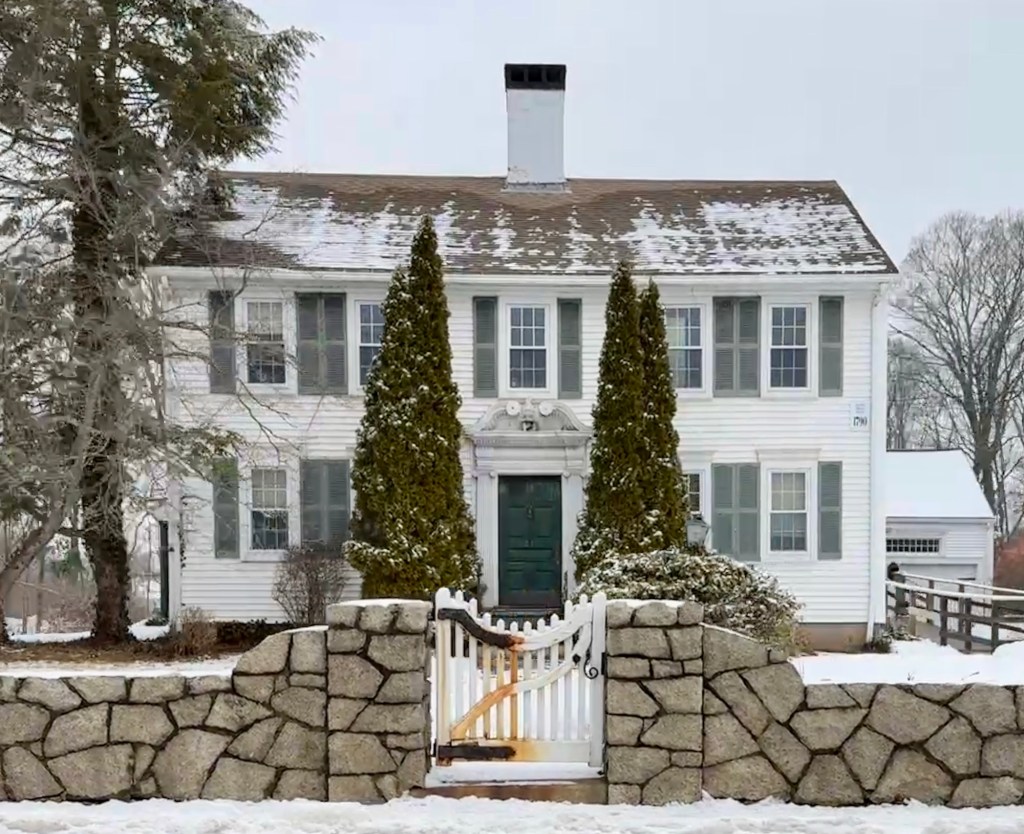
In 1787, Oliver Druce (1760-1797) married Sarah “Sally” Kollock (1764-1789) and had this large residence built overlooking the Town Common in Wrentham, Massachusetts. The young couple raised one daughter here until Sarah died in 1789 at 25 years old, followed years later by Oliver, who died in 1797 at 37 years old. By the turn of the 19th century, the late-Georgian residence was owned by John Francoeur, a French Huguenot. The Druce-Francoeur House is one of the finest Georgian style residences in Wrentham, which retains its magnificent doorway framed by fluted Ionic pilasters with broken scrolled pediment above.
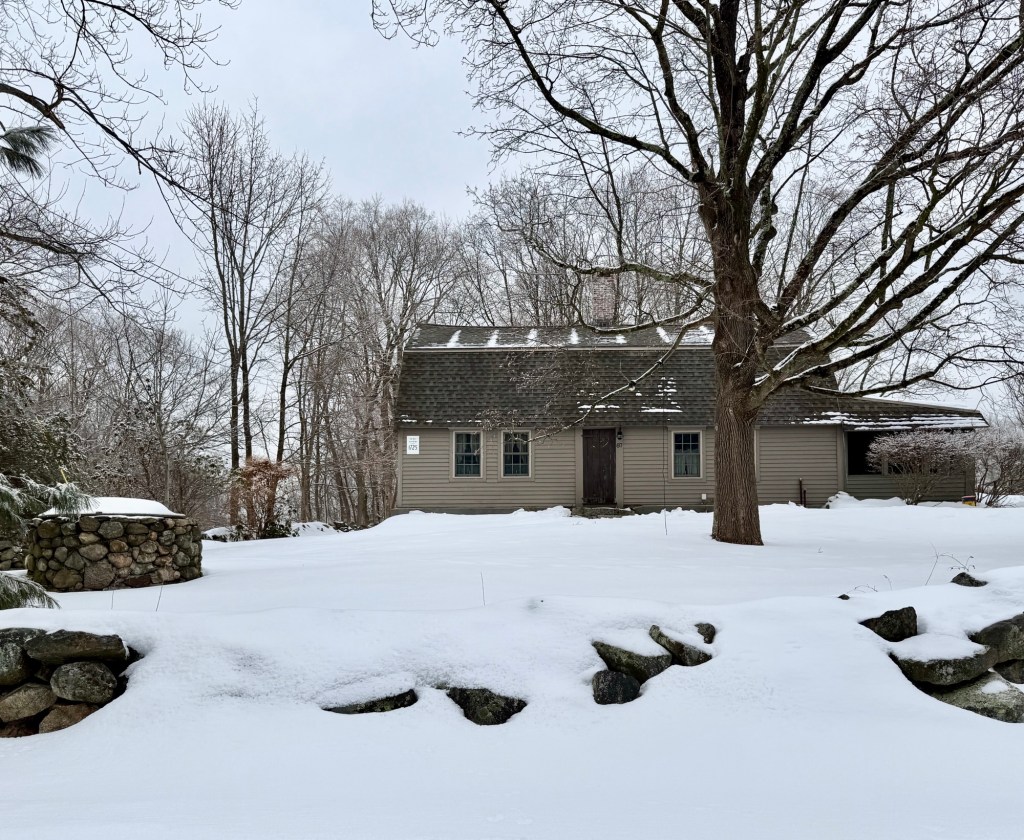
Wrentham, Massachusetts, was originally known as Wollomonopoag, roughly translating to “place of shells” a name given by the native tribes living here, referencing to area lakes as a food source for the people living here for over 8,000 years before European settlement. The area was settled by colonists in 1635 and became part of Dedham, when it was established in 1636. In 1673, the General Court allowed for the separation of what is now Wrentham, to incorporate as its own town. The community adopted the name Wrentham after the town in Suffolk County, England, a small village of just under 1,000 residents. About 50 years after incorporating, this historic Georgian farmhouse off Cumberland Road, not far from the Rhode Island state line, was built. The Boyden-Clark House is among the few pre-Revolutionary era homes remaining in the suburban community and retains its rural character. The house is said to have been built for Thomas Boyden (1681-1771) and wife, Mary (Clark) Boyden around 1725. The Boyden’s enslaved laborers who worked the farm here for decades. The property was later owned by Stephen Clark who farmed the land and likely added the stone well in the front yard. The house retains its gambrel roof and central chimney, hallmarks of the Colonial era.
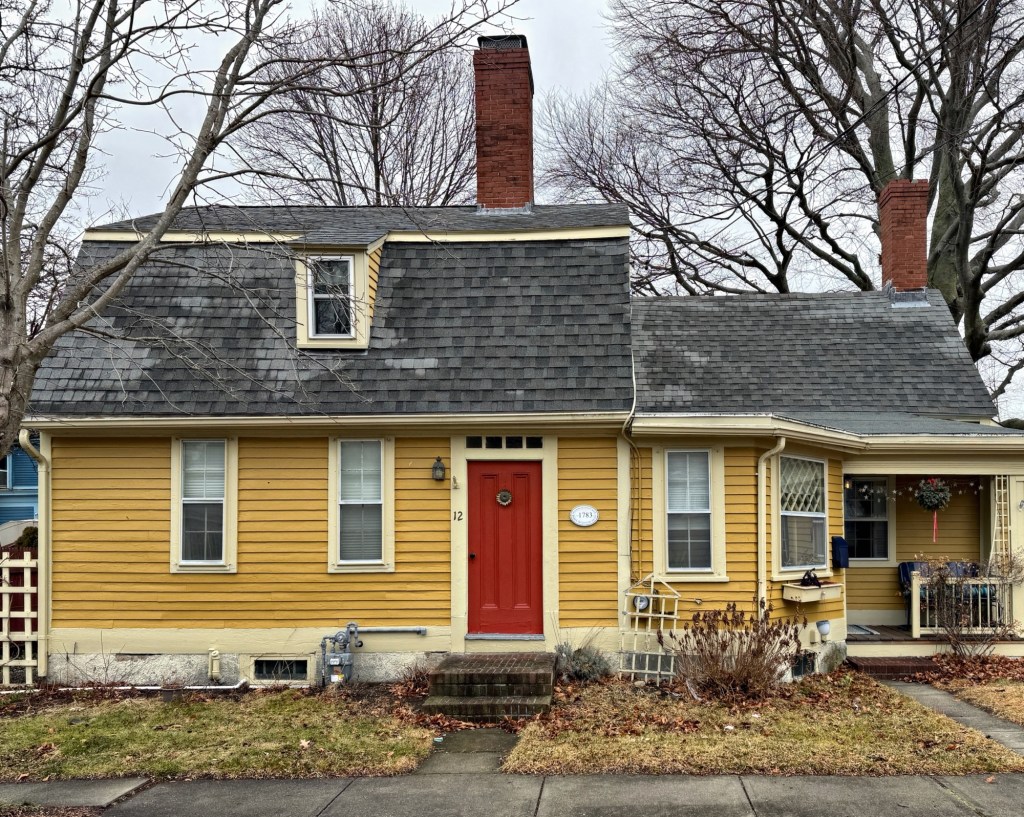
The Cranston Cottage on School Street is one of the few such Revolutionary-era gambrel-roofed cottages in the charming town of Warren, Rhode Island, and showcases how many early New England homes were originally built before later additions as families grew. The house was likely built soon after Queen Street (since renamed School Street) was laid out in 1765, or it was moved to the site after the street was laid out and house lots platted. The original owner, Benjamin Cranston, had the house built, which was then just a three-bay, two-story cottage with central chimney for heating. Over time, additions were made to the cottage, including the kitchen ell on the side with chamfered hyphen with diamond pane window.
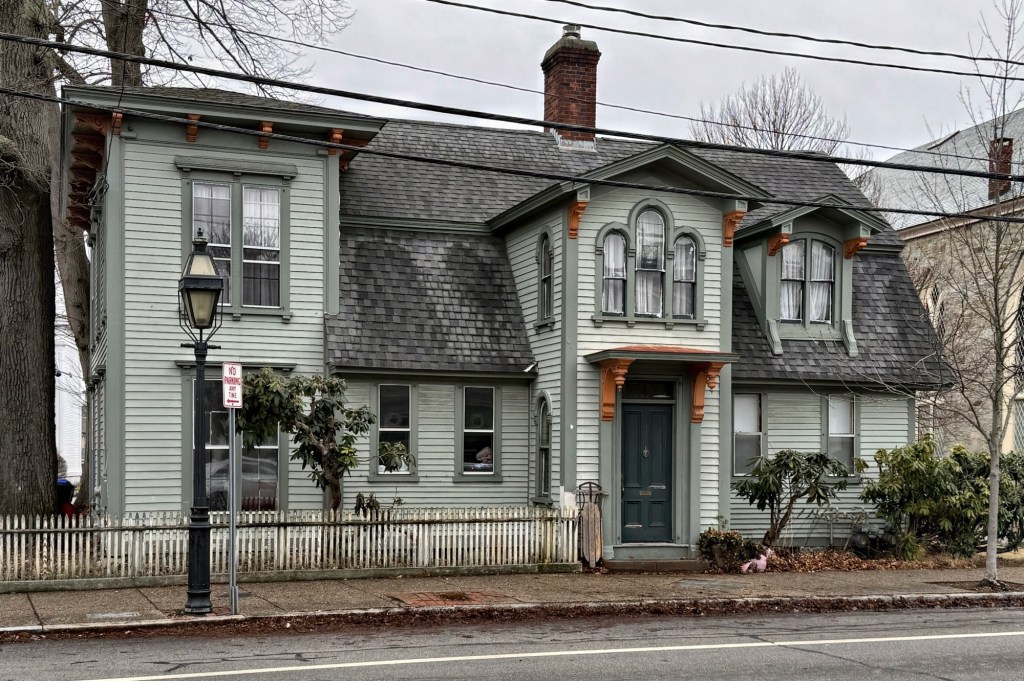
One of the most historic and architecturally unique houses in Warren, Rhode Island, is this pre-Revolutionary cottage on Main Street, that was modernized in the mid-19th century for later owners. Historians state that the house was built by Jesse Baker (1708-1751), who must have died shortly after its completion. At the time of the British burning of Warren during the Revolution in May 1778, Jesse’s widow resided here and saved the modest cottage from the hot embers of the adjacent burning Baptist Church, parsonage and arsenal by wetting every blanket and sheet in the house and spreading them over the roof of the home. The once modest, gambrel-roofed Georgian cottage, was purchased in 1868 by Dr. Joseph Merchant, a physician and surgeon, who “Victorianized” the house to the eclectic beauty we see today. Dr. Merchant added the projecting two-story corner tower, two-story front entry vestibule with Rundbogenstil tripartite window which reads like a Palladian window, projecting eaves with brackets, and stickwork in the north gambrel roof. The home was later inherited by Dr. Merchant’s daughter, Mary, and her husband, Howard K. DeWolf.
 Buildings of New England
