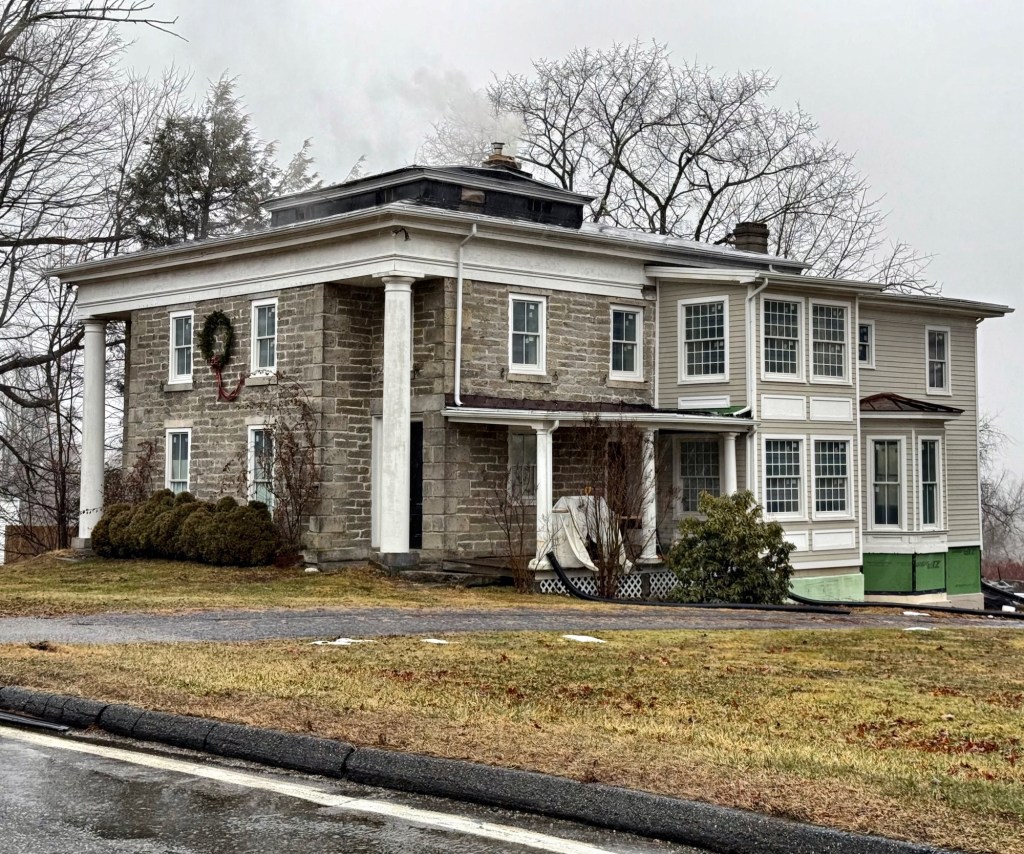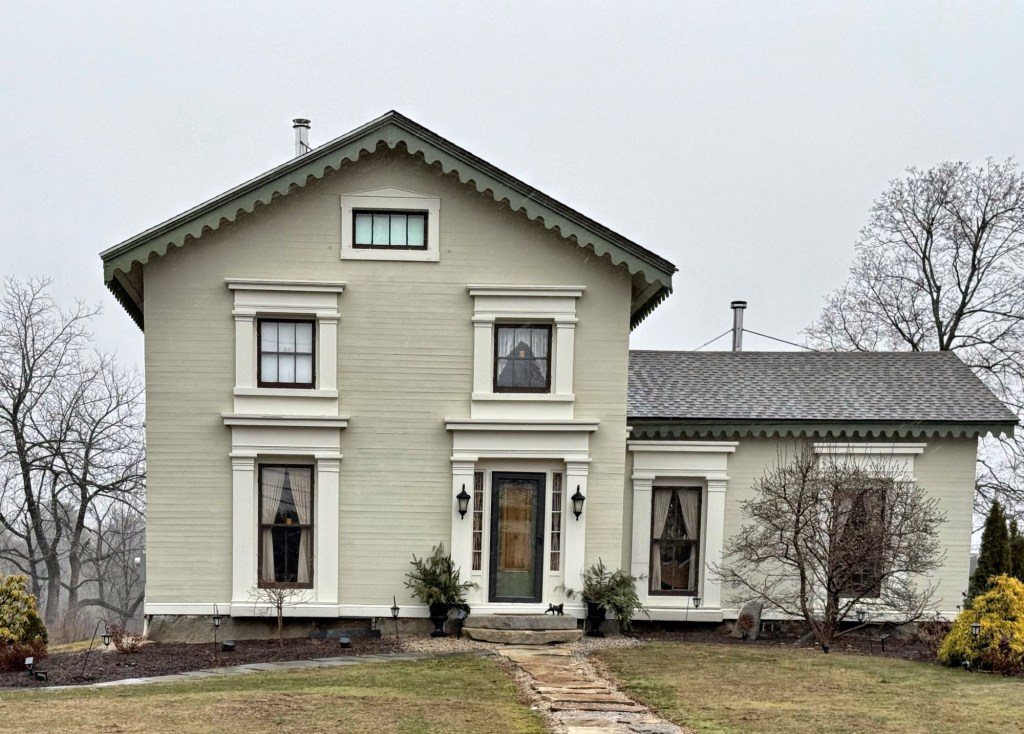
Israel Snow House // c.1850

The Israel Snow House stands at 9 Water Street in the South End of Rockland, Maine, and it is one of the region’s finest examples of late Greek Revival architecture. The residence was built for Captain Israel Snow (1801-1875), a mariner and captain of several vessels, including the schooner Maria (1829), the brig Snow (1835-36), the brig Lucy Ann (1842), and the Barque Star (1848). In 1850, he and his wife Lucy moved from Thomaston to Rockland, and he would build this stately mansion where they raised seven children. Some records put the construction of this house at 1861, but that seems very late for such an example of this style. In 1863, he founded Snow’s Point Shipyard on Mechanic Street in the South End. Rockland was the fourth largest seaport in the United States in terms of production and commerce at the time, and Snow’s shipyard was a large part of that production. This residence is now offices to the U.S. Fish and Wildlife Service’s Maine Coastal Islands National Wildlife Refuge Complex.

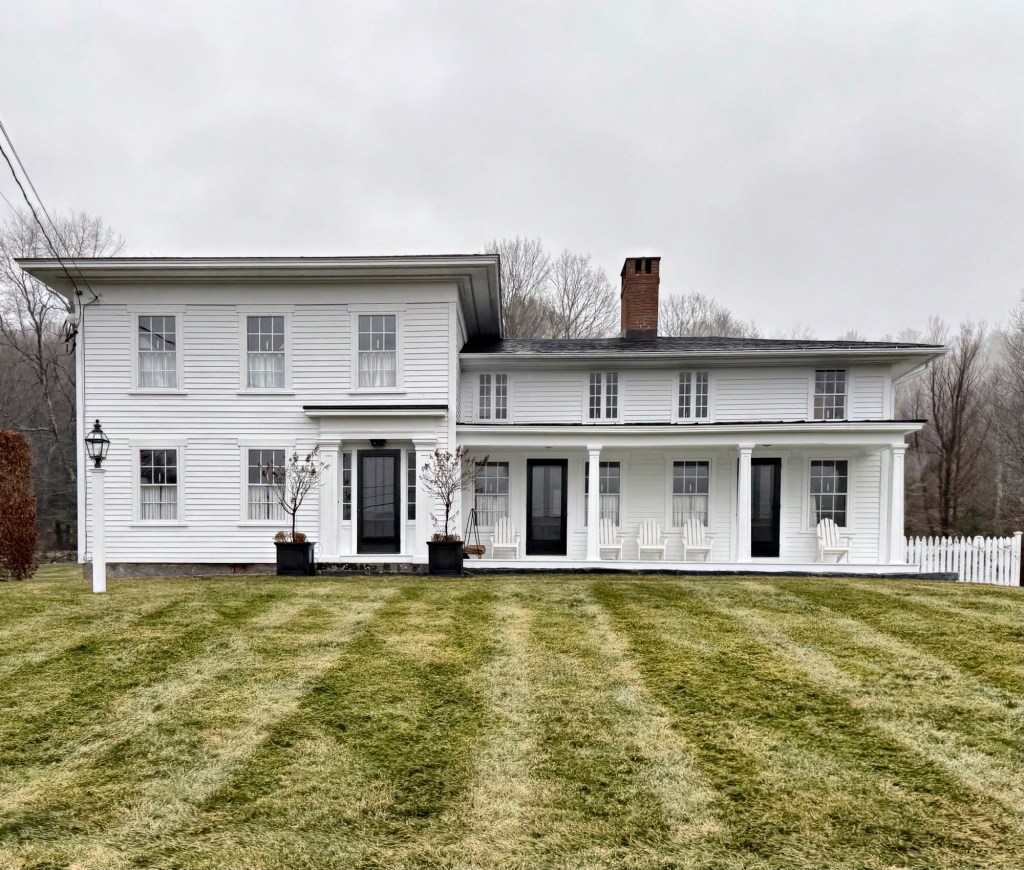
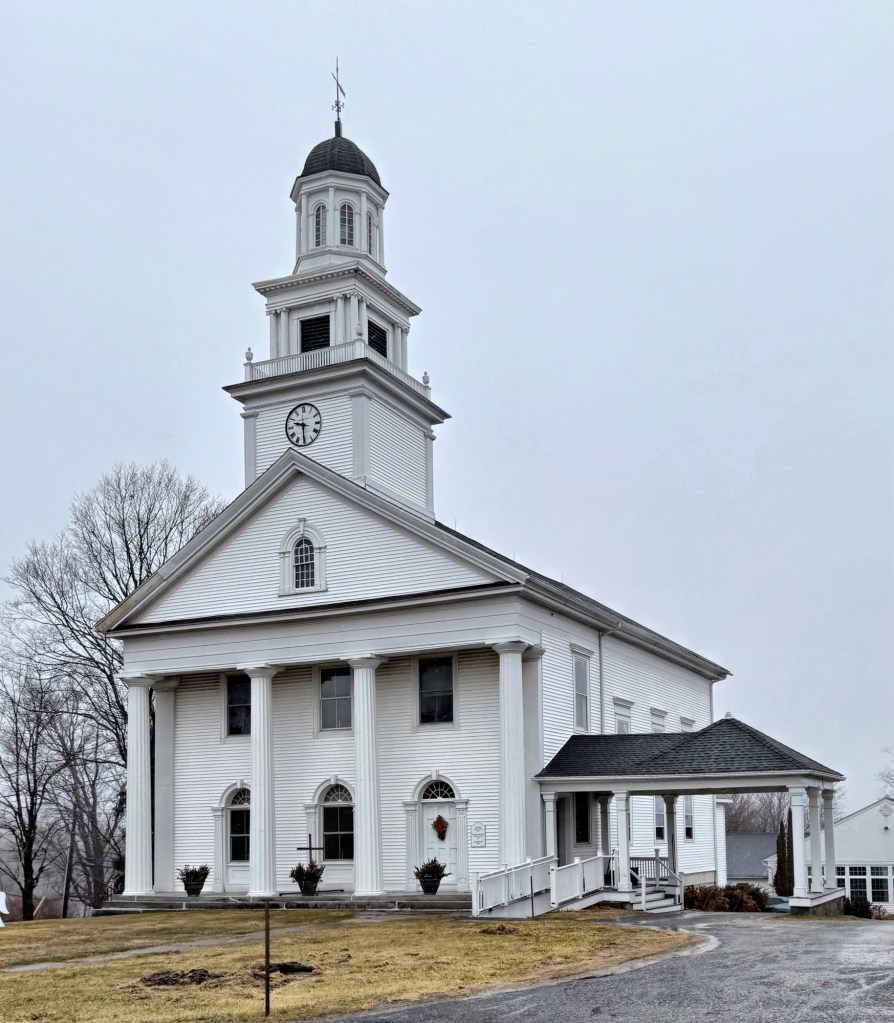
Farnsworth Homestead // 1850

The Farnsworth Homestead is located on Elm Street in Downtown Rockland, Maine, and is an excellent example of a mid-19th century residence in the Greek Revival style. The home was built in 1850 for Rockland businessman William Alden Farnsworth, who gained his income from lime-rock quarries and the Rockland Water Company. Mr. Farnsworth was a leading businessman who helped establish Rockland as the number four port in the United States, largely exporting lime for masonry construction all down the east coast. After William died in 1873, the property was inherited by his heirs, the last of which, Lucy Farnsworth, lived here until her own death in 1935. The 96-year-old Lucy Farnsworth died in the home and in her will, bequeathed the family property and ample funds to establish the Farnsworth Art Museum, and included preservation of the family homestead as a mid-19th century house museum, which it remains to this day. The Greek Revival style house with its flushboard siding and bold pilasters, was recently restored by the museum, along with the carriage house which stands to its east.

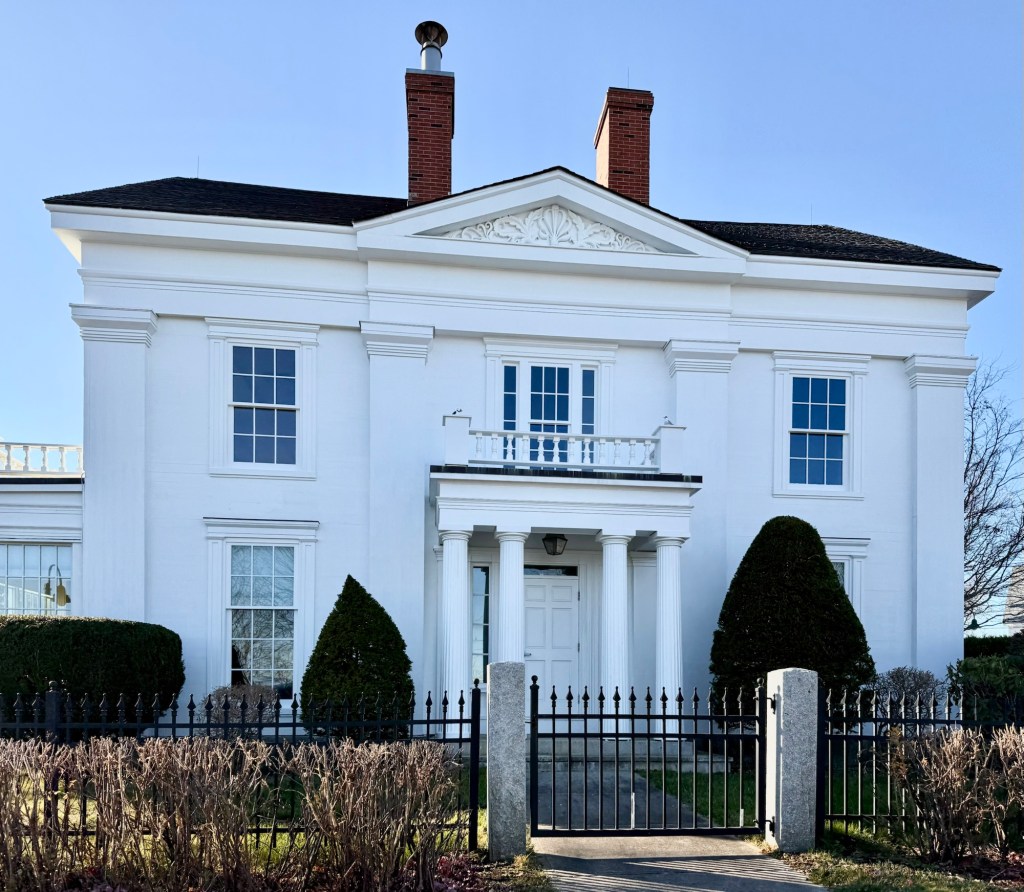
Rankin Block // 1853

The Rankin Block is a significant early commercial building in Rockland, Maine. The brick block was built in 1853 by Samuel Rankin, a descendant of one of the area’s first European settlers. Its location was near the center of the city’s shipbuilding industries, and replaced an earlier commercial building destroyed by fire. Its early tenants included a ship chandlery, shipping offices, and a sail loft. The vernacular Greek Revival style building is constructed of brick and granite, showcasing the no-frill architecture that working Maine sailors preferred. The building is now occupied by a senior living facility. Talk about a great adaptive reuse!

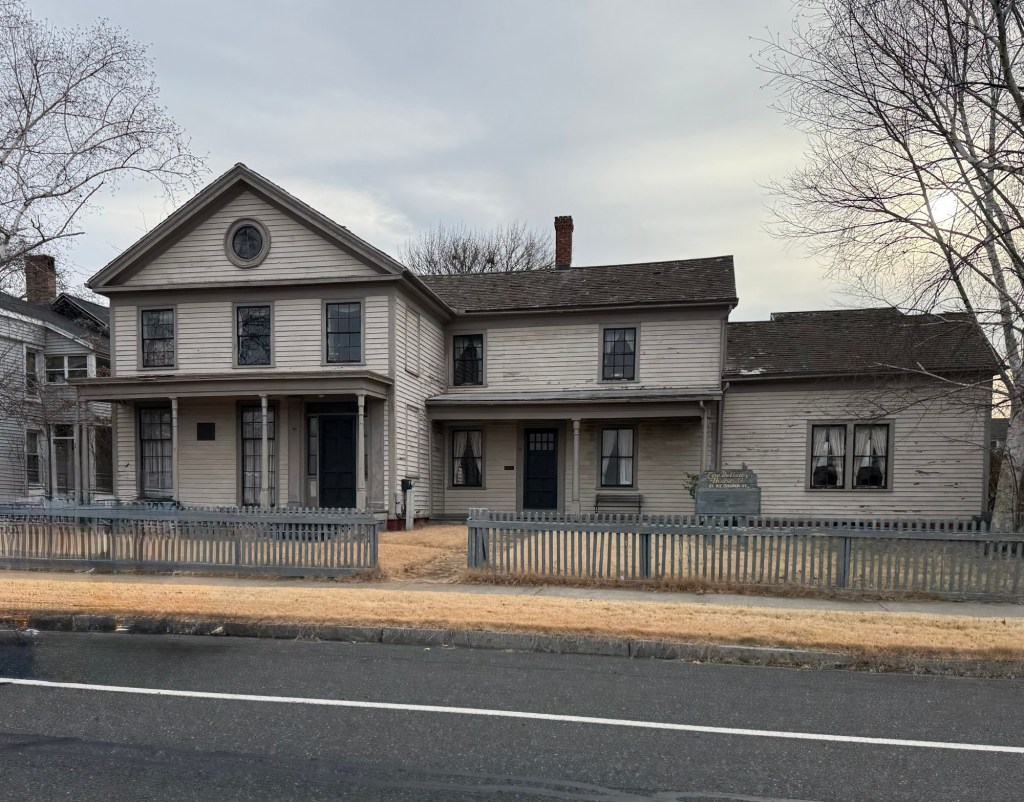
Putnamville Schoolhouse // 1852

Diminutive in scale, the one-room Putnamville Schoolhouse at 224 Locust Street in Danvers, Massachusetts, showcases a stark difference in scale and design to the later Wadsworth and Tapleyville schools in town. Built in 1852, the transitional Greek Revival and Italianate style schoolhouse served the more rural district number 3 in town. The first class of 42 pupils was taught by Miss Sophia C . Appleton who ranged from 5 to 15 years of age. Due to a consolidation of schools in town, the building finally closed in 1974. In 1976, the Danvers Art Association leased the building for years. It is unclear to me at this time what the school is used for. Does anyone know more?

Mudge Family Cottage // 1852

Edwin Mudge (1818-1890) was a major shoe manufacturer and a representative to the Massachusetts General Court. In 1844, he married Lydia Nichols Bryant, and in 1852, the couple hired Edwin’s brother, a carpenter, to build this house at 108 Centre Street in Danvers, Massachusetts. A son, Francis was born October 4, 1846, and his sister Lydianna was born March 20, 1853. Tragically, both brother and sister died in 1855 of what was described as “brain fever” or “dropsy in the head.” Frank, one month shy of 10 years of age, passed away on September 8, 1855, followed by little two-year-old Lydianna exactly one month later. They are buried together in the local cemetery and a portrait of them is in the Danvers Historical Society collections. Edwin and Lydia would have one other child, Sarah Mudge (1857-1938), who grew up to be a prominent citizen and one of the founders of the Danvers Historical Society. The formerly simple Greek Revival style cottage was “Victorianized” in the Stick/Eastlake style with the addition of delicate bargeboards, a hood over the new double-door entry with iron balustrade, and side dormers.

Overlook Mansion // 1842

In about 1842, a Salem merchant, Joseph Adams, built this stately Greek Revival style mansion on Pine Street in Danvers, Massachusetts. Named “Overlook”, the house is a simplified adaptation of the temple-front form with three columns supporting an entablature and closed pediment above. Joseph Adams was an instrumental force who brought an Episcopal church to Danvers, bankrolling the new building there himself. By 1862, the house was owned by Milton P. Braman (1799-1882), who had just retired as pastor for the First Church of Danvers. Of particular note, when news reached Danvers of the assassination of President Lincoln, a gang of men there captured two men who had said unkind words of the late president, and tar and feathered them. A number of the mob were said to have planned to also go to Rev. Braman’s house here to do the same to him, as he was said to have been a “copperhead” a democrat who opposed the American Civil War and wanted an immediate peace settlement with the Confederates. Reverend Braman got wind of the plans of the local mob and had men stationed in the windows with shotguns, with the order to shoot anyone who entered the property. Luckily for all involved, the mob never showed. He would later move to Brookline and Newton. Overlook remains a significant country estate and very well-preserved by the owners.

Jackson-Richards Farmhouse // c.1768

This historic home at the edge of Newton Centre is believed to have been built by 1768 by Abraham Jackson, a descendant of one of the earliest settlers in what would become Newton. Abraham took out a mortgage on three acres of land and woodlands, a dwelling house and barn. In 1782, the property was acquired by Aaron Richards (1750-1823), a Revolutionary War veteran and carpenter, who likely modified the residence into the Federal style form and design we see today. Aaron Richards would farm the land here until his death. The farmhouse would be bought and sold and the property subdivided in the 19th and 20th centuries, diminishing the farm and woodland which once surrounded the residence. For a period after the Civil War, the property was owned by the Boston Children’s Aid Society as a Girl’s Home, used as a boarding house to raise orphaned girls from the Boston area, teaching them skills to increase their hopes of adoption or moving out on their own. The property was reverted to a residence by the 20th century and is significant as one of Newton’s few extant 18th-century farmhouses.

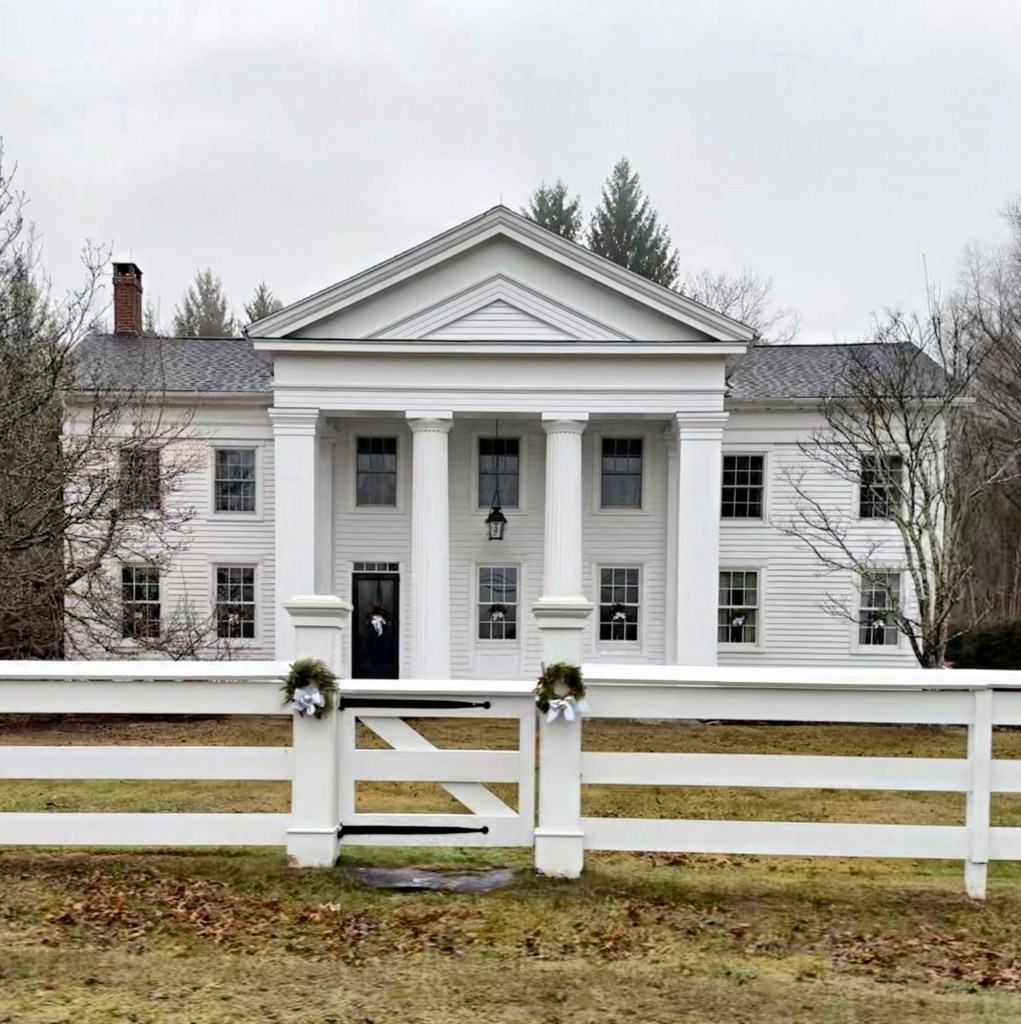
Adams Hall // c.1828

According to local histories, this significant Greek Revival style property on Elm Street in Georgetown, Massachusetts, was owned by Josiah Adams (1757-1852), a farmer, a Revolutionary War veteran, and a fourth-generation descendant of the immigrant Robert Adams, who arrived here from Devonshire, England by about 1629. In March 1849, the town’s Congregational Society purchased Adams Hall for eight hundred dollars to house the church vestry, which remained in the building for forty-one months until a new building was built for that purpose next door. Later, Adams Hall was owned by Moses Tenney (1808-1903), operator of a prosperous saw mill in Georgetown, and served at one time in the state senate. The structure retains its significant temple-front with four, two-story Doric columns supporting the portico. Also special on this residence is the use of flush-board siding and the oversized first floor windows.

Moody-Hall House // 1830

Transitional Federal/Greek Revival style houses are among my favorite. You can see the emergence of Classical architecture blending with American architecture with features of both styles, which work well together. This example can be found on Elm Street in Georgetown, Massachusetts. The dwelling appears to have been built for Dr. George Moody, one of four physicians in Georgetown in 1840, who began his practice in town in 1830. In his first years there, he oversaw patients during Typhus and Dysentery outbreaks and was credited with having determined that a high sulphur content in the local water supply accounted for the increased cases. Dr. Moody died in 1866, and his widow continued to live in the house until her death in 1880, after which it was sold to Mrs. Charlotte Sawyer Hall, the widow of local shoemaker Seth Hall.

Georgetown Brick Schoolhouse No. 4 // 1854

Constructed in 1854 for intermediate and high school classes at a time when one-room schoolhouses were still the rule in Georgetown, this well-preserved brick building is a reminder as to how far education and schooling has come. As nearby one-room schools consolidated and after the new Central School Building (now Georgetown Town Hall) was built in 1905, this Greek Revival school building was converted to town offices. The town was still fairly small, so the offices only occupied the ground floor, and the town rented the upper floor to the All Saints Episcopal Church, who purchased the building in 1917 and occupied it for nearly 50 years. They likely added the Craftsman style entry porch. The church was deconsecrated in 1966, and the building sold in 1970 to the Noack Organ Manufacturing Company, who added an assembly room at the rear.