First Church of Christ, Suffield // 1869

Located adjacent to the Town Common, the First Church of Christ in Suffield showcases the grandiose architecture seen in many churches after the Civil War in New England. This brick edifice is the fifth in the history of the church which dates back to around 1680. The church was designed by local architect John C. Mead, who designed many churches in the region. The church is a blending of Italianate and Romanesque Revival styles and originally featured a tall spire and secondary tower. In 1938, the New England Hurricane destroyed the tall spire (a similar event occurred to many New England Churches, including Old North in Boston). Even without the steeple, the church remains as a great architectural treasure in town.

Dr. Aretus Rising House // 1854

Dr. Aretus Rising was born in Suffield, CT in 1801, part of one of the oldest families in town who settled here. His father was a farmer of modest means who could not afford the ability to let his eight children attend school routinely as he needed help on the family farm. He eventually moved to Western MA where he graduated the Berkshire Medical School in 1826, soon after opening a practice in Florida, NY before moving back to Massachusetts. He operated a doctors office in Suffield starting in 1845, running it until 1871, stopping due to poor health and failing sight. He lived most of his later years in this modest Italianate home. The house features broad overhanging eaves and a porch supported by stunning lattice columns.

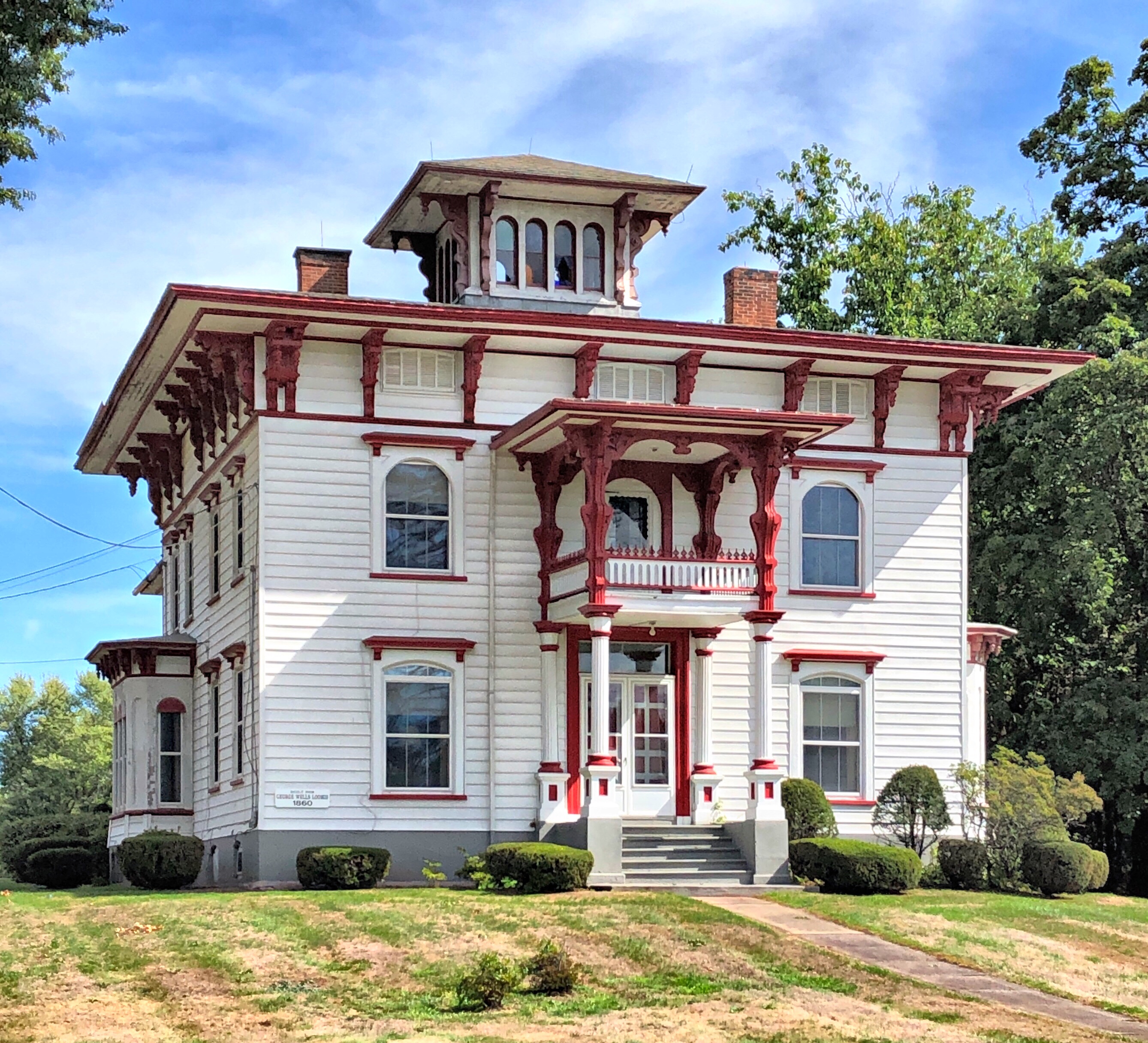
George Loomis House // 1860

This large Italianate mansion on Main Street in Suffield was built in 1860 by John Wells Loomis for his son, George. George ran a cigar shop in a separate building on the lot, selling rolled cigars that his family harvested and rolled. The mansion features a belvedere atop the low sloped hip roof with broad overhanging eaves. John Loomis’ home is a couple lots away.

Suffield Academy-Memorial Building // 1854

Initially established as the Connecticut Literary Institute (the school was renamed Suffield School in 1916 and then Suffield Academy in 1937), the mission of this school with Baptist roots was to educate young men for the ministry. As the Connecticut Literary Institute was the only high school in Suffield, the town tax dollars paid for local students to attend. Although town and local Baptists served a major role in getting the school underway, the founders soon moved away from a denominational focus. Built for the Institute in 1854, this large brick academic building was designed in the Italianate style with brackets and decorative brickwork at the cornice. In 1950, the school “Colonialized” the campus beginning with the Memorial Building, removing the Victorian flair for a more traditional Colonial Revival appearance. They also did the same with Fuller Hall next door.

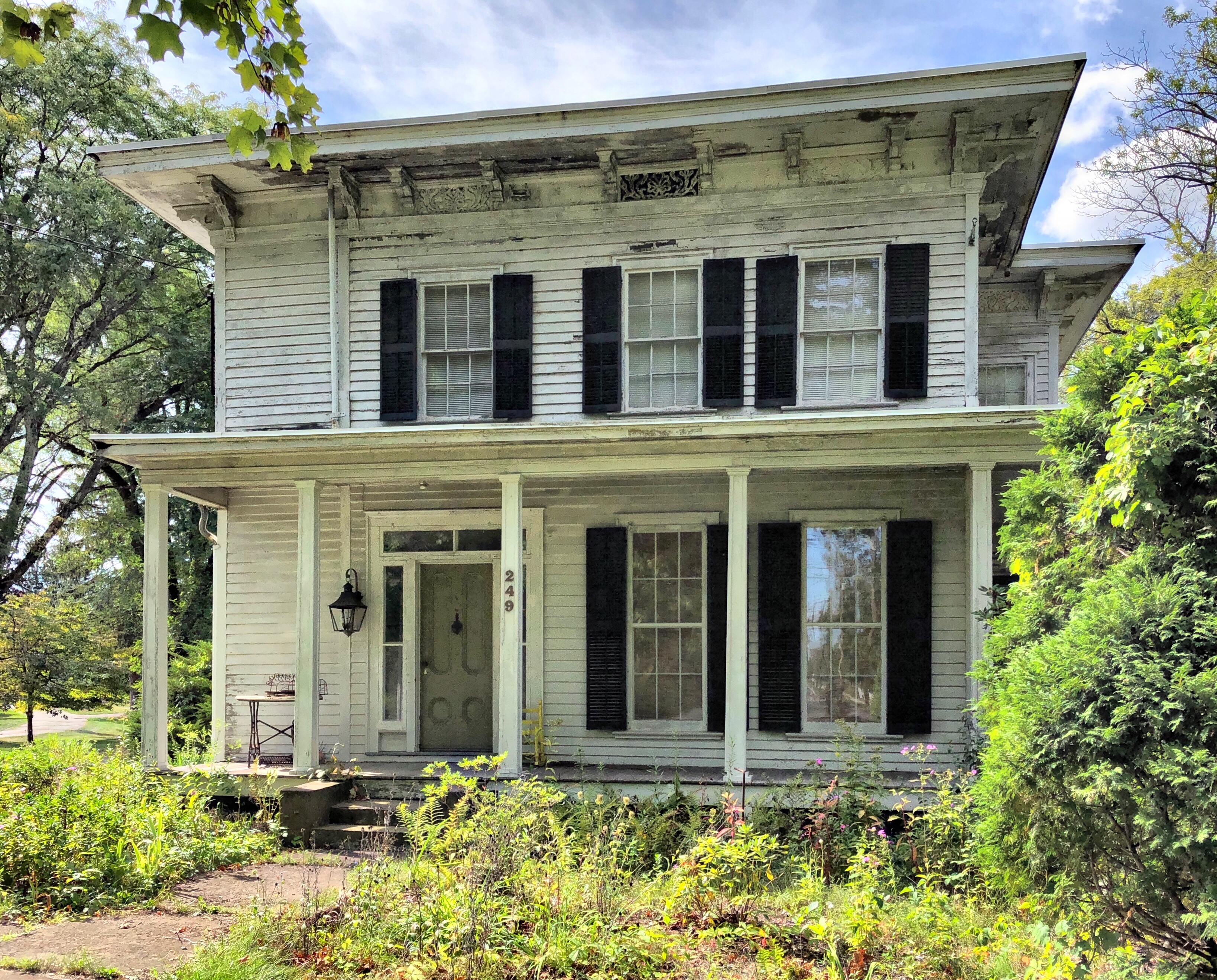
Israel L. Spencer House // c.1855

The Spencer family emigrated from Braintree, England to America in 1638, with Thomas Spencer settling in Hartford, Connecticut in 1640. Thomas Spencer Jr., the second generation in Connecticut moved to modern-day Suffield in the 1670s. Generations later, Israel L. Spencer (1833-1887) became a businessman and politician, later being employed at the First National Bank in Suffield, continuing the family’s legacy in town. Mr. Spencer had this Italianate house on South Main Street built for him and his family. Israel’s son Charles L. Spencer grew up in the home, later following in his father’s footsteps becoming the president of the local bank. Sadly, the home has seen better days, hopefully it can be restored and maintained in the future!

McLaughlin Tenements // c.1875

After the American Civil War, the North End of Boston saw a massive phase of redevelopment, replacing the dilapidated wooden dwellings with larger brick tenements to house the neighborhood’s growing immigrant population. Nearly all of the North End was replaced with these dwellings, which has now added so much to the appeal of the neighborhood. One of the earliest and notable examples is this building on Endicott Street. Built around 1875, the tenements were owned by George T. McLauthlin (also spelled McLaughlin), who owned the engineering and machinery company on Fulton Street, housed in one of the last remaining cast-iron facades in Boston. The tenement house was later owned by George’s son Daniel, likely providing housing for the company’s employees and/or providing additional income for the family. The building also appears to have always had commercial use on the ground floor, allowing merchants to also rent the space. The late-Italianate panel brick block is modest in design, but contributes to the diverse population and worker’s housing in the North End.

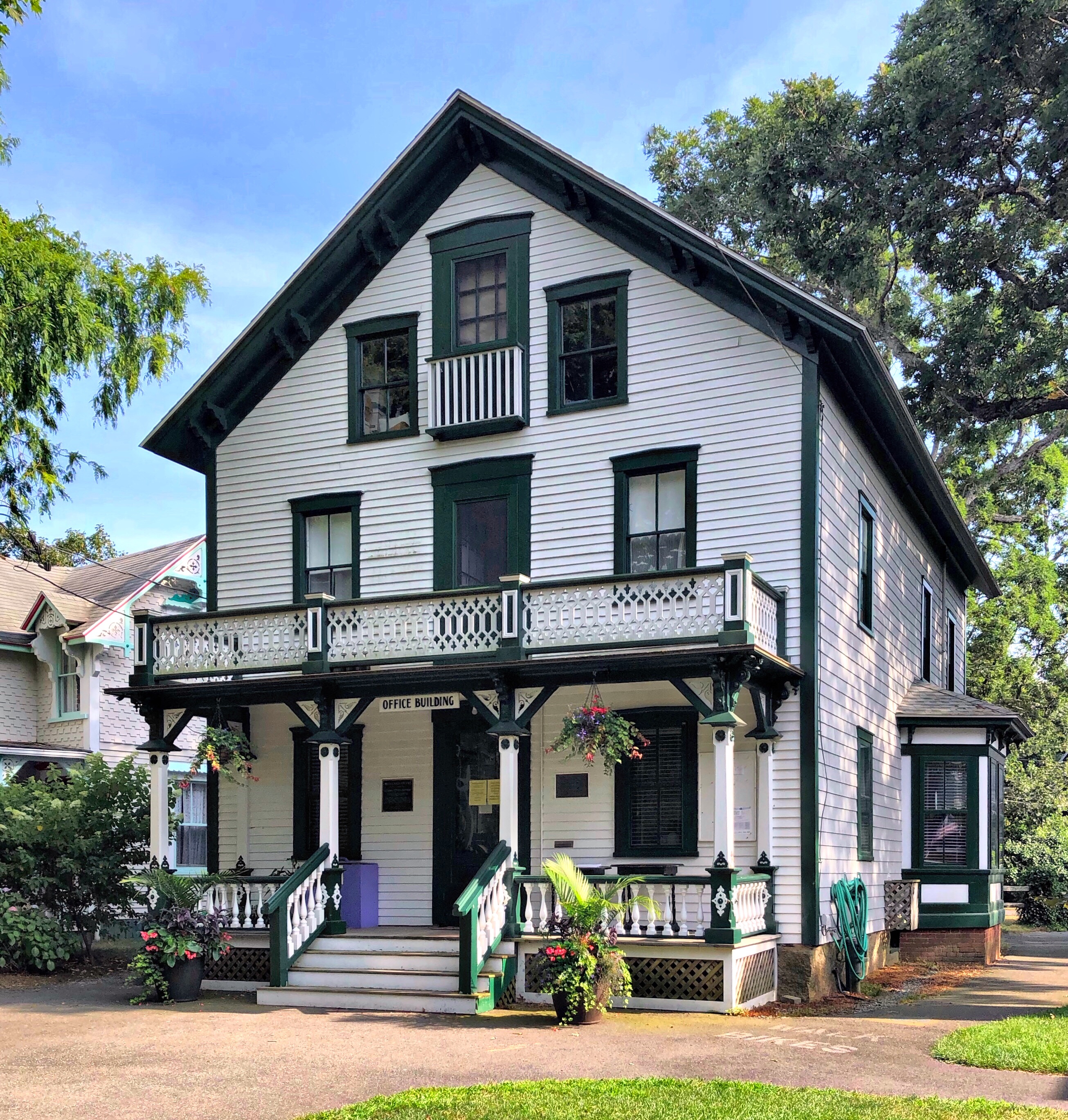
Methodist Camp Meeting Association Office // 1859

Located at the center of the Wesleyan Grove, – the Martha’s Vineyard Camp Meeting Association – this Italianate building has long served as a hub of the active summer community. The building was constructed in 1859, before any cottages were built in the newly formed summer colony. The office building was not only the headquarters for the Camp Meeting Association, it also served as a storage space for the baggage of the many who stayed in tents, many who didn’t have the means to purchase or rent a cottage. The building even was home to the associations’ post office. It now houses the Association director’s offices and contains the lease holders records back to 1864, a great way to learn about the diverse groups of people who visited and worshiped in this camp.

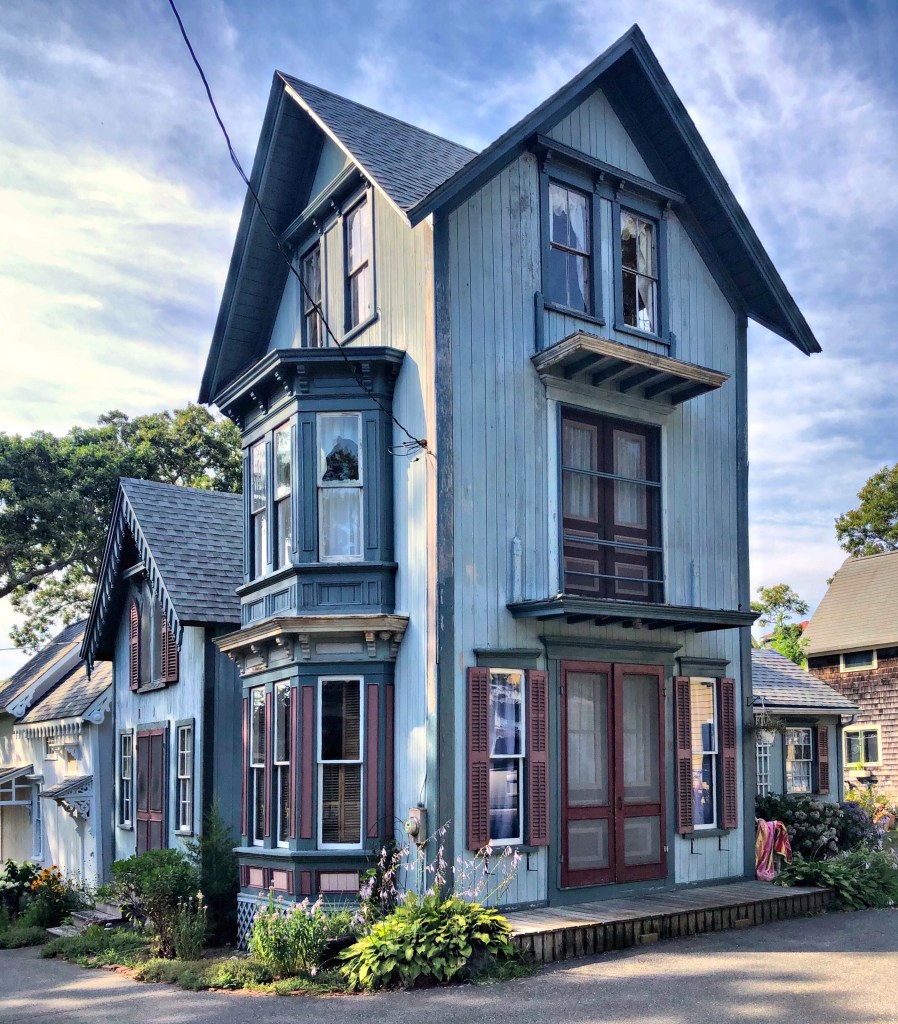
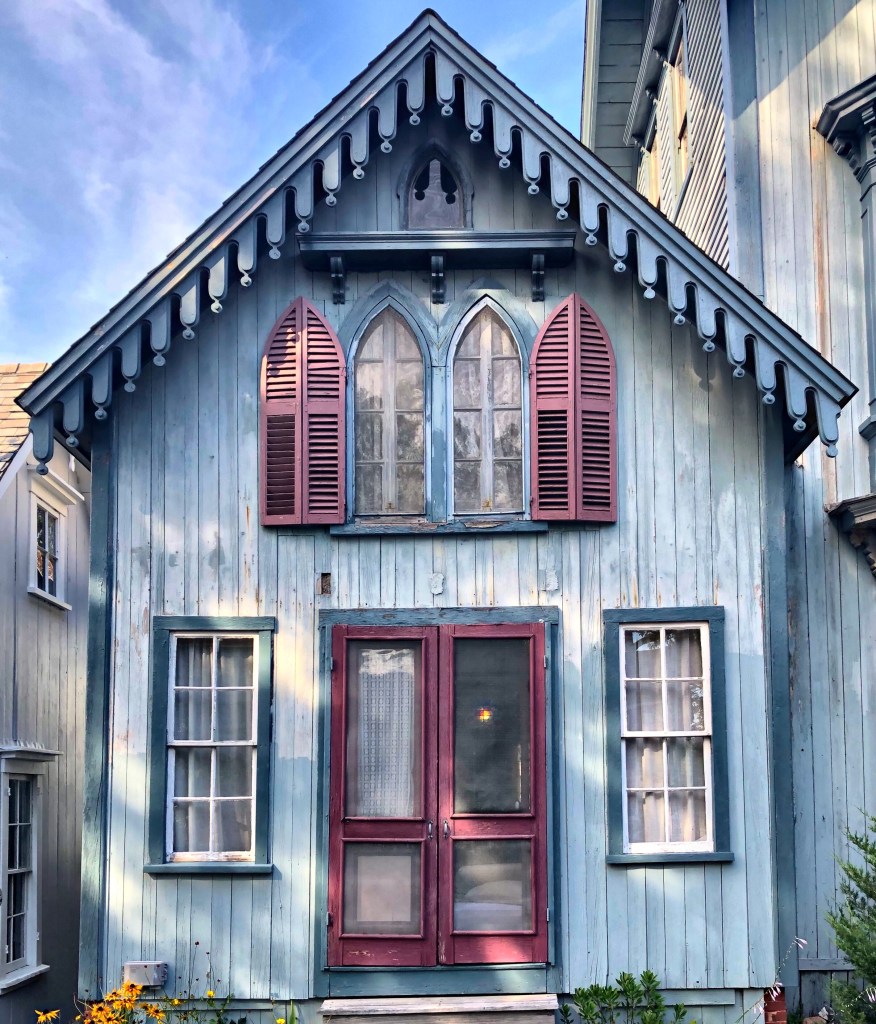
Tall Timbers Cottage // c.1870

Tall Timbers is one of the more unique cottages in the Wesleyan Grove development, a religiously oriented summer community in Oak Bluffs on Martha’s Vineyard. The cottage was actually built in two phases. The small two story cottage was built first before 1870 and features gothic bargeboard, lancet windows, and paired doors. It was purchased around 1870 by William Newell, of Rhode Island, who had a three-story wing added to serve as a summer cottage. The addition is notable for the full-length vertical boards that rise through the entire three stories without a break like trees after harvesting, likely the inspiration for the name of the cottage. William Newell was a manufacturer of brass fixtures and ran a foundry in Central Falls in Rhode Island. Mr. Newell was active in politics and early in his career joined the cause of the anti-slavery party, which was likely solidified in his experiences in the ethnically diverse Martha’s Vineyard.

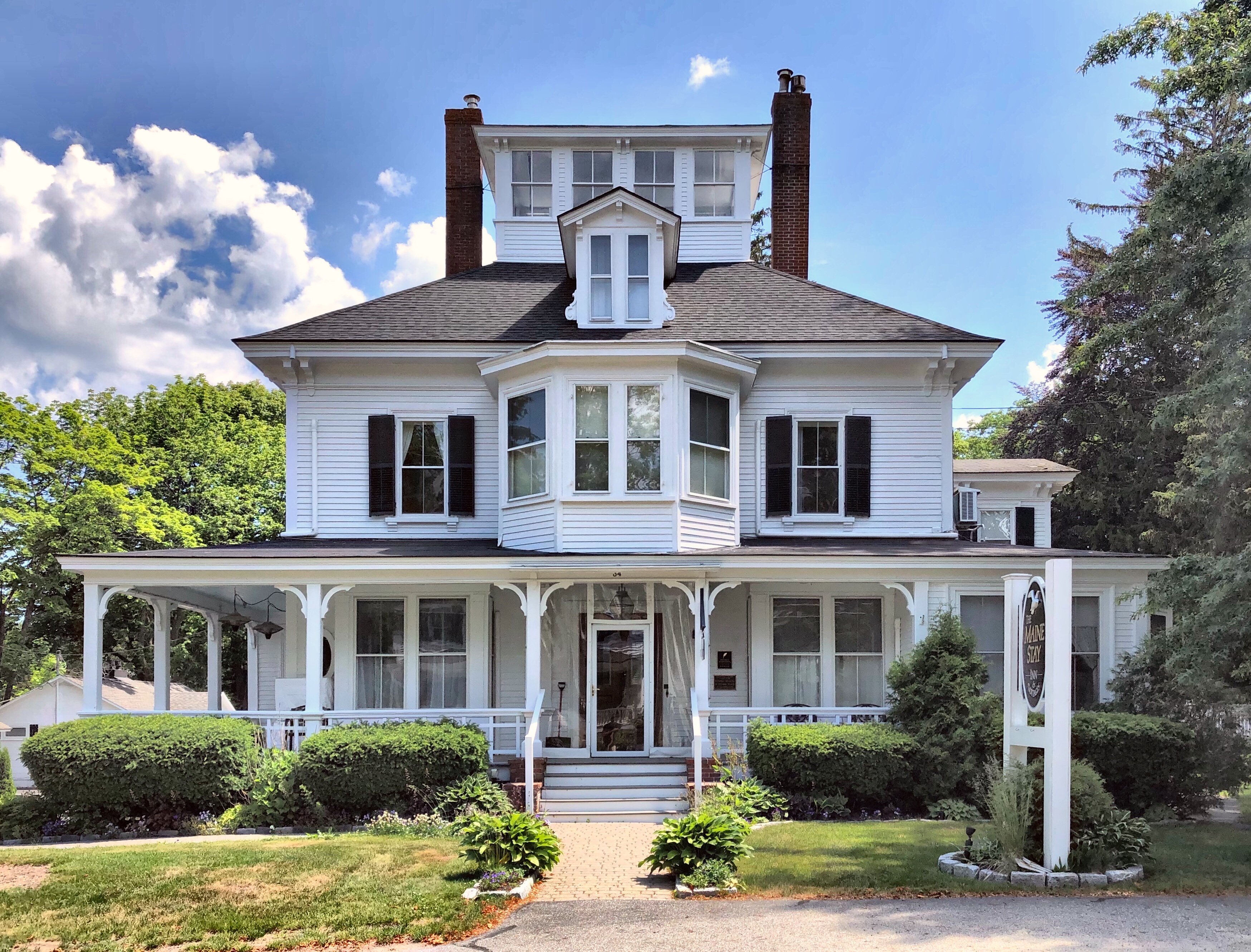
Melville Walker House // 1860

Built for Melville Walker, a sea captain on land gifted to him by his father, this home perfectly exhibits the changing dynamic of Kennebunkport. Melville Walker would often be out at sea for months at a time, and he apparently brought along his wife, three daughters and son on many trips to ports all over the world. The Italianate home was eventually sold out of the family, and by 1901, it was purchased by George Little, an executive with the New York, New Haven and Hartford Railroad. That year, he had the summer home renovated with Colonial Revival detailing, including the hipped roof, dormer, and other detailing. The belvedere, 2/2 windows, and Victorian era porch were retained, showing the original form and detailing of the Italianate version. In the 1950s, the home was converted to an inn, with small cottages constructed surrounding the property to house additional families. Today, Maine Stay Inn & Cottages welcomes families from all over the world to experience the beauty of Kennebunkport.

Captain George Nowell House // 1854

Captain George W. Nowell and his wife, Frances, the daughter of the wealthy Capt. William Jefferds, built this elegant Italianate style home in 1854 that stands on Temple Street, next door to the Kennebunkport Post Office. George was a sea captain, following in his father’s footsteps and also invested in several of the ships he sailed, but had the fiscal foresight to insure his interests against loss. His prized ship was named “Tropic” and she was launched in 1855, less than a year after his house was built. On a cold December day in 1862, Nowell, captaining The Tropic left Philadelphia with a cargo of coal for the Pacific Mail Steamship Company in San Francisco. She and her crew of 20 were never heard from again. George was not yet 40 when he perished. His youngest son, Frank, never met his father and was only 8 years-old when his mother passed in 1872. Shipbuilder David Clark bought their Temple Street home and George’s brother took his children to live in Bangor.

The captain’s reputation as a prudent and charitable man was recognized by Victoria, Queen of England. She awarded Capt. George W. Nowell, of the ship Tropic, an engraved spyglass in testimony of his humanity in rescuing her subjects, the crew of the Village Belle, of Nova Scotia. The telescope and a certificate, signed by the Queen, have been proudly protected by the Kennebunkport Historical Society.

The family home features bold corner quoins, bracketed door and window hoods, and paired rounded arch windows at the top floor.