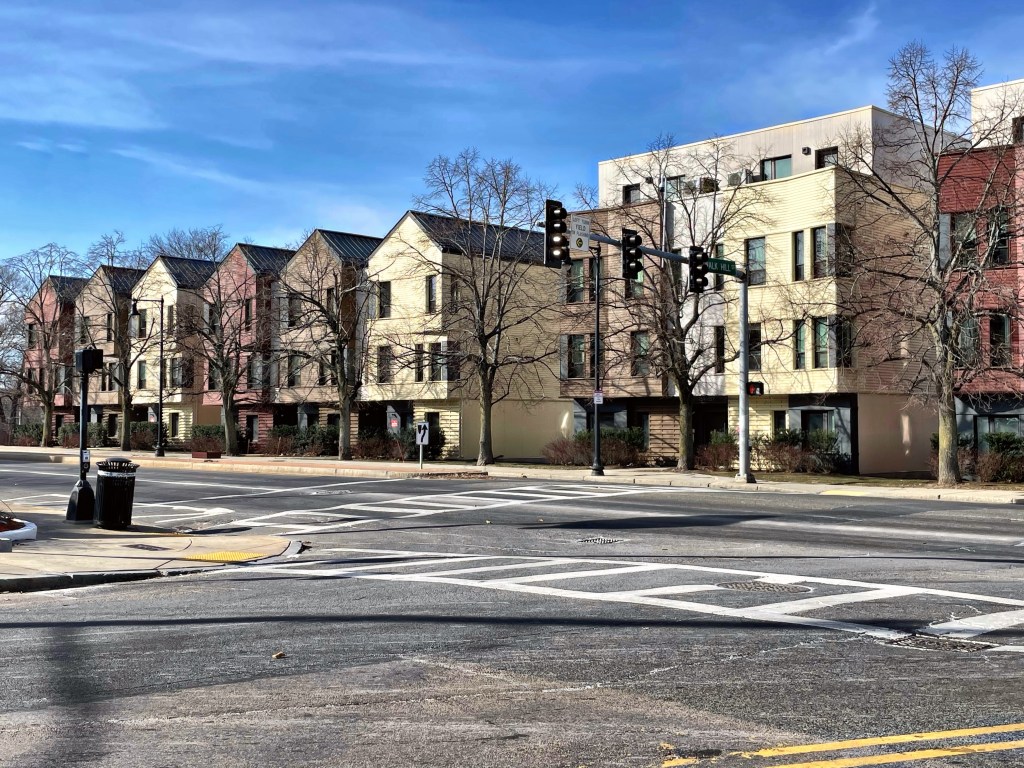
As many of you likely agree with me, most contemporary architecture and buildings in Boston (and in many U.S. cities) is bland and mundane, but there are some projects that really stand out for creative and contextual designs. Tilia in Jamaica Plain is one of the latter! When the Massachusetts Bay Transportation Authority (MBTA) began accepting bids for the development of an undeveloped linear parcel along Washington Street just south of the Forest Hills T-stop, developers jumped at the opportunity. Urbanica Inc., a local design/development group had the winning proposal which consists of approximately 110‐120 residential units in buildings of varied density ranging from a larger apartment building to more human-scaled townhouses. Led by architect Stephen Chung with Kamran Zahedi as developer, the design for the townhouses specifically is a contemporary nod to the triple-decker form we see so much in the surrounding area. The varied color and recessed sections provide a lot of depth and character to the development along the streetwall.
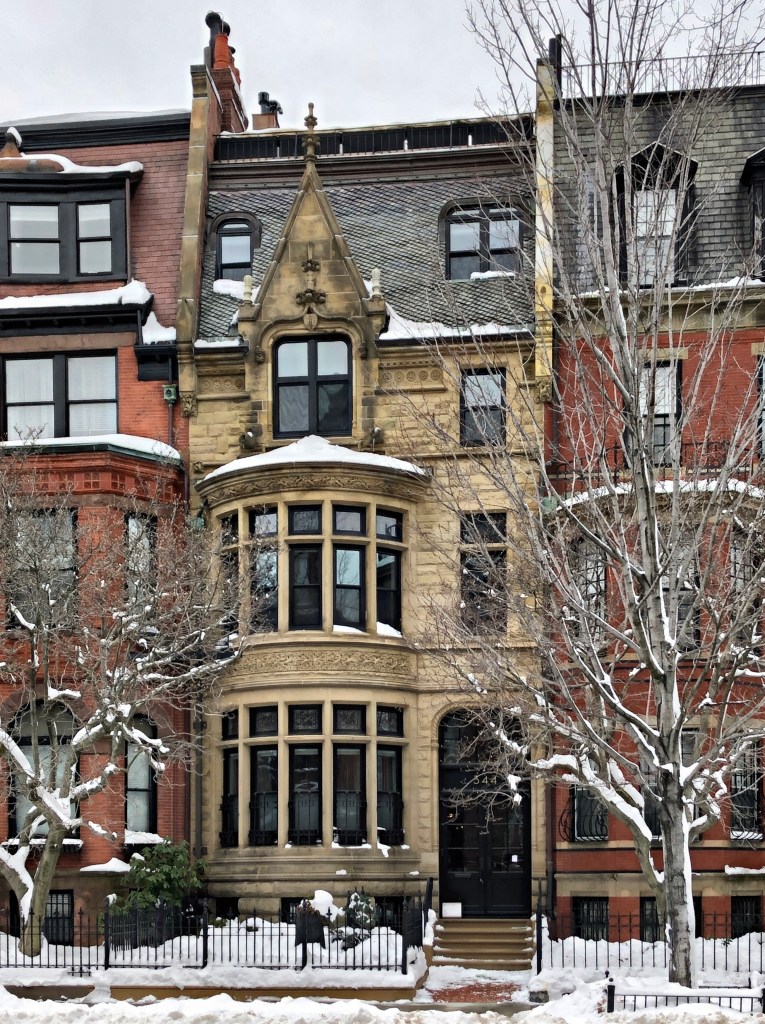
Another of my favorite townhouses in the Back Bay neighborhood of Boston is this Victorian Gothic mansion on Beacon Street, built for Daniel and Mary Knowlton. The residence was designed by the firm of Allen and Kenway and built in 1880 and stands out architecturally for its use of style and use of material amongst a sea of brick. A former cotton merchant, Daniel Knowlton was treasurer of the Flexible Shoe Nail Company and later worked as a stockbroker. The large single-family dwelling was converted into four condominium units in 1989, but has since been switched back to a single-family residence. It sold for $11.2 million dollars as a five bedroom, six full and two half bath home in 2017. Yikes!
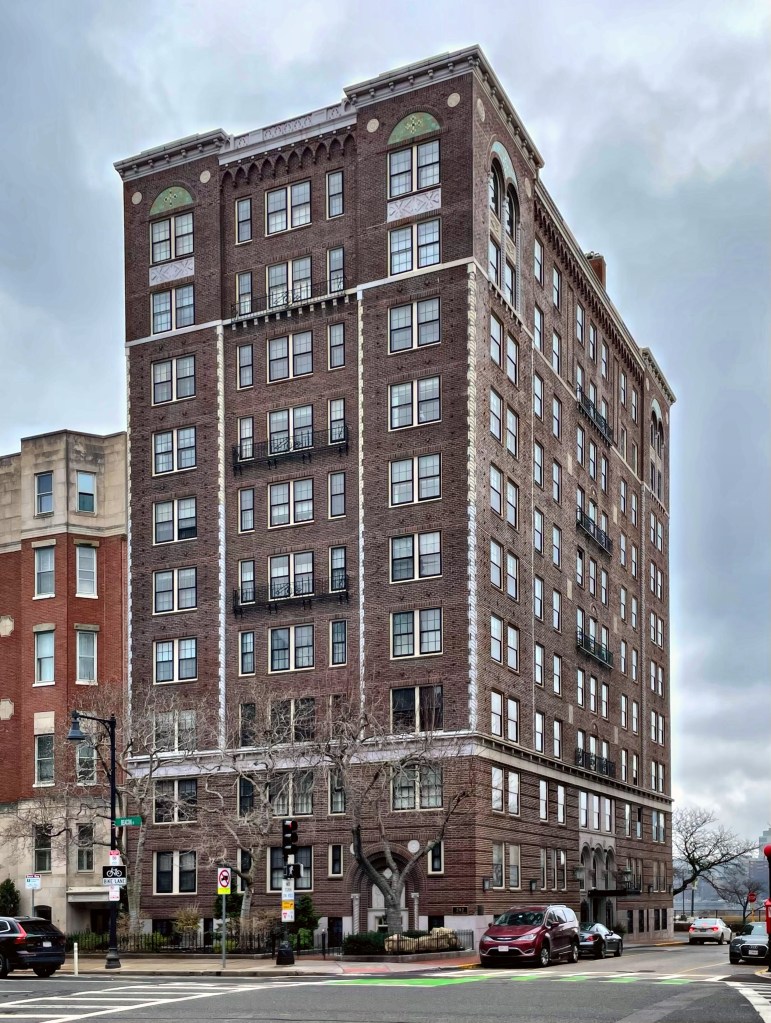
One of the finest apartment-houses in Boston is this towering building at the corner of Beacon and Exeter streets in the Back Bay neighborhood. In 1926, real estate dealers Elliott Henderson and Roger B. Tyler purchased two townhouses on small lots and demolished them for the present structure. They hired the architectural firm of Blackall and Elwell furnished the plans for the 11-story Renaissance Revival style residence which included ten large apartments. The design is unique to the Back Bay with amazing cast stone details at the entries with rounded arch windows, fanciful brickwork, and spiral columns!
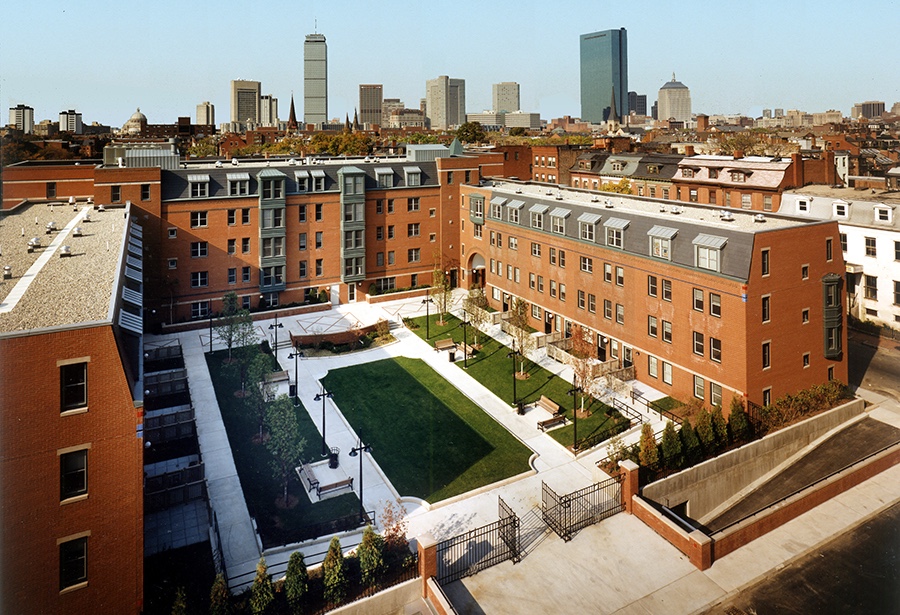
Appropriate infill construction can be a very difficult thing to accomplish, with some developments hitting the mark and others adversely impacting the historic neighborhoods where they were built. Boston is home to many examples of both occurrences, but I wanted to share a very successful infill project in the South End neighborhood, Langham Court. As the South End resurfaced as a desirable neighborhood, long-time residents were priced out, which led to the Boston Redevelopment Authority to fund projects to provide much-needed housing for the local community. This site which once housed over 20 townhouses, was razed by the 1960s in a period of urban renewal where existing housing was deemed unsafe and inadequate. The local design firm of Goody/Clancy was hired, and they masterfully designed a U-shaped complex of 84 mixed-income units that fits well within its surroundings. The design exhibits dormers, bays, arched and vaulted entries, a combination of mansard and flat roofs, stringer courses and textured brickwork, and a palette of well chosen materials all at a scale that blends in the 1990s building to its surroundings which came nearly 150 years prior. The complex remains as a testament to good-quality design even for affordable housing, which notoriously gets the short end of the stick design-wise.
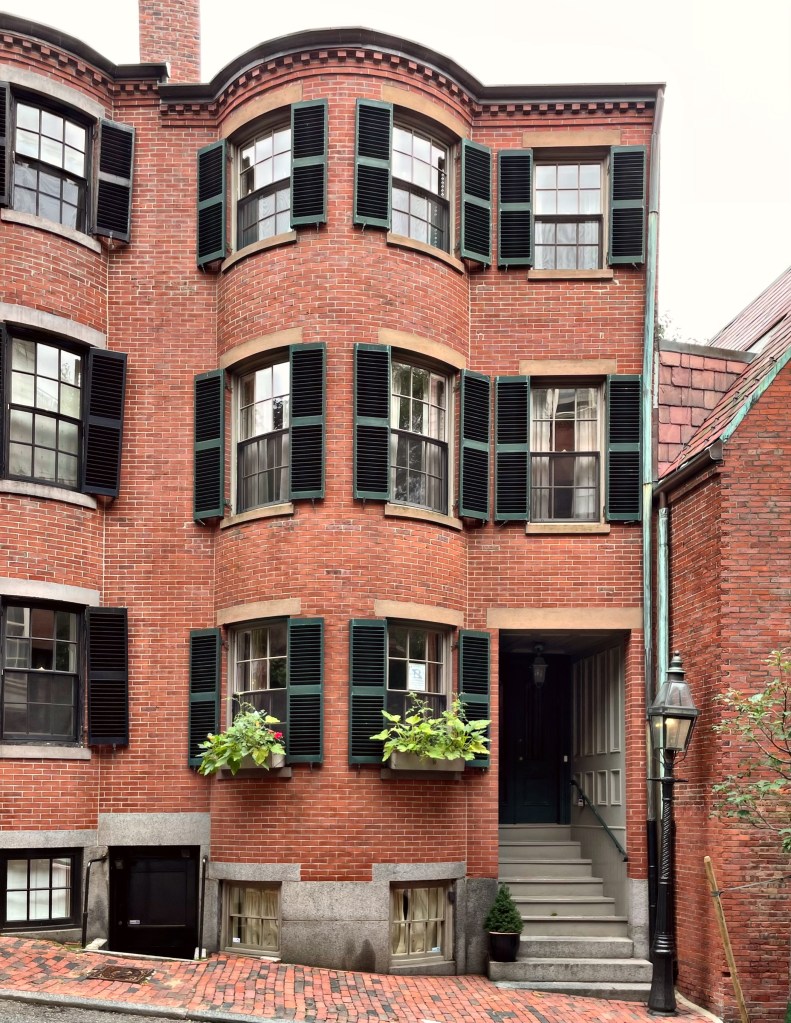
Just steps from the iconic Louisburg Square in Boston’s exclusive Beacon Hill neighborhood, a man named Joshua Bennett in 1834, purchased two recently completed townhouses built by housewrights Samuel H. Mitchell and Loring Dunbar. Joshua Holden Bennett (1792-1865) was born in Billerica, Massachusetts and split his time between his hometown and Boston. Bennett and his family owned the two identical bowfront houses until about 1930, likely renting them out to middle-upper class families. The home on the right (pictured) was later purchased by Benjamin B. Gillette an organist at a local church. After WWII, property values in Beacon Hill began to falter and this property and its neighbor became lodging houses of rented rooms to a more wealthy clientele than those on the North Slope of the hill. The home last sold in 1989 for $753,000 and is estimated at a value today at over $4,000,000!
For the last on this series of Lost Boston buildings, I present this little-known landmark which was once neighbors to the Old State House. The Pagoda Building as it was named, was located on the corner of Washington and State Streets and was one of the tallest buildings on the street upon completion. The seven-story building of Quincy granite exhibited round arched windows and an interpretation of a belvedere at the roof which served as a penthouse. The building’s upper six stories were residential, including the spectacular Oriental penthouse at the top, with retail space at the ground floor. The architect was a recent immigrant from Britain named GeorgeSnell, who clearly made a name for himself, later entering a partnership with James R. Gregerson. The Pagoda Building, which was originally an early “skyscraper” in Boston was quickly surpassed in height and floor plate size and was deemed inadequate for such a prominent location. It was demolished by 1917.
Ever so often, I stumble across a historic photo and I end up spending way too much time falling down rabbit-holes uncovering a cool history. This is one of those times.
Frank Howard Packer (1857-1925) was born in Providence, Rhode Island and worked at his father’s jewelry store there, later moving to Chicago. Out west, Frank was first tattooed by a friend, and he was hooked. Frank started using his body as a canvas, and when he ran out of space, his wife Annie was covered with tattoos. The couple were discovered by Barnum & Bailey’s Greatest Show on Earth and were hired to tour the country alongside other acts. Frank was the “Original Tattooed Man” and Annie was the first tattooed woman to tour with Barnum & Bailey. At these shows, Frank and Annie would show off their tattoos and then tattoo spectators for money. Eventually, they had enough money to open a tattoo parlor in a Civil War-era building on Court Street in Boston. The space was originally shared with a barbershop, but it later expanded to the entire floor of the building. Annie died in 1911 and Frank remarried a few years later and seemingly began to wind down his tattooing career. He died in 1925. The old shop building was demolished in the 1960s as part of Boston’s Urban Renewal period.
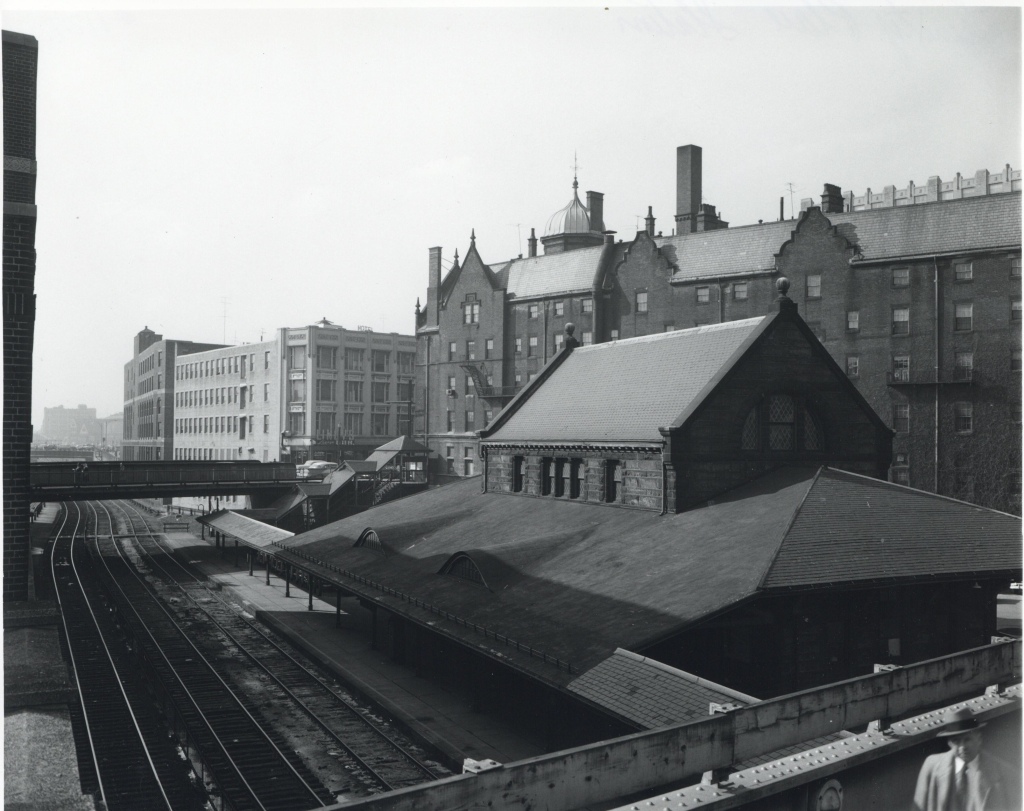
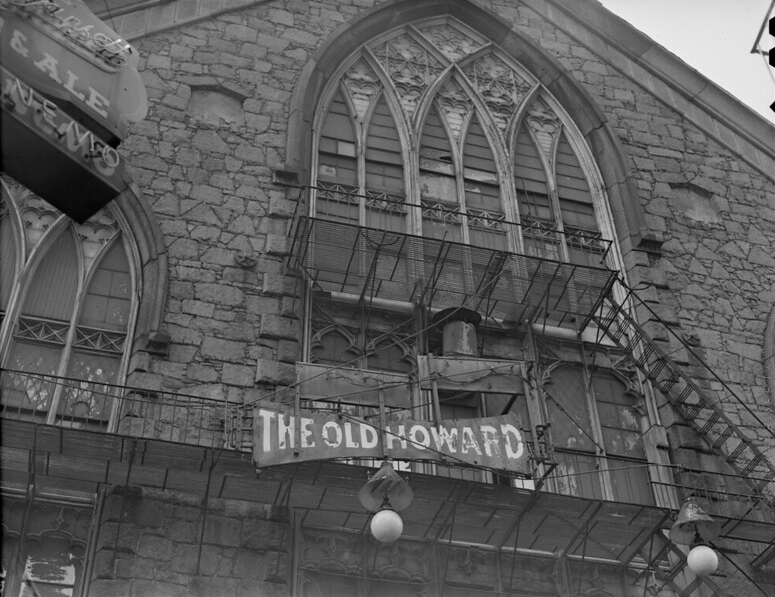
One of the more iconic theater buildings to ever stand in Boston was the Howard Athenaeum, later the Old Howard, which stood on the former Howard Street in Downtown Boston. The origins of the building begin in 1843, when a flimsy, tent was built to serve as a church for the small Millerite sect. The small but loyal congregation eventually abandoned the site following disappointment with the minister’s promise that the world would end in 1844. After Armageddon failed to materialize, the founder of the sect, William Miller, an ex-Deputy Sheriff from Poultney, Vermont, was discredited and the Millerites moved on. After running their former minister out of town, several church members (who had given up all their worldly possessions in preparation for their trip to heaven,) decided to recoup some of their losses by selling the property to Messers Boyd and Beard, who opened a theater here in 1845. A fire destroyed the structure, and it was replaced by a larger, fireproof building that same year. The new building was constructed in 1845 and was designed by architect Isaiah Rogers in the Gothic Revival style with massive granite blocks from Quincy.
The Howard Athenaeum saw many iconic performers and historical events in its 100 years. A young John Wilkes Booth, played Hamlet at the Howard before becoming famous for a more nefarious deed in Washington in 1865. Also, Sarah Parker Remond, a Black anti-slavery activist and lecturer with the American Anti-Slavery Society (and later a medical doctor), had bought a ticket through the mail for the Donizetti opera, Don Pasquale, but, upon arriving, refused to sit in a segregated section for the show. She was forcibly removed and pushed down a flight of stairs. She eventually won a desegregation lawsuit against the managers of the Howard Athenaeum and received $500 in a settlement.
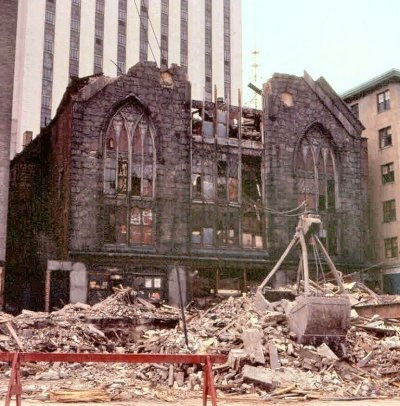
The theater was quickly deemed obsolete and second-tier compared to more modern theatres built nearby. By the mid-20th century, the Old Howard was largely featuring burlesque shows. To keep bringing in audiences, the burlesque performances got more risqué with each year. As a result, the Boston vice squad made the Old Howard the object of their attention. The Boston Vice squad made a 16 mm film during one of their raids in 1953 and captured on film the performance by “Irma the Body”. This film footage resulted in an indecency hearing which eventually led to the closing of the Old Howard in 1953. A fire a few years later along with Urban Renewal led to the demolition of the Old Howard by 1962. Like the former Suffolk Savings Bank (featured previously), the present Center Plaza Building is on the site.
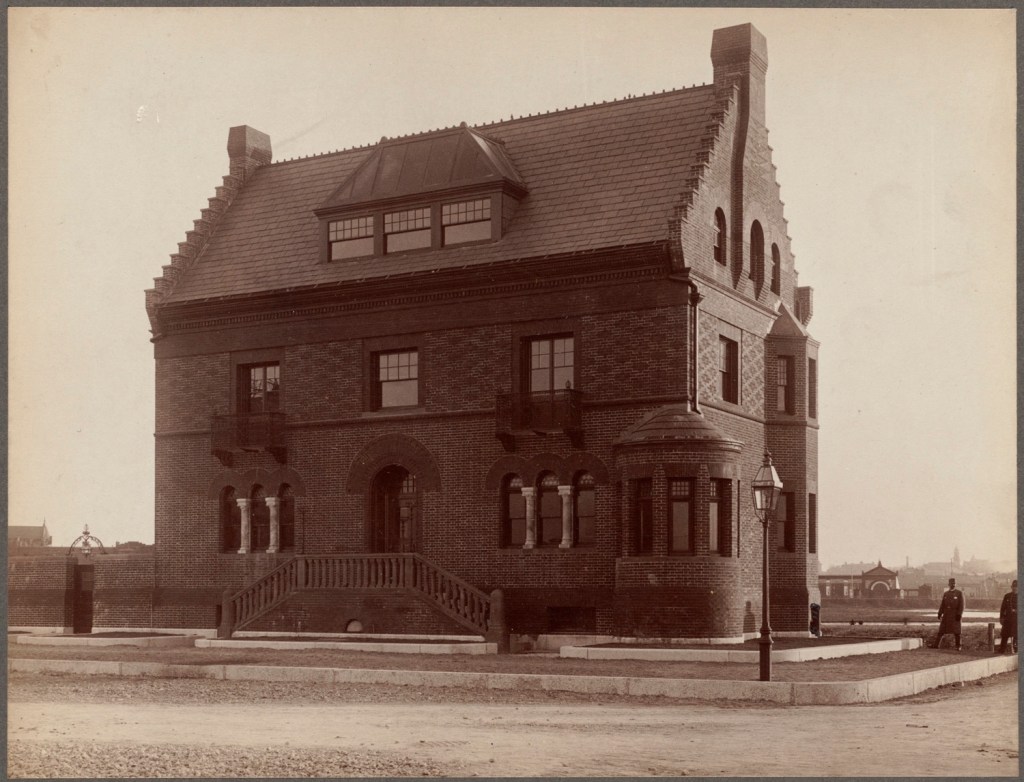
In 1888, Kate and Charles Page purchased a house lot in the sparsely developed Fenway section of Boston. The corner lot at Westland and Parker (renamed Hemenway) provided views to natural scenery and access to many Boston amenities. The couple worked with architect Herbert Langford Warren, who had previously apprenticed under the great H. H. Richardson. Warren took many of the common motifs seen in Richardson’s own style, but he was also a fan of the Arts and Crafts Movement, with its love of fine handicraft. You can see that in the elaborate diaper-patterned brick and in the stepped gables. The gables were a revival of a motif from old Flemish, Dutch, and Scottish architecture, sometimes called corbie-step gables, because corbies (crows) liked to stand on the steps. The interior was just as stunning, with massive brick arches, fanciful woodwork, and a prominent stairhall at the entrance. The couple was likely inspired to hire Warren by their son, Walter Gilman Page, a young artist who maintained a studio space in the home for some time. The home was sold out of the family by 1912. In 1917, the whole house was lifted up one story and a strip of retail stores was inserted beneath it. The original arched entryway then became a second-floor window. It was replaced with a taller building by 2003. Interestingly, upon the opening, the Commissioner of the Boston Parks and Recreation Department and long-time Boston Preservation Alliance Executive Director stated that the 1888 house “looked like a missing front tooth” and was happy to see it demolished.



 Buildings of New England