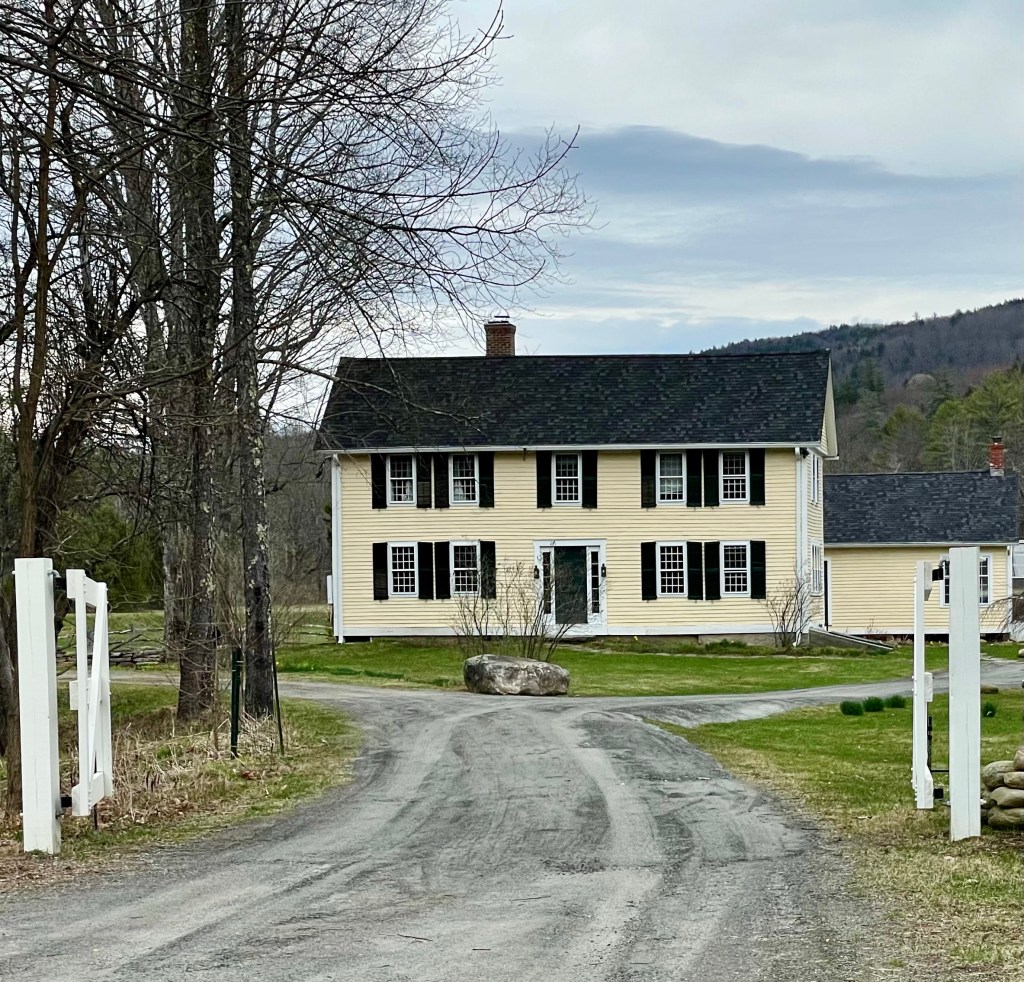
In the earliest part of the nineteenth century of sleepy Brookline, Vermont, the town saw its largest population until 2010. As a result, churches, schools and homes were built to serve the townspeople. Joel and Susan Codding seemingly had this house built in the early decades of the 1800s and operated it as a tavern. With a shrinking population, the tavern must have struggled. The Codding House saw new life in the early 1900s when it served as a boarding house for laborers of a nearby saw mill. Today, the old Codding’s Tavern stands in a great state of preservation as an early home in rural Brookline, VT.
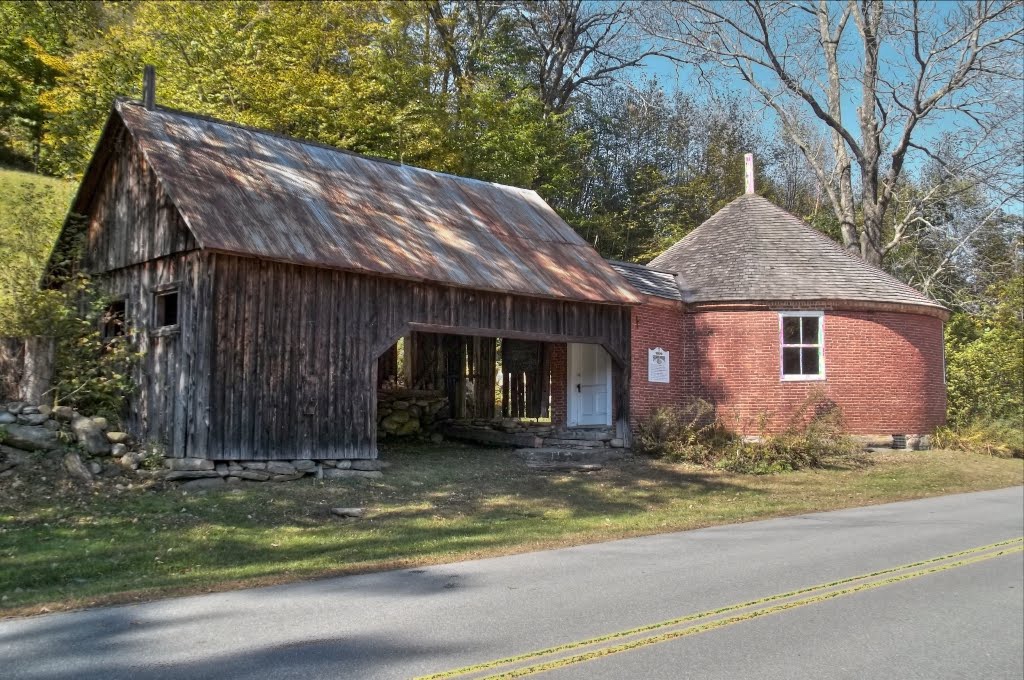
Historic schoolhouses in rural New England are often one-room wood-frame buildings, but not in Brookline, Vermont! The Brookline Round Schoolhouse is constructed of brick and… you guessed it, ROUND! The iconic building sits on the same road as the Baptist Church in town (last post) and likely built from bricks made at the same brickyard. The school was built in 1822 to replace a log school house originally built nearby. The plan for the round design was apparently made by Dr. John Wilson. Wilson, known as “Thunderbolt”, was reputed to have been a robber and highway-man who came from Scotland to escape punishment. He eventually settled in Vermont and had many occupations but settled on saying he was a doctor and began practicing. He eventually took up teaching and somehow convinced the town he should design the new school building. Local legend asserts that Wilson designed the school house round so that he could see from any position, all possible intruders. At the interior, the single-room originally contained sixty oak benches and desks arranged in a circular position facing a teacher’s desk near the door. The building is capped by a conical wood shingle roof, which appears in great condition. The structure functioned as a school until 1929, when a new school was built which conformed to state codes. At this time the round school was turned over to the town for use as a Town Hall, a use it held until the 1980s.
Brookline, Vermont is home to just 540 people but has one of the most beautiful brick churches in the state! The Brookline Baptist Church sits along a quiet road in town and is an excellent example of vernacular Gothic Revival architecture in the Vermont. Brookline’s first organized church congregation were Baptists, who established a formal organization in 1785 out of local homes and barns. By 1836, enough funds were gathered to erect a church, but of brick, a more substantial building material than traditional wood-frame buildings. The church remained active throughout the nineteenth century, and the vestry addition was constructed off the rear in 1895 to provide space for community gatherings and meals. Dwindling membership led the church to become mostly used for weddings, funerals, graduation ceremonies, and craft fairs by the second half of the 20th century. The Town of Brookline presently owns the significant structure, and while preserved, it does not appear to get much use.
The Peter Parley Schoolhouse (also known as the West Lane Schoolhouse) in Ridgefield, CT, is an excellent example of a well-preserved one-room school building in Fairfield County. The little red schoolhouse was originally built in 1756 and either replaced or enlarged in the early 1800s. As Ridgefield in the early days was primarily an agricultural community, many children split their time either helping family on the farm or in school, with work almost always coming before education. The school is named for its most famous student, Samuel Griswold Goodrich. Goodrich went by the alias Peter Parley and was born in Ridgefield, attending the school between 1799-1803. He was a prolific writer, with over 170 books to his credit, and is believed by many to have written the first American textbooks. Samuel wrote about his experiences as a student there, giving locals and historians a look into early life in the town. In the early 1900s, the town consolidated schools and this building was closed. The town seemed to simply close the building and it saw some neglect over time until the Ridgefield Historical Society assumed a lease of the property, recently restoring it.
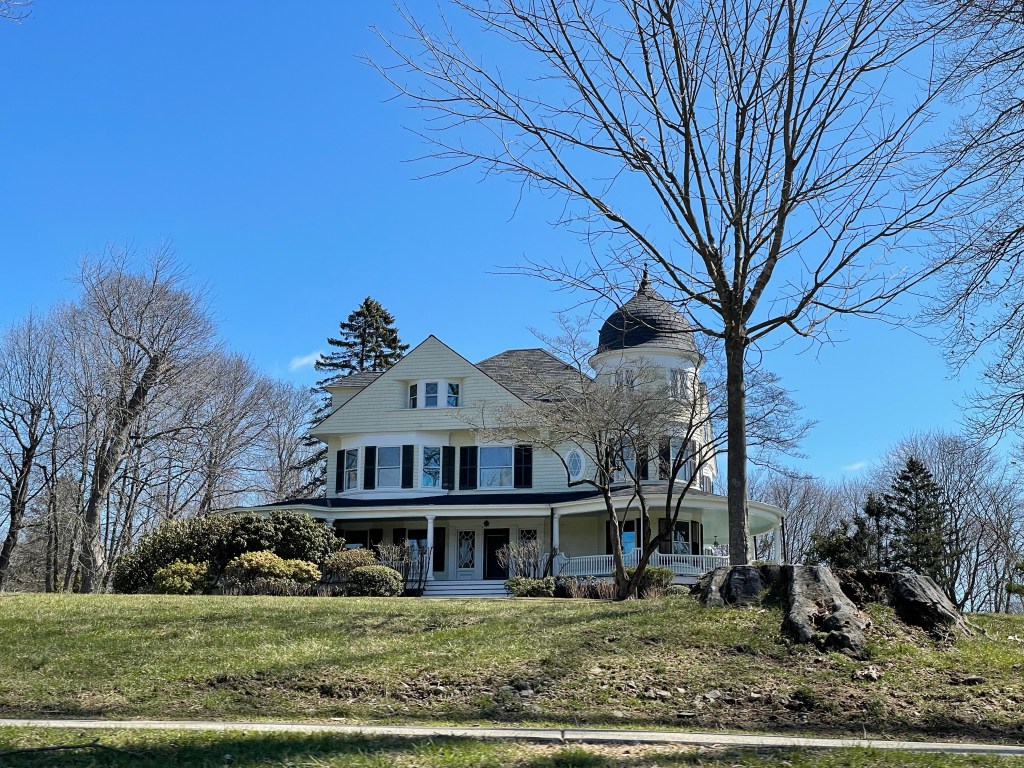
Lewis H. Bailey (1818-1899) was a local banker, merchant, and hotel proprietor in Ridgefield, Connecticut. He had this stunning Italianate Villa home built on Main Street before the American Civil War. Bailey was savvy in realizing the upcoming development boom in town as wealthy New Yorkers began to arrive in town to build summer houses to escape the cramped city living and polluted air, and he began to sell off land and develop streets in the village. To house some shorter-term summer residents, Bailey constructed and operated the old Bailey Inn on a lot adjacent to his own home. The inn was torn down in the 1920s as the town’s dynamic as a summer town began to change with more more year-round residency. The Italianate Villa is a lasting legacy of Bailey and his impact on the town. The home with its square tower and detached carriage house are in a great state of preservation and significantly contribute to the character of Main Street.
When Ridgefield, Connecticut was settled in 1708 by Europeans, there was only one Episcopal Church in the state, and the general assembly allowed dissenters their own churches so long as they continued to pay taxes to support the Congregational Church. Ridgefield’s first Episcopal church, St. Stephen’s was built in 1740 on land granted by the Proprietors who founded the town and laid out lots along the towns new Main Street. In 1776, St. Stephen’s minister, Epenetus Townsend, a Tory (loyal to the British), was ordered to leave town with his wife and five children when the Revolution picked up steam. He was appointed chaplain to a British regiment and in 1779, the battalion was ordered to Nova Scotia. En route by vessel, a severe storm arose and all passengers were lost. The church was taken over by the commissary department of the American Army. During the Battle of Ridgefield, British troops set it on fire as a statement to the townspeople. The church was replaced two more times until 1914 when the present building was constructed. The Colonial Revival church is absolutely stunning and built from plans by (unknown to me) architect Walter Kerr Rainsford. The rubblestone church is one of the most pleasing designs I have seen in Connecticut!
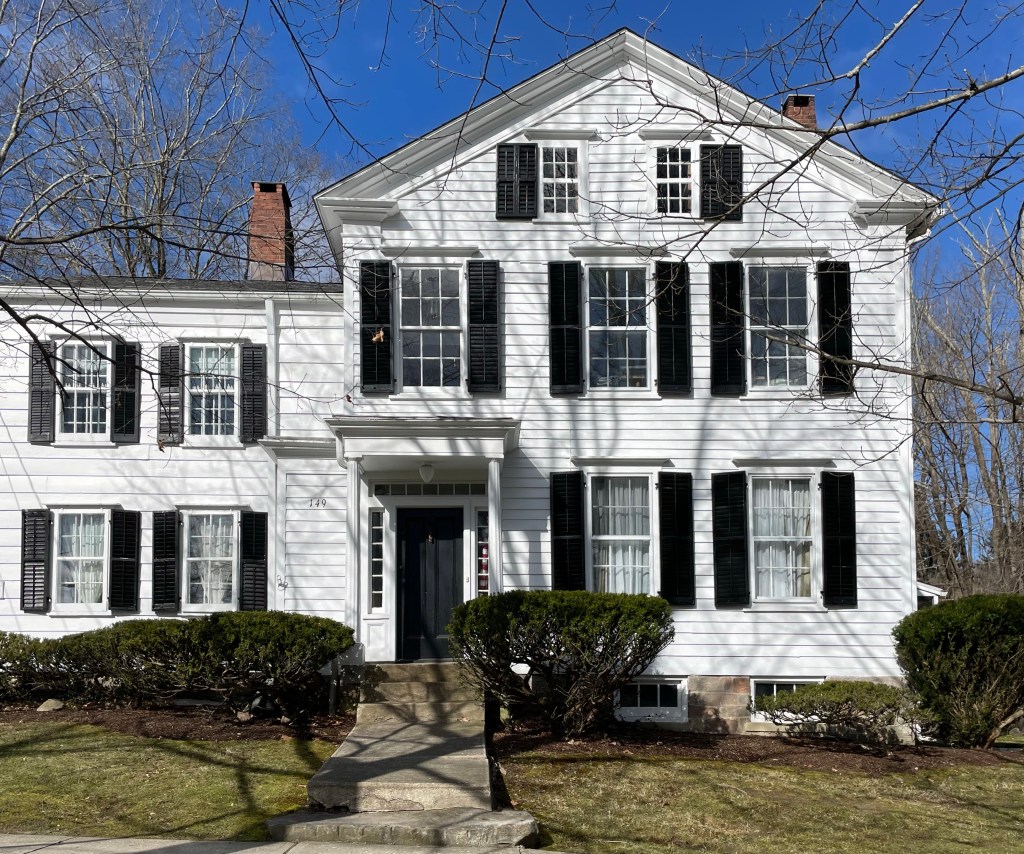
While this house appears to have been built in the mid-1800s as a Greek Revival home, it was actually built nearly a century earlier as one of the oldest extant properties on Main Street in Ridgefield, CT! Located on proprietors lot #20, the original building lots laid out for the new town of Ridgefield, this house appears to have been constructed in 1760 for Matthew Seymour (Seamore) and consisted of what is now the ell of the home (left side). Seymour operated one of the trade posts in town that engaged in trade with a nearby native Ramapo Tribe. The home was likely re-oriented and added onto with a more formal Greek Revival wing with its gable roof facing the street before the Civil War, a configuration it retains to this day.
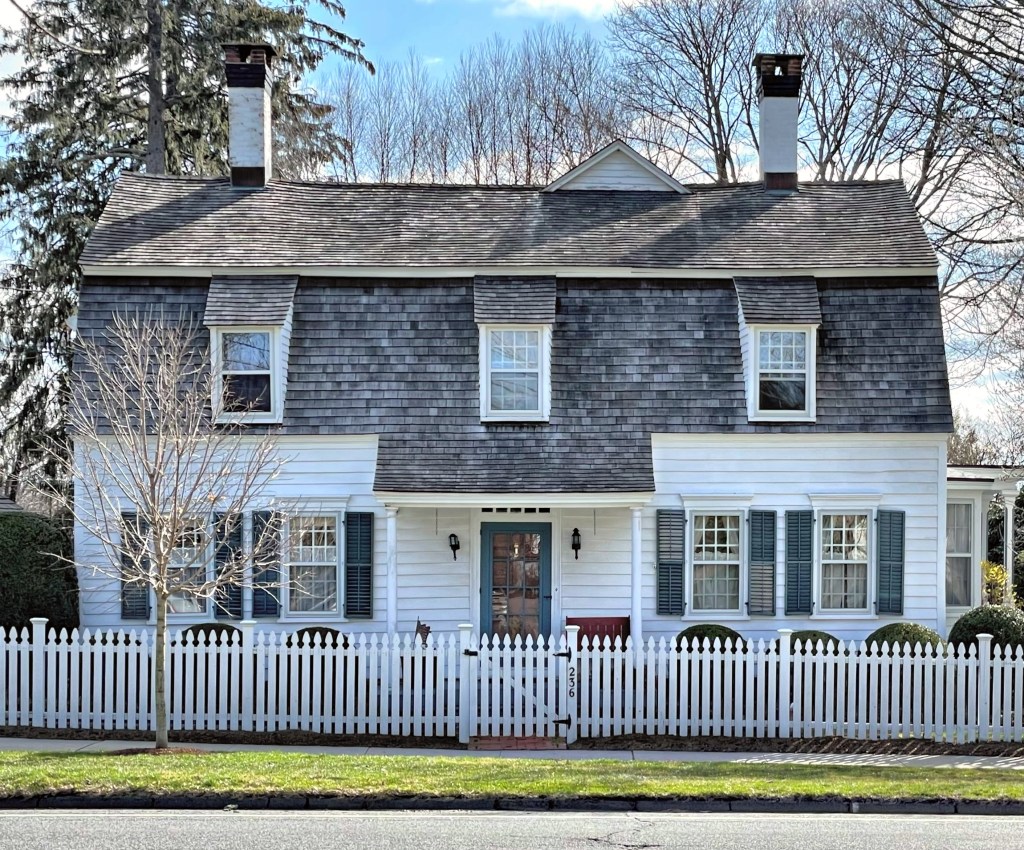
This old Georgian house was built in 1713 on the Proprietors Lot 5, on Ridgefield’s Main Street. Constructed for the first minister of Ridgefield, the home was originally occupied by 25-year-old Reverend Thomas Hawley (1689-1738) not long after his graduation from Harvard in 1709. In addition to being minister of the newly formed Congregational Church, Hawley (also spelled Hauley) also served as school teacher and town clerk. The house employs Dutch Colonial detailing from the gambrel roof to the extended portico over the front door, common in the Dutch colonies in the Hudson River Valley in New York.
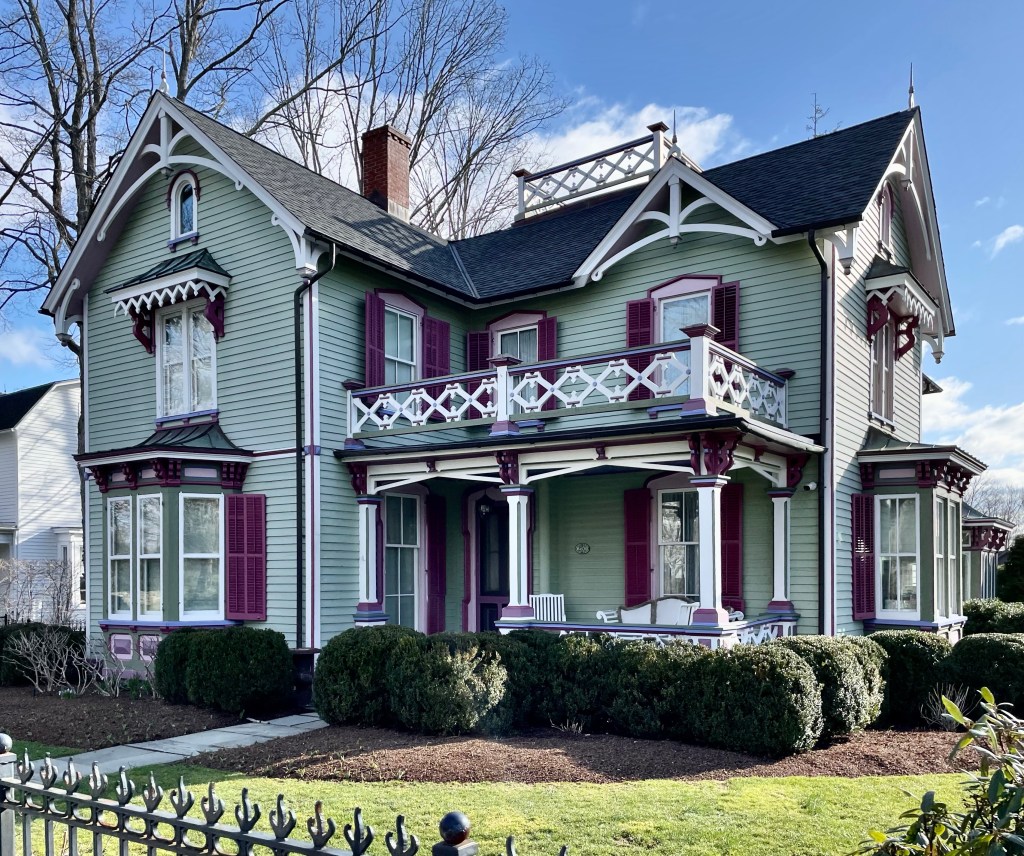
Located next to the Reverend Thomas Hawley House (last post), this gingerbread cottage on Ridgefield’s Main Street looks straight out of a fairy tale! The home appears to have been built around the Civil War (or a renovation of an earlier house) and blends Italianate and Gothic detailing elegantly under one roof. The home was built on land that was owned by the Hawley descendants and was occupied by a few members of the family until it sold out of Hawley ownership in the 20th century. The house was purchased in 2002 by Gregory and Valerie Jensen who restored the home. Mrs. Jensen is the founder of the Prospector Theatre, a non-profit cinema dedicated to providing a higher quality of life through meaningful employment to people with disabilities.



 Buildings of New England