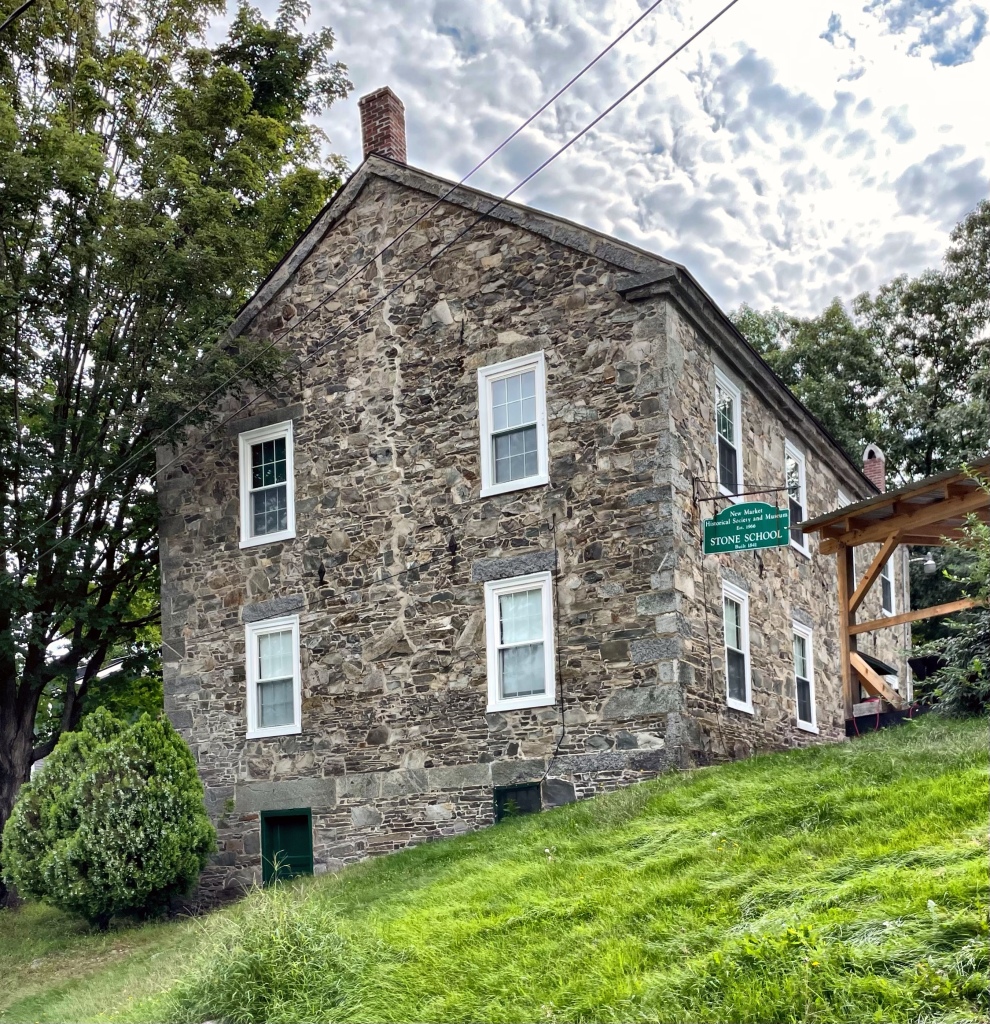
Perched high on a hill, next to the Stone Church (featured previously), the old Stone School in Newmarket is one of a handful of iconic stone buildings in the town. Built in 1841, its stonework executed by William and Robert Channel, local farmers and stonemasons, who likely got their skill from building stone walls on farms. The building was used continuously as a school until 1966, when it was given to the Newmarket Historical Society, which now operates it as a local history museum.
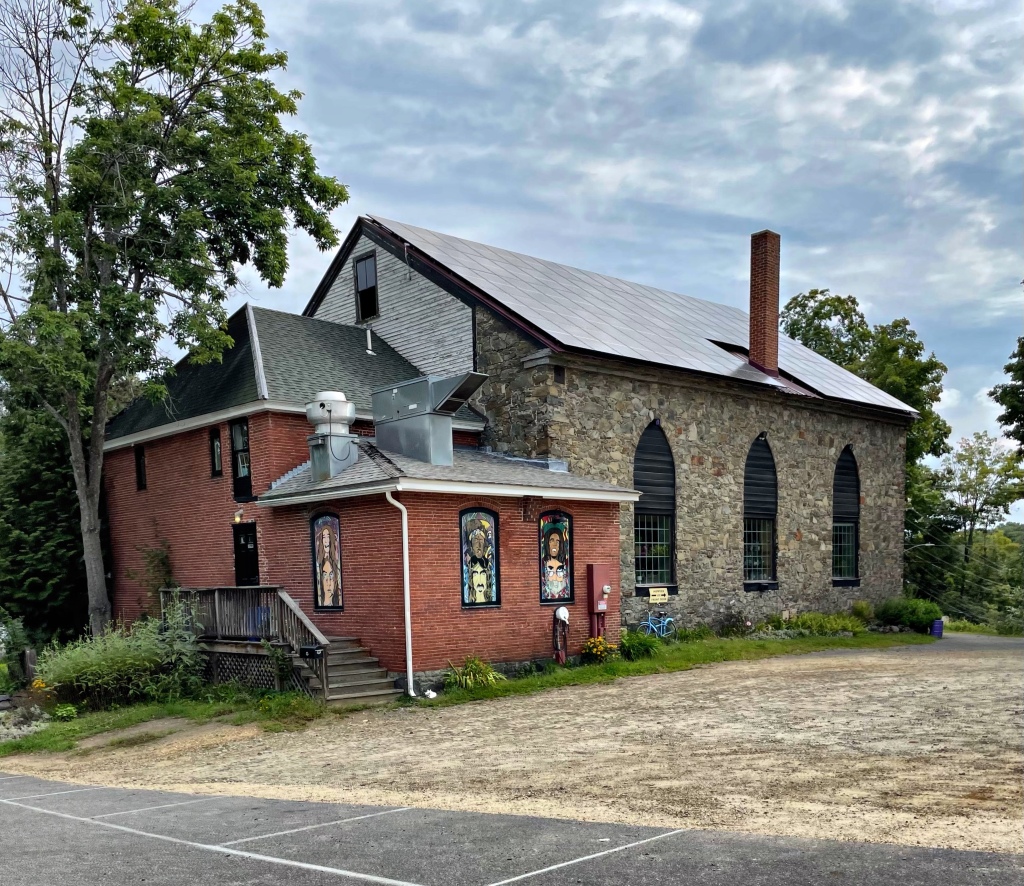
Erected in 1832, the iconic Stone Church building in Newmarket, NH, first served as a Universalist Meeting House before shifting to Unitarian twenty years later. In 1865, it was sold to the Roman Catholic Church, thus establishing the first Catholic Church in Newmarket, NH. In 1890, the congregation moved down to Main Street into a new church next to the town hall, and the Catholics then used the Stone Church as a school for teaching French to children, likely due to the influx of French-Canadian immigrants working at the mills in town at the time. After use as a church, the building was used as a roller-skating rink, playhouse, and VFW hall. In the 1950s, The Newmarket Heel Factory inhabited the building, a shoe manufacturing company. In 1968 the building was ravaged by a fire, and according to legend, the firefighters were reluctant to break the historic windows of the church to vent the fire. In 1970, the building was sold to two UNH students and another, who planned to open a coffee house, but quickly realized they couldn’t sell enough coffee to pay the bills. They decided to sell beer, but weren’t old enough to drink…legally. So one of the boy’s mom’s got the liquor license in her name. Since then, the Stone Church has been one of the most important cultural institutions in the state, providing arts and music space for local musicians and artists to gather and share ideas, over beer. What could be better?!
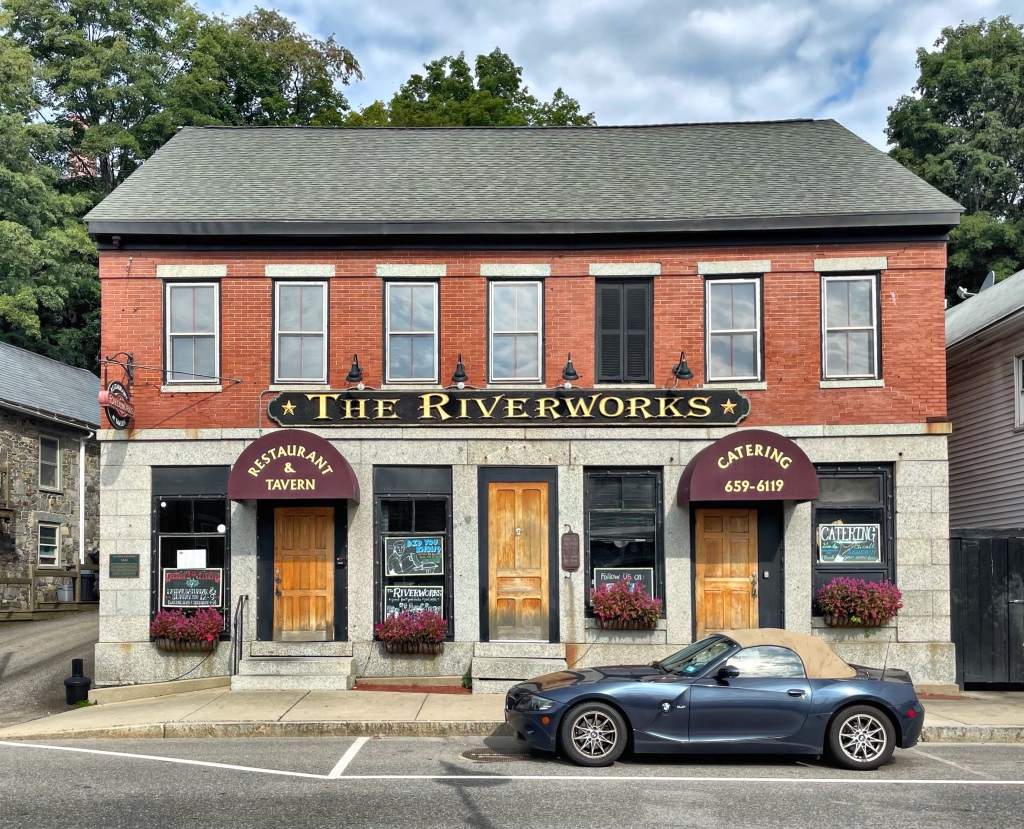
Right on Main Street in Newmarket, the Mathes Block is one of the best-preserved examples of a brick commercial building in town. The structure was seemingly built for Benjamin W. Mathes, who operated a grocery and dry goods store out of the storefronts. Above, he likely had offices or a dwelling for workers. The building stands out for the contrast of granite at the storefront with the brick elsewhere. The building is now home to The Riverworks, an aptly named restaurant/pub with great food.
Incorporated in 1727, Newmarket, New Hampshire, is one of six towns granted by Massachusetts in the last year of the reign of King George I (when it was a part of the Massachusetts Bay Colony). Newmarket started as a parish of nearby Exeter, and was granted full town privileges by the legislature in 1737. Newmarket was a center of the New England shipping trade with the West Indies and also saw financial success as a shipbuilding center for the Royal Navy. By the 19th century, the town thrived as a mill town with great water power from the Lamprey River. With the growth of industry and immigrant population increasing due to labor necessity, the town outgrew its older Town Hall. In 1847, the town purchased land adjacent to a prominent mill site on Main Street, and built this beautiful Greek Revival building. The building was updated in the late 19th century with a tower and additional detailing. A massive fire gutted the old building in 1987. Two years later, the building was demolished and town offices moved to a former school building. The site today is a surface parking lot.
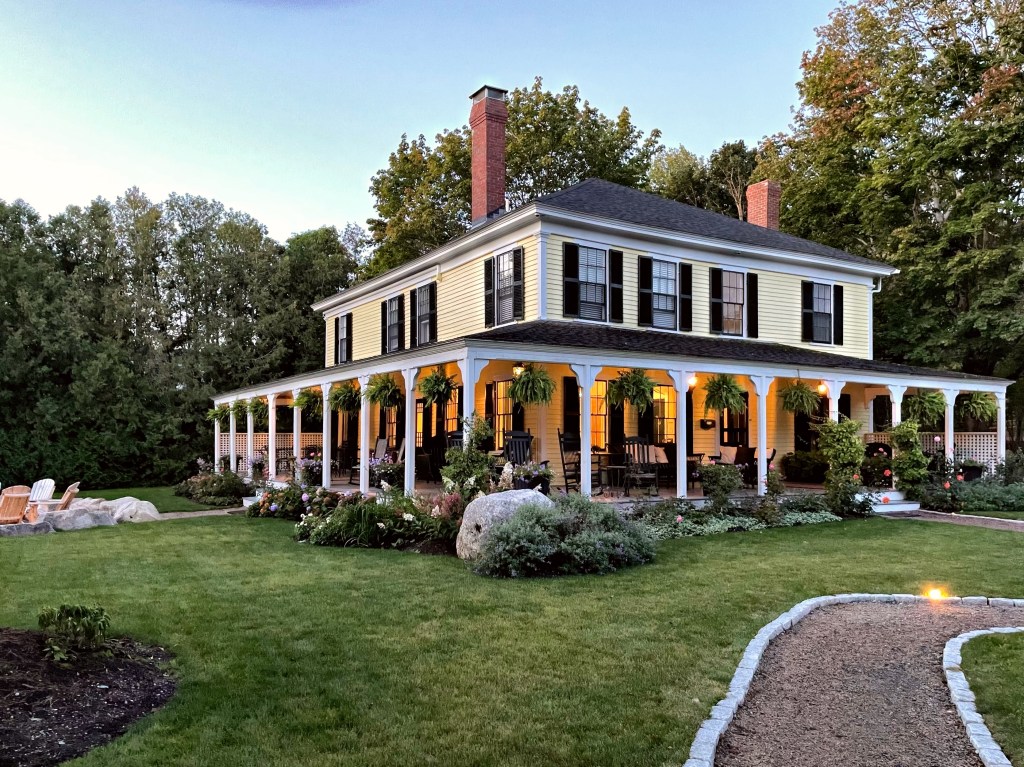
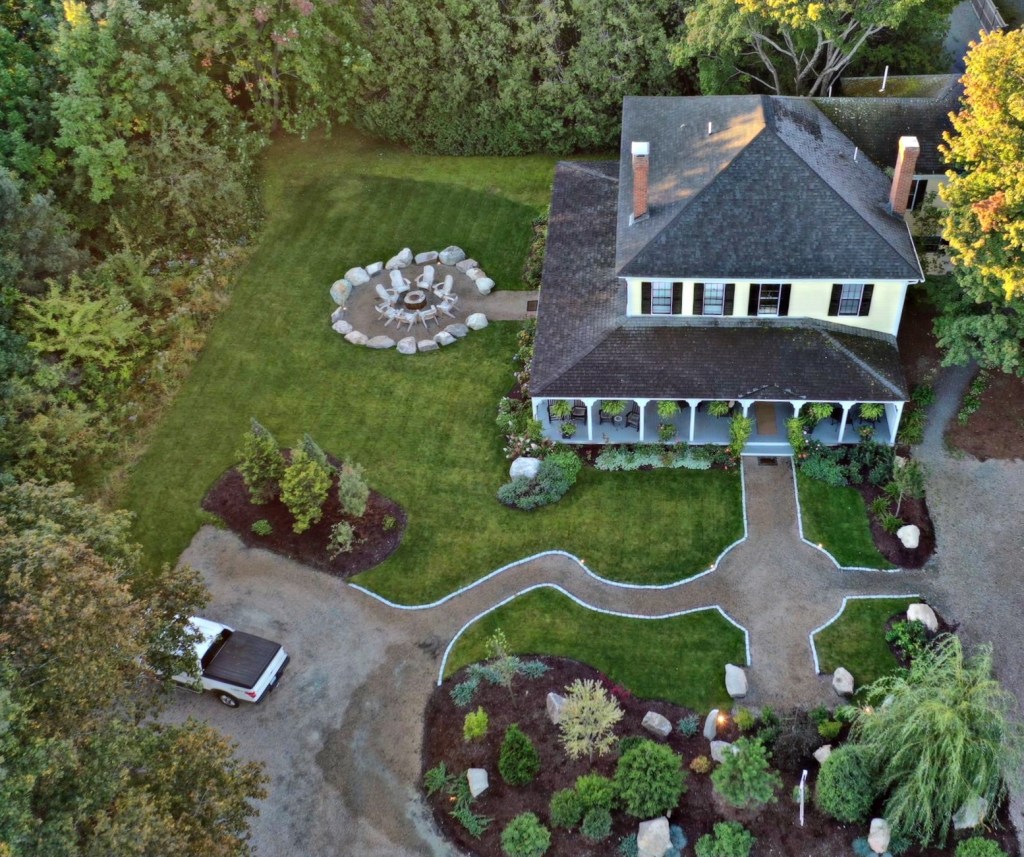
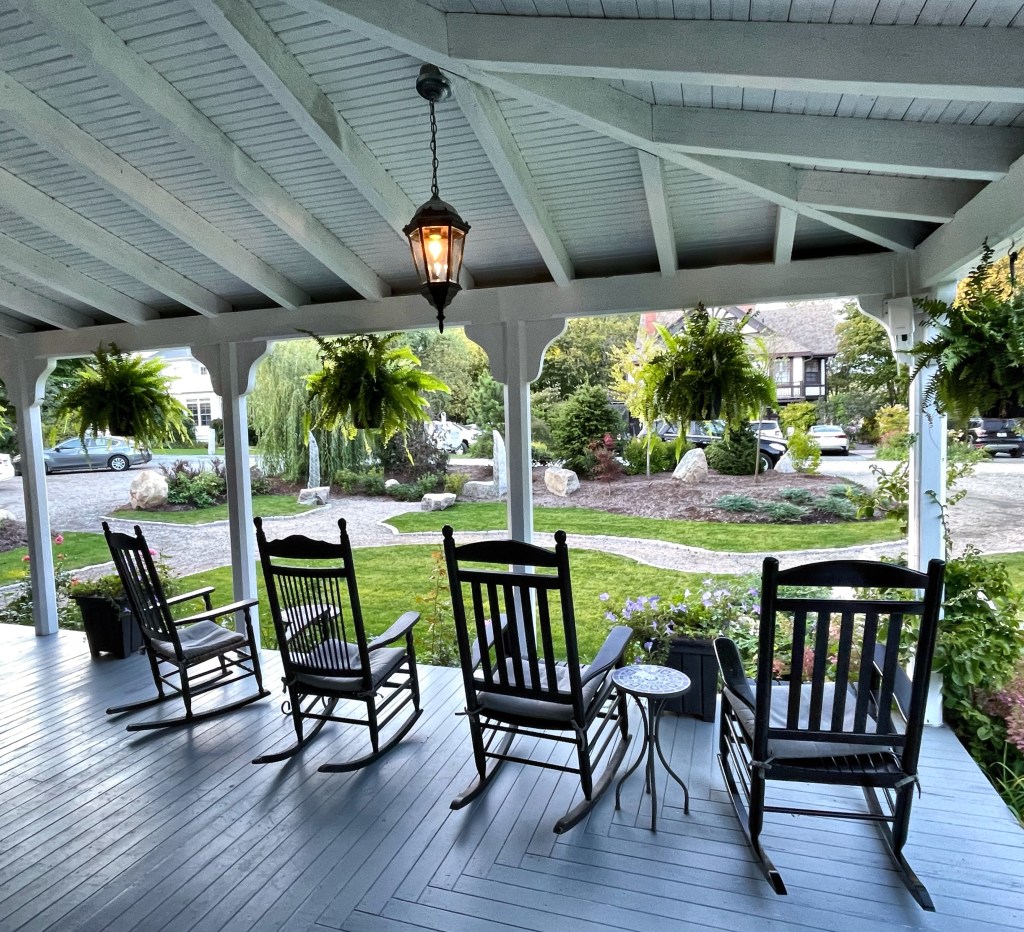
The Yellow House in Bar Harbor is one of the most stunning summer cottages in town, and luckily for us, is an inn! The cottage sits on a sleepy road just off Main Street, just steps from the rugged Mount Desert Island coastline on one side and busy restaurants, shopping, and bars on the other side. The cottage appears to have been built in the late 19th century from deed research and was acquired by socialite Ms. Sarah Parker Torrey Linzee, of Boston by 1886. Sarah married Thomas Linzee, a treasurer of a mill in Lowell, in 1855 and engaged in upper-class society together in Boston until his death in 1863. His wealth went to Sarah, who within a year of his death, purchased a rowhouse in Boston’s newly established Back Bay neighborhood. Her sister, Susan and her husband John Revere (the grandson of the American Patriot Paul Revere), had a matching home built nextdoor in Boston. Like any good socialite, Sarah Linzee desired a summer cottage in desirable Bar Harbor, Maine, to escape the woes of city life for clean air and large parties. Sarah and her sister Susan purchased this cottage, painting it yellow, and the name “Yellow House” stuck. The home was purchased by Leonard Opdyke and remained in the family for generations. By the second half of the 20th century, it became an inn, a use it remains as to this day. The old cottage features the finest wrap-around porch I have seen, large rooms, and original detailing inside and out. For anyone thinking about visiting Acadia National Park, I HIGHLY recommend checking in here to get the true Bar Harbor vibe!
The Grange, officially named The National Grange of the Order of Patrons of Husbandry, is a social organization that encourages families to band together to promote the economic and political well-being of the community and agriculture. Grange Halls can be found in rural towns and villages all over New England, and historically served as a gathering place to discuss agriculture-based business, crops, trade, and issues faced in the community. The Rochester Grange Hall was constructed in 1924 to the designs of architects Brown and Poole of New Bedford, MA and is of the Craftsman style. The National Grange has sharply declined in membership since the late 19th century. In 2013, the Grange signed on to a letter to Congress calling for the doubling of legal immigration and legalization for undocumented immigrants currently in the United States. The Grange now emphasizes an expansion in the H-2A visa program to increase legal immigration and address the crisis-level labor shortage in agriculture.
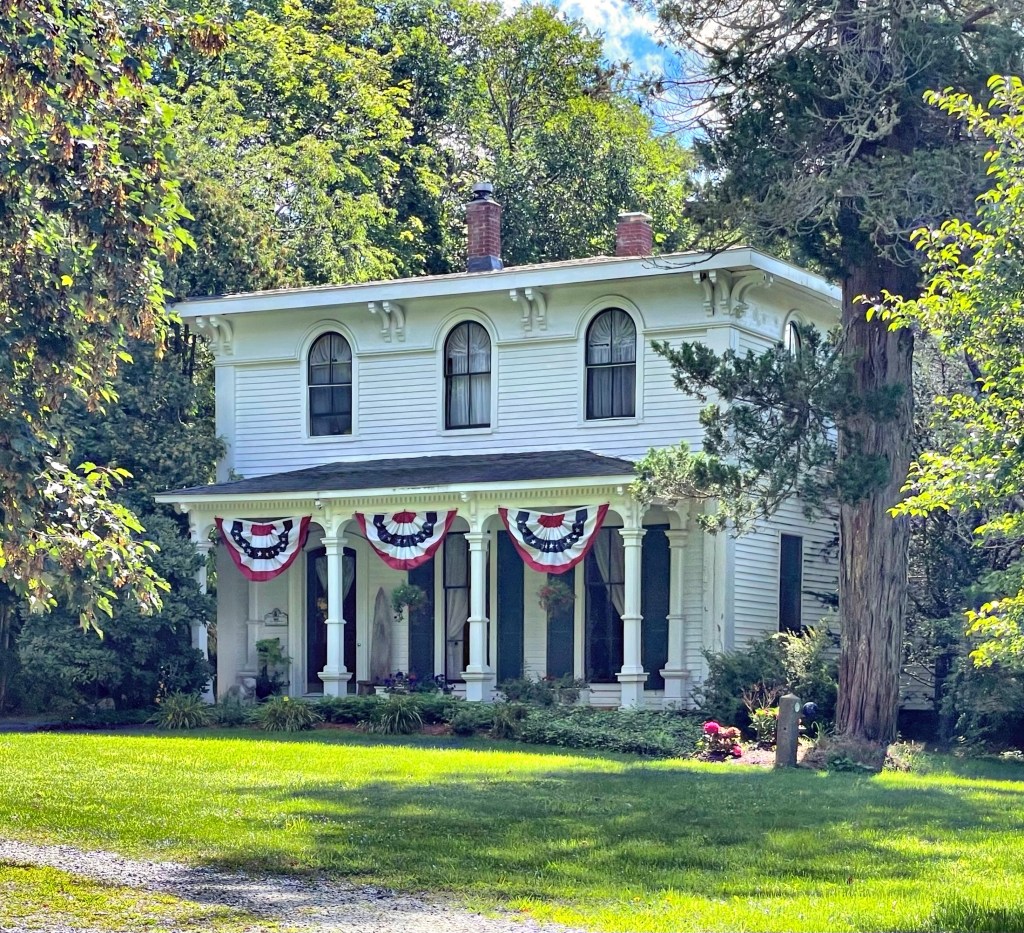
One of the more high-style houses in rural Rochester, Massachusetts, is the Weld-Haskell House. The house was built around 1854 in the Italianate style for a recently widowed Susan Haskell. Susan was the daughter of Jesse Haskell, who was a state representative and served in the War of 1812, and a descendant of one of the town’s earliest colonial settlers. The home remained in the Haskell family until the second half of the 20th century.
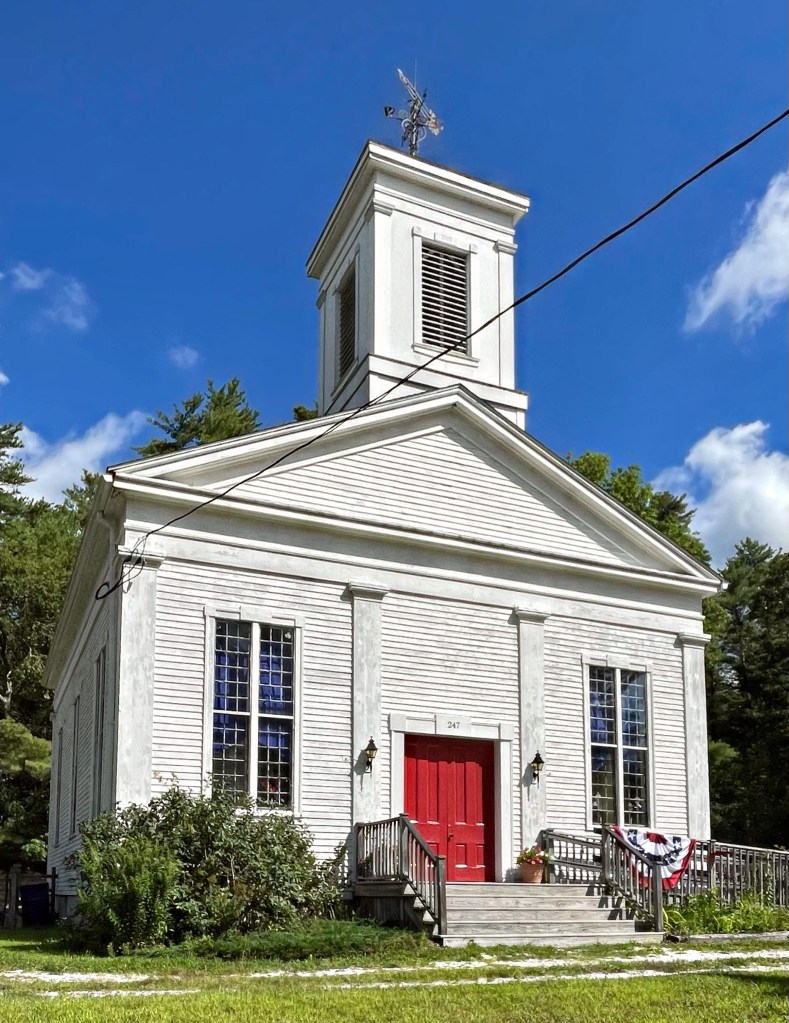
The North Rochester Congregational Church is located in a distinctly rural, area in the northwest corner of the largely pastoral town of Rochester, Massachusetts. This church, built 1841, is locally important to the development of religion and community in North Rochester. In Rochester as in other early New England towns, the building of a church symbolized the founding of a community. North Rochester’s first church was built in 1748, about 1 mile west of the present building, and was served by traveling ministers from other communities. The church congregation was formally organized in 1790, and a new church was built at that time, serving a larger area. The current church building was built in 1841 by Solomon K. Eaton, a noted regional builder whose credits include several other area churches. The church is of the Greek Revival style, which was frequented in the designs of hundreds of churches all over New England in the mid-19th century.
Calvin Chaddock (1765-1823) graduated from Dartmouth in 1791 and three years later earned a Master of Arts degree from the college. In 1792, he married Meletiah Nye and they settled in Rochester, Massachusetts, where he became pastor of a Congregational parish in the rural northern part of town. In 1798, he opened an academy for boys and girls in the village and built this beautiful Federal style home as a boarding house for students to reside in (the schoolhouse is no longer extant). By 1804, he had “a respectable number of students from different parts of the United States.” The man moved to Ohio before settling in Charlestown, West Virginia, where he lived in a homestead with his family and three enslaved people, Charles, Thomas, and an unnamed woman. Upon his death in 1823, the three people enslaved by Chaddock, were sold at auction. The former boarding house in Rochester was later occupied as a tavern and stagecoach stop, and a store, when it was given some 19th century alterations. It has been a private home for the past hundred years.
Craftsman bungalows are a rarity in New England. The Craftsman style surged in the early 1900s, which coincided with the ever-popular Colonial Revival styles reign as most commonly built house style. Many of the Craftsmans that were built are less “ornate” than the West Coast counterparts, lacking deep exposed rafters, sweeping porches, and low-pitched roofs, but they are out there. This bungalow in Rochester was built around 1910 and has some Colonial qualities, including the Tuscan columns, boxed eaves, and shingle siding. I do love that full-length porch and hipped roof with a cute centered dormer! Do you wish we had more Craftsmans in New England?




 Buildings of New England