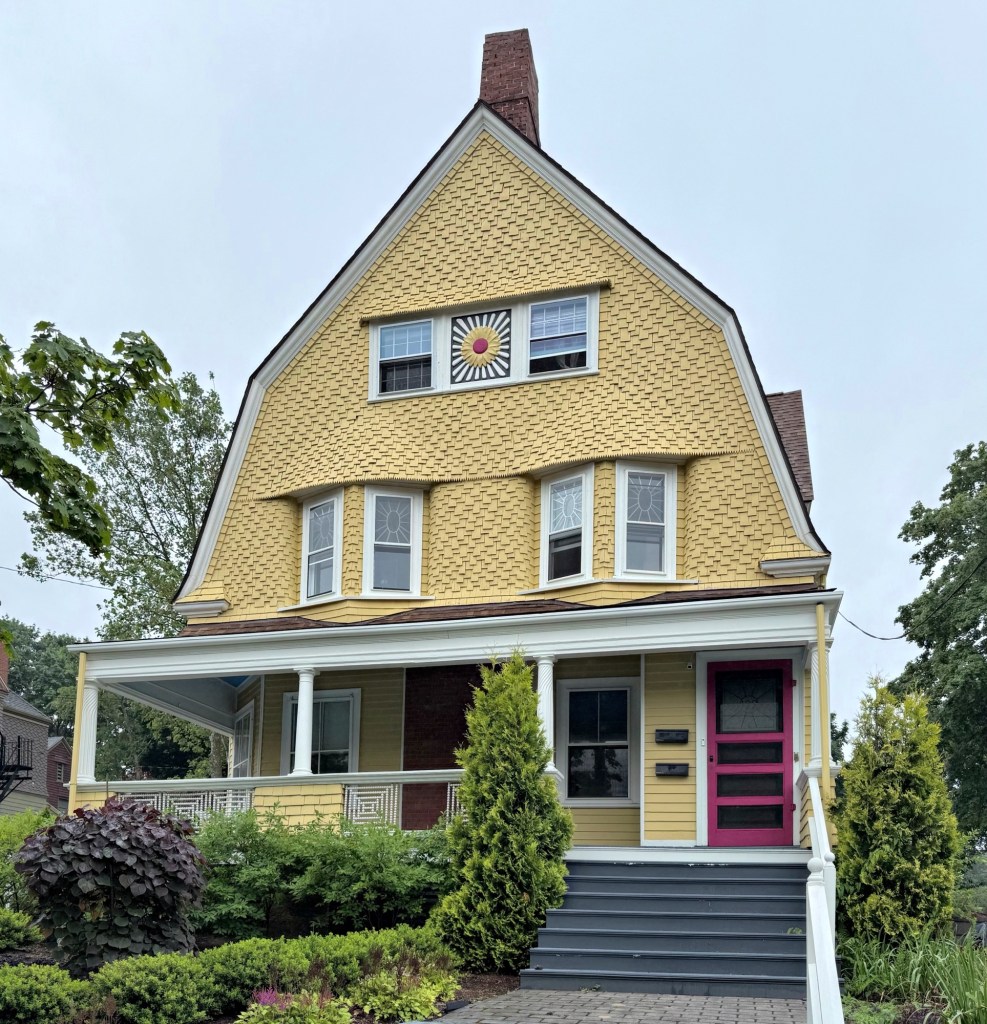
Lynch House // 1889

One of the most unique and enchanting houses in the Ashmont Hill neighborhood of Dorchester is the Lynch House (aka the Sunflower House) at 102 Ocean Street, a landmark example of the Queen Anne architectural style. This residence was designed in 1889 by architect Samuel J. Brown, who worked in the firm of Cummings and Sears before opening his own office in Boston, where he specialized in residential designs. The first owners were Edward C. Lynch, a stair builder, and his wife, Petronella P. Lynch, who was born in Sweden and emigrated to the United States. Architecturally, the Lynch House features a prominent gambrel roof that swells out over the second-floor inset windows, clapboard and shingle siding, sawtooth shingled details over the windows, and the sunflower motif in a panel at the third floor.

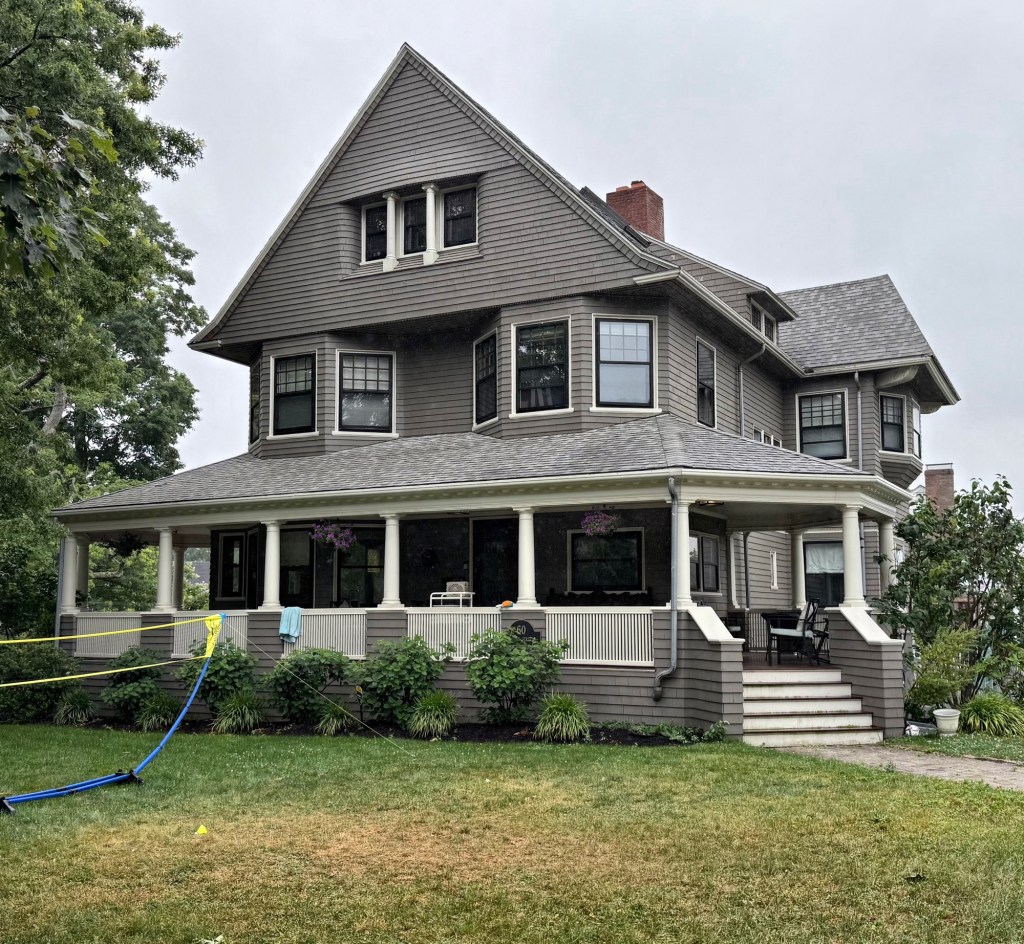
George A. Eastman House and Stable // 1889

Built between 1889-1891, the house and stable at 60 Ocean Street in the Ashmont Hill neighborhood of Dorchester was commissioned by George A. Eastman, a Harvard graduate and insurance executive. George Augustine Eastman married Anna C. Winsor in 1870, and the family would remain in this house for nearly 100 years. George Eastman worked as an insurance executive at the Boston office of the Liverpool & London & Globe Insurance Company of England for over 50 years, and built his home next-door to his brother’s at 42 Ocean Street. It is believed that the Eastman House and Stable were designed by local architect Edwin J. Lewis, who designed about a dozen other residences in the surrounding area at the same time. The old stable has been converted to residential use, a great way to adaptively reuse these old, well-built structures.

Clark-Cottle House // 1890

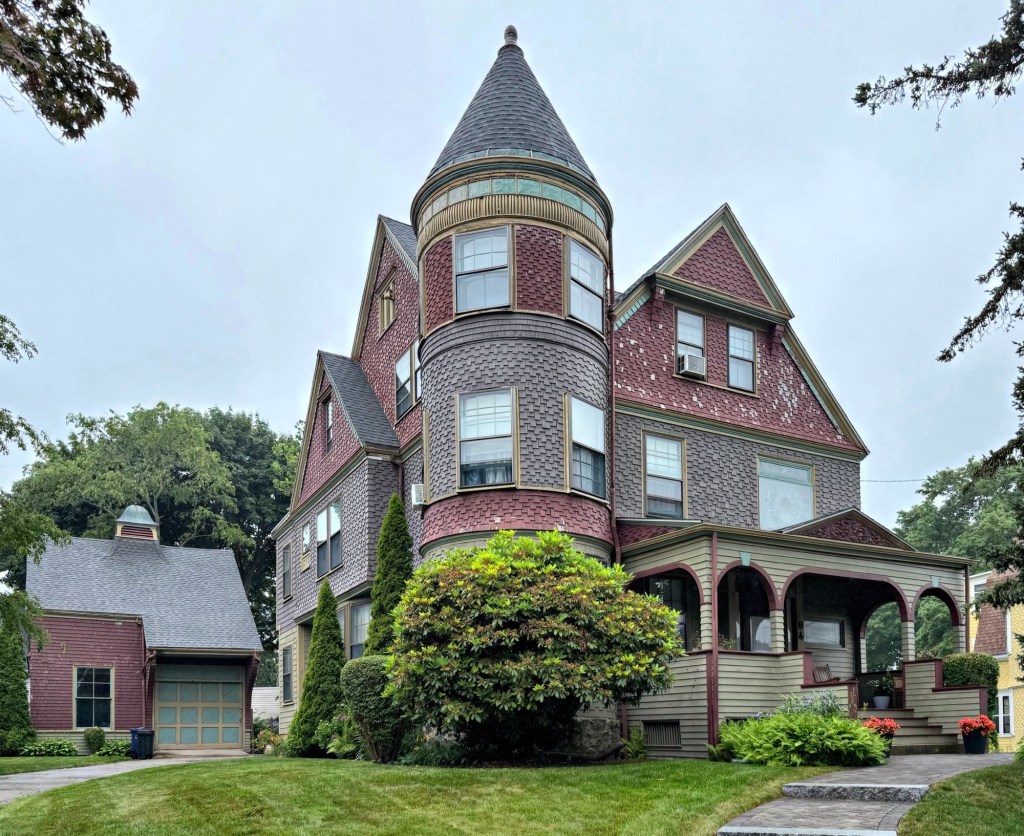
One of the most sumptuous Victorian-era homes in Dorchester can be found at 94 Ocean Street, this is the Clark-Cottie House. The residence (and rear stable) was built in 1890 from plans by famed architect Arthur H. Vinal, who designed many other Shingle style and Queen Anne homes in the surrounding neighborhood. The first owners of the mansion were Evelyn and Edward Clark, who after a few years, sold the property to Edgar Cottle, president of the Curtis & Pope Lumber Company. The three-story Queen Anne style mansion features a rounded corner tower, varied shingle siding, shingled porch, and the intact, charming stable at the rear.

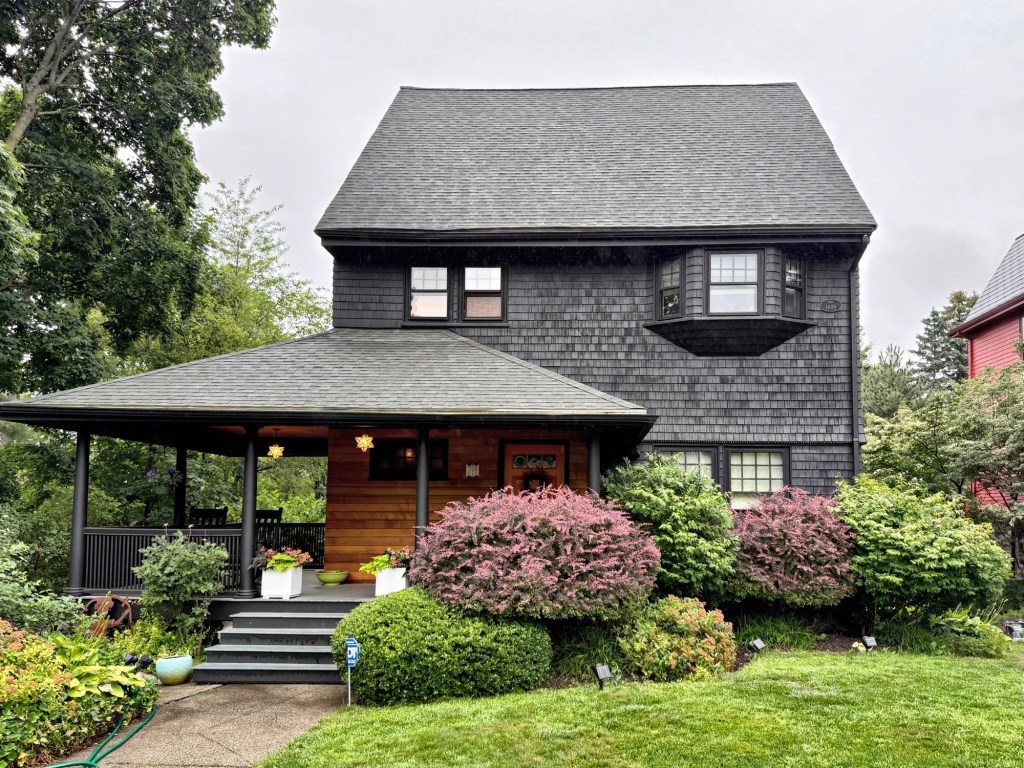
Reed-Fitzgerald House // 1891

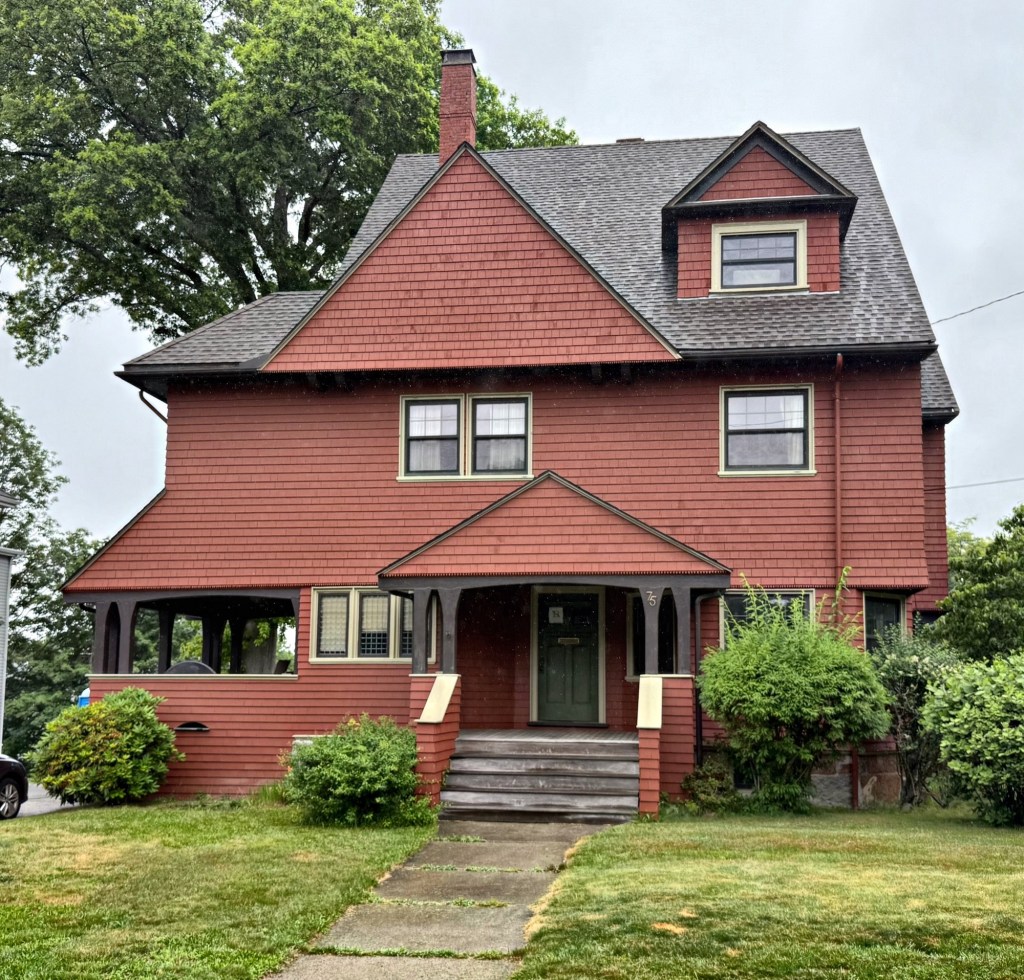
The Reed-Fitzgerald House at 75 Ocean Street in Ashmont Hill, Dorchester, stands out as a simple, yet beautiful example of the Shingle style of architecture for residential purposes. The house here was built in 1891 from plans by Edwin J. Lewis, Jr., a Boston-born architect who worked at the office of Peabody and Stearns before he opened his own firm in 1887, specializing in suburban houses and churches. The first owner of this residence was George Reed, a Boston insurance executive. Years later, the house was owned by Henry Fitzgerald, possibly Henry S. Fitzgerald, the brother of John “Honey Fitz” Fitzgerald (1863-1950), the Mayor of Boston who resided in a since demolished house in the neighborhood. Mayor John Fitzgerald was the father of Rose Fitzgerald and maternal grandfather of her sons President John F. Kennedy, Attorney General Robert F. Kennedy, and Senator Ted Kennedy. Recently, the owners of the Reed-Fitzgerald House have restored the exterior, and stained the shingles the lovely rust color.

Mary E. C. Bates House // c.1894

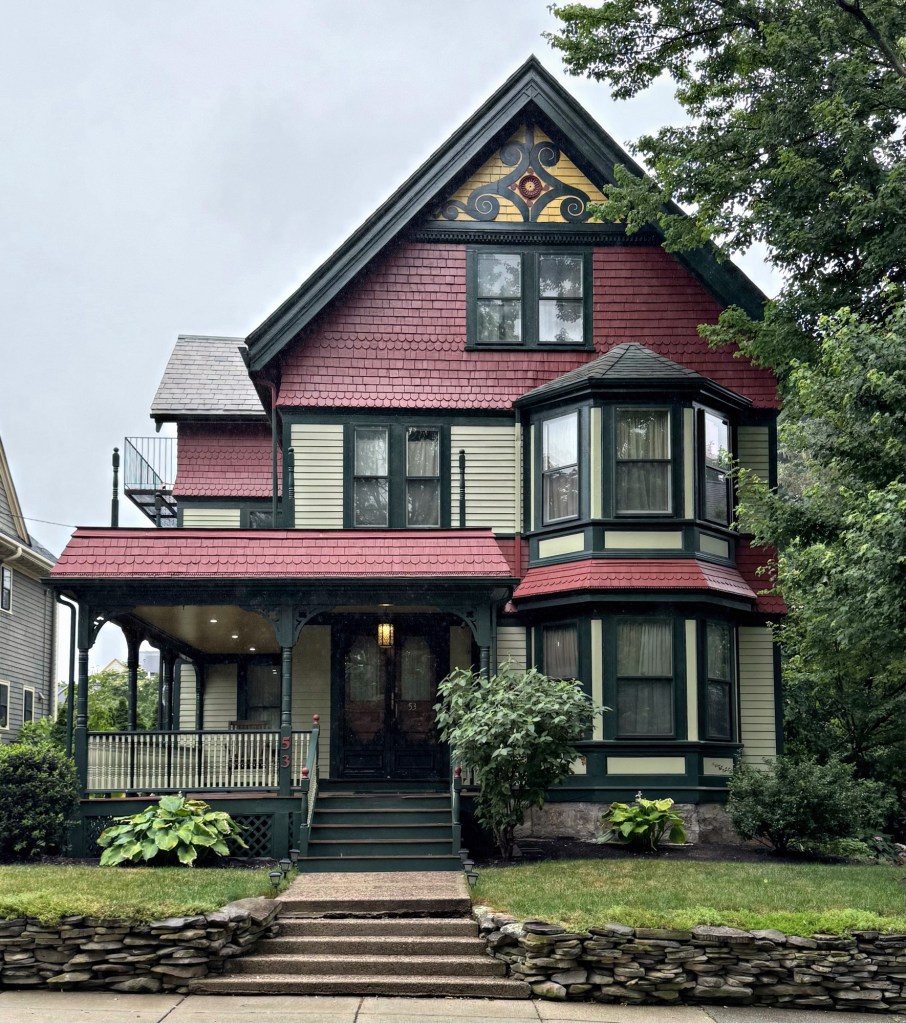
One of the many spectacular Queen Anne style houses in the Ashmont Hill neighborhood of Dorchester (Boston) is this c.1894 residence at 53 Ocean Street. The house was built for Mary Elizabeth (Cushing) Bates and her husband, Henry L. Bates. Henry worked as a bookkeeper and the couple was able to afford a house lot in the fashionable Ashmont area of Dorchester, and had this home built. In the early 20th century, the couple purchased a then-vacant lot next-door at 57 Ocean Street, and had the current house there built, renting it out for years for supplemental income. Hallmarks of the Queen Anne style seen in the Bates house include: varied siding types, large porch supported by turned posts, asymmetry, projecting bay window, and applied ornament seen here in the gable.

Harrison H. Atwood House // 1888

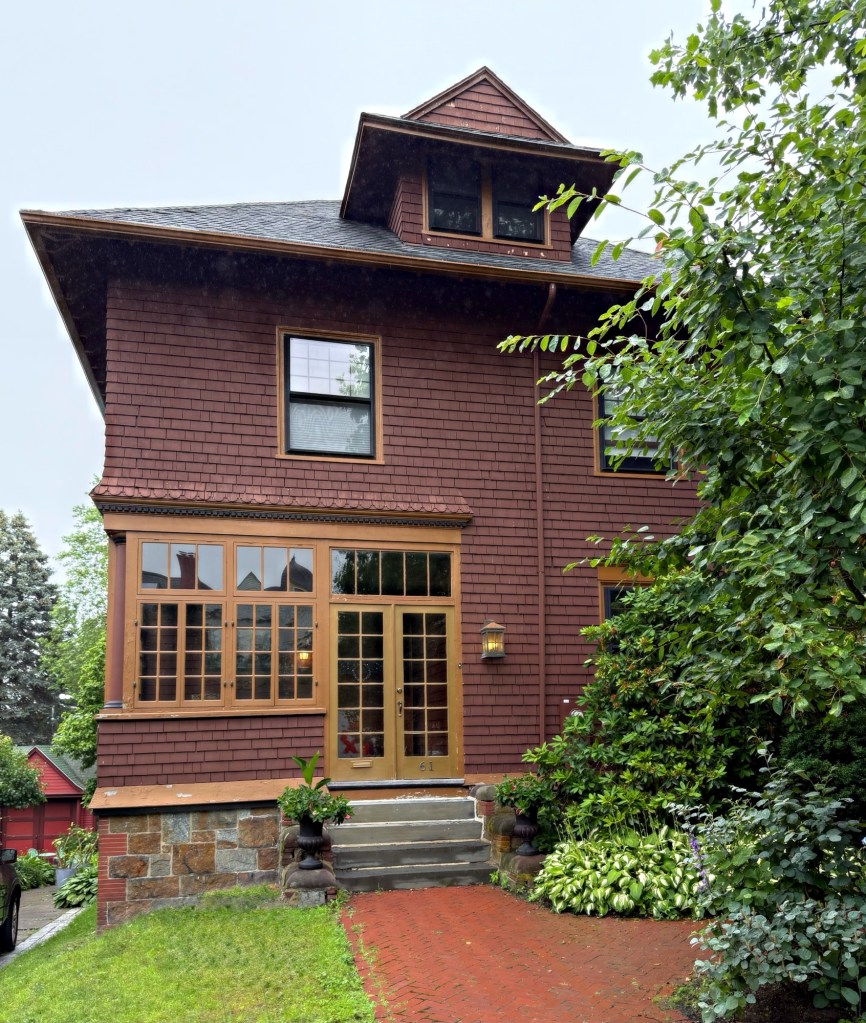
When an architect designs their own home, you know it will be something special. This house on Alban Street in Ashmont Hill, Dorchester, was built in 1888 and designed by owner-architect, Harrison H. Atwood (1863-1954). The unique Shingle style residence features a plain, boxy form and is capped by a pyramidal hipped roof with a center dormer. The recessed side entry porch is enclosed by large windows with multi pane sash which is surmounted by flared shingles. Besides being a residential architect, Harrison Henry Atwood also was appointed as the 5th City Architect of Boston, designing schools and firehouses, and served as a member of the Massachusetts House of Representatives. While the Atwood House may appear modest from the street, the house stretches back toward the rear of the lot and is larger than meets the eye, also the interior was lavishly decorated with much of the original millwork and mantels intact. 

Dillaway House // 1889

One of the finest and refined examples of the Shingle style in Boston can be found on Alban Street in the Ashmont Hill section of Dorchester, a lovely, walkable neighborhood where you can find timeless examples of just about any Victorian-era architectural style. Built for Charles F. Dillaway, a banker in Boston, this home was designed by local architect, Edwin J. Lewisarchitect for many houses in the Ashmont area.  Lewis’s designs are distinguished by their crisp geometry, often with horizontal lines emphasized and small-paned windows. The house has been slightly modernized by later owners who added new siding within the inset porch and a more moody color scheme. 

Mumford House // 1877

Set back behind a manicured lawn on the charming Alban Street in the Ashmont Hill neighborhood of Dorchester, this Victorian era residence was both a family home as well as a finishing school for young ladies. The house at 35 Alban Street was completed in 1877 for the Reverend Thomas James Mumford, pastor of the Third Church of Dorchester and anti-slavery advocate, who died the year his home was completed. His widow, Elizabeth Goodrich Warren Mumford (1834-1897) would inherit the home from her husband and for supplemental income to maintain the home, she opened the Mrs. Mumford’s Finishing School for Young Ladies, a school to educate and teach young girls manners and religion. Elizabeth Mumford would also publish books on how to conduct classes for Sunday School, Kindergarten, and the home. The Mumford House is a great example of a Stick style residence with less exuberance than some other examples. The picket frieze, applied stickwork on the siding, and more ornate porch are all typical of the style. 

George Derby Welles Rental House // c.1872

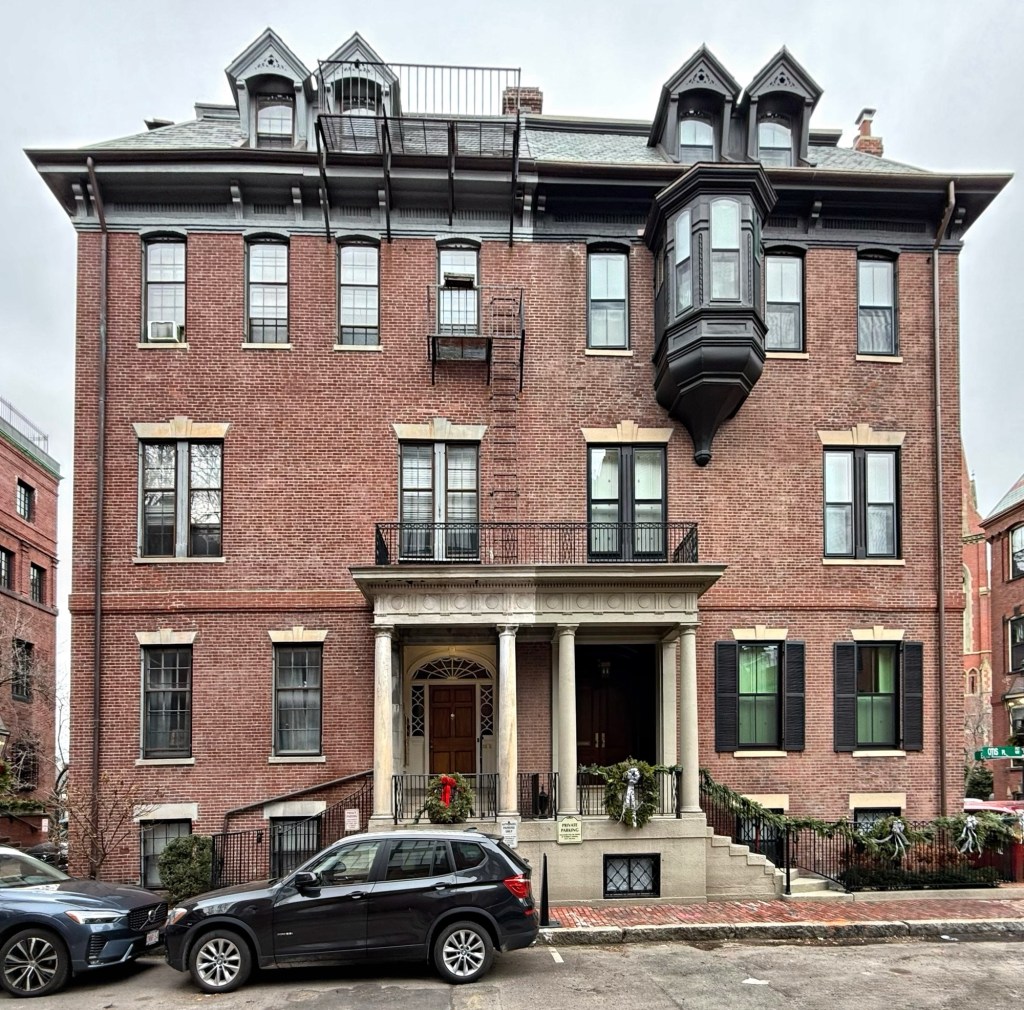
From the 1780s until 1870, almost all of Ashmont Hill (west of the present train station) was a farm, with the large farmhouse dating to about 1720, located at the corner of Washington and Welles streets, now the home to the Codman Square Branch of the Boston Public Library system. The farm was owned for a time by General Henry Knox. Sometime before 1850, the estate and mansion came into the possession of the Honorable John Welles, who died in 1855. The property would eventually be deeded to John Welles’ grandson, George Derby Welles, who was then just 26 years old and living in Paris with his wife, Armandine V. Derby. Welles wasted no time in developing the property through his agent, Boston Attorney Edward Ingersoll Browne. Streets were laid out and house lots were platted and sold, with some early properties built with much of the neighborhood developing by the turn of the century. The old Knox-Welles farmhouse would be razed by 1889, but the remainder of the neighborhood has since become a landmark neighborhood of Victorian-era homes. This mansard double-house at 67-69 Ocean Street dates to around 1872 and is one of the earliest properties in the area. Blending the Second Empire and Stick architectural styles, the handsome double house is said to have been designed by architect Luther Briggs for George D. Welles and rented to tenants.

Dorchester Temple Baptist Church // 1889

Located at the corner of Washington Street and Welles Avenue, the Dorchester Temple Baptist Church was designed in 1889 by architect Arthur H. Vinal, as one of the best examples of a church designed in the Shingle Style in New England. The church began in 1886 as a mission church of the Tremont Temple Baptist Church in Boston. At this time, Dorchester was a semi-rural area and would surge in development when the streetcars were electrified in the 1880s. With a rapidly developing neighborhood, the congregation here, purchased lots and hired Vinal to furnish plans for a house of worship. The church’s cornerstone was laid October 3, 1889, with the church membership numbering ninety-nine at that time. Membership would decline in the decades following WWII, and shifting racial and ethnic demographics in the neighborhood brought new members to worship here. The building was renamed as the Global Ministries Christian Church by the current congregation, who with the assistance of preservation grants, worked with Mills Whitaker architects to restore the iconic landmark. Specific details of the building stand out, including the stained glass windows, the belfry with bulbous form, and the arched openings with continuous shingled walls.