Bates Cottage // 1853

This Gothic Revival brick cottage is of several houses built by Amos A. Lawrence for his Cottage Farm neighborhood in Brookline, Massachusetts. After he built his own stone residence at the center of the estate, Lawrence erected a series of cottages in the vicinity which were rented or sold to family and friends. This house was listed as the “Bates House” in Amos Lawrence’s papers, likely referring to the renter of the property soon after the cottage was completed by 1853. After Amos Lawrence died in 1886, the estate was inherited by his daughter, Hetty S. Cunningham. The “Bates Cottage” was later acquired by Boston University, who in 1964, received town approval to convert the residence into offices for the Center for the Study of Liberal Arts Education. The cottage was expanded at the rear and is today home to the Boston University African American & Black Diaspora Studies Program.
Amos A. Lawrence House // 1851

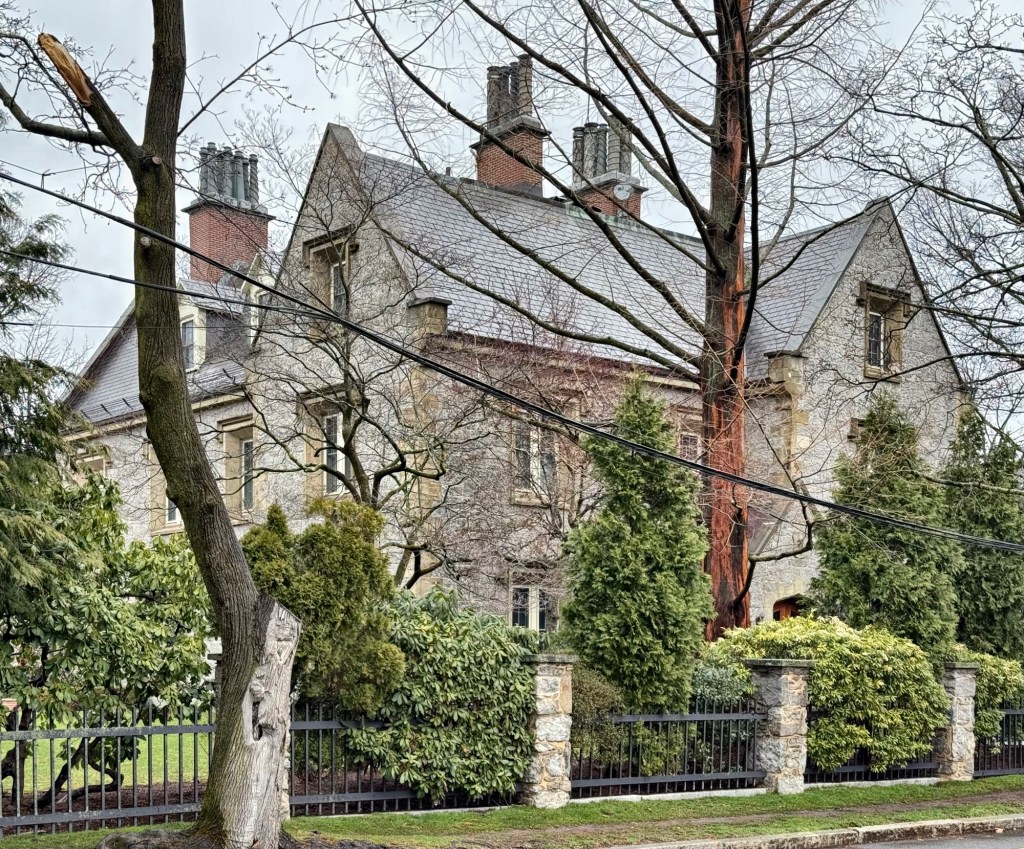
Cottage Farm area of Brookline is one of the finest neighborhoods in all of New England. The area was developed thanks to Amos A. Lawrence (1814-1886), a wealthy second-generation Bostonian, who provided much of the capital and enthusiasm for the growth of the cotton industry in New England prior to the Civil War. Lawrence’s involvement in the industry aided the development of the Massachusetts mill towns of Lowell and Lawrence, whom the city was named after. In 1851, Amos Lawrence purchased 200 acres of land from David Sears, who himself developed the equally beautiful Longwood neighborhood of Brookline on the other side of Beacon Street. Amos began to subdivide the land, working with the architect George Minot Dexter and landscape architect and surveyor, Alexander Wadsworth, who designed Mount Auburn Cemetery in Cambridge, to create an early picturesque residential suburb. With houses designed in the newly popular Gothic Revival and Mansard styles and several small parks, the area became known as Cottage Farm. This stone house was designed by George M. Dexter and was the country residence of Amos Lawrence, who had other homes built nearby and rented out to wealthy friends and family. By 1888, the property was owned by Amos’ daughter, Hettie S. Cunningham, who later, subdivided the estate into five house lots, and moved this stone house to the corner of Ivy and Carleton streets. Expressive of English architectural traditions over the more ornate Gothic Revival popularized by Andrew Jackson Downing, the Lawrence House is one of the finest residences in the Boston area. Built of granite with limestone trim and set behind landscaping and a perimeter fence, the mansion is surprisingly hard to get decent photos of, but it is a stunner. Today, the house is owned by Boston University and is known as Sloane House.

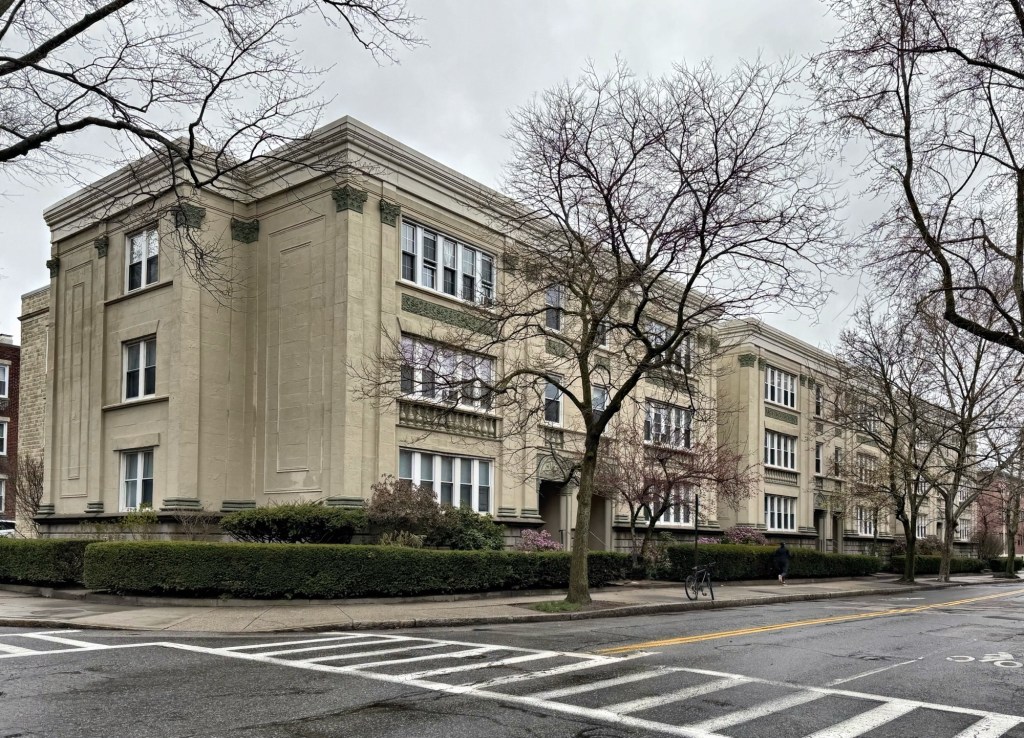
New England Fireproof Construction Co. Apartments // 1917

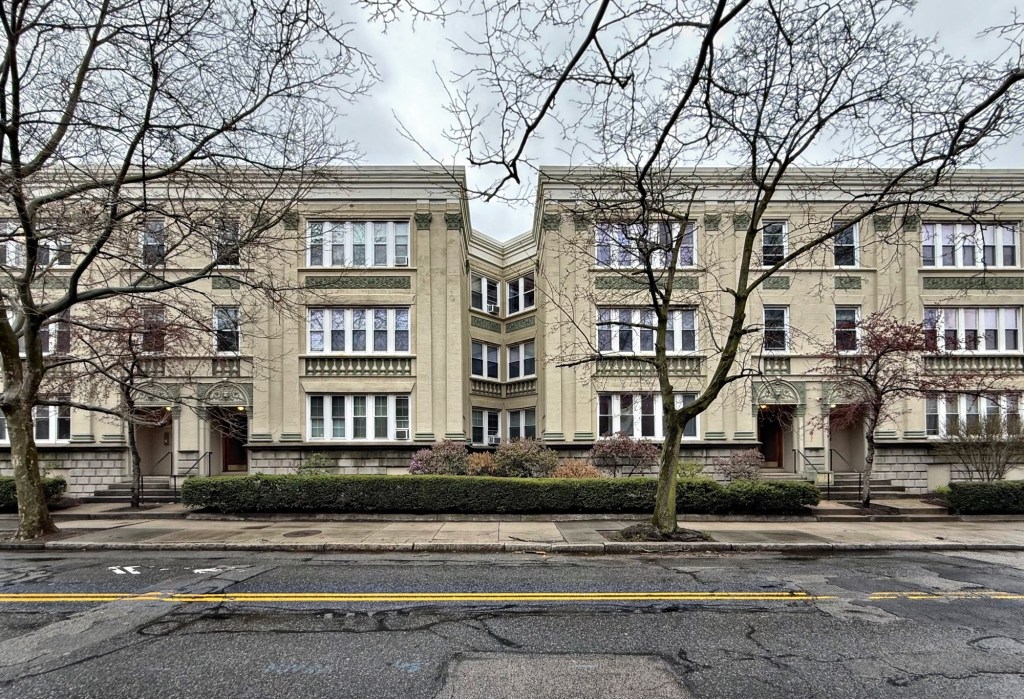
One of the most unique and architecturally pleasing buildings in Brookline has to be these apartments on Egmont and St. Paul streets that break the mold of traditional brick or wood-frame apartment houses. Built in 1917 by the New England Fireproof Construction Company as an example of how cheaper cement material can be used effectively and beautifully to design and construct high-quality housing. The company hired architect G. Bertram Washburn to design the buildings which utilize concrete block and cast concrete details with the facades embellished with pilasters capped with Corinthian capitals, engaged balusters, and modillioned and corniced entrances decorated with a lion’s head over each doorway. Additionally, a special touch is the recessed wells in the facade which not only break up the massing of the building, but provide additional light and air into the apartments inside. 

Snider and Druker Apartments // 1913

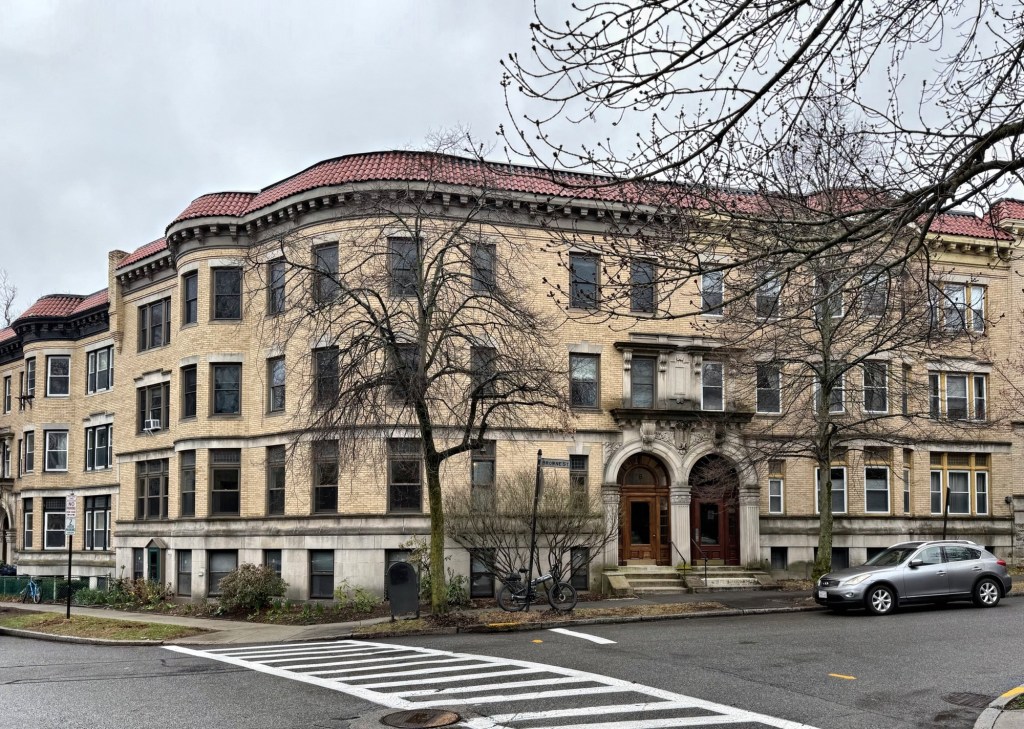
By the beginning of the 20th century, Brookline was developing rapidly as a desirable Boston suburb, with easy-access to downtown via streetcar and rail, all with less cramped land and less industrial development impacting the air quality. Developers soon realized that they could build high-quality apartment blocks within established neighborhoods to market to middle-income families who wanted to live in these desirable enclaves without breaking the bank. Developers Snider & Druker (a precursor to the Druker Company) purchased house lots in the neighborhood adjacent to Cottage Farm, a rich enclave of large homes on large lots, and began building apartment buildings. They hired architect Frederick A. Norcross, who specialized in multi-family housing designs, to furnish plans for these Renaissance Revival style apartments at the corner of Browne and Powell streets. Besides the use of buff brick, limestone trim and detailing, and the use of projecting bays to break up the facades, the building’s terracotta roof adds intrigue and individuality to a building form often maligned for blandness. 

Louis C. Page House // 1906

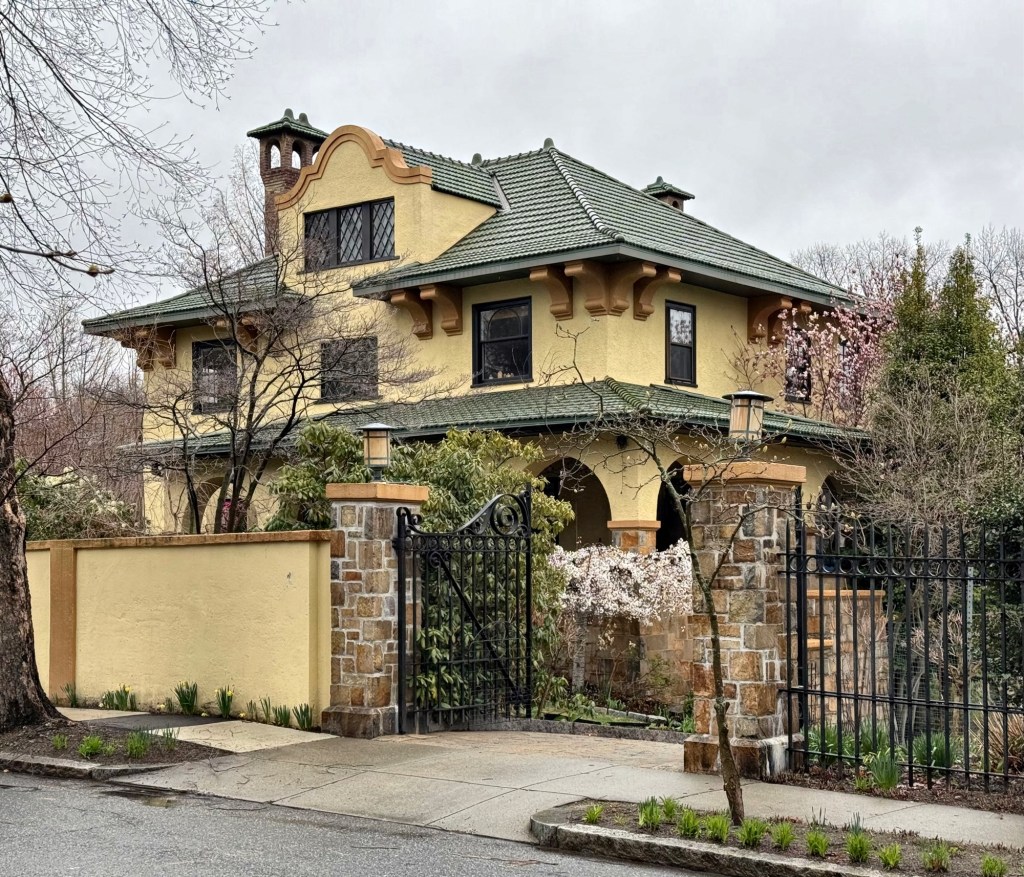
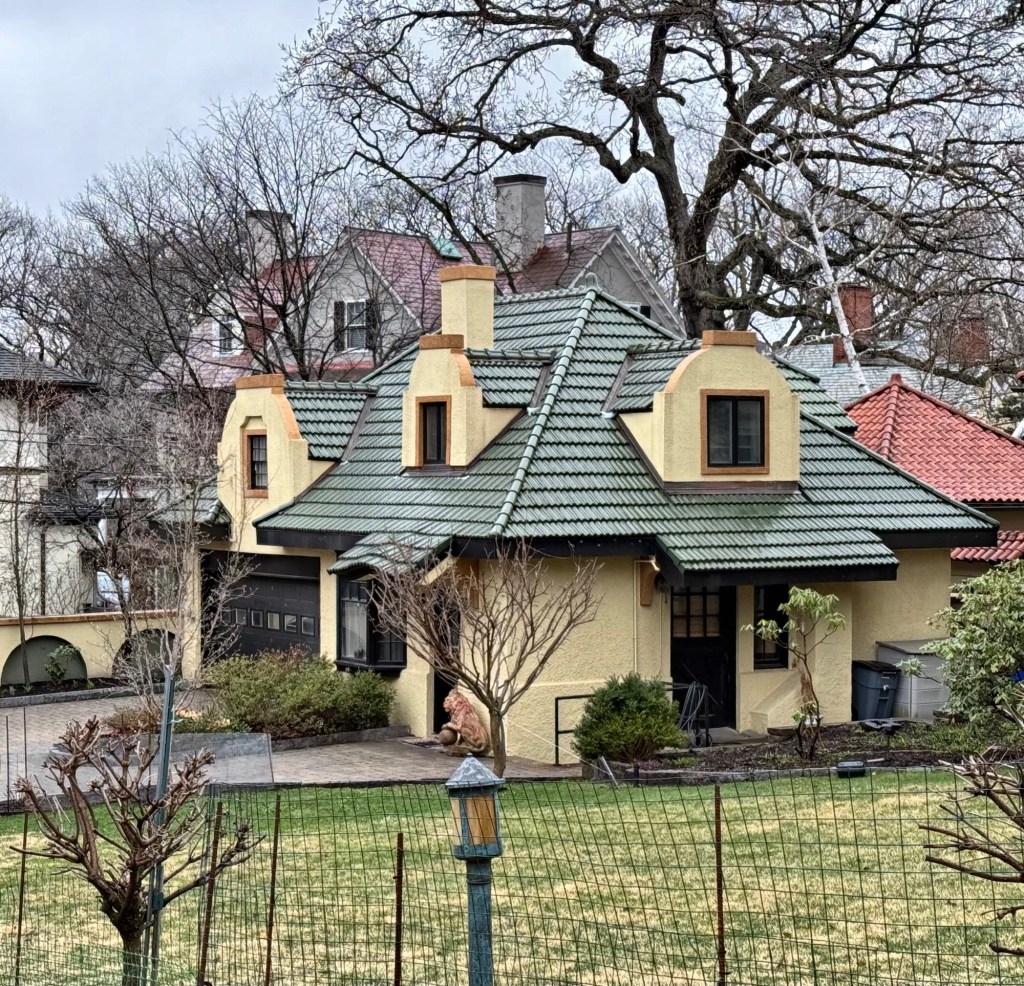
As Paul Hunt, the son of famous painter, William Morris Hunt, and the nephew of famed architect Richard Morris Hunt, built his house in Brookline, Massachusetts, he also began constructing this neighboring property which was to be sold upon completion (that is one good way to pick your neighbors!) On an oversized lot on Powell Street, Paul Hunt worked with his architect, Milton W. Stratton of Bar Harbor, to furnish plans for a similar style home to his own next door. The Mission Revival style mansion is set behind a tall, stucco and metal fence, and is constructed of wood and covered with stucco siding and capped by a lovely green tile roof. Main architectural details include the Mission-style dormer and the chimneys with round arched tops that are capped with small hipped roofs, creating a whimsical addition to the house. When finished, the property was sold to Louis Coues Page (1869-1956), a wealthy publisher with offices in Boston. Louis C. Page would hire local architect Edward B. Stratton, in 1916, to design a detached automobile garage in a style mimicking the main house. What an incredible property. 

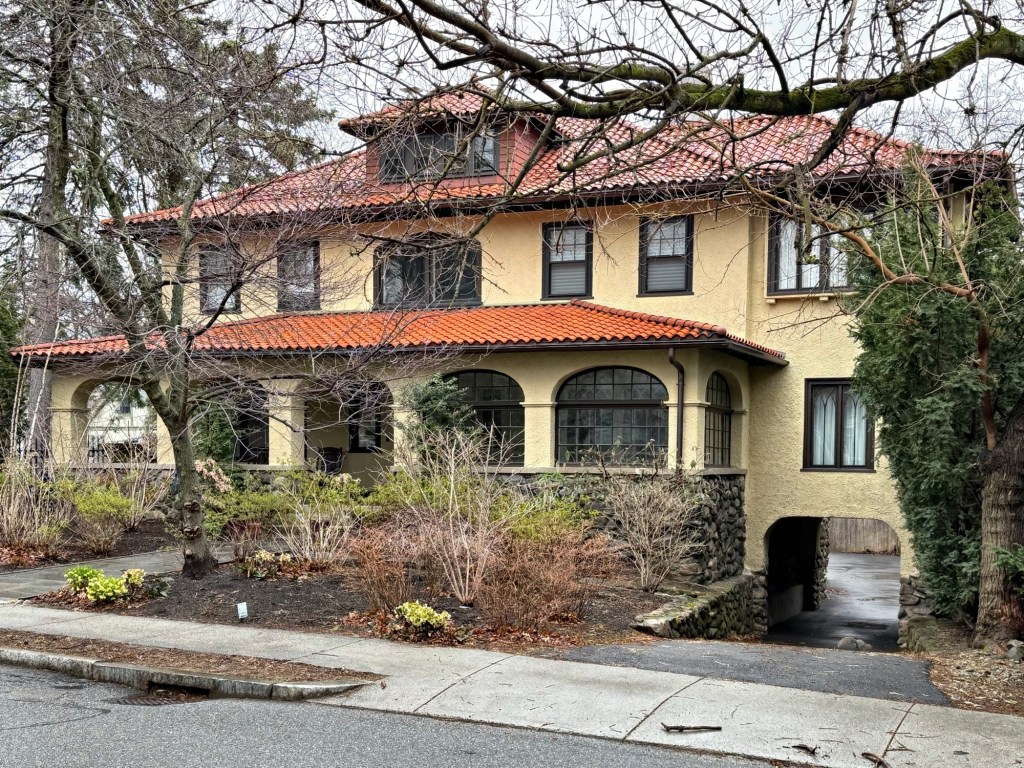
Paul and Caroline Hunt House // 1905

Paul Hunt, the son of famous painter, William Morris Hunt, and the nephew of famed architect Richard Morris Hunt, built this house in Brookline, Massachusetts for $15,000 for him and his wife, Caroline. Paul had been involved in real estate development in Bar Harbor, Maine, where his mother had a summer cottage, and while not an architect himself, he was very interested in design and took a keen interest in developing estates with the family funds. While developing property in the summer enclave of Bar Harbor, Maine, Paul met the Bar Harbor architect, Milton W. Stratton, and the two collaborated in the construction of houses there and two adjacent homes in Brookline. The two-story house is wood frame construction with a stucco finish on the exterior. Spanish Colonial Revival in style, the roof is hipped with terra cotta tile, as is the roof of the verandah which extends across the facade. In 1911, Paul Hunt worked with architect William Ewing Harding to add the two-story wing on the side of the house, which is built over the driveway, creating a really unique (though not as functional) design element. 

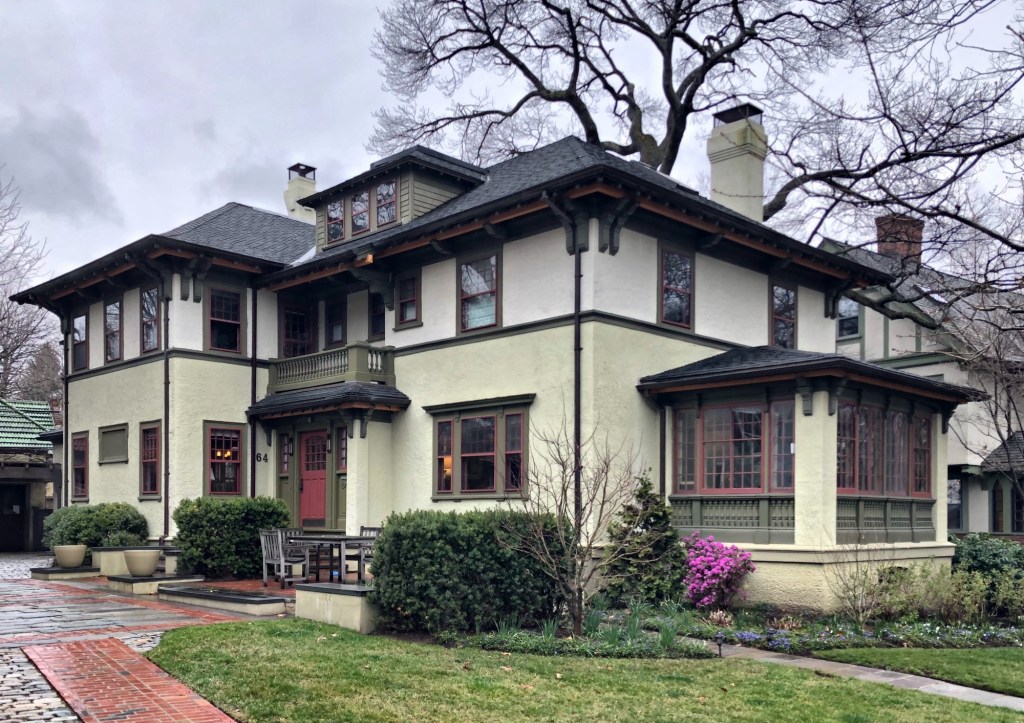
Partridge House // c.1908

Located on Amory Street in Brookline, this handsome Arts and Crafts style residence dates to about 1908 and while clearly Craftsman in style, does appear to follow the horizontality and form of the Prairie School of architecture, popularized by famed architect, Frank Lloyd Wright. While the architect of this house is unclear, we do know that the first owners were Mr. Frank T. Partridge and his wife, Edith Stevens Partridge. The stucco house features a horizontal belt course, shallow hip roof with broad eaves supported by brackets, and elaborate entry and porches. The colors enhance the architecture of the home perfectly. 

Moseley-Widger House // 1906

One of the many houses in the Cottage Farm-adjacent neighborhoods of Brookline, Massachusetts, is this great blending of the Tudor Revival and Arts and Crafts styles of architecture, which dominated residential architecture in the Boston suburbs in the early 20th century. This residence was built in 1906 for Mr. Frank Moseley and his wife, Martha Hawes Moseley from plans by architect Robert C. Coit. Covered in stucco siding and half timbering, the charming house evokes the countryside of England, right here in Brookline. After WWI, the house was owned by Ms. Lizzie Widger, a water color artist and member of Copley Society of Boston, and her husband, Samuel Widger, a cotton broker. The Moseley-Widger House looks as it did 120 years ago and is in a great state of preservation, thanks to generations of loving stewards.

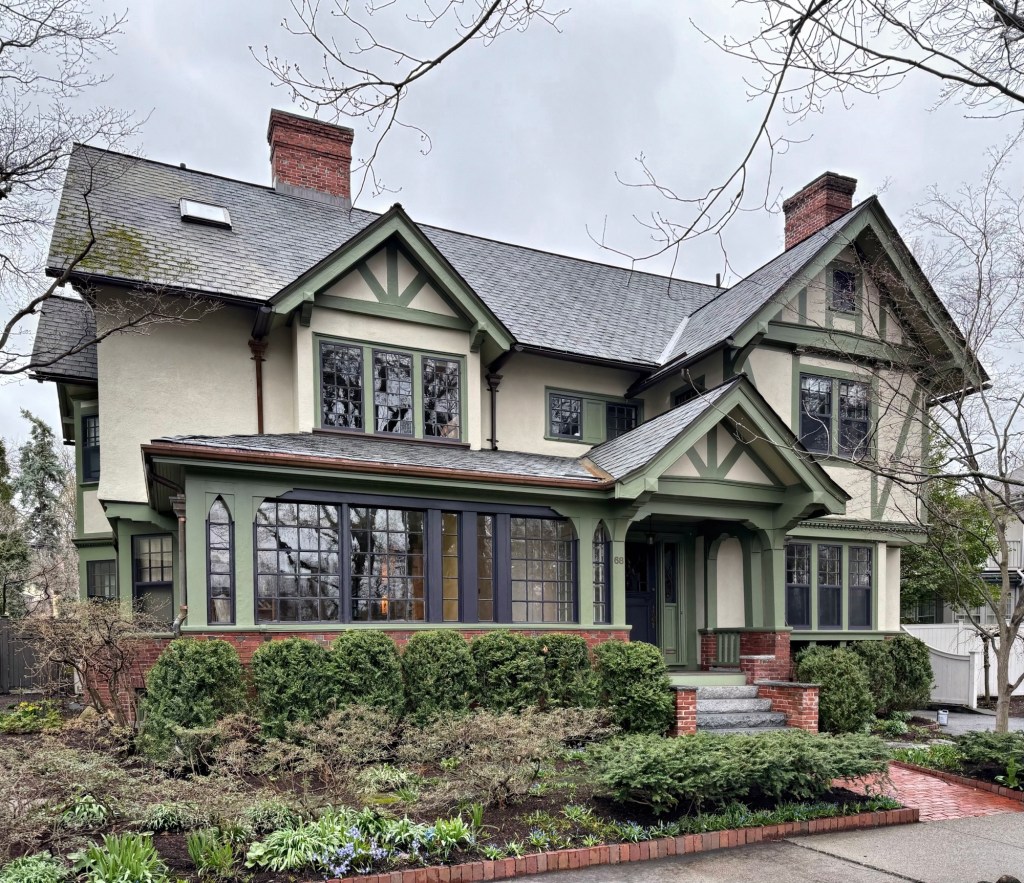
Edward and Lillian Norton House // 1905

Edward Russell Norton (1871-1960) and his wife, Lillian (1870-1968) got married in 1904 and immediately began planning their dream home. They purchased a building lot on Powell Street in Brookline, Massachusetts, and hired architect, Robert Coit, to furnish plans for the new home which was completed by the next year. The house blends Arts and Crafts and Tudor Revival styles with a pleasing design and architecturally appropriate paint scheme.

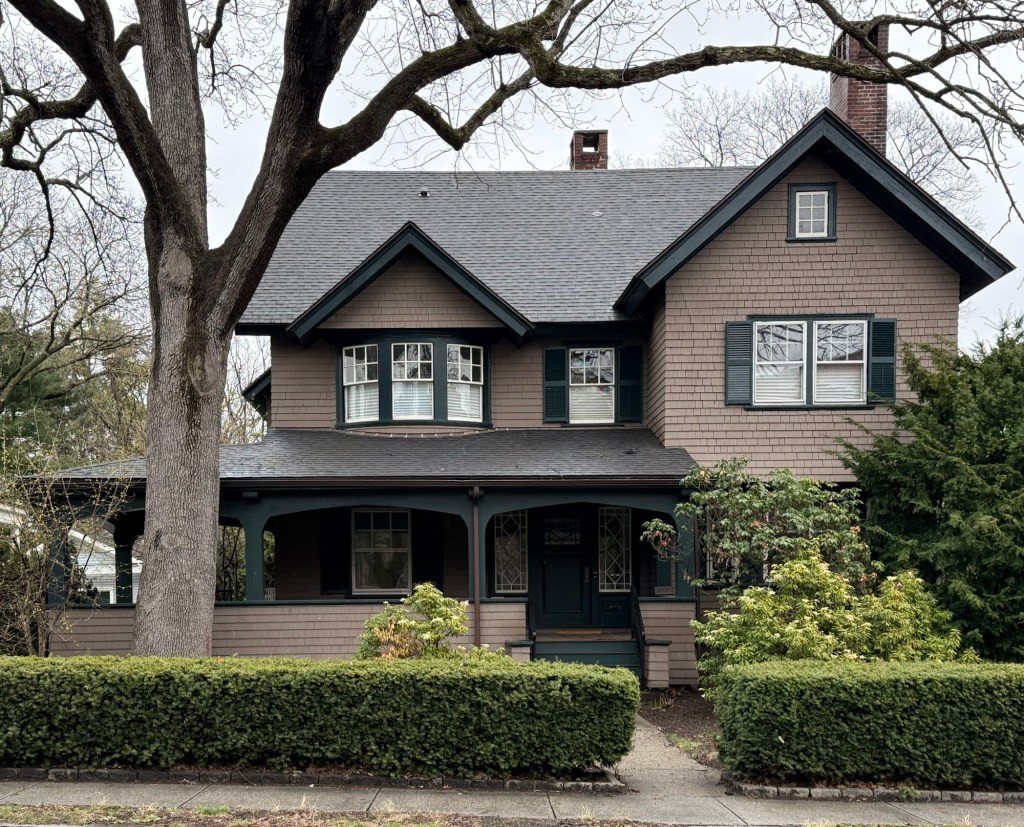
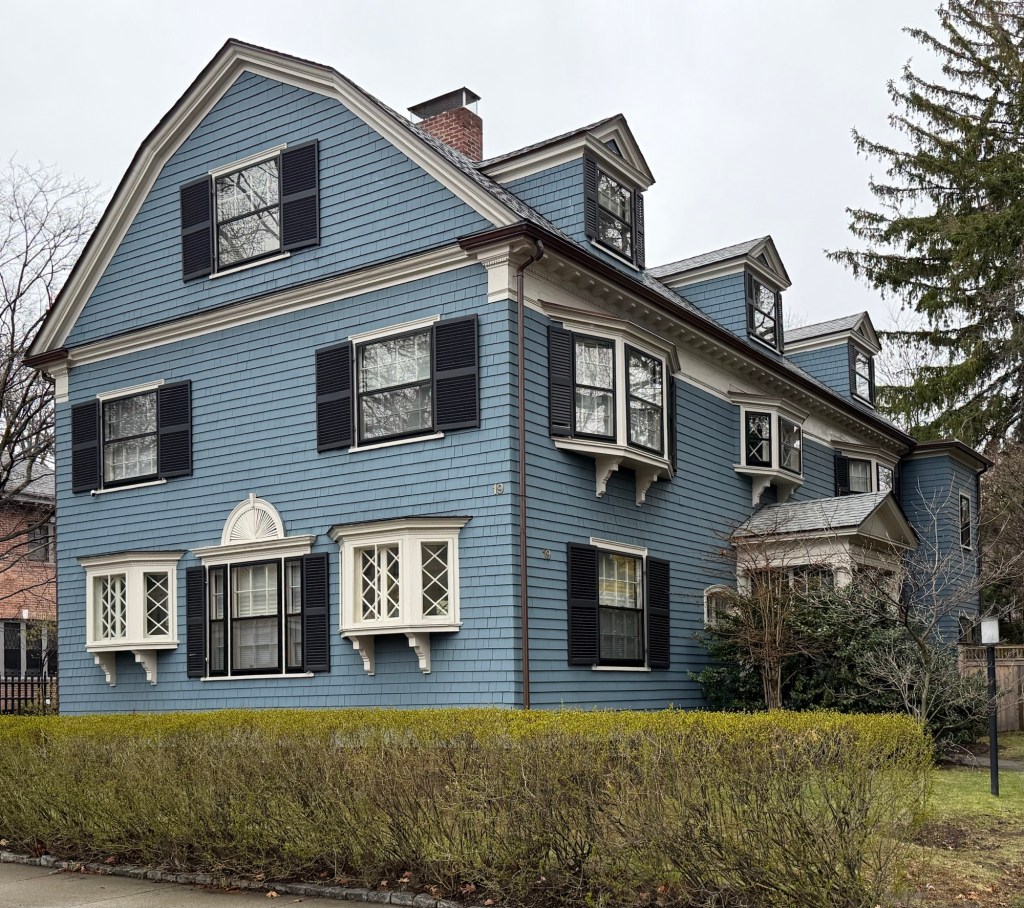
John R. Perry House // 1904

This lovely Colonial Revival style house on Powell Street in Brookline was built in 1904 for Charles H. Owens, Jr., an interior designer who just two years later, built another home next door that he would reside in with his own family. This house was rented to John R. Perry, who was also listed as a “decorator” in city directories and president of Perry, Lewis & Whitney, a design firm. The house (like its neighbor built two years later), was designed by the architectural firm of Loring and Phipps and was oriented southward to face the side yard. The Perry House features small projecting oriel windows, a broad gambrel roof, and an entrance portico supported by Tuscan columns.