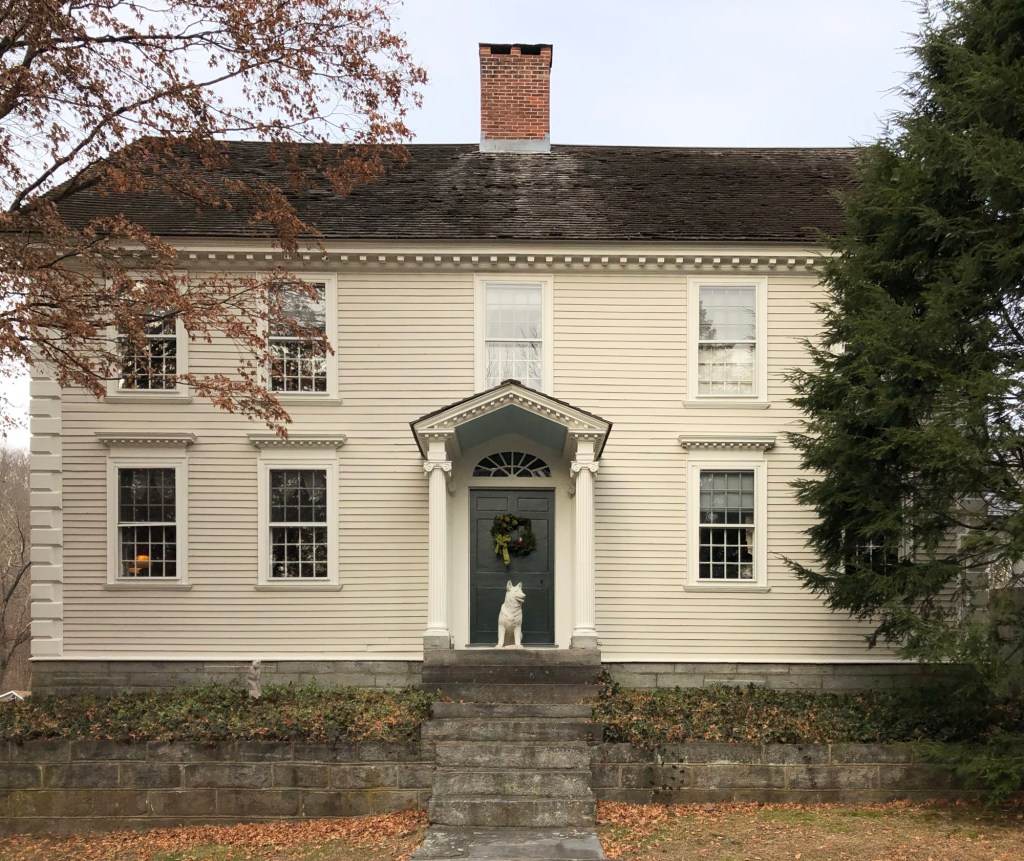
Leet-Ely House // c.1787

One of the finest homes in Chester, Connecticut, can be found on Liberty Street, a short distance to the village green. The Federal style house dates to about 1787 and was built by Gideon Leet, a Revolutionary War veteran and joiner as his own residence. After Gideon’s death, the property was purchased by Dr. Richard Ely (1765-1816), who may have expanded the residence, and worked locally as a town doctor. The property remained in the Ely familyfor generations and minimal changes have occured to the exterior as a result of this. The modillon cornice, corner quoins, and fanlight transom sheltered under a columned portico add to the charm of this great house. 
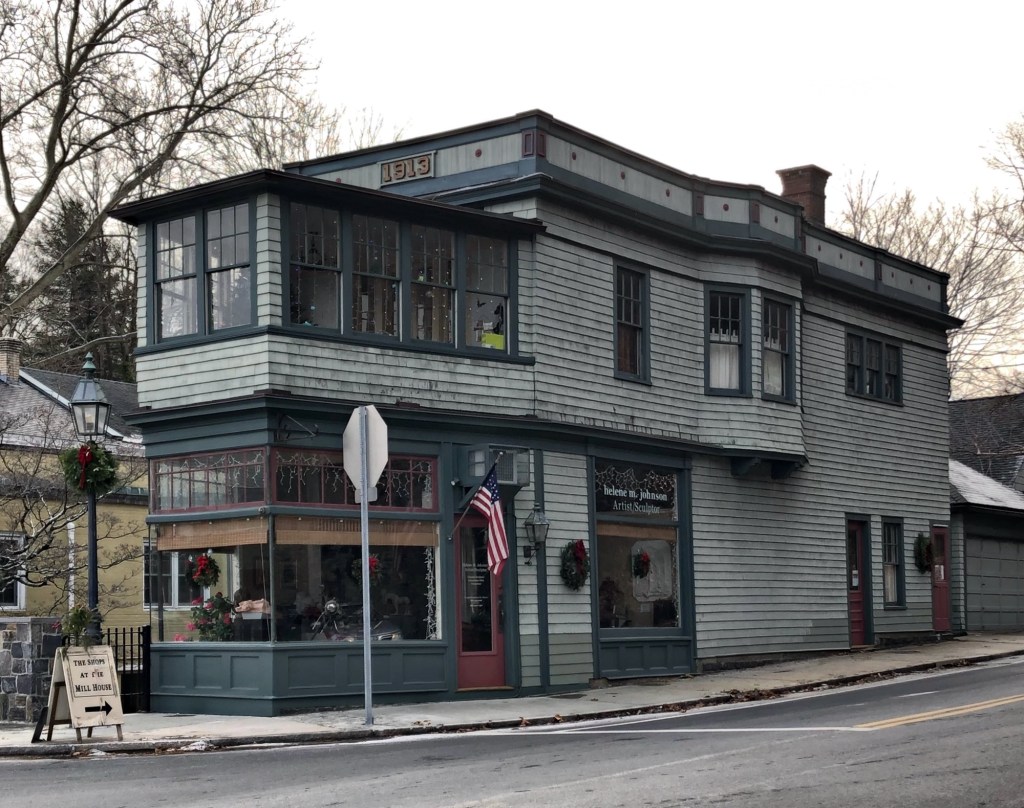
Chester Flatiron Building // 1913

At the junction of West Main and Main Streets in Chester Village, Connecticut, this unique flatiron commercial building stands overlooking the Pattaconk Brook that cuts through the center of town. In 1913, this two-story block was built with ground floor retail and a second floor residence for owner, Elmer Pierce, who ran his pharmacy downstairs. By 1920, the building was owned by Jacob Feinstein, who raised his family on the second floor and had his clothing business, “Feinsteins” in the store below. Later, the retail space was occupied by Child Design, a wooden toy store, and after that, a lighting fixture store. Historic main street buildings are often incubators for small and local businesses, keep the chain stores near the highways!

Chester Baptist Church // 1835

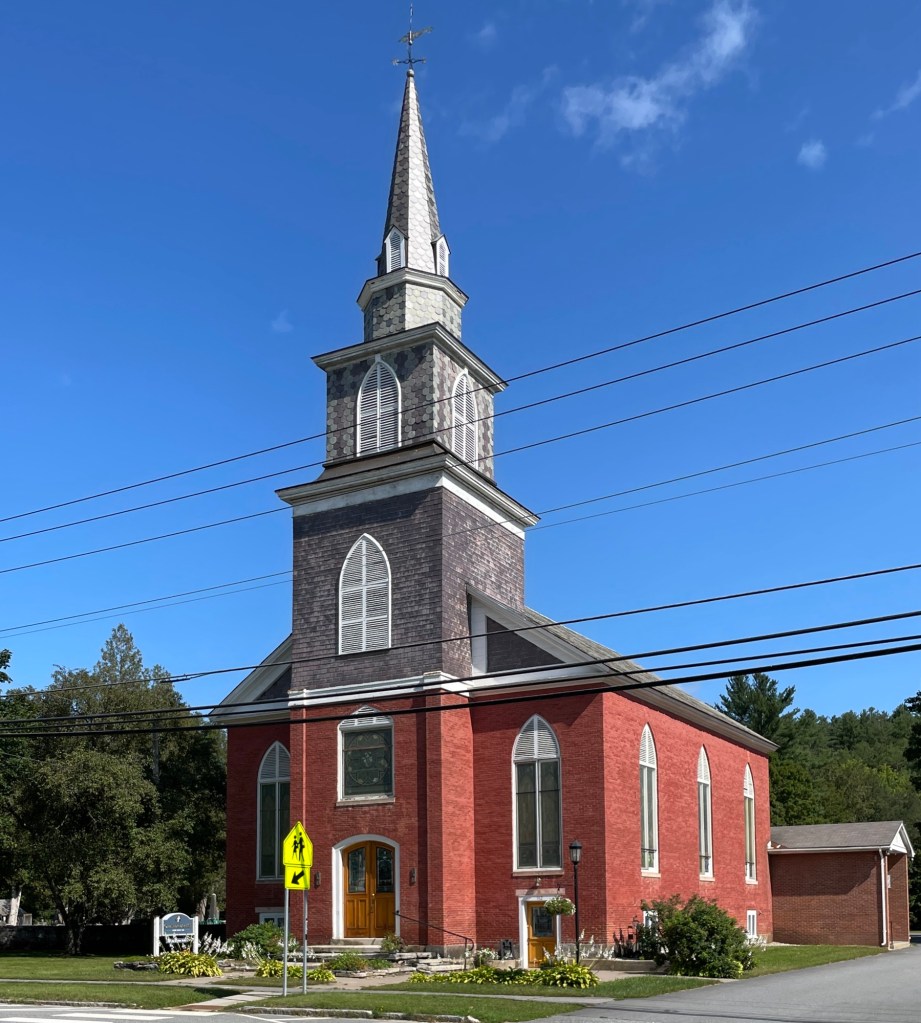
The Baptists of Chester, Vermont, first built a wood-frame meetinghouse in 1788 for meetings and worship. The congregation here was established a year prior by Aaron Leland (1761-1832), a successful pastor and preacher, who settled in town with the task of building up a church there. Active in politics, Leland served in local offices including Town Clerk and Selectman, and was Windsor County Assistant Judge for eighteen years, he was later elected into the Vermont House of Representatives and served as Lt. Governor. After his death, the Federal style building was outgrown and sold by the 1830s. The original meetinghouse was moved to its current location across from the town’s Congregational Church and planning began for a new house of worship. The current Baptist Church, an impressive brick edifice in the Gothic Revival style, features a high slated spire that was likely added in the early 1870s, replacing a more traditional wooden crenelated tower. The 1870s spire was destroyed in 1953 and reproduced in 1999. The congregation here remains active and maintains the church well.

Fullerton Inn // 1921

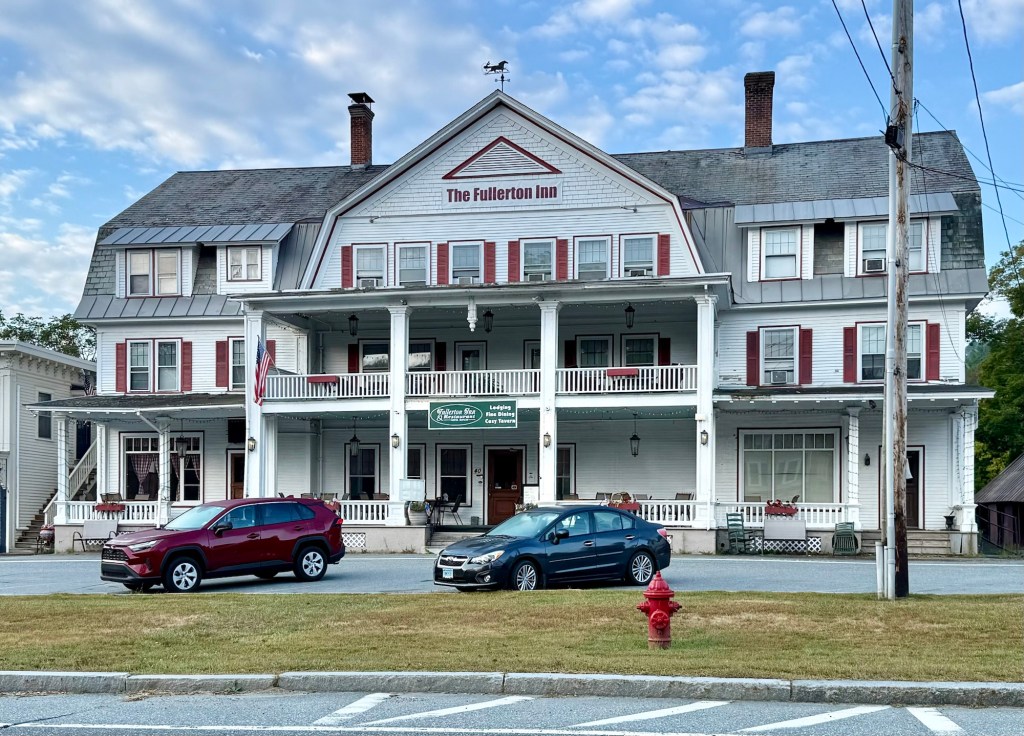
The Fullerton Inn, overlooking the Town Common in Chester, Vermont, is an imposing Colonial Revival style hotel that has been in operation through many iterations, and contributes to the strong commercial character of the Chester Village streetscape. The inn was first developed here following the arrival of the railroad to Chester, which brought new business and travellers to the formerly agrarian and light industrial community. The original 1862 inn building, known as the Ingraham House, was destroyed following a large fire in the village, and its replacement burned as well in January 1920. Within a year, the present building was built from the ashes in a style typical of the early 20th century, Colonial Revival. Dominated by the large slate-shingled gambrel roof and projecting front veranda, the building’s most iconic feature is said to be inside, a fireplace inside the lobby which contains 27 stone varieties from the area.

Frederick Fullerton House // 1861

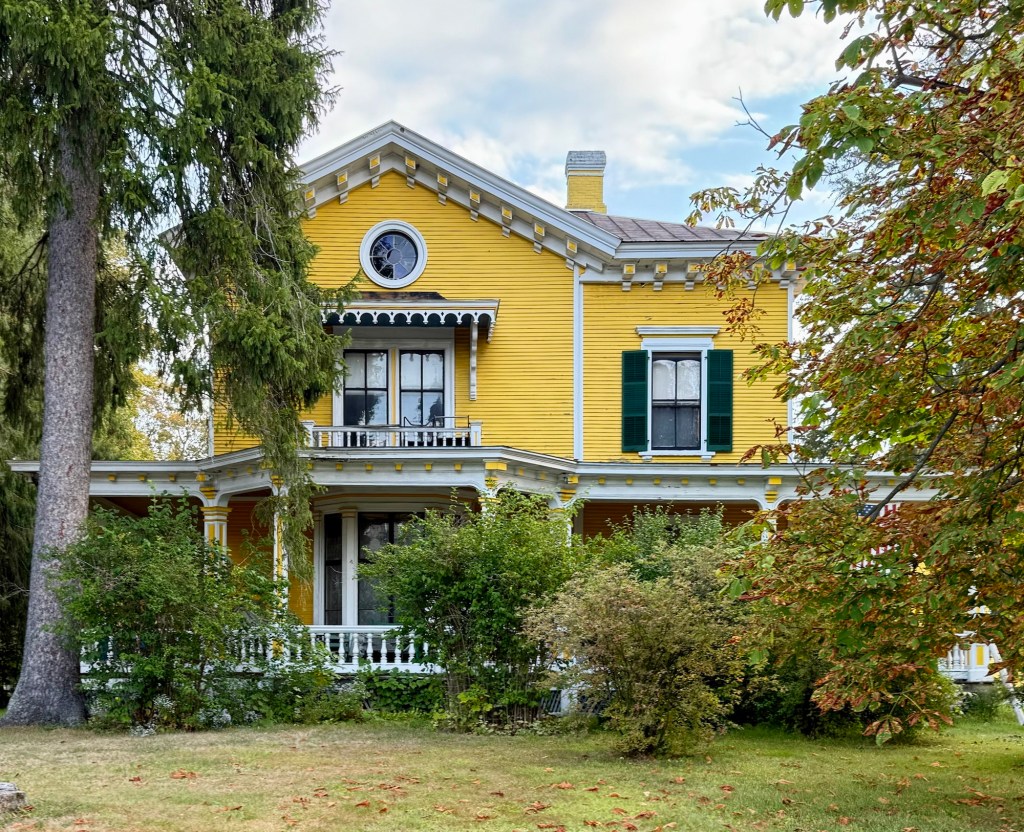
This distinctive Italianate Villa style house in the charming village of Chester, Vermont, was built in 1861 for wealthy merchant, Frederick Fullerton (1817-1869). Mr. Fullerton worked in his family’s mercantile business in Chester, and was involved with cotton manufacture in Springfield and with the Cavendish woolen mill managed by his older brother, Henry, who built an equally distinctive residence in Cavendish called “Glimmerstone“. Basically cubic with asymmetrical gabled corner pavilions, the Fullerton House is an excellent example of an Italianate Villa with bracketed cornice, two-over-two sash windows, a wrap-around porch, and second floor balcony with a bracket-supported hood with decorative valance and an oculus window above. The residence is said to have been designed by architect, William P. Wentworth, who designed the St. Luke’s Episcopal Church across Main Street a decade later.

William Pollard House // 1899

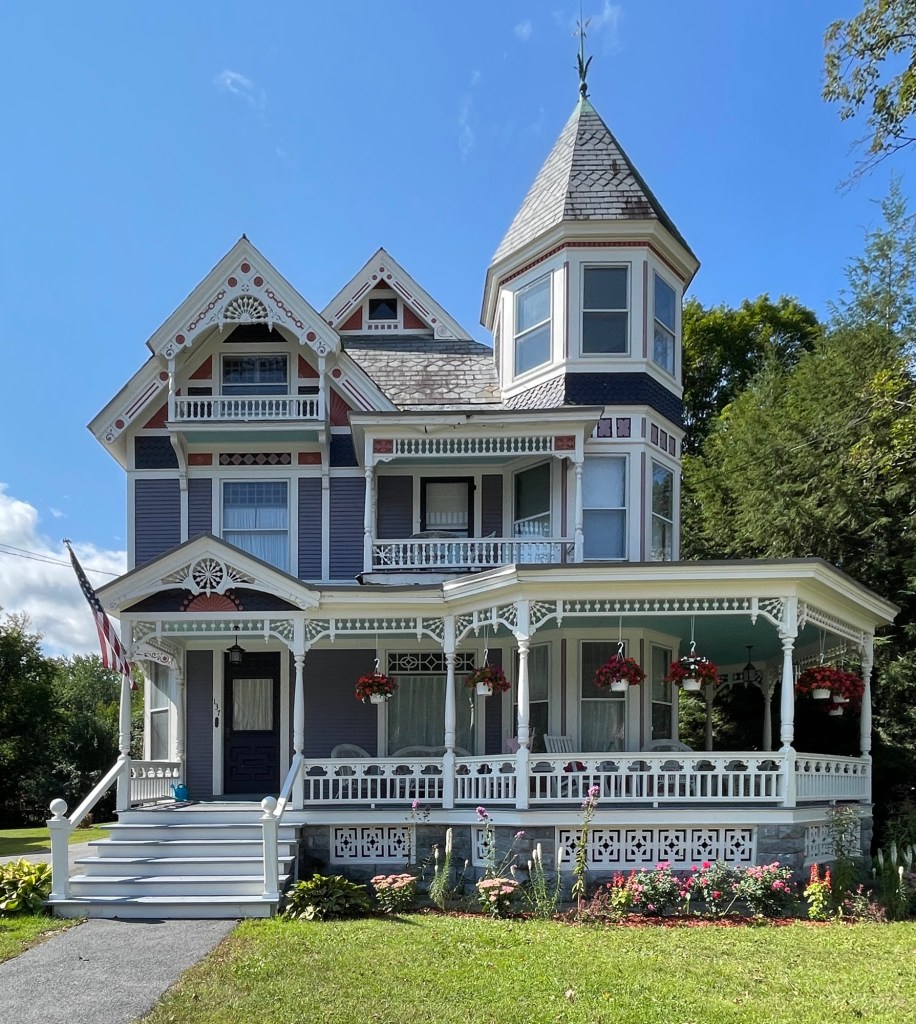
This high-style and ornamental house in Chester, Vermont, ranks among the state’s best examples of the Queen Anne style. The residence was constructed in 1899 for William Pollard (1854-1941), a local businessman who owned a shirtwaist manufactory in town with his brother, who lived next door. The painted-lady Victorian house features an asymmetrical plan highlighted by a three-story octagonal corner tower that is surrounded by a wrap-around porch with a delicate spindled frieze. The use of accent colors in the paint scheme further highlight the millwork details on the residence, which have all been preserved for well over a century. 

Blaisdell House // 1868

This Italianate style house was built in 1868 for Augustus and Laura Blaisdell, natives of New Hampshire who moved here to Chester, Vermont, in 1860. The Blaisdell’s operated a company that manufactured fireproof roofing and paint at their home base in New Hampshire, and built this building on a prominent site in the village to promote sales, which were conducted from a storefront on its ground floor. The location of the Blaisdell House alongside the tracks of the local railroad depot, was strategic in order to provide ease in the transportation of goods to the village of Chester Depot from the New Hampshire-based headquarters of A.H. Blaisdell & Co.The home and store is significant in the local economy and is itself, a significant example of the Italianate style in town.

Chester Tin Shop // c.1830

Located on the edge of the Chester Town Green, you can find this beautiful Federal style commercial building. The use of blind arches at the facade is a fairly common feature found in brick Federal style buildings in Vermont. The structure was built around 1830 and has served a variety of uses through its existence, the most notable being the tin shop owned by various members of the Miller and Hadley families that sold stoves and hardware during the latter half of the 19th century. The tin business in New England grew rapidly after 1820. Tin shop owners imported tinplated sheet iron from Great Britain, shaped it into a variety of forms, and distributed their finished goods through peddlers and country stores. They also sold tinware in their shops. Colanders, dippers, dish kettles, funnels, measures, and pans were in greatest demand. Other common items included lanterns, foot stoves, teapots, coffeepots, “tin kitchens”, skimmers, and sconces. After its use as a tin shop, the building was occupied as a telephone exchange and electric utility company office. It presently is home to an antique store.

Emery Bolles House // 1841

Next to the Israel Moore house (last post) in Chester, VT, the Emery Bolles house is yet another beautiful example of a snecked ashlar building in central Vermont. The town of Chester has the largest concentration of these buildings in the state in the north village, now known as Stone Village. The building method was so popular that even a couple examples sprouted up in the larger Chester Village nearby. Erected for Emory Bolles (who operated a wagon shop next door), this 1841 house possesses a 5-bay facade and a later, distinguished Victorian-era full-width porch. The porch incorporates turned posts with a central gable above the steps that carries an openwork screen.

Israel Moore Snecked Ashlar House // c.1846

Located on Main Street in Chester, Vermont, you can find this perfect little Snecked Ashlar home. The building technique is very local and can be found in just a handful of towns in central Vermont. Scottish-born masons from Canada introduced the technique to local masons while erecting a mill in nearby Cavendish in 1832, and within a few years, the first stone structure in North Chester village was built by local masons. Soon after, the local school, church and other homes were all constructed the same way. This home outside the Stone Village district was built later than almost all other examples in town. It features Federal and Greek Revival detailing with a central fluted fan at the door and large gable-front roof.

Have you heard of Snecked Ashlar before?