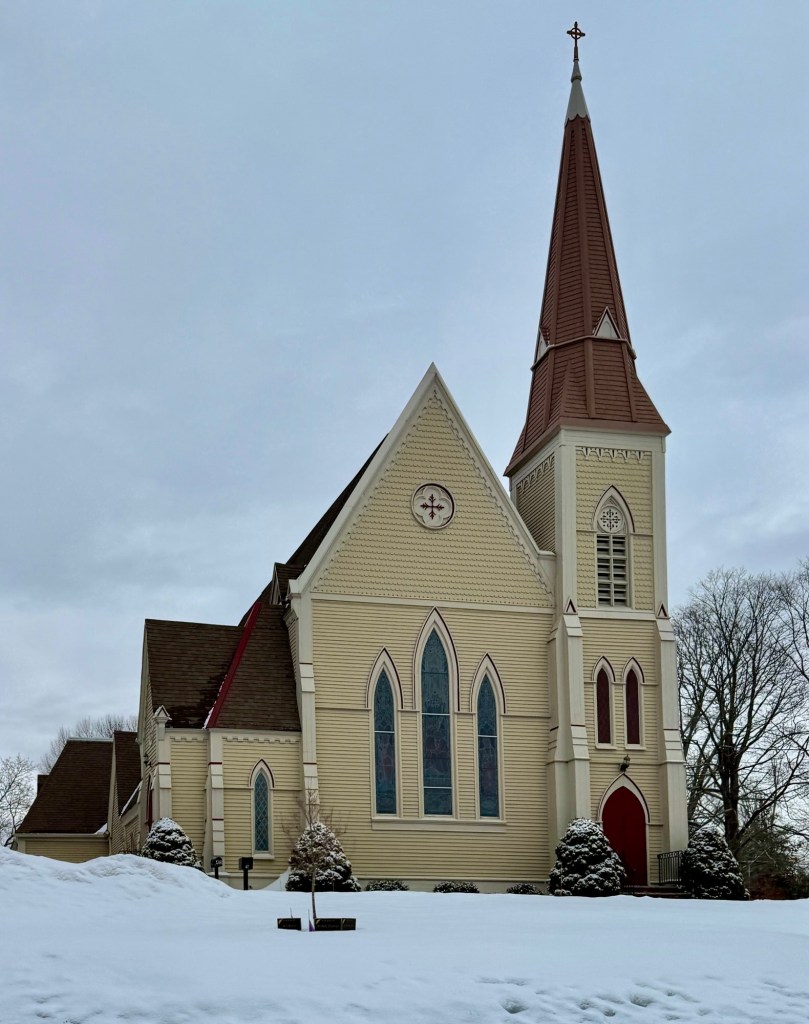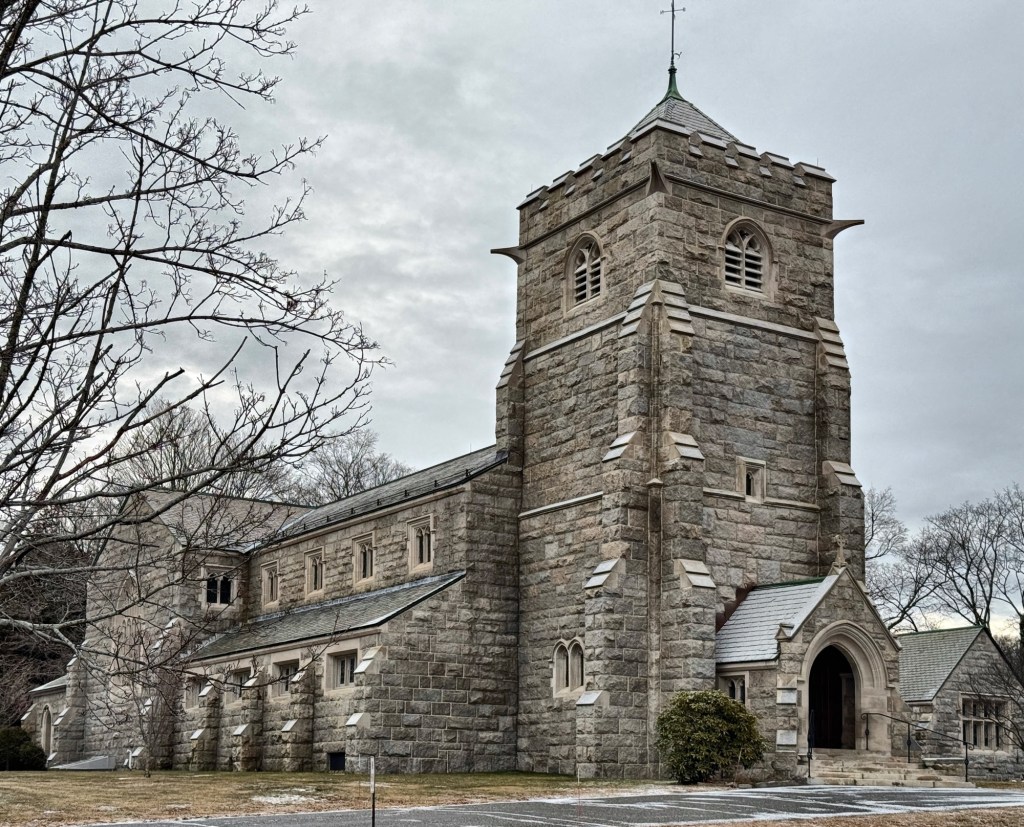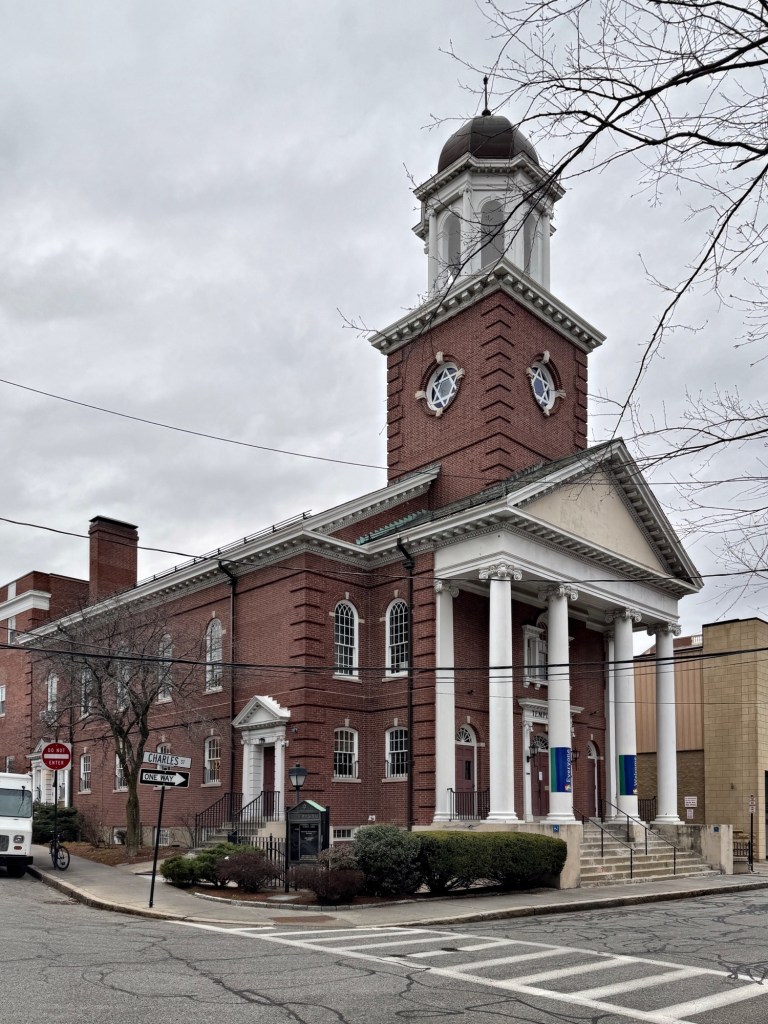
St. Mary of the Assumption Catholic Church, Brookline Village // 1880

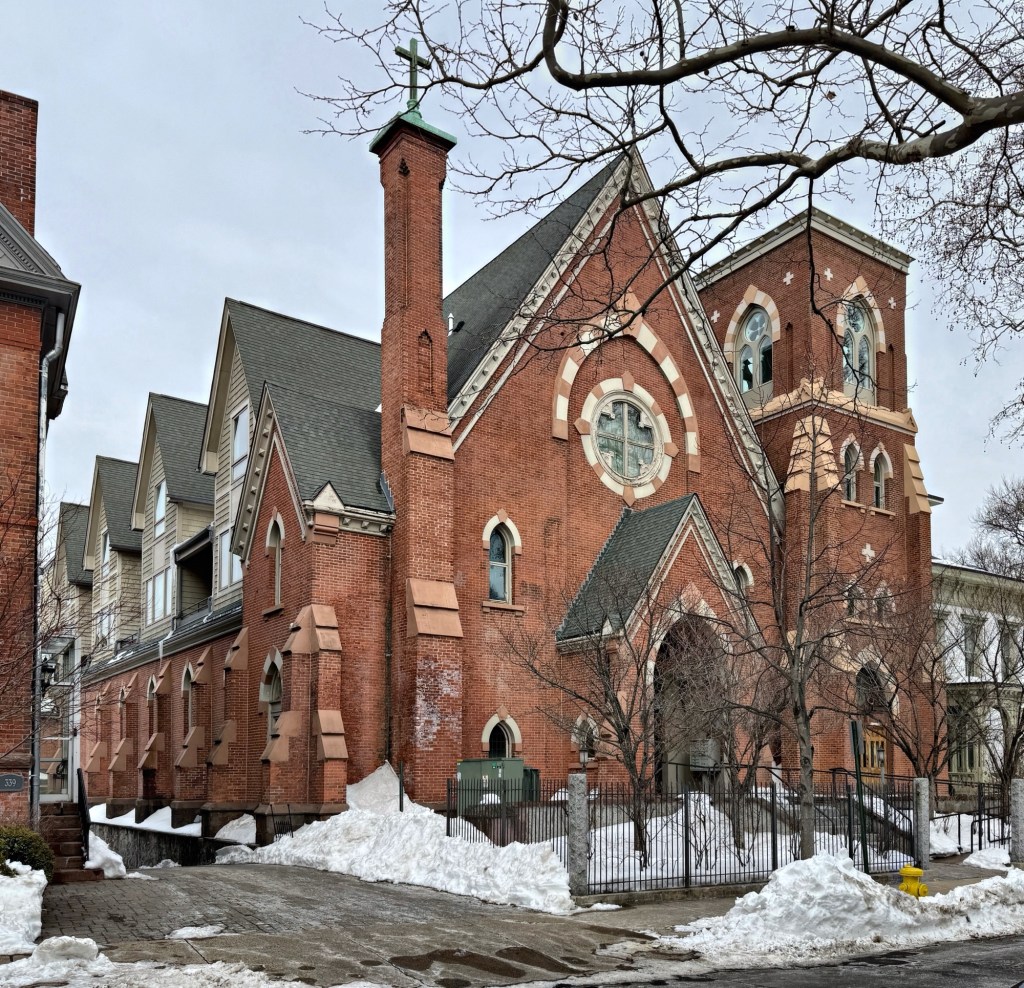
St. Mary of the Assumption church was the first Catholic Church established in Brookline, Massachusetts, in 1852 when a congregation of Catholics began to congregate to worship together at the old Lyceum Hall. The congregation primarily consisted of Irish immigrants who settled in Brookline, where they often found work at the many large estates and building the new branch railroad in town, but desired a true house of worship close to their homes. By 1853, a modest wood-frame Gothic Revival style church was built in the Village, but was quickly outgrown. In 1873, the pastor of the congregation, Irish-born Rev. Lawrence Morris (1845-1900) began purchasing land at the corner of Harvard Street and Linden Place to establish a new church, large enough to comfortably fit the congregation and various church-related buildings. In 1880, the firm of Peabody & Stearns was hired to furnish plans for the Victorian Gothic edifice in brick and brownstone. Although the church was designed in 1880, it was not dedicated until 1886, and at this time, Pope Leo XIII sent a chalice to the Parish in honor of the completion of this church, the first in America to be named Saint Mary of the Assumption.

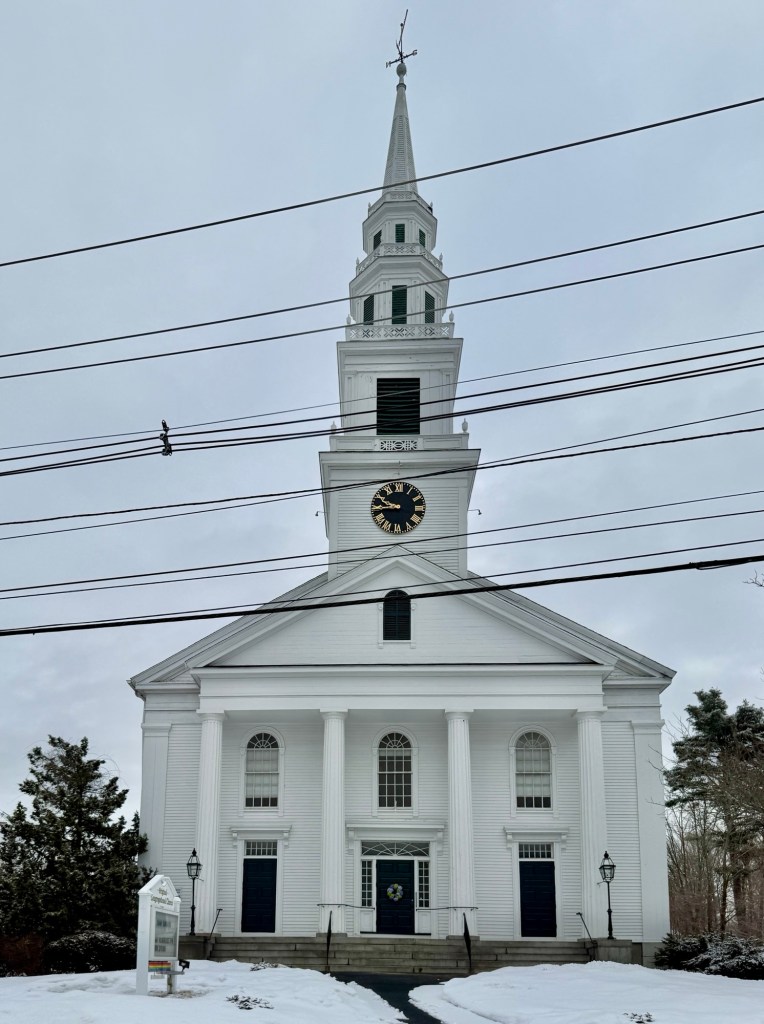
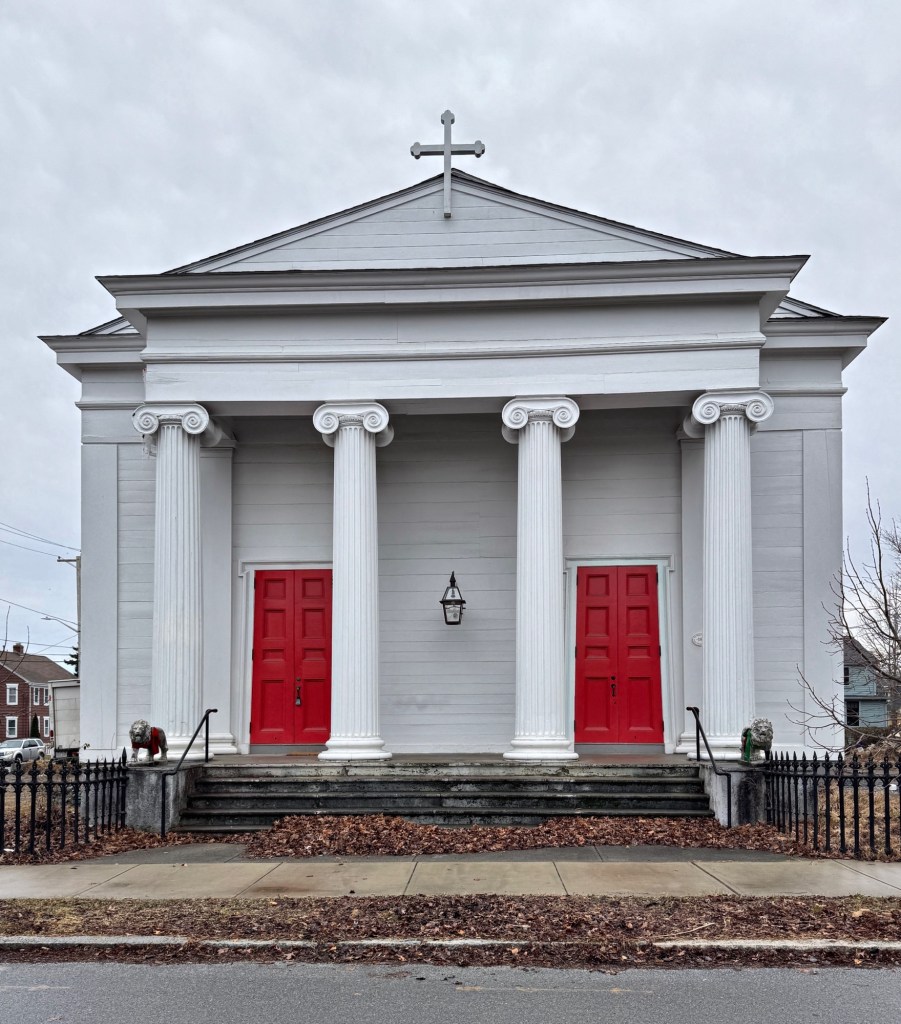
First Congregational Church of Derby // 1821

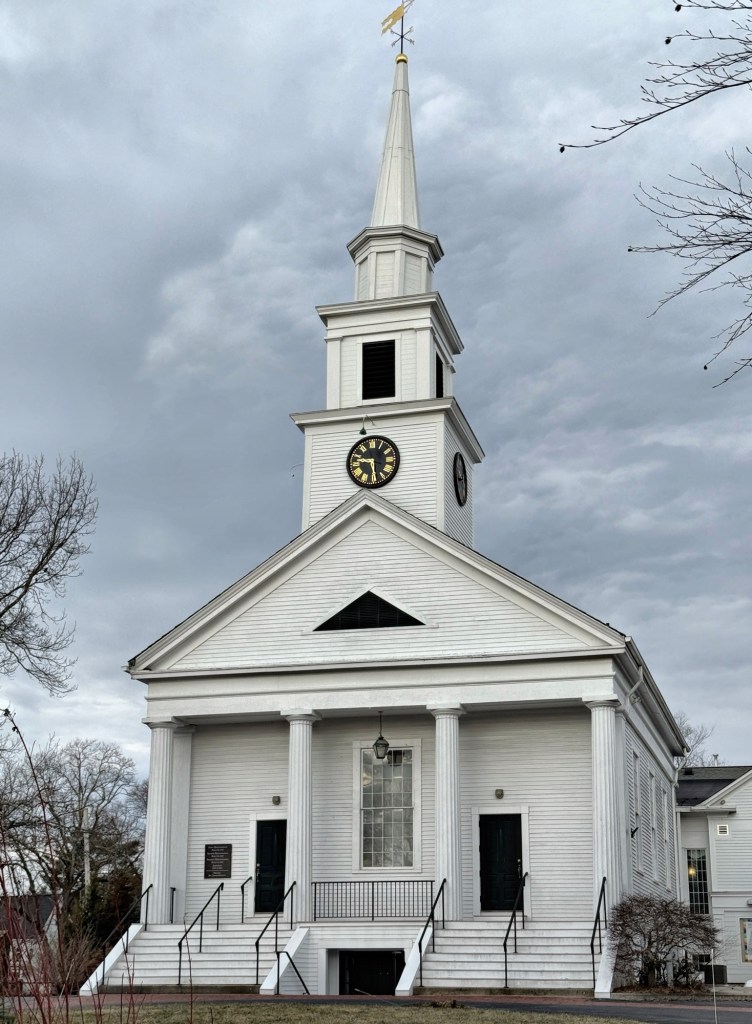
Derby, Connecticut was settled by colonists in 1642 as a trading post with local Native people under the name Paugasset. The community was eventually named after Derby, England, in 1675 and incorporated 100 years later in 1775. Like all communities in New England, it was required to have a meeting house, where religious services and town business would take place. Derby had its first meeting house built in 1681, a rustic, square structure which was eventually replaced with a new meeting house on “The Common”, now the East Derby Green. The building served its purpose for over 100 years, with sermons led by Rev. Daniel Humphreys (1706-1787) for 54 years. In that church, his son, David Humphreys (1752-1818) was baptized, he later became George Washington’s aide and most trusted general, later becoming the first presidential speech-writer. That meetinghouse was eventually outgrown, and the present Congregational Church of Derby was built on its present site on the eastern banks of the Naugatuck River in 1821. The Federal style church building was built by Williams and Barnum from Brookfield, who likely utilized plan books by Asher Benjamin for the finishes. The Congregational Church of Derby has watched as the commercial “downtown” of the city shifted to the other side of the river and has stood here for over 200 years as a landmark of “old Derby”.

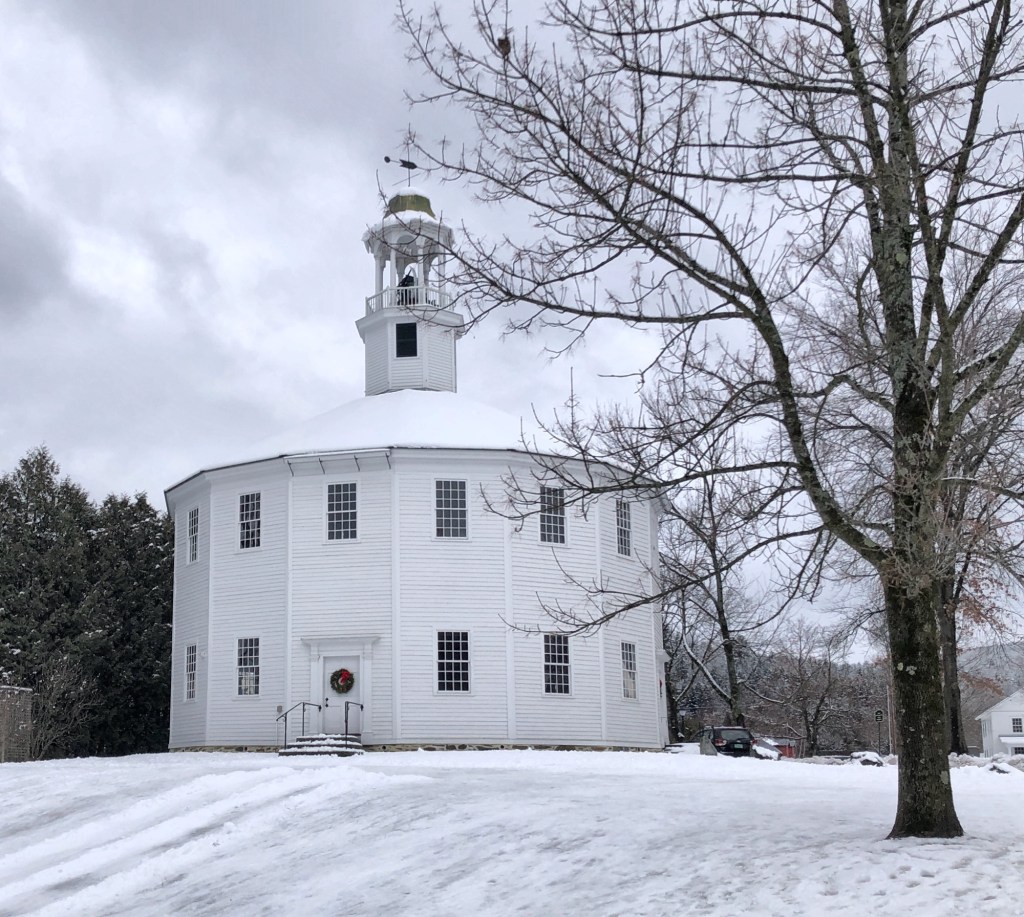
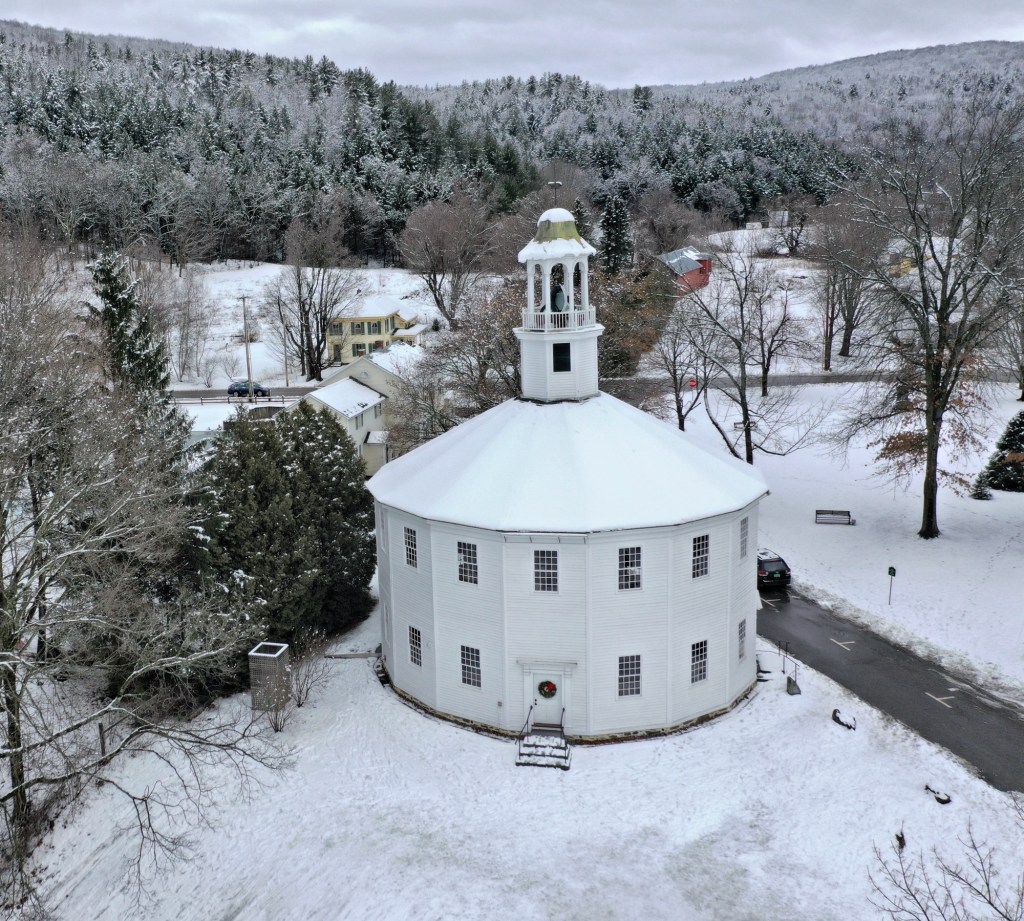
Bow Bog Meetinghouse // 1835

The Bow Bog Meetinghouse in Bow, New Hampshire, was built in 1835 for the First Methodist Episcopal Church and Society in town. Designed in the Greek and Gothic revival styles, the traditional form and paired entries with two stage belfry is adorned by finials and pilasters, showcasing an elegant blending of these two styles. built by George Washington Wheeler for the First Methodist Episcopal Church and Society of Bow in 1835. Mary Baker Eddy, founder of the Christian Science Church, mentioned Reverend Orlando Hinds as a contributor to her early religious teachings. She maintained close ties with this Church, donating funds for the bell in 1903. The Church provided religious instruction and social activities for 116 years and in 1951, the Church was closed and the Bow Bog Meeting House Society acquired the building. In 1970, they restored it to nearly its original condition, and it was acquired by the town in 1985.

First Church of Lancaster // 1816

Built in 1816, the First Church of Lancaster is one of just two extant church buildings designed by famed American architect, Charles Bulfinch, and is said to be one of the finest churches in the Federal style in the United States. The fifth meetinghouse of the Unitarian First Church of Christ in Lancaster, this building was constructed of local brick, slate, and lumber from master-builder, Thomas Hearsey. Hearsey is said to have modified Bulfinch’s design, which had proposed one tall center arch flanked by two lower arches to reflect the unequal heights of the three vestibule doors behind them; instead going with three, identical arches. Other than this change, the church remains substantially as originally built, even without artificial lighting or central heat inside. Besides the iconic arched portico, the two- stage brick tower topped by a beautifully proportioned wood cupola surrounded by Roman Ionic columns, and fronted by a giant arcuated portico, is especially noteworthy. The congregation, which dates back to 1653 as a Puritan congregation was the first parish established in Central Massachusetts and remains active to this day.

Chester Baptist Church // 1835

The Baptists of Chester, Vermont, first built a wood-frame meetinghouse in 1788 for meetings and worship. The congregation here was established a year prior by Aaron Leland (1761-1832), a successful pastor and preacher, who settled in town with the task of building up a church there. Active in politics, Leland served in local offices including Town Clerk and Selectman, and was Windsor County Assistant Judge for eighteen years, he was later elected into the Vermont House of Representatives and served as Lt. Governor. After his death, the Federal style building was outgrown and sold by the 1830s. The original meetinghouse was moved to its current location across from the town’s Congregational Church and planning began for a new house of worship. The current Baptist Church, an impressive brick edifice in the Gothic Revival style, features a high slated spire that was likely added in the early 1870s, replacing a more traditional wooden crenelated tower. The 1870s spire was destroyed in 1953 and reproduced in 1999. The congregation here remains active and maintains the church well.

Old St. Stephen’s Church – Barker Playhouse // 1840

The old St. Stephen’s Episcopal Church in Providence’s Fox Point neighborhood is an architecturally distinctive Greek Revival style church building located on charming Benefit Street. The church had its beginnings in 1839, when the newly established congregation called on 29-year-old Francis Vinton to serve as their first pastor. The congregation funded this small church which broke ground in 1840, and before it was completed, Rev. Vinton resigned as Rector. The building, built of stone and covered in stucco, once had a spire and belfry above the main entrance. The congregation grew over the next decade and it was soon realized that a larger and more central church should be built for members, many of whom were wealthy residents with mansions surrounding Brown College. In 1860, the parish purchased a lot on George Street, and hired architect, Richard Upjohn to design the new church in the Gothic style. For reasons of location, and possibly social class, twenty-two men and women remained here at the less fashionable church and formed a new parish, the Church of the Saviour. The smaller, mission church with its stucco walls, remained until the property was sold in 1932 to house the Barker Playhouse, reputed to be the oldest continuously operating little theatre in the United States.


Dorchester Temple Baptist Church // 1889

Located at the corner of Washington Street and Welles Avenue, the Dorchester Temple Baptist Church was designed in 1889 by architect Arthur H. Vinal, as one of the best examples of a church designed in the Shingle Style in New England. The church began in 1886 as a mission church of the Tremont Temple Baptist Church in Boston. At this time, Dorchester was a semi-rural area and would surge in development when the streetcars were electrified in the 1880s. With a rapidly developing neighborhood, the congregation here, purchased lots and hired Vinal to furnish plans for a house of worship. The church’s cornerstone was laid October 3, 1889, with the church membership numbering ninety-nine at that time. Membership would decline in the decades following WWII, and shifting racial and ethnic demographics in the neighborhood brought new members to worship here. The building was renamed as the Global Ministries Christian Church by the current congregation, who with the assistance of preservation grants, worked with Mills Whitaker architects to restore the iconic landmark. Specific details of the building stand out, including the stained glass windows, the belfry with bulbous form, and the arched openings with continuous shingled walls.

Westborough Unitarian Universalist Church // 1850

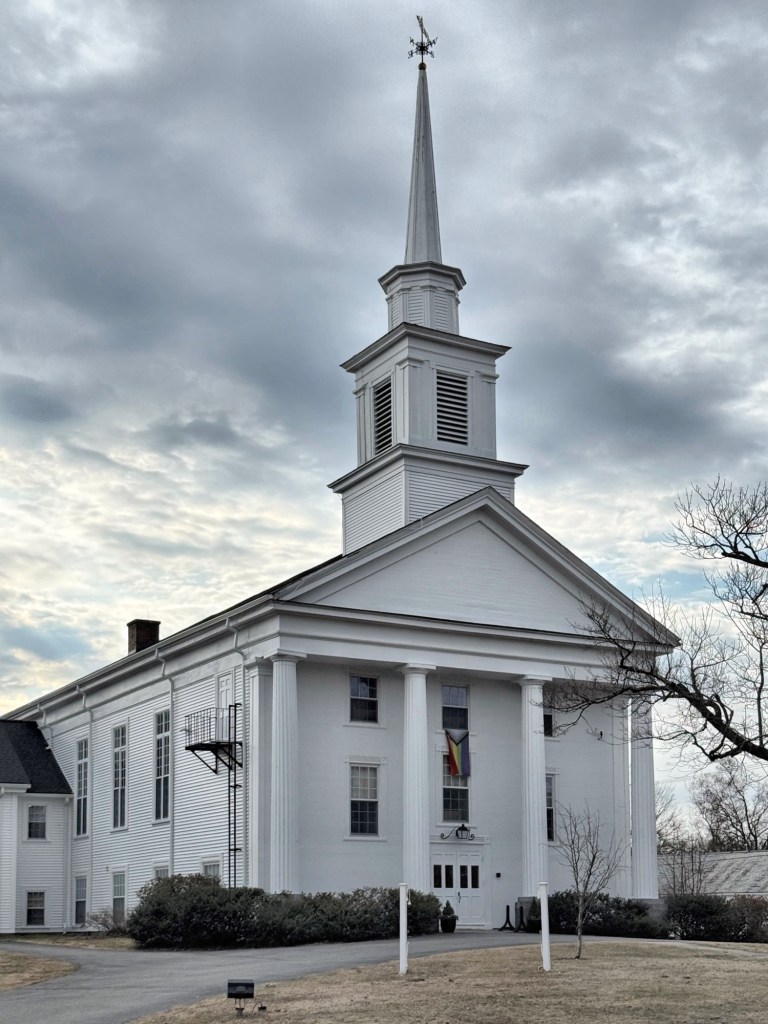
The Unitarian Universalist Church of Westborough, Massachusetts is architecturally significant as an excellent example of a ecclesiastical building in the Greek Revival style, but it is also significant historically as it tells a richer history of the community and New England as a whole. The Congregational Church has its roots in the first church in Westborough, established in 1724 under Reverend Ebenezer Parkman. The Religious Freedom Act of 1811 and the official separation of church and state in 1825 encouraged a diversity of religious views in Westborough and a branching out from the first church both spiritually and since churches needed new houses of worship. As a result, the local church in Westborough split due to differing beliefs, with the Congregationalists building a church and a few years later, the Unitarians building this church, both in variations of the same architectural style. The UU Church in Westborough was built by 1850 and was expanded as the congregation grew. The building remains nearly identical to when it was built except for the steeple, which in 1921, was in such bad repair that it had to be removed. Less than a decade later in 1930, member Isadore Forbes donated the funds to have the steeple rebuilt and a bell installed. 

Congregational Church of Westborough // 1834

The Evangelical Congregational Church of Westborough, Massachusetts, has its roots in the first church in Westborough, established on Powder Hill in 1724 under Reverend Ebenezer Parkman. The Religious Freedom Act of 1811 and the official separation of church and state, encouraged a diversity of religious views in Westborough and a branching out from the First Church. As a result the church here split in 1834, with some members forming the Evangelical Society, and those who remained, became the First Congregational Unitarian Society. The newly formed Evangelical Congregation built this church at the corner of West Main and Church streets in 1834 and the building is a typical 1830s Greek Revival style religious building in the state. In 1869, the church was remodeled, where the first floor was jacked up to provide basement meeting rooms.

First United Methodist Church of Somerville // 1874

This handsome Victorian Gothic church sits on Summer Street in Somerville, defining the northern edge of the Union Square area. The church was built for the local Methodist congregation, which was established in 1855. The group would meet in local meeting halls and houses until this building was completed in 1874. The towering brick church was once even taller, but its steeple came down following the Great New England Hurricane of 1938. The church closed in the second half of the 20th century and the building was used by the Somerville Community News for years until it was purchased by a developer and converted to condominiums.