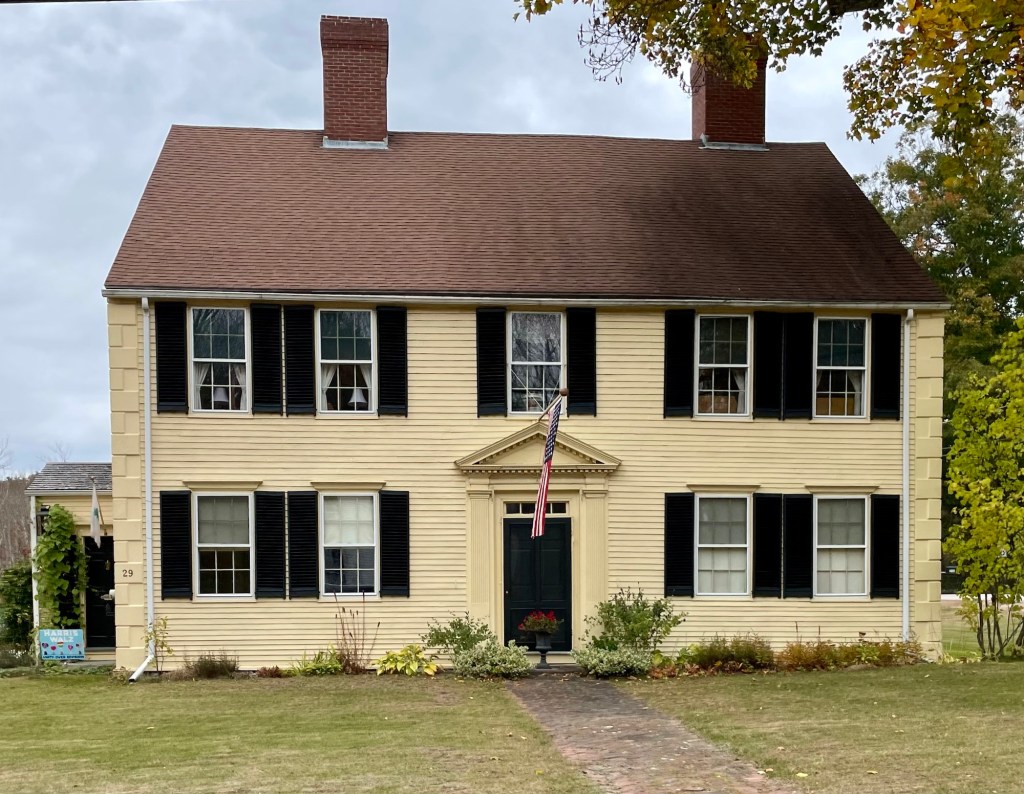
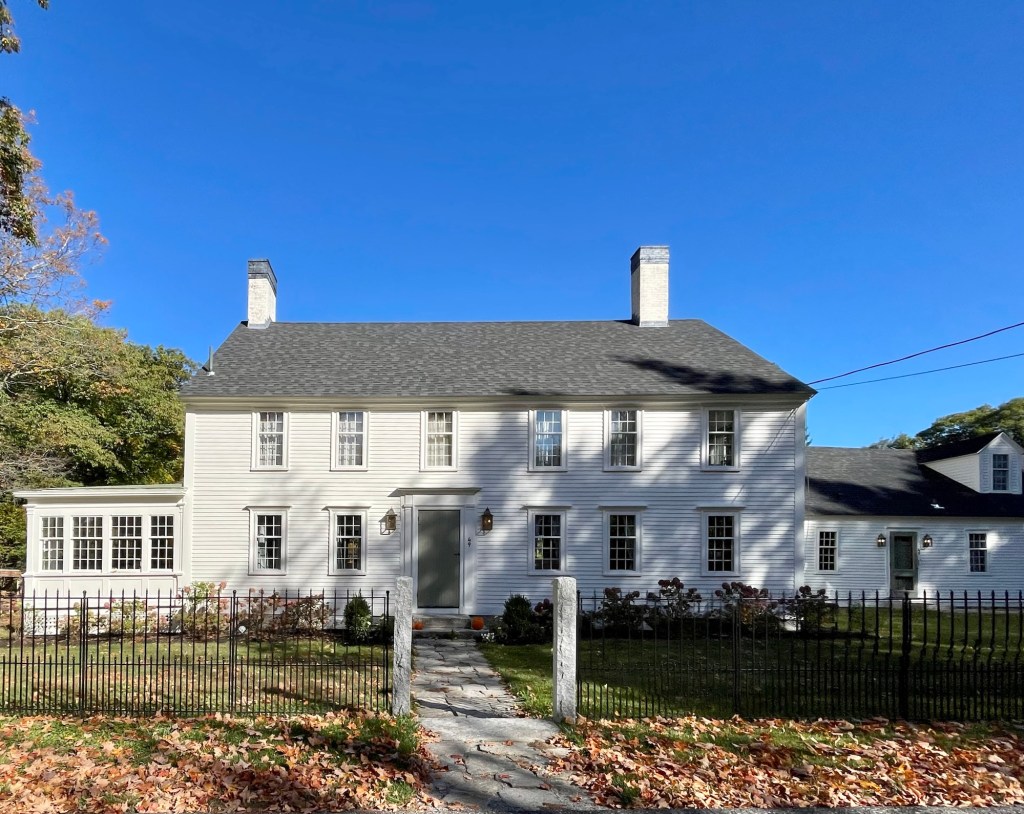
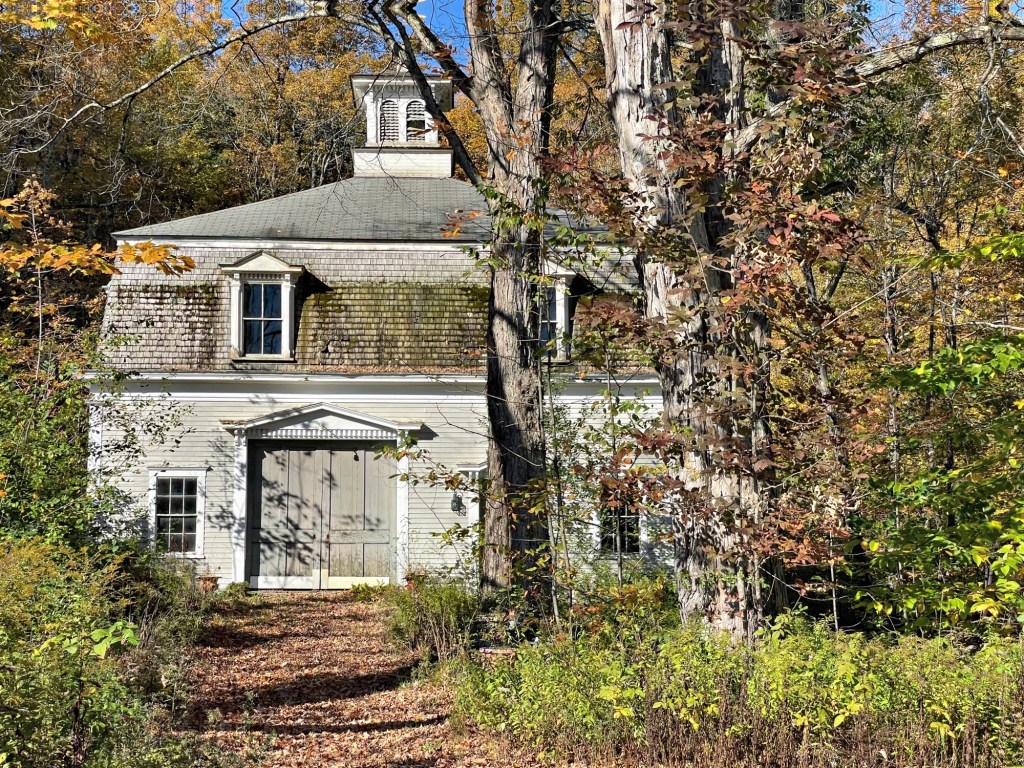
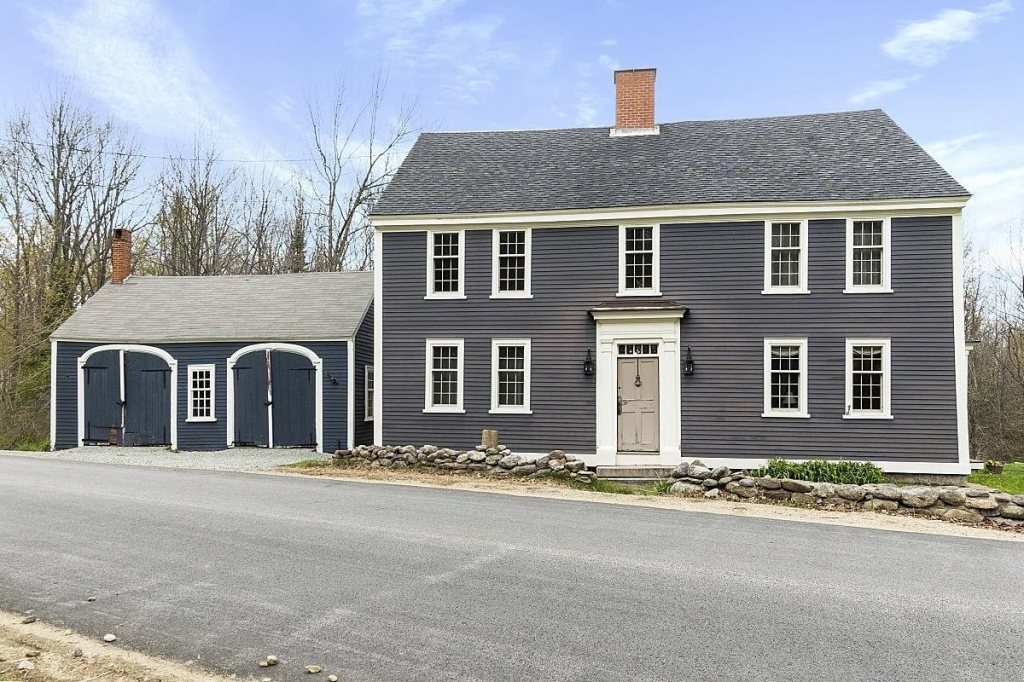
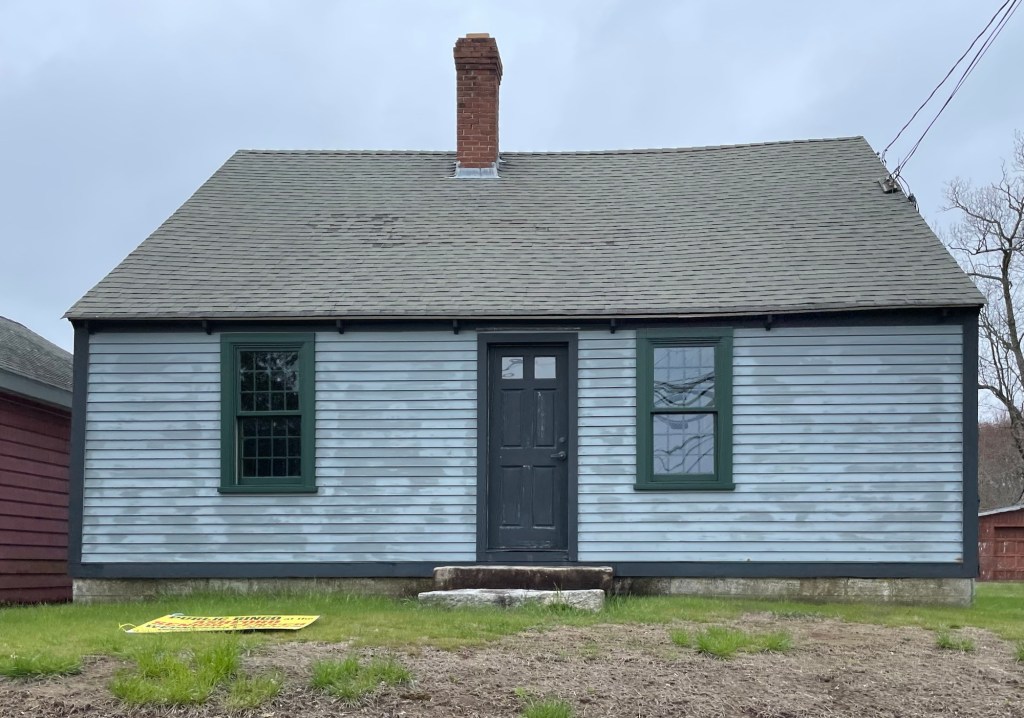
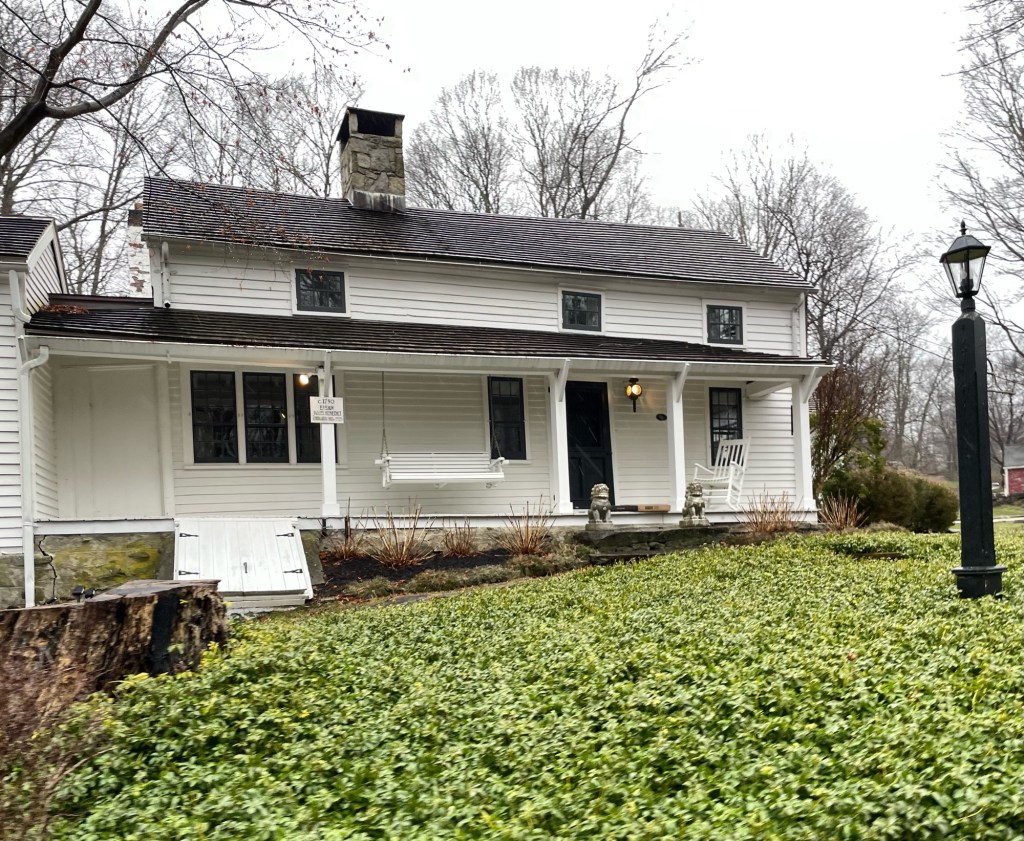
Stebbins-Tremko House // 1773

Ashford, Connecticut is located in a part of Windham County at the northeast part of the state which is sometimes referred to as the Quiet Corner, due to its limited access to larger cities and more bucolic scenery. Formerly known as New Scituate, Ashford was settled in 1710 and incorporated as a town in October of 1714. One of the town’s early houses is this cape style dwelling, built around 1773 for Thomas Stebbins (1748-1826). By the 20th century, the small house was owned by George Tremko (1907-1981) who worked as the town’s postmaster for some years in the post office just nextdoor. After Tremko’s death, the town acquired the property through eminent domain, with the hopes of redeveloping the prominent site for a new library. Luckily, the local historical society advocated for its preservation, and grants were acquired, which helped to restore the 1770s house.

Coleman House // c.1750

In 1802, a young sea captain, Laban Coleman purchased this house on Orange Street on Nantucket within a year of his marriage to Jane Carman. Historians estimate the date of construction of the house to be from sometime between 1729 and 1750, but it could date closer to the time that Coleman purchased the house from a joiner, Elisha Raymond, who possibly built the house. I particularly love the simple door with transom above and the narrow, second-story stairhall window. What do you like the most about this Nantucket home?

Captain Silas Jones House // c.1774

Brick houses are not too common on Nantucket, so I love to highlight them whenever possible! This gambrel-roofed residence was built by 1774 for Silas Jones, a whaling captain around the time of his marriage to Judith Gardner. As originally built, this house had brick endwalls while the facade and rear walls were constructed of wood. It was not until under the ownership of Silas’ son, Daniel, that the house was “modernized” with its present appearance. Daniel added brick walls to the front and rear walls, added brownstone lintels and sills to the openings, and added twin chimneys, likely replacing a single, central chimney. Due to his materiality and heavy presence, the house looks more like it belongs in Salem or Providence, so seeing it in the coastal town of Nantucket makes my heart sing. Standing out is a good thing!

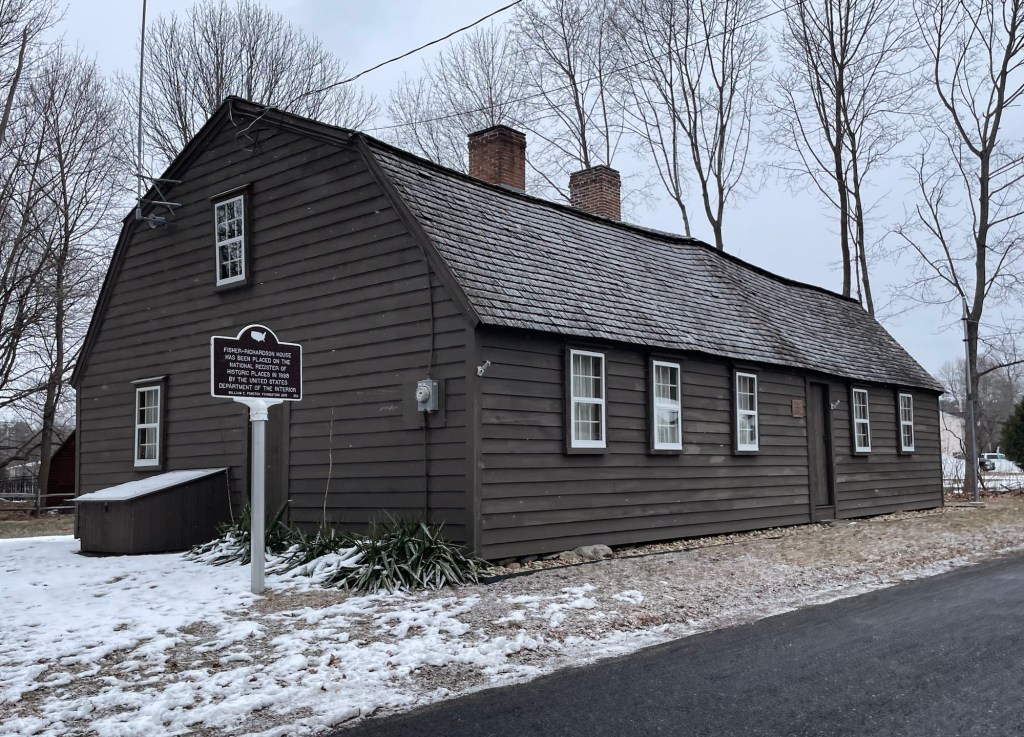
Wellman-Fisher-Richardson House // c.1745

The Fisher-Richardson House in Mansfield, Massachusetts is considered to be one of the oldest buildings in the suburban town. The home dates to sometime between 1743 and 1751 and was built for its original owner Ebenezer Wellman (1720-1776). The property was eventually owned by Lemuel Fisher, who in about 1800, doubled the size of the house adding its western half. When Lemuel died in 1820, the property was inherited by his youngest son, Daniel, a farmer and blacksmith who also built a gristmill nearby. The home was later inherited by Daniel’s daughter, Evelina and her husband, Captain Ira Richardson. By 1930, the gambrel-roofed Georgian house was in disrepair, and the owner at the time contacted SPNEA (now Historic New England) who drafted an agreement to acquire and restore the house. However, as local interest in the property increased, the owner deeded the property to the town, and the town took on the costs of restoration. The property is now managed by the Mansfield Historical Society.

Benedict House // c.1740

The Benedict House in Ridgefield, Connecticut is a stunning Colonial-era cottage that was once the home of a cobbler, who had his shop on the property. The Benedict family, headed by James Benedict, Sr., were original proprietor settlers of Ridgefield. This house and shop have been attributed to James’ son James Benedict (1685-1762), who owned the land and was a shoemaker and deacon of the Congregational Church. Ensign Benedict was also a fence viewer, a term new to me. Fence viewers had power to make and enforce rulings regarding escaped or trespassing livestock, the location of fences, and, above all, maintenance of fences. With fences so crucial to keeping livestock where it belonged, loose boards and rotting posts were big concerns. The fence viewer could even compel a property owner to pay for needed maintenance or repair conducted by a neighbor if he or she failed to keep up their fence properly. The property left Benedict family ownership in 1848, and it was later extensively restored by renowned architect Cass Gilbert, who bought the property in 1920. Cass Gilbert also restored a few other Colonial-era houses in town. It was later the home of Robert and Mildred Wohlforth, both writers of note and six-decade residents of Ridgefield.

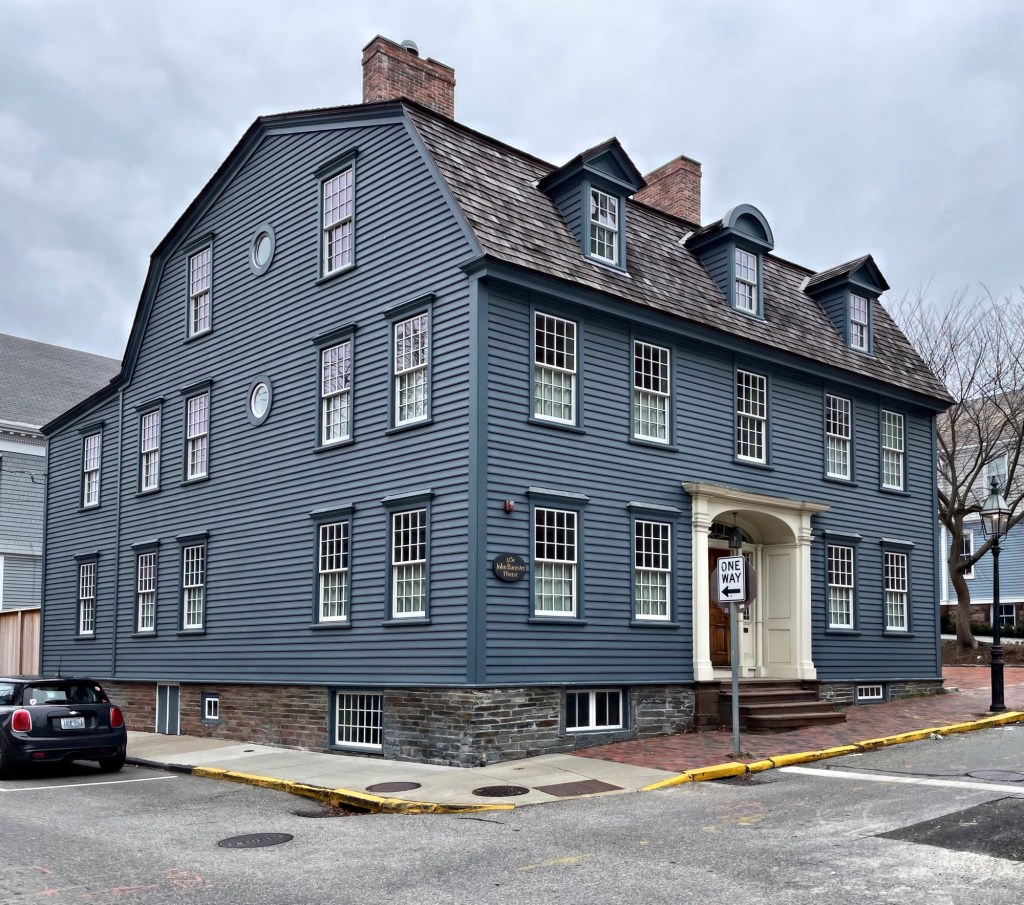
John Banister House // 1751

This deep, gambrel-roofed house is among my favorites in Newport. The house was built in 1751 for John Banister (1707-1767), a Boston-born merchant who moved to Newport in 1736, marrying Hermoine Pelham (1718-1765), a granddaughter of Gov. Benedict Arnold, that next year. Banister quickly established himself as a leading Newport merchant, trading with England, the West Indies, engaging in privateering and the slave trade. In 1752, he held one of the last public slave auctions in Rhode Island at his store, describing them in advertisements as “the finest cargo of slaves ever brought into New England”. The couple also built a country estate in Middletown, Rhode Island. John and Hermione had two sons, John and Thomas, who grew up in this home. John inherited the house after his father’s death in 1767, but the two brothers would soon find themselves on opposite sides of the battle for independence. Thomas was a loyalist, and even enlisted in the British army during the occupation of Newport, while John supported American independence. In retaliation for his patriot views, the occupying British forces seized this house, along with John’s farm in nearby Middletown. The house became the headquarters of General Richard Prescott during the occupation, although John later reclaimed his property following the British evacuation of Newport in 1779. The house has a later Federal entry, but otherwise is one of the best-preserved Colonial homes in Newport. It is a single-family home.

Langley-King House // c.1710

Built c. 1710 this amazing Georgian Colonial house would have originally been a smaller, central chimney structure built by Nathaniel Langley. Major remodeling to effect the Georgian style seen today was done by a subsequent owner of the property. That owner was likely John Brown (1694-1764) a wealthy merchant that may have gifted or sold this home to his daughter, Ann Brown and her new husband, Charles Handy. Handy was a merchant and operated a spermaceti factory just to its west. Later owner, David King and his heirs owned the house for much of the 19th century. The house is on its original site and was purchased by the Newport Restoration Foundation (NRF) in 1969 and restored in 1970-71.

Reverend Graham-Howard Richmond House // c.1715

Who doesn’t love a good Colonial house in Connecticut!? This house in Southbury was originally built at the beginning of the 18th century and was later altered and expanded in the fashionable Federal style at the end of the century. The house was built around 1715 by a Nathan Strong, who sold the property to Reverend John Graham who was the town’s pastor for over forty years. The house was later owned by antiques dealers Daniel and Marguerite Croucher. They used the former White Oak Schoolhouse (nextdoor) to store and sell some of their finds! After later owners, the property (which includes the schoolhouse) was purchased by Howard K. Richmond had been a graphic designer and art director in New York. He created the original layout and logo for Life magazine in 1936. He also did advertising and publicity work for Lord & Taylor, Bloomingdale’s, Elizabeth Arden and Saks Fifth Avenue. So many layers of history in over 300 years!

Samuel Bradley House // 1715

Welcome to Southport, one of the most walkable and charming seaside villages in all of Connecticut, and it’s also in Fairfield! Southport became a leading coastal port on Long Island Sound, its ships carrying produce and goods back and forth to New York City. Sea captains houses, historic banks, and stunning churches line the streets in the village and are all in a great state of preservation. This is because much of the old village area is part of a local historic district, first established in 1967, where buildings from three centuries are protected for future generations. This house was built in East Haven, Connecticut by Samuel Bradley in 1715. The saltbox house is evocative of many early Colonial homes of Connecticut built at the time with a large central chimney and symmetrical facade. The house remained in the family until the mid-1940s when it was purchased, disassembled, shipped and reconstructed on this site on Harbor Road in Southport.

Woodward Abrahams House // c.1768

This Georgian-era Colonial home in Marblehead, Massachusetts was built around 1768 by Woodward Abrahams, who was appointed deputy postmaster in Marblehead ten years prior by Benjamin Franklin. Abrahams was one of the seven listed “Tories” mentioned in a town meeting of 1777, which were more loyal to the British crown than the colonies. After the war, he attempted to restore his political favor, which he did over decades, later being renamed a postmaster in 1797. The old Abrahams house was later owned by Thomas Tucker, who ran a dry goods business. In 1881, he converted the first floor to commercial space, giving the house its appearance we see today.

Homan-Devereaux House // 1764

In 1764, Joseph Homan, a wealthy merchant, built this house on a lot that was formerly a “mowing field” in Marblehead, Massachusetts. The Georgian style home is of a more elaborate design, showcasing Mr. Homan’s wealth at the time. His wealth was not all acquired ethically, however. Joseph Homan was engaged in international trade, and enslaved Africans at his Marblehead home. In the Boston Daily Newsletters in September 1770, Homan posted a notice that Jack, one of his enslaved humans escaped. It read: “At Night, a Negro Man, named Jack, about 6 feet high, near 50 years of age, speaks bad English, and Born in Martinico [Martinique]; had on when he went away, a blue Coat with Mohair Buttons, a blue Jacket with black Glass Buttons, blue Breeches with white metal Buttons, and a red worsted Cap, but may have changed his Cloaths [sic], as he had more at Beverly.-Whoever shall take up said Negro, and deliver him to Mr. Brown, Deputy-Sheriff, in Salem, shall have Two Dollars Reward, and all necessary Charges paid them. All Masters of Vessels, and others, are cautioned against carrying said Negro off, as they would avoid the Penalty of the Law.” Homan would later sell the property to Elbridge Gerry, who served as the fifth vice president of the United States under President James Madison, and who Gerrymandering is named after. Gerry gifted the house to his sister Elizabeth, who married Burrell Devereaux a year later. Burrell was a sea captain that later was a privateer.

Reverend Whitwell House // c.1756

Another of the stunning gambrel-roofed Georgian homes in Marblehead is this beauty located on High Street in the village. This house was built around 1756 but is best known for its resident from 1766-1779, as the home of the Reverend William Whitwell (1737-1781), who was the fourth minister of the Old North Church, located just a stone’s throw away. Although this Georgian dwelling looks like a single-family house from the outside, it is actually divided into two houses with separate owners, likely since its construction. Later dormers crowd the roof, but its still a pretty amazing Pre-Revolution home in one of the most charming towns in New England!

Benjamin Coes House – “Tory Chimneys” // c.1785

One of the hidden architectural gems of Kennebunkport is this Revolutionary-era house with some serious proportions. The house was built around 1785 by Benjamin Coes, a sailmaker from Marblehead, who settled in the burgeoning Kennebunkport in search of new work and opportunities. He married Sarah Durrell and the couple erected the seventh house in town, which is part of this property. For his work, Mr. Coes used the first two floors as his residence and the third floor was used as a sail loft, with an exterior staircase. A young boy, Joseph Brooks, would work in the loft and he would go on to marry Benjamin’s daughter, Sarah. The couple inherited the family house and retired here. The property was sold out of the Coes-Brooks Family when Maine State Historian, Henry Sweetser Burrage and his wife Ernestine purchased this house in 1917, which would be used as a guest house. The couple and lived in the house across the street. Ernestine Burrage, who was Chairperson of the Kennebunkport Chapter of the Red Cross, allowed the ladies of her chapter to gather there three times a week to roll bandages for the soldiers injured in battles overseas. It became the headquarters for the Kennebunkport Red Cross. It was likely Ernestine who had the chimneys painted white, which resembled the old Tory Chimneys in Revolutionary-era New England; where, when painted white, they served as a quiet signal which indicated that a home’s residents were loyal subjects of the British Crown.

Nathaniel Backus House // c.1702

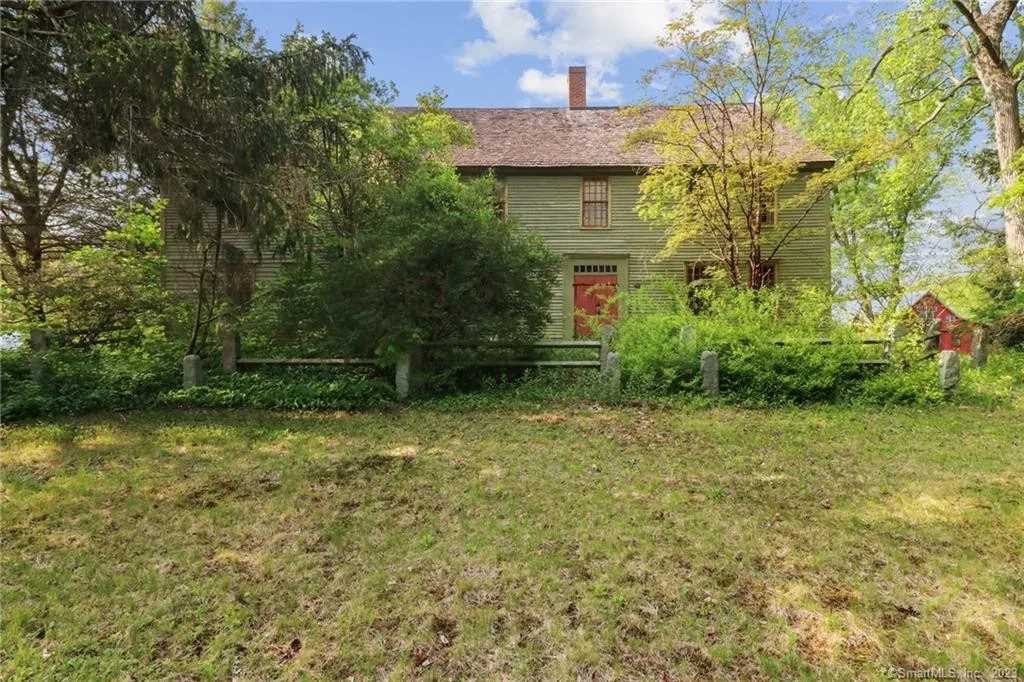
Welcome to Franklin, Connecticut, which frankly (pun intended) I had never heard of before driving through it not long ago! The town is located in New London County and was originally a part of Norwich, Connecticut and was called West Farms village. The town incorporated in 1786, creating its own town at that time, and the citizens decided to name their new town after Benjamin Franklin. I wonder if there are more place names in the United States after Benjamin Franklin or George Washington…

This is one of the oldest houses in the sleepy town of Franklin, and it was built around 1702 by Nathaniel Backus, about the same time he was married to his wife, Elizabeth. The Georgian Cape house features a large gambrel roof and a small gabled dormer. The house is representative of many of the earliest homes which once existed in this landscape in the early 18th century. The home appears to have been vacant for some time, and in 2022, was auctioned off. Its future is unclear at this time sadly.

Grindell Gardner House // 1772

In 1772, Grindell Gardner built this Georgian gambrel-roofed house on land which was part of a large tract formerly owned by his
grandfather, Abel Gardner, whose own home sits a stone’s throw away. The charming Cape house is of an unusual type, having the gambrel on the front side only which slopes to a sort of saltbox at the rear, which originally contained the summer kitchen and a water closet. The house was altered in the 1890s with the addition of dormer windows and the removal of the original large central chimney, which was removed prior to the new dormers. By the 1960s, the house had only been owned by four families.